
Living things run on batteries FERMENTATION The incomplete
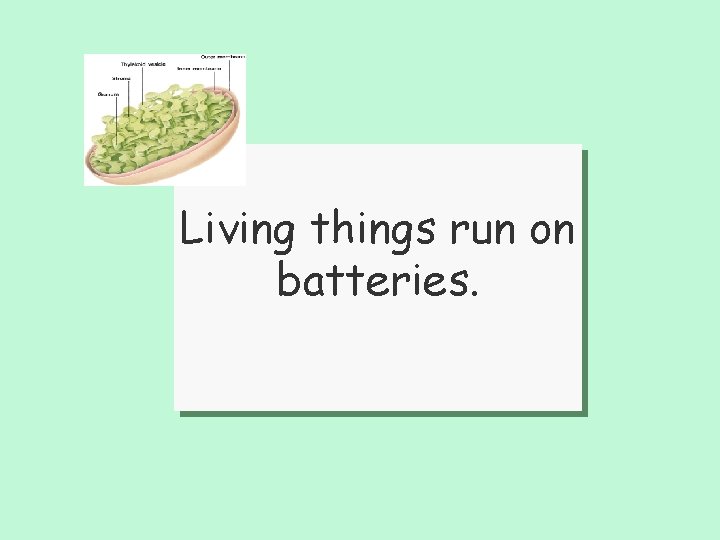
Living things run on batteries.
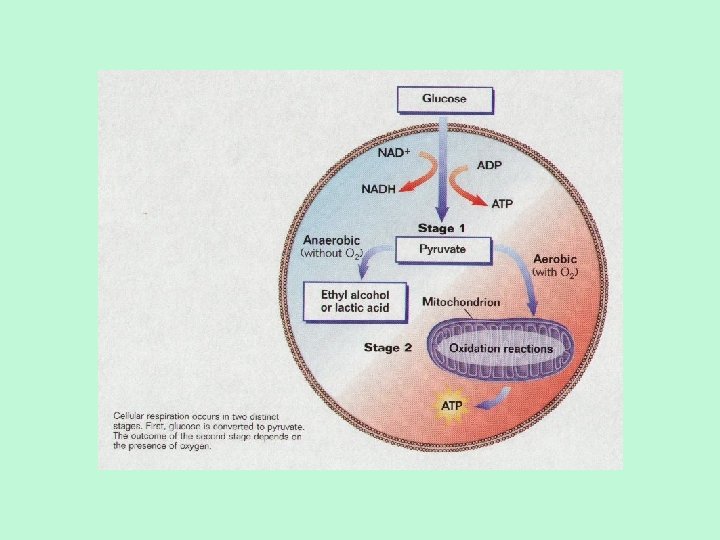
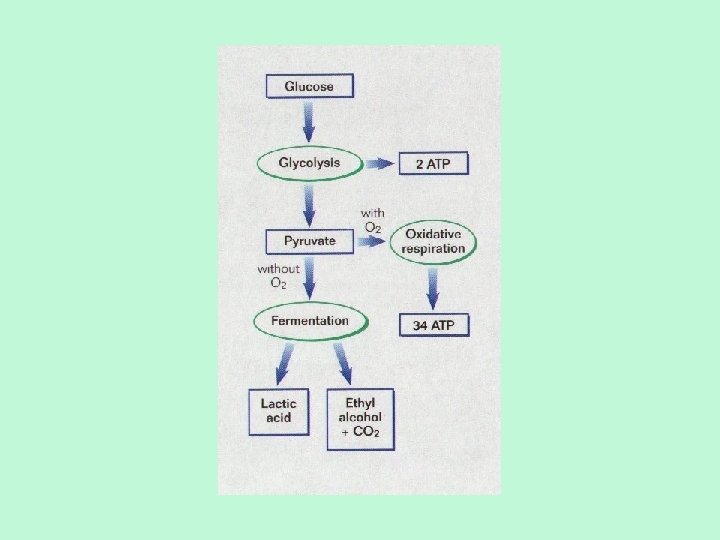
FERMENTATION The incomplete breakdown of organic compounds without oxygen
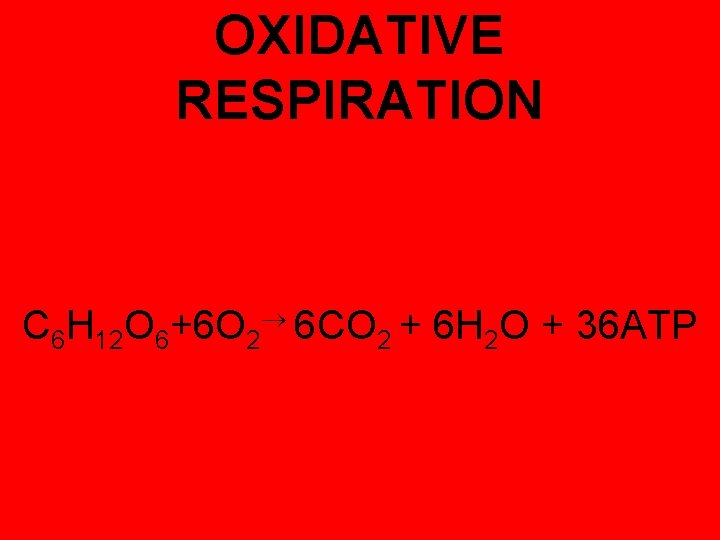
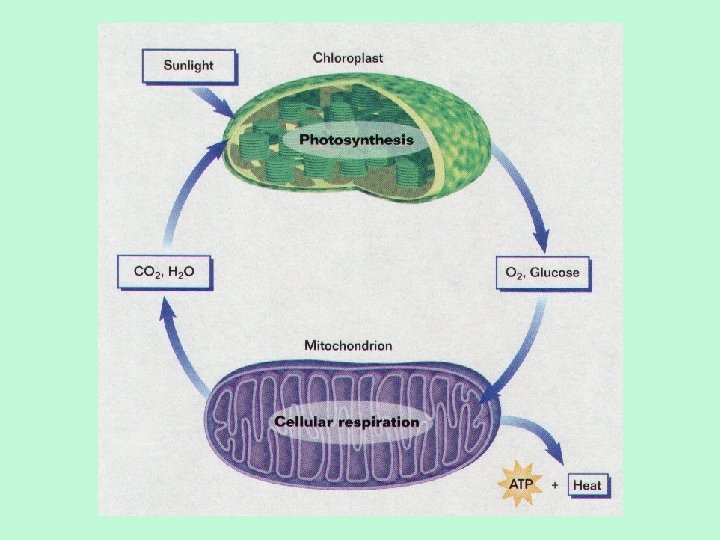
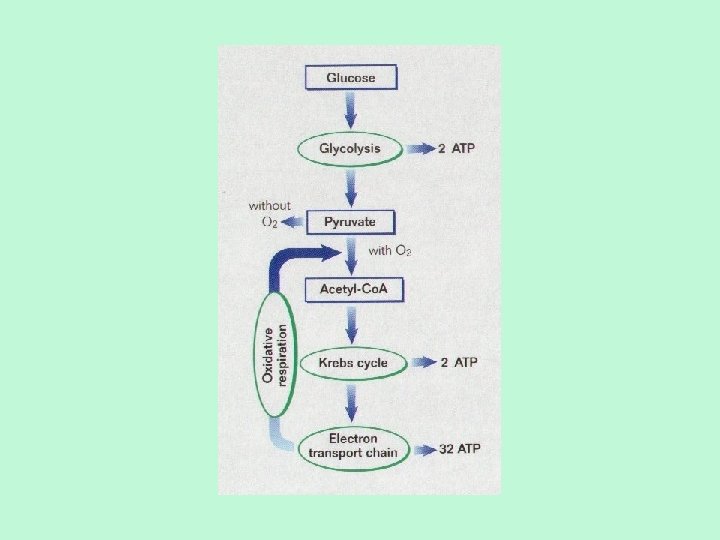
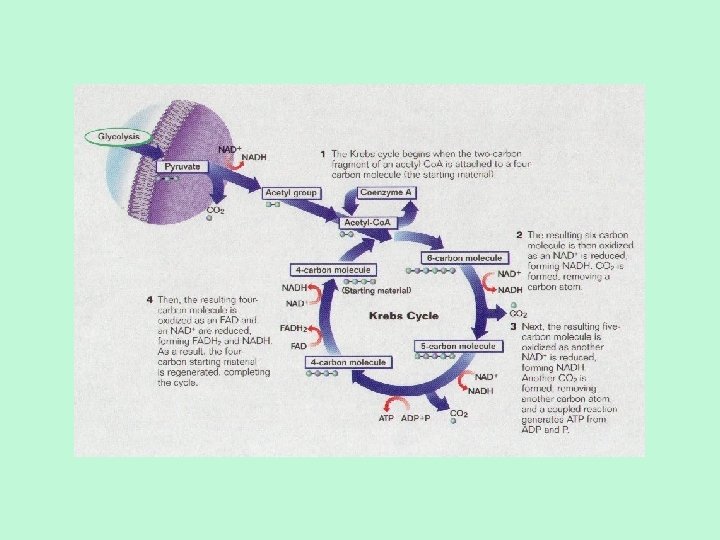
OXIDATIVE RESPIRATION C 6 H 12 O 6+6 O 2 6 CO 2 + 6 H 2 O + 36 ATP
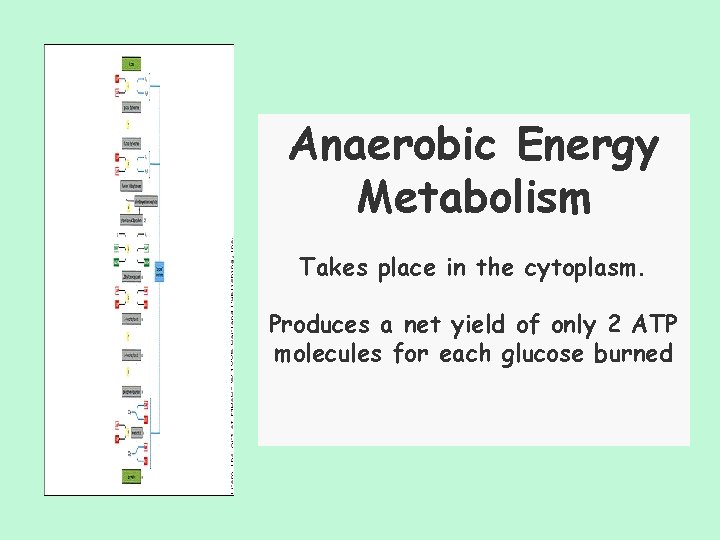
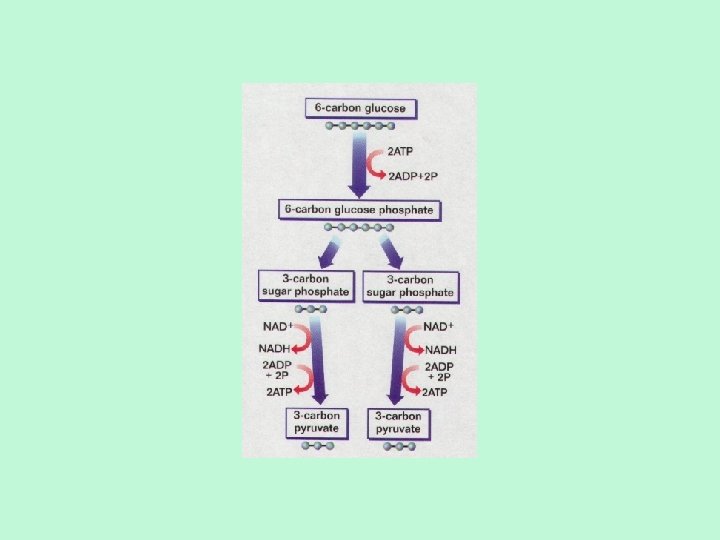
Anaerobic Energy Metabolism Takes place in the cytoplasm. Produces a net yield of only 2 ATP molecules for each glucose burned
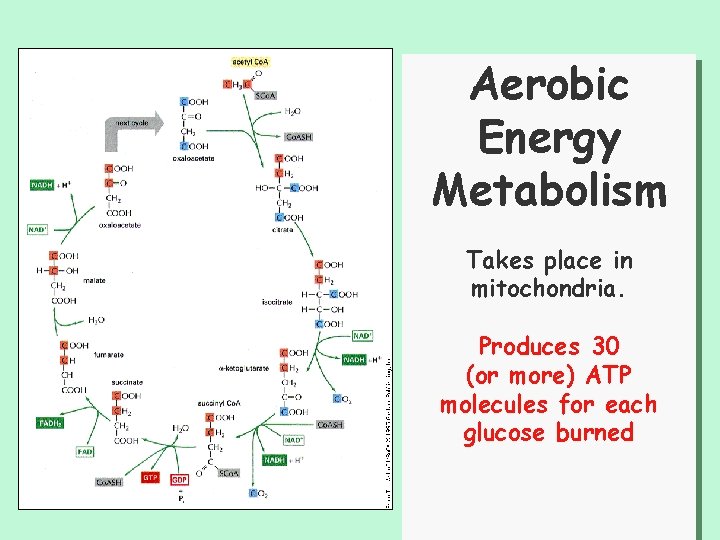
Aerobic Energy Metabolism Takes place in mitochondria. Produces 30 (or more) ATP molecules for each glucose burned
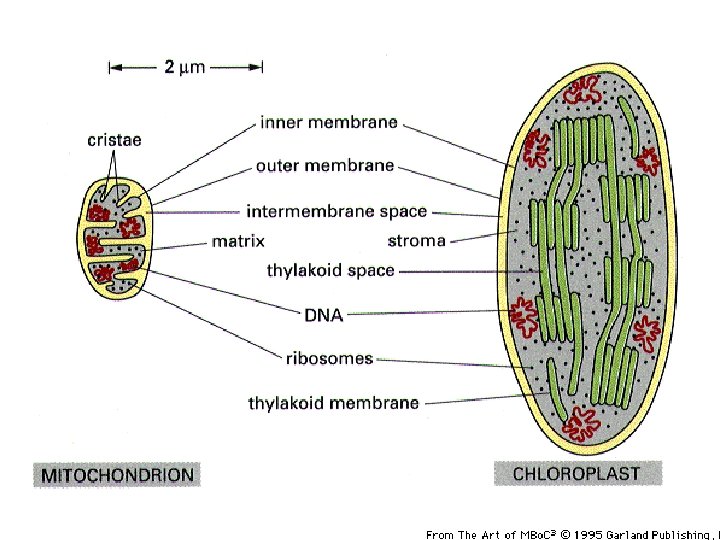
Key points: The fixed positions of the membrane proteins in both chloroplasts and mitochondria are essential to organelle function. Each space in both of these organelles has a unique function.
Why would the DNA in the mitochondria and the chloroplasts be different from the DNA in the nucleus?
ENDOSYMBIOSIS HYPOTHESIS 1 st eukaryotes were formed by the symbiosis of several prokaryotes
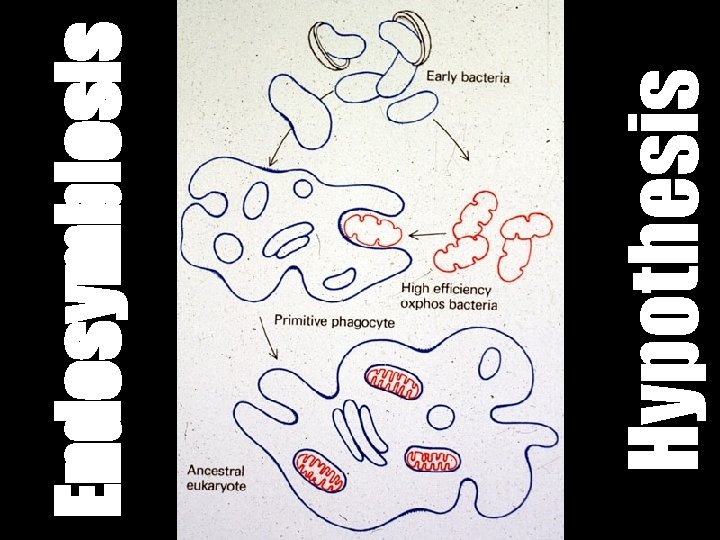
Hypothesis Endosymbiosis
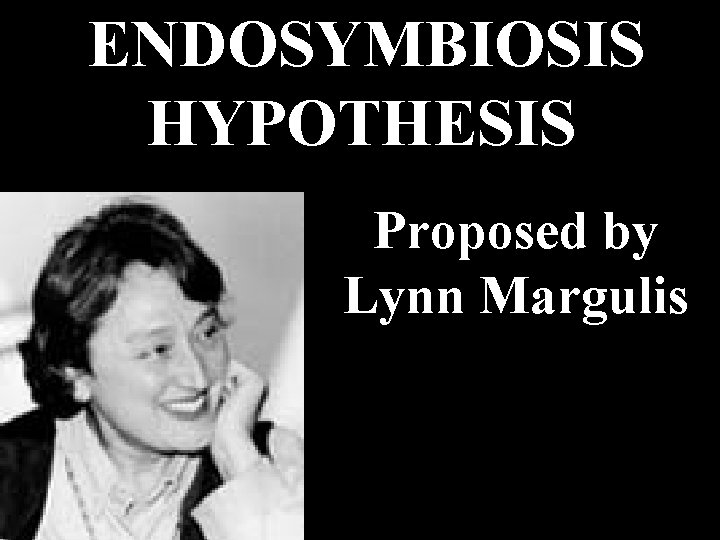
ENDOSYMBIOSIS HYPOTHESIS Proposed by Lynn Margulis
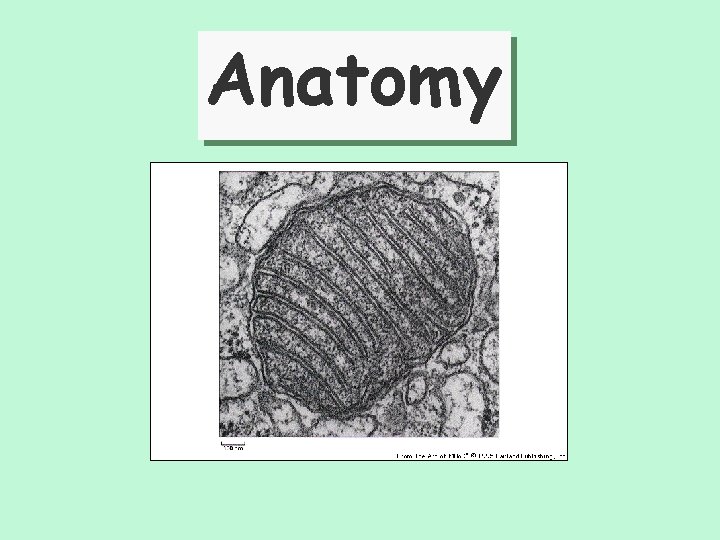
Anatomy
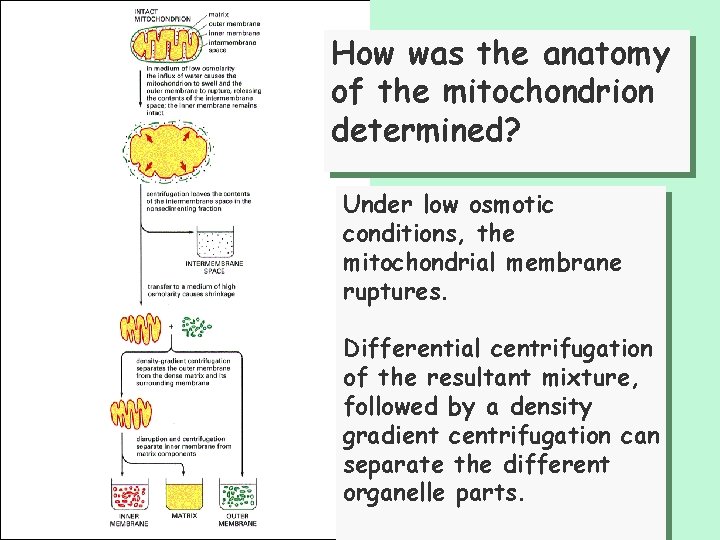
How was the anatomy of the mitochondrion determined? Under low osmotic conditions, the mitochondrial membrane ruptures. Differential centrifugation of the resultant mixture, followed by a density gradient centrifugation can separate the different organelle parts.
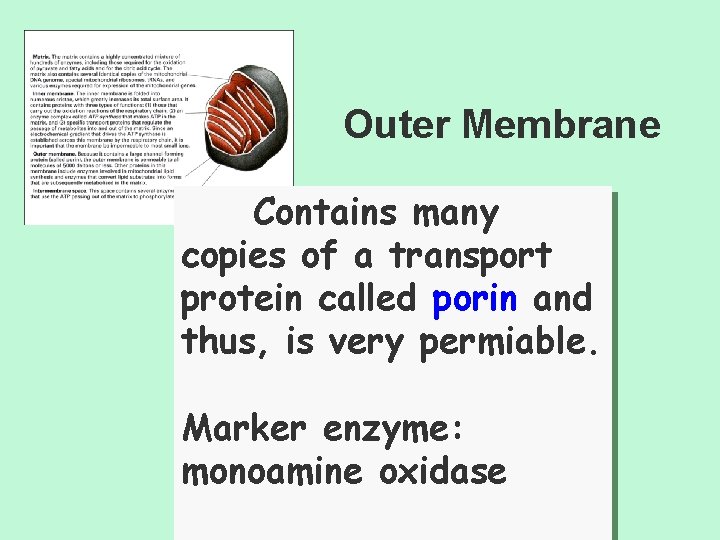
Outer Membrane Contains many copies of a transport protein called porin and thus, is very permiable. Marker enzyme: monoamine oxidase
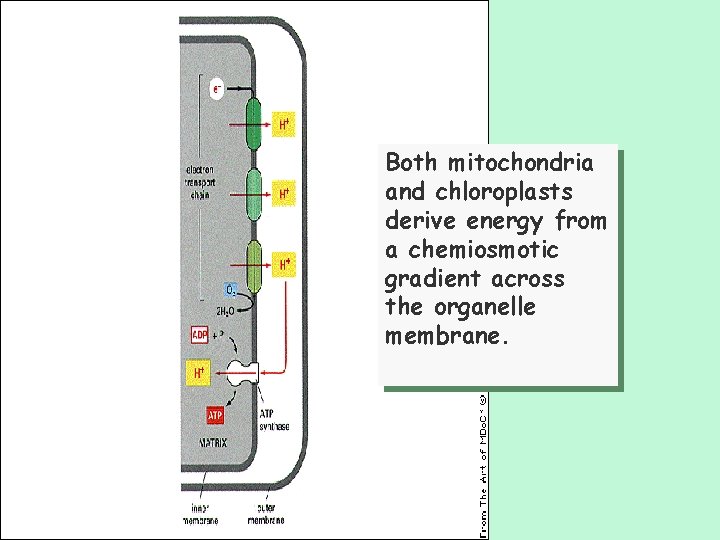
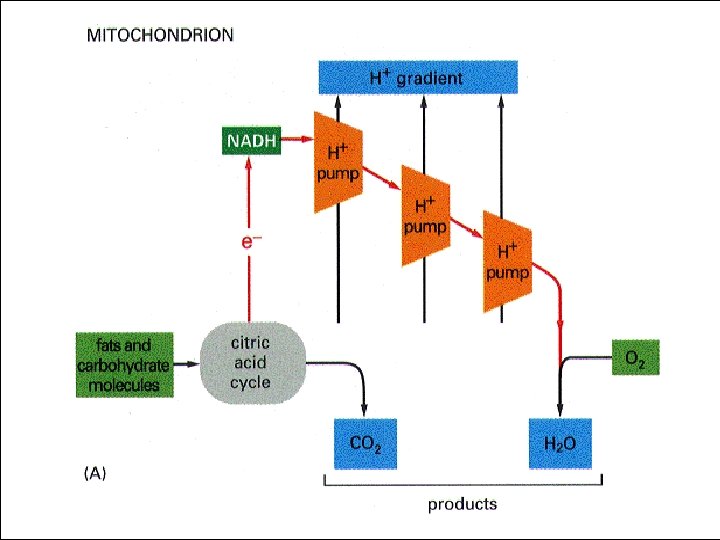
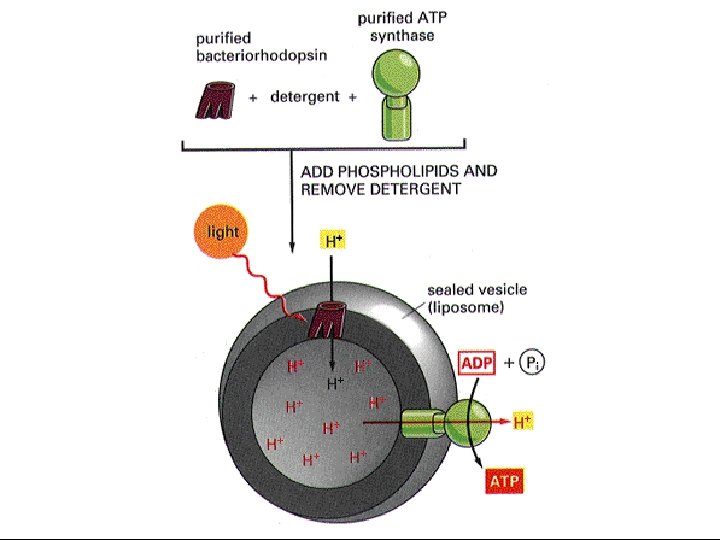
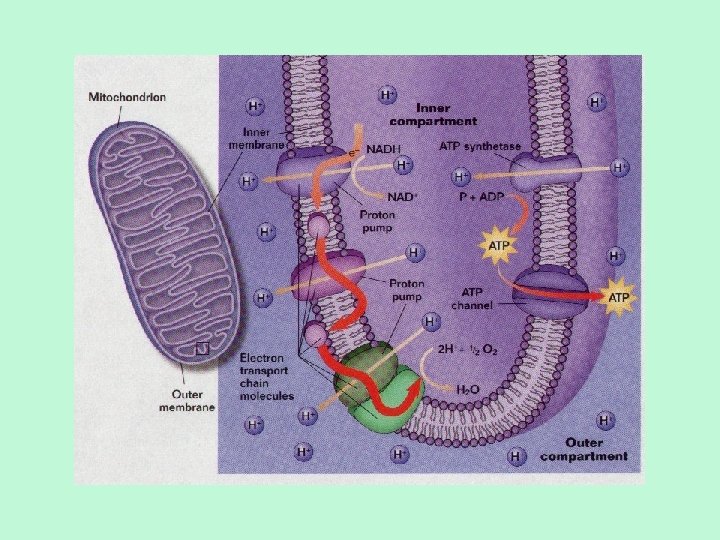
Both mitochondria and chloroplasts derive energy from a chemiosmotic gradient across the organelle membrane.
![The p. H inside the mitochondrion is 8. (The [H+] is 10 -8 molar.](http://slidetodoc.com/presentation_image_h2/67f7c1c30d9c6c0f33f969039f7e0169/image-17.jpg "The p. H inside the mitochondrion is 8. (The [H+] is 10 -8 molar.")
The p. H inside the mitochondrion is 8. (The [H+] is 10 -8 molar. ) The p. H in the cytoplasm is 7. (The [H+] is 10 -7 molar. ) Thus, the H+ concentration is 10 x higher outside the mitochondrion.
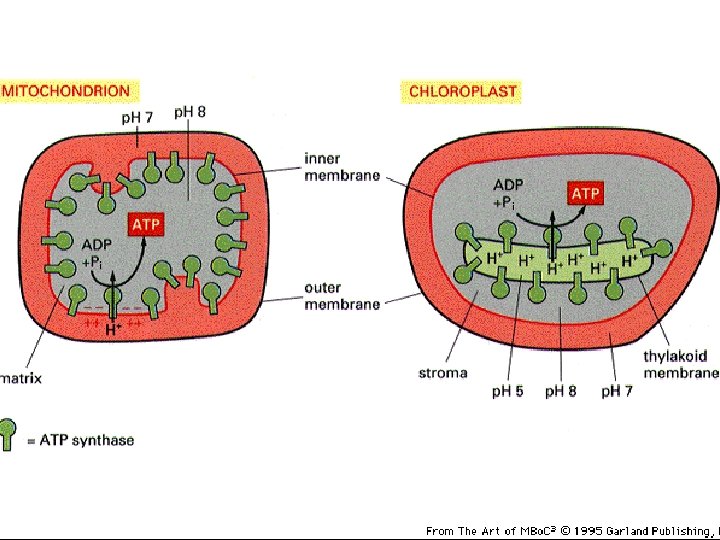
The enzyme which makes ATP is called ATP synthase, or ATPase, and sits on the mitochondria in animal cells or chloroplasts in plant cells
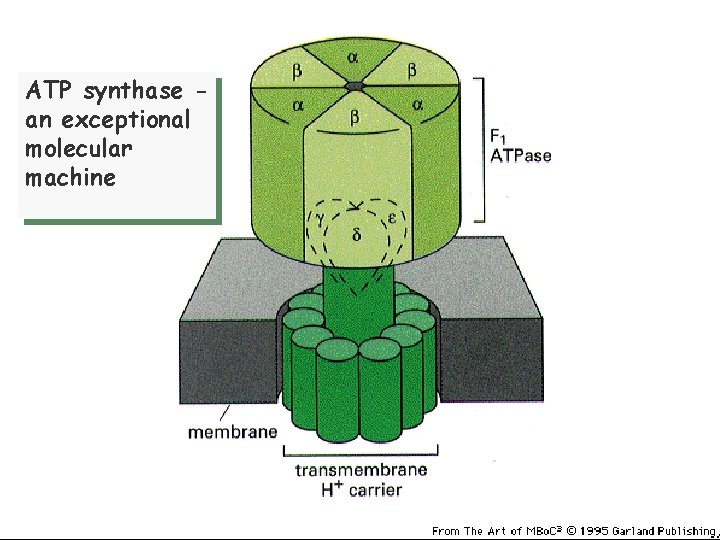
ATP synthase an exceptional molecular machine
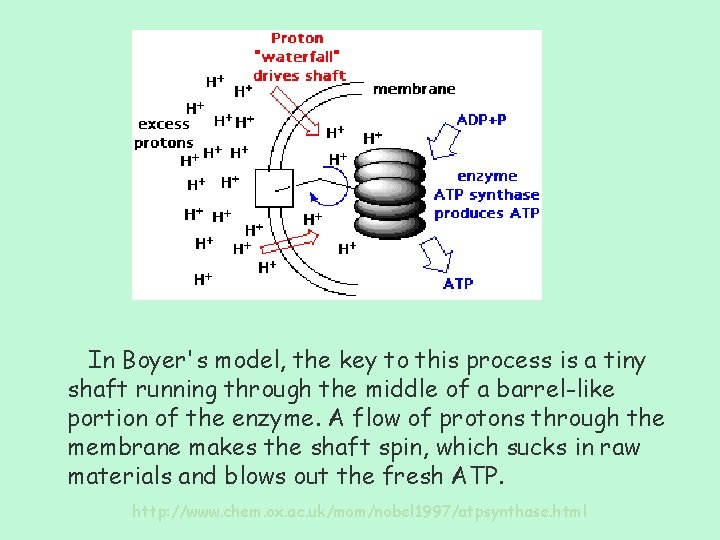
In Boyer's model, the key to this process is a tiny shaft running through the middle of a barrel-like portion of the enzyme. A flow of protons through the membrane makes the shaft spin, which sucks in raw materials and blows out the fresh ATP. http: //www. chem. ox. ac. uk/mom/nobel 1997/atpsynthase. html
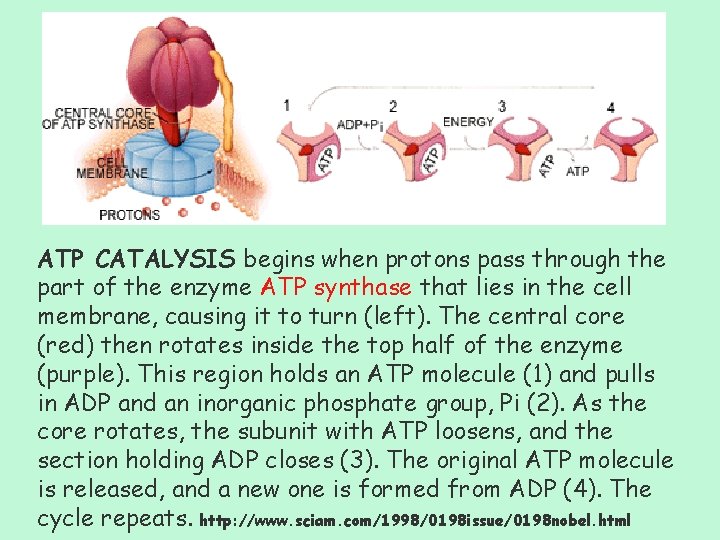
ATP CATALYSIS begins when protons pass through the part of the enzyme ATP synthase that lies in the cell membrane, causing it to turn (left). The central core (red) then rotates inside the top half of the enzyme (purple). This region holds an ATP molecule (1) and pulls in ADP and an inorganic phosphate group, Pi (2). As the core rotates, the subunit with ATP loosens, and the section holding ADP closes (3). The original ATP molecule is released, and a new one is formed from ADP (4). The cycle repeats. http: //www. sciam. com/1998/0198 issue/0198 nobel. html
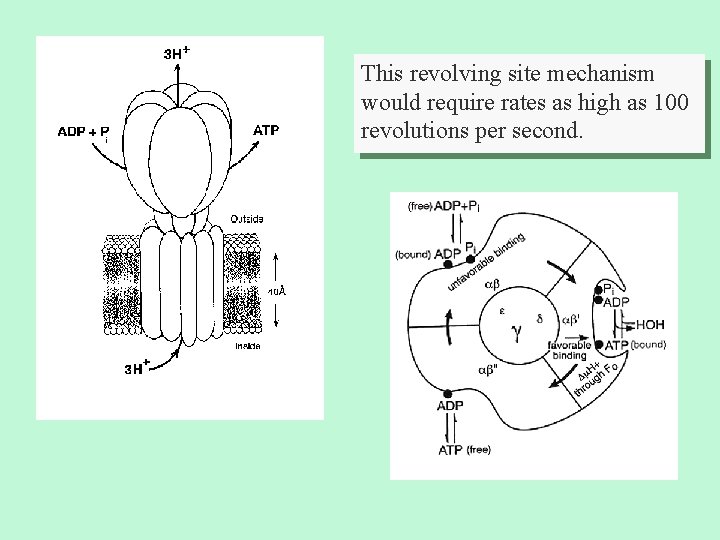
This revolving site mechanism would require rates as high as 100 revolutions per second.
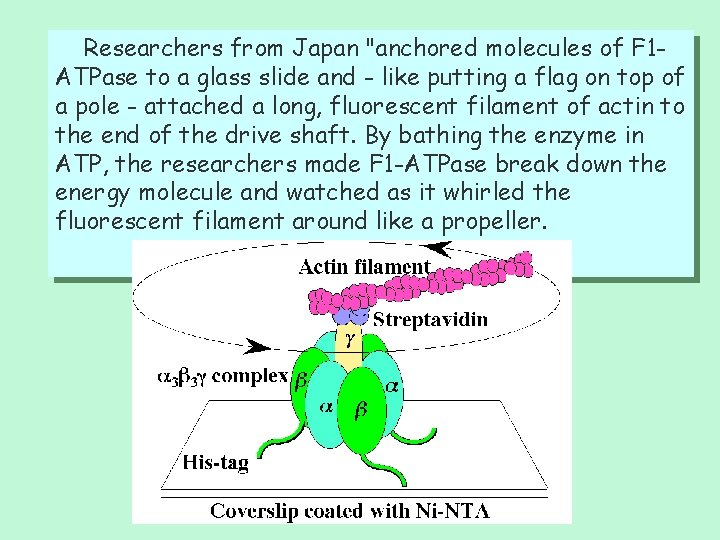
Researchers from Japan "anchored molecules of F 1 ATPase to a glass slide and - like putting a flag on top of a pole - attached a long, fluorescent filament of actin to the end of the drive shaft. By bathing the enzyme in ATP, the researchers made F 1 -ATPase break down the energy molecule and watched as it whirled the fluorescent filament around like a propeller.
Why is mitochondrial inheritance maternal?
Some interesting facts about the human mitochondrial genome. Mamalian mitochondria have their own genetic code. For example: UGA usually = STOP in mamalian mitochondria, it means trp The aging process is linked to mutations in mitochondrial DNA. There is very dense packing of genes in mitochondrial DNA.
Endosymbiotic origins of chloroplasts and mitochondria Chloroplasts are related to photosynthetic bacteria. Mitochondria are related to the purple bacteria.
- Slides: 35