
Living Sociologically Chapter 1 Introduction Chapter 1 Lecture


- Slides: 26
Living Sociologically Chapter 1: Introduction
Chapter 1 Lecture Outline • • What is Sociology? Level of Analysis Thinking Relationally: The Paired Concepts Why Sociology? © 2018 2
Chapter 1 Learning Goals • • Defining the sociological imagination Understanding different levels of analysis Recognizing sociology as a “science” Finding sociology outside of academia © 2018 3
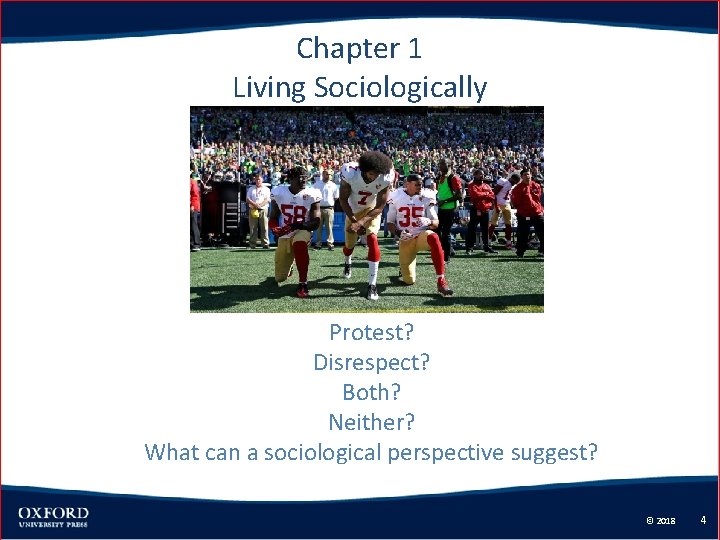
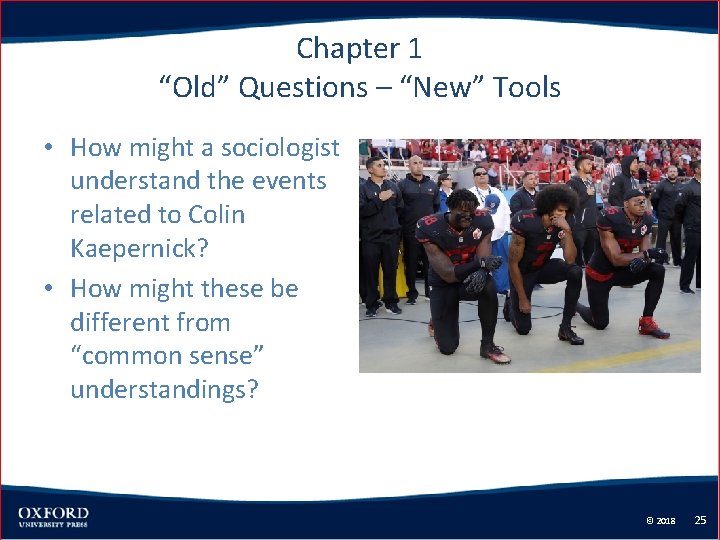
Chapter 1 Living Sociologically Protest? Disrespect? Both? Neither? What can a sociological perspective suggest? © 2018 4
Chapter 1 What is Sociology? • Studies the relationship between individuals and society • Concerned with “social facts, ” “social actions, ” and “social relationships” © 2018 5
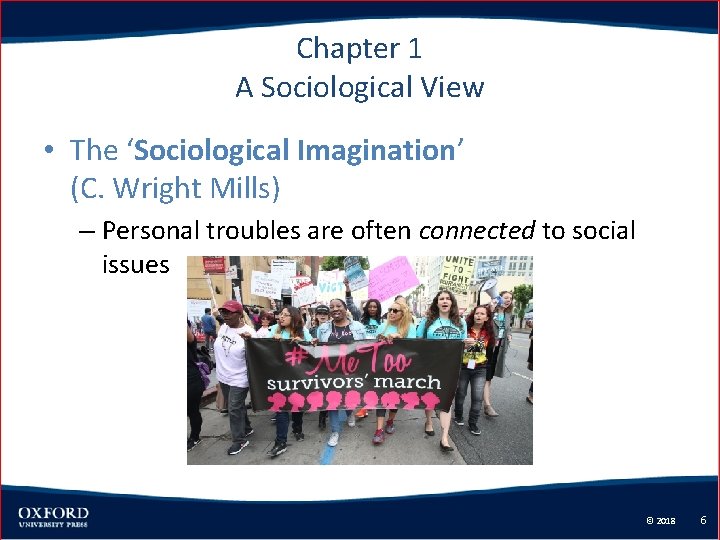
Chapter 1 A Sociological View • The ‘Sociological Imagination’ (C. Wright Mills) – Personal troubles are often connected to social issues © 2018 6
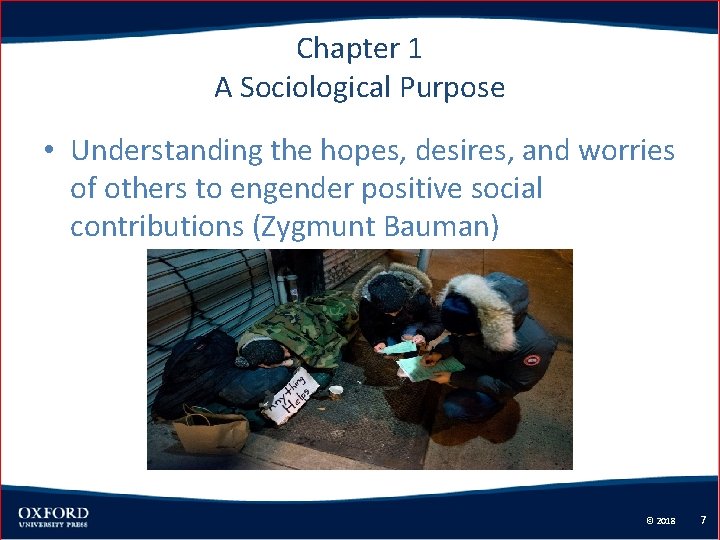
Chapter 1 A Sociological Purpose • Understanding the hopes, desires, and worries of others to engender positive social contributions (Zygmunt Bauman) © 2018 7
Chapter 1 A Sociological “Martial Art” • Sociology is a way to “make sense” of a complex world (Pierre Bourdieu) © 2018 8
Chapter 1 Primary Focus of Sociology • Social facts – A level of reality, external to individuals, that influences their lives (Durkheim 1895) • Social actions – How do people share meaning and act together (Weber, Baehr, and Wells 2002) • Social relationships – Individual lives are patterned but we also make choices (Small and Vincent 1894) © 2018 9
Chapter 1 The Discipline of Sociology • Sociology explores the world though systematic and scientific research • For success, sociology must – get the facts right – figure out how to get the facts right © 2018 10
Chapter 1 Sociology and Everyday Knowledge • Sociological knowledge is different from “common sense” – Serves as an antidote to confirmation bias – Strives to understand how social things are related to one another – Ultimate aim is improving a science of society © 2018 11
Chapter 1 Levels of Analysis • What is the “scale” of research? – Microsociology – Macrosociology – Institutional perspectives © 2018 12
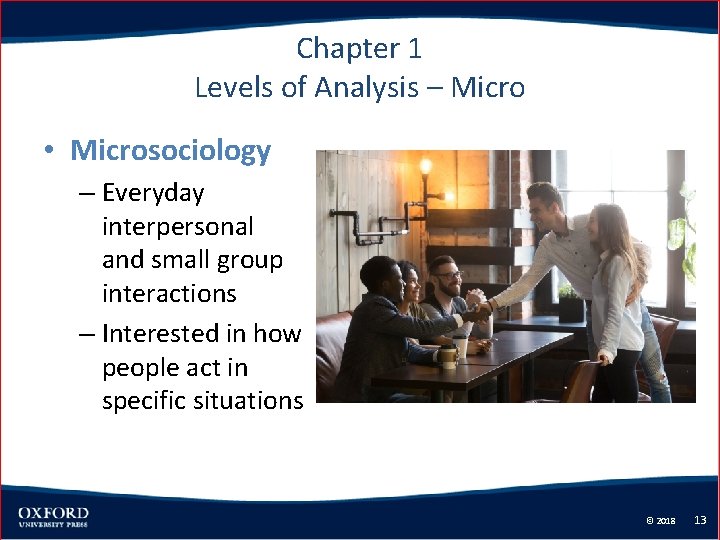
Chapter 1 Levels of Analysis – Micro • Microsociology – Everyday interpersonal and small group interactions – Interested in how people act in specific situations © 2018 13
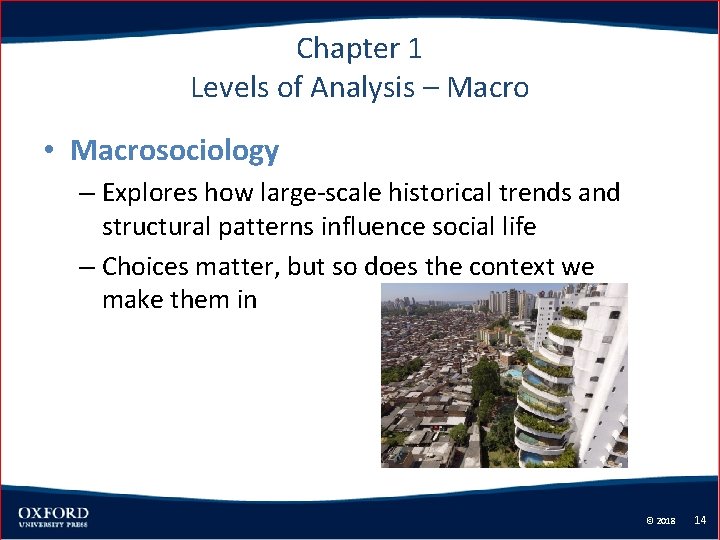
Chapter 1 Levels of Analysis – Macro • Macrosociology – Explores how large-scale historical trends and structural patterns influence social life – Choices matter, but so does the context we make them in © 2018 14
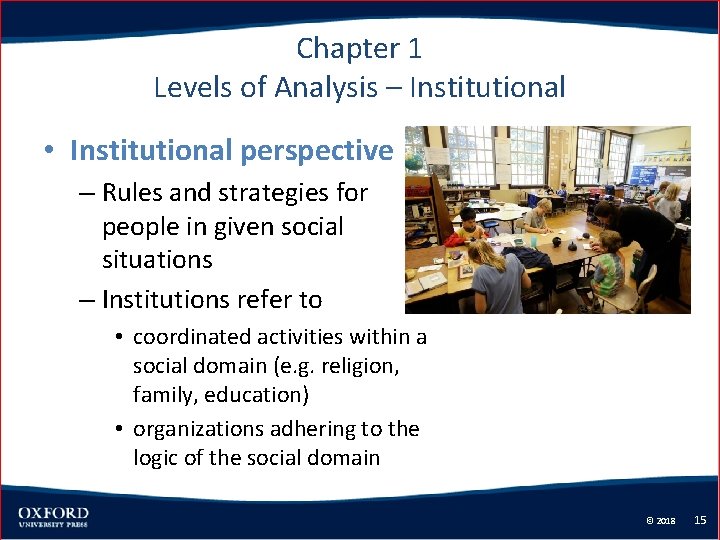
Chapter 1 Levels of Analysis – Institutional • Institutional perspective – Rules and strategies for people in given social situations – Institutions refer to • coordinated activities within a social domain (e. g. religion, family, education) • organizations adhering to the logic of the social domain © 2018 15
Chapter 1 Thinking Relationally • Sociology emphasizes focusing on relationships between social forces – Five sets of paired concepts • • • Solidary and conflict Power and resistance Inequality and privilege Global and local Structure and contingency © 2018 16
Chapter 1 Paired Concepts 1 • Solidarity – A sense of belonging and connection to a particular social group – Creates an “us” • Conflict – Disagreement, opposition, and separation between groups – Creates a “them” © 2018 17
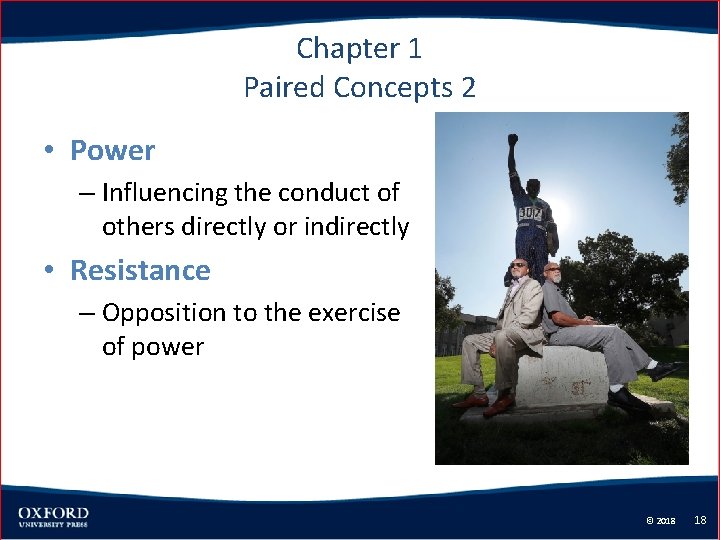
Chapter 1 Paired Concepts 2 • Power – Influencing the conduct of others directly or indirectly • Resistance – Opposition to the exercise of power © 2018 18
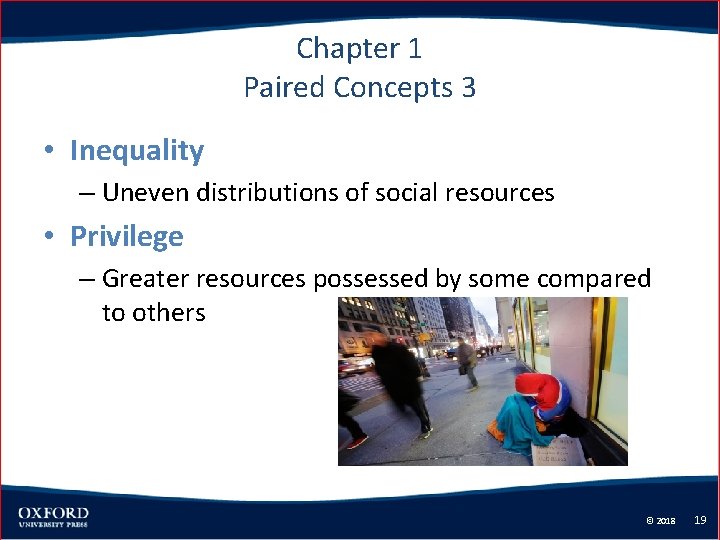
Chapter 1 Paired Concepts 3 • Inequality – Uneven distributions of social resources • Privilege – Greater resources possessed by some compared to others © 2018 19
Chapter 1 Paired Concepts 4 • Global – Interconnection of social life on the planet • Local – Specific settings of everyday life © 2018 20
Chapter 1 Paired Concepts 5 • Structure – The seen and unseen regular, organized patterns of social life • Contingency – Openness in social life produced by human choices and actions © 2018 21
Chapter 1 Why Sociology? – Literacy Skills • Key concepts learned can be identified in real life • Helps develop ability to analyze data and information © 2018 22
Chapter 1 Why Sociology? – Sociology’s Promise • Aspires to inform but also act for freedom and human justice • Not meant to tell people what to think, but allows for clarification of thought • Helps us see the world from the perspective of someone other than ourselves © 2018 23
Review of Learning Objectives • What is the “sociological imagination”? • What are levels of analysis, and how are they generally classified? • What features make sociology a “science”? • Where can we find sociology outside of academia, and why? © 2018 24
Chapter 1 “Old” Questions – “New” Tools • How might a sociologist understand the events related to Colin Kaepernick? • How might these be different from “common sense” understandings? © 2018 25
What’s Next? © 2018 26