
Living Primates Part 1 General Characteristics Categories A
- Slides: 25
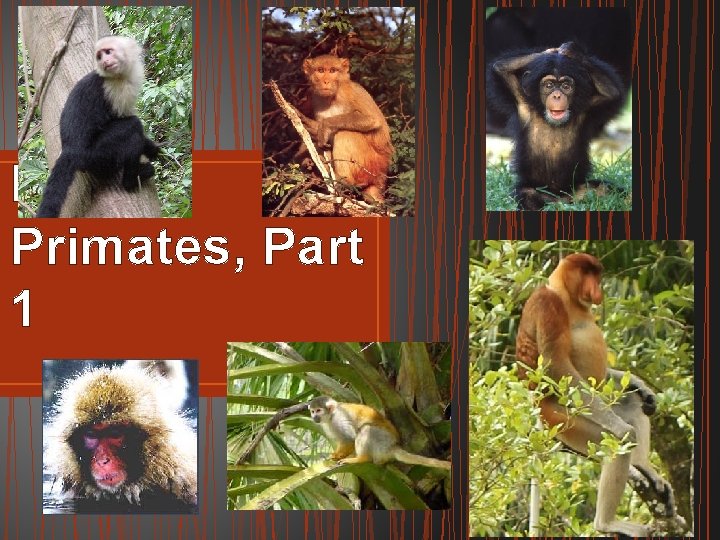
Living Primates, Part 1
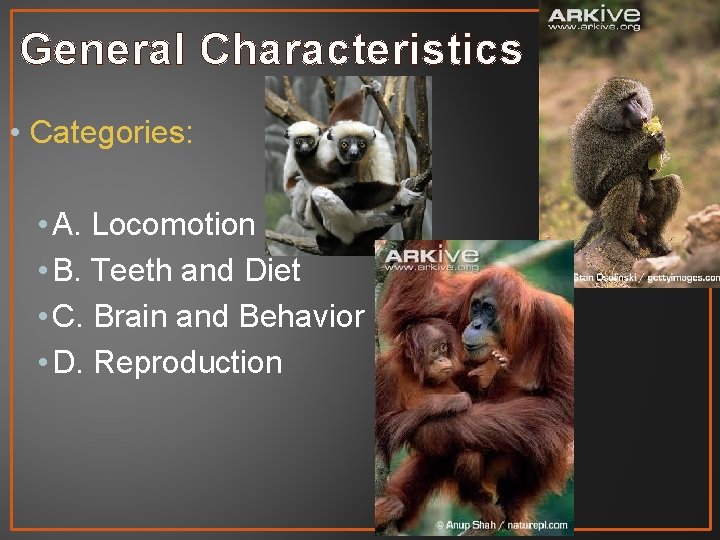
General Characteristics • Categories: • A. Locomotion • B. Teeth and Diet • C. Brain and Behavior • D. Reproduction
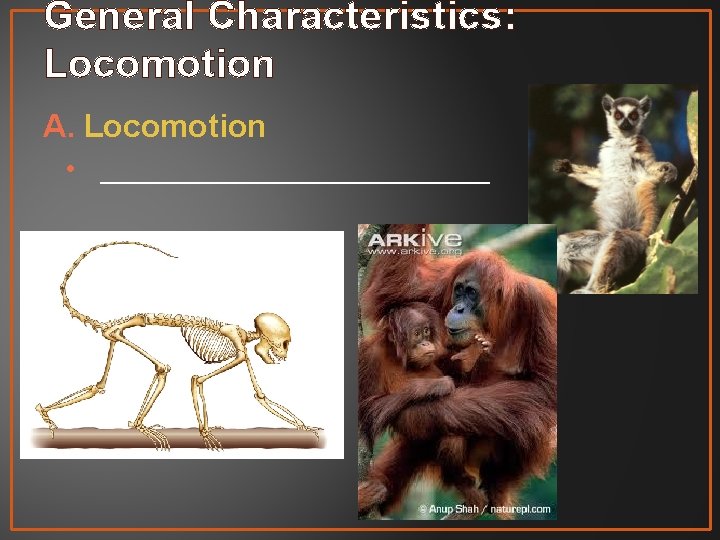
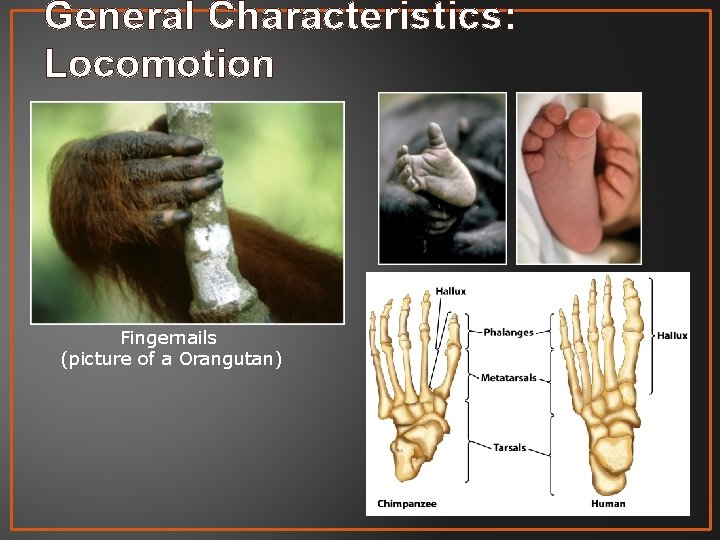
General Characteristics: Locomotion A. Locomotion • _____________
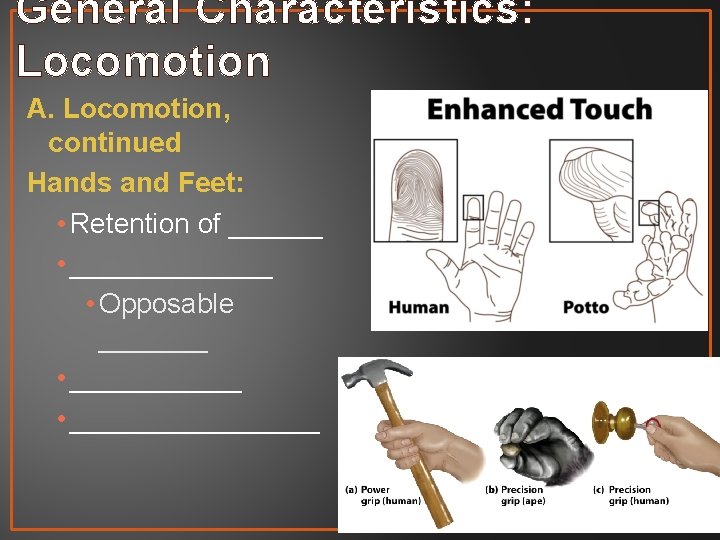
General Characteristics: Locomotion A. Locomotion, continued Hands and Feet: • Retention of ______ • _______ • Opposable _______ • __________
General Characteristics: Locomotion Fingernails (picture of a Orangutan)
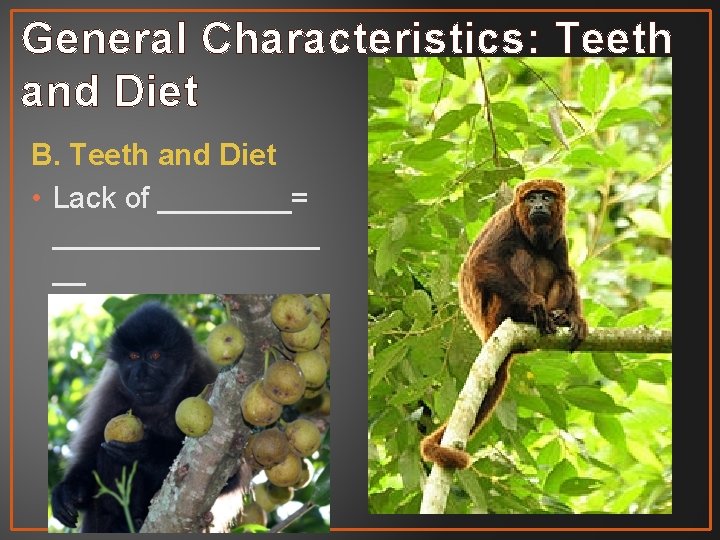
General Characteristics: Teeth and Diet B. Teeth and Diet • Lack of ____= ________ __
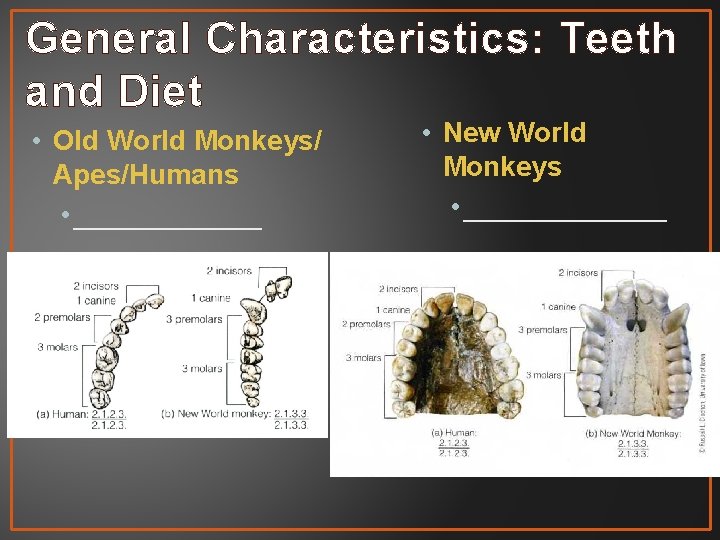
General Characteristics: Teeth and Diet • Old World Monkeys/ Apes/Humans • ______ • New World Monkeys • _______
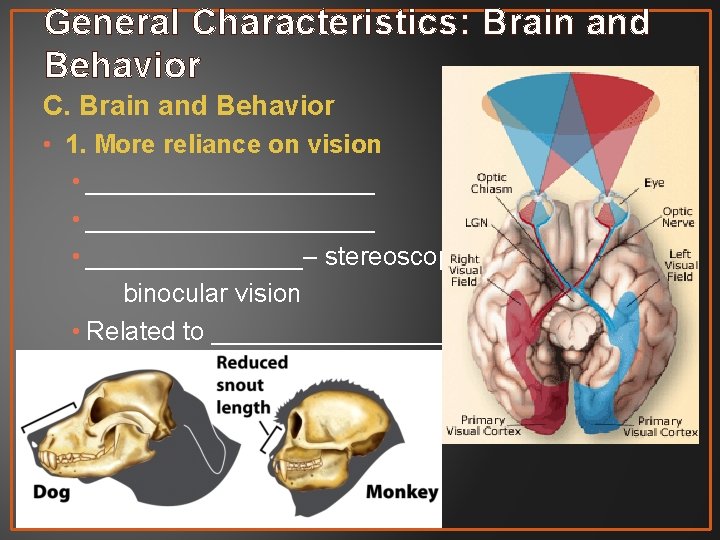
General Characteristics: Brain and Behavior C. Brain and Behavior • 1. More reliance on vision • ____________________ • ________– stereoscopic, binocular vision • Related to _________ • 2. Reduction in snout
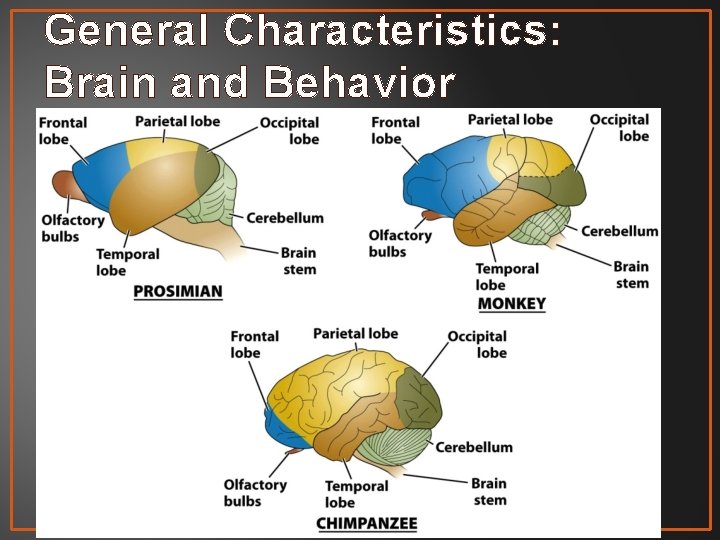
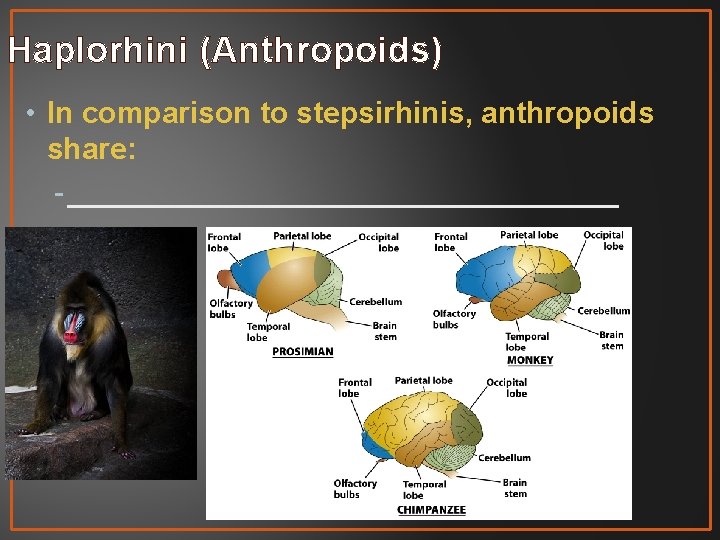
General Characteristics: Brain and Behavior C. Brain and Behavior _________complexity of brain especially the cerebral cortex
General Characteristics: Brain and Behavior C. Brain and Behavior
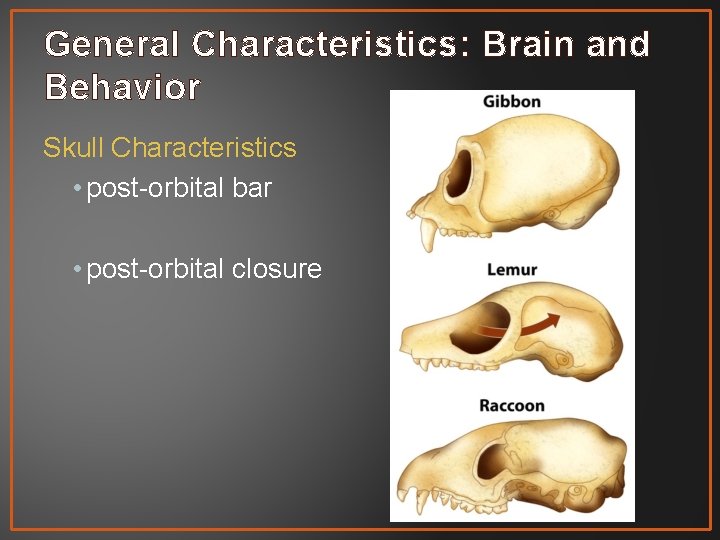
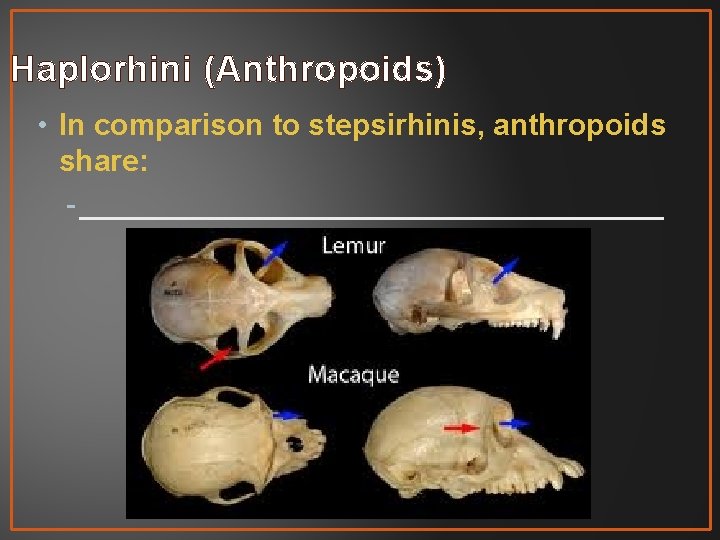
General Characteristics: Brain and Behavior Skull Characteristics • post-orbital bar • post-orbital closure
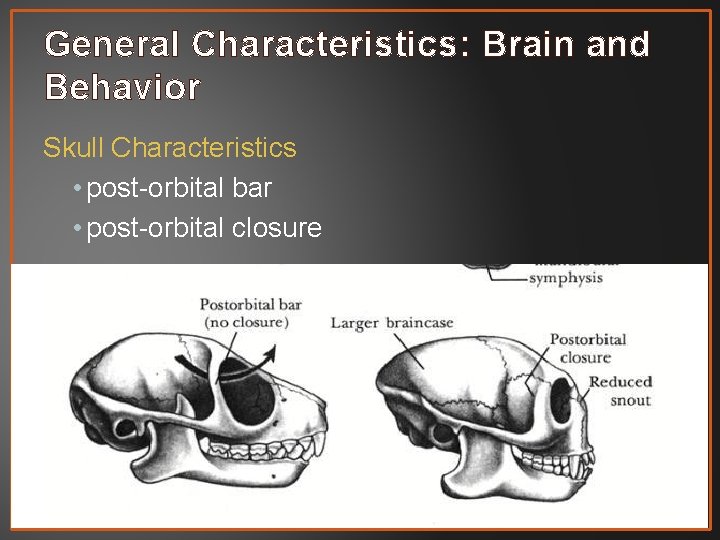
General Characteristics: Brain and Behavior Skull Characteristics • post-orbital bar • post-orbital closure
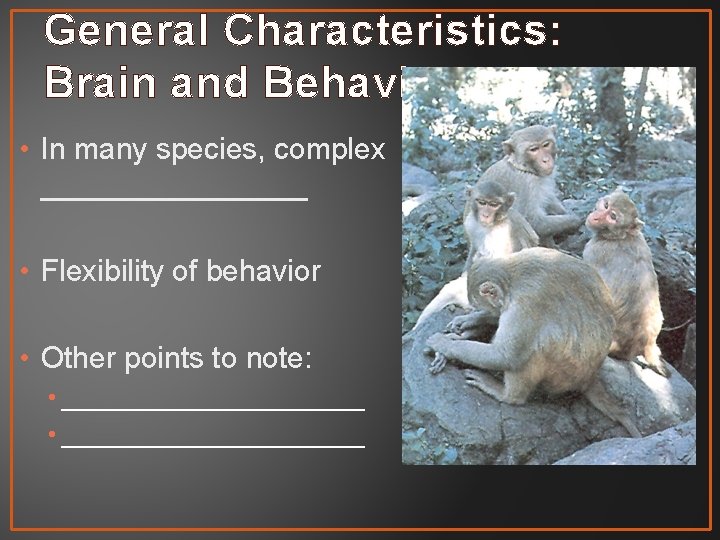
General Characteristics: Brain and Behavior • In many species, complex ________ • Flexibility of behavior • Other points to note: • _____________________
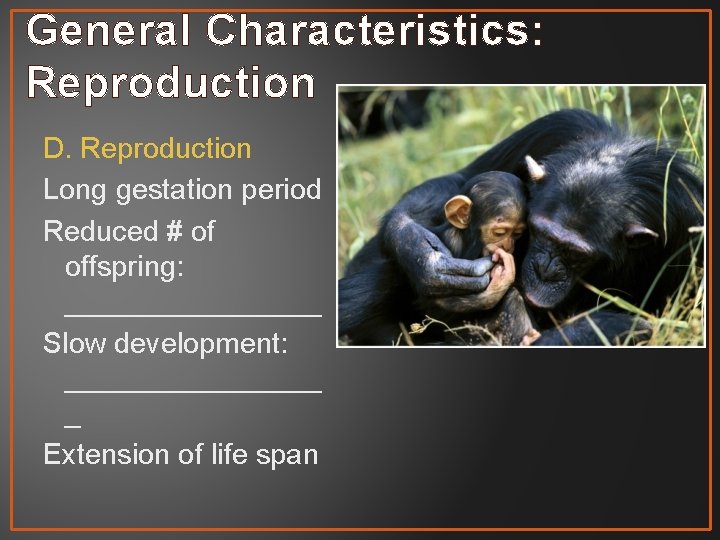
General Characteristics: Reproduction D. Reproduction Long gestation period Reduced # of offspring: ________ Slow development: ________ _ Extension of life span
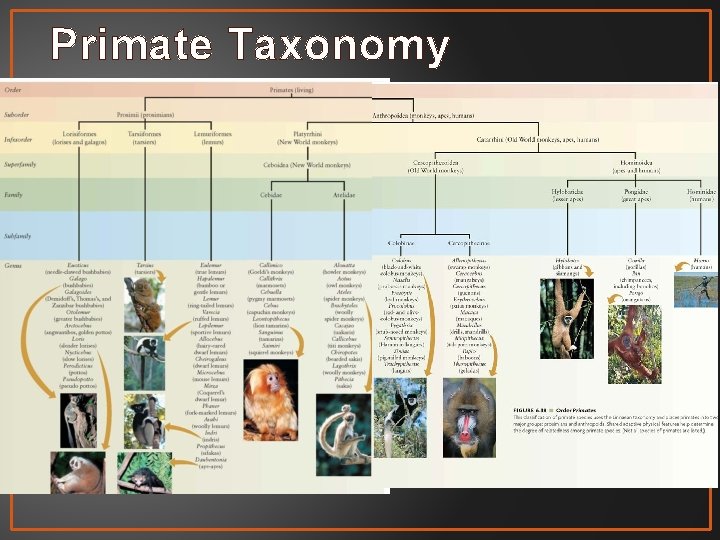
Primate Taxonomy
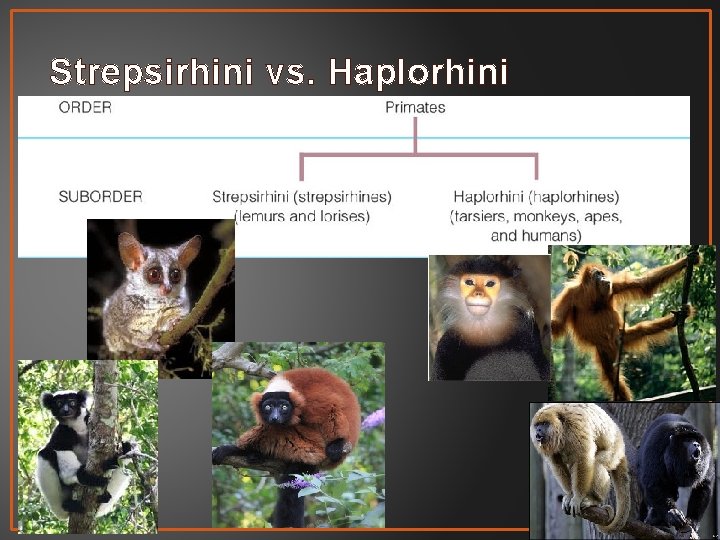
Strepsirhini vs. Haplorhini
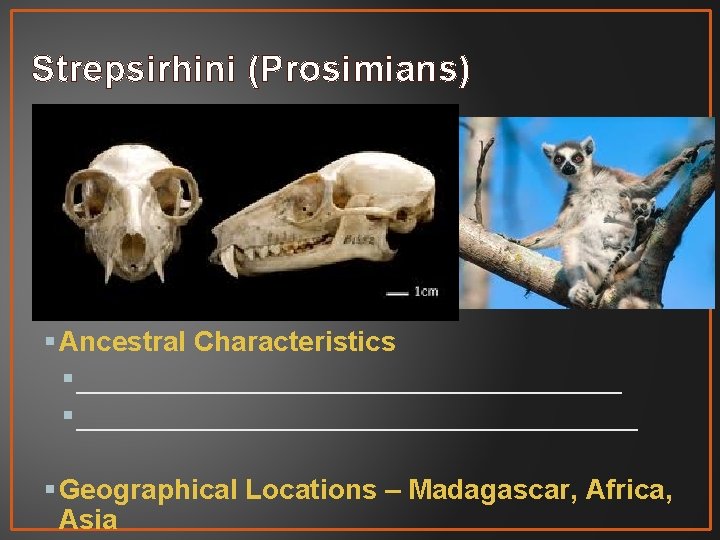
Strepsirhini (Prosimians) § Strepsirhini § Most primitive of all primates § Note: Primitive = “least derived”, most similar to earlier mammalian ancestors § Ancestral Characteristics § ____________________________________ § Geographical Locations – Madagascar, Africa, Asia
Haplorhini (Anthropoids) • In comparison to stepsirhinis, anthropoids share: - _________________
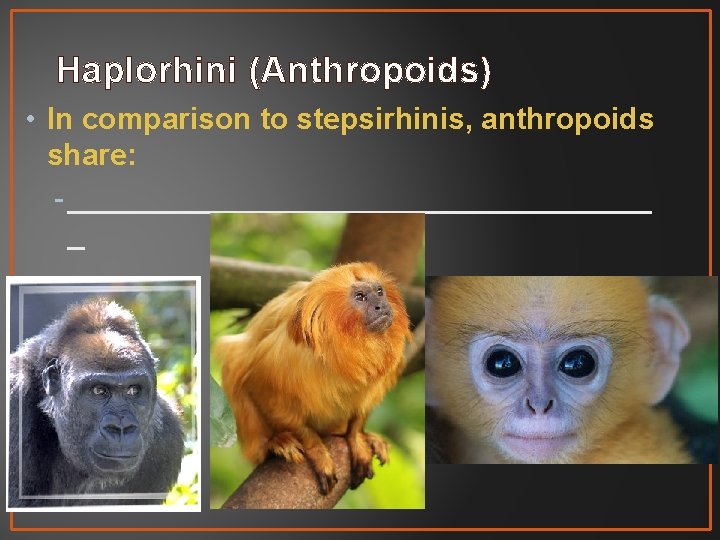
Haplorhini (Anthropoids) • In comparison to stepsirhinis, anthropoids share: - __________________ _
Haplorhini (Anthropoids) • In comparison to stepsirhinis, anthropoids share: - __________________
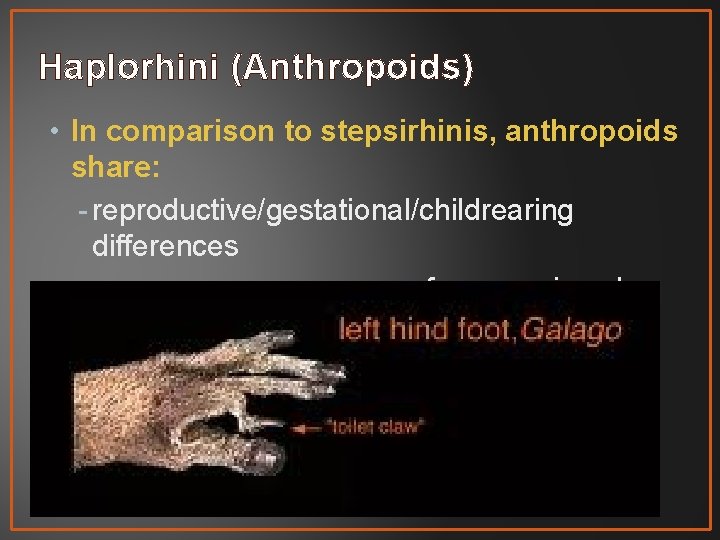
Haplorhini (Anthropoids) • In comparison to stepsirhinis, anthropoids share: - reproductive/gestational/childrearing differences - __________of a grooming claw
Haplorhini (Anthropoids) • Who are the haplorhines? Differences • New World Monkeys exist • Old World Monkeys between • Hominoids (apes and humans) the haplorhines
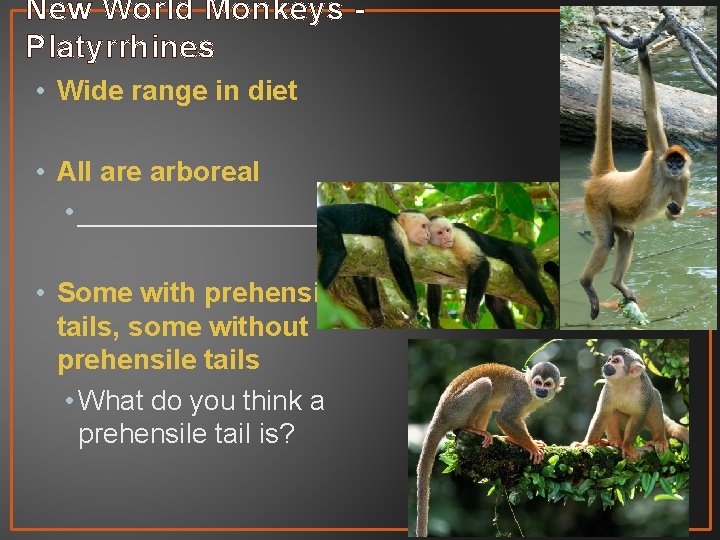
New World Monkeys Platyrrhines • Wide range in diet • All are arboreal • ________ • Some with prehensile tails, some without prehensile tails • What do you think a prehensile tail is?
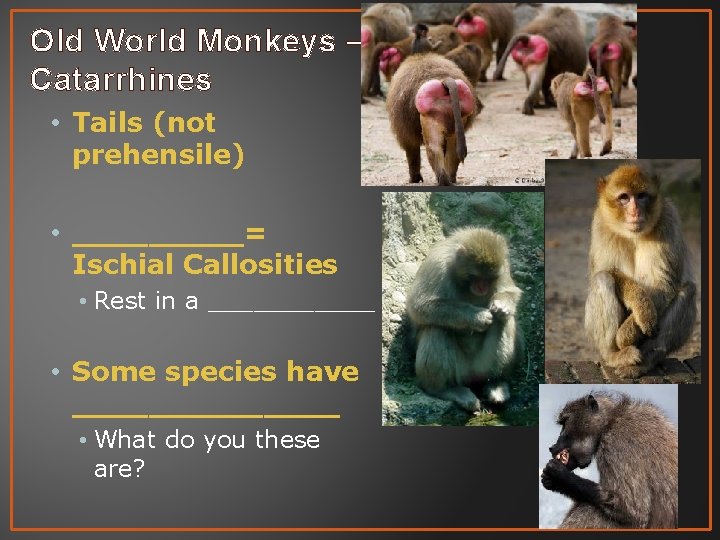
Old World Monkeys – Catarrhines • Tails (not prehensile) • _____= Ischial Callosities • Rest in a ______ • Some species have _______ • What do you these are?
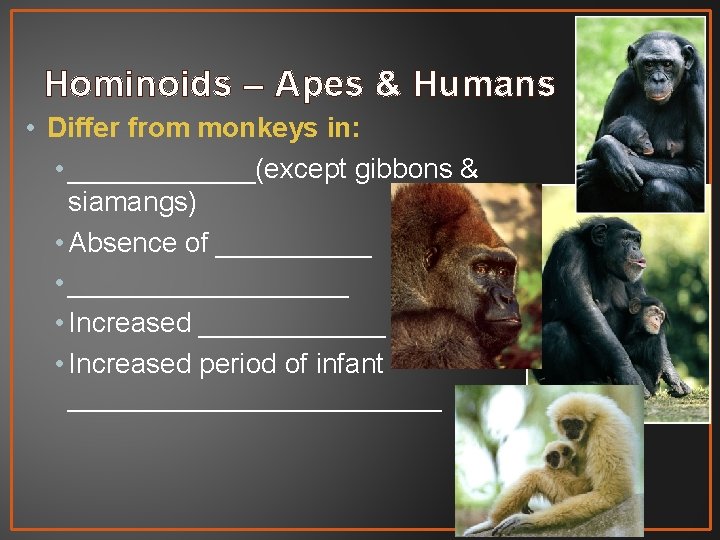
Hominoids – Apes & Humans • Differ from monkeys in: • ______(except gibbons & siamangs) • Absence of _____ • _________ • Increased period of infant ____________