
Living fast and slow Data Talk for Kinetics

- Slides: 24
Living, fast and slow Data Talk for Kinetics Chapters and A World from Dust Chapters 10 -12
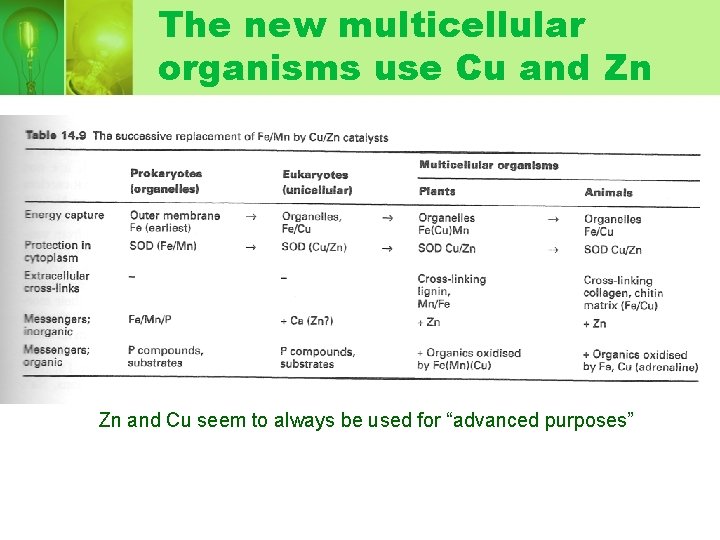
The new multicellular organisms use Cu and Zn Zn and Cu seem to always be used for “advanced purposes”
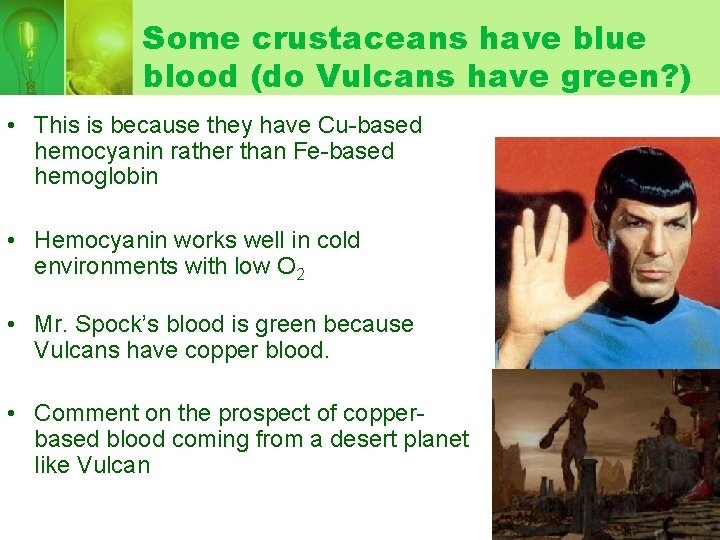
Some crustaceans have blue blood (do Vulcans have green? ) • This is because they have Cu-based hemocyanin rather than Fe-based hemoglobin • Hemocyanin works well in cold environments with low O 2 • Mr. Spock’s blood is green because Vulcans have copper blood. • Comment on the prospect of copperbased blood coming from a desert planet like Vulcan
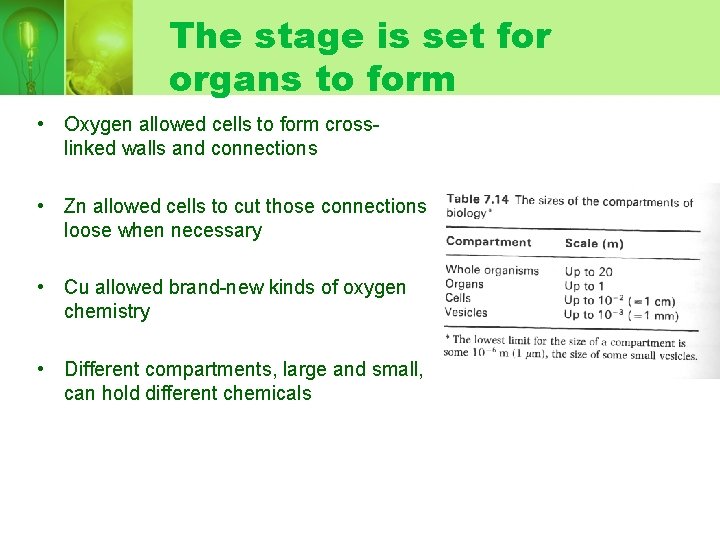
The stage is set for organs to form • Oxygen allowed cells to form crosslinked walls and connections • Zn allowed cells to cut those connections loose when necessary • Cu allowed brand-new kinds of oxygen chemistry • Different compartments, large and small, can hold different chemicals
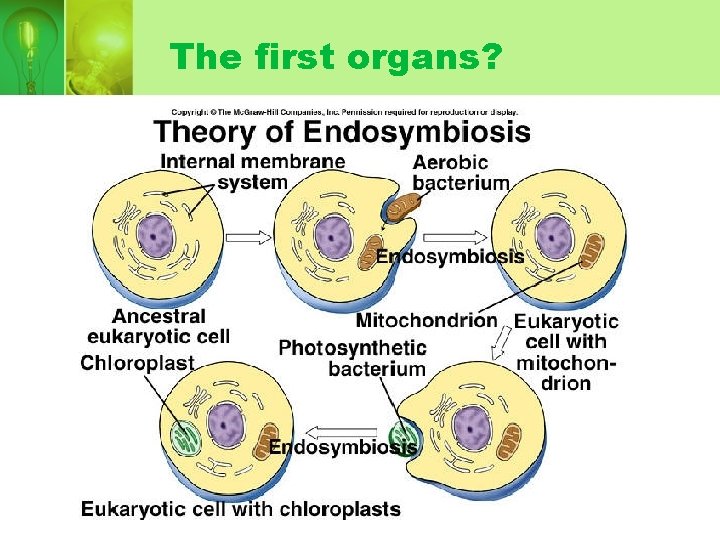
The first organs?
The first “organs” = subcellular structures • Mitochondria make ATP by turning acetyl-Co. A and O 2 into water and CO 2 • Chloroplasts do the reverse chemistry for photosynthesizing plants • Both of these have their own (circular!) DNA like a bacterium, their own membrane (with bacterial lipids), they reproduce asexually when the cell divides, etc. • Some bacteria can “eat” (phagocytose) each other; maybe one stuck around and specialized?
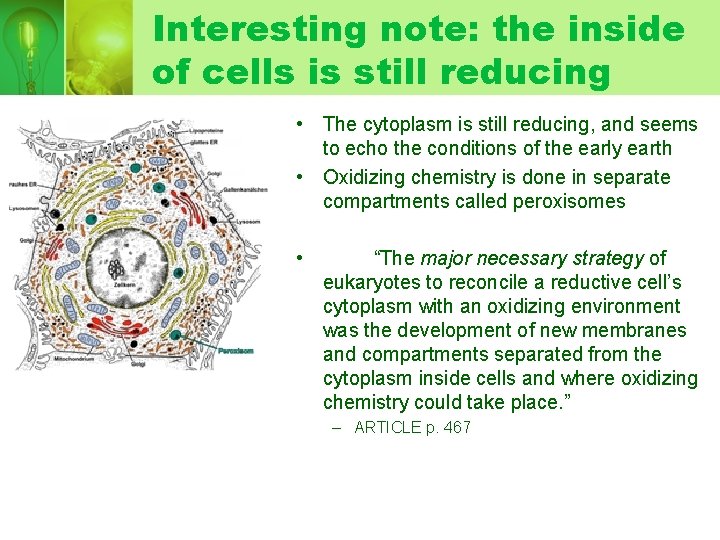
Interesting note: the inside of cells is still reducing • The cytoplasm is still reducing, and seems to echo the conditions of the early earth • Oxidizing chemistry is done in separate compartments called peroxisomes • “The major necessary strategy of eukaryotes to reconcile a reductive cell’s cytoplasm with an oxidizing environment was the development of new membranes and compartments separated from the cytoplasm inside cells and where oxidizing chemistry could take place. ” – ARTICLE p. 467
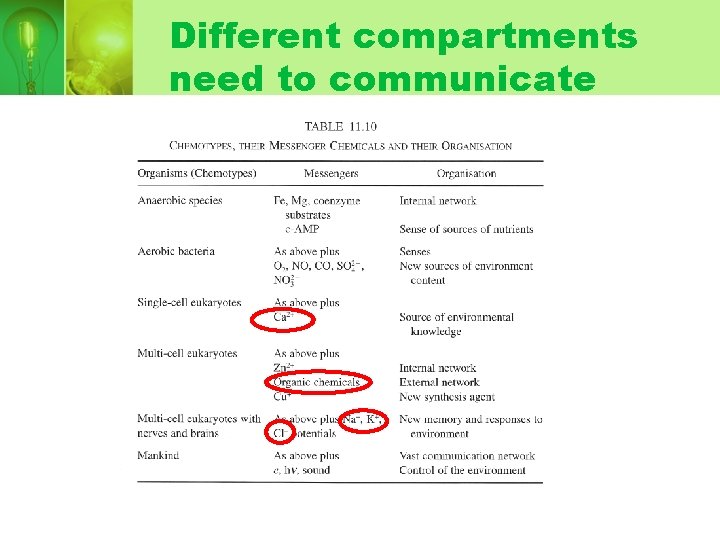
Different compartments need to communicate
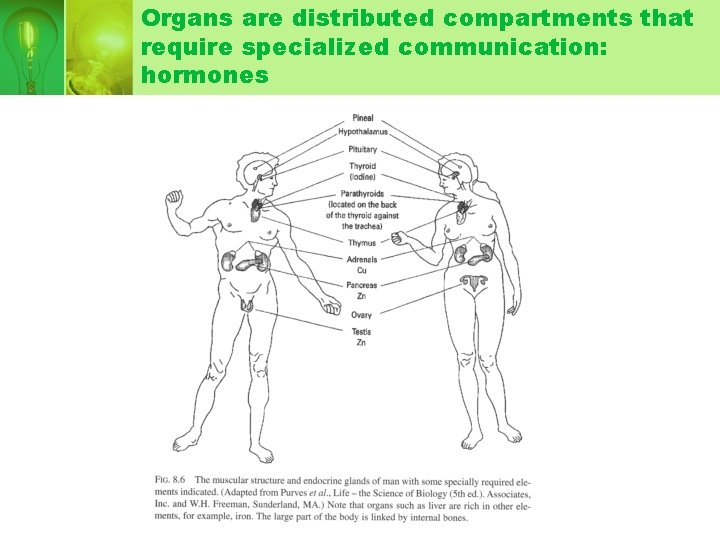
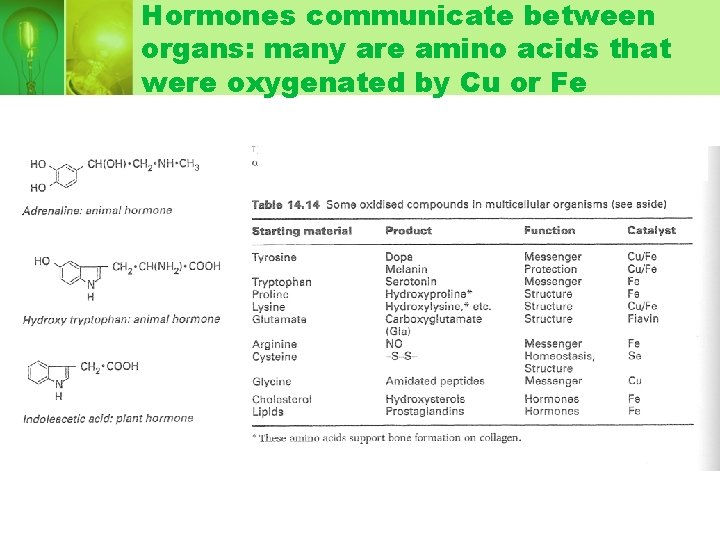
Organs are distributed compartments that require specialized communication: hormones
Hormones communicate between organs: many are amino acids that were oxygenated by Cu or Fe
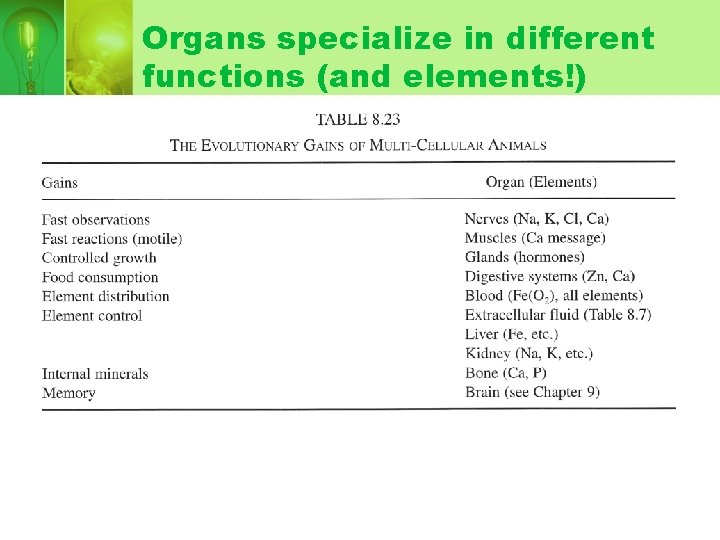
Organs specialize in different functions (and elements!)
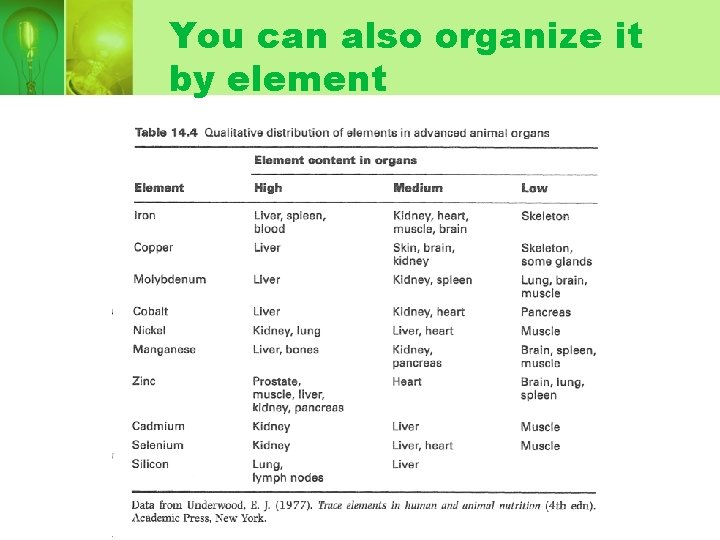
You can also organize it by element
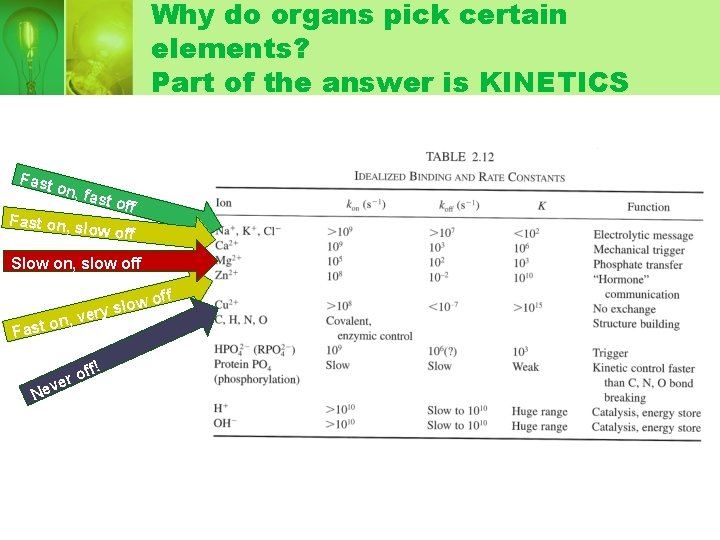
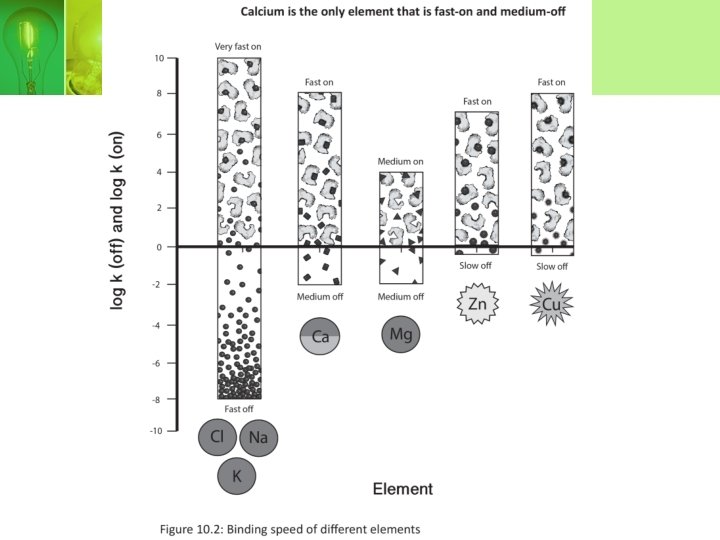
Why do organs pick certain elements? Part of the answer is KINETICS Fast on, f ast o Fast on, slo ff w off Slow on, slow off n, v o t s Fa low ery s ff! Ne o ver off
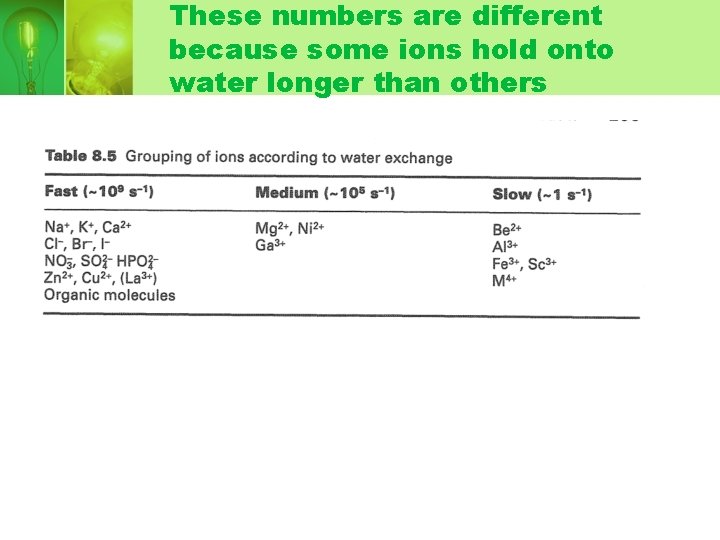
These numbers are different because some ions hold onto water longer than others
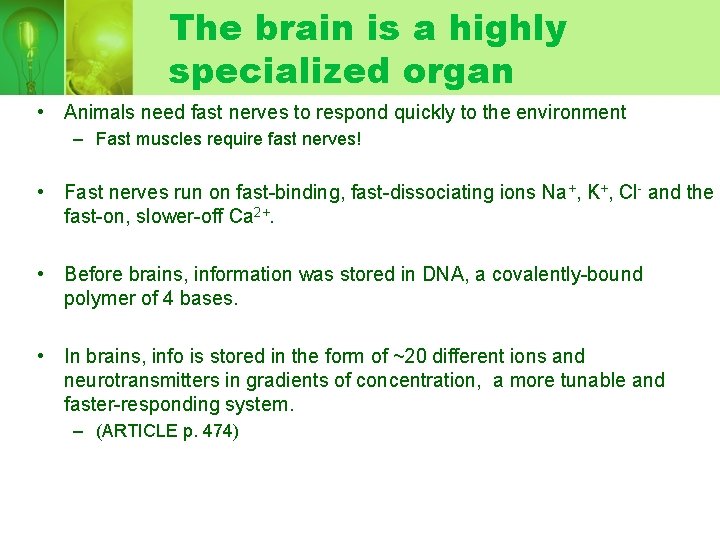
The brain is a highly specialized organ • Animals need fast nerves to respond quickly to the environment – Fast muscles require fast nerves! • Fast nerves run on fast-binding, fast-dissociating ions Na+, K+, Cl- and the fast-on, slower-off Ca 2+. • Before brains, information was stored in DNA, a covalently-bound polymer of 4 bases. • In brains, info is stored in the form of ~20 different ions and neurotransmitters in gradients of concentration, a more tunable and faster-responding system. – (ARTICLE p. 474)
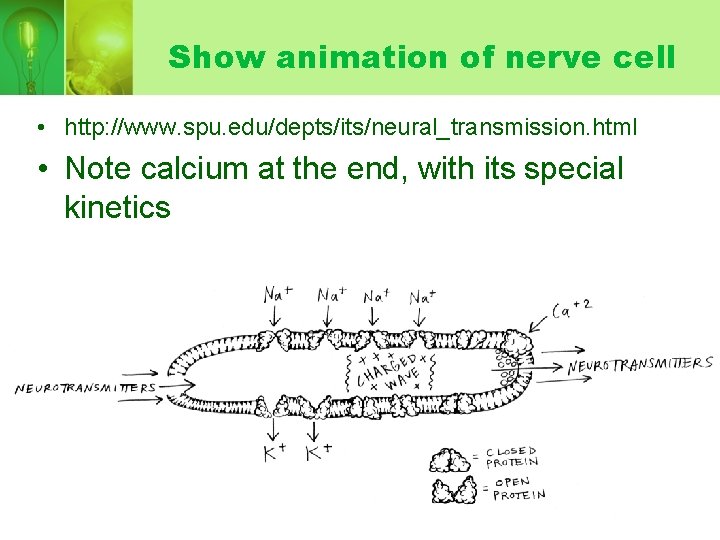
Show animation of nerve cell • http: //www. spu. edu/depts/its/neural_transmission. html • Note calcium at the end, with its special kinetics
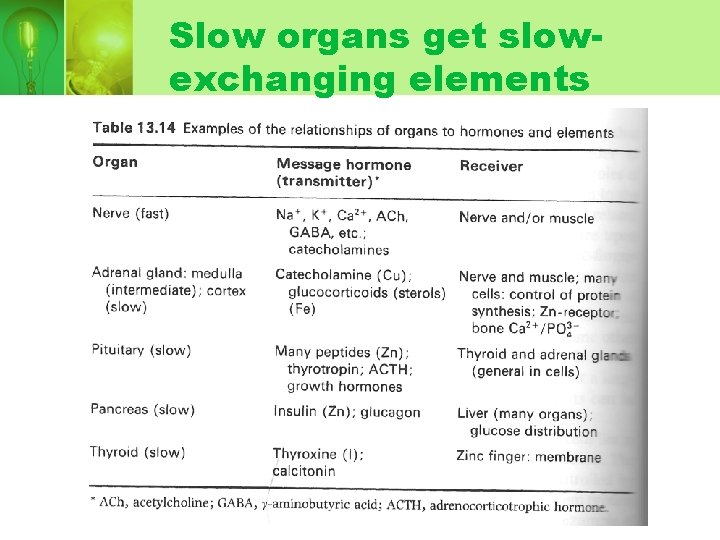
Slow organs get slowexchanging elements
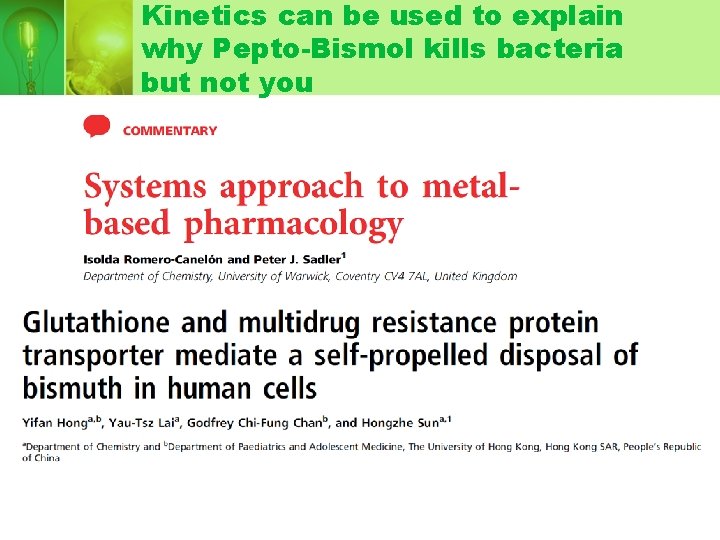
Kinetics can be used to explain why Pepto-Bismol kills bacteria but not you
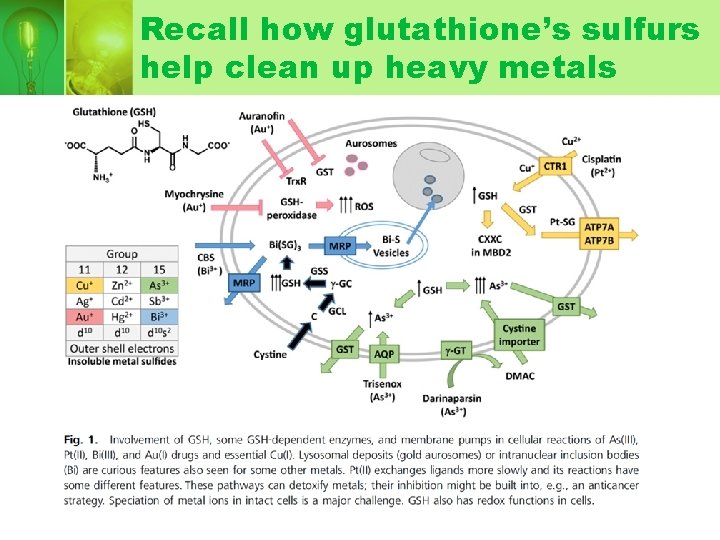
Recall how glutathione’s sulfurs help clean up heavy metals
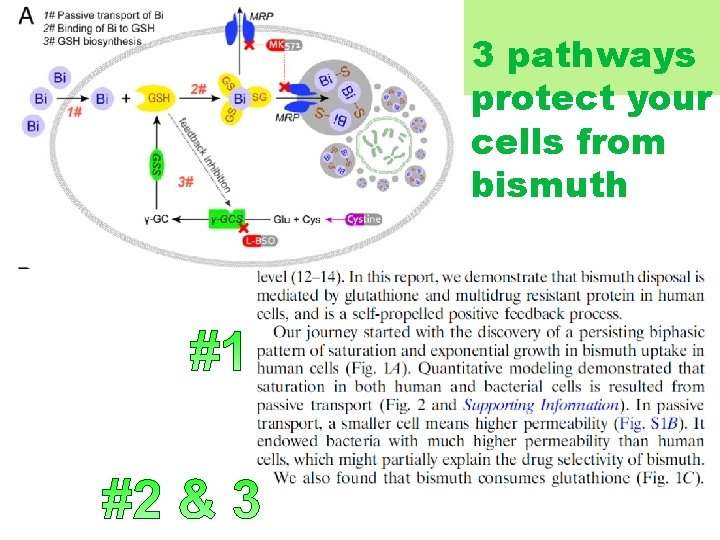
3 pathways protect your cells from bismuth
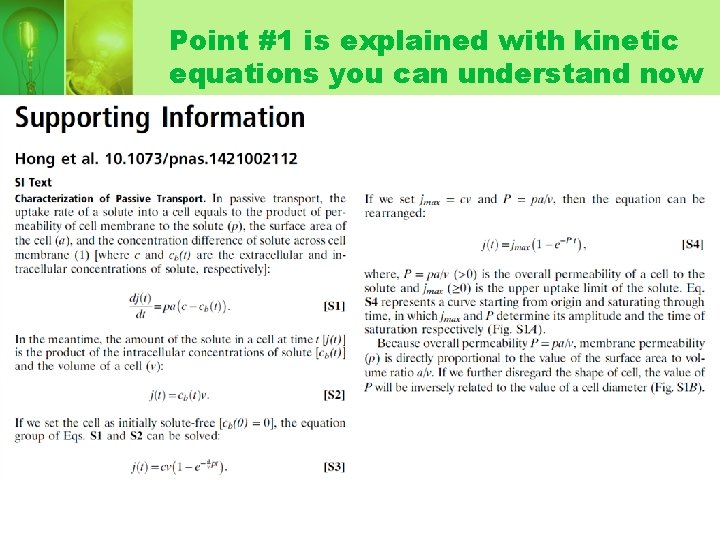
Point #1 is explained with kinetic equations you can understand now
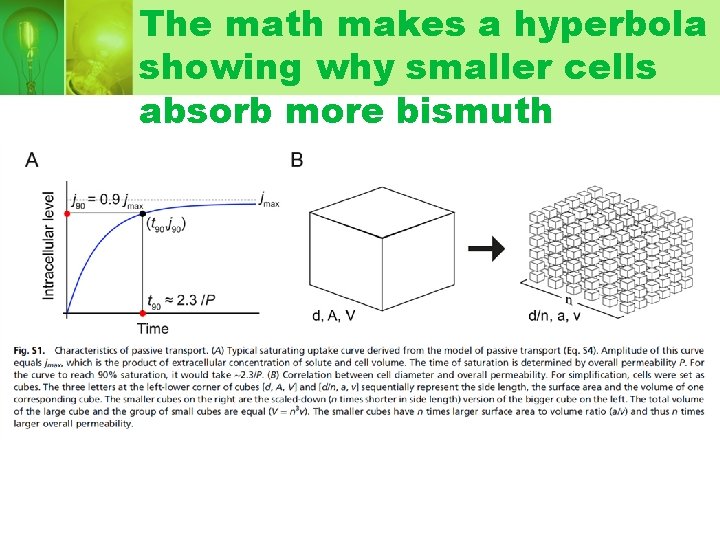
The math makes a hyperbola showing why smaller cells absorb more bismuth
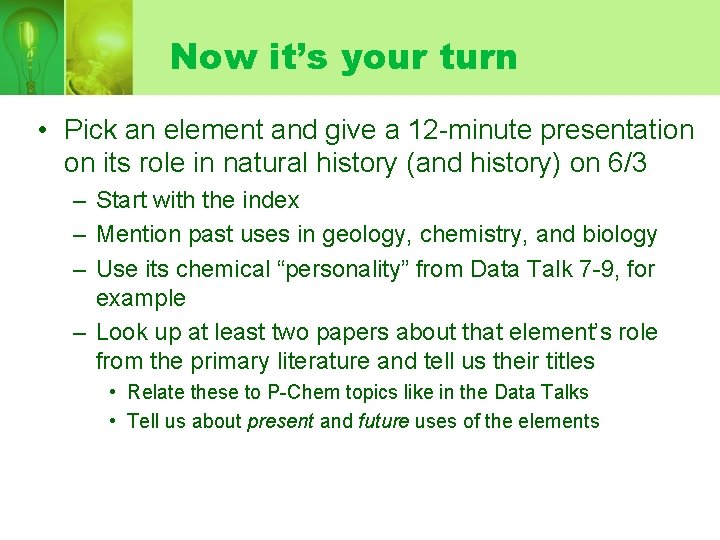
Now it’s your turn • Pick an element and give a 12 -minute presentation on its role in natural history (and history) on 6/3 – Start with the index – Mention past uses in geology, chemistry, and biology – Use its chemical “personality” from Data Talk 7 -9, for example – Look up at least two papers about that element’s role from the primary literature and tell us their titles • Relate these to P-Chem topics like in the Data Talks • Tell us about present and future uses of the elements