
Living Factories Unit 7 Biotechnology Saccharomyces cerevisiae YEAST
Living Factories Unit 7 - Biotechnology
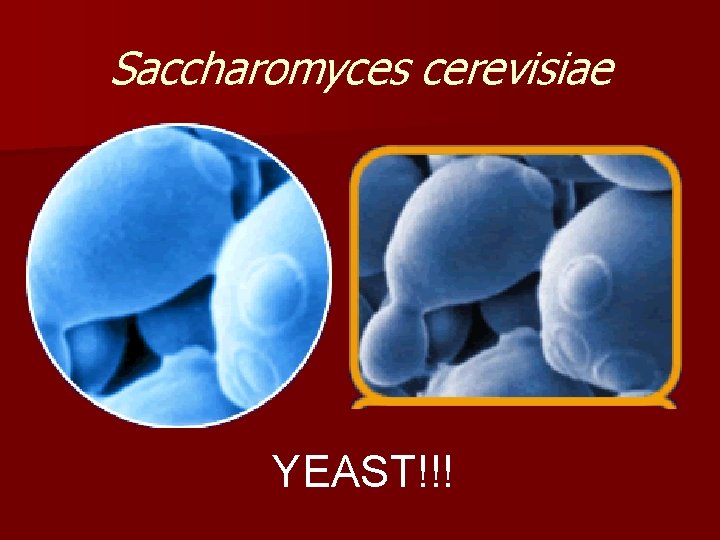
Saccharomyces cerevisiae YEAST!!!
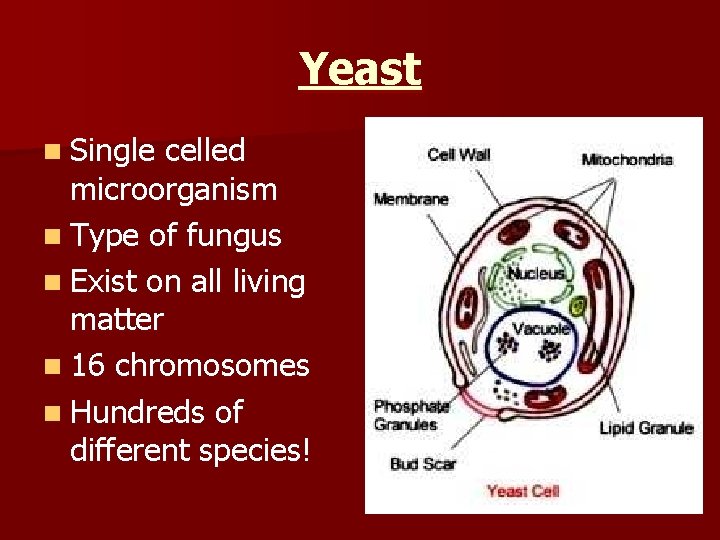
Yeast n Single celled microorganism n Type of fungus n Exist on all living matter n 16 chromosomes n Hundreds of different species!
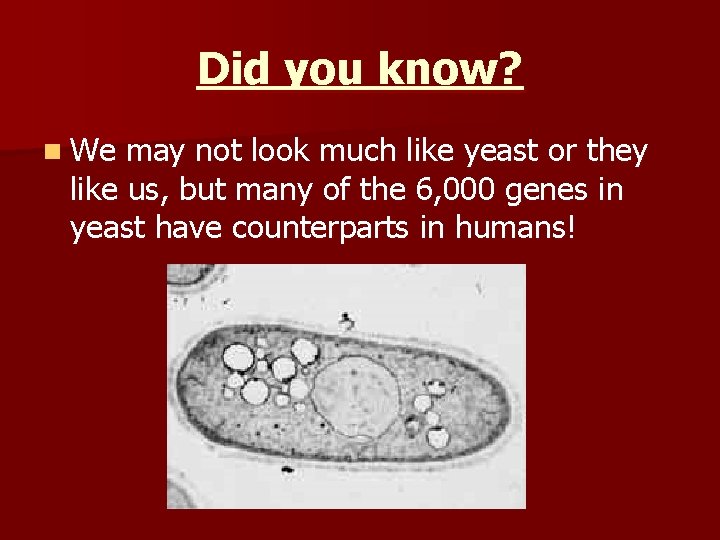
Did you know? n We may not look much like yeast or they like us, but many of the 6, 000 genes in yeast have counterparts in humans!
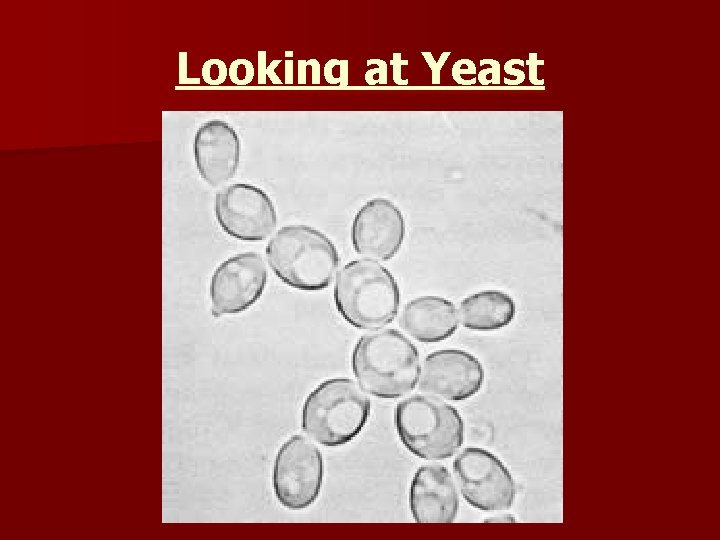
Looking at Yeast
Yeast as a Living Organism n As a living organism, just like us, yeast needs the following to survive and flourish: -sugars -water -warmth n Respiration is the process by which a living organism releases energy from its food
Do you remember the difference between aerobic and anaerobic respiration?
Aerobic Respiration n Humans produce energy through aerobic respiration n In aerobic respiration glucose reacts with oxygen in the mitochondria of the cells to release energy. n Carbon dioxide and water are by-products of the reaction.
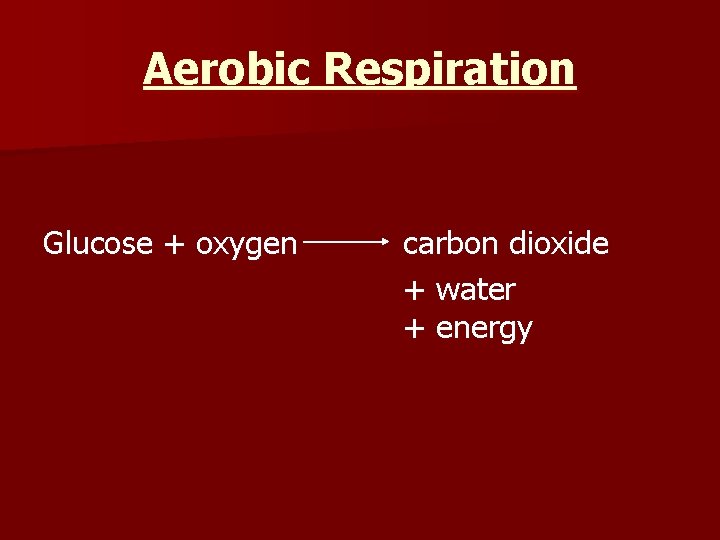
Aerobic Respiration Glucose + oxygen carbon dioxide + water + energy
Anaerobic Respiration n Anaerobic respiration occurs when oxygen is not available. n In anaerobic respiration the glucose is only partially broken down, and lactic acid is produced
Fermentation n Living yeast cells in the absence of oxygen are still able to use sugar as their source of food to make energy n This n In is known as fermentation this case ethanol (alcohol) is produced instead of lactic acid
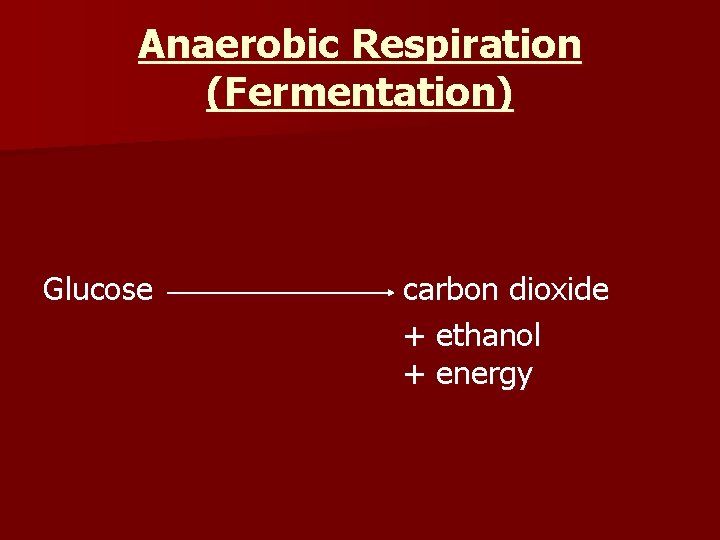
Anaerobic Respiration (Fermentation) Glucose carbon dioxide + ethanol + energy
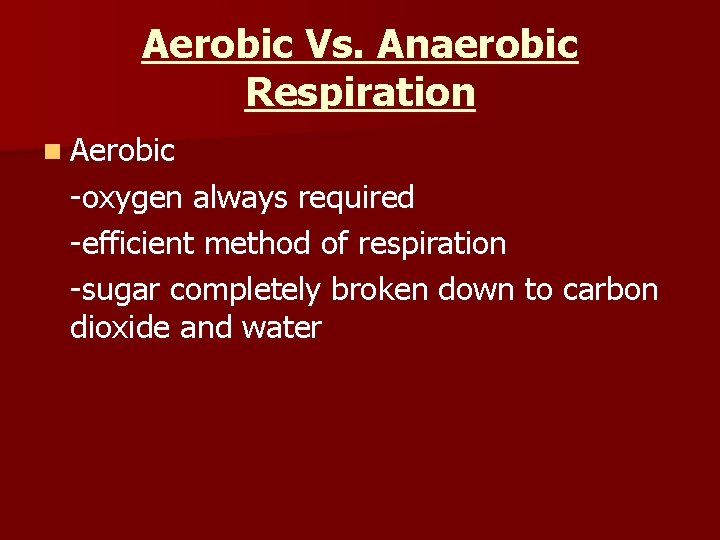
Aerobic Vs. Anaerobic Respiration n Aerobic -oxygen always required -efficient method of respiration -sugar completely broken down to carbon dioxide and water
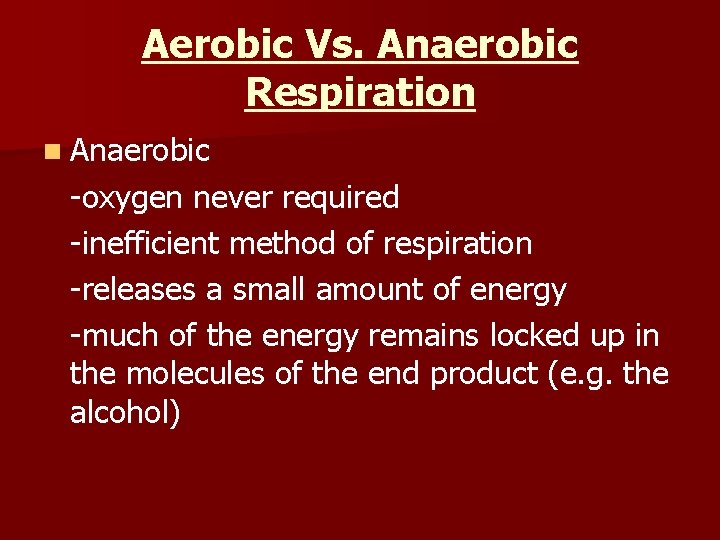
Aerobic Vs. Anaerobic Respiration n Anaerobic -oxygen never required -inefficient method of respiration -releases a small amount of energy -much of the energy remains locked up in the molecules of the end product (e. g. the alcohol)
Quick Quiz n Can you sort out the following statements into aerobic or anaerobic respiration? n Just fill them into your table!
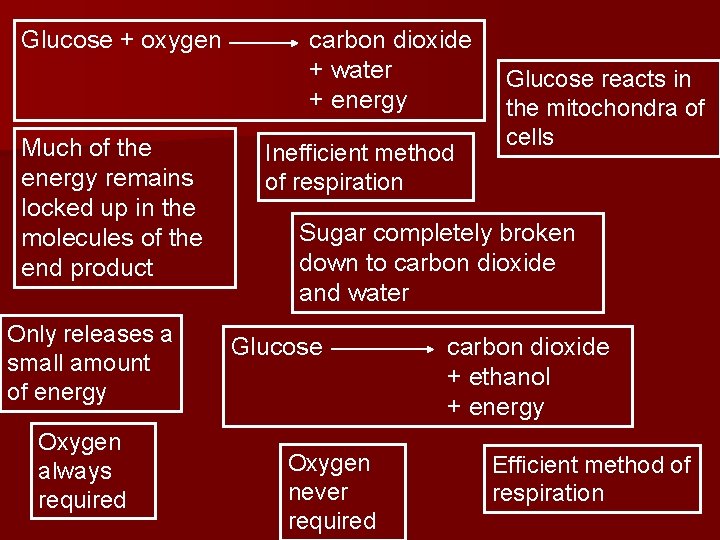
Glucose + oxygen Much of the energy remains locked up in the molecules of the end product Only releases a small amount of energy Oxygen always required carbon dioxide + water + energy Inefficient method of respiration Glucose reacts in the mitochondra of cells Sugar completely broken down to carbon dioxide and water Glucose Oxygen never required carbon dioxide + ethanol + energy Efficient method of respiration
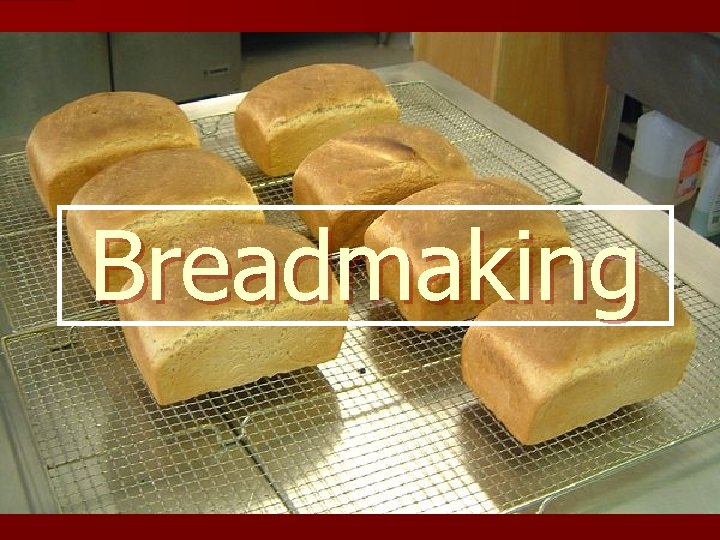
Breadmaking
Bread Basics! n Bakers use two simple facts of life to create soft, spongy, moist bread: 1. First, they use the fact that yeast (a single-cell fungi) will eat sugar: -from the sugar yeast creates alcohol and carbon dioxide gas as waste products -the carbon dioxide gas created by yeast is what gives bread its airy texture, and -the alcohol, which burns off during baking, leaves behind an important component of bread's flavor.
Bread Basics! 2. Second, wheat flour, if mixed with water and kneaded, becomes very elastic. -the flour-and-water mixture in bread becomes stretchy like a balloon because of a protein in wheat known as gluten -gluten gives bread dough the ability to capture the carbon dioxide produced by yeast in tiny flour balloons.
Gluten n http: //www. exploratorium. edu/cooking/br ead/bread_science. html
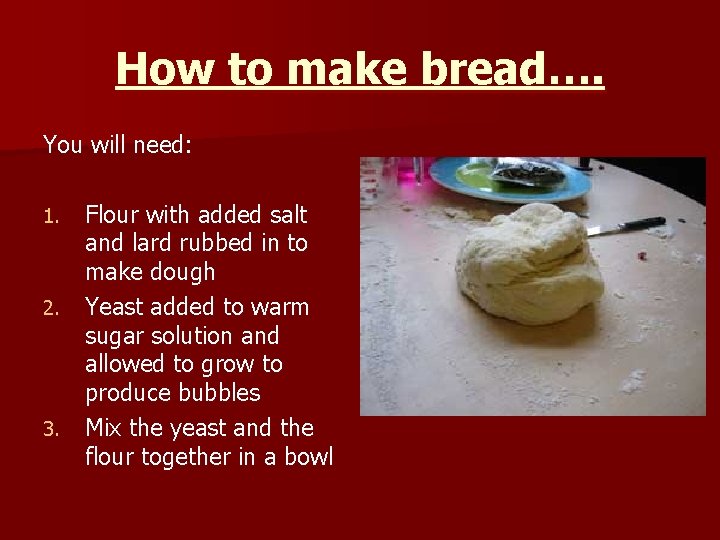
How to make bread…. You will need: 1. 2. 3. Flour with added salt and lard rubbed in to make dough Yeast added to warm sugar solution and allowed to grow to produce bubbles Mix the yeast and the flour together in a bowl
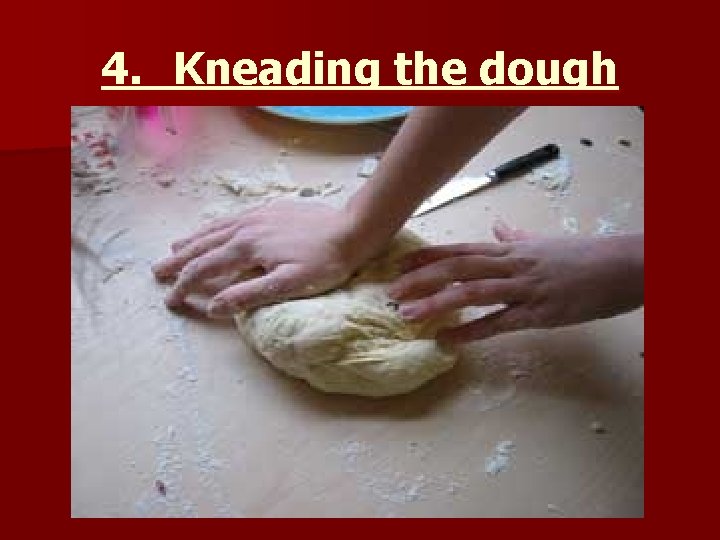
4. Kneading the dough
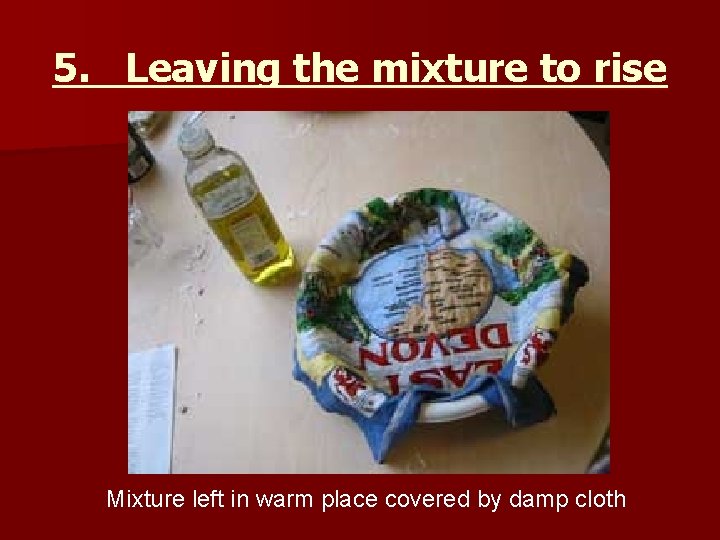
5. Leaving the mixture to rise Mixture left in warm place covered by damp cloth
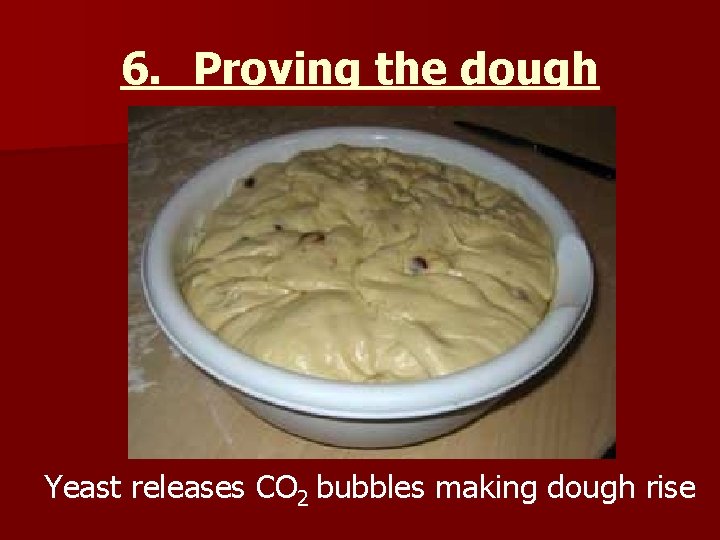
6. Proving the dough Yeast releases CO 2 bubbles making dough rise
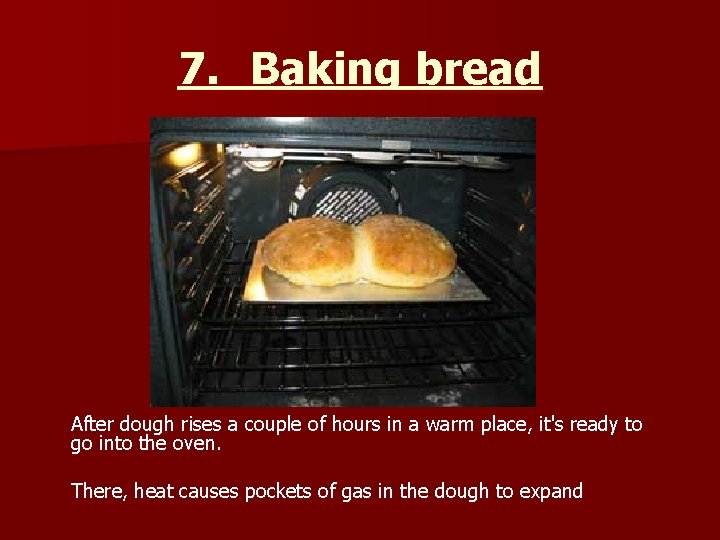
7. Baking bread After dough rises a couple of hours in a warm place, it's ready to go into the oven. There, heat causes pockets of gas in the dough to expand
This powerpoint was kindly donated to www. worldofteaching. com http: //www. worldofteaching. com is home to over a thousand powerpoints submitted by teachers. This is a completely free site and requires no registration. Please visit and I hope it will help in your teaching.
- Slides: 26