
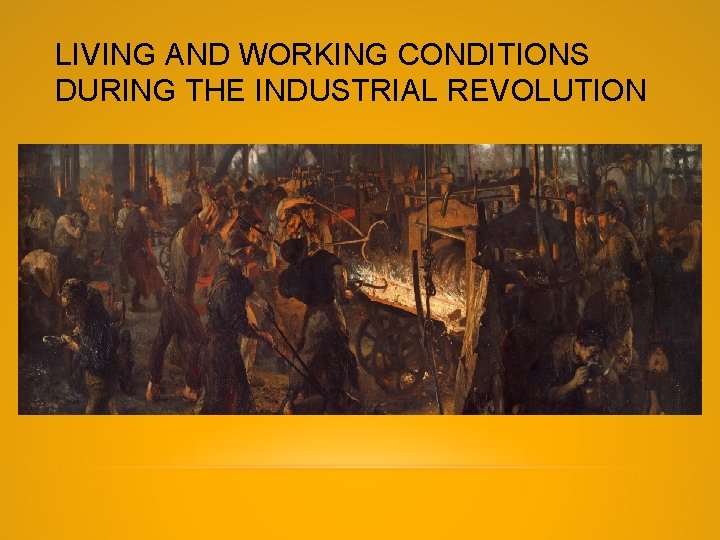
LIVING AND WORKING CONDITIONS DURING THE INDUSTRIAL REVOLUTION
- Slides: 19
LIVING AND WORKING CONDITIONS DURING THE INDUSTRIAL REVOLUTION
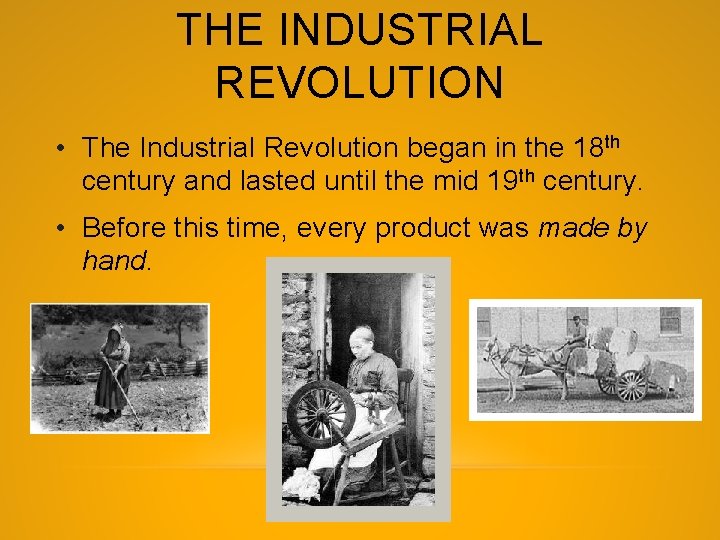
THE INDUSTRIAL REVOLUTION • The Industrial Revolution began in the 18 th century and lasted until the mid 19 th century. • Before this time, every product was made by hand.
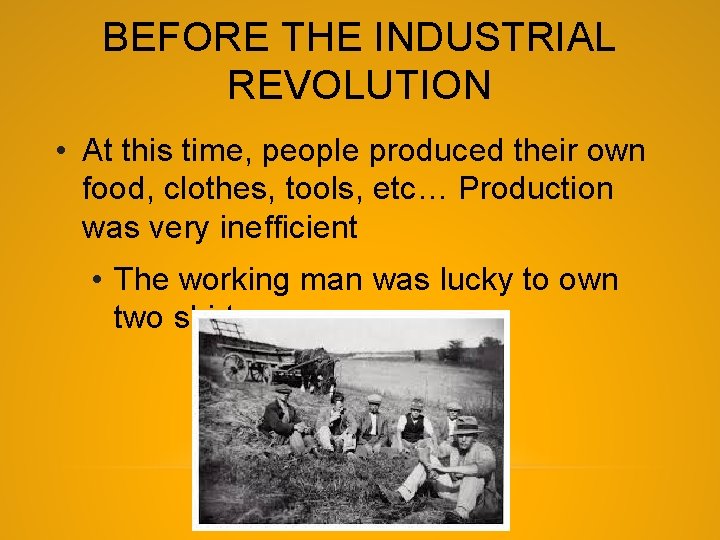
BEFORE THE INDUSTRIAL REVOLUTION • At this time, people produced their own food, clothes, tools, etc… Production was very inefficient • The working man was lucky to own two shirts.
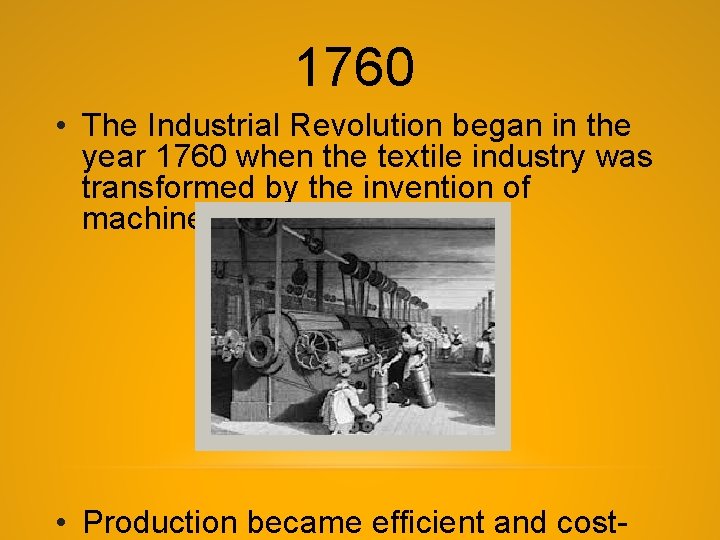
1760 • The Industrial Revolution began in the year 1760 when the textile industry was transformed by the invention of machines. • Production became efficient and cost-
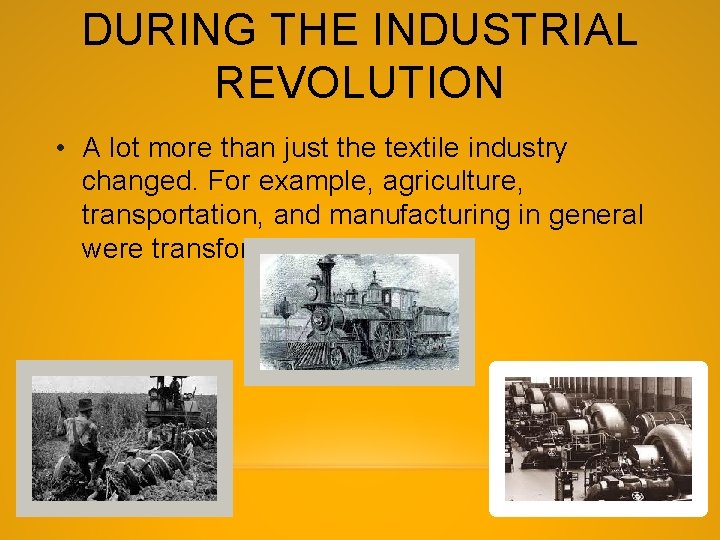
DURING THE INDUSTRIAL REVOLUTION • A lot more than just the textile industry changed. For example, agriculture, transportation, and manufacturing in general were transformed.
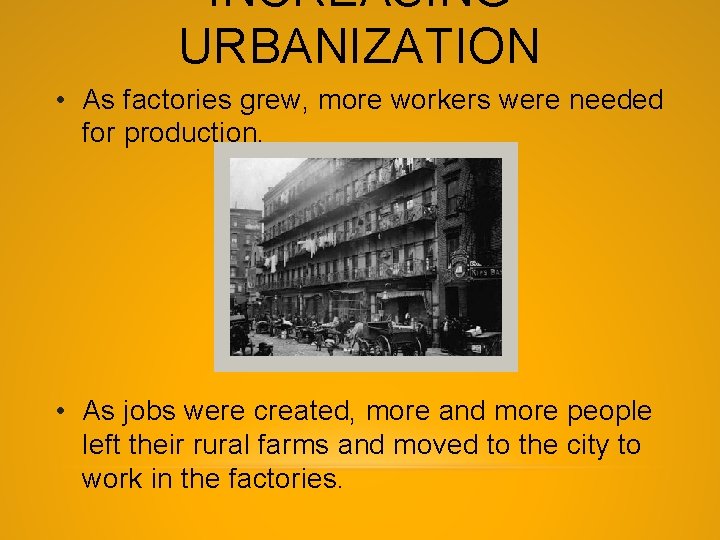
INCREASING URBANIZATION • As factories grew, more workers were needed for production. • As jobs were created, more and more people left their rural farms and moved to the city to work in the factories.
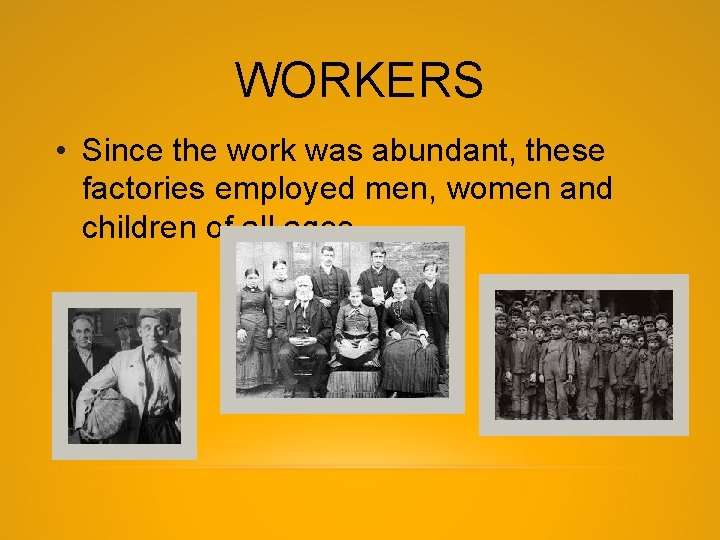
WORKERS • Since the work was abundant, these factories employed men, women and children of all ages.
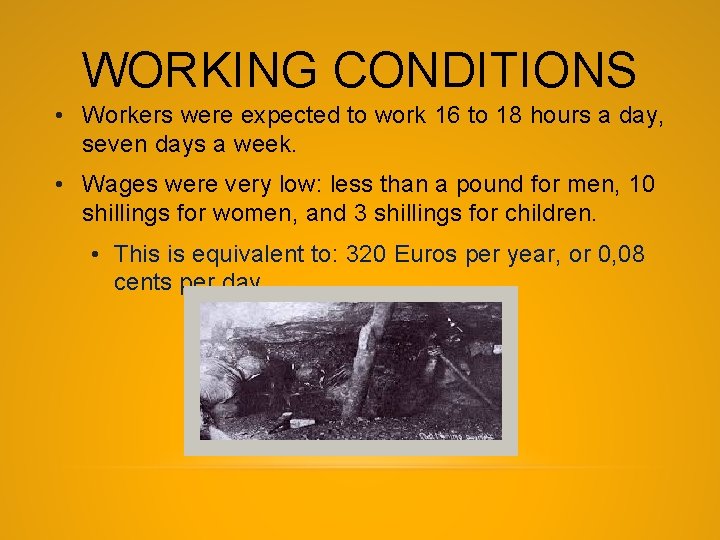
WORKING CONDITIONS • Workers were expected to work 16 to 18 hours a day, seven days a week. • Wages were very low: less than a pound for men, 10 shillings for women, and 3 shillings for children. • This is equivalent to: 320 Euros per year, or 0, 08 cents per day.
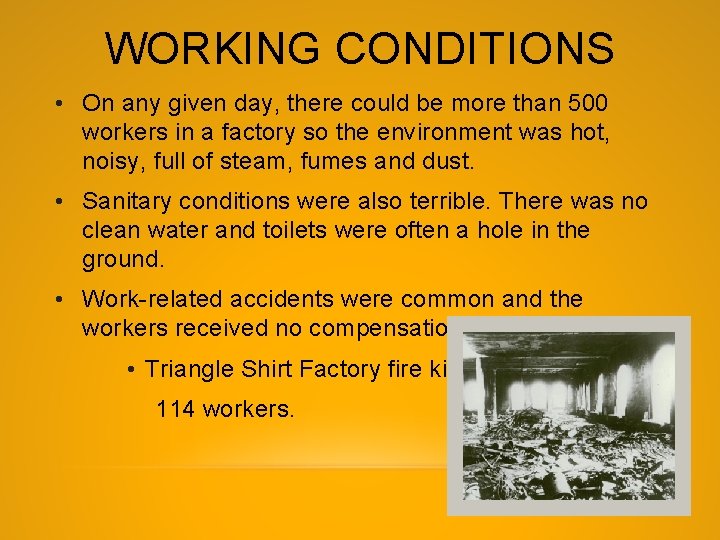
WORKING CONDITIONS • On any given day, there could be more than 500 workers in a factory so the environment was hot, noisy, full of steam, fumes and dust. • Sanitary conditions were also terrible. There was no clean water and toilets were often a hole in the ground. • Work-related accidents were common and the workers received no compensation. • Triangle Shirt Factory fire killed 114 workers.
CHILD LABOUR • During the Industrial Revolution children constituted 2/3 of the working force in England Scotland. • They were expected to work as long as adults • They were paid significantly less than adults • They performed dangerous jobs such as climbing the machines to unblock them or going into narrow spaces to collect coal. CHEAP LABOUR
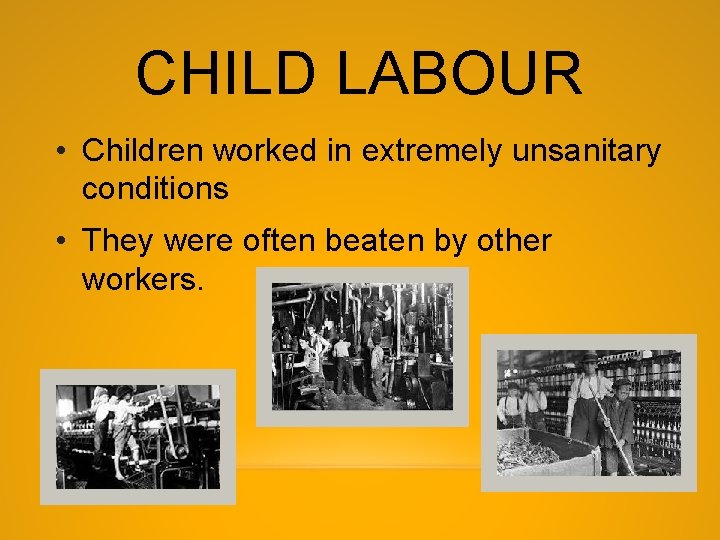
CHILD LABOUR • Children worked in extremely unsanitary conditions • They were often beaten by other workers.
FACTORY ACT • Although the factories claimed that they were providing jobs for the poor, eventually the government intervened and passed the Factory Act in 1844. • This law established that children had to be 9 years or older to work and they could only work 12 hours a day.
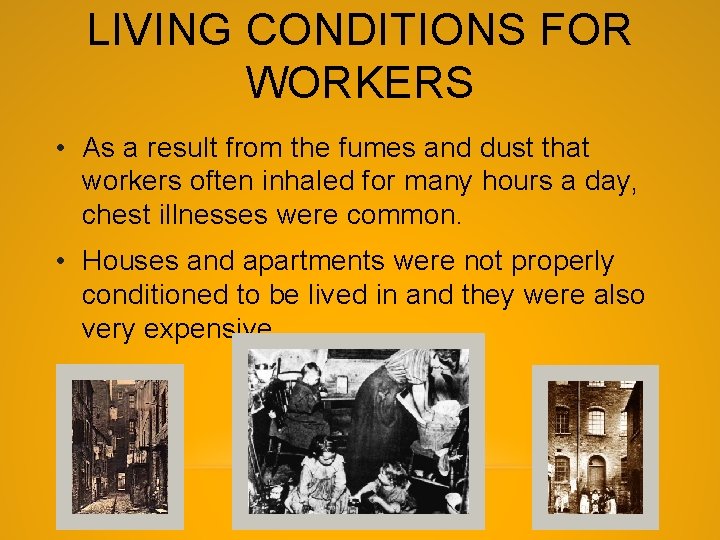
LIVING CONDITIONS FOR WORKERS • As a result from the fumes and dust that workers often inhaled for many hours a day, chest illnesses were common. • Houses and apartments were not properly conditioned to be lived in and they were also very expensive.
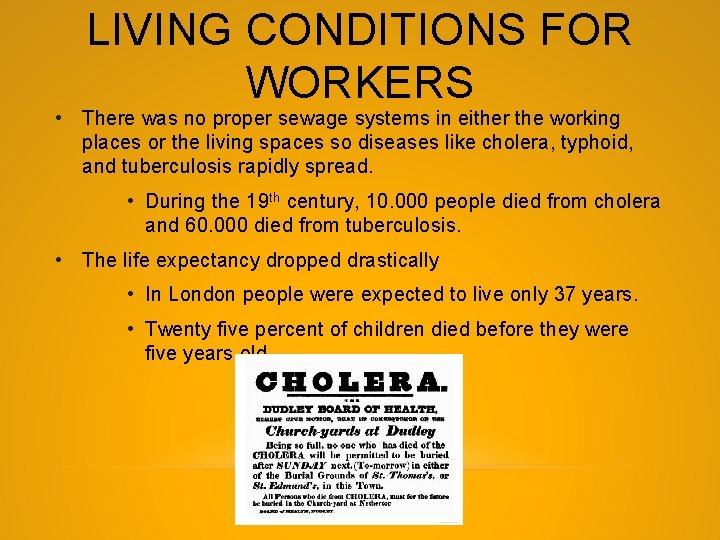
LIVING CONDITIONS FOR WORKERS • There was no proper sewage systems in either the working places or the living spaces so diseases like cholera, typhoid, and tuberculosis rapidly spread. • During the 19 th century, 10. 000 people died from cholera and 60. 000 died from tuberculosis. • The life expectancy dropped drastically • In London people were expected to live only 37 years. • Twenty five percent of children died before they were five years old.
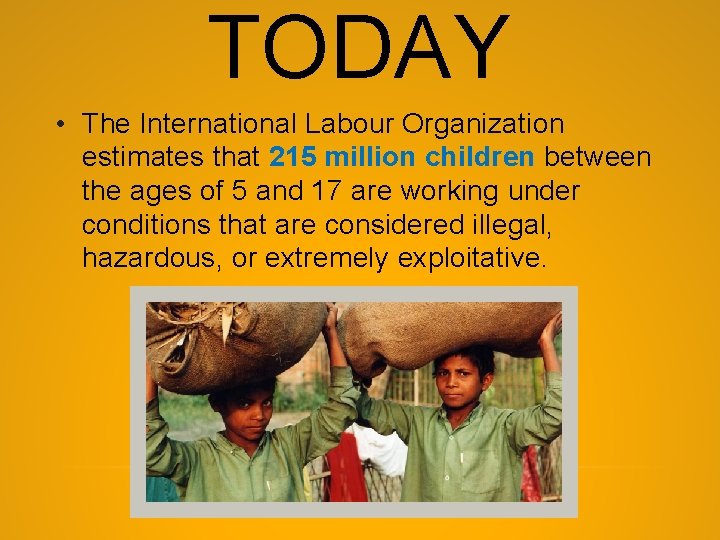
TODAY • The International Labour Organization estimates that 215 million children between the ages of 5 and 17 are working under conditions that are considered illegal, hazardous, or extremely exploitative.
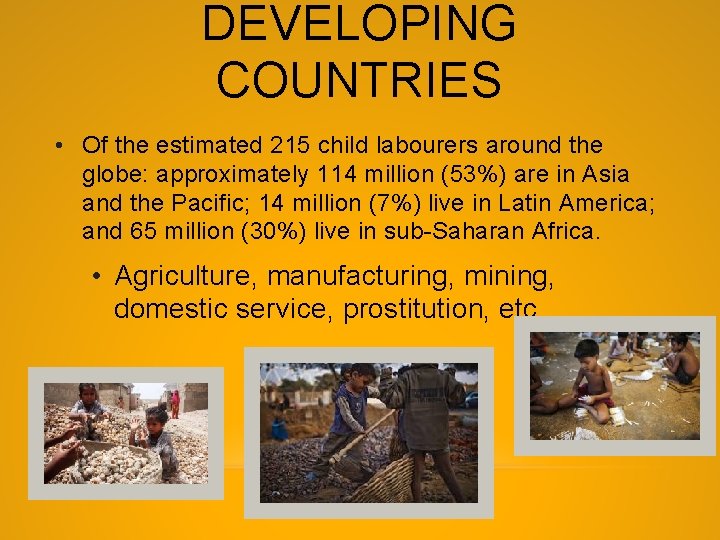
DEVELOPING COUNTRIES • Of the estimated 215 child labourers around the globe: approximately 114 million (53%) are in Asia and the Pacific; 14 million (7%) live in Latin America; and 65 million (30%) live in sub-Saharan Africa. • Agriculture, manufacturing, mining, domestic service, prostitution, etc.
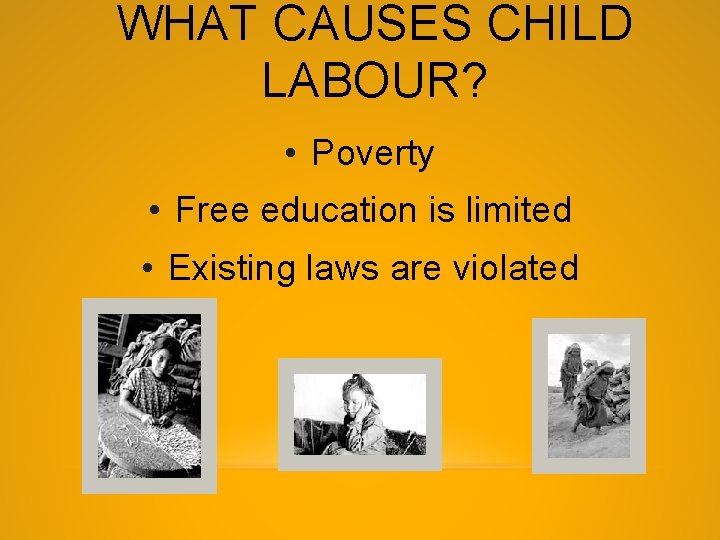
WHAT CAUSES CHILD LABOUR? • Poverty • Free education is limited • Existing laws are violated
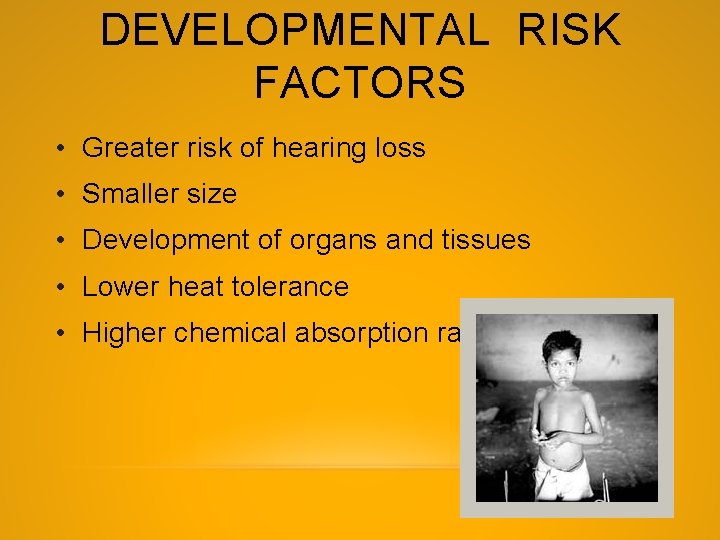
DEVELOPMENTAL RISK FACTORS • Greater risk of hearing loss • Smaller size • Development of organs and tissues • Lower heat tolerance • Higher chemical absorption rates
Think about the Industrial Revolution and the world today…. Why do we still have child labour?