
Living and NonLiving Organisms Made by Camden Mod
Living and Non-Living Organisms Made by Camden Mod 5 10/26/13

What is an Organism? An organism is any living thing Either unicellular (Single-cell) or multicellular (Multi-cell)
Characteristics of Organisms All living things are alike in some ways, even if they are completely different from each other. A cat has some of the same characteristics as a mushroom, etc. There are six characteristics that organisms share. 1. Organisms have cells 2. Organisms sense and respond to change 3. Organisms reproduce 4. Organisms have DNA 5. Organisms use energy 6. Organisms grow and develop

Organisms Have Cells are the structures that contain all materials needed to survive All organisms are made of cells Most cells can only be seen with a microscope Two types: Plant cells and animal cells
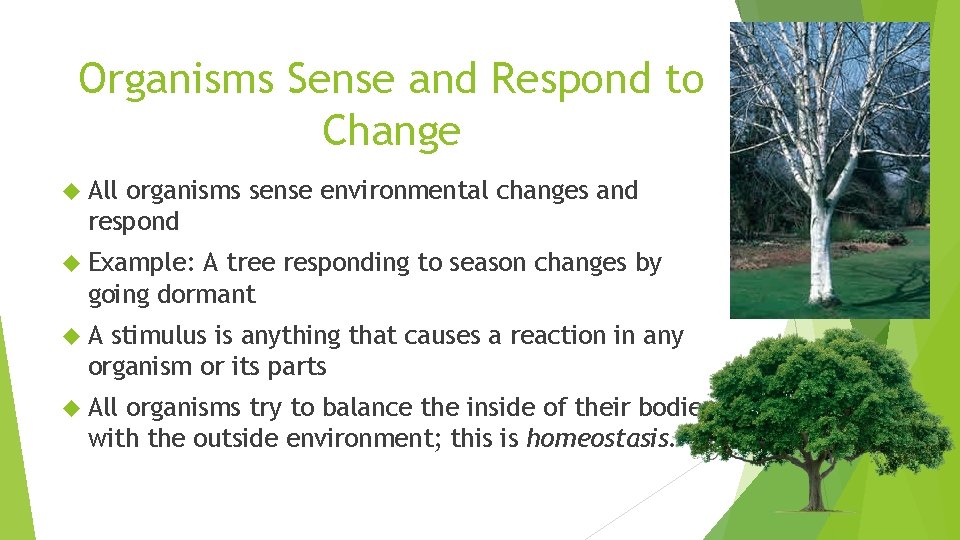
Organisms Sense and Respond to Change All organisms sense environmental changes and respond Example: A tree responding to season changes by going dormant A stimulus is anything that causes a reaction in any organism or its parts All organisms try to balance the inside of their bodies with the outside environment; this is homeostasis.
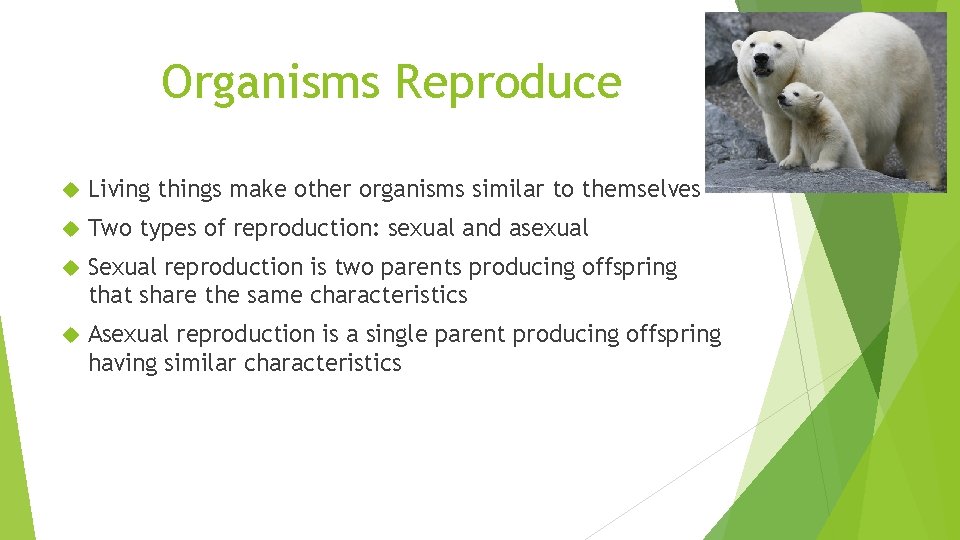
Organisms Reproduce Living things make other organisms similar to themselves Two types of reproduction: sexual and asexual Sexual reproduction is two parents producing offspring that share the same characteristics Asexual reproduction is a single parent producing offspring having similar characteristics
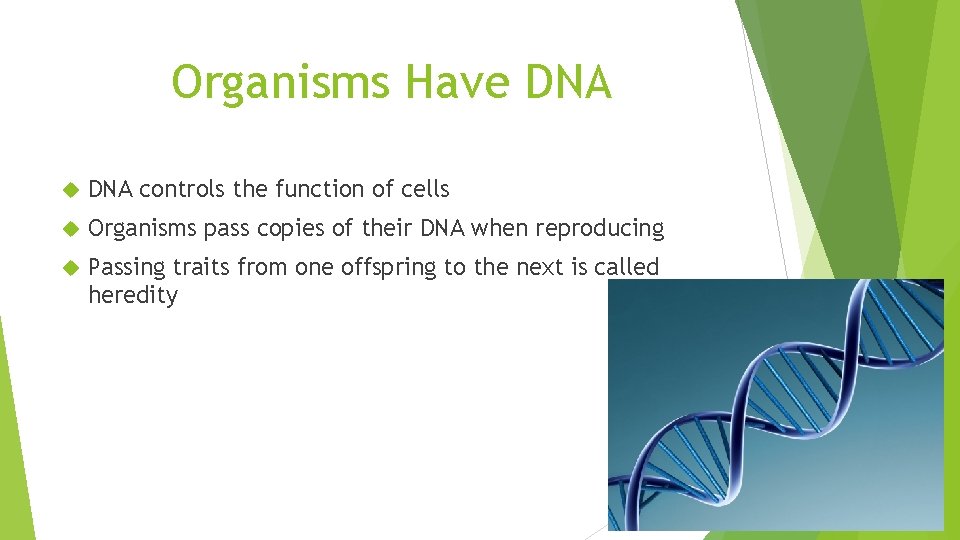
Organisms Have DNA controls the function of cells Organisms pass copies of their DNA when reproducing Passing traits from one offspring to the next is called heredity

Organisms Use Energy Activities in life require using energy This includes making and digesting food Metabolism is the total of all chemical processes in an organism

Organisms Grow and Develop All organisms grow during periods in their life Single-celled organisms divide to make more of themselves As organisms develop, they go through different stages

Necessities of Life All organisms need four things to survive: water, air, a place to live, and food. Without these necessities (or needs), the organism wouldn’t survive.
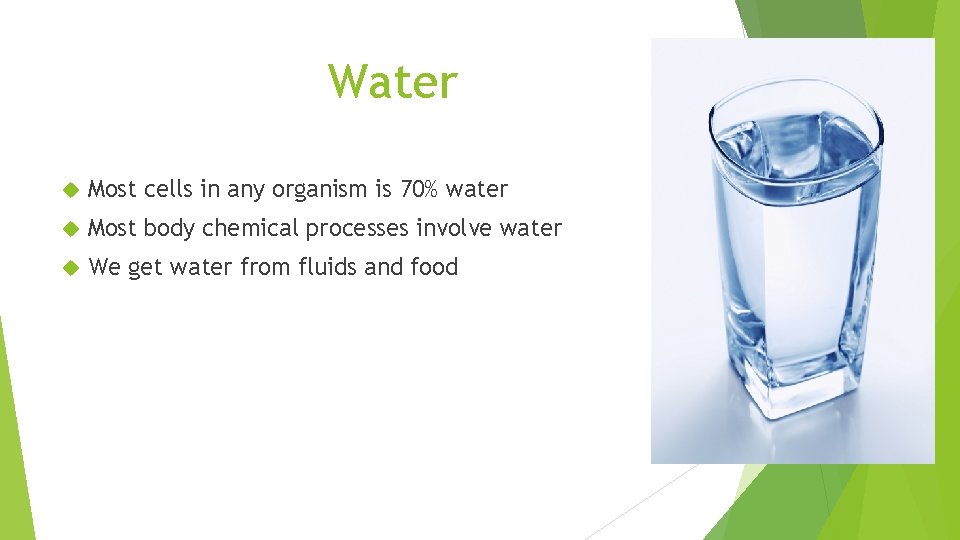
Water Most cells in any organism is 70% water Most body chemical processes involve water We get water from fluids and food

Air contains many gases including oxygen and carbon dioxide Even underwater animals need air Air is used to breathe and used in chemical processes
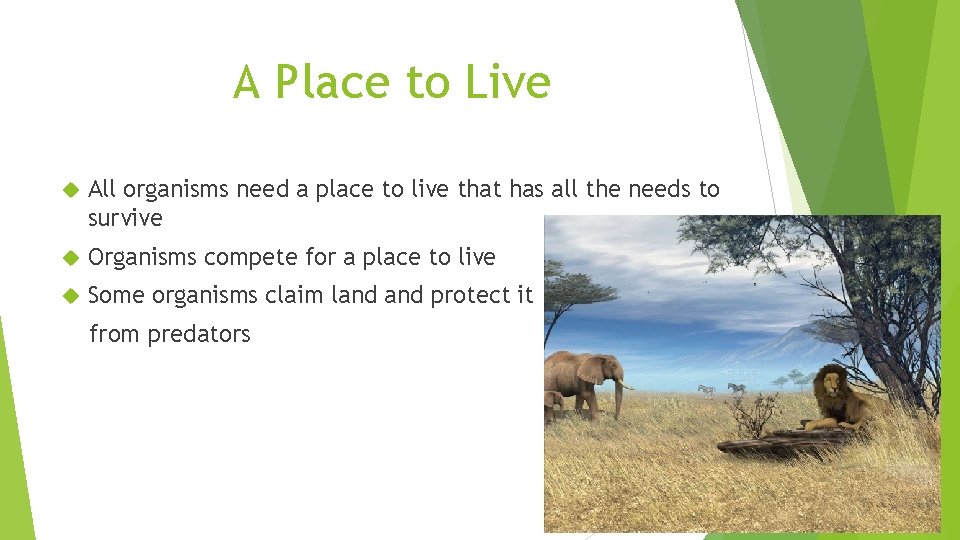
A Place to Live All organisms need a place to live that has all the needs to survive Organisms compete for a place to live Some organisms claim land protect it from predators
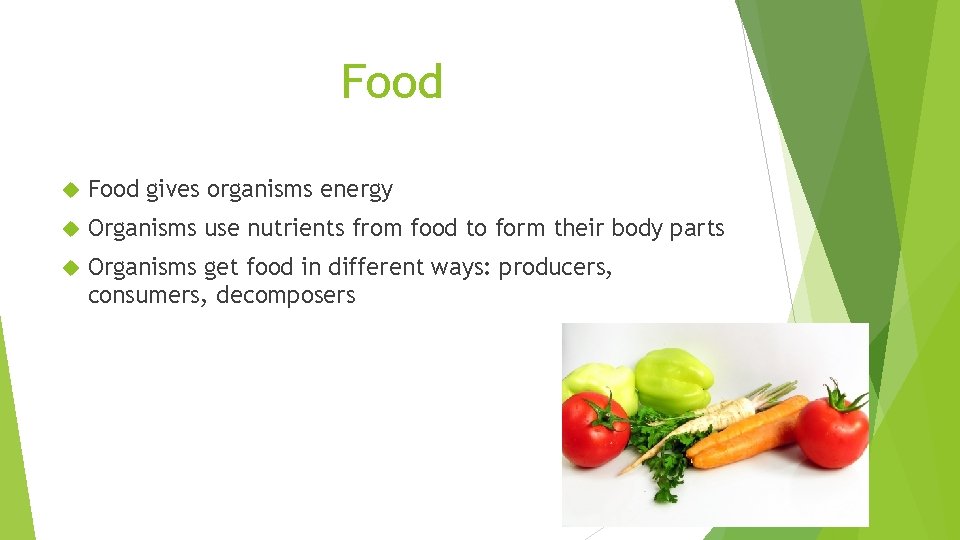
Food gives organisms energy Organisms use nutrients from food to form their body parts Organisms get food in different ways: producers, consumers, decomposers
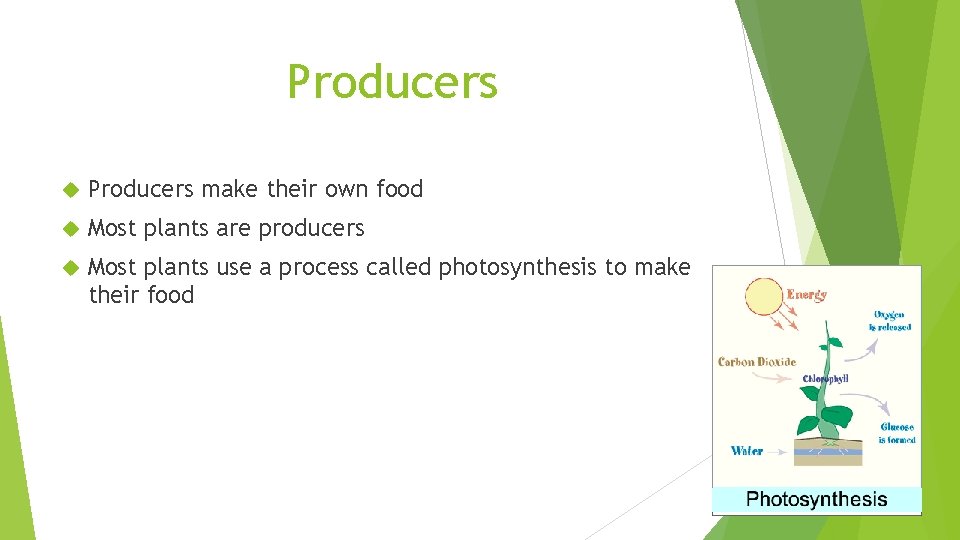
Producers make their own food Most plants are producers Most plants use a process called photosynthesis to make their food
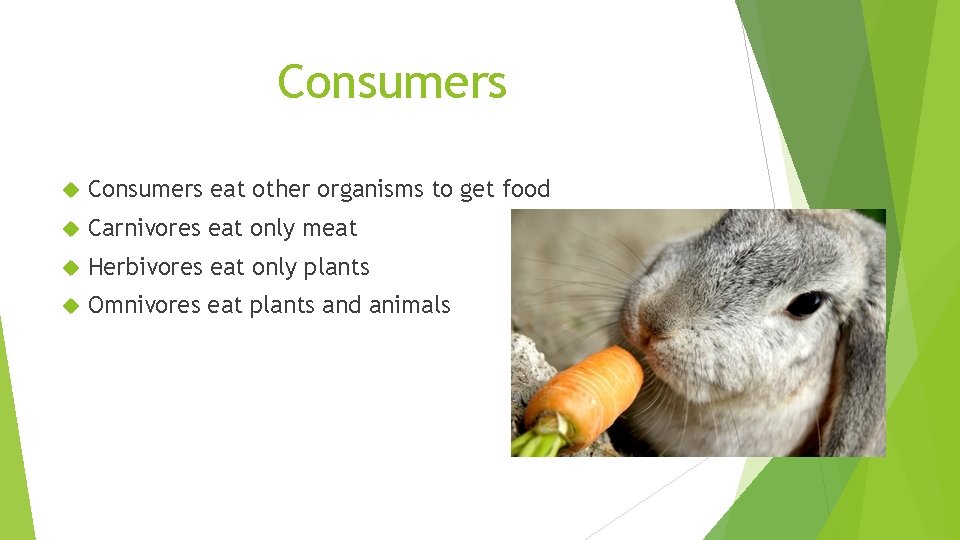
Consumers eat other organisms to get food Carnivores eat only meat Herbivores eat only plants Omnivores eat plants and animals
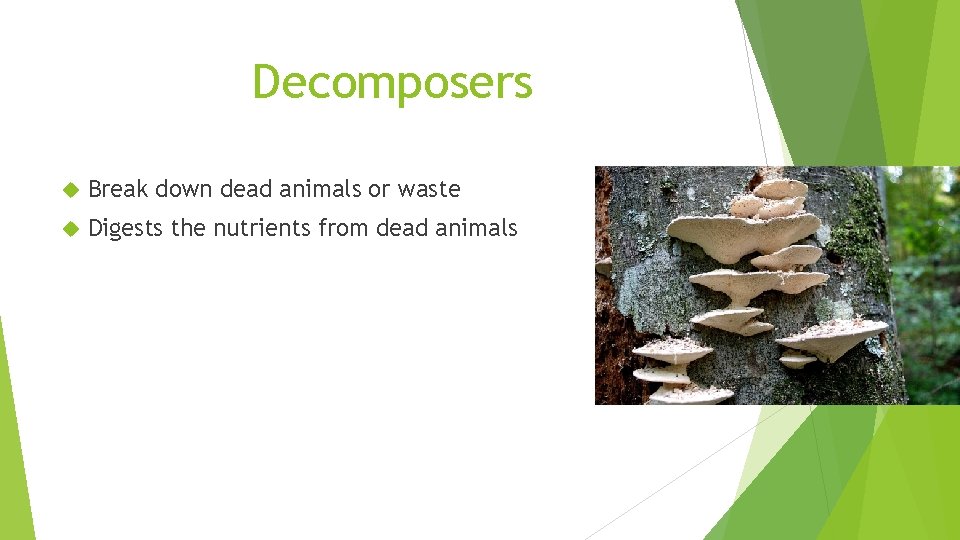
Decomposers Break down dead animals or waste Digests the nutrients from dead animals
Conclusion All organisms are similar and different in many ways, but all have the same needs and characteristics that are required to be called “living”.
- Slides: 18