
Liver and biliary system v The liver is
Liver and biliary system
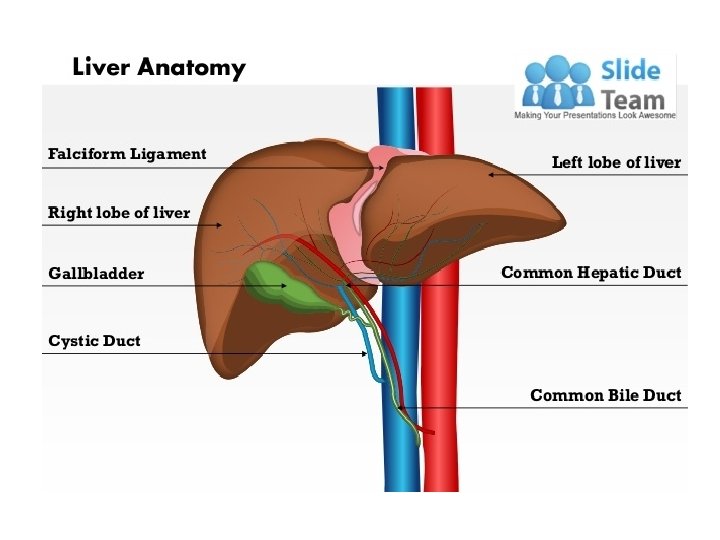
v The liver is an accessory digestive organ that produces bile, a fluid which helps in breakdown of fat. v It is both the heaviest (weighs approximately 1. 5 kg) internal organ and the largest gland in the human body. v Located in the right upper quadrant of the abdominal cavity, it rests just below the diaphragm, to the right of the stomach and overlies the gallbladder. v Connected to two large blood vessels: the hepatic artery and the portal vein. The hepatic artery carries oxygen-rich blood from the aorta via the celiac plexus, whereas the portal vein carries blood rich in digested nutrients from the entire gastrointestinal tract and also from the spleen and pancreas. v The liver is grossly divided into two parts when viewed from above – a right and a left lobe - and four parts when viewed from below (left, right, caudate, and quadrate lobes) v The falciform ligament divides the liver into a left and right lobe.
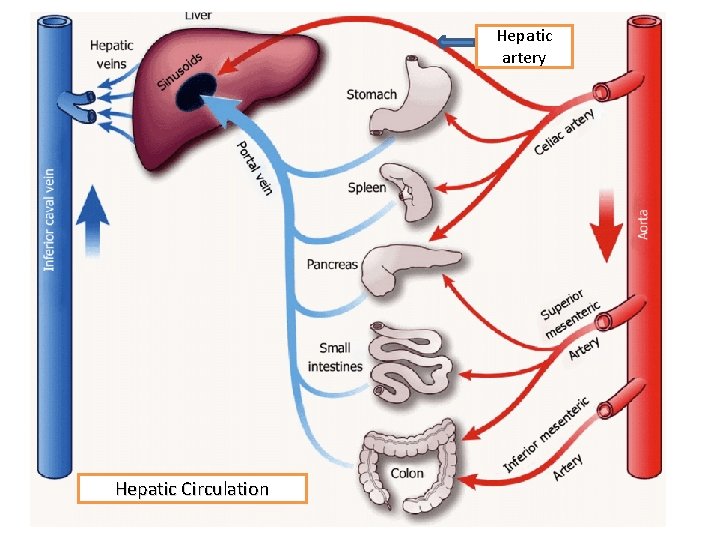
Hepatic artery Hepatic Circulation
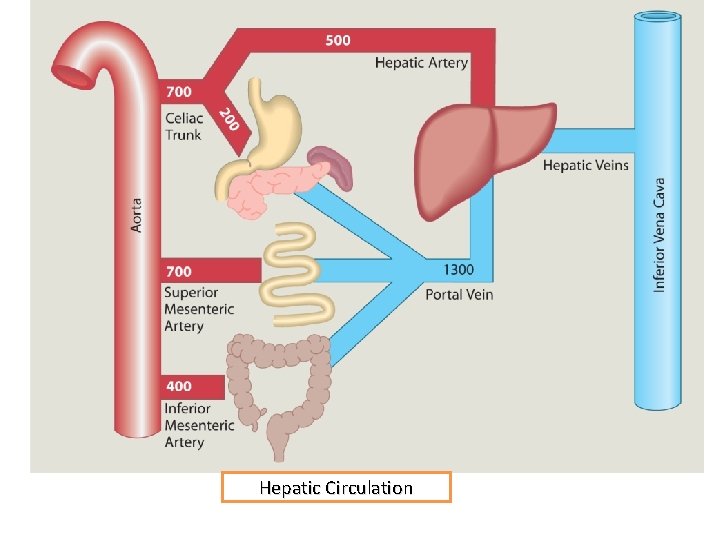
Hepatic Circulation
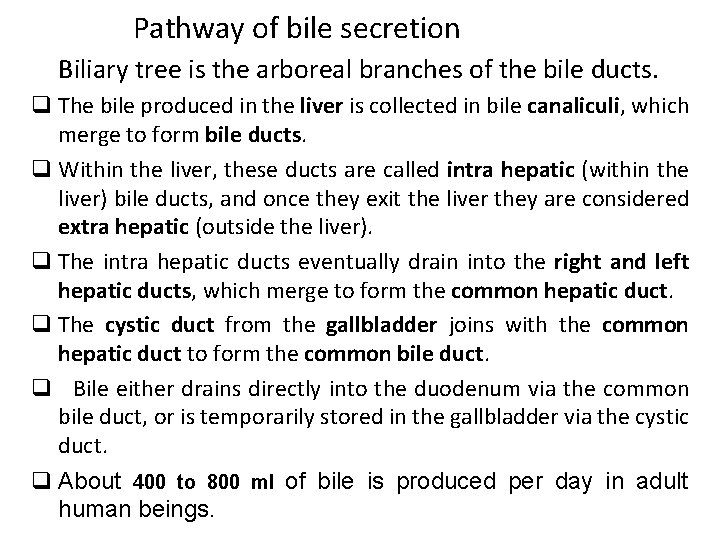
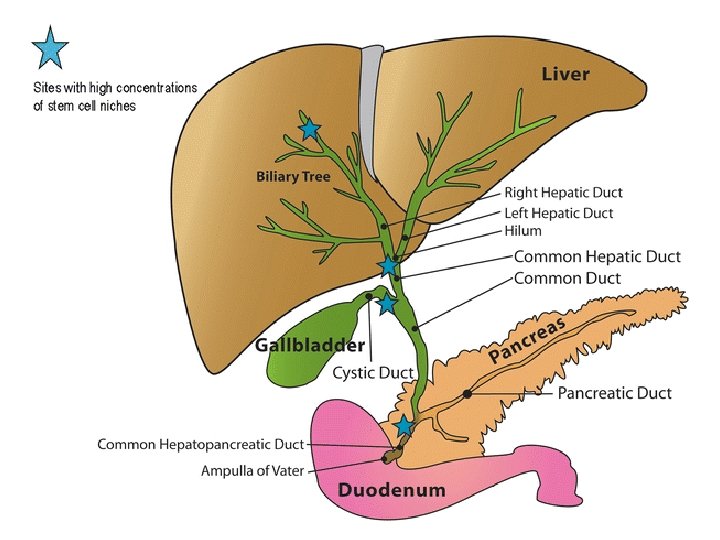
Pathway of bile secretion Biliary tree is the arboreal branches of the bile ducts. q The bile produced in the liver is collected in bile canaliculi, which merge to form bile ducts. q Within the liver, these ducts are called intra hepatic (within the liver) bile ducts, and once they exit the liver they are considered extra hepatic (outside the liver). q The intra hepatic ducts eventually drain into the right and left hepatic ducts, which merge to form the common hepatic duct. q The cystic duct from the gallbladder joins with the common hepatic duct to form the common bile duct. q Bile either drains directly into the duodenum via the common bile duct, or is temporarily stored in the gallbladder via the cystic duct. q About 400 to 800 ml of bile is produced per day in adult human beings.
Functions of bile salts
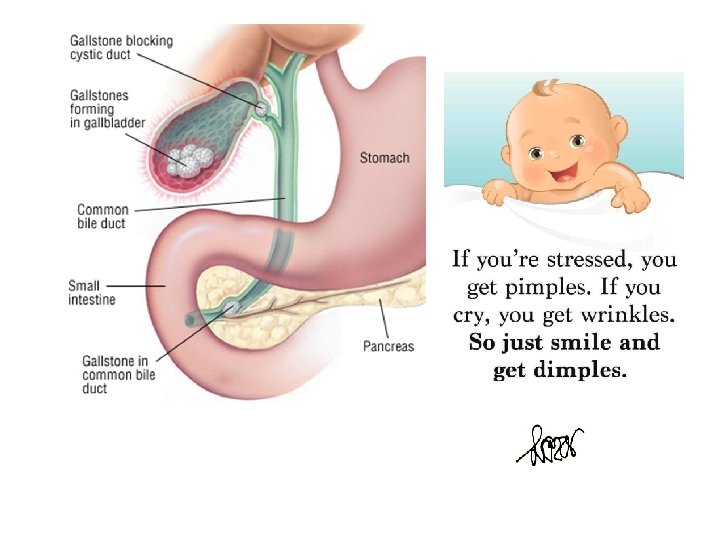
Gallstones are solid particles that form from bile cholesterol and bilirubin in the gallbladder. Types The two main kinds are: • Cholesterol stones. These are usually yellow-green in color. They're the most common kind, accounting for 80% of gallstones. They form when there is too much cholesterol in the bile. • Pigment stones. These stones are smaller and darker. They're made up when there is excess bilirubin in the bile.
- Slides: 13