
Live Fish Handling During stocking sampling harvesting grading
- Slides: 57
Live Fish Handling During: stocking– sampling– harvesting- grading- markinganesthesia & transportation Abdel Rahman El Gamal, Ph D www. fishconsult. org 2017
Why this lecture? Questions are being asked all time: Why fishes are not subject to the types of stresses in nature compared to that in aquaculture? In aquaculture, survival and wellbeing of farmed fish is our responsibility in a way we believe it is good for them. In nature fishes manage their life the way they feel good for their survival and well being; and sometimes for their offspring too We stock, we sample, we harvest, we transport, we grade, we mark and carry out any other farming practices We are the ones who design the farming facility and carry out all farming practices. The challenge is doing all that with no or minimum stress? 2
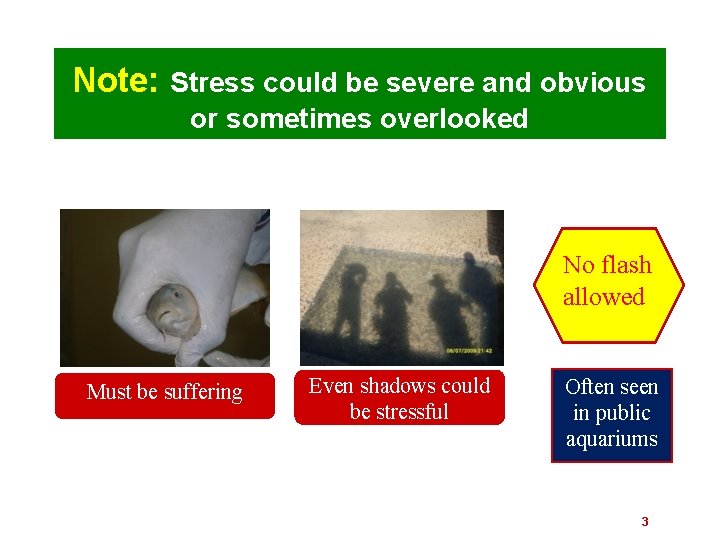
Note: Stress could be severe and obvious or sometimes overlooked No flash allowed Must be suffering Even shadows could be stressful Often seen in public aquariums 3
Stocking - general Usually carried out after any of stressful practice (harvest, transport, etc) Stocking success or failure indicate the efficiency of previous practices Good stocking eliminates doubts or unpleasant surprises afterwards Remember Carried out only once for each production cycle Mortality estimates should not be the first option in case of doubtful shipments 4
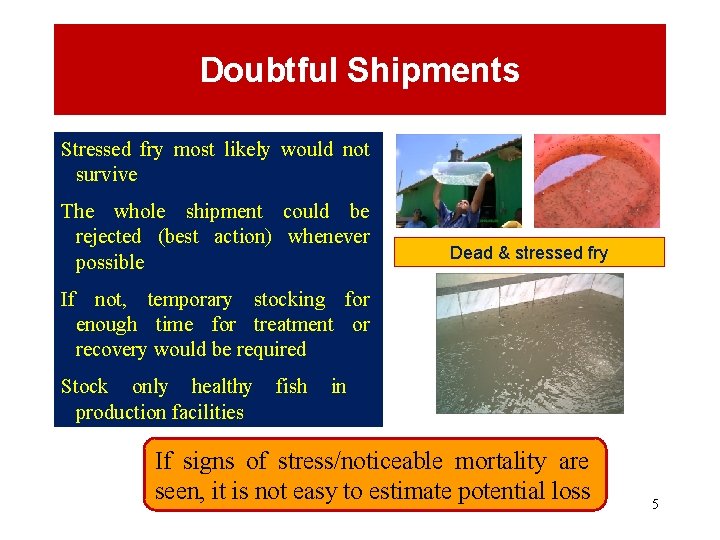
Doubtful Shipments Stressed fry most likely would not survive The whole shipment could be rejected (best action) whenever possible Dead & stressed fry If not, temporary stocking for enough time for treatment or recovery would be required Stock only healthy production facilities fish in If signs of stress/noticeable mortality are seen, it is not easy to estimate potential loss 5
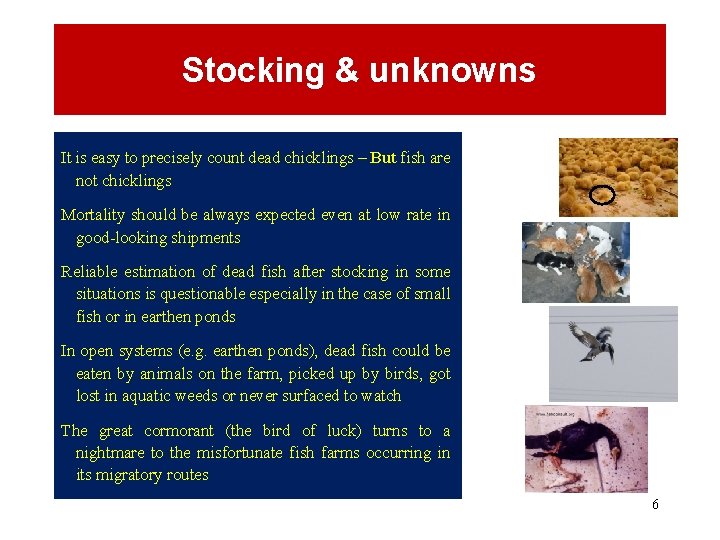
Stocking & unknowns It is easy to precisely count dead chicklings – But fish are not chicklings Mortality should be always expected even at low rate in good-looking shipments Reliable estimation of dead fish after stocking in some situations is questionable especially in the case of small fish or in earthen ponds In open systems (e. g. earthen ponds), dead fish could be eaten by animals on the farm, picked up by birds, got lost in aquatic weeds or never surfaced to watch The great cormorant (the bird of luck) turns to a nightmare to the misfortunate fish farms occurring in its migratory routes 6
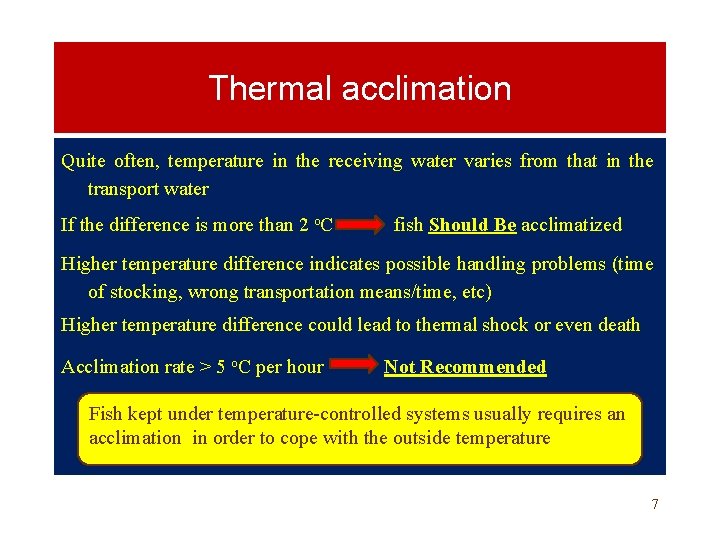
Thermal acclimation Quite often, temperature in the receiving water varies from that in the transport water If the difference is more than 2 o. C fish Should Be acclimatized Higher temperature difference indicates possible handling problems (time of stocking, wrong transportation means/time, etc) Higher temperature difference could lead to thermal shock or even death Acclimation rate > 5 o. C per hour Not Recommended Fish kept under temperature-controlled systems usually requires an acclimation in order to cope with the outside temperature 7
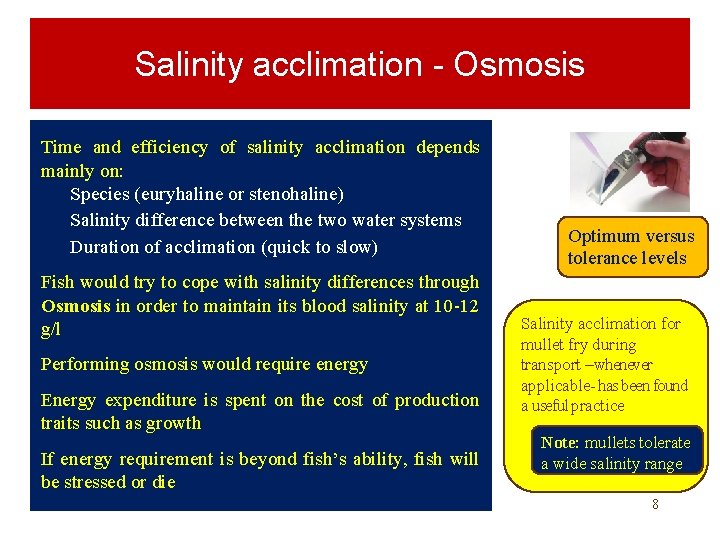
Salinity acclimation - Osmosis Time and efficiency of salinity acclimation depends mainly on: Species (euryhaline or stenohaline) Salinity difference between the two water systems Duration of acclimation (quick to slow) Fish would try to cope with salinity differences through Osmosis in order to maintain its blood salinity at 10 -12 g/l Performing osmosis would require energy Energy expenditure is spent on the cost of production traits such as growth If energy requirement is beyond fish’s ability, fish will be stressed or die Optimum versus tolerance levels Salinity acclimation for mullet fry during transport –whenever applicable- has been found a useful practice Note: mullets tolerate a wide salinity range 8
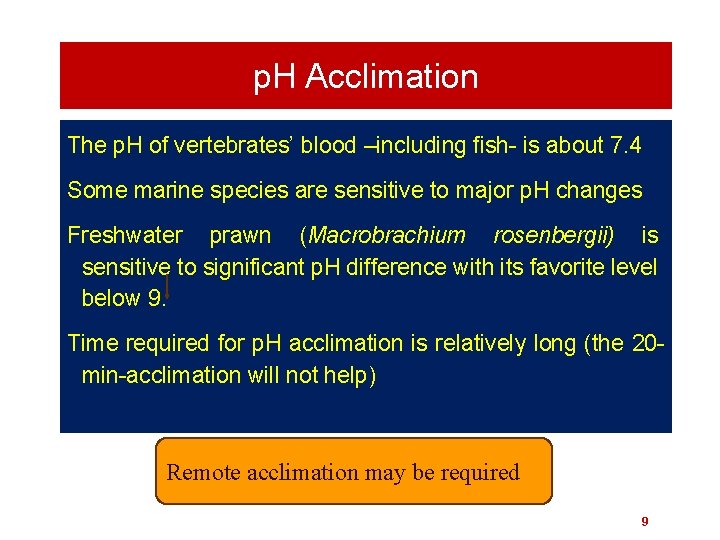
p. H Acclimation The p. H of vertebrates’ blood –including fish- is about 7. 4 Some marine species are sensitive to major p. H changes Freshwater prawn (Macrobrachium rosenbergii) is sensitive to significant p. H difference with its favorite level below 9. Time required for p. H acclimation is relatively long (the 20 min-acclimation will not help) Remote acclimation may be required 9
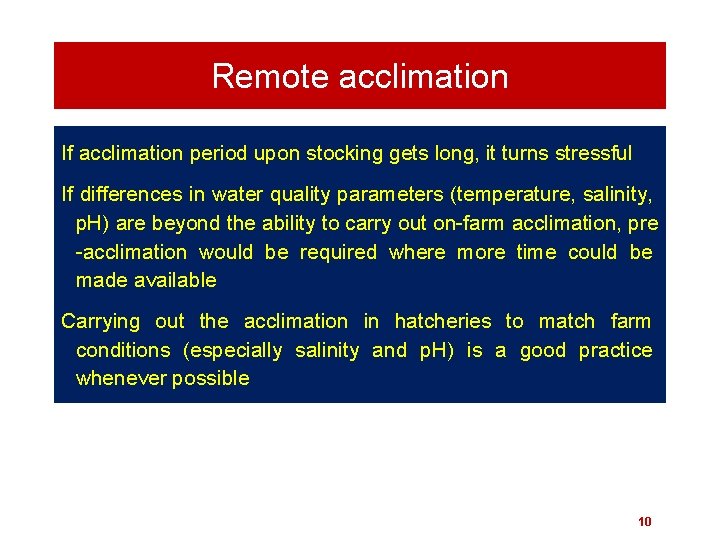
Remote acclimation If acclimation period upon stocking gets long, it turns stressful If differences in water quality parameters (temperature, salinity, p. H) are beyond the ability to carry out on-farm acclimation, pre -acclimation would be required where more time could be made available Carrying out the acclimation in hatcheries to match farm conditions (especially salinity and p. H) is a good practice whenever possible 10
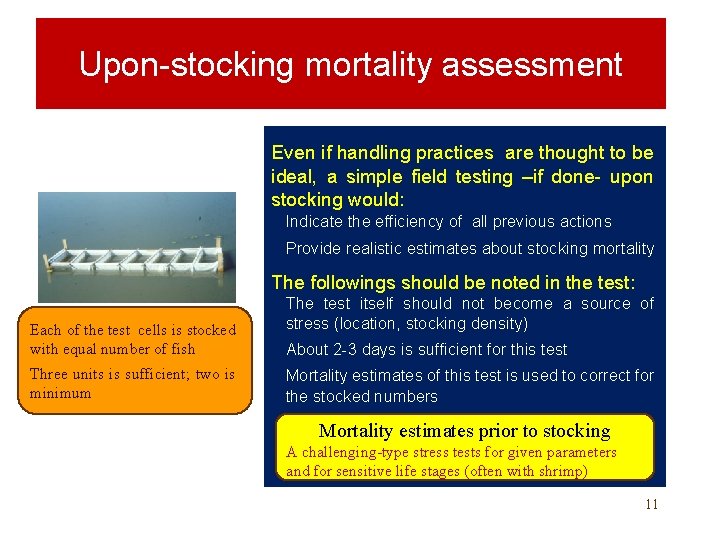
Upon-stocking mortality assessment Even if handling practices are thought to be ideal, a simple field testing –if done- upon stocking would: Indicate the efficiency of all previous actions Provide realistic estimates about stocking mortality The followings should be noted in the test: Each of the test cells is stocked with equal number of fish Three units is sufficient; two is minimum The test itself should not become a source of stress (location, stocking density) About 2 -3 days is sufficient for this test Mortality estimates of this test is used to correct for the stocked numbers Mortality estimates prior to stocking A challenging-type stress tests for given parameters and for sensitive life stages (often with shrimp) 11
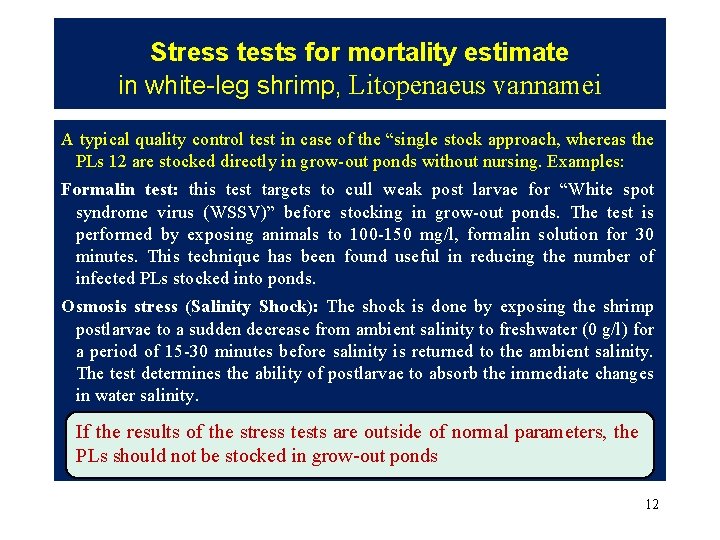
Stress tests for mortality estimate in white-leg shrimp, Litopenaeus vannamei A typical quality control test in case of the “single stock approach, whereas the PLs 12 are stocked directly in grow-out ponds without nursing. Examples: Formalin test: this test targets to cull weak post larvae for “White spot syndrome virus (WSSV)” before stocking in grow-out ponds. The test is performed by exposing animals to 100 -150 mg/l, formalin solution for 30 minutes. This technique has been found useful in reducing the number of infected PLs stocked into ponds. Osmosis stress (Salinity Shock): The shock is done by exposing the shrimp postlarvae to a sudden decrease from ambient salinity to freshwater (0 g/l) for a period of 15 -30 minutes before salinity is returned to the ambient salinity. The test determines the ability of postlarvae to absorb the immediate changes in water salinity. If the results of the stress tests are outside of normal parameters, the PLs should not be stocked in grow-out ponds 12
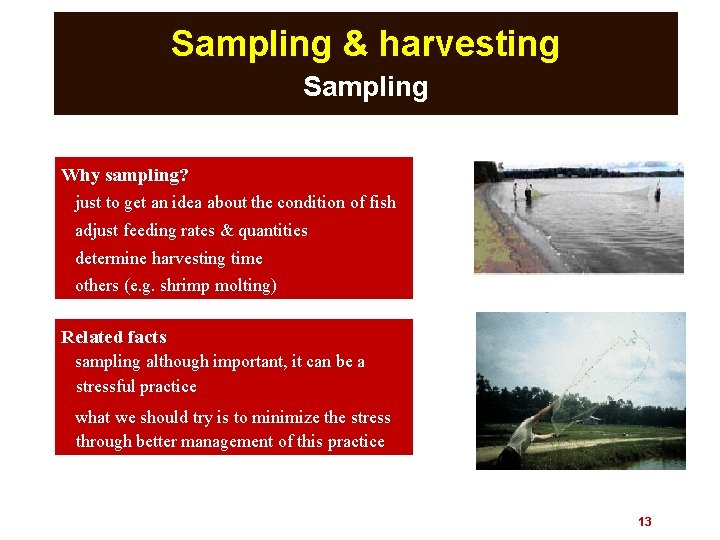
Sampling & harvesting Sampling Why sampling? just to get an idea about the condition of fish adjust feeding rates & quantities determine harvesting time others (e. g. shrimp molting) Related facts sampling although important, it can be a stressful practice what we should try is to minimize the stress through better management of this practice 13
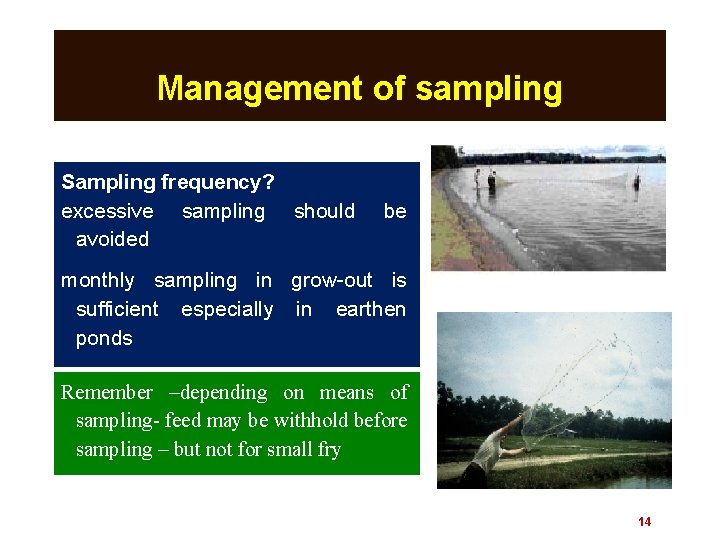
Management of sampling Sampling frequency? excessive sampling should avoided be monthly sampling in grow-out is sufficient especially in earthen ponds Remember –depending on means of E samplingfeed may be withhold before sampling – but not for small fry 14
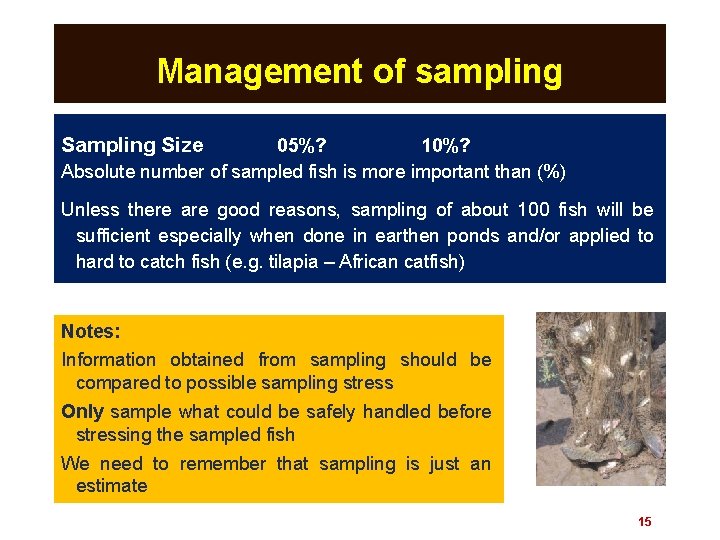
Management of sampling Size 05%? 10%? Absolute number of sampled fish is more important than (%) Unless there are good reasons, sampling of about 100 fish will be sufficient especially when done in earthen ponds and/or applied to hard to catch fish (e. g. tilapia – African catfish) Notes: Information obtained from sampling should be compared to possible sampling stress Only E sample what could be safely handled before stressing the sampled fish We need to remember that sampling is just an estimate 15
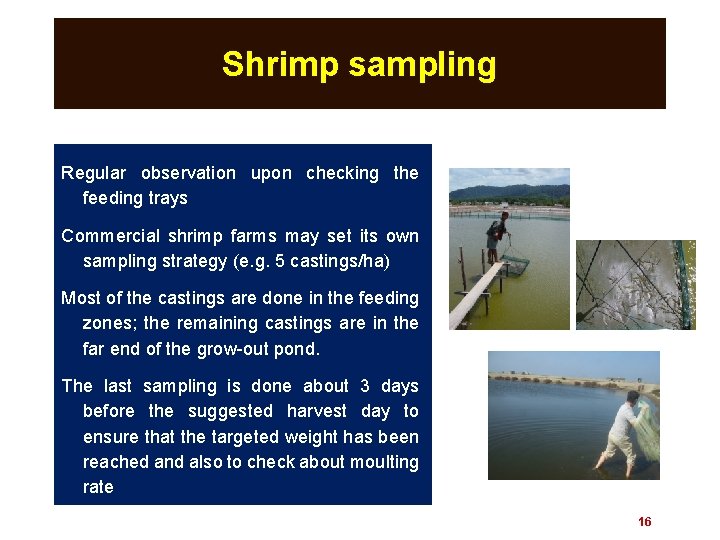
Shrimp sampling Regular observation upon checking the feeding trays Commercial shrimp farms may set its own sampling strategy (e. g. 5 castings/ha) Most of the castings are done in the feeding zones; the remaining castings are in the far end of the grow-out pond. The last sampling is done about 3 days before the suggested harvest day to ensure that the targeted weight has been reached and also to check about moulting rate 16
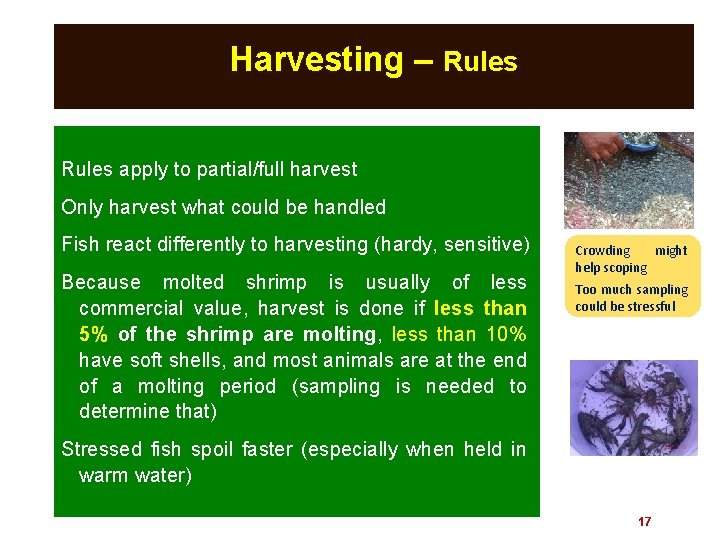
Harvesting – Rules apply to partial/full harvest Only harvest what could be handled Fish react differently to harvesting (hardy, sensitive) Because molted shrimp is usually of less commercial value, harvest is done if less than 5% of the shrimp are molting, less than 10% have soft shells, and most animals are at the end of a molting period (sampling is needed to determine that) Crowding might help scoping Too much sampling could be stressful Stressed fish spoil faster (especially when held in warm water) 17
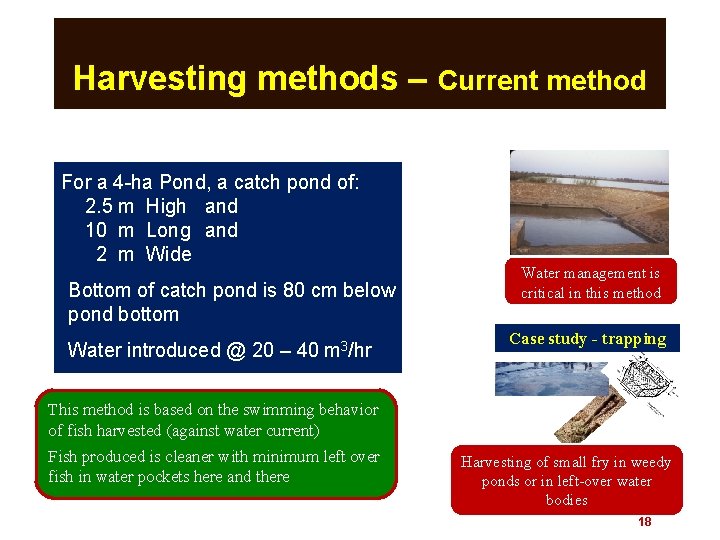
Harvesting methods – Current method For a 4 -ha Pond, a catch pond of: 2. 5 m High and 10 m Long and 2 m Wide Bottom of catch pond is 80 cm below pond bottom Water introduced @ 20 – 40 m 3/hr Water management is critical in this method Case study - trapping This method is based on the swimming behavior of fish harvested (against water current) Fish produced is cleaner with minimum left over fish in water pockets here and there Harvesting of small fry in weedy ponds or in left-over water bodies 18
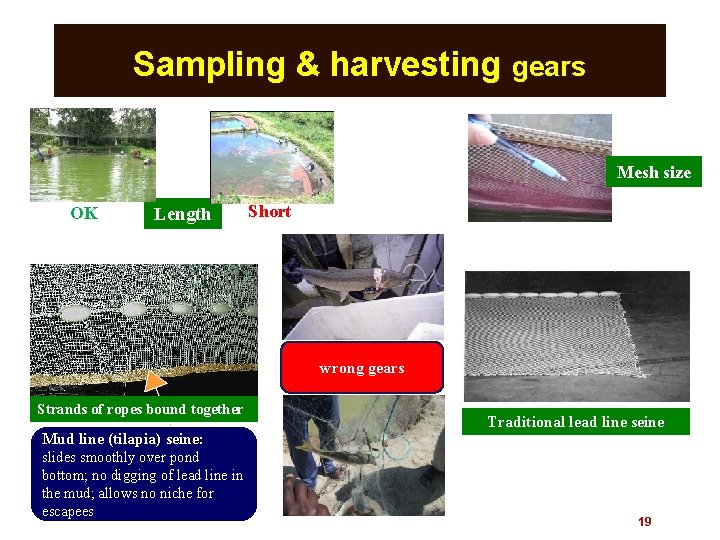
Sampling & harvesting gears Mesh size OK Length Short wrong gears E Strands of ropes bound together Mud line (tilapia) seine: slides smoothly over pond bottom; no digging of lead line in the mud; allows no niche for escapees Traditional lead line seine 19
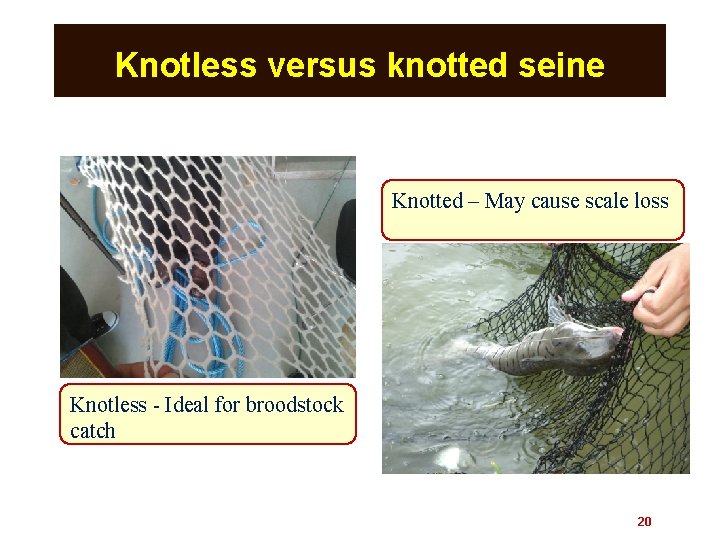
Knotless versus knotted seine Knotted – May cause scale loss Knotless E - Ideal for broodstock catch 20
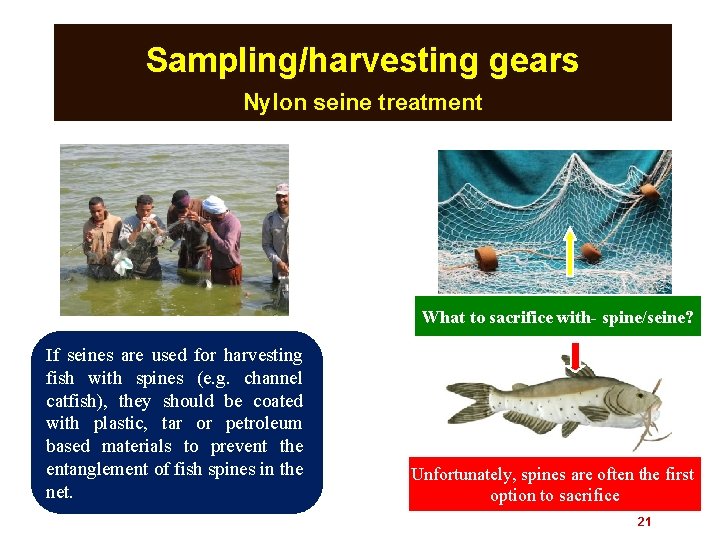
Sampling/harvesting gears Nylon seine treatment What to sacrifice with- spine/seine? If seines are used for harvesting fish with spines (e. g. channel catfish), they should be coated E with plastic, tar or petroleum based materials to prevent the entanglement of fish spines in the net. Unfortunately, spines are often the first option to sacrifice 21
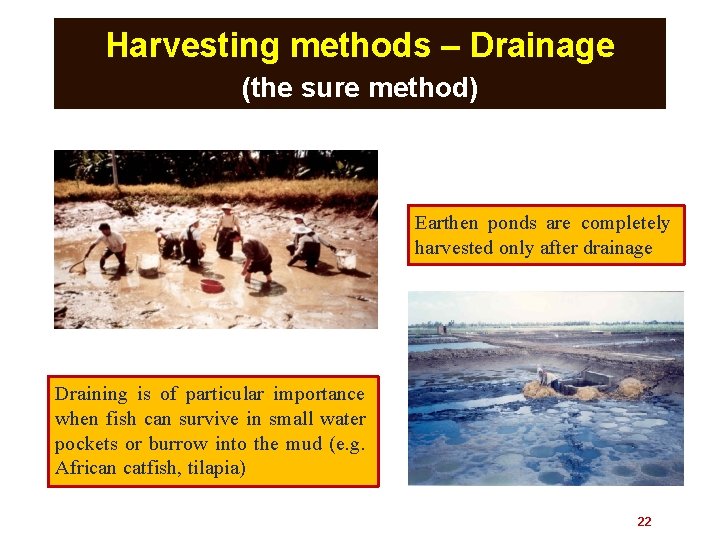
Harvesting methods – Drainage (the sure method) Earthen ponds are completely harvested only after drainage Draining is of particular importance E can survive in small water when fish pockets or burrow into the mud (e. g. African catfish, tilapia) 22
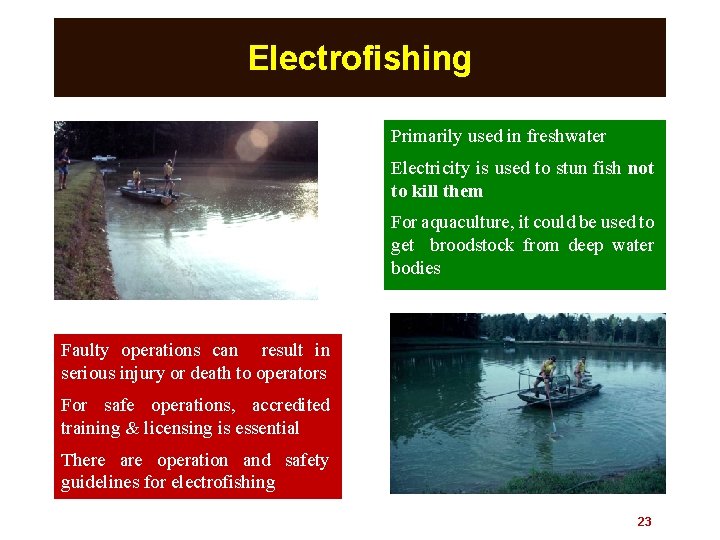
Electrofishing Primarily used in freshwater Electricity is used to stun fish not to kill them For aquaculture, it could be used to get broodstock from deep water bodies Faulty operations can result in serious injury or death to operators For safe operations, accredited training & licensing is essential There are operation and safety guidelines for electrofishing 23
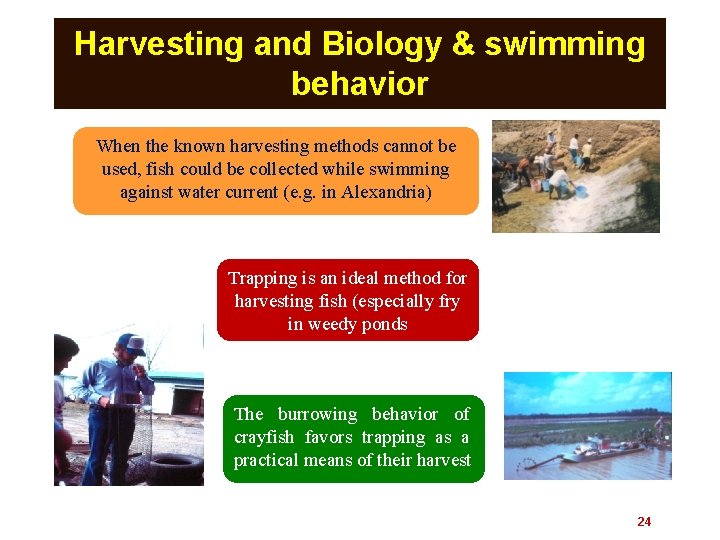
Harvesting and Biology & swimming behavior When the known harvesting methods cannot be used, fish could be collected while swimming against water current (e. g. in Alexandria) Trapping is an ideal method for harvesting fish (especially fry in weedy ponds The burrowing behavior of crayfish favors trapping as a practical means of their harvest 24
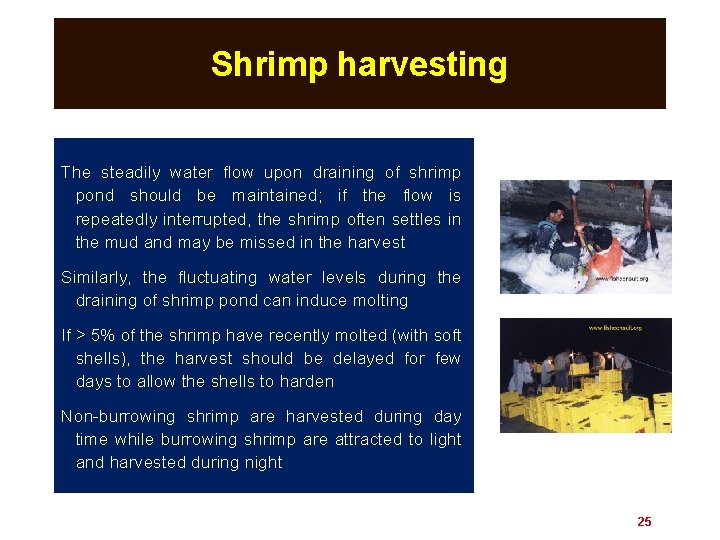
Shrimp harvesting The steadily water flow upon draining of shrimp pond should be maintained; if the flow is repeatedly interrupted, the shrimp often settles in the mud and may be missed in the harvest Similarly, the fluctuating water levels during the draining of shrimp pond can induce molting If > 5% of the shrimp have recently molted (with soft shells), the harvest should be delayed for few days to allow the shells to harden Non-burrowing shrimp are harvested during day time while burrowing shrimp are attracted to light and harvested during night 25
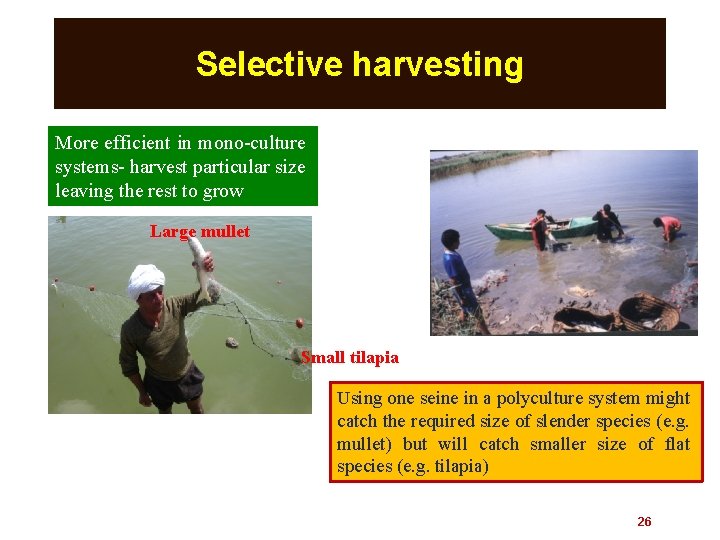
Selective harvesting More efficient in mono-culture systems- harvest particular size leaving the rest to grow Large mullet Small tilapia E Using one seine in a polyculture system might catch the required size of slender species (e. g. mullet) but will catch smaller size of flat species (e. g. tilapia) 26
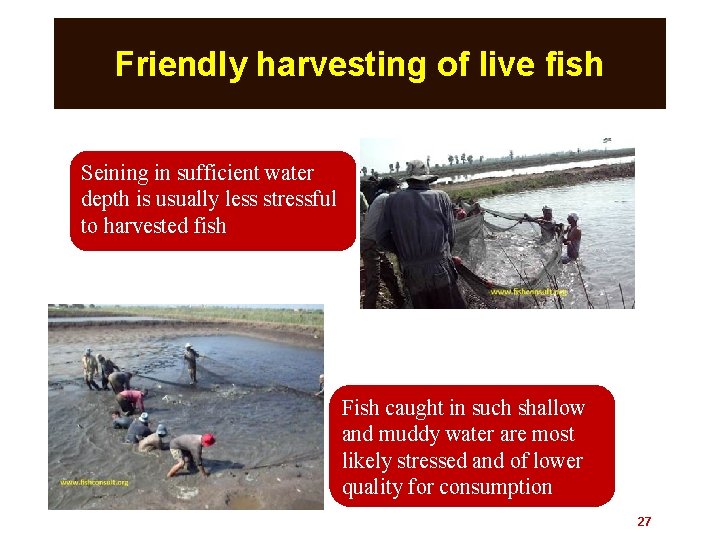
Friendly harvesting of live fish Seining in sufficient water depth is usually less stressful to harvested fish Fish caught in such shallow and muddy water are most likely stressed and of lower quality for consumption 27
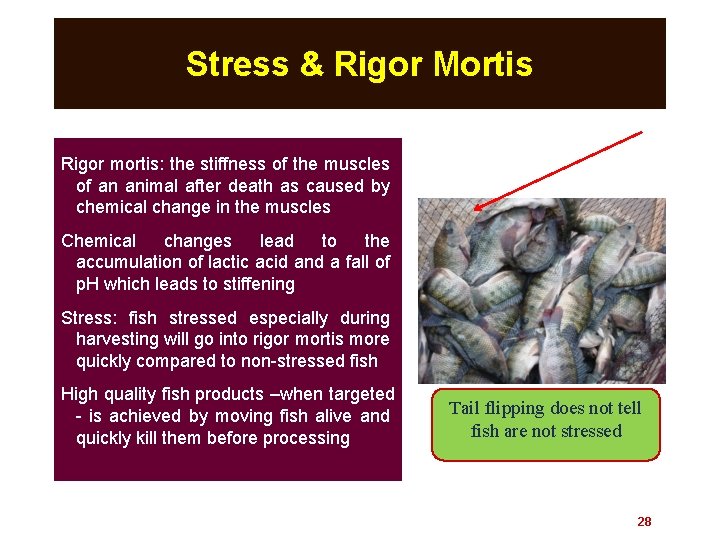
Stress & Rigor Mortis Rigor mortis: the stiffness of the muscles of an animal after death as caused by chemical change in the muscles Chemical changes lead to the accumulation of lactic acid and a fall of p. H which leads to stiffening Stress: fish stressed especially during harvesting will go into rigor mortis more quickly compared to non-stressed fish High quality fish products –when targeted - is achieved by moving fish alive and quickly kill them before processing Tail flipping does not tell fish are not stressed 28
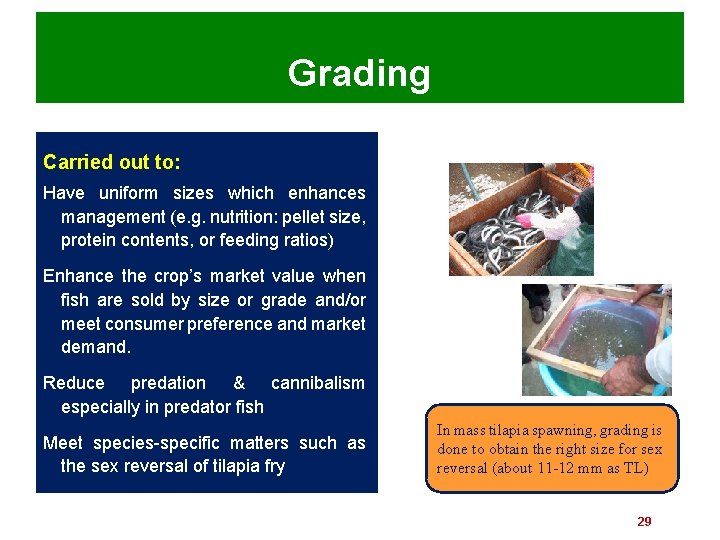
Grading Carried out to: Have uniform sizes which enhances management (e. g. nutrition: pellet size, protein contents, or feeding ratios) Enhance the crop’s market value when fish are sold by size or grade and/or meet consumer preference and market demand. Reduce predation & cannibalism especially in predator fish Meet species-specific matters such as the sex reversal of tilapia fry In mass tilapia spawning, grading is done to obtain the right size for sex reversal (about 11 -12 mm as TL) 29
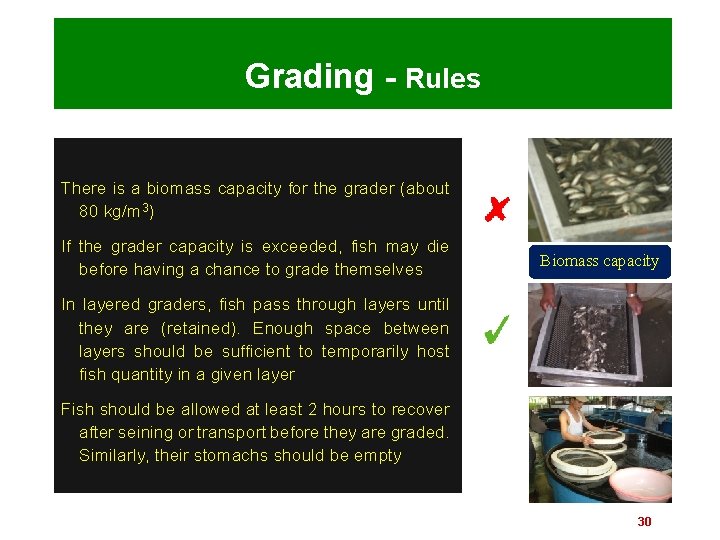
Grading - Rules There is a biomass capacity for the grader (about 80 kg/m 3) If the grader capacity is exceeded, fish may die before having a chance to grade themselves Biomass capacity In layered graders, fish pass through layers until they are (retained). Enough space between layers should be sufficient to temporarily host fish quantity in a given layer Fish should be allowed at least 2 hours to recover after seining or transport before they are graded. Similarly, their stomachs should be empty 30
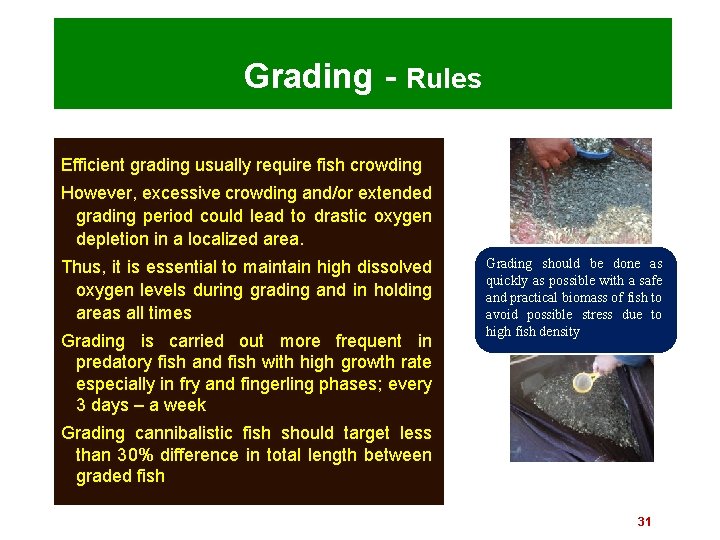
Grading - Rules Efficient grading usually require fish crowding However, excessive crowding and/or extended grading period could lead to drastic oxygen depletion in a localized area. Thus, it is essential to maintain high dissolved oxygen levels during grading and in holding areas all times Grading is carried out more frequent in predatory fish and fish with high growth rate especially in fry and fingerling phases; every 3 days – a week Grading should be done as quickly as possible with a safe and practical biomass of fish to avoid possible stress due to high fish density Grading cannibalistic fish should target less than 30% difference in total length between graded fish 31
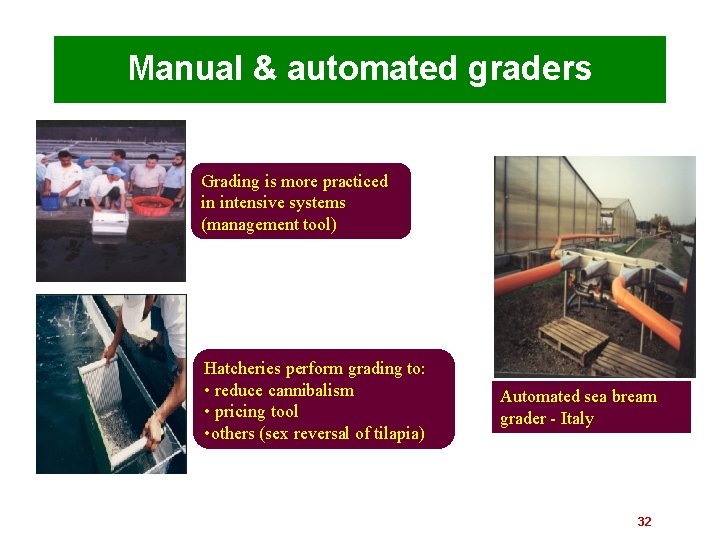
Manual & automated graders Grading is more practiced in intensive systems (management tool) Hatcheries perform grading to: • reduce cannibalism • pricing tool • others (sex reversal of tilapia) Automated sea bream grader - Italy 32
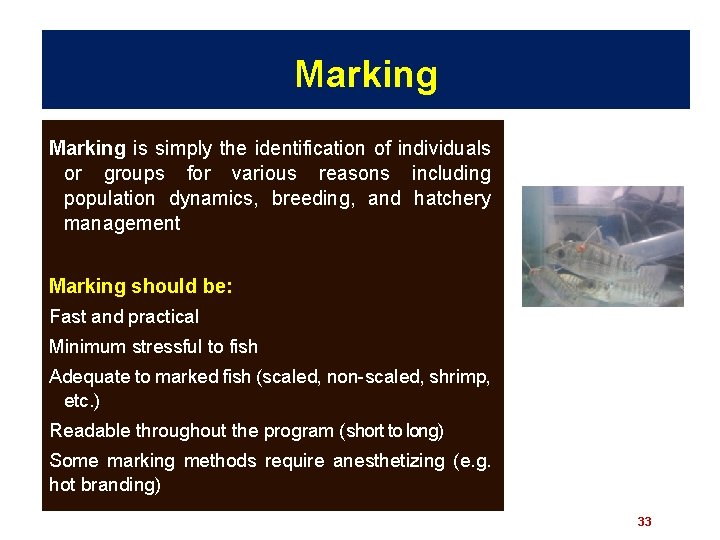
Marking is simply the identification of individuals or groups for various reasons including population dynamics, breeding, and hatchery management Marking should be: Fast and practical Minimum stressful to fish Adequate to marked fish (scaled, non-scaled, shrimp, etc. ) Readable throughout the program (short to long) Some marking methods require anesthetizing (e. g. hot branding) 33
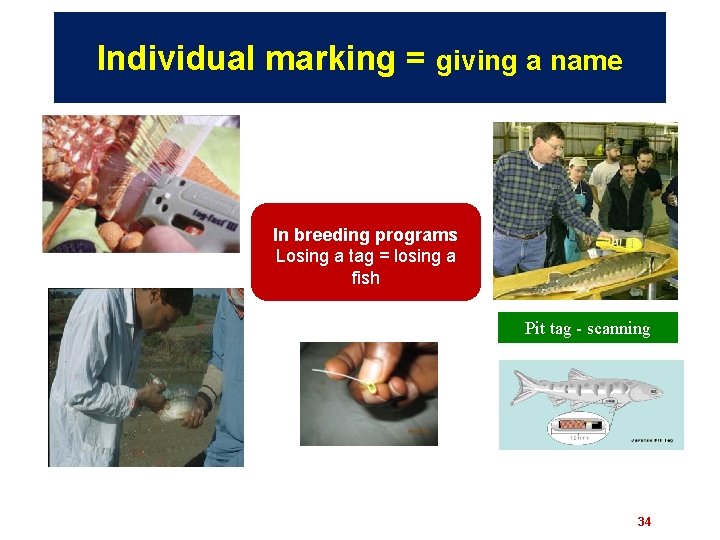
Individual marking = giving a name In breeding programs Losing a tag = losing a fish Pit tag - scanning 34
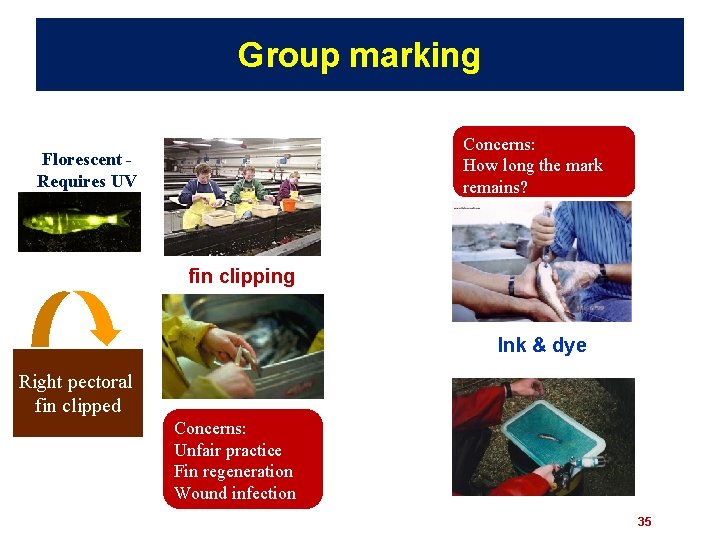
Group marking Concerns: How long the mark remains? Florescent Requires UV fin clipping Ink & dye Right pectoral fin clipped Concerns: Unfair practice Fin regeneration Wound infection 35
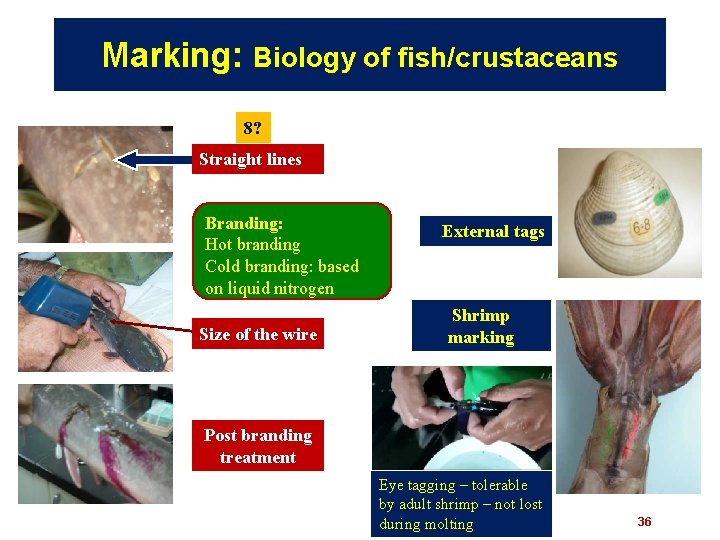
Marking: Biology of fish/crustaceans 8? Straight lines Branding: Hot branding Cold branding: based on liquid nitrogen Size of the wire External tags Shrimp marking Post branding treatment Eye tagging – tolerable by adult shrimp – not lost during molting 36
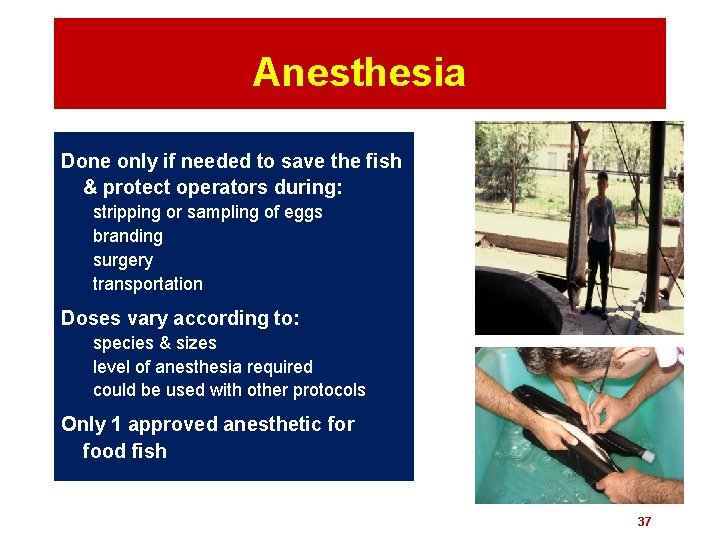
Anesthesia Done only if needed to save the fish & protect operators during: stripping or sampling of eggs branding surgery transportation Doses vary according to: species & sizes level of anesthesia required could be used with other protocols Only 1 approved anesthetic for food fish 37
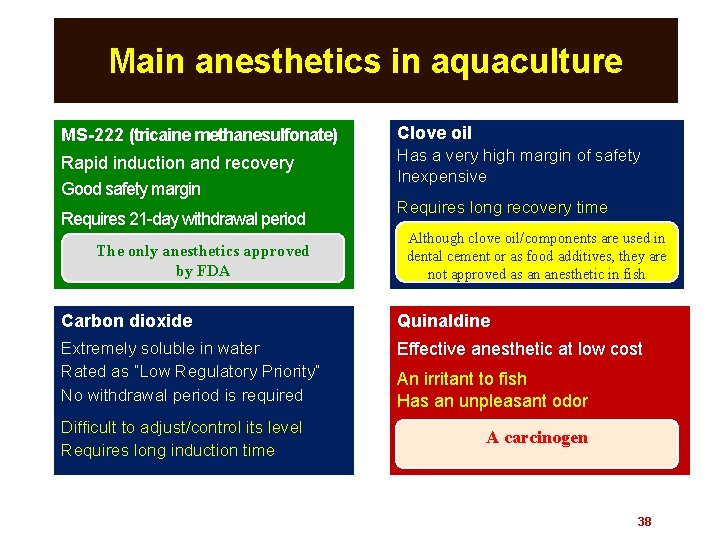
Main anesthetics in aquaculture MS-222 (tricaine methanesulfonate) Clove oil Rapid induction and recovery Good safety margin Has a very high margin of safety Inexpensive Requires 21 -day withdrawal period The only anesthetics approved by FDA Requires long recovery time Although clove oil/components are used in dental cement or as food additives, they are not approved as an anesthetic in fish Carbon dioxide Quinaldine Extremely soluble in water Rated as “Low Regulatory Priority” No withdrawal period is required Effective anesthetic at low cost Difficult to adjust/control its level Requires long induction time An irritant to fish Has an unpleasant odor A carcinogen 38
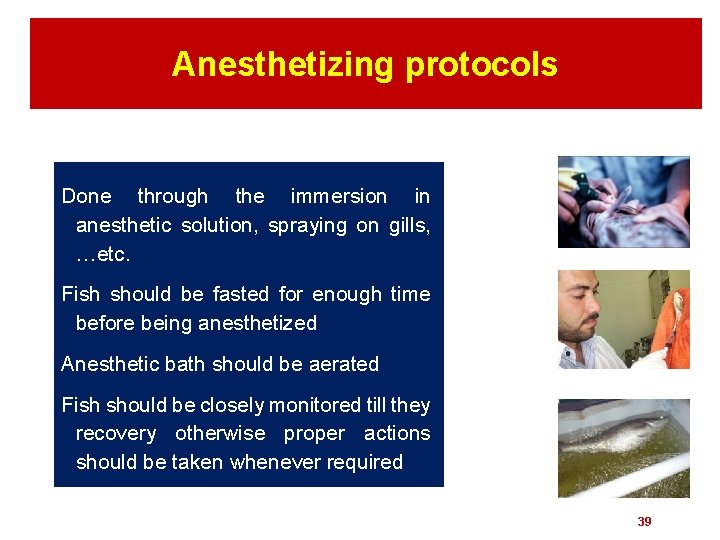
Anesthetizing protocols Done through the immersion in anesthetic solution, spraying on gills, …etc. Fish should be fasted for enough time before being anesthetized Anesthetic bath should be aerated Fish should be closely monitored till they recovery otherwise proper actions should be taken whenever required 39
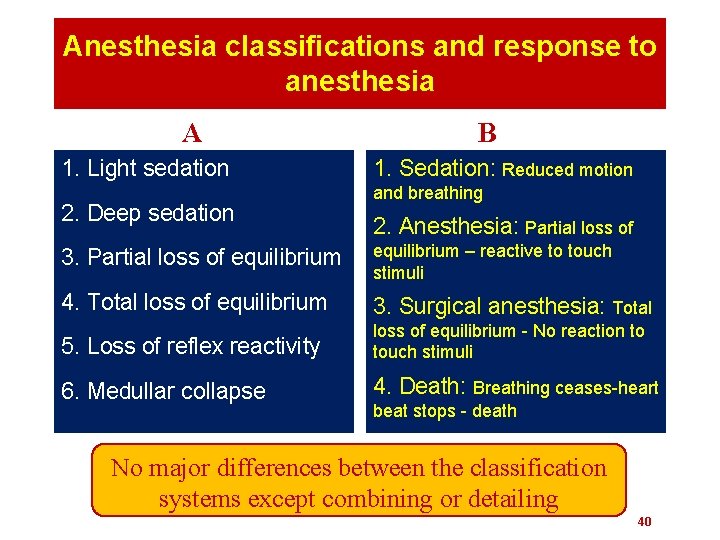
Anesthesia classifications and response to anesthesia A 1. Light sedation 2. Deep sedation B 1. Sedation: Reduced motion and breathing 2. Anesthesia: Partial loss of 3. Partial loss of equilibrium – reactive to touch stimuli 4. Total loss of equilibrium 3. Surgical anesthesia: Total 5. Loss of reflex reactivity loss of equilibrium - No reaction to touch stimuli 6. Medullar collapse 4. Death: Breathing ceases-heart beat stops - death No major differences between the classification systems except combining or detailing 40
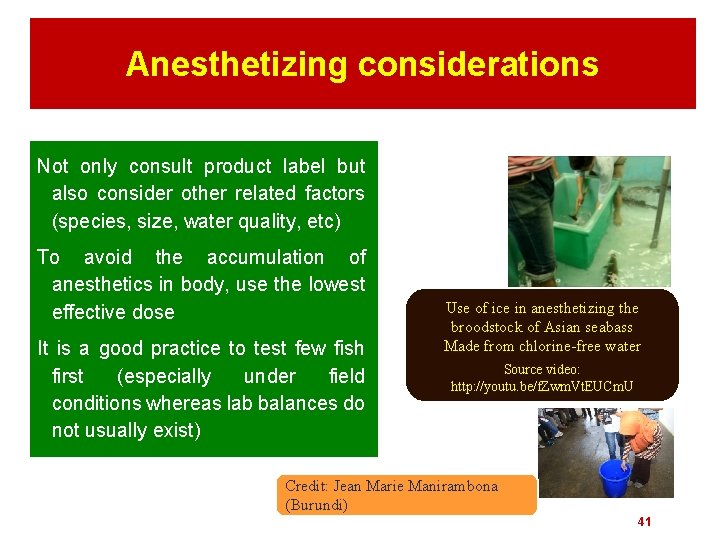
Anesthetizing considerations Not only consult product label but also consider other related factors (species, size, water quality, etc) To avoid the accumulation of anesthetics in body, use the lowest effective dose It is a good practice to test few fish first (especially under field conditions whereas lab balances do not usually exist) Use of ice in anesthetizing the broodstock of Asian seabass Made from chlorine-free water Source video: http: //youtu. be/f. Zwm. Vt. EUCm. U Credit: Jean Marie Manirambona (Burundi) 41
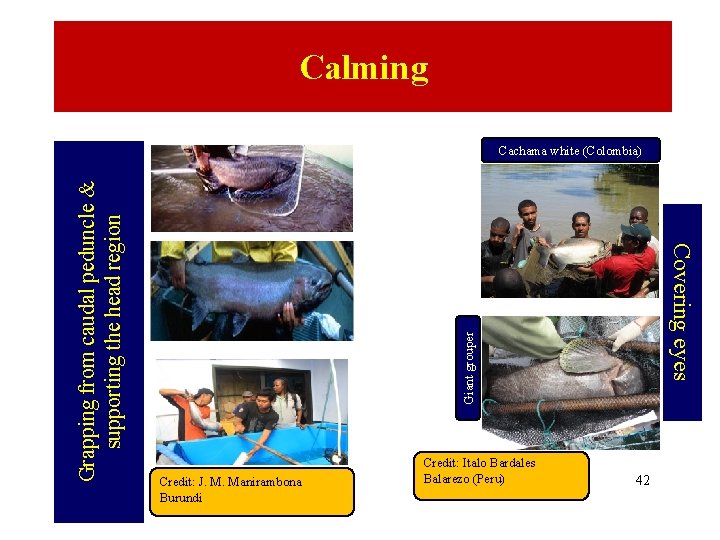
Calming Giant grouper Covering eyes Grapping from caudal peduncle & supporting the head region Cachama white (Colombia) Credit: J. M. Manirambona Burundi Credit: Italo Bardales Balarezo (Peru) 42
Transportation is one of the challenging procedures in fish handling, as the concept of transport usually is: Transport as many fish as possible in a little water as possible with a little loss as possible 43
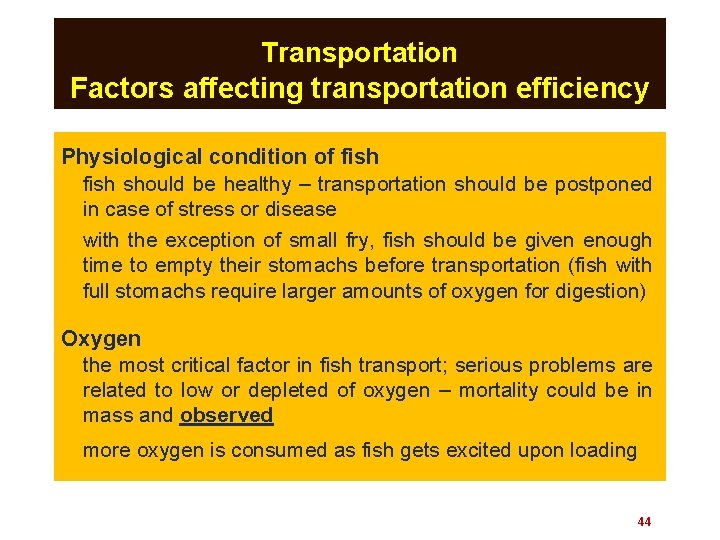
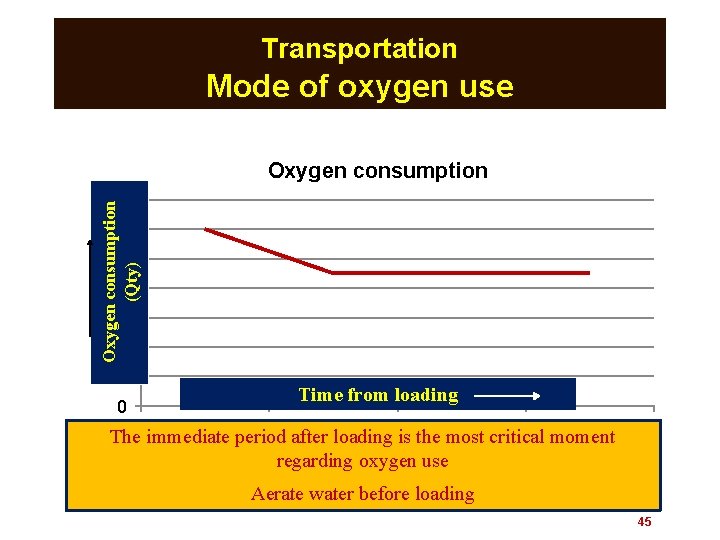
Transportation Factors affecting transportation efficiency Physiological condition of fish should be healthy – transportation should be postponed in case of stress or disease with the exception of small fry, fish should be given enough time to empty their stomachs before transportation (fish with full stomachs require larger amounts of oxygen for digestion) Oxygen the most critical factor in fish transport; serious problems are related to low or depleted of oxygen – mortality could be in E and observed mass more oxygen is consumed as fish gets excited upon loading 44
Transportation Mode of oxygen use Oxygen consumption (Qty) 700 600 500 400 300 200 100 0 Time from loading 30 minutes The immediate period 60 after loading is 120 the most critical 180 moment regarding oxygen use Aerate water before loading 45
Transportation Factors affecting transportation efficiency Carbon Dioxide free CO 2 is a poisonous product as free CO 2 increases, more oxygen is required. as CO 2 reduces the affinity of blood to oxygen, 25 mg/l of CO 2 seems risky Ammonia a major waste product especially at high temperature if unionized ammonia (NH 3) reaches (about 1 mg/l), oxygen content of blood is reduced to 1/7 normal and CO 2 of blood is increased by 15% resulting in death by suffocation. 46
Transportation & temperature The influence of temperature occurs through its impact on water quality parameters and fish physiology. Lowering water temperature will lead to: reduce metabolic wastes (feces, ammonia, Co 2) reduce DO requirements increase the saturation level of DO in water Fish species vary in regard to levels of temperature reduction Various means are adopted to lower water temperature 47
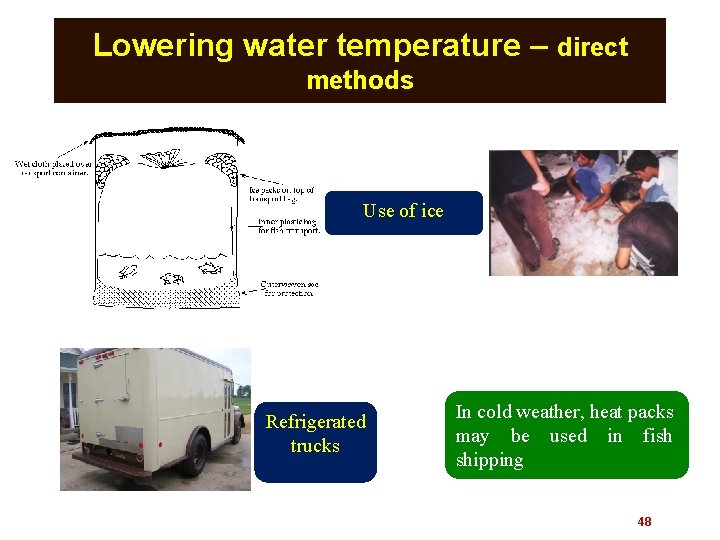
Lowering water temperature – direct methods Use of ice Refrigerated trucks In cold weather, heat packs may be used in fish shipping 48
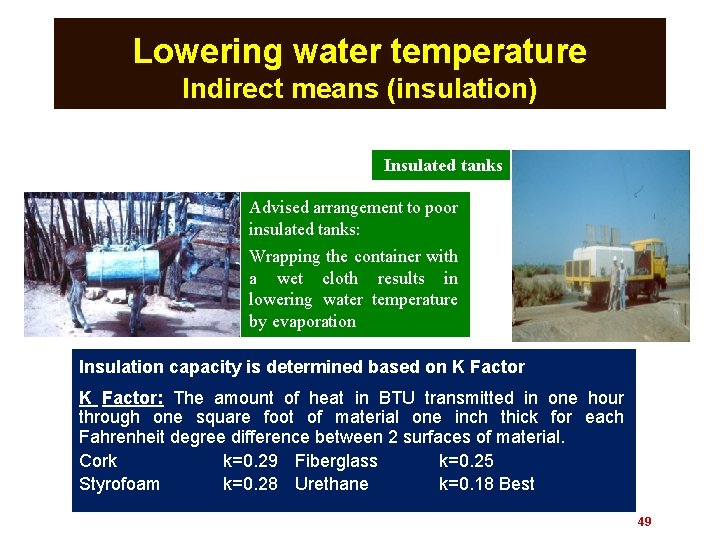
Lowering water temperature Indirect means (insulation) Insulated tanks Advised arrangement to poor insulated tanks: Wrapping the container with a wet cloth results in lowering water temperature by evaporation Insulation capacity is determined based on K Factor: The amount of heat in BTU transmitted in one hour through one square foot of material one inch thick for each Fahrenheit degree difference between 2 surfaces of material. Cork k=0. 29 Fiberglass k=0. 25 Styrofoam k=0. 28 Urethane k=0. 18 Best 49
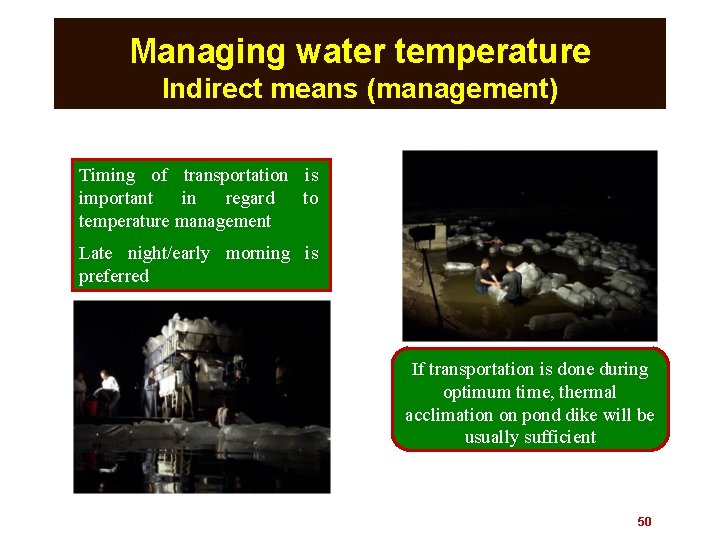
Managing water temperature Indirect means (management) Timing of transportation is important in regard to temperature management Late night/early morning is preferred If transportation is done during optimum time, thermal acclimation on pond dike will be usually sufficient 50
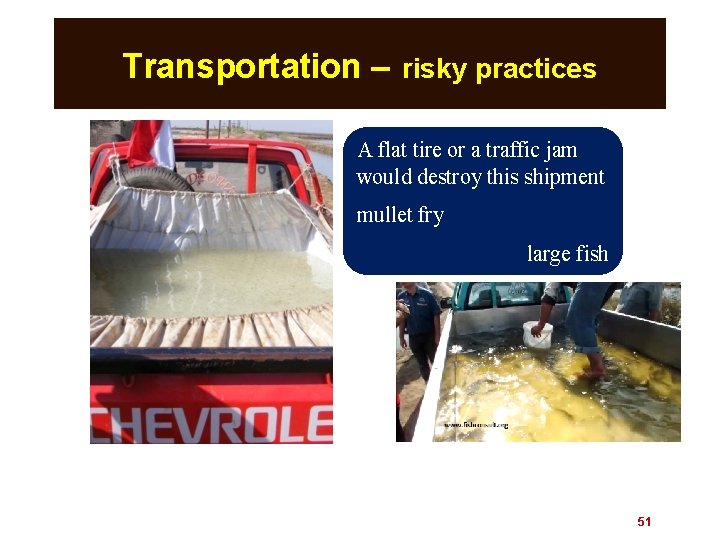
Transportation – risky practices A flat tire or a traffic jam would destroy this shipment mullet fry large fish E 51
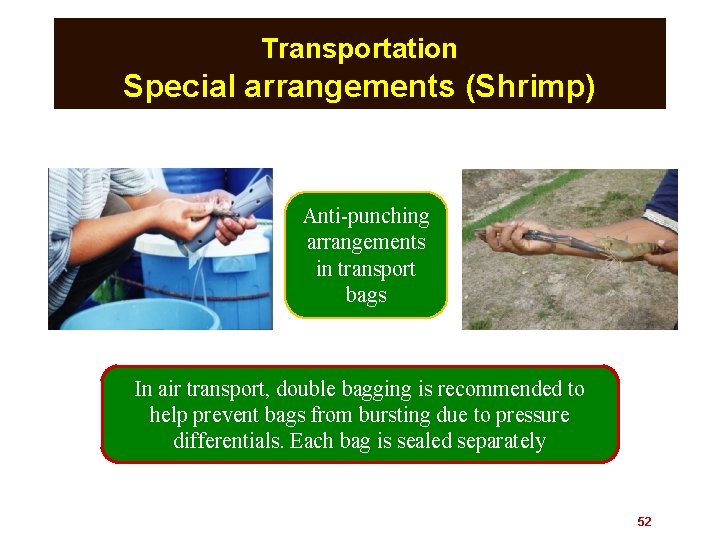
Transportation Special arrangements (Shrimp) Anti-punching arrangements in transport bags In air transport, double bagging is recommended to help prevent bags from bursting due to pressure differentials. Each bag is sealed separately 52
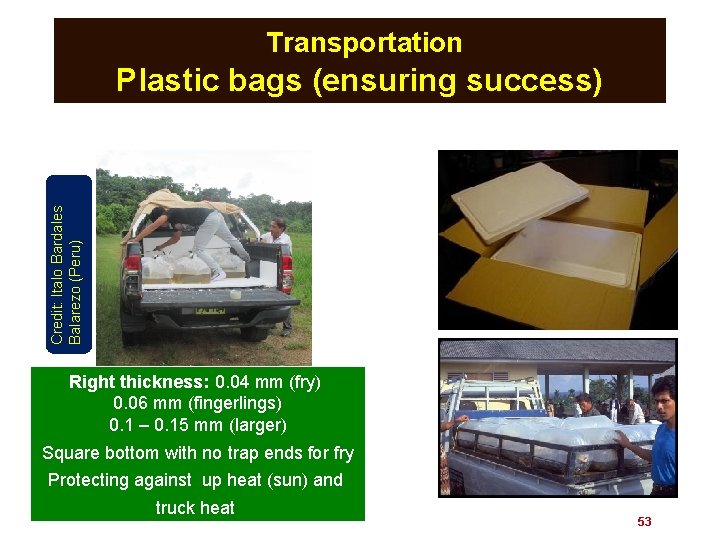
Transportation Credit: Italo Bardales Balarezo (Peru) Plastic bags (ensuring success) Right thickness: 0. 04 mm (fry) 0. 06 mm (fingerlings) 0. 1 – 0. 15 mm (larger) Square bottom with no trap ends for fry Protecting against up heat (sun) and truck heat 53
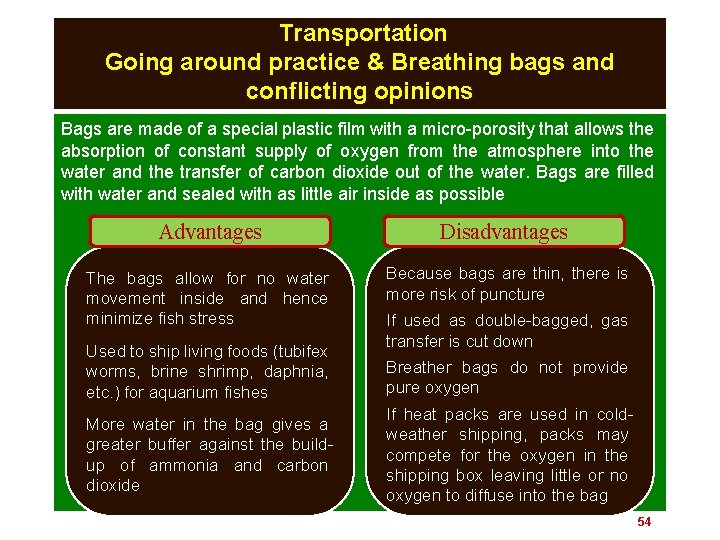
Transportation Going around practice & Breathing bags and conflicting opinions Bags are made of a special plastic film with a micro-porosity that allows the absorption of constant supply of oxygen from the atmosphere into the water and the transfer of carbon dioxide out of the water. Bags are filled with water and sealed with as little air inside as possible Advantages Disadvantages The bags allow for no water movement inside and hence minimize fish stress Because bags are thin, there is more risk of puncture Used to ship living foods (tubifex worms, brine shrimp, daphnia, etc. ) for aquarium fishes More water in the bag gives a greater buffer against the buildup of ammonia and carbon dioxide If used as double-bagged, gas transfer is cut down Breather bags do not provide pure oxygen If heat packs are used in coldweather shipping, packs may compete for the oxygen in the shipping box leaving little or no oxygen to diffuse into the bag 54
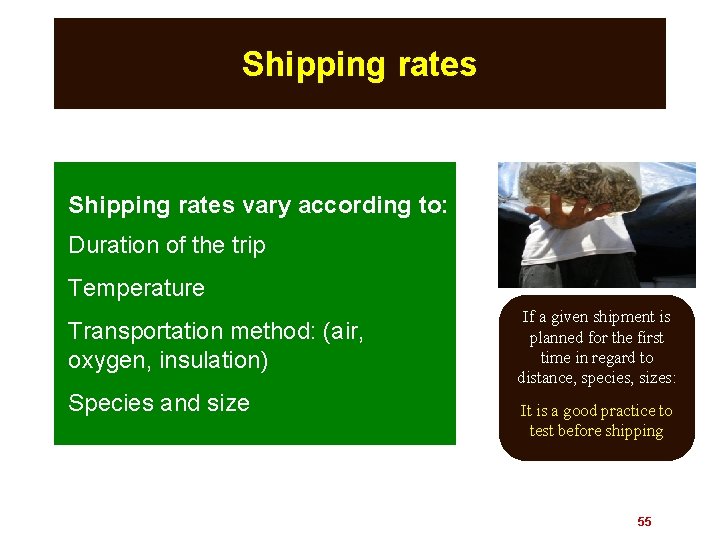
Shipping rates vary according to: Duration of the trip Temperature Transportation method: (air, oxygen, insulation) Species E and size If a given shipment is planned for the first time in regard to distance, species, sizes: It is a good practice to test before shipping 55
Materials of possible used in transportation Adding salt Use of anesthesia Up to 2 g/l salt will minimize energy spent in reducing salt loss from fish Use only if needed Some have used up to 5 g/l successfully Tolerance limits of species to salt should be considered If common table salt is used, it should be iodine free Antibiotics Buffers Reduce excitement and so stress Level of anesthesia during transport should permit fish to be caught easily but not cause total loss of equilibrium MS-222 is used at 15 to 60 mg/l for 6 to 48 hours to sedate fish during transport Acriflavin @ 2 -3 ppm Tris hydroxymethyl amino methane 1 -2 ppt 56
Finally In order to handle fish better we need to understand its biology, requirements, tolerance, sensitivity, etc. Unlike other animals, aquatic environment is unique in a way that the effects of improper handling may pass unnoticed before being discovered later If the protection is usually considered before treatment, in aquatic systems, protection should be highly considered 57