
Live Cell Imaging Chamber Client Lance Rodenkirch Advisor

Live Cell Imaging Chamber Client: Lance Rodenkirch Advisor: Prof. John Webster Jon Sass David Schurter Dan Jonovic Matt Kudek Bryan Fondrie
Design Statement n Engineer a cell imaging chamber so that substances can be perfused into the cell culture at a controlled rate and also maintain a specific carbon dioxide concentration.
Live Cell Imaging n Two Types Develop studies to establish natural behavior n Induced change to study effects of a controlled factor n Light field n Dark field n 3 -D imaging n
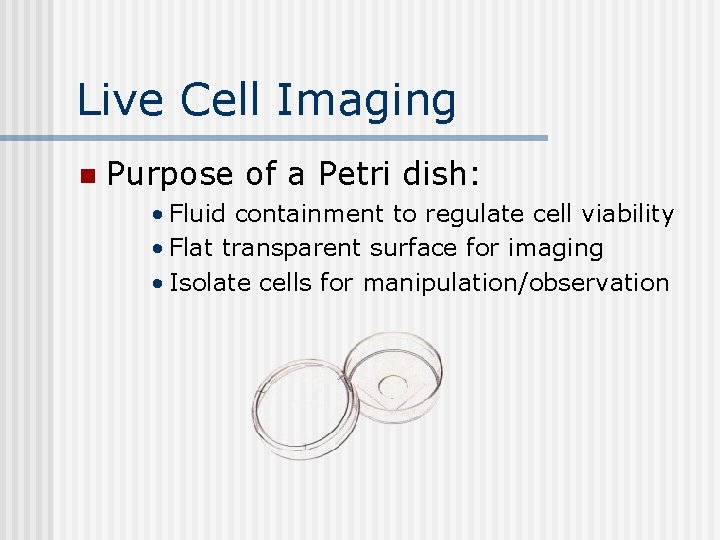
Live Cell Imaging n Purpose of a Petri dish: • Fluid containment to regulate cell viability • Flat transparent surface for imaging • Isolate cells for manipulation/observation
Live Cell Imaging n Goal: Imitate cell’s natural environment • • n Nutrient filled serum 5% CO 2 concentration Temperature set at 37° C Saturated humidity Accomplished through: • • Perfusion CO 2 regulators Heating elements Water pan
Design Constraints n n n n Must not interfere with normal functions of microscope Designed around a 35 mm glass bottom dish Chamber must have internal access Microscope platform 21 cm x 25 cm x 10 cm p. H limiting factor, constant 5% CO 2 Humid environment Costs < $1000
Design #1: CO 2 Feedback and Monitoring System n n n Enclosed Plexiglas chamber CO 2 sensor provides [CO 2] information Circuit evaluates the relayed information Adjustments made automatically by CO 2 uptake controlling valves Add CO 2 if [CO 2] < 5% Small fan keeps air mixture homogeneous
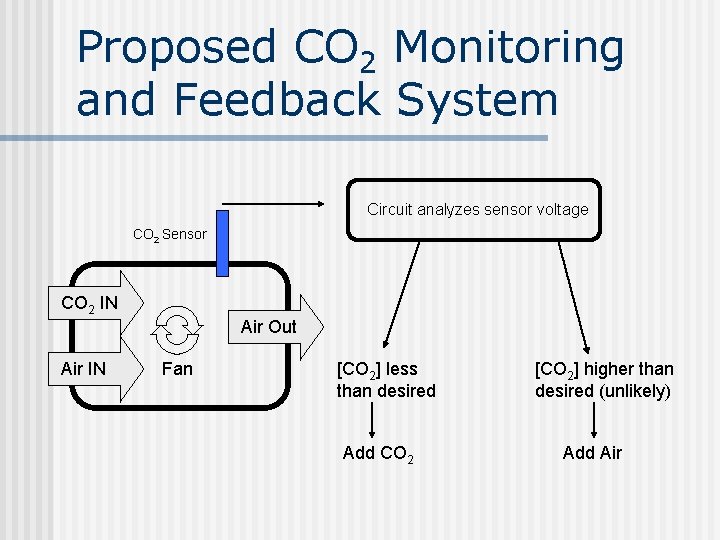
Proposed CO 2 Monitoring and Feedback System Circuit analyzes sensor voltage CO 2 Sensor CO 2 IN Air Out Air IN Fan [CO 2] less than desired Add CO 2 [CO 2] higher than desired (unlikely) Add Air
Design #1 Analysis PROS §Accurate CO 2 monitoring §“Set it and forget it” §Independent of Petri-dish CONS §Rather complicated system §Slower feedback time
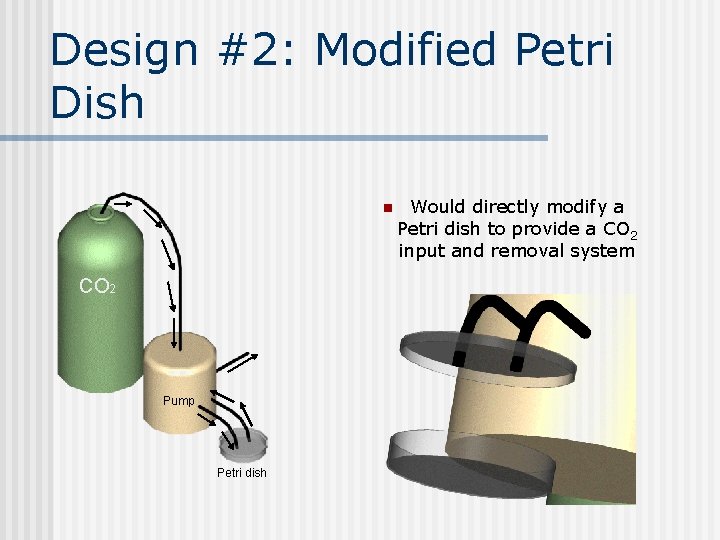
Design #2: Modified Petri Dish n CO 2 Pump Petri dish Would directly modify a Petri dish to provide a CO 2 input and removal system
Design #2 Analysis PROS §Few Parts/Simple Design §Cheaper Solution CONS §Small area to work with §Reuse same top §Low quality of Petri-dish material §Cannot fit CO 2 sensor
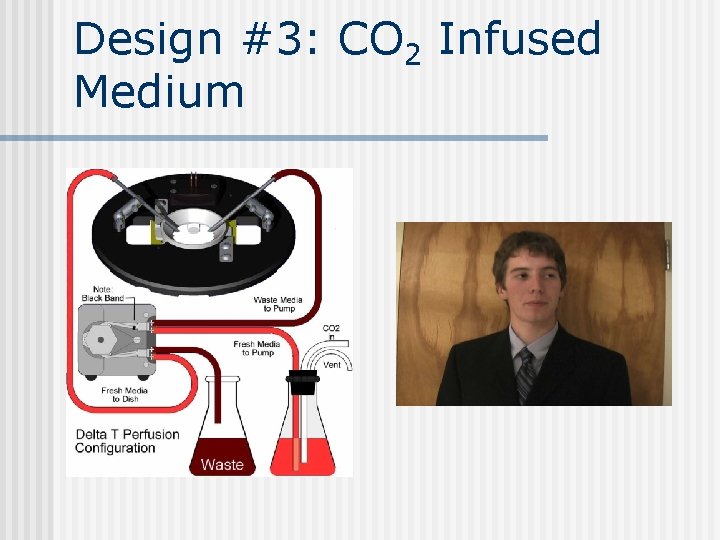
Design #3: CO 2 Infused Medium
Design #3 Analysis §Pros §No enclosure §Refreshes Medium §Increased experimental diversity §Cons §Cover-slip Out of Focus §Price §No CO 2 concentration §monitoring §Waste of medium
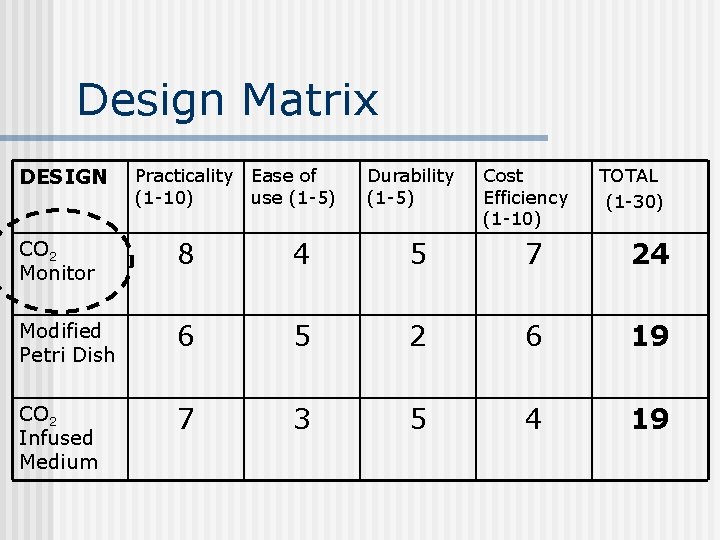
Design Matrix DESIGN Practicality Ease of (1 -10) use (1 -5) Durability (1 -5) Cost Efficiency (1 -10) TOTAL (1 -30) CO 2 Monitor 8 4 5 7 24 Modified Petri Dish 6 5 2 6 19 CO 2 Infused Medium 7 3 5 4 19
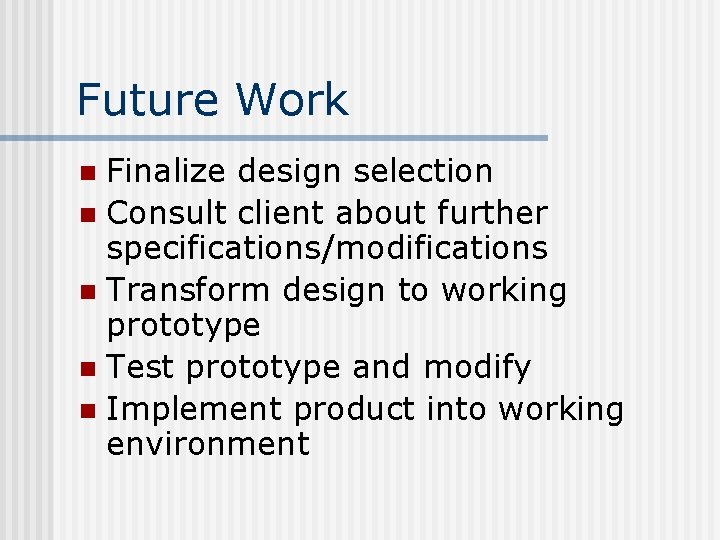
Future Work Finalize design selection n Consult client about further specifications/modifications n Transform design to working prototype n Test prototype and modify n Implement product into working environment n

Questions?
- Slides: 16