
Littoral zone Intertidal zone Estuaries Kelp forests Coral
- Slides: 20
* Littoral zone * Intertidal zone * Estuaries * Kelp forests * Coral reefs * Ocean banks * Continental shelf * Neritic zone * Straits *Pelagic zone *Oceanic zone *Seamounts *Hydrothermal vents *Cold seeps *Demersal zone *Benthic zone *
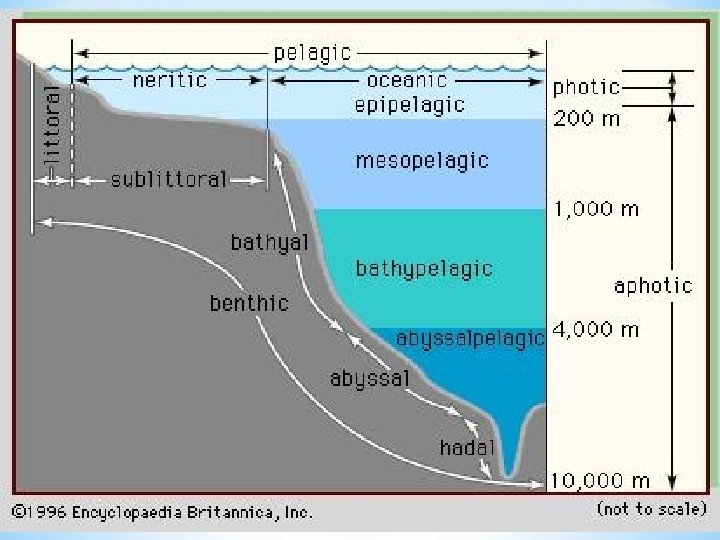
* The part of the ocean that extends from the high water mark to shoreline areas that are permanently underwater * The Littoral zone always includes and extends beyond the intertidal zone to the continental shelf. * Includes 3 sub-zones: supralittoral, eulittoral, sublittoral (also called the neritic zone) * Organisms in these two zones must be able to cope with exposure to air, fresh water from the rain, cold and hot temperatures, and predators (various animals and seabirds). * Some of the organisms that live in these zones include oysters, barnacles, corals, algae (algal). *
*An estuary is an area where the mouth of a river opens into an ocean. *These areas are also called bays, harbors, lagoons, inlets, or sounds. *Estuaries form a transition zone between river environments and ocean environments. *There is a combinations of the freshwater from the rivers and the ocean water which provides for high levels of nutrients in the water and sediment. *Estuaries are some of the most productive natural habitats in the world. *Some of the organisms that live in this zone include salmon, sea trout, plankton. *
*Kelp forests are underwater areas that have a high concentration of kelp. *Kelps are large seaweeds (a form of algae) belonging to the brown algae family. *For kelp forests to thrive they need rocks, high amounts of nitrogen & phosphorus, and light. *They can exist in various temperatures of the ocean, but few exist in the tropical climates because the warm water does not allow the nutrients needed for kelp to grow. *Lots of different organisms are found in kelp forests including sea urchins, snails, shrimp, rockfish, abalone, corals, and so many more! *
*Coral reefs are underwater structures made from calcium carbonate that is given off by corals. *Corals are colonies of tiny living animals found in ocean waters containing little nutrients. *Reefs grow best in warm, shallow, clear, sunny, agitated waters. *Some of the organisms living in coral reefs include various fish, mollusks, worms, crustaceans, and sponges. *
*A shallow area on the continental shelf, like the top of an underwater hill *Also called fishing banks because it is where much of the commercial fishing occurs *Obviously fish are a prominent organism in this zone. *
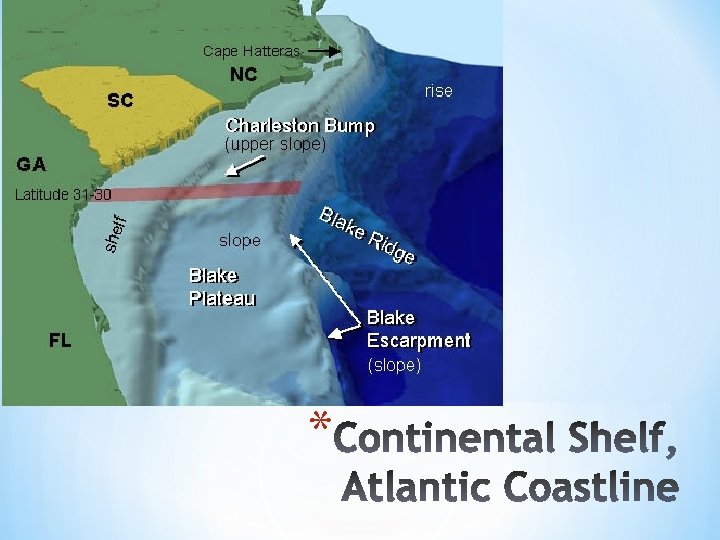
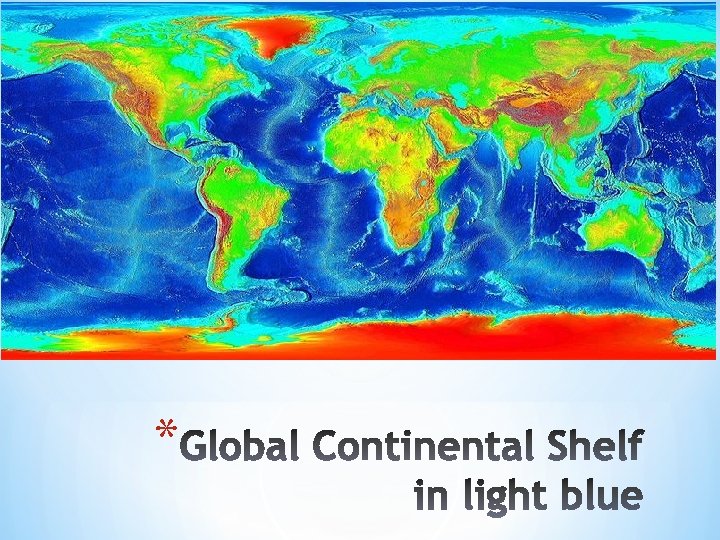
*The continental shelf is the gradually sloping end of a continent that extends under the ocean. *Some areas of the continental shelf extends long distances such as the Atlantic and Gulf coasts of North America. *The shelf is covered in sediment from the erosion of continents. *Typically shallow water and abundant sunshine allow for lots of organisms to thrive. *
*Also called the sublittoral zone *Extends from the low tide mark to the edge of the continental shelf *Has low water pressure, shallow waters, and abundant sunshine *Various organisms live in this zone including small fish, shrimp, and phytoplankton. *
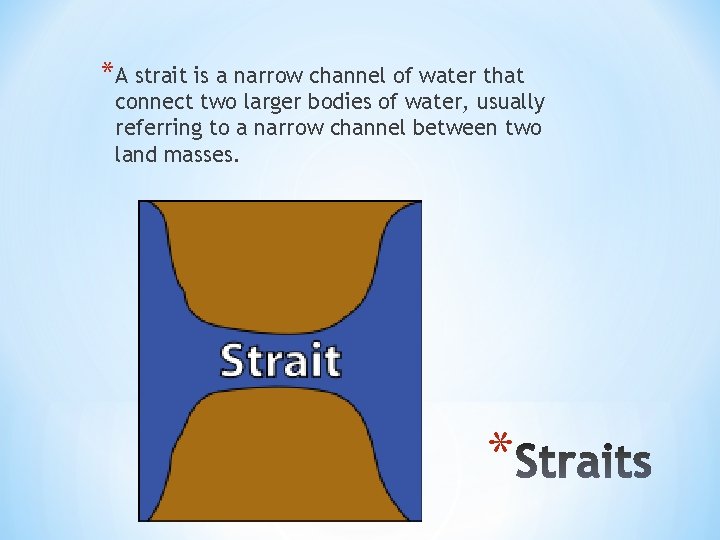
*A strait is a narrow channel of water that connect two larger bodies of water, usually referring to a narrow channel between two land masses. *
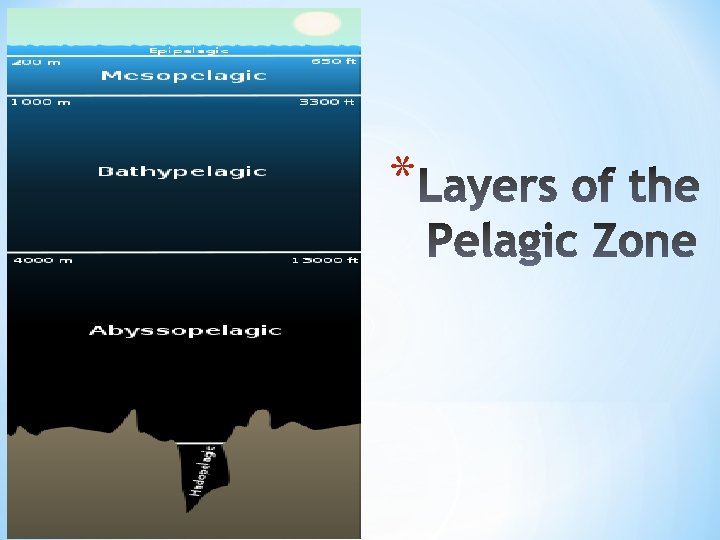
*Considered the “open sea” *The fish that live in this zone are called the pelagic fish. *Life is affected by light intensity, pressure, temperature, salinity (salt content), the supply of dissolved oxygen and nutrients, and the topography. *Sometimes called the open-ocean zone *
*Includes the area beyond the edge of the continental shelf and about 65% of the ocean’s open water *It is another name for Pelagic Zone. *
*Seamounts are mountains rising from the ocean seafloor that does not reach to the water’s surface. *They are typically formed from extinct volcanoes and are located within the deep sea. *Organisms that live on seamounts include plankton, corals, fish, and marine mammals. *
*A hydrothermal vent is a fissure in the Earth’s surface from which geothermal heated water is emitted. *Usually found near volcanic activity: where tectonic plates are moving apart; ocean basins; hotspot; hot springs; geysers *Organisms found near hydrothermal vents in the ocean include tube worms, clams, and shrimp. *
*A cold seep (also called a cold vent) is an area in the ocean floor where hydrogen sulfide, methane and other hydrocarbon-rich fluid seeps out of the Earth’s crust. *Reactions between methane and seawater creates carbonate rock formations and reefs. *Organisms that can be found near cold seeps include bacteria, mussels, and tubeworms. *
*Organisms that live in this zone are called Demersal fish, and live and feed in the open water column. *This zone is just beyond the continental shelf but does not extend into the abyssal depths. *
*This region starts at the shore line and extends to the deep ocean trenches. *The marine habitat at the bottom level of the ocean which includes organisms called benthos. *Some organisms are permanently attached to the bottom. *Because the water is deep and pressurized organisms feed on organic matter that drifts down from higher up in the water column (dead and decaying organisms). *