
LITTLE PREMODE CLEANER TILTFREE SEISMOMETER Veronica Leccese Dr






- Slides: 30
LITTLE PRE-MODE CLEANER & TILT-FREE SEISMOMETER Veronica Leccese, Dr. Dooley Research Group
Outline Little Pre-Mode Cleaner (PMC) • Laser beam and its instability • Solution: PMC • Little PMC building • Future work Tilt-free seismometer • Seismic noise in LIGO: solutions • Tilt-to-translation coupling and tilt-free sismometer • Tilt injection: current driver • Future work
LITTLE PRE-MODE CLEANER
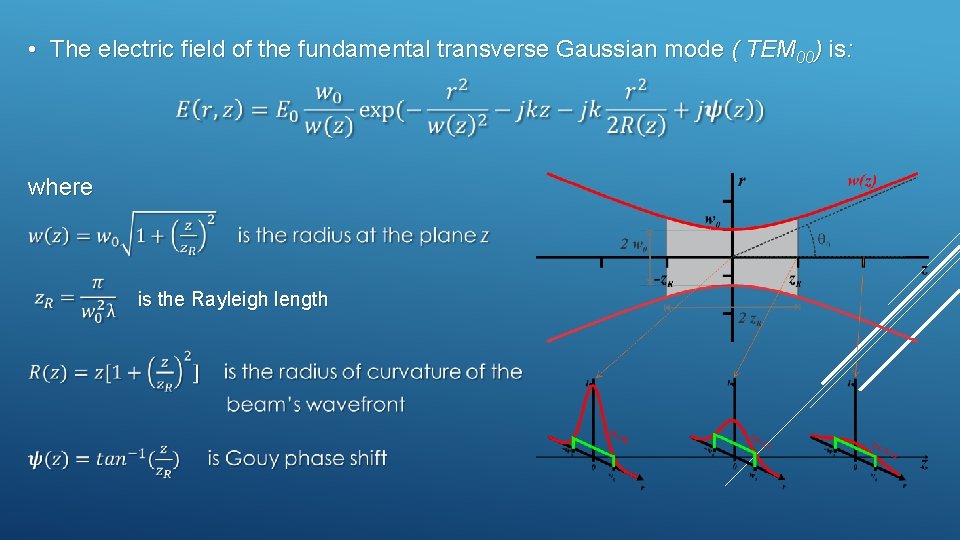
Laser emission: Gaussian beam • Gaussian beam is a beam of monochromatic electromagnetic radiation whose transverse magnetic and electric field amplitude profiles are given by the Gaussian function; this also implies a Gaussian intensity profile. • Gaussian beams and the higher-order Gaussian modes are solutions to the wave equation for an electromagnetic field in free space or in a homogeneous dielectric medium:
• The electric field of the fundamental transverse Gaussian mode ( TEM 00) is: where is the Rayleigh length
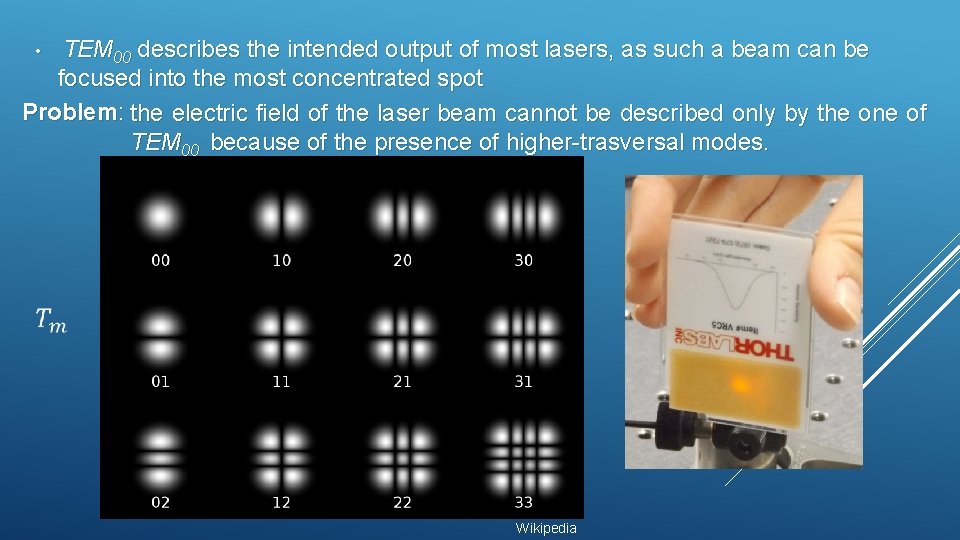
• TEM 00 describes the intended output of most lasers, as such a beam can be focused into the most concentrated spot Problem: the electric field of the laser beam cannot be described only by the one of TEM 00 because of the presence of higher-trasversal modes. Wikipedia
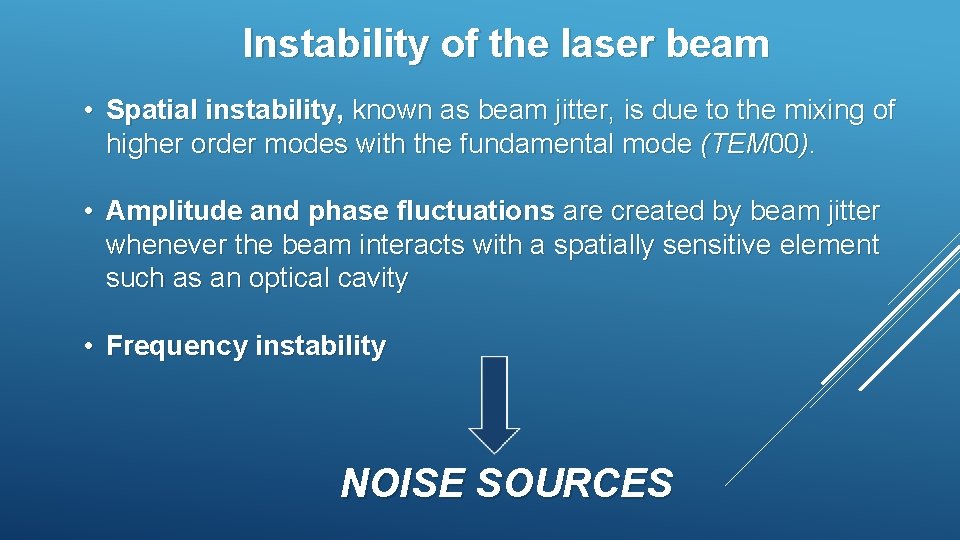
Instability of the laser beam • Spatial instability, known as beam jitter, is due to the mixing of higher order modes with the fundamental mode (TEM 00). • Amplitude and phase fluctuations are created by beam jitter whenever the beam interacts with a spatially sensitive element such as an optical cavity • Frequency instability NOISE SOURCES
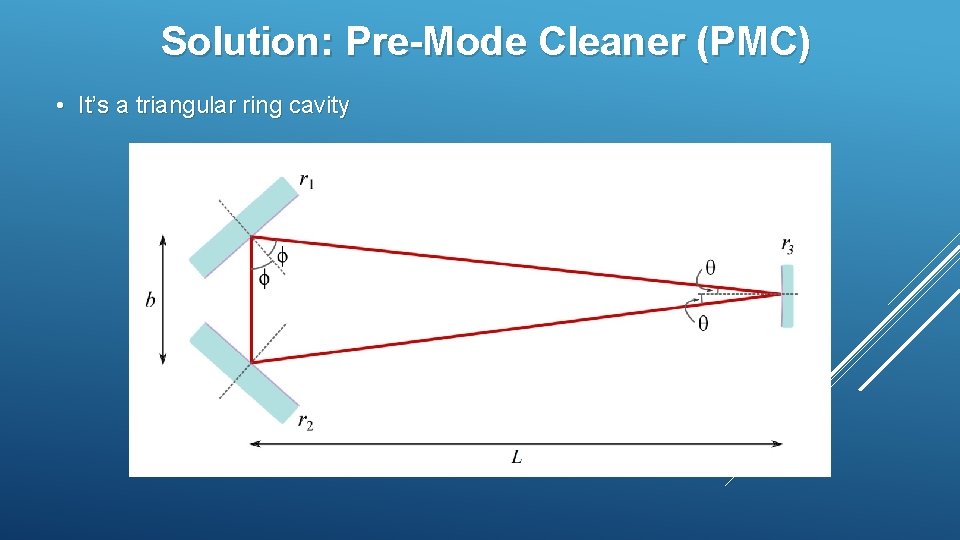
Solution: Pre-Mode Cleaner (PMC) • It’s a triangular ring cavity
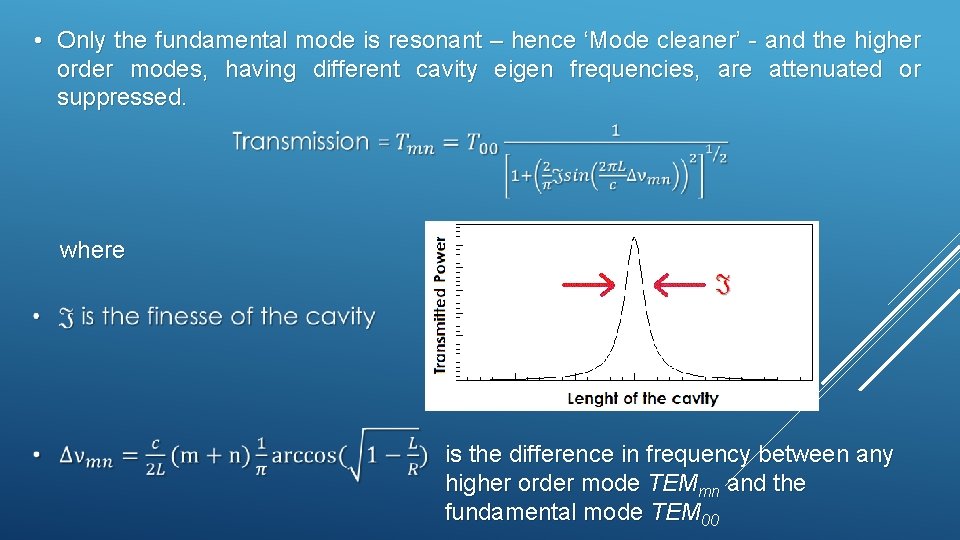
• Only the fundamental mode is resonant – hence ‘Mode cleaner’ - and the higher order modes, having different cavity eigen frequencies, are attenuated or suppressed. where is the difference in frequency between any higher order mode TEMmn and the fundamental mode TEM 00
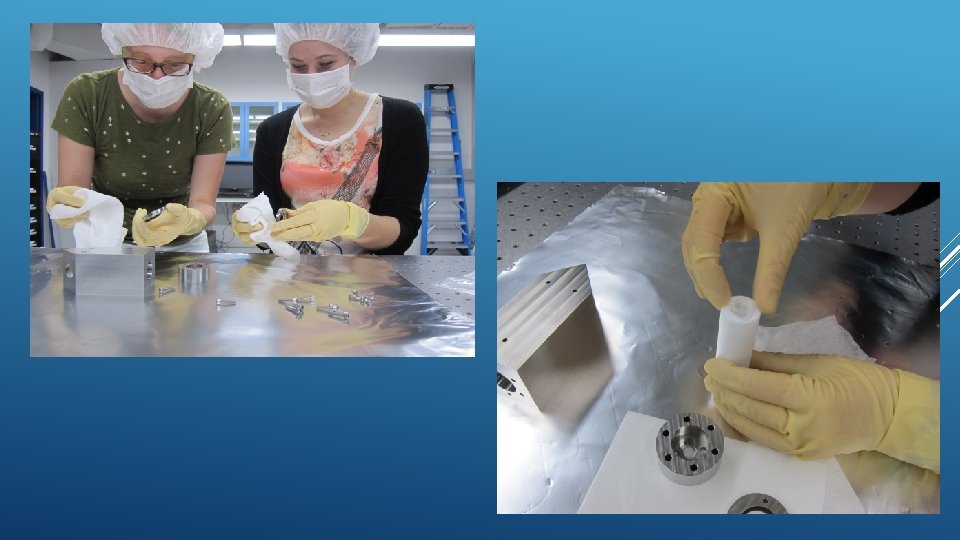
Building a Little PMC What do we need? • A spacer • Two flat mirrors and a curved mirror • Piezoelectric transducer (PZT) DCC E 1400332 -v 1 • Two clamps and an endcup • A base
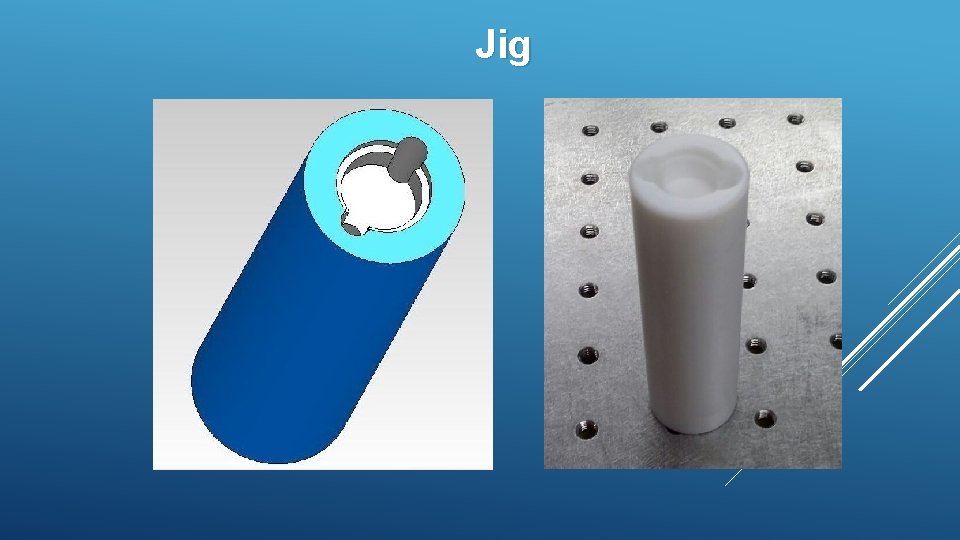
Jig
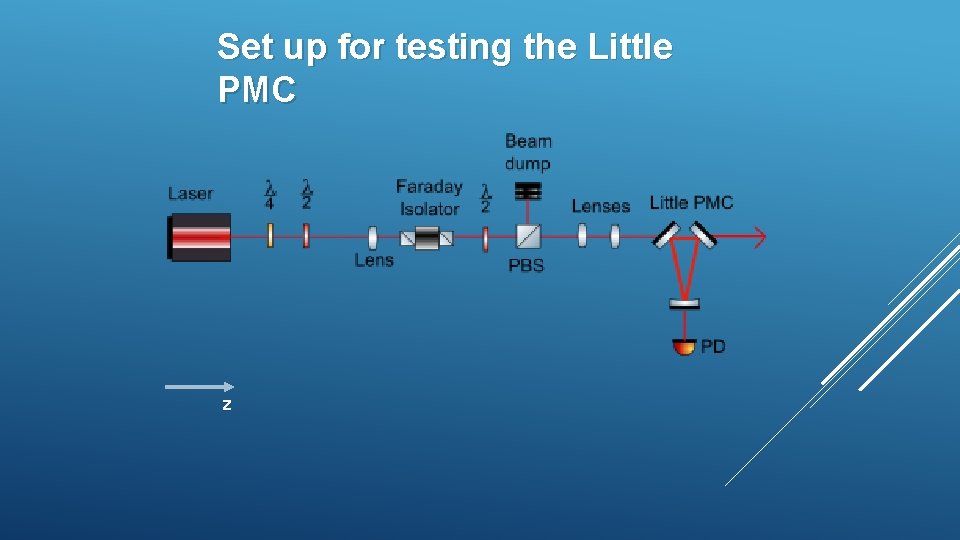
Set up for testing the Little PMC z
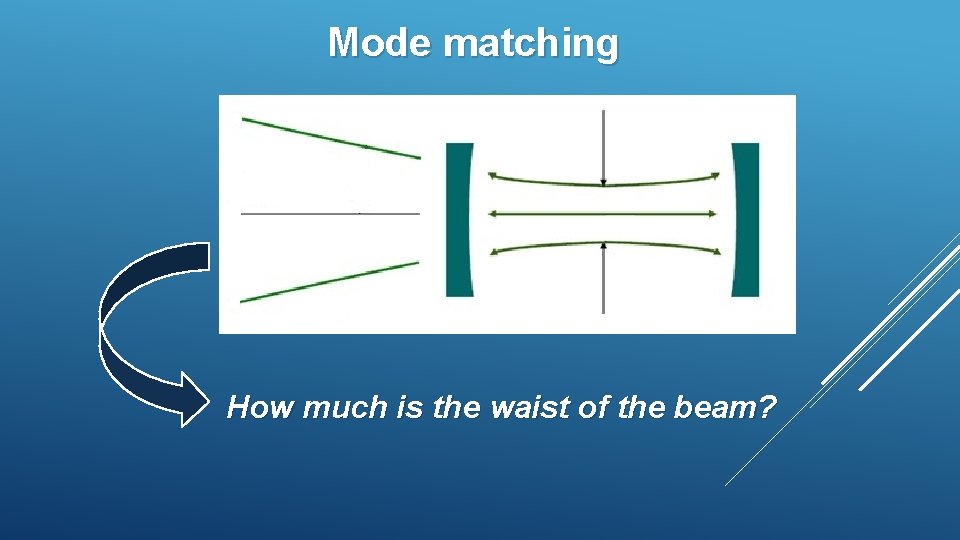
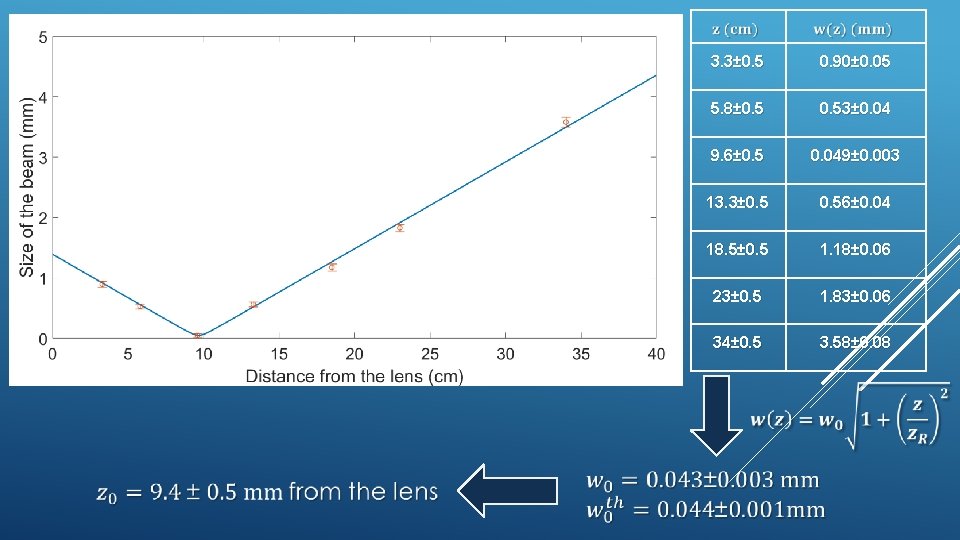
Mode matching How much is the waist of the beam?
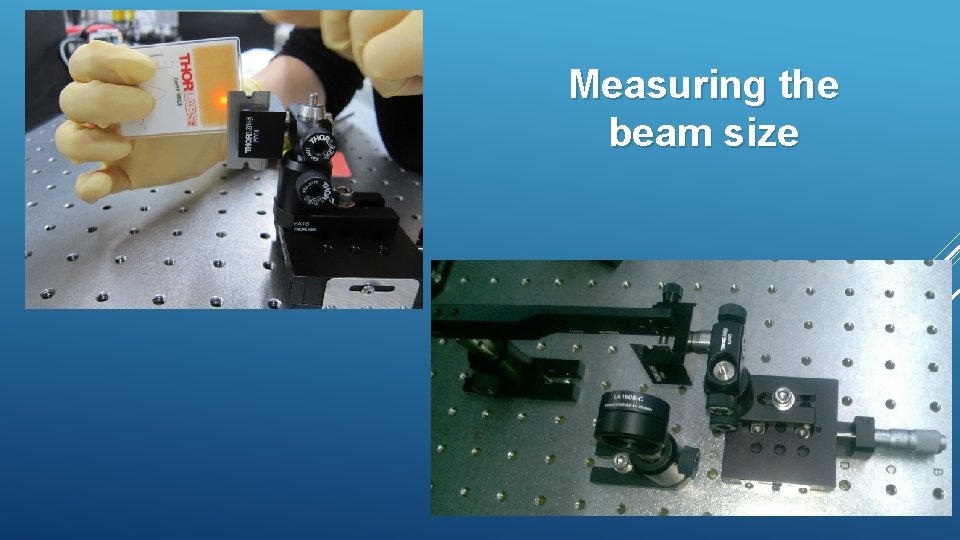
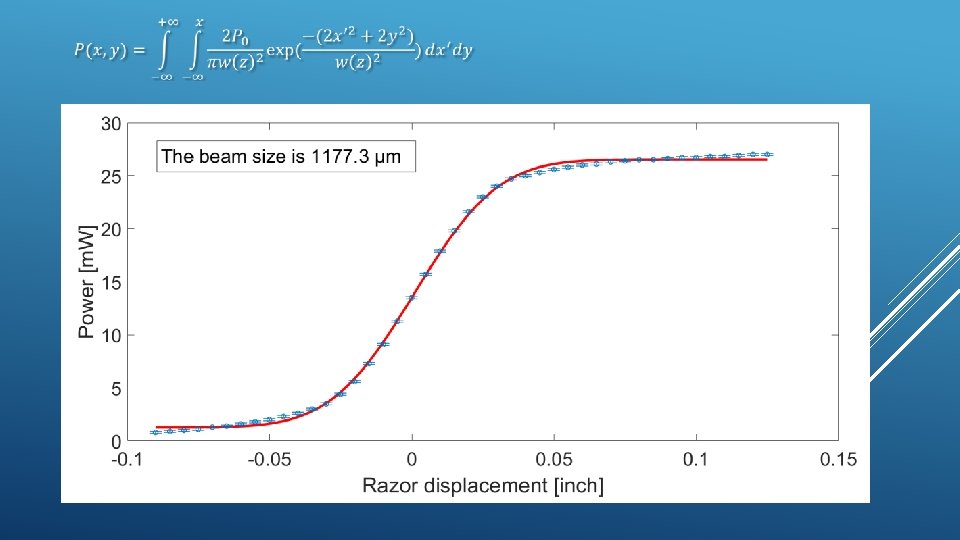
Measuring the beam size
3. 3± 0. 5 0. 90± 0. 05 5. 8± 0. 53± 0. 04 9. 6± 0. 5 0. 049± 0. 003 13. 3± 0. 56± 0. 04 18. 5± 0. 5 1. 18± 0. 06 23± 0. 5 1. 83± 0. 06 34± 0. 5 3. 58± 0. 08
Choise of lenses where and
Future work • Gluing the PZT to the mirror and the mirror on the endcup • Driver for the PZT • Lock the PMC • Characterize the PMC (i. e. measure the mode matching and the transmission) • Use the cavity in optic experiments (e. g. squeezed light)
TILT-FREE SEISMOMETER
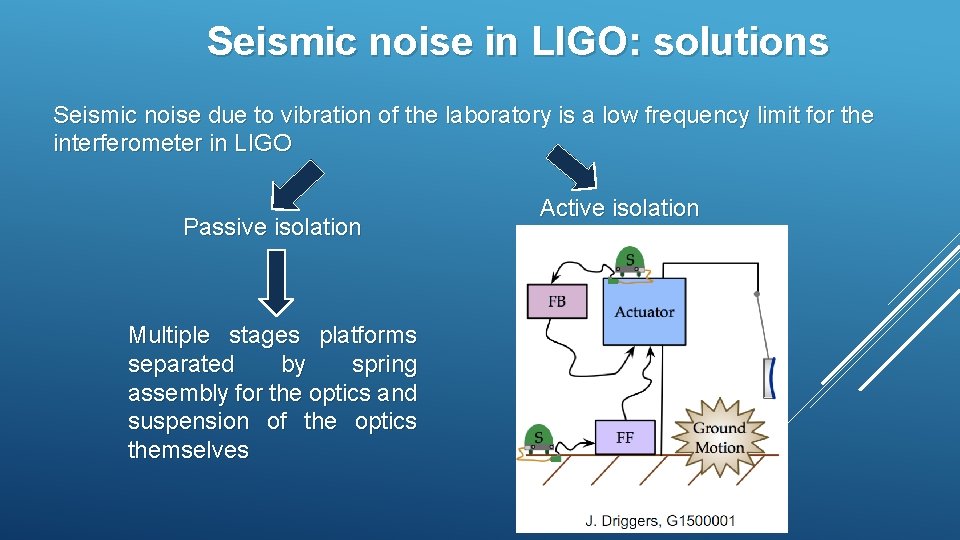
Seismic noise in LIGO: solutions Seismic noise due to vibration of the laboratory is a low frequency limit for the interferometer in LIGO Passive isolation Multiple stages platforms separated by spring assembly for the optics and suspension of the optics themselves Active isolation
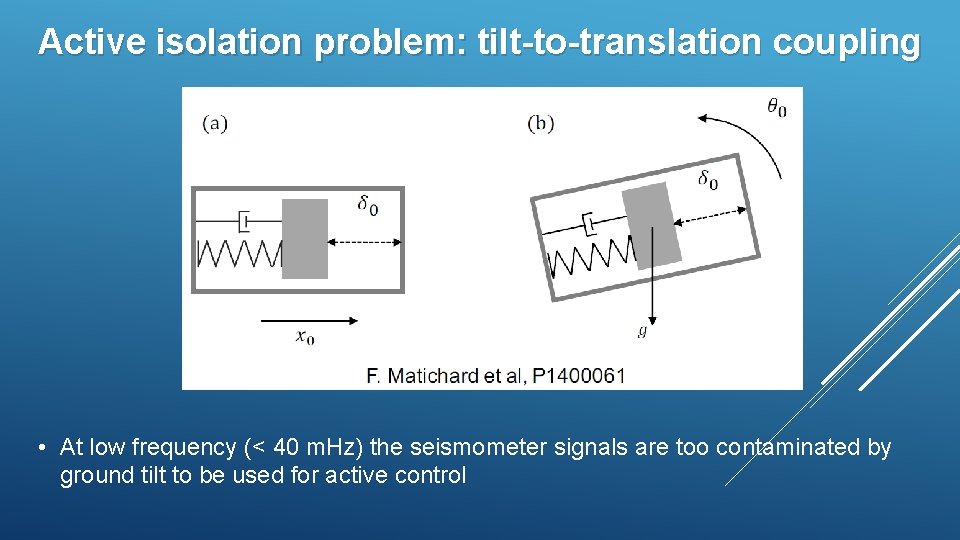
Active isolation problem: tilt-to-translation coupling • At low frequency (< 40 m. Hz) the seismometer signals are too contaminated by ground tilt to be used for active control
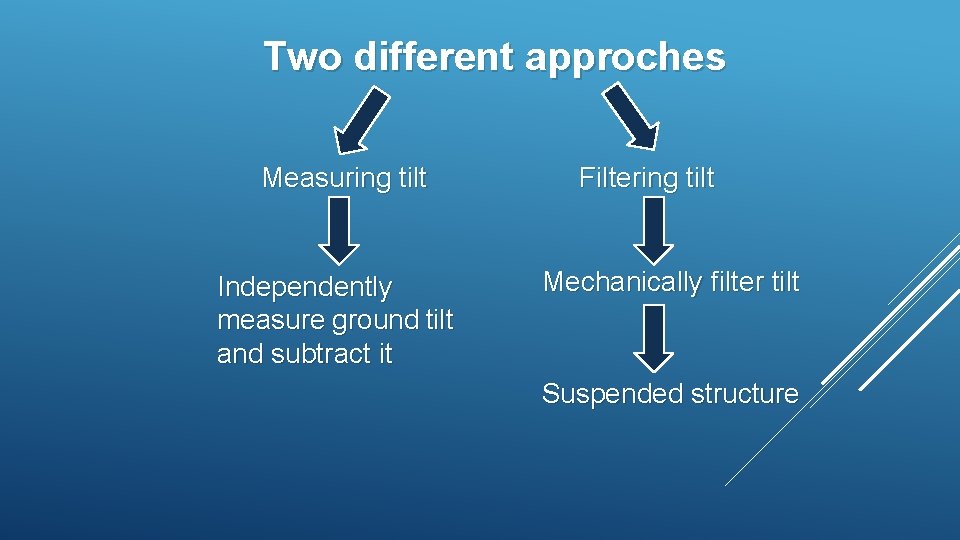
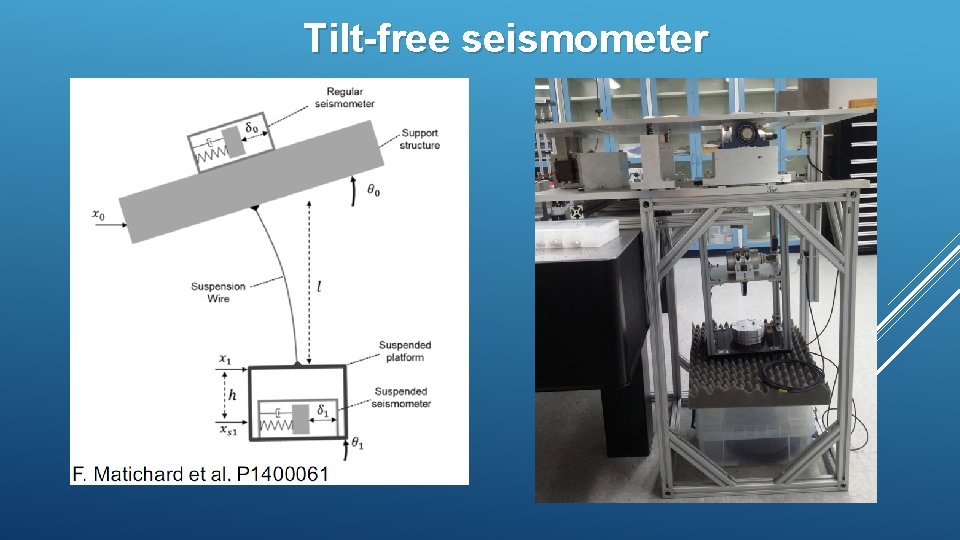
Two different approches Measuring tilt Independently measure ground tilt and subtract it Filtering tilt Mechanically filter tilt Suspended structure
Tilt-free seismometer
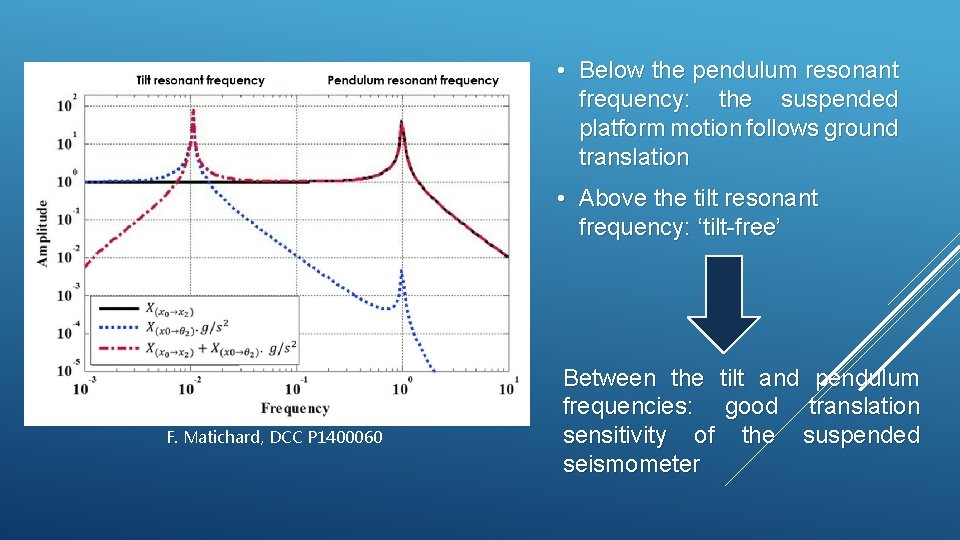
• Below the pendulum resonant frequency: the suspended platform motion follows ground translation • Above the tilt resonant frequency: ‘tilt-free’ F. Matichard, DCC P 1400060 Between the tilt and pendulum frequencies: good translation sensitivity of the suspended seismometer
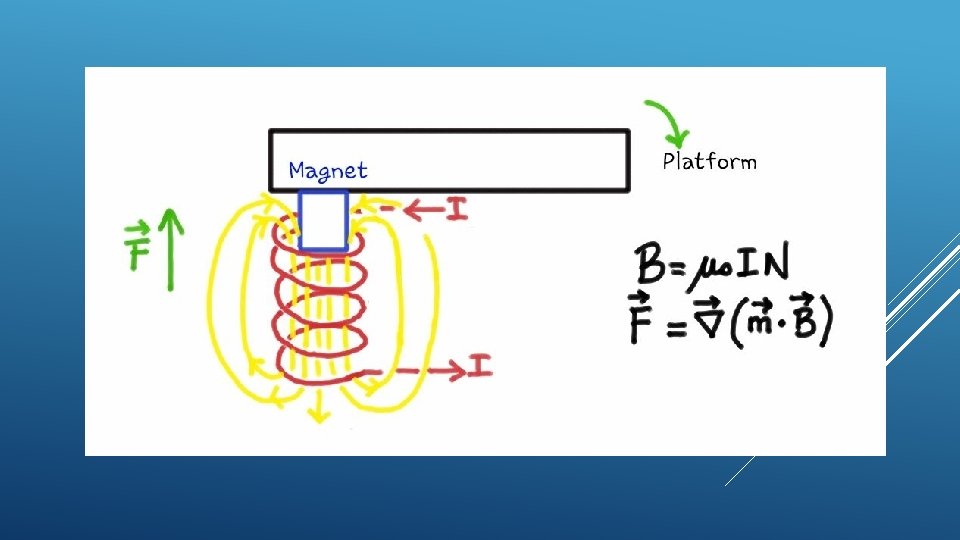
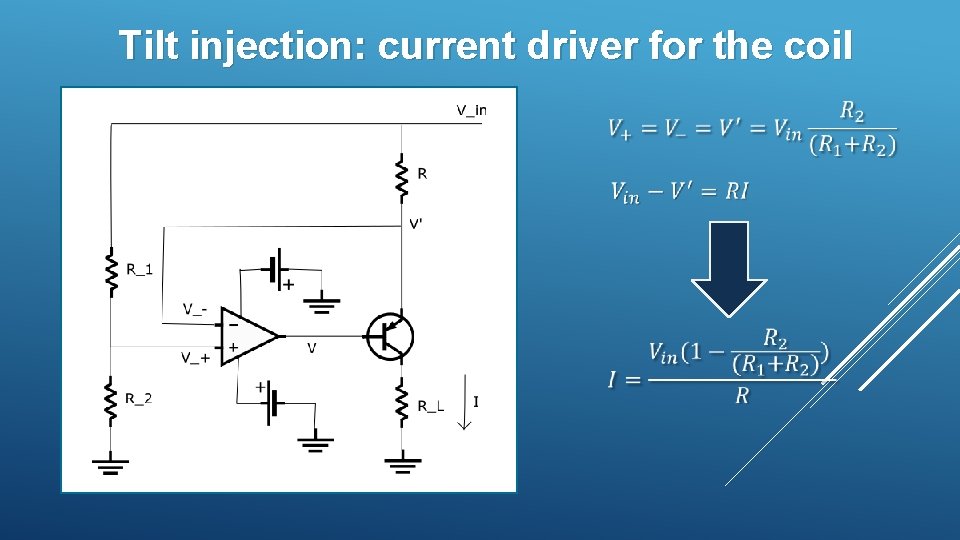
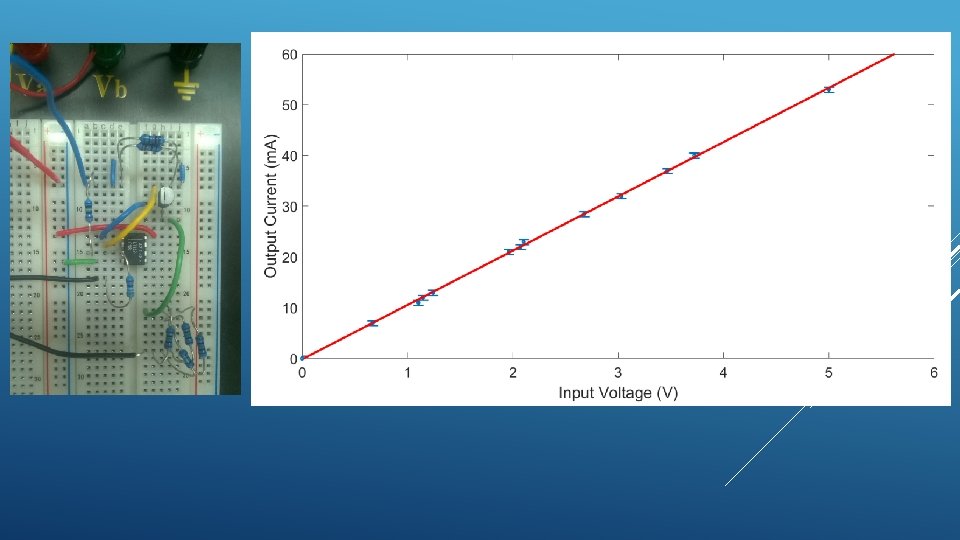
Tilt injection: current driver for the coil
Future work • Test the circuit with the coil • Solder components to breadboard • Measurement of the tilt to displacement transfer function
Acknowledgments • Dr. Kate Dooley • Dr. Marco Cavaglià • Dr. Antonio Perreca • Dr. Lucien Cremaldi • Dr. Giancarlo Cella • Mohammad Afrough • Camillo Cocchieri • INFN, NSF and LIGO Thank you for your attention!