
Little or No Increase in Attendance Based on
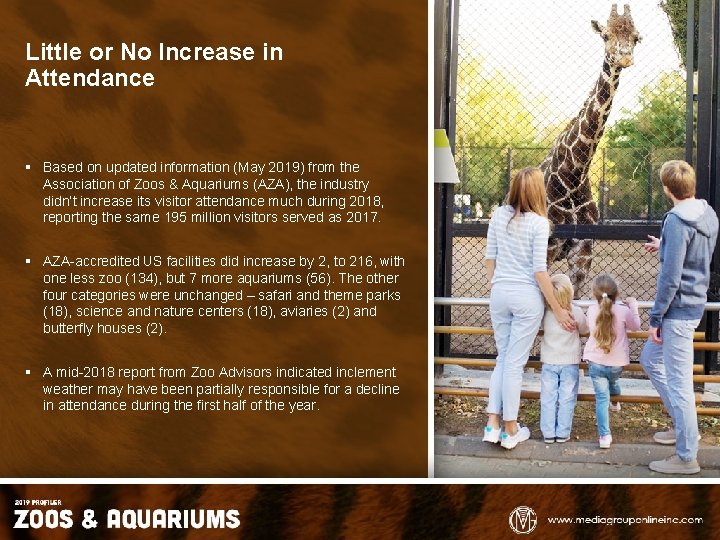
Little or No Increase in Attendance § Based on updated information (May 2019) from the Association of Zoos & Aquariums (AZA), the industry didn’t increase its visitor attendance much during 2018, reporting the same 195 million visitors served as 2017. § AZA-accredited US facilities did increase by 2, to 216, with one less zoo (134), but 7 more aquariums (56). The other four categories were unchanged – safari and theme parks (18), science and nature centers (18), aviaries (2) and butterfly houses (2). § A mid-2018 report from Zoo Advisors indicated inclement weather may have been partially responsible for a decline in attendance during the first half of the year.
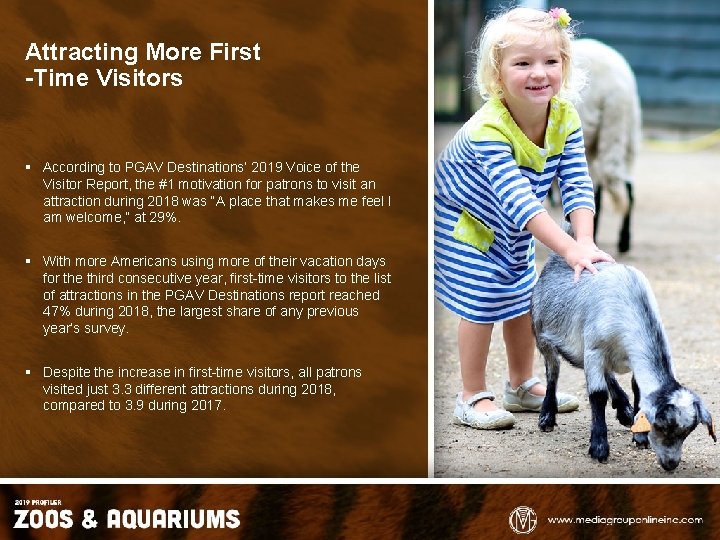
Attracting More First -Time Visitors § According to PGAV Destinations’ 2019 Voice of the Visitor Report, the #1 motivation for patrons to visit an attraction during 2018 was “A place that makes me feel I am welcome, ” at 29%. § With more Americans using more of their vacation days for the third consecutive year, first-time visitors to the list of attractions in the PGAV Destinations report reached 47% during 2018, the largest share of any previous year’s survey. § Despite the increase in first-time visitors, all patrons visited just 3. 3 different attractions during 2018, compared to 3. 9 during 2017.
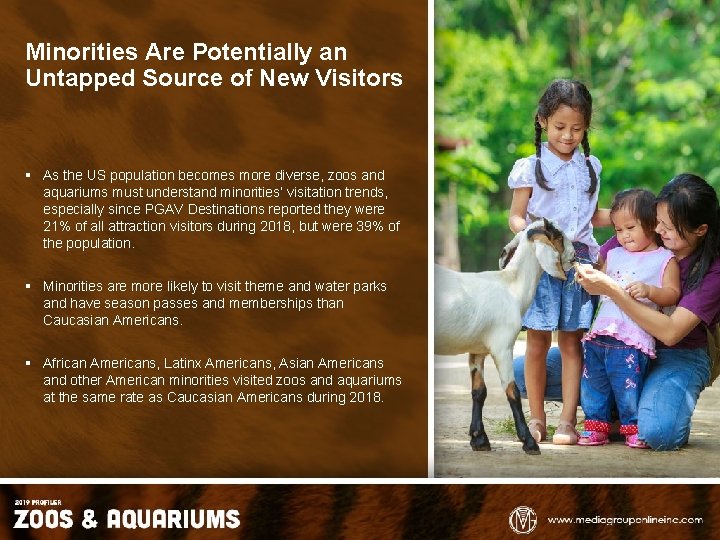
Minorities Are Potentially an Untapped Source of New Visitors § As the US population becomes more diverse, zoos and aquariums must understand minorities’ visitation trends, especially since PGAV Destinations reported they were 21% of all attraction visitors during 2018, but were 39% of the population. § Minorities are more likely to visit theme and water parks and have season passes and memberships than Caucasian Americans. § African Americans, Latinx Americans, Asian Americans and other American minorities visited zoos and aquariums at the same rate as Caucasian Americans during 2018.
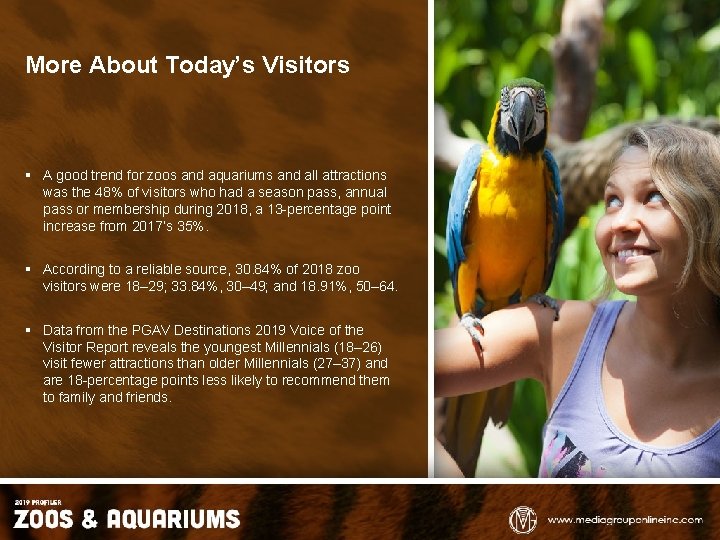
More About Today’s Visitors § A good trend for zoos and aquariums and all attractions was the 48% of visitors who had a season pass, annual pass or membership during 2018, a 13 -percentage point increase from 2017’s 35%. § According to a reliable source, 30. 84% of 2018 zoo visitors were 18– 29; 33. 84%, 30– 49; and 18. 91%, 50– 64. § Data from the PGAV Destinations 2019 Voice of the Visitor Report reveals the youngest Millennials (18– 26) visit fewer attractions than older Millennials (27– 37) and are 18 -percentage points less likely to recommend them to family and friends.
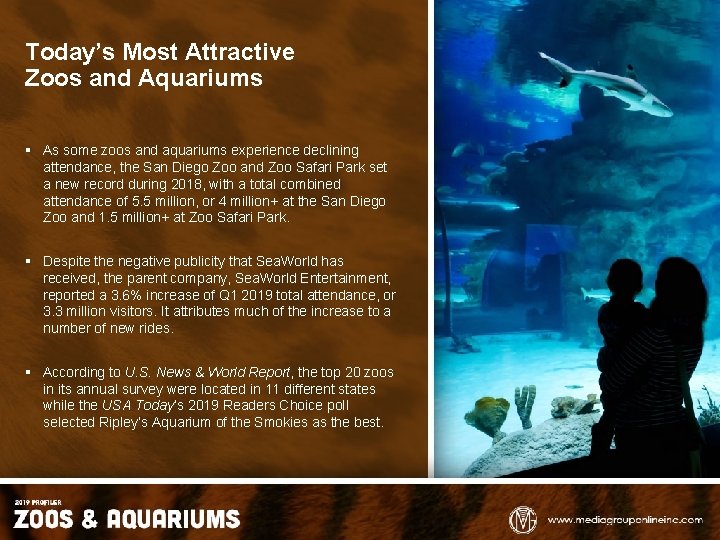
Today’s Most Attractive Zoos and Aquariums § As some zoos and aquariums experience declining attendance, the San Diego Zoo and Zoo Safari Park set a new record during 2018, with a total combined attendance of 5. 5 million, or 4 million+ at the San Diego Zoo and 1. 5 million+ at Zoo Safari Park. § Despite the negative publicity that Sea. World has received, the parent company, Sea. World Entertainment, reported a 3. 6% increase of Q 1 2019 total attendance, or 3. 3 million visitors. It attributes much of the increase to a number of new rides. § According to U. S. News & World Report, the top 20 zoos in its annual survey were located in 11 different states while the USA Today’s 2019 Readers Choice poll selected Ripley’s Aquarium of the Smokies as the best.
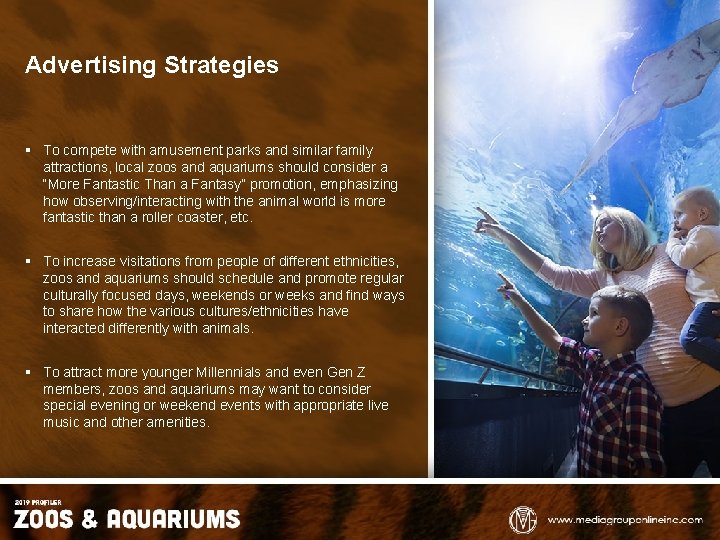
Advertising Strategies § To compete with amusement parks and similar family attractions, local zoos and aquariums should consider a “More Fantastic Than a Fantasy” promotion, emphasizing how observing/interacting with the animal world is more fantastic than a roller coaster, etc. § To increase visitations from people of different ethnicities, zoos and aquariums should schedule and promote regular culturally focused days, weekends or weeks and find ways to share how the various cultures/ethnicities have interacted differently with animals. § To attract more younger Millennials and even Gen Z members, zoos and aquariums may want to consider special evening or weekend events with appropriate live music and other amenities.
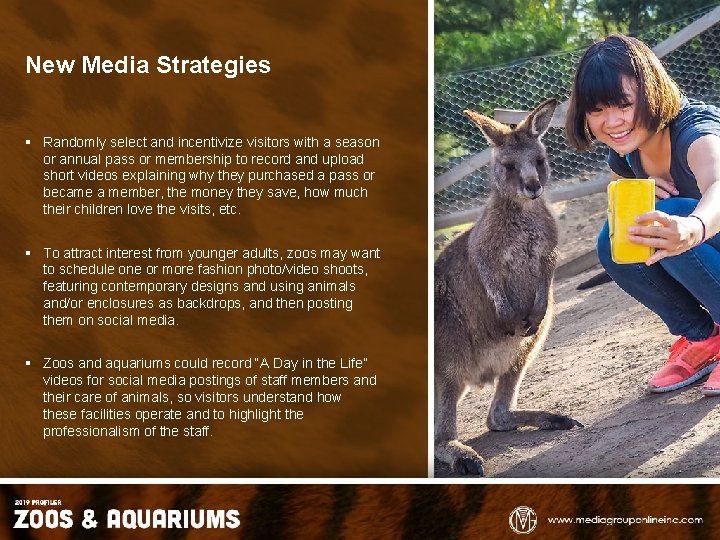
New Media Strategies § Randomly select and incentivize visitors with a season or annual pass or membership to record and upload short videos explaining why they purchased a pass or became a member, the money they save, how much their children love the visits, etc. § To attract interest from younger adults, zoos may want to schedule one or more fashion photo/video shoots, featuring contemporary designs and using animals and/or enclosures as backdrops, and then posting them on social media. § Zoos and aquariums could record “A Day in the Life” videos for social media postings of staff members and their care of animals, so visitors understand how these facilities operate and to highlight the professionalism of the staff.
- Slides: 9