
Lithosphere The rigid outermost part of the earth
- Slides: 7
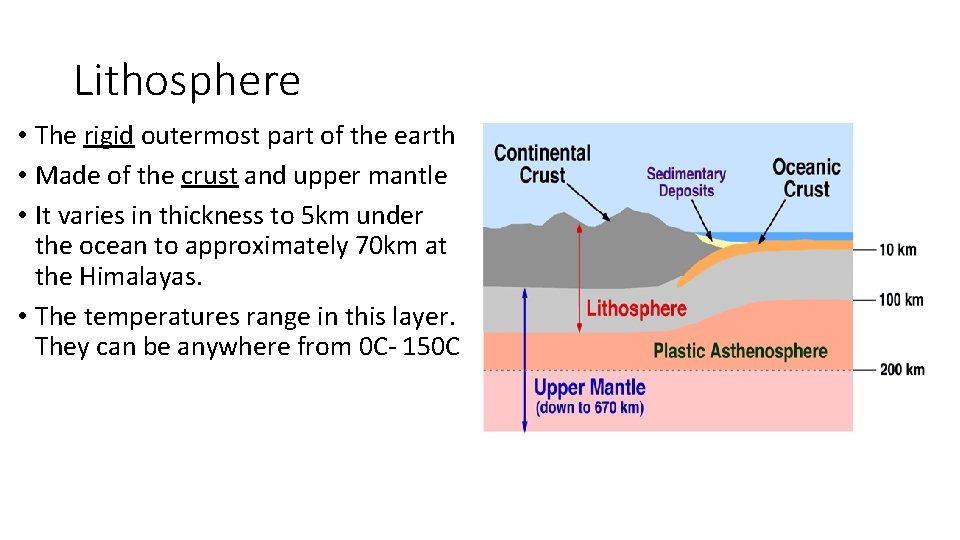
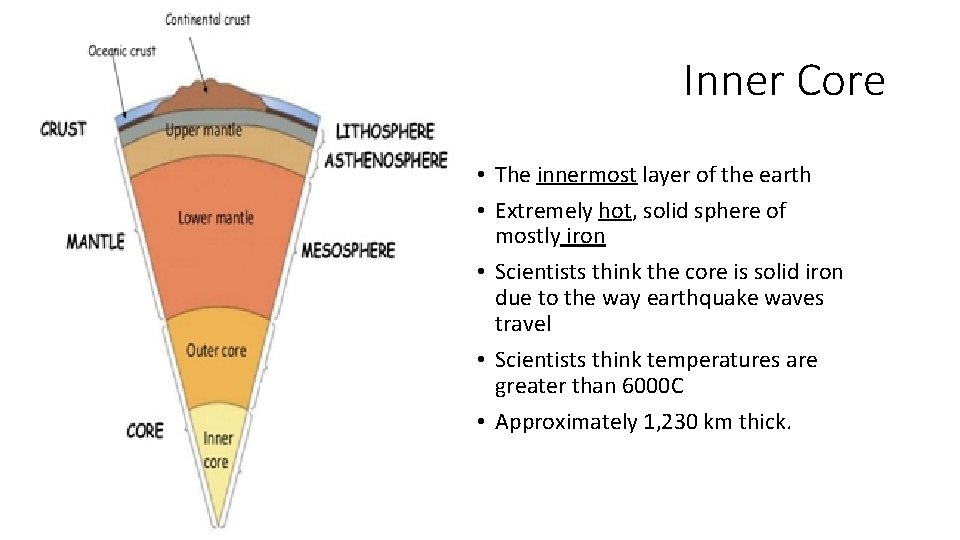
Lithosphere • The rigid outermost part of the earth • Made of the crust and upper mantle • It varies in thickness to 5 km under the ocean to approximately 70 km at the Himalayas. • The temperatures range in this layer. They can be anywhere from 0 C- 150 C
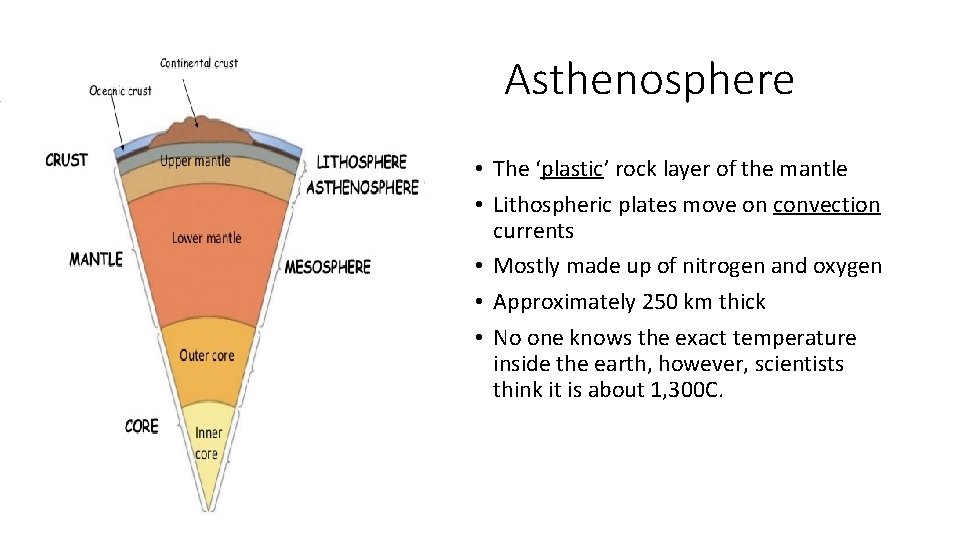
Asthenosphere • The ‘plastic’ rock layer of the mantle • Lithospheric plates move on convection currents • Mostly made up of nitrogen and oxygen • Approximately 250 km thick • No one knows the exact temperature inside the earth, however, scientists think it is about 1, 300 C.
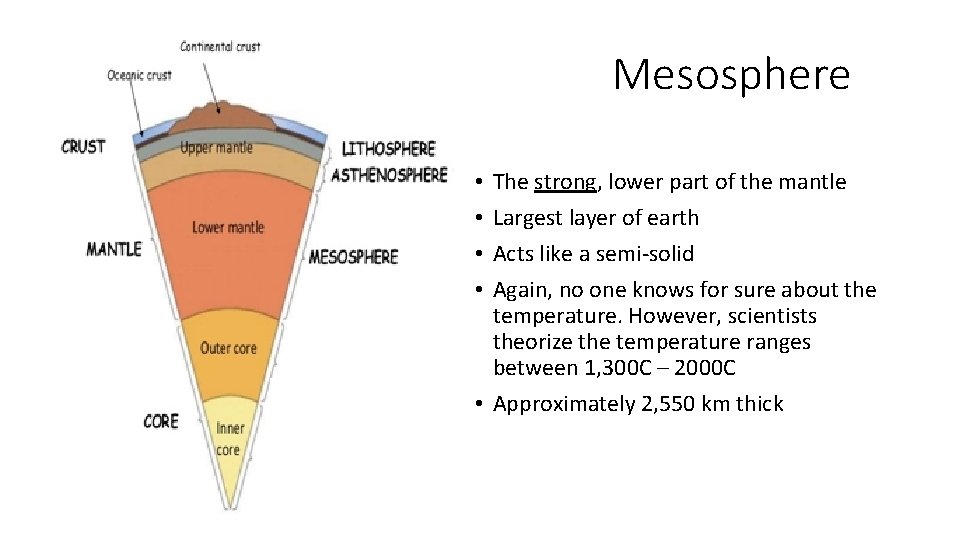
Mesosphere The strong, lower part of the mantle Largest layer of earth Acts like a semi-solid Again, no one knows for sure about the temperature. However, scientists theorize the temperature ranges between 1, 300 C – 2000 C • Approximately 2, 550 km thick • •
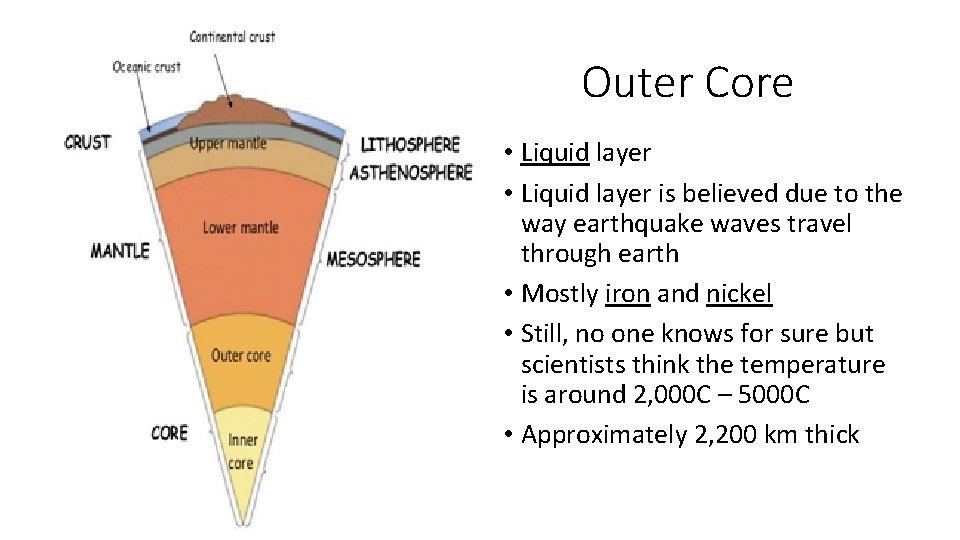
Outer Core • Liquid layer is believed due to the way earthquake waves travel through earth • Mostly iron and nickel • Still, no one knows for sure but scientists think the temperature is around 2, 000 C – 5000 C • Approximately 2, 200 km thick
Inner Core • The innermost layer of the earth • Extremely hot, solid sphere of mostly iron • Scientists think the core is solid iron due to the way earthquake waves travel • Scientists think temperatures are greater than 6000 C • Approximately 1, 230 km thick.
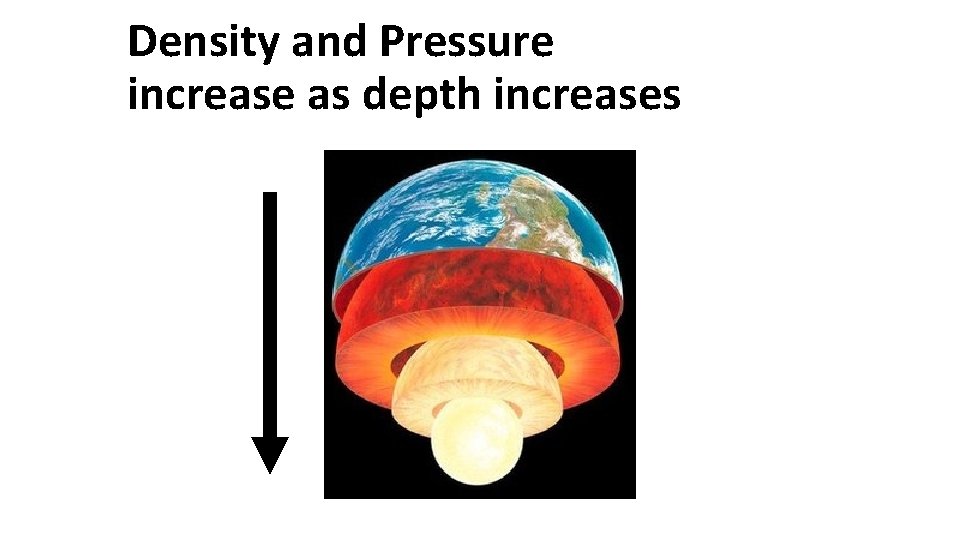
Density and Pressure increase as depth increases
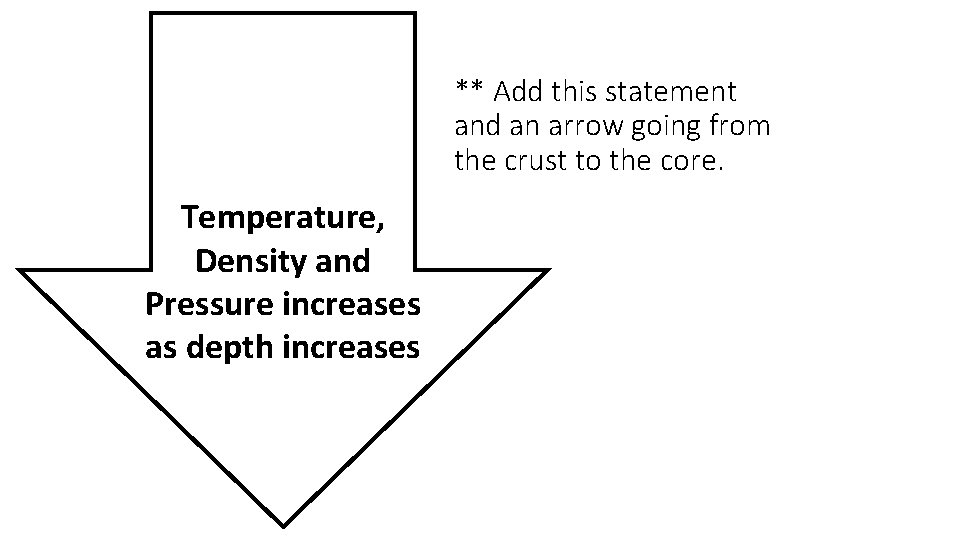
** Add this statement and an arrow going from the crust to the core. Temperature, Density and Pressure increases as depth increases