
LITHOSPHERE ROCKS MINERALS SOIL Lithosphere w The outer
- Slides: 24
LITHOSPHERE ROCKS MINERALS SOIL
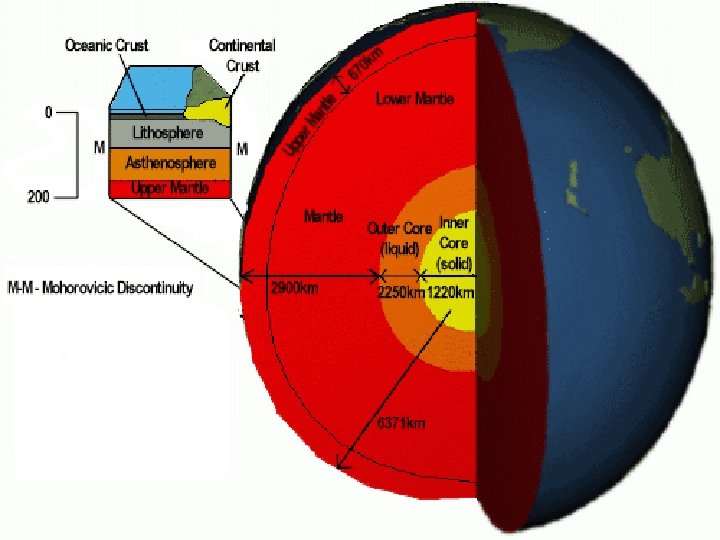
Lithosphere w The outer "solid" part of Earth. w It has two parts, the crust and the upper mantle. w It is about 100 km thick.
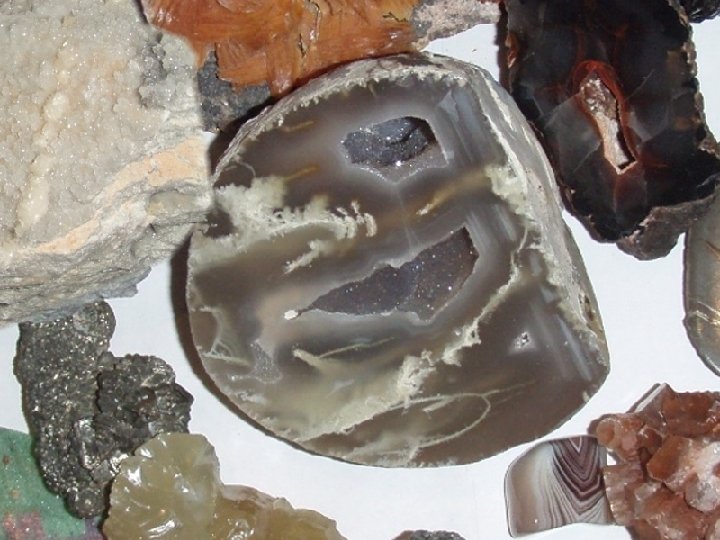
Minerals w To be classified as a true mineral, a substance must be a solid and have a crystalline structure. w It must also be a naturally occurring, homogeneous substance with a defined chemical composition
w Minerals: Inorganic solids and their composition and properties are defined
Classification of Minerals 1. 2. 3. 4. Color Luster Hardness Streak
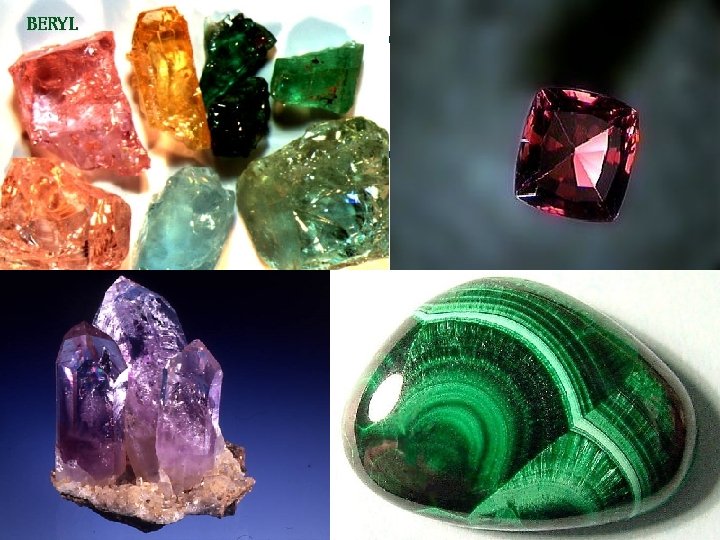
Color w Idiochromatic w Idio “particular” w Mineral in which the color is due to some essential constituent of the stone, n Eg, Malachite (Green) and Almandine (deep red). w Allochromatic w Allo “other” w Mineral in which the color can vary, due to possible impurities l l Eg, Beryl (Aquamarine or Emarald) Eg, Smoky Quartz or Amethyst (Quartz)
Luster w The way its surface reflects light. w Minerals with a metallic luster: shiny, opaque appearance similar to a bright chrome w Non-metallic lusters: shiny, but somewhat translucent or transparent lusters (glassy, adamantine), along with dull, earthy, waxy, and resinous lusters, are grouped as nonmetallic.
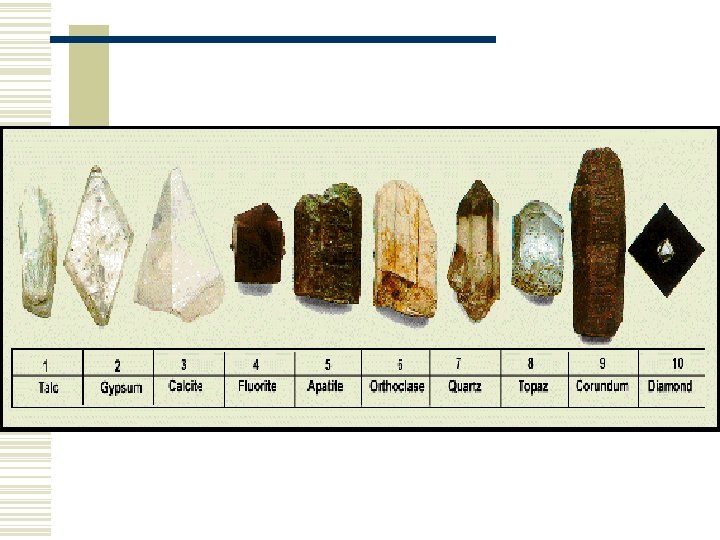
Hardness w The Mohs scale of mineral hardness characterizes the scratch resistance of various minerals through the ability of a harder material to scratch a softer material. w Created in 1812 by the German mineralogist Friedrich Mohs
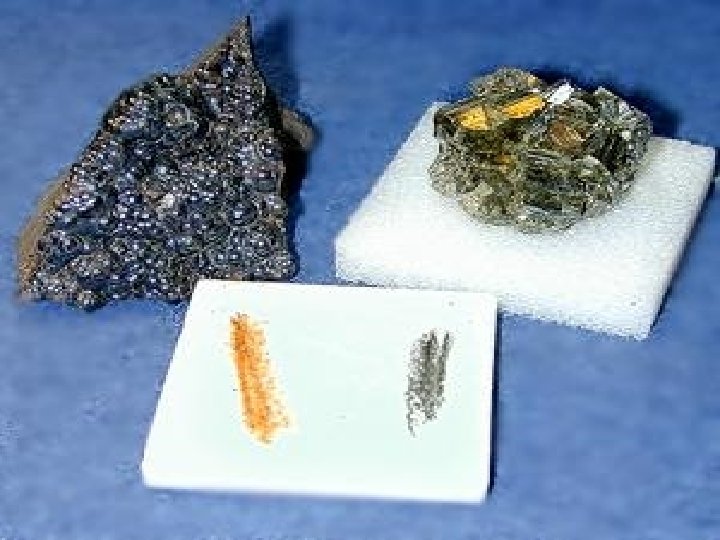
Streak w The color of a mineral when it is powdered is called the streak of the mineral. w Streak can be determined for any mineral by rubbing the mineral across the surface of a hard, unglazed porcelain material called a streak plate. w The streak and color of some minerals are the same. For others, the streak may be quite different from the color, as for example the red-brown streak of hematite, often a gray to silver-gray mineral.
w Idiochromatic minerals will leave a bright color w Allochromatic will leave a white powder or very little color
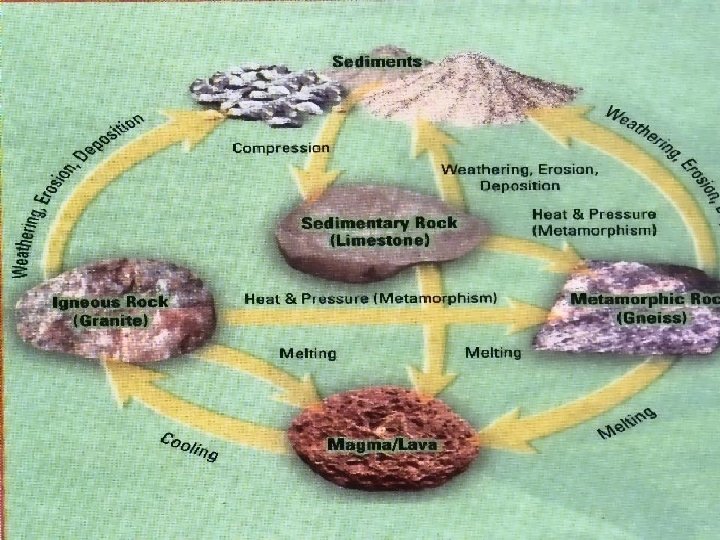
Rocks w Heterogeneous solids composed of many minerals. w In general rocks are of three types, namely, igneous, sedimentary, and metamorphic. w Formed from volcanic eruptions
Classification w Igneous rocks : when molten magma cools w 2 main categories: plutonic rock and volcanic. w Plutonic or intrusive rocks result when magma cools and crystallizes slowly within the Earth's crust (example granite), w Volcanic or extrusive rocks result from magma reaching the surface as lava.
Classification w Sedimentary rocks : by deposition of either organic matter or chemical precipitates, followed by compaction of the particulate matter. w Sedimentary rocks form at or near the Earth's surface.
Classification w Metamorphic rocks: by subjecting any rock type to different temperature and pressure conditions than those in which the original rock was formed. w These temperatures and pressures are always higher than those at the Earth's surface and must be sufficiently high so as to change the original minerals into other mineral types or else into other forms of the same minerals (e. g. by recrystallisation).
Soil w Naturally occurring, loose covering on the earth's surface. w Made up of broken rock particles that have been altered by chemical and environmental conditions. w Soil can be altered by interactions between the lithosphere, hydrosphere, atmosphere, and the biosphere.
Soil Horizons (Layers) w A specific layer in the soil which measures parallel to the soil surface and possesses physical characteristics which differ from the layers above and beneath.
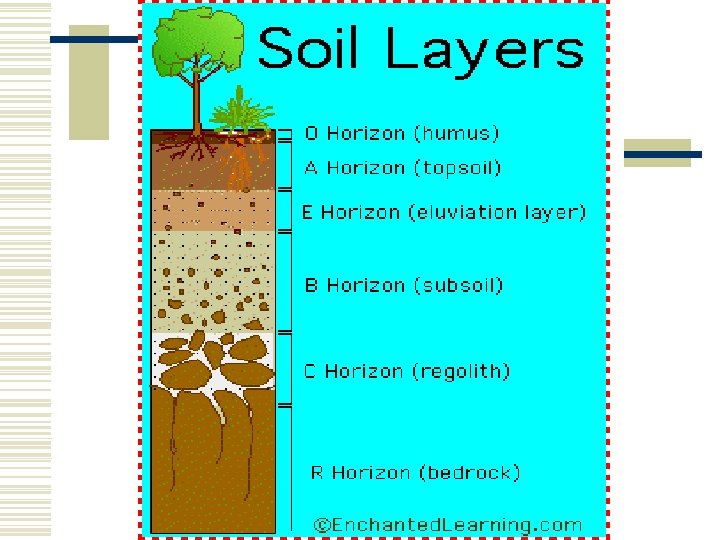
Layers w O- composed mainly of humus, organic layers of plant and animal residue w A- mixture of humus and minerals soluble in water, support plant life w B- composed of small particles of minerals, dense w C- degradation of rocks, unconsolidated soil parent material w R- partially-weathered bedrock at the base of the soil profile.