
LITHOSPHERE COASTLINES Hydraulic Action The force of waves
- Slides: 25
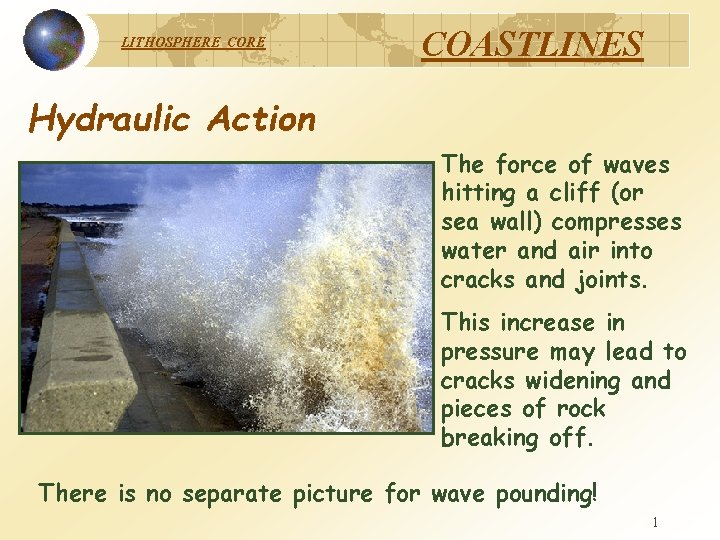
LITHOSPHERE COASTLINES Hydraulic Action The force of waves hitting a cliff (or sea wall) compresses water and air into cracks and joints. This increase in pressure may lead to cracks widening and pieces of rock breaking off. There is no separate picture for wave pounding! 1
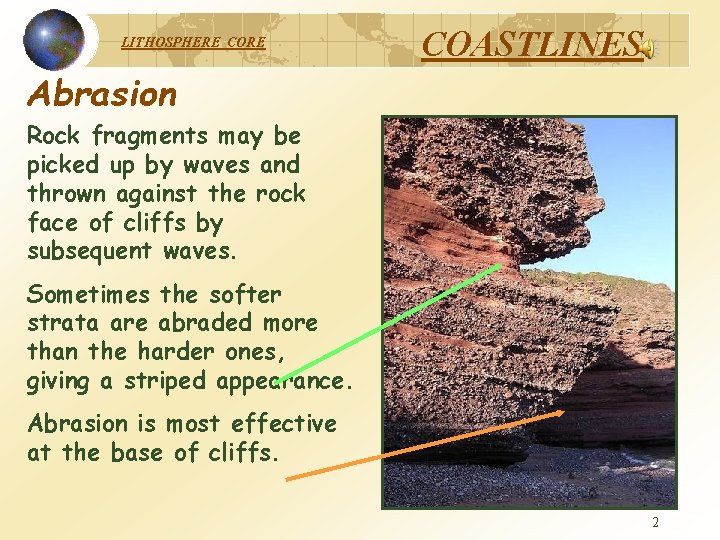
LITHOSPHERE COASTLINES Abrasion Rock fragments may be picked up by waves and thrown against the rock face of cliffs by subsequent waves. Sometimes the softer strata are abraded more than the harder ones, giving a striped appearance. Abrasion is most effective at the base of cliffs. 2
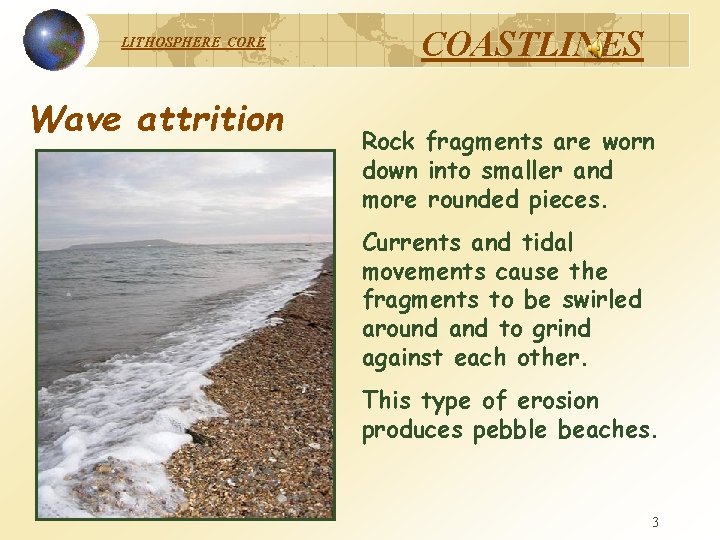
LITHOSPHERE CORE Wave attrition COASTLINES Rock fragments are worn down into smaller and more rounded pieces. Currents and tidal movements cause the fragments to be swirled around and to grind against each other. This type of erosion produces pebble beaches. 3
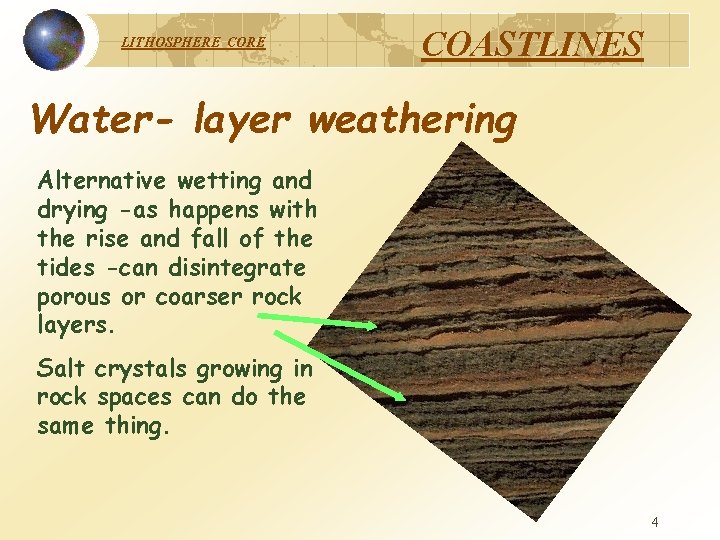
LITHOSPHERE COASTLINES Water- layer weathering Alternative wetting and drying -as happens with the rise and fall of the tides -can disintegrate porous or coarser rock layers. Salt crystals growing in rock spaces can do the same thing. 4
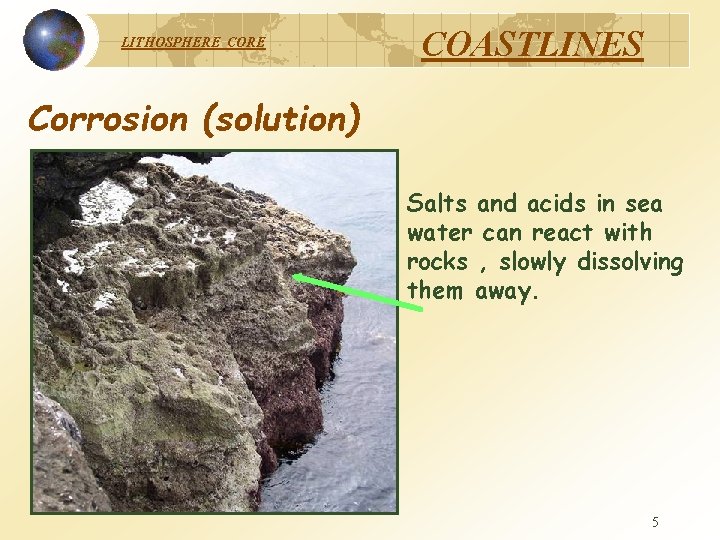
LITHOSPHERE COASTLINES Corrosion (solution) Salts and acids in sea water can react with rocks , slowly dissolving them away. 5
LITHOSPHERE COASTLINES -the chemical weathering of the cliff when salts and weak acids dissolve rock minerals. -the sheer force of the waves as they crash into a cliff explode, compress the air, and cause the face to break up. -the sandpaper effect when waves, armed with rocks and pebbles, rub away the base of the cliff. -rocks and pebbles rub against each other on beaches forming smaller and smaller particles. 6
COASTLINES Rates of erosion depend on many factors: LITHOSPHERE CORE Waves – strength, frequency, height Weather – frequency of storm conditions Geology of the coastline : -type of rock -orientation of stratification 7
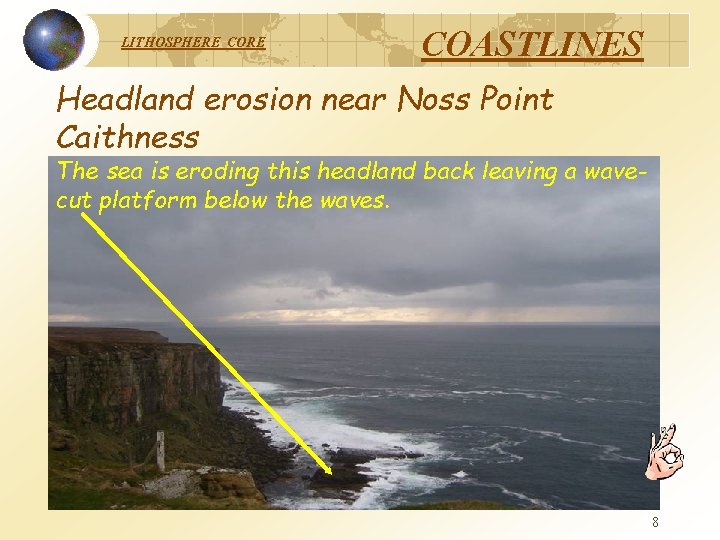
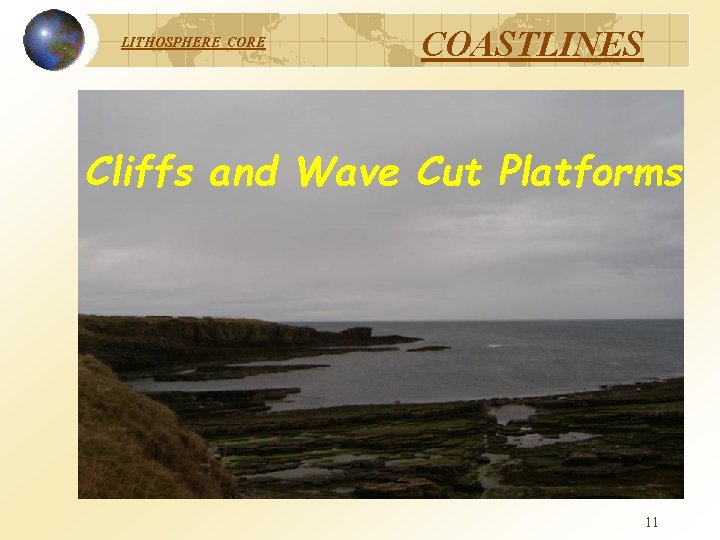
LITHOSPHERE COASTLINES Headland erosion near Noss Point Caithness The sea is eroding this headland back leaving a wavecut platform below the waves. 8
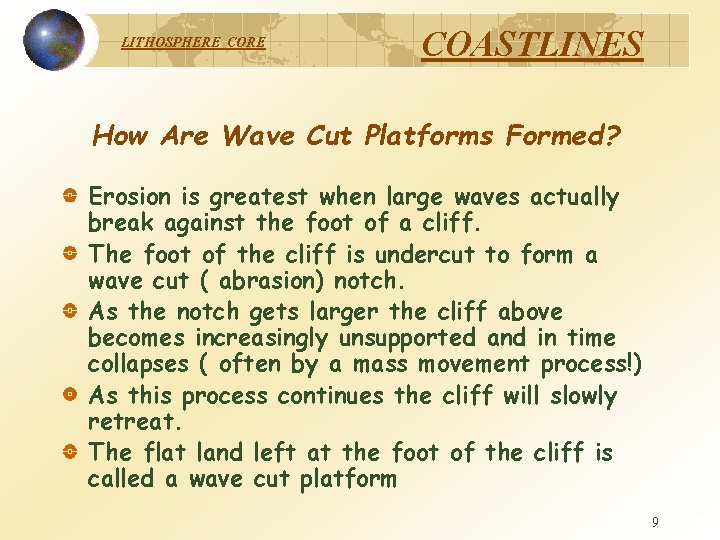
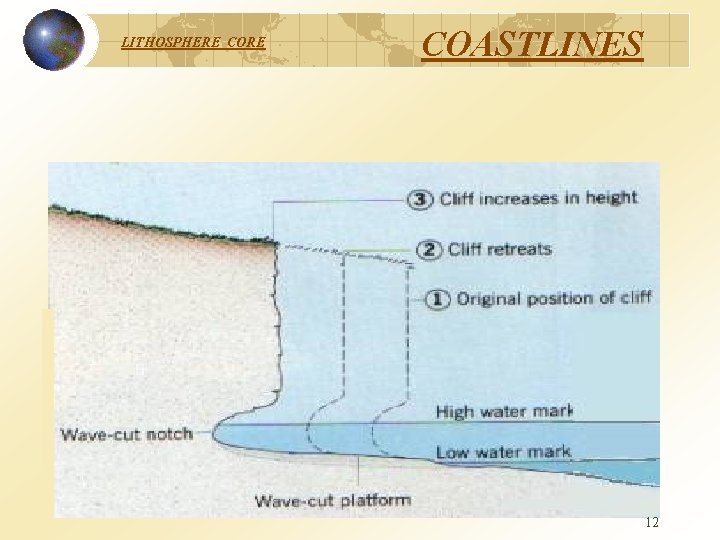
LITHOSPHERE COASTLINES How Are Wave Cut Platforms Formed? Erosion is greatest when large waves actually break against the foot of a cliff. The foot of the cliff is undercut to form a wave cut ( abrasion) notch. As the notch gets larger the cliff above becomes increasingly unsupported and in time collapses ( often by a mass movement process!) As this process continues the cliff will slowly retreat. The flat land left at the foot of the cliff is called a wave cut platform 9
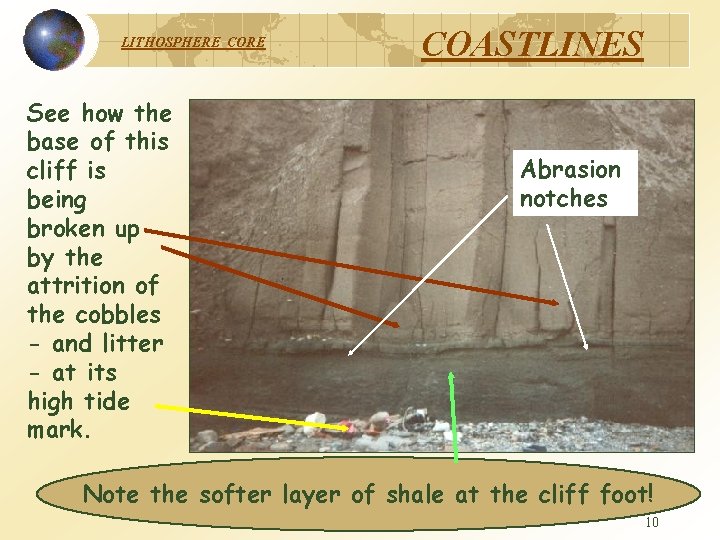
LITHOSPHERE CORE See how the base of this cliff is being broken up by the attrition of the cobbles - and litter - at its high tide mark. COASTLINES Abrasion notches Note the softer layer of shale at the cliff foot! 10
LITHOSPHERE COASTLINES Cliffs and Wave Cut Platforms 11
LITHOSPHERE COASTLINES 12
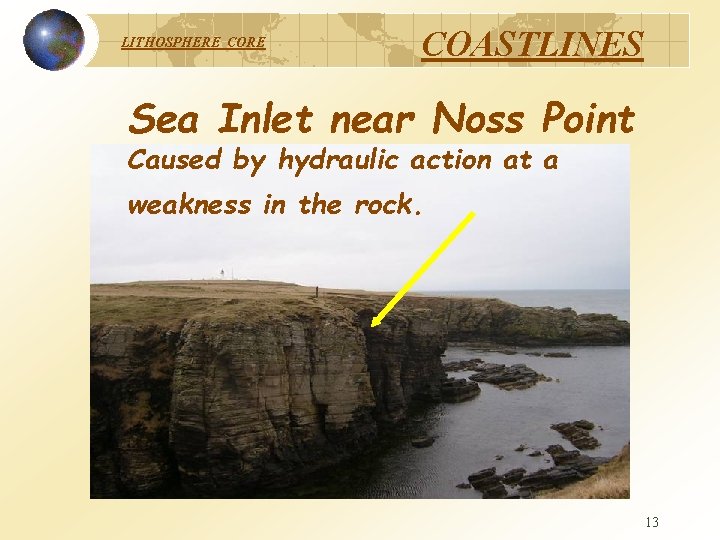
LITHOSPHERE COASTLINES Sea Inlet near Noss Point Caused by hydraulic action at a weakness in the rock. 13
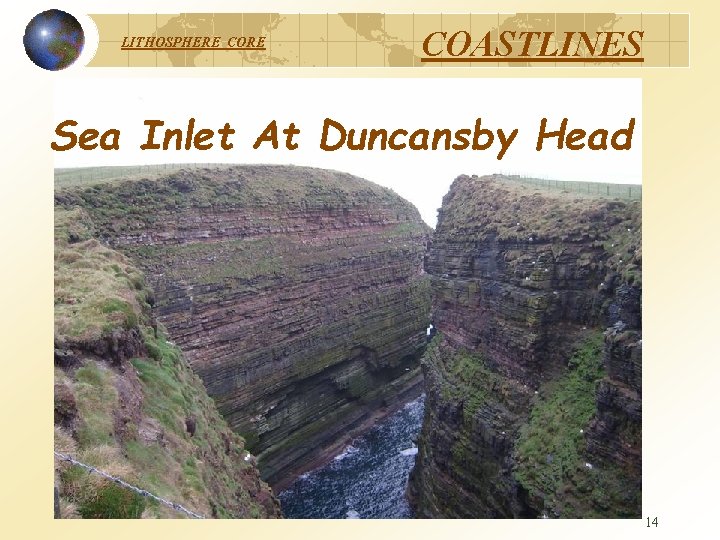
LITHOSPHERE COASTLINES Sea Inlet At Duncansby Head 14
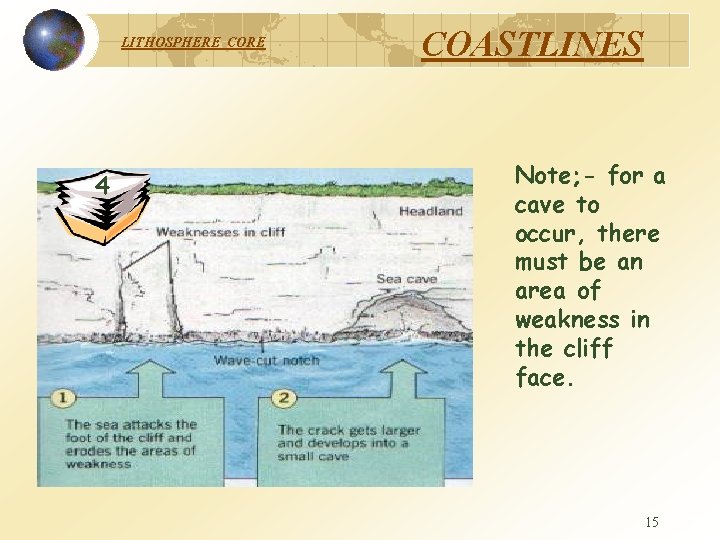
LITHOSPHERE CORE 4 COASTLINES Note; - for a cave to occur, there must be an area of weakness in the cliff face. 15
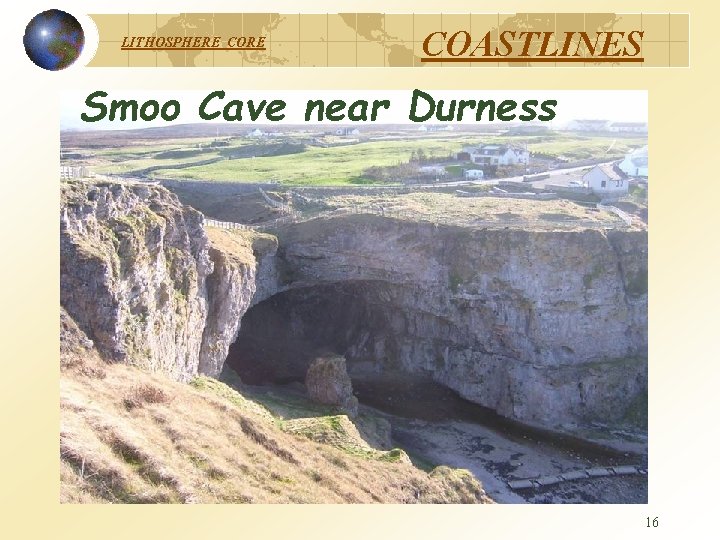
LITHOSPHERE COASTLINES Smoo Cave near Durness 16
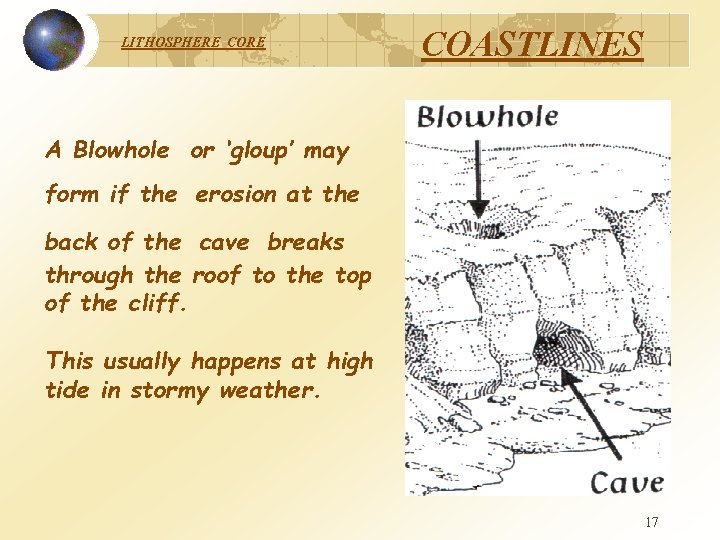
LITHOSPHERE COASTLINES A Blowhole or ‘gloup’ may form if the erosion at the back of the cave breaks through the roof to the top of the cliff. This usually happens at high tide in stormy weather. 17
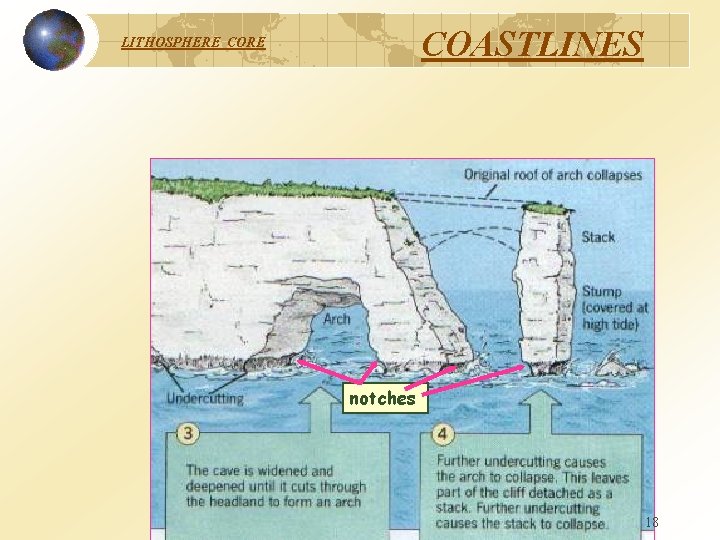
COASTLINES LITHOSPHERE CORE notches 18
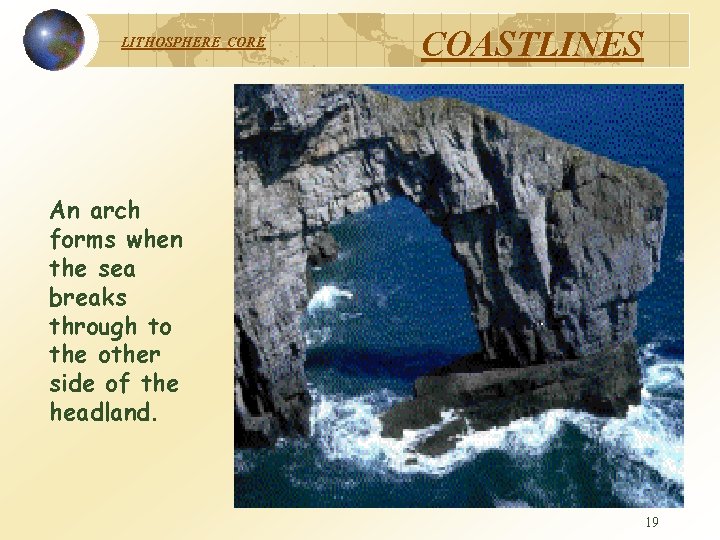
LITHOSPHERE COASTLINES An arch forms when the sea breaks through to the other side of the headland. 19
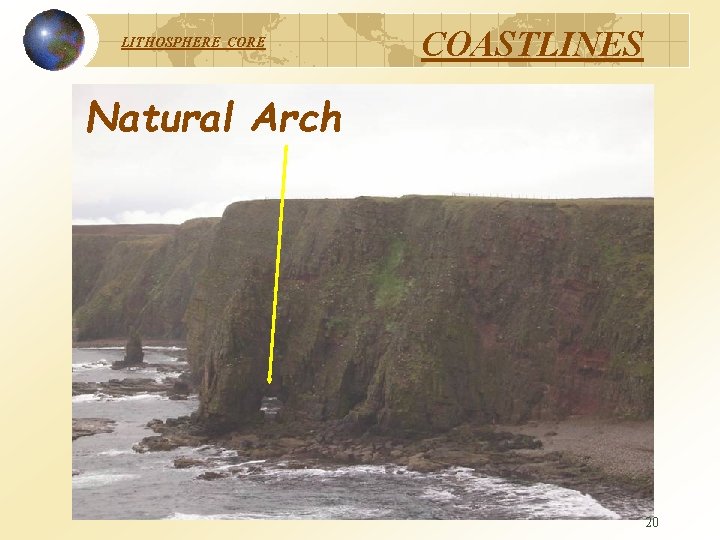
LITHOSPHERE COASTLINES Natural Arch 20
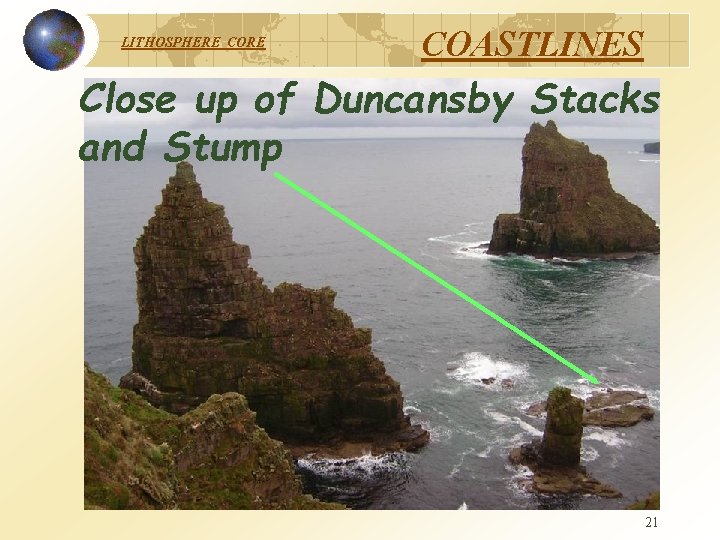
LITHOSPHERE COASTLINES Close up of Duncansby Stacks and Stump 21
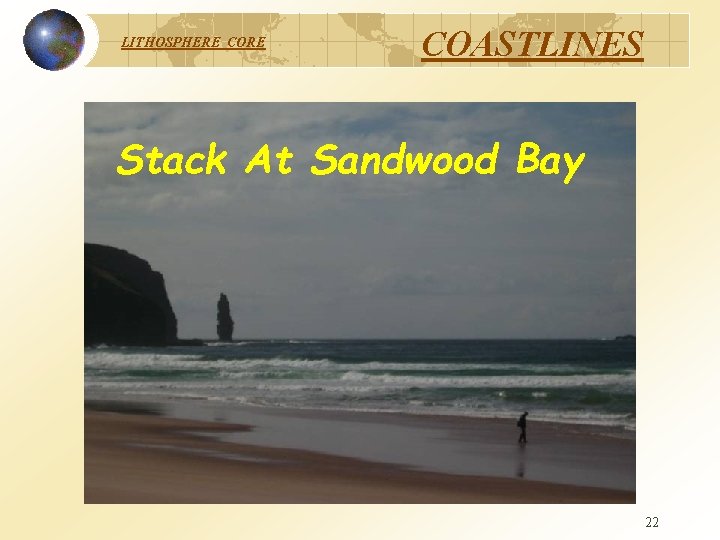
LITHOSPHERE COASTLINES Stack At Sandwood Bay 22
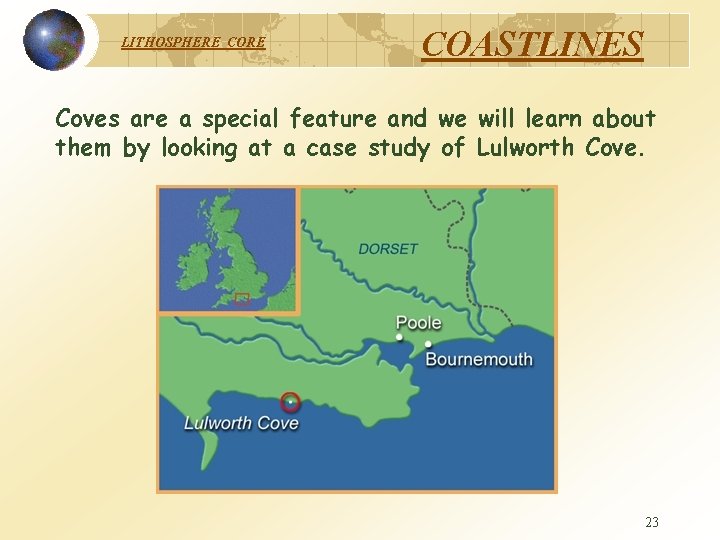
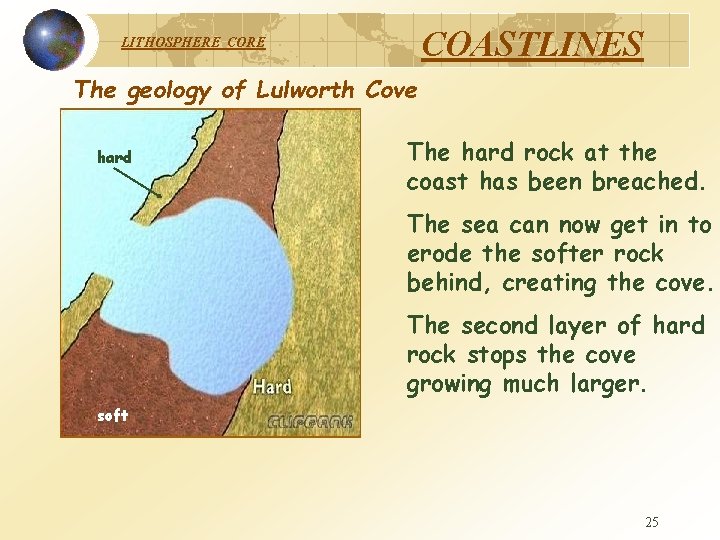
LITHOSPHERE COASTLINES Coves are a special feature and we will learn about them by looking at a case study of Lulworth Cove. 23
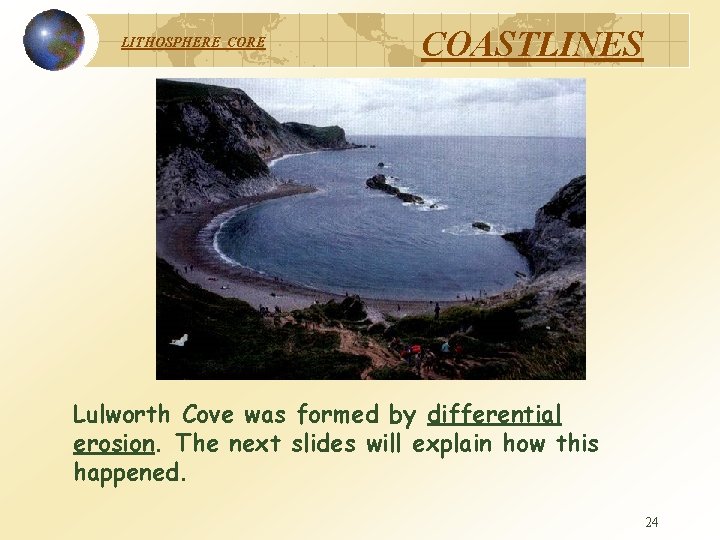
LITHOSPHERE COASTLINES Lulworth Cove was formed by differential erosion. The next slides will explain how this happened. 24
COASTLINES LITHOSPHERE CORE The geology of Lulworth Cove hard The hard rock at the coast has been breached. The sea can now get in to erode the softer rock behind, creating the cove. The second layer of hard rock stops the cove growing much larger. soft 25