
Lithium ion battery manufacturing process by Sean Robles
Lithium ion battery manufacturing process by Sean Robles Uy & Marc Brandon Tabajonda
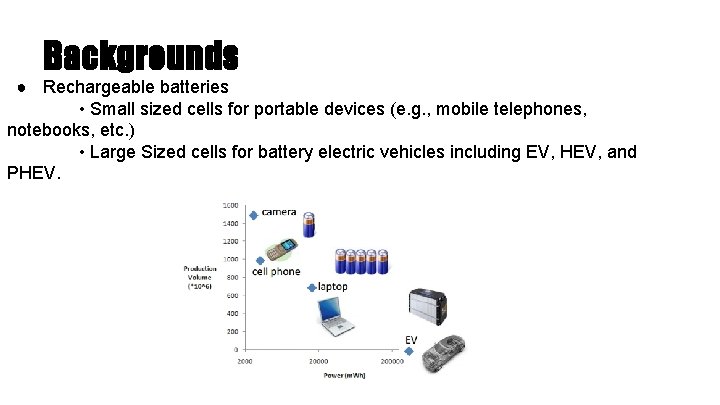
Backgrounds ● Rechargeable batteries • Small sized cells for portable devices (e. g. , mobile telephones, notebooks, etc. ) • Large Sized cells for battery electric vehicles including EV, HEV, and PHEV.
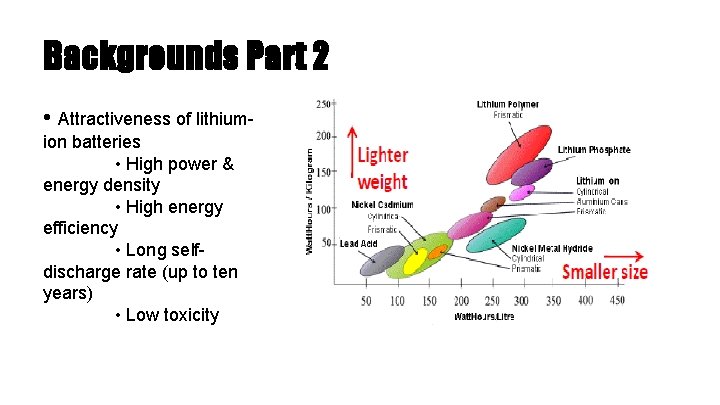
Backgrounds Part 2 • Attractiveness of lithiumion batteries • High power & energy density • High energy efficiency • Long selfdischarge rate (up to ten years) • Low toxicity
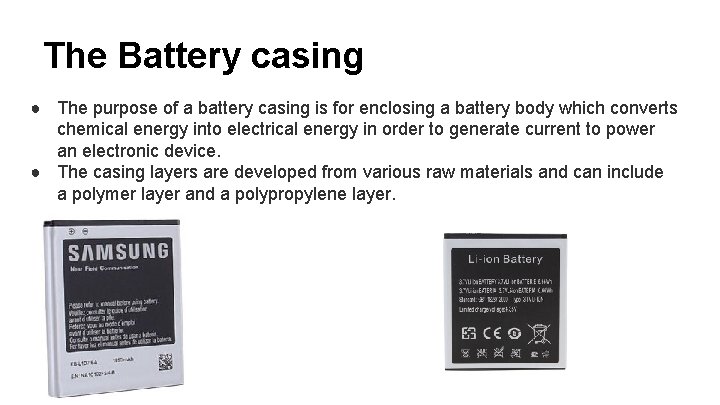
The Battery casing ● The purpose of a battery casing is for enclosing a battery body which converts chemical energy into electrical energy in order to generate current to power an electronic device. ● The casing layers are developed from various raw materials and can include a polymer layer and a polypropylene layer.
Materials The fabrication of li-ion batteries requires several material components. ● Lithium. ● Cathode Active Materials (LFP, LCO, LMO, NMC, NCA, CSG etc) ● Anode Active Materials (Graphite) ● Aluminium (Al) Foils. ● SBR & PVDF Binders. ● Electrolytes, Li. PF 6. ● Separators.
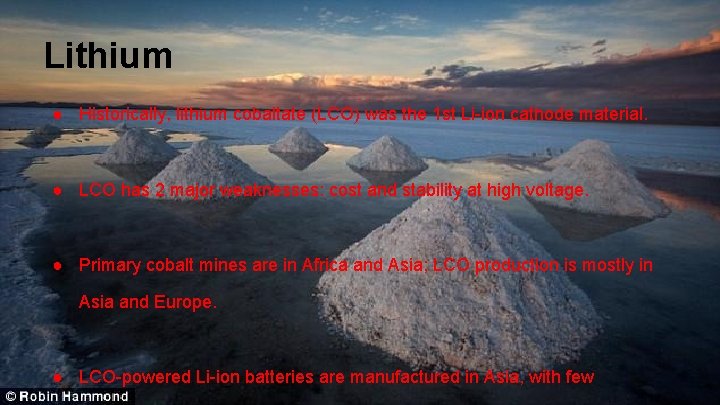
Lithium ● Historically, lithium cobaltate (LCO) was the 1 st Li-ion cathode material. ● LCO has 2 major weaknesses: cost and stability at high voltage. ● Primary cobalt mines are in Africa and Asia; LCO production is mostly in Asia and Europe. ● LCO-powered Li-ion batteries are manufactured in Asia, with few
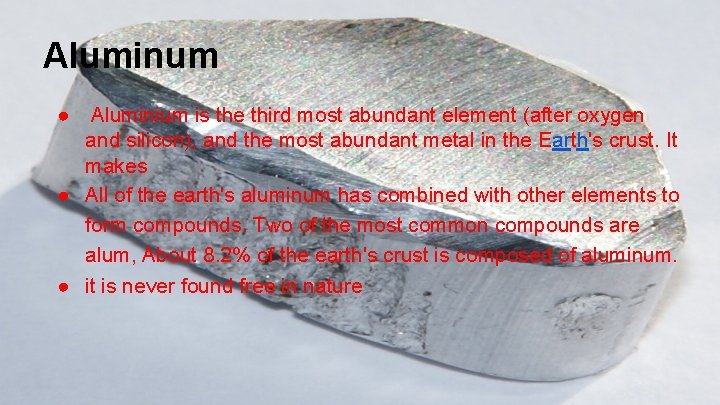
Aluminum ● Aluminium is the third most abundant element (after oxygen and silicon), and the most abundant metal in the Earth's crust. It makes ● All of the earth's aluminum has combined with other elements to form compounds. Two of the most common compounds are alum, About 8. 2% of the earth's crust is composed of aluminum. ● it is never found free in nature
Aluminum manufacturing process ● Aluminium production starts with the raw material bauxite, a clay like soil type found in a belt around the equator. The bauxite is mined from a few meters below the ground. ● The bauxite is then transported to plants where the clay is washed off and the bauxite passes through a grinder. ● Alumina, or aluminium oxide, is extracted from the bauxite through refining. ● Alumina is separated from the bauxite by using a hot solution of caustic soda and lime ● The mixture is heated and filtered, and the remaining alumina is dried to a white powder ● Electricity is run between a negative cathode and a positive anode, both made of carbon. The anode reacts with the oxygen in the alumina and forms CO 2
Making products with Aluminum ● The liquid aluminium is cast into extrusion ingots, sheet ingots or foundry alloys, all depending on what it will be used for. ● The extrusion technique has almost unlimited possibilities for design and offers countless application opportunities. ● In the extrusion process, the aluminium ingot is heated and pressed through a shaped tool called a die. ● Aluminium is very ductile. Foil can be rolled from 60 cm to 2 -6 mm, and final foil product can be as thin as 0. 006 mm. It still will not let light, aroma or taste in or out. ● Sheet ingots are used to make rolled products, such as plates, strip and foil.
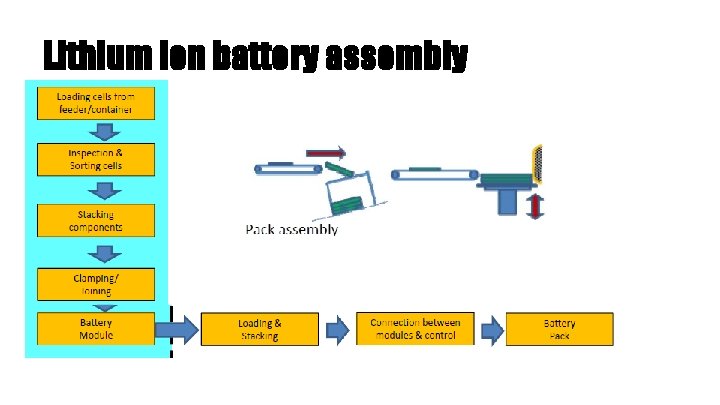
Lithium ion battery assembly
Sources ● ● http: //education. jlab. org/itselemental/ele 013. html http: //www. hydro. com/en/About-aluminium/How-its-made/ http: //en. wikipedia. org/wiki/Aluminium http: //www. manufacturing. gatech. edu/sites/default/files/uploads/nsf/201101 NSFEnergy. Manufacturing. Hu. pdf
- Slides: 11