
LITERATURE RECEPTION Method Definition of literature reception History






- Slides: 20
LITERATURE RECEPTION
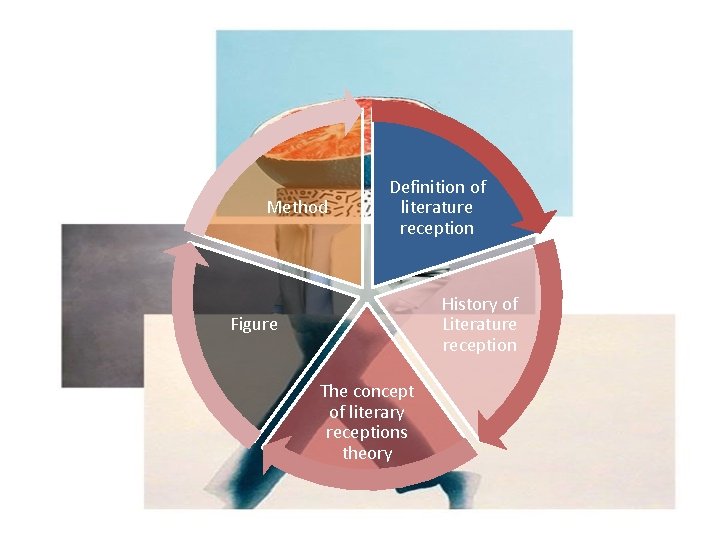
Method Definition of literature reception History of Literature reception Figure The concept of literary receptions theory
Literature reception is a literary stream that examines literary texts and considers the reader as the giver of speech or response which influenced by the factors of space, time and social class (Sastriyani 2001: 253)
Reception is derived from Latin “recipere” which is interpreted as acceptance or welcome for readers. (Ratna 2008: 22)
In the broad meaning if reception is define as the processing of the text, the ways of giving meaning to the work so it can give response to it. The response which intended is not done between the work and the readers, other than the readers as the process of history readers in certain period (Ratna: 2007)
The history of literary theory begins with the anthology of theory of literary reception by Rainer Warning (1975) which includes essays from German scholars. The first scholar of his essay published by Warning was the research of Leo Lowenthal before the Second World War which studied acceptance of Dostoyevski's works in Germany.
The purpose of his research was to know the general view in Germany at that time, and it can be said that also a worldview. Based on the results of Lowenthal research, Warning (in Junus 1985: 29) gives the concept, theory of literary receptions collected donations of readers who determine the direction of literature research that found the meaning, modalities, and meeting results between works and audiences through various aspects and ways.
The Concept of Literary Reception Theory The development of literary receptions was more enthusiastic after the emergence of Jausz and Iser's thoughts which could be considered to provide a theoretical and epistemological basis. Jausz has a different approach to Iser about literary receptions, though both share the attention of readers in using their imaginations.
• Jausz sees a) how readers understand a work as seen in their statements / ratings and b) the role of the work is not important anymore. The most important thing here is the activity of the reader itself.
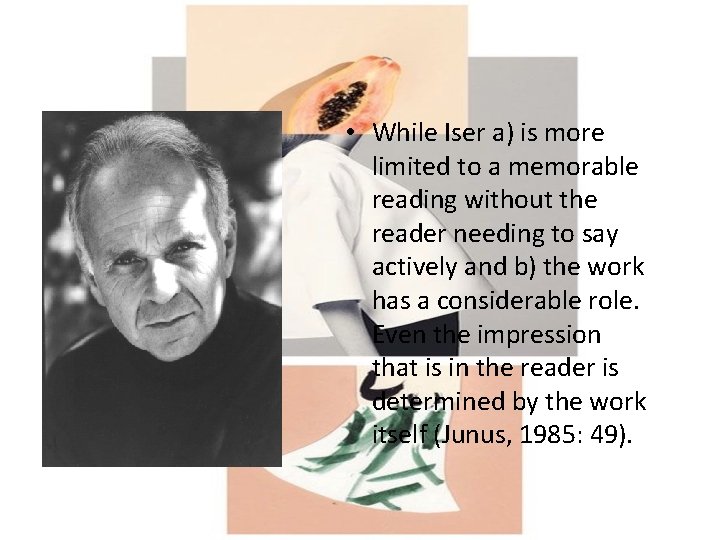
• While Iser a) is more limited to a memorable reading without the reader needing to say actively and b) the work has a considerable role. Even the impression that is in the reader is determined by the work itself (Junus, 1985: 49).
Figure of Literary Reception Theory In discussing theory of literary receptions, we will find some of the thinkers of theory, such as Hans Robert Jausz is the main character in literature that emphasizes the role of the reader.
• In contrast to Jauz, Iser considers literary works as a form of communication. • In other words, we as readers are invited to interpret their own meaning in the work, shaping the world itself according to our own imagination.
In other words, we as readers are invited to interpret their own meaning in the work, shaping the world itself according to our own imagination, become the characters in it, and feel for ourselves what the characters in the work are feeling.
The task of reception is to examine the reader's responses in the form of interpretation, concretization, or criticism of literary works read. The reader's responses to the literary works he read, may be influenced by several factors, including socio-cultural background, level of education of different levels of experience, and the age of the reader.
Syncretic Reception Method Reception research by synchronic method is a literary receptive study that uses the responses of contemporaneous readers, meaning that the readers used as respondents are in a period of time.
Diachronic Reception Method Literary receptions with diachronic methods are literary receptive studies conducted on reader responses over several periods. But the time period is still within a time frame.
The advantages and disadvantages of synchronous and diachronic methods Each method in research has advantages and weaknesses. also in the study of literary receptions. Each method, both synchronous and diachronic, has its advantages and disadvantages.
Advantages of Synchronous the repondent can be determined without having to search for literary criticism first, synchronous receptive research can be done directly without waiting for the emergence of criticism or review of literary works, and can be done on popular literary works. Disadvantages of Synchronous research can only be used to determine the response of the reader at one time. Thus, when applied to literary works published several years ago, it would be difficult to distinguish between past and present responses, as it was a matter of time.
Advantages of Diachronic reception research is the easy of the researcher in searching the data, that is, the ideal reader's response to a literary work. So researchers do not have to bother looking for data with interview techniques. Disadvantages of Diachronic The weakness of diachronic reception research will be felt by beginer researchers. Generally beginer researchers will have difficulty in determining the literary works that made the object of research. Because most literature works known to many people have been studied by past researchers.
THANK YOU