
Literature Poem Introduction to Poetry English High School


- Slides: 27
Literature - Poem: Introduction to Poetry English, High School, 4 - 5 points Nadine Ali Awawdi
Introduction to Poetry Reading Comprehension Can you……. . ? Use the HOTS of “ Inferring” to infer attitudes Understand, find and explain “ Imagery” in a poem Understand, find and explain examples of “ Personification” in a poem
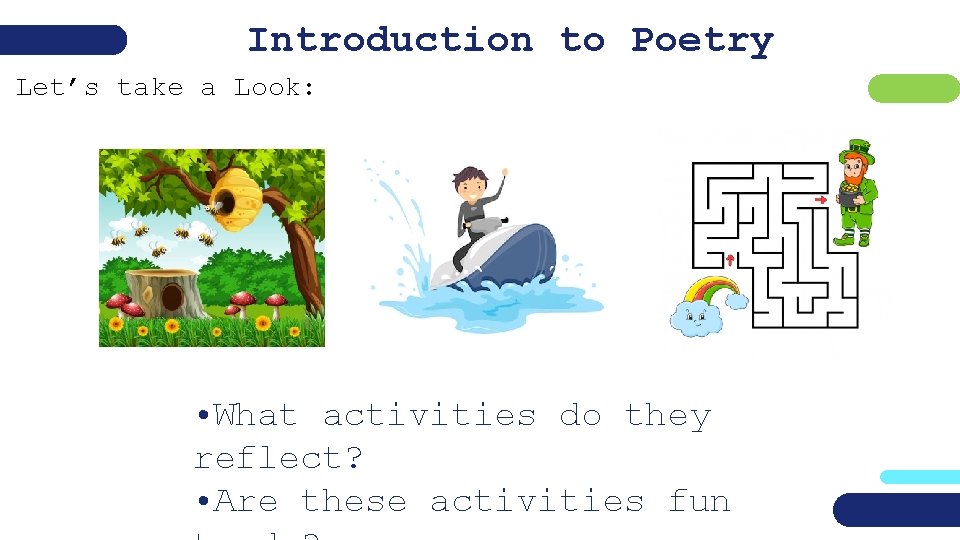
Introduction to Poetry Let’s take a Look: • What activities do they reflect? • Are these activities fun
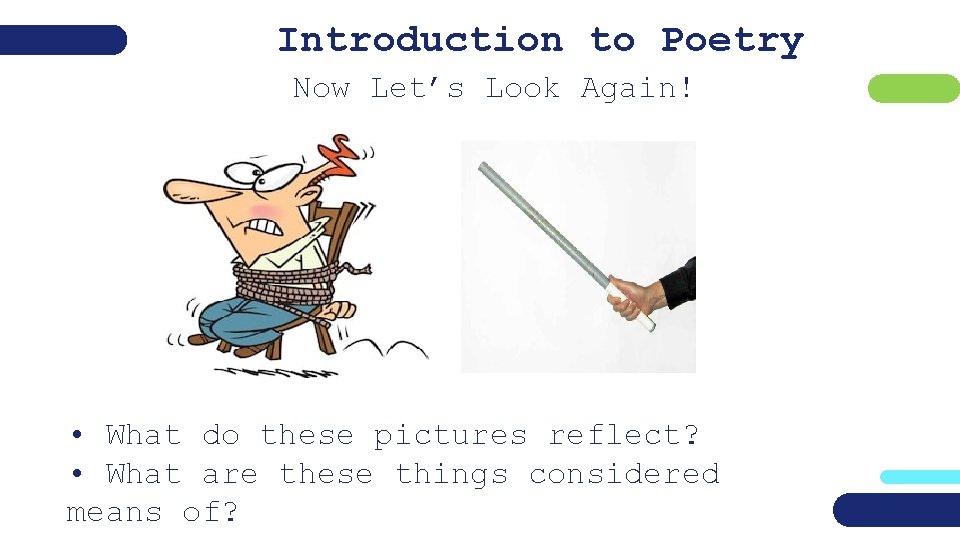
Introduction to Poetry Now Let’s Look Again! • What do these pictures reflect? • What are these things considered means of?
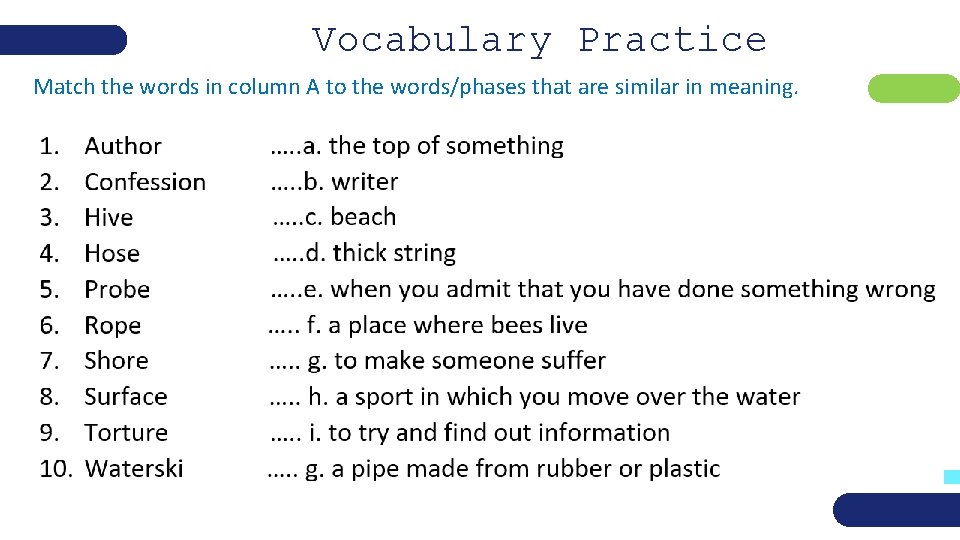
Vocabulary Practice Match the words in column A to the words/phases that are similar in meaning.
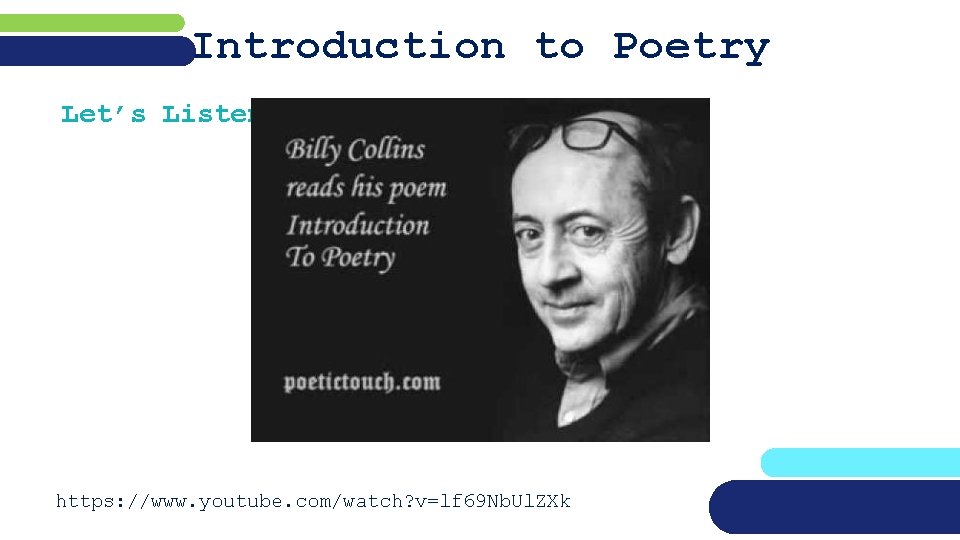
Introduction to Poetry Let’s Listen! https: //www. youtube. com/watch? v=lf 69 Nb. Ul. ZXk
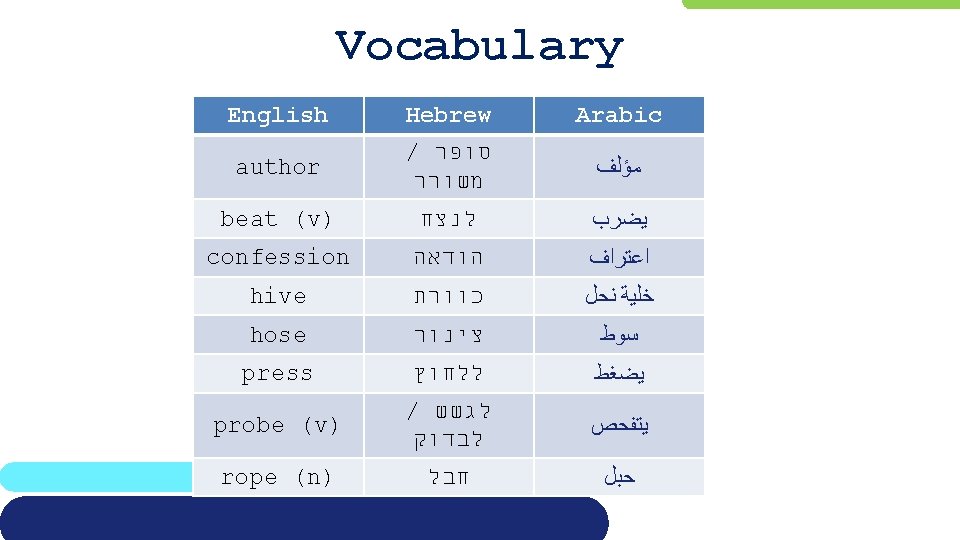
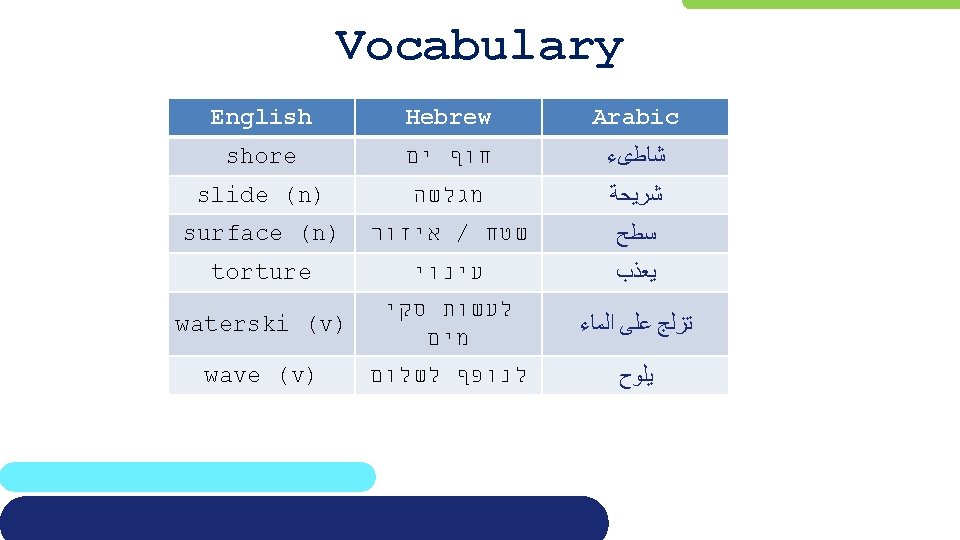
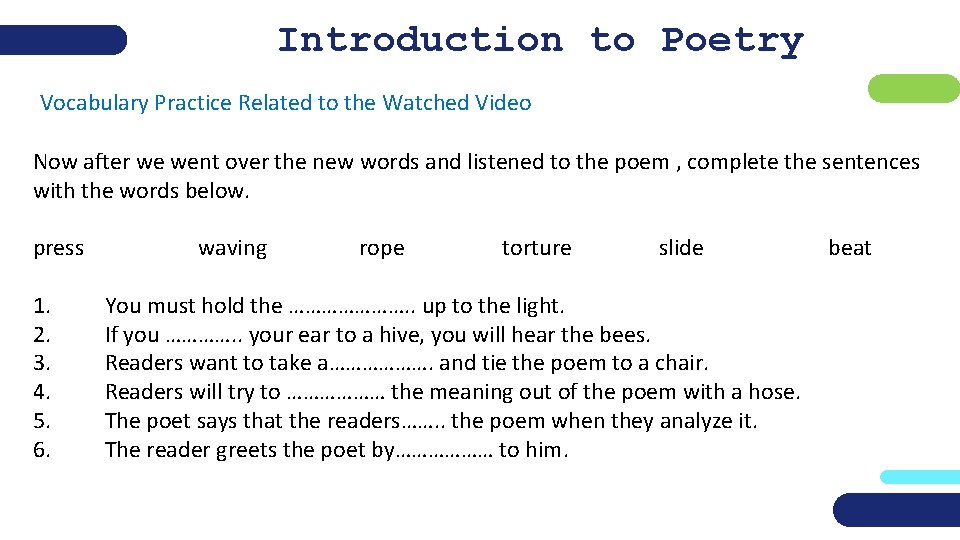
Introduction to Poetry Vocabulary Practice Related to the Watched Video Now after we went over the new words and listened to the poem , complete the sentences with the words below. press 1. 2. 3. 4. 5. 6. waving rope torture slide You must hold the …………………. . up to the light. If you …………. . your ear to a hive, you will hear the bees. Readers want to take a………………. and tie the poem to a chair. Readers will try to ……………… the meaning out of the poem with a hose. The poet says that the readers……. . the poem when they analyze it. The reader greets the poet by……………… to him. beat
Introduction to Poetry Let’s Watch! https: //www. youtube. com/watch? v=End. Yb. LBd 15 Q
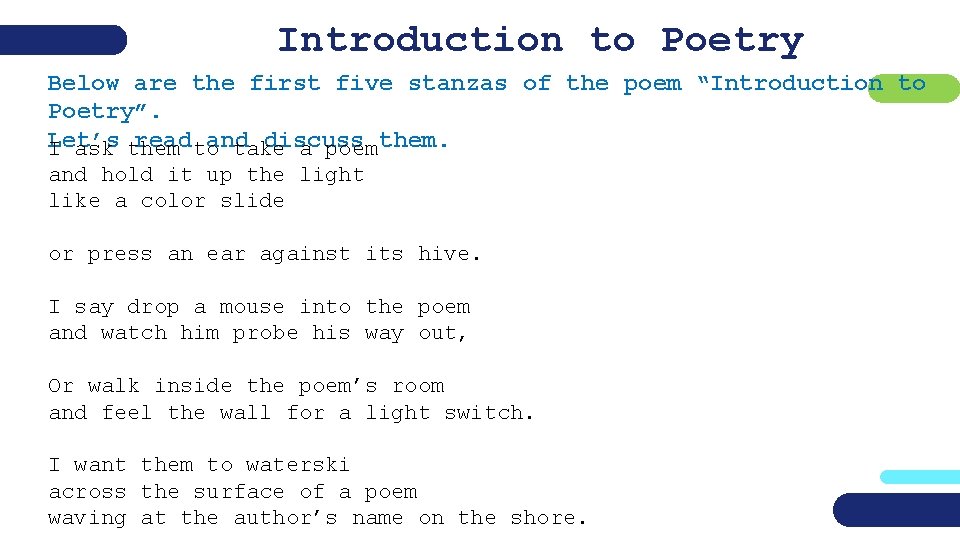
Introduction to Poetry Below are the first five stanzas of the poem “Introduction to Poetry”. Let’s read to and discuss I ask them take a poem them. and hold it up the light like a color slide or press an ear against its hive. I say drop a mouse into the poem and watch him probe his way out, Or walk inside the poem’s room and feel the wall for a light switch. I want them to waterski across the surface of a poem waving at the author’s name on the shore.
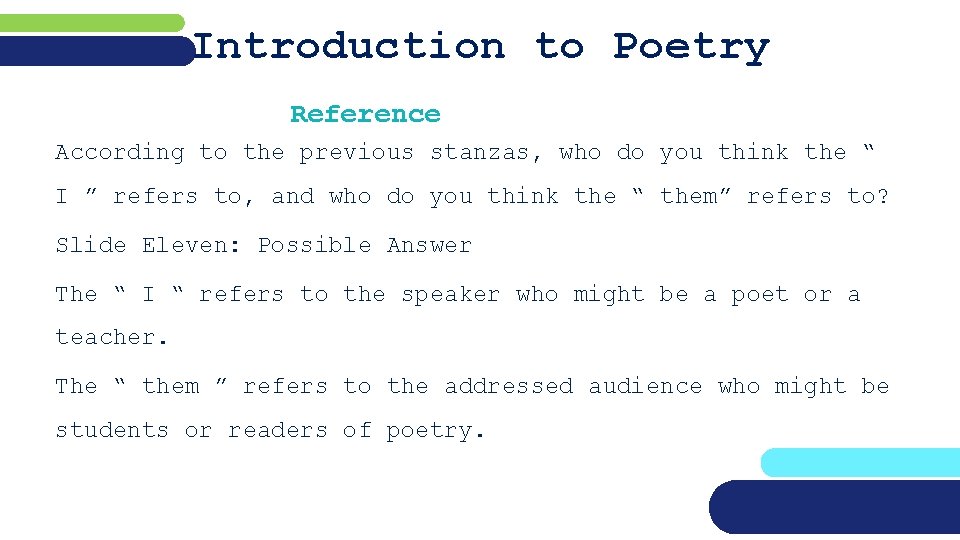
Introduction to Poetry Reference According to the previous stanzas, who do you think the “ I ” refers to, and who do you think the “ them” refers to? Slide Eleven: Possible Answer The “ I “ refers to the speaker who might be a poet or a teacher. The “ them ” refers to the addressed audience who might be students or readers of poetry.
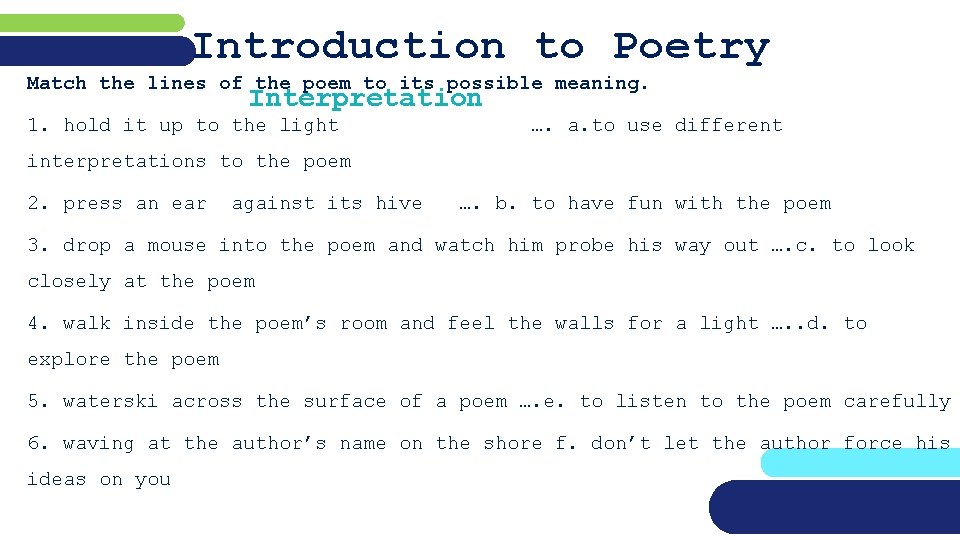
Introduction to Poetry Match the lines of the poem to its possible meaning. Interpretation 1. hold it up to the light …. a. to use different interpretations to the poem 2. press an ear against its hive …. b. to have fun with the poem 3. drop a mouse into the poem and watch him probe his way out …. c. to look closely at the poem 4. walk inside the poem’s room and feel the walls for a light …. . d. to explore the poem 5. waterski across the surface of a poem …. e. to listen to the poem carefully 6. waving at the author’s name on the shore f. don’t let the author force his ideas on you
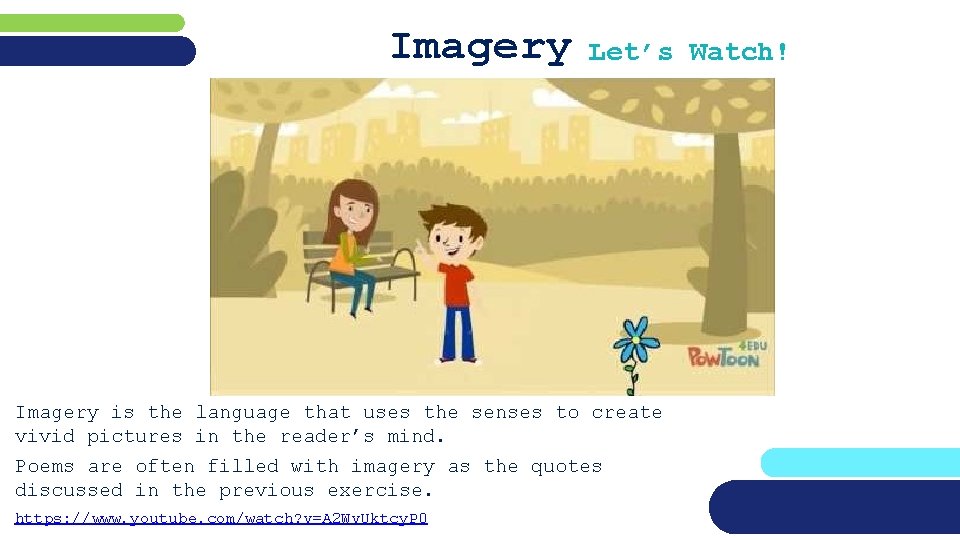
Imagery Let’s Watch! Imagery is the language that uses the senses to create vivid pictures in the reader’s mind. Poems are often filled with imagery as the quotes discussed in the previous exercise. https: //www. youtube. com/watch? v=A 2 Wv. Uktcy. P 0
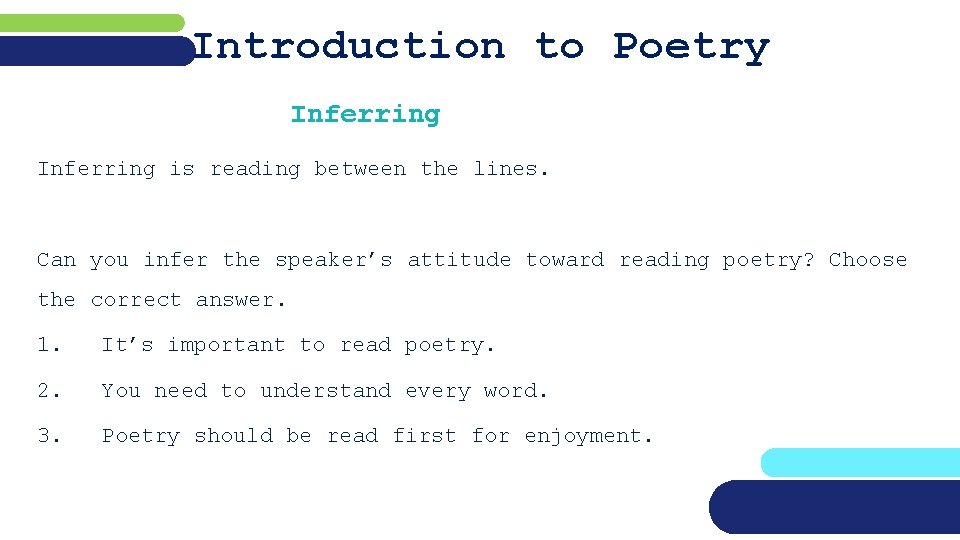
Introduction to Poetry Inferring is reading between the lines. Can you infer the speaker’s attitude toward reading poetry? Choose the correct answer. 1. It’s important to read poetry. 2. You need to understand every word. 3. Poetry should be read first for enjoyment.
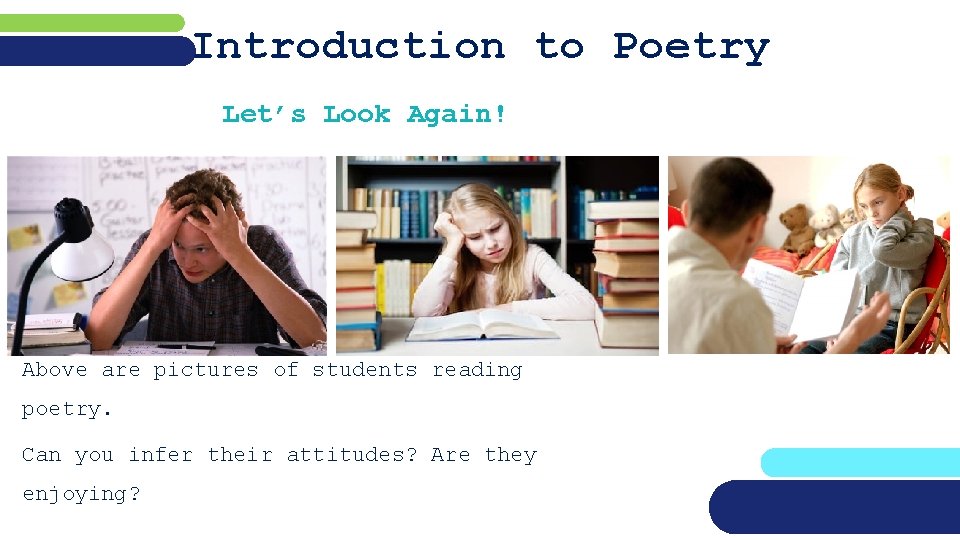
Introduction to Poetry Let’s Look Again! Above are pictures of students reading poetry. Can you infer their attitudes? Are they enjoying?
Break
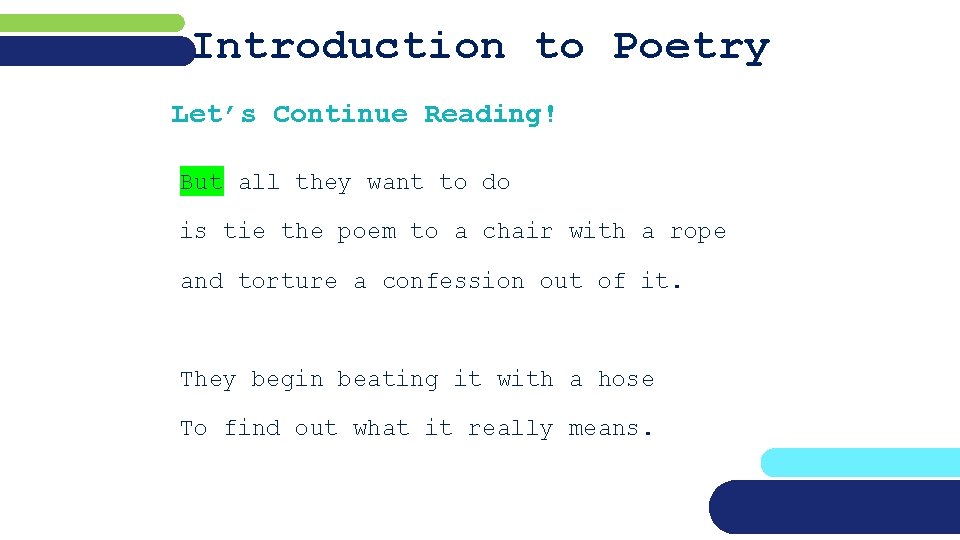
Introduction to Poetry Let’s Continue Reading! But all they want to do is tie the poem to a chair with a rope and torture a confession out of it. They begin beating it with a hose To find out what it really means.
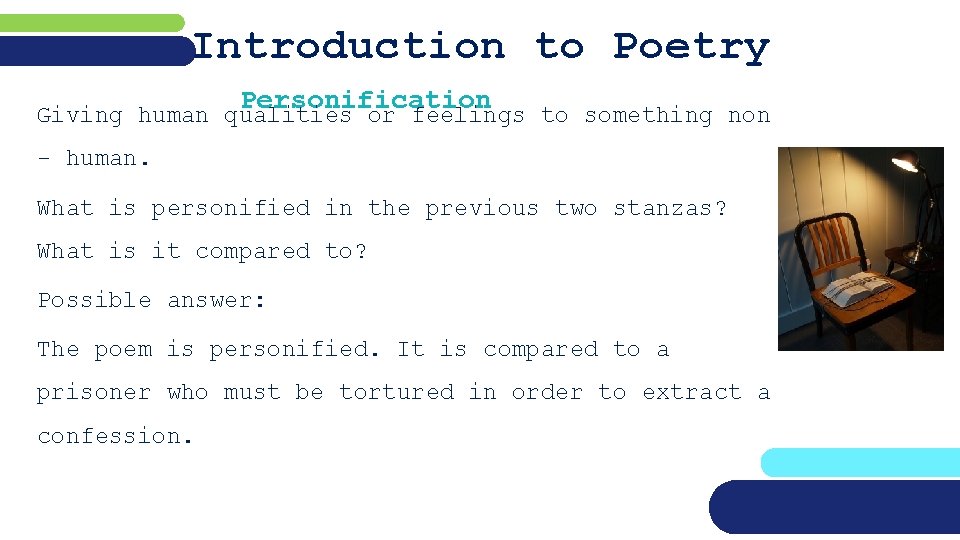
Introduction to Poetry Personification Giving human qualities or feelings to something non - human. What is personified in the previous two stanzas? What is it compared to? Possible answer: The poem is personified. It is compared to a prisoner who must be tortured in order to extract a confession.
Introduction to Poetry Some More Interpretation What is the confession the students want to get? Choose the correct answer. a. What the poem means b. How the poem rhymes c. Who wrote the poem
Introduction to Poetry Message What is the poem’s message?
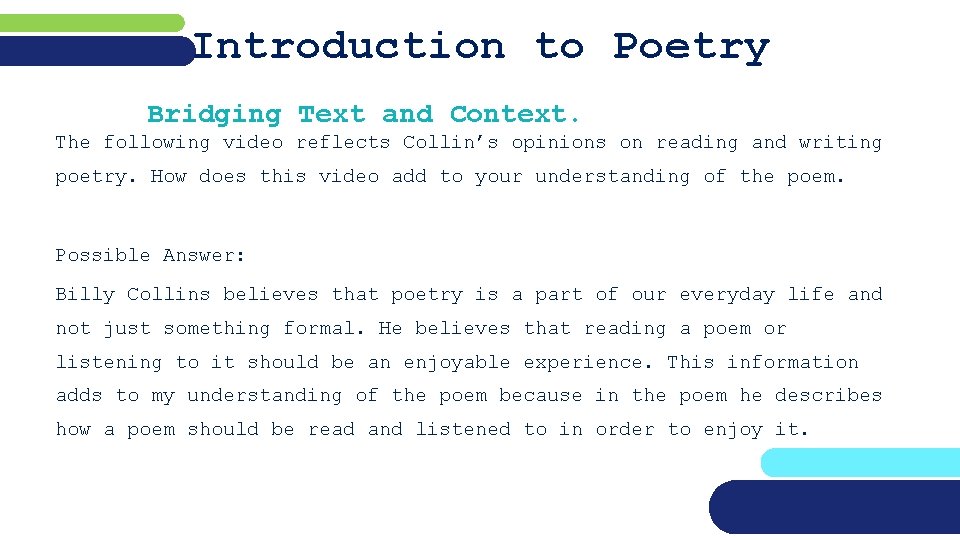
Introduction to Poetry Bridging Text and Context. The following video reflects Collin’s opinions on reading and writing poetry. How does this video add to your understanding of the poem. Possible Answer: Billy Collins believes that poetry is a part of our everyday life and not just something formal. He believes that reading a poem or listening to it should be an enjoyable experience. This information adds to my understanding of the poem because in the poem he describes how a poem should be read and listened to in order to enjoy it.
Introduction to Poetry Post Reading Write a letter to Billy Collins telling him how his poem changed your attitude toward reading poetry.
Introduction to Poetry Now We Can…. • Use the HOTS of “Inferring” to infer attitudes • Understand, find and explain “Imageries” in a poem • Understand, find and explain examples of “Personification” in a poem
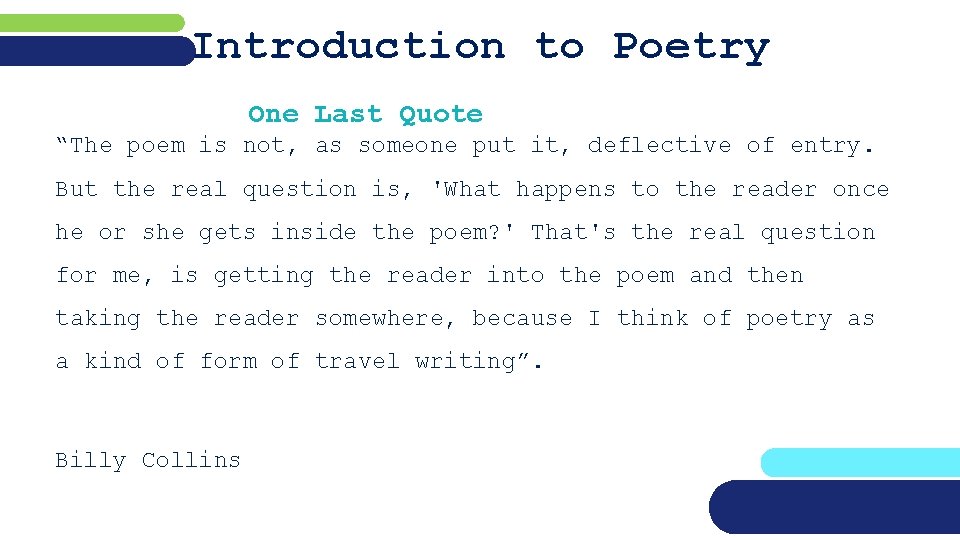
Introduction to Poetry One Last Quote “The poem is not, as someone put it, deflective of entry. But the real question is, 'What happens to the reader once he or she gets inside the poem? ' That's the real question for me, is getting the reader into the poem and then taking the reader somewhere, because I think of poetry as a kind of form of travel writing”. Billy Collins