
Literary Time Periods and Movements The Classical Era
- Slides: 31
Literary Time Periods and Movements
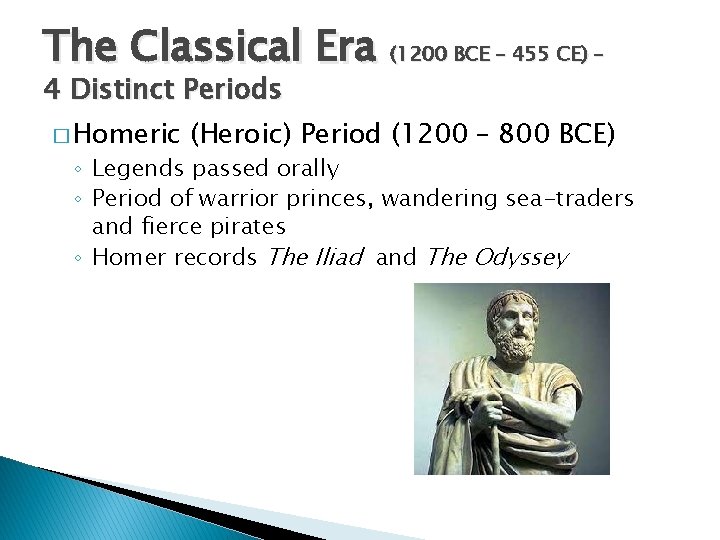
The Classical Era (1200 BCE – 455 CE) – 4 Distinct Periods � Homeric (Heroic) Period (1200 – 800 BCE) ◦ Legends passed orally ◦ Period of warrior princes, wandering sea-traders and fierce pirates ◦ Homer records The Iliad and The Odyssey
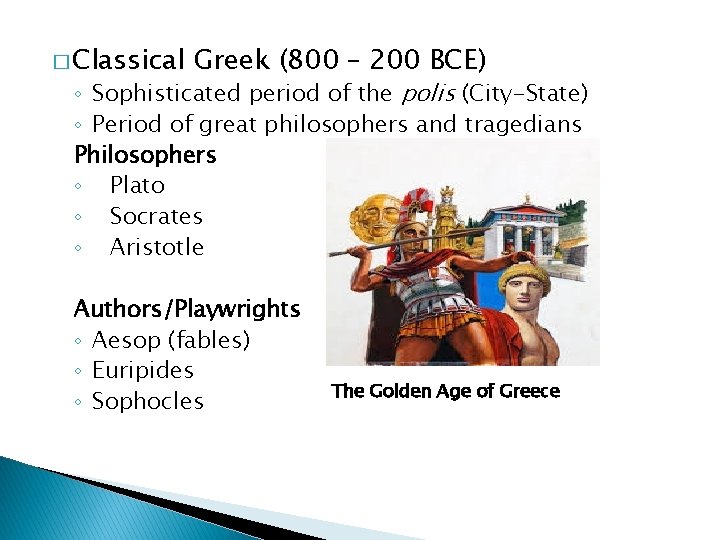
� Classical Greek (800 – 200 BCE) ◦ Sophisticated period of the polis (City-State) ◦ Period of great philosophers and tragedians Philosophers ◦ Plato ◦ Socrates ◦ Aristotle Authors/Playwrights ◦ Aesop (fables) ◦ Euripides ◦ Sophocles The Golden Age of Greece
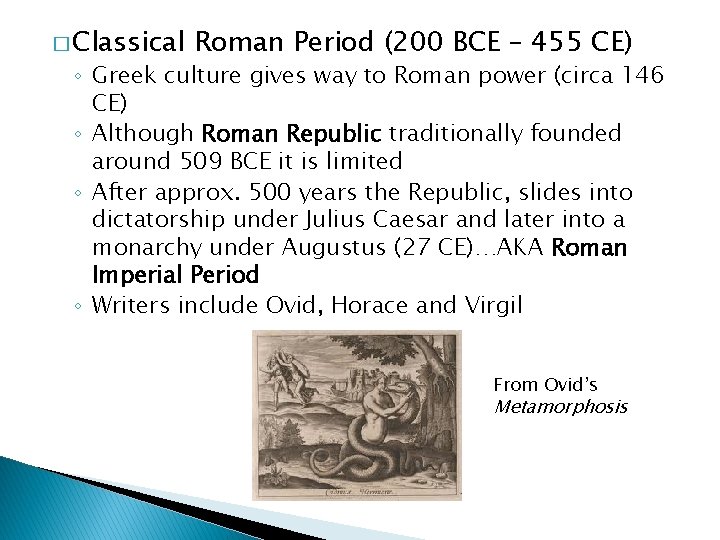
� Classical Roman Period (200 BCE – 455 CE) ◦ Greek culture gives way to Roman power (circa 146 CE) ◦ Although Roman Republic traditionally founded around 509 BCE it is limited ◦ After approx. 500 years the Republic, slides into dictatorship under Julius Caesar and later into a monarchy under Augustus (27 CE)…AKA Roman Imperial Period ◦ Writers include Ovid, Horace and Virgil From Ovid’s Metamorphosis
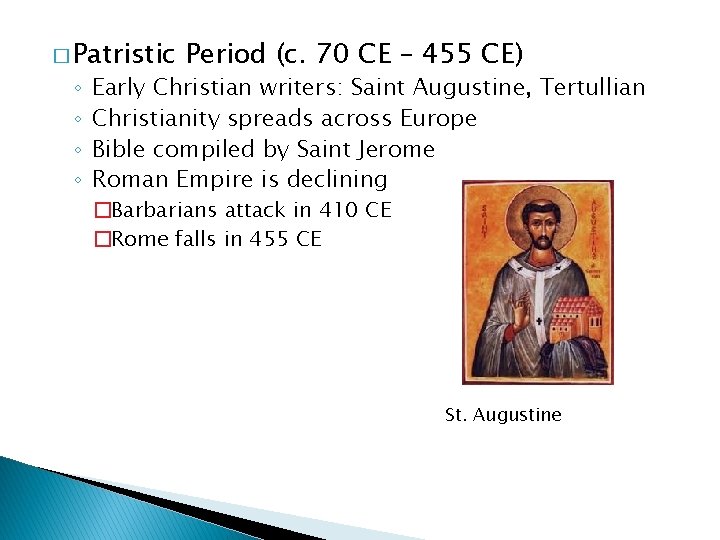
� Patristic ◦ ◦ Period (c. 70 CE – 455 CE) Early Christian writers: Saint Augustine, Tertullian Christianity spreads across Europe Bible compiled by Saint Jerome Roman Empire is declining �Barbarians attack in 410 CE �Rome falls in 455 CE St. Augustine
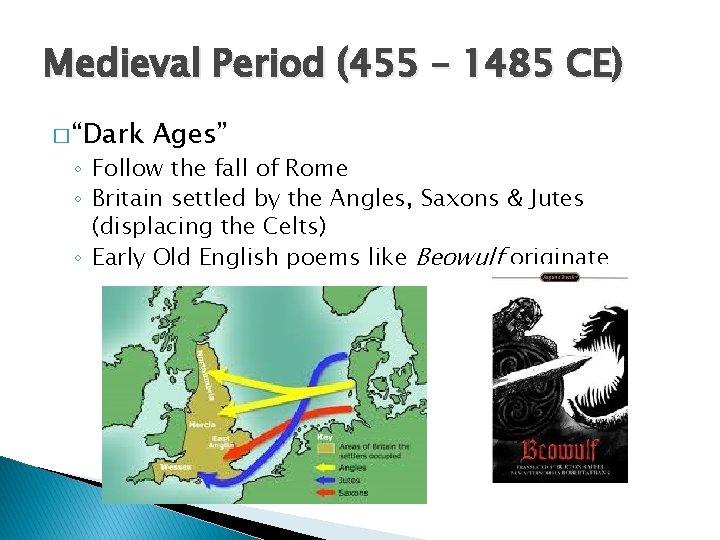
Medieval Period (455 – 1485 CE) � “Dark Ages” ◦ Follow the fall of Rome ◦ Britain settled by the Angles, Saxons & Jutes (displacing the Celts) ◦ Early Old English poems like Beowulf originate
Medieval continued � Carolingian Renaissance (800 – 850) ◦ Early medieval grammar texts ◦ Encyclopedias ◦ Viking Sagas recorded � Middle English Period (1066 – 1450) ◦ 1066 Norman Invasion �William of Normandy assumes the English throne ◦ French chivalric romances �Chrétien de Troyes – tales of Arthurian knights ◦ French fables
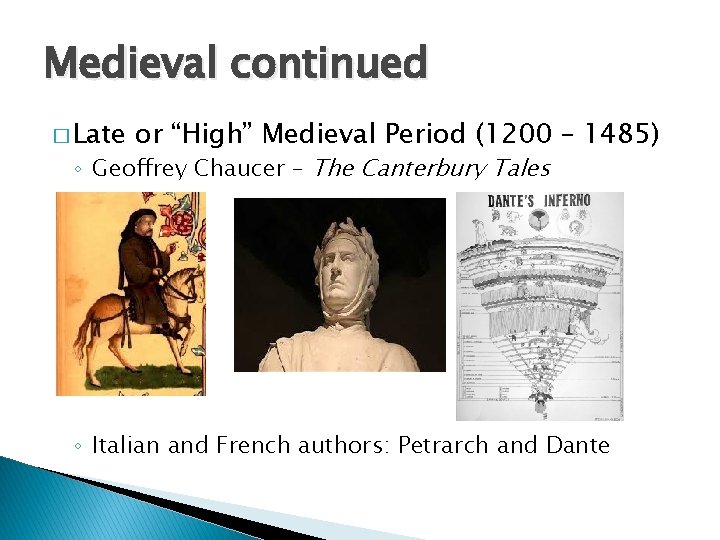
Medieval continued � Late or “High” Medieval Period (1200 – 1485) ◦ Geoffrey Chaucer – The Canterbury Tales ◦ Italian and French authors: Petrarch and Dante
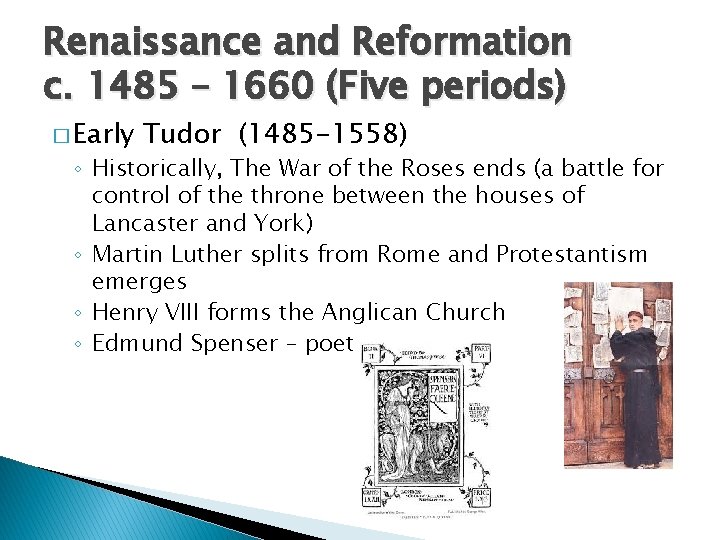
Renaissance and Reformation c. 1485 – 1660 (Five periods) � Early Tudor (1485 -1558) ◦ Historically, The War of the Roses ends (a battle for control of the throne between the houses of Lancaster and York) ◦ Martin Luther splits from Rome and Protestantism emerges ◦ Henry VIII forms the Anglican Church ◦ Edmund Spenser – poet
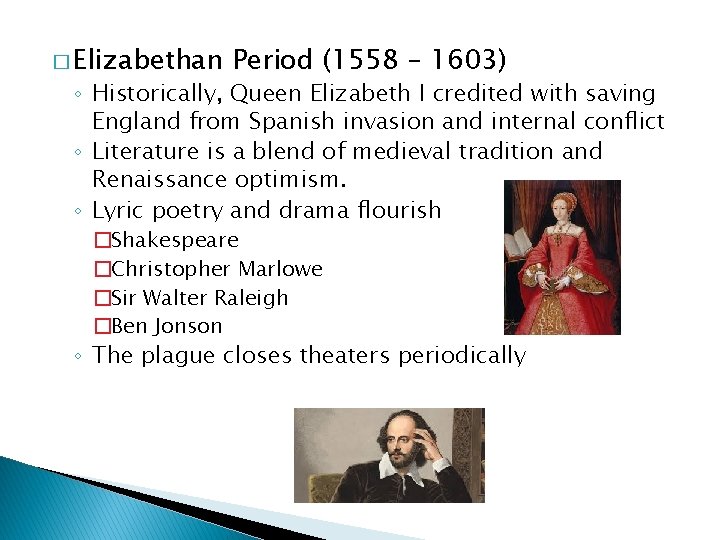
� Elizabethan Period (1558 – 1603) ◦ Historically, Queen Elizabeth I credited with saving England from Spanish invasion and internal conflict ◦ Literature is a blend of medieval tradition and Renaissance optimism. ◦ Lyric poetry and drama flourish �Shakespeare �Christopher Marlowe �Sir Walter Raleigh �Ben Jonson ◦ The plague closes theaters periodically
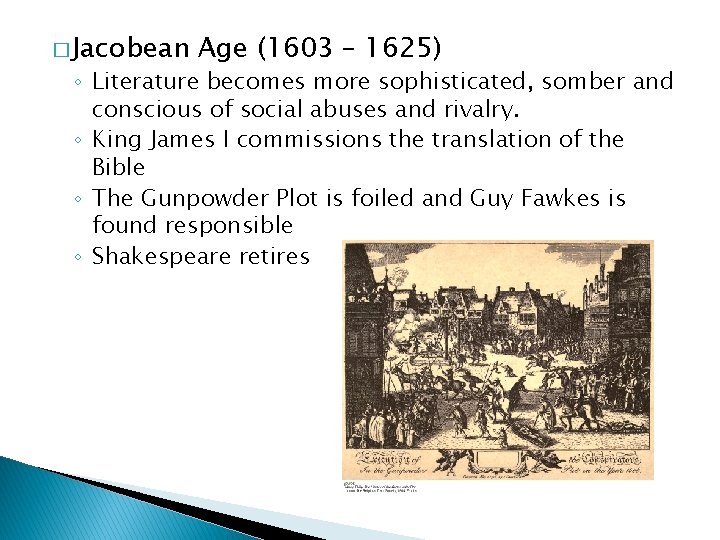
� Jacobean Age (1603 – 1625) ◦ Literature becomes more sophisticated, somber and conscious of social abuses and rivalry. ◦ King James I commissions the translation of the Bible ◦ The Gunpowder Plot is foiled and Guy Fawkes is found responsible ◦ Shakespeare retires
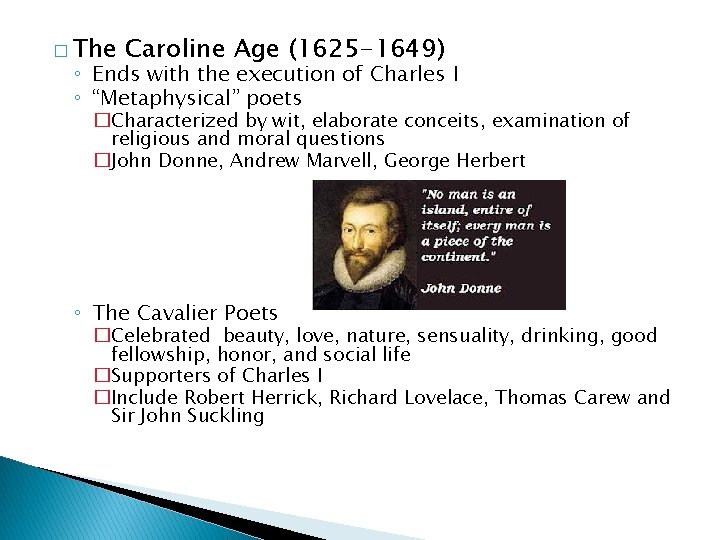
� The Caroline Age (1625 -1649) ◦ Ends with the execution of Charles I ◦ “Metaphysical” poets �Characterized by wit, elaborate conceits, examination of religious and moral questions �John Donne, Andrew Marvell, George Herbert ◦ The Cavalier Poets �Celebrated beauty, love, nature, sensuality, drinking, good fellowship, honor, and social life �Supporters of Charles I �Include Robert Herrick, Richard Lovelace, Thomas Carew and Sir John Suckling
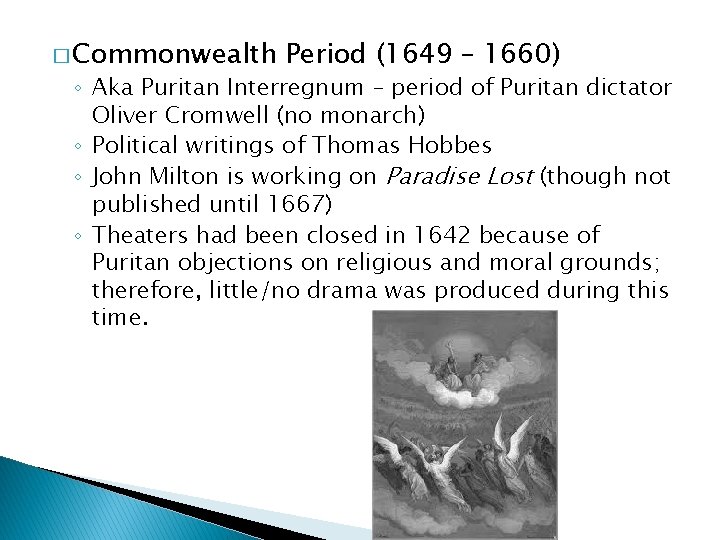
� Commonwealth Period (1649 – 1660) ◦ Aka Puritan Interregnum – period of Puritan dictator Oliver Cromwell (no monarch) ◦ Political writings of Thomas Hobbes ◦ John Milton is working on Paradise Lost (though not published until 1667) ◦ Theaters had been closed in 1642 because of Puritan objections on religious and moral grounds; therefore, little/no drama was produced during this time.
The Enlightenment (Neoclassical) 1660 - 1790 � “Neoclassical” refers to the increased influence of Classical literature upon these decades. � Also called The Enlightenment because of increased reverence for logic and a disdain of superstition � Marked by the rise of Deism: belief that God has created the universe but remains apart from it and permits his creation to administer itself through natural laws; thus, rejects the supernatural aspects of religion, such as belief in revelation in the Bible, and stresses the importance of ethical conduct.
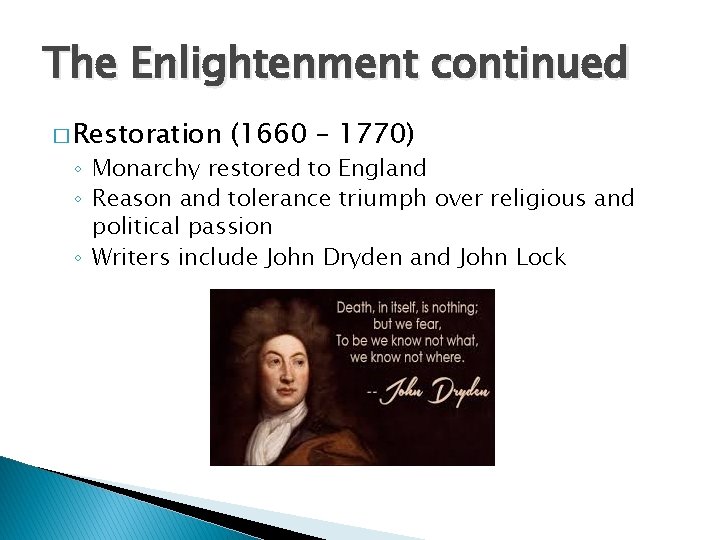
The Enlightenment continued � Restoration (1660 – 1770) ◦ Monarchy restored to England ◦ Reason and tolerance triumph over religious and political passion ◦ Writers include John Dryden and John Lock
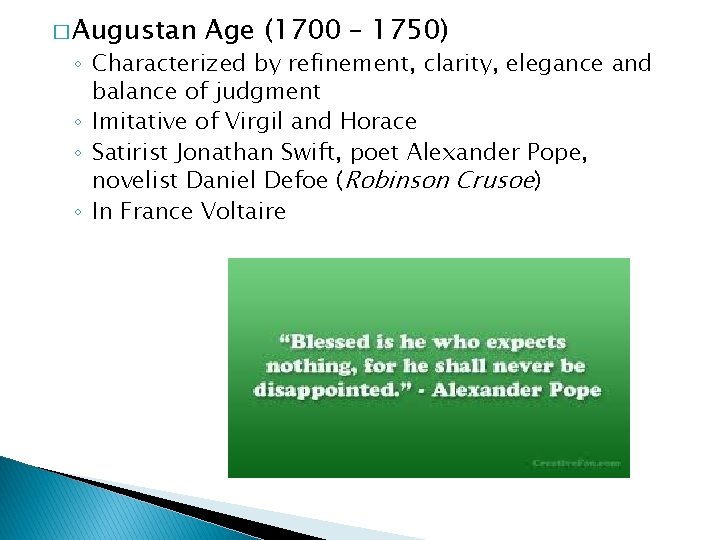
� Augustan Age (1700 – 1750) ◦ Characterized by refinement, clarity, elegance and balance of judgment ◦ Imitative of Virgil and Horace ◦ Satirist Jonathan Swift, poet Alexander Pope, novelist Daniel Defoe (Robinson Crusoe) ◦ In France Voltaire
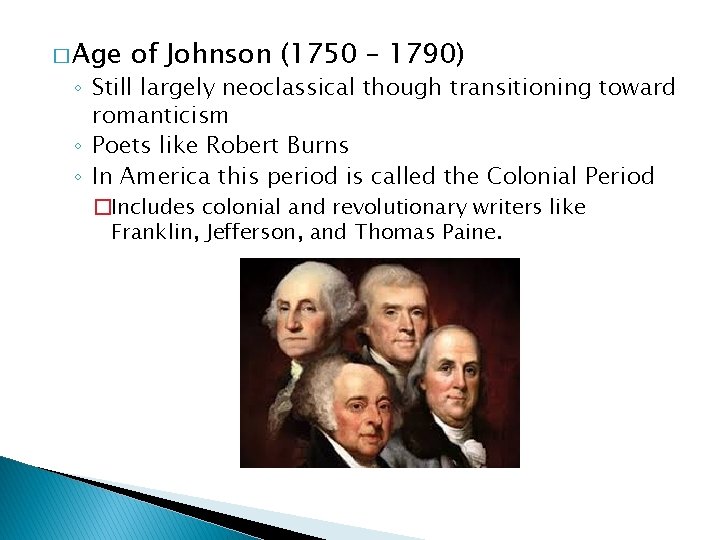
� Age of Johnson (1750 – 1790) ◦ Still largely neoclassical though transitioning toward romanticism ◦ Poets like Robert Burns ◦ In America this period is called the Colonial Period �Includes colonial and revolutionary writers like Franklin, Jefferson, and Thomas Paine.
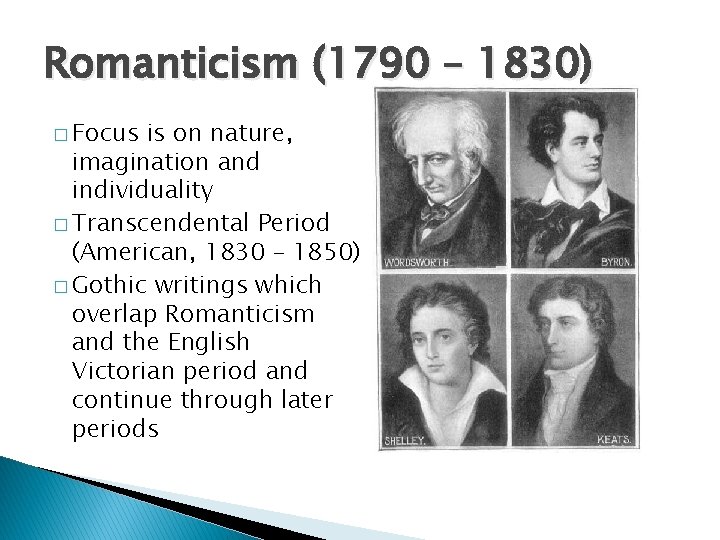
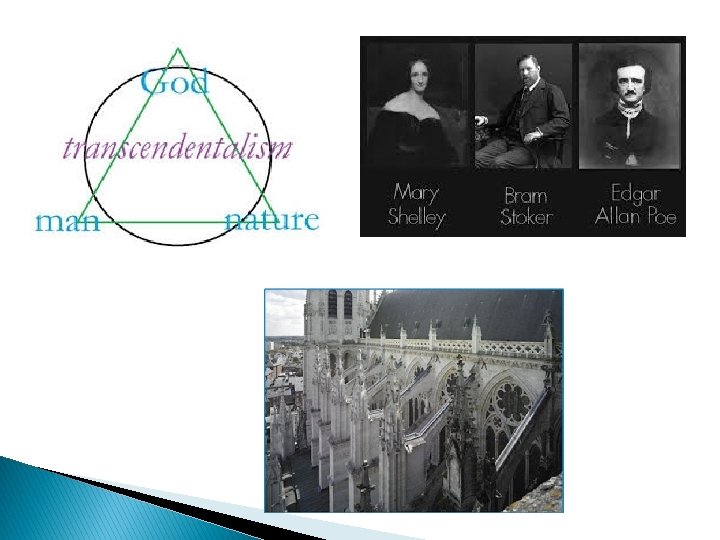
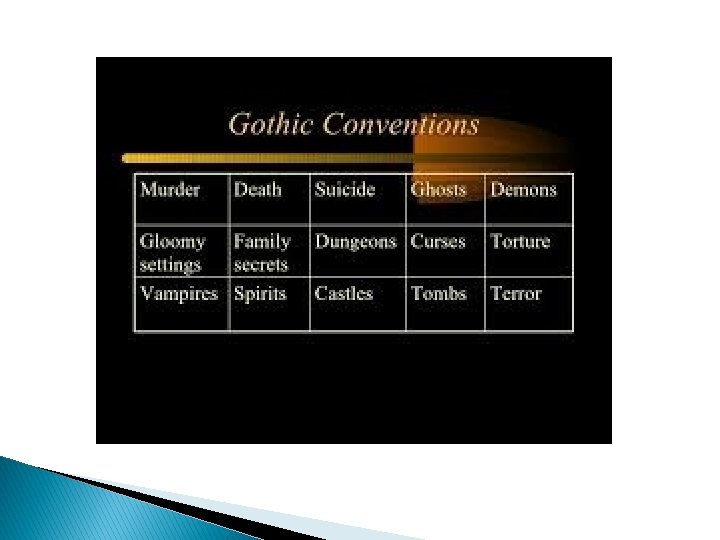
Romanticism (1790 – 1830) � Focus is on nature, imagination and individuality � Transcendental Period (American, 1830 – 1850) � Gothic writings which overlap Romanticism and the English Victorian period and continue through later periods
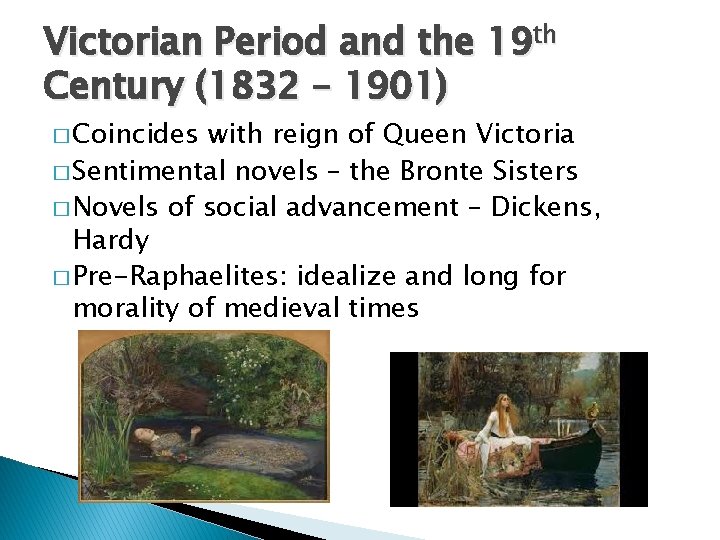
Victorian Period and the 19 th Century (1832 – 1901) � Coincides with reign of Queen Victoria � Sentimental novels – the Bronte Sisters � Novels of social advancement – Dickens, Hardy � Pre-Raphaelites: idealize and long for morality of medieval times
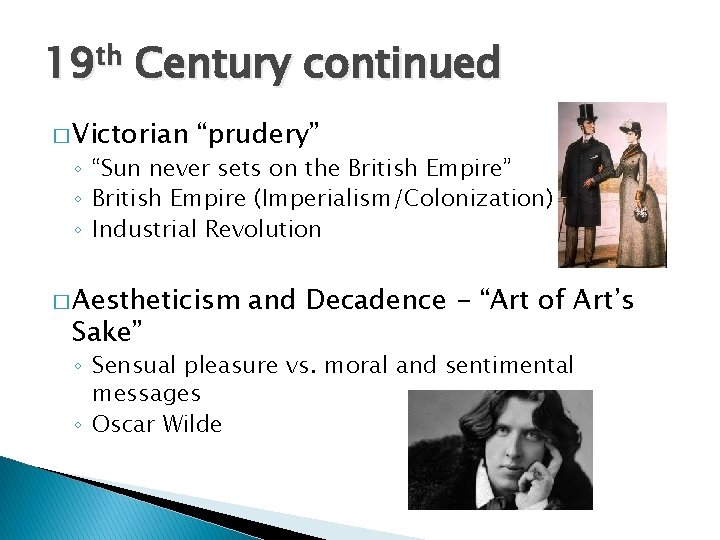
19 th Century continued � Victorian “prudery” ◦ “Sun never sets on the British Empire” ◦ British Empire (Imperialism/Colonization) ◦ Industrial Revolution � Aestheticism Sake” and Decadence - “Art of Art’s ◦ Sensual pleasure vs. moral and sentimental messages ◦ Oscar Wilde
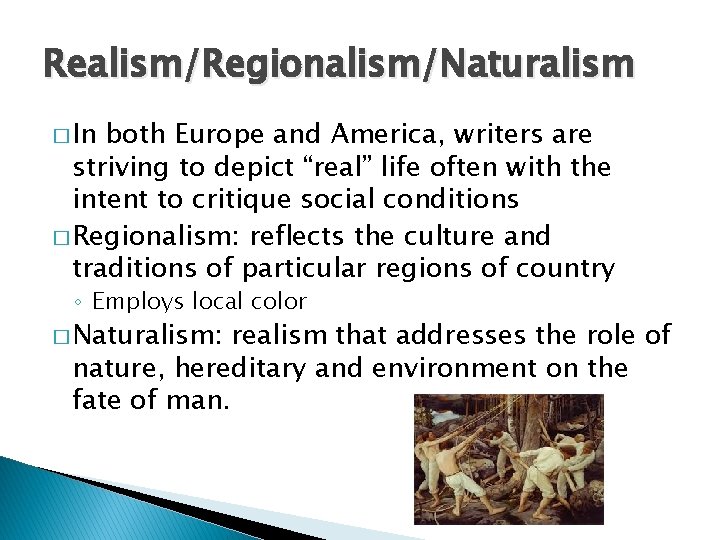
Realism/Regionalism/Naturalism � In both Europe and America, writers are striving to depict “real” life often with the intent to critique social conditions � Regionalism: reflects the culture and traditions of particular regions of country ◦ Employs local color � Naturalism: realism that addresses the role of nature, hereditary and environment on the fate of man.
Authors/Poets � Early ◦ ◦ realists George Eliot Thomas Hardy Henry James Joseph Conrad � Regionalists ◦ Mark Twain ◦ Kate Chopin � Naturalists (local colorists) ◦ Jack London ◦ Stephan Crane
1901 – 1914 ? ? ? � In Britain, The Edwardian and Georgian periods. � No specific name in American literature � Primarily literature of this time period continued to be realistic and focused on the social, political and economic conditions of the time � Bloomsbury Group (London) – Virginia Woolf, E. M. Forster
Modernism (1914 -1945) � Experimentation with subject matter, form and style � Includes members of the Bloomsbury Group, The Lost Generation (coined by Gertrude Stein) and the Harlem Renaissance � The Lost Generation – American ex-patriots writing about their disillusionment with the “American Dream” following the World Wars; includes Hemingway, Dos Passos, Stein, Fitzgerald (who coined the term “Jazz Age”), T. S. Eliot, Ezra Pound
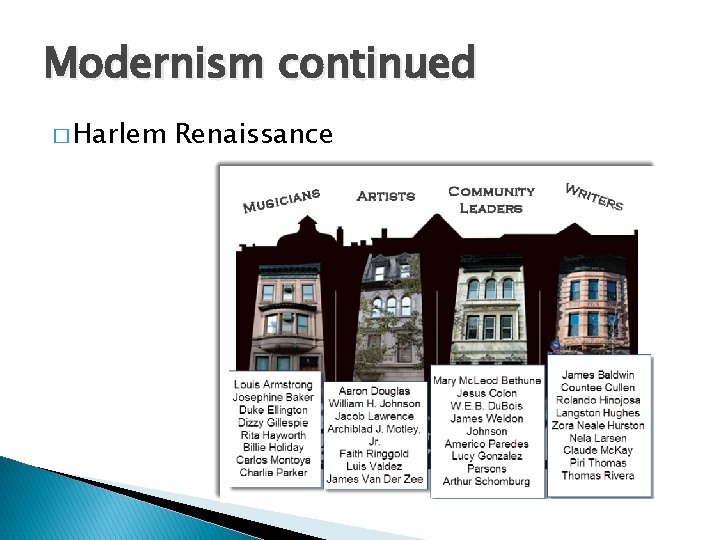
Modernism continued � Harlem Renaissance
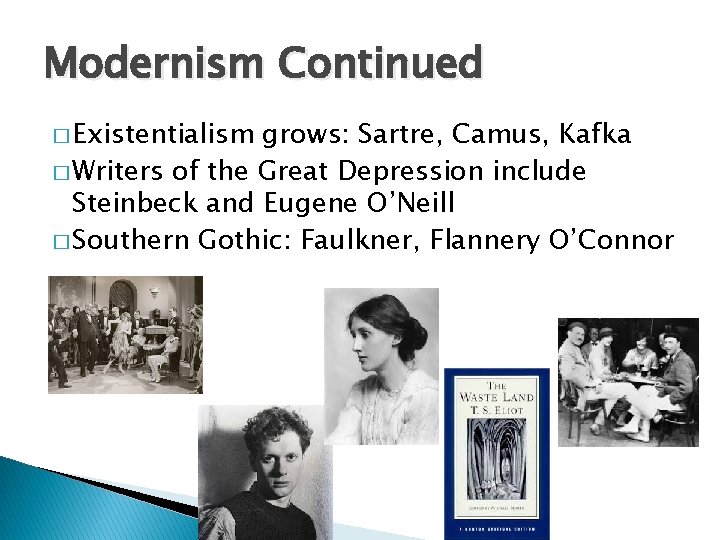
Modernism Continued � Existentialism grows: Sartre, Camus, Kafka � Writers of the Great Depression include Steinbeck and Eugene O’Neill � Southern Gothic: Faulkner, Flannery O’Connor
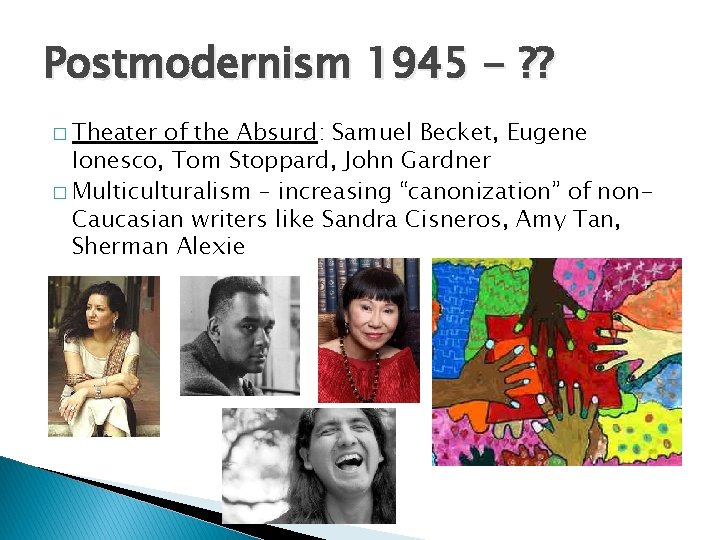
Postmodernism 1945 - ? ? � Theater of the Absurd: Samuel Becket, Eugene Ionesco, Tom Stoppard, John Gardner � Multiculturalism – increasing “canonization” of non. Caucasian writers like Sandra Cisneros, Amy Tan, Sherman Alexie
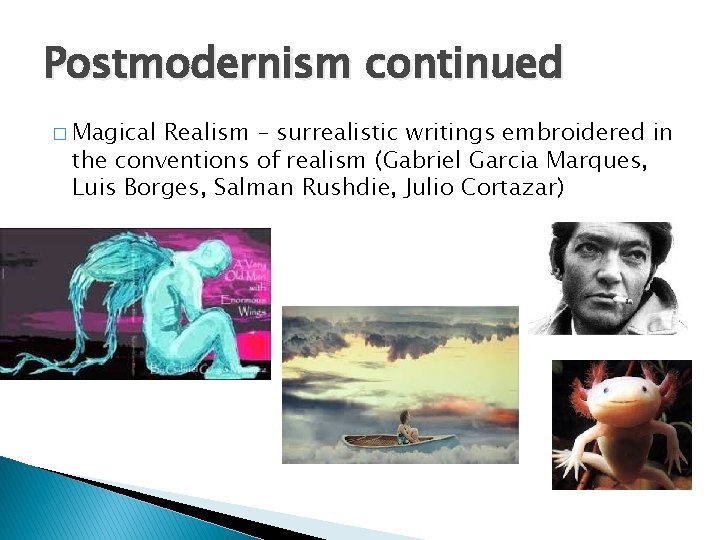
Postmodernism continued � Magical Realism – surrealistic writings embroidered in the conventions of realism (Gabriel Garcia Marques, Luis Borges, Salman Rushdie, Julio Cortazar)
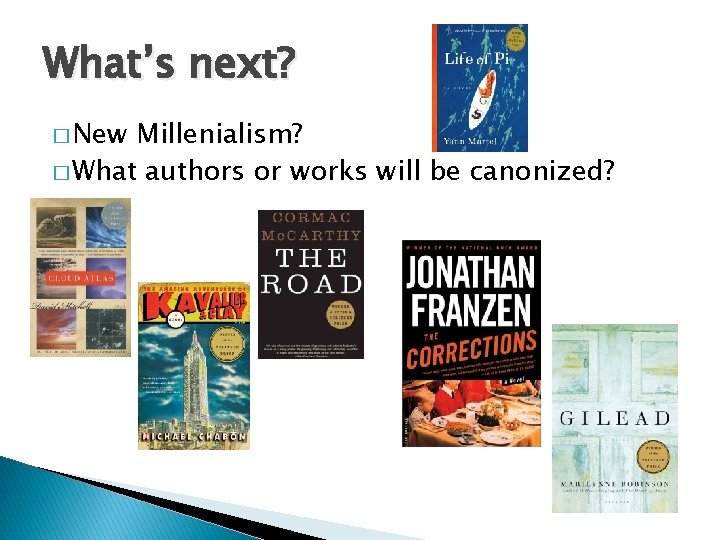
What’s next? � New Millenialism? � What authors or works will be canonized?