
Literary Theories CRITICAL METHODS OF ANALYZING LITERATURE AN
- Slides: 11
Literary Theories CRITICAL METHODS OF ANALYZING LITERATURE
AN OVERVIEW � Think of the following as perspectives to view a work of literature. � These literary theories are ways of trying to make sense of the underlying points the author is trying to make and how a reader should understand the reading. � We will add on to these as the year goes on.
FEMINIST CRITICISM � Holds that the majority of literature is structured from a masculine / patriarchal view, and the role of women is negated or, at best, minimized. � Seeks to raise consciousness about the importance and unique nature of women in literature. � Focuses on the misguided and prejudiced views toward women. � Attempts to bring the female gender into
FEMINIST CRITICISM Questions to consider: � How important are the female characters and how individual are they? � Are they credited with their own existence and their own character? � In relationships with men, how are they treated? � Are the women given equal status, ignored, patronized, and/or demeaned? � Do the male characters exhibit interest in female concerns?
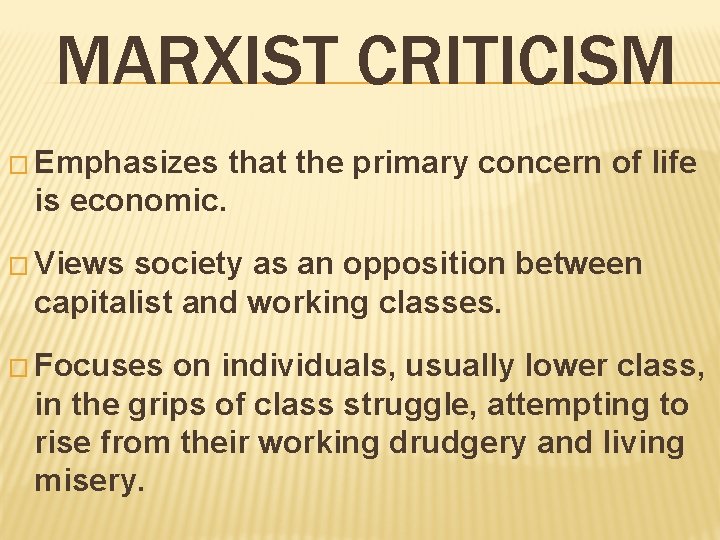
MARXIST CRITICISM � Emphasizes that the primary concern of life is economic. � Views society as an opposition between capitalist and working classes. � Focuses on individuals, usually lower class, in the grips of class struggle, attempting to rise from their working drudgery and living misery.
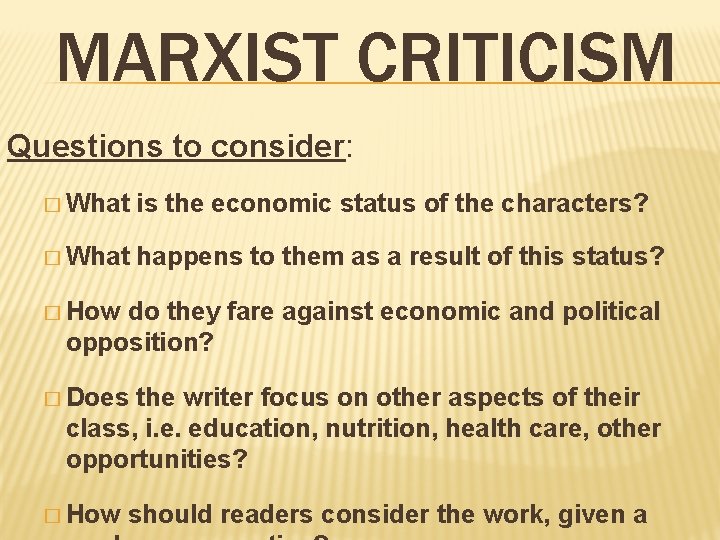
MARXIST CRITICISM Questions to consider: � What is the economic status of the characters? � What happens to them as a result of this status? � How do they fare against economic and political opposition? � Does the writer focus on other aspects of their class, i. e. education, nutrition, health care, other opportunities? � How should readers consider the work, given a
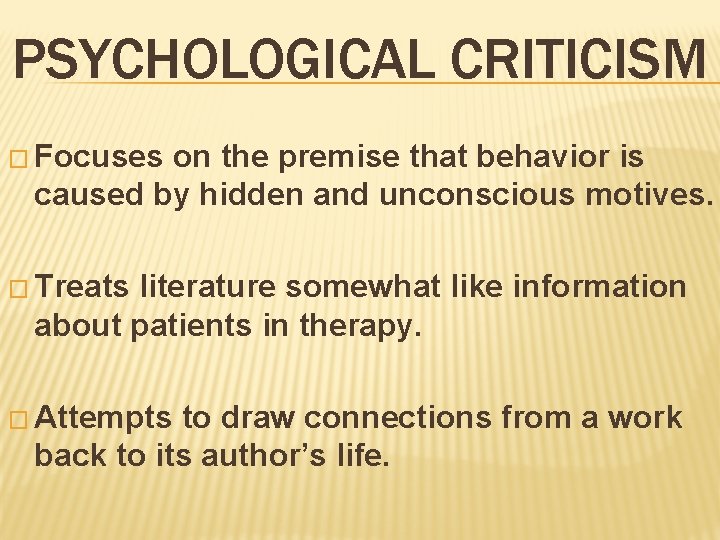
PSYCHOLOGICAL CRITICISM � Focuses on the premise that behavior is caused by hidden and unconscious motives. � Treats literature somewhat like information about patients in therapy. � Attempts to draw connections from a work back to its author’s life.
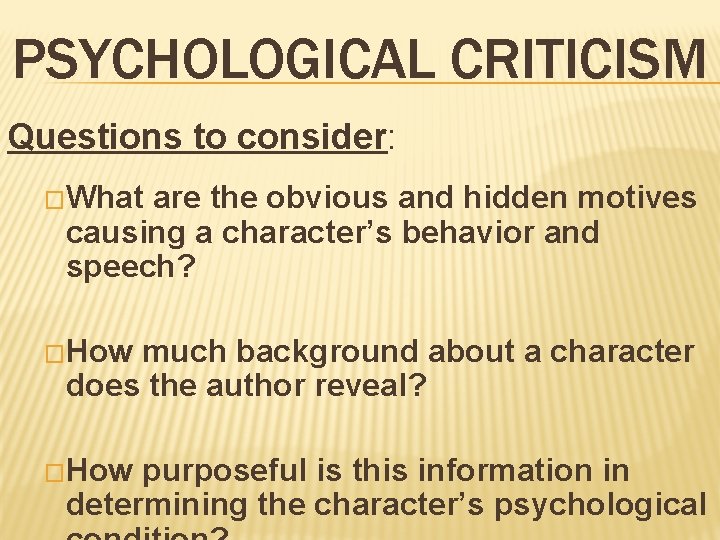
PSYCHOLOGICAL CRITICISM Questions to consider: �What are the obvious and hidden motives causing a character’s behavior and speech? �How much background about a character does the author reveal? �How purposeful is this information in determining the character’s psychological
MORAL INTELLECTUAL � Concerned with content and values � Persons using this approach may look for a “message” in the work � Judges a work by its ethical principals
MORAL INTELLECTUAL Questions to consider: �Is the work true and significant? �Does it teach a lesson? the work help the reader lead a better life, improve their understanding of the world?
THE GIVING TREE � With a partner, make sense of Shel Silverstein’s The Giving Tree by looking at the story through two of the perspectives. Write a paragraph from each of your two perspectives that explains the true meaning/underlying message that Silverstein is trying to get through to the readers. � Choose perspectives that ultimately give at least somewhat different understandings of the story.