
LITERARY TERMS REVIEW Module 3 Dystopia SYMBOLISM Symbolism
LITERARY TERMS REVIEW Module 3 - Dystopia
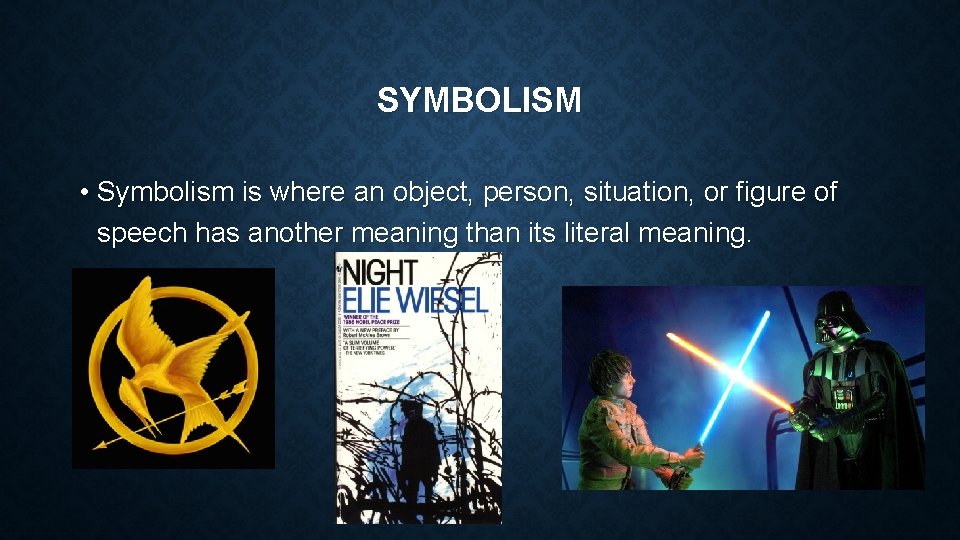
SYMBOLISM • Symbolism is where an object, person, situation, or figure of speech has another meaning than its literal meaning.
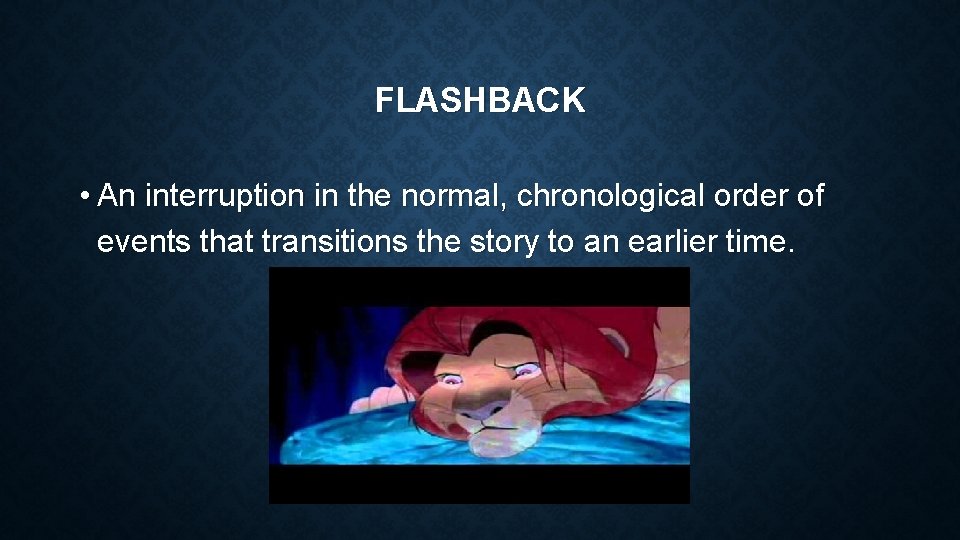
FLASHBACK • An interruption in the normal, chronological order of events that transitions the story to an earlier time.
FORESHADOWING • Foreshadowing is where the writer gives an advance hint as to what is going to happen later in the novel. • In the story of the cyclops, there are many little things that lead the reader to understand that Odysseus and his men are about to run into a lot of trouble: the cyclops’ refusal to follow the rules of the gods, his lack of hospitality, & the boulder at the door.
ALLEGORY • A story, poem, or picture that can be interpreted to reveal a hidden meaning, typically a moral or political one. The Wizard of Oz takes place in Kansas – “the heartland of America” (it’s in the center of the continental US) In came the twister: the whirling confusion of the Great Depression, stock market crash, US Bankruptcy, etc. The TIN-Man is the artificial man (Taxpayer Identification Number) who is a vessel of a human being. …and a lot more.
IRONY • Dramatic irony – The audience/reader understands something about a story that the characters do not. • Situational irony – The opposite of what is expected happens. • Verbal irony – Sarcasm; a character means the opposite of what he/she is saying. • Dramatic – in Romeo and Juliet, the audience knows the lovers’ fate before themselves.
IMAGERY • Imagery is descriptive language that appeals to the reader’s five senses. • I could hear the popping and crackling as mom dropped the bacon into the frying pan, and soon the salty, greasy smell wafted toward me.
- Slides: 7