
LITERARY TERMS PROJECT By Eric Getz FIGURATIVE LANGUAGE
LITERARY TERMS PROJECT By Eric Getz
FIGURATIVE LANGUAGE

IMAGERY Vivid and descriptive language that appeals to one or more of the senses (sight, hearing, touch, smell, and taste)
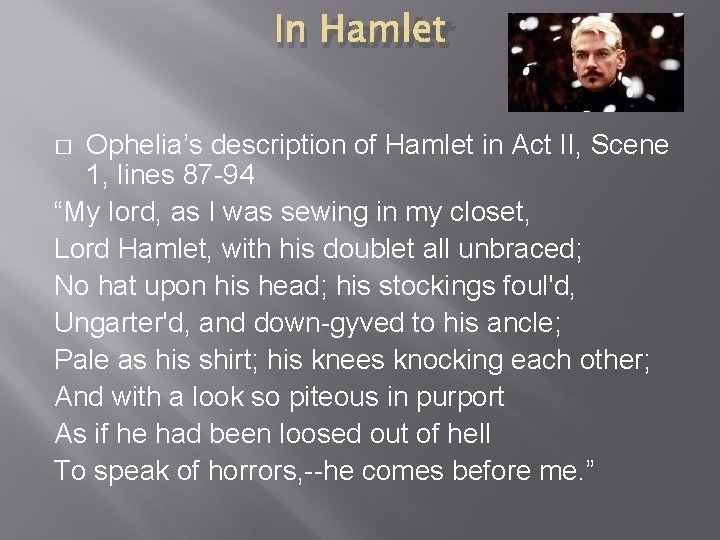
In Hamlet Ophelia’s description of Hamlet in Act II, Scene 1, lines 87 -94 “My lord, as I was sewing in my closet, Lord Hamlet, with his doublet all unbraced; No hat upon his head; his stockings foul'd, Ungarter'd, and down-gyved to his ancle; Pale as his shirt; his knees knocking each other; And with a look so piteous in purport As if he had been loosed out of hell To speak of horrors, --he comes before me. ” �
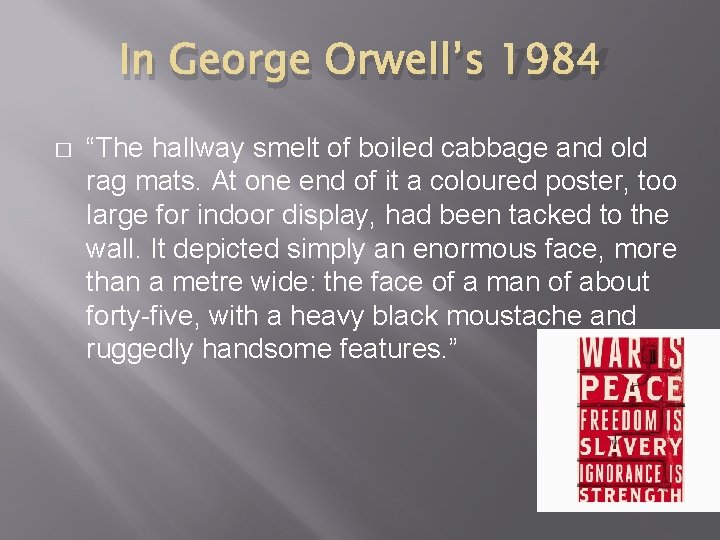
In George Orwell’s 1984 � “The hallway smelt of boiled cabbage and old rag mats. At one end of it a coloured poster, too large for indoor display, had been tacked to the wall. It depicted simply an enormous face, more than a metre wide: the face of a man of about forty-five, with a heavy black moustache and ruggedly handsome features. ”

SIMILE A figure of thought involving the comparison of one thing with another thing of a different kind, explicitly using the word “like” or “as”
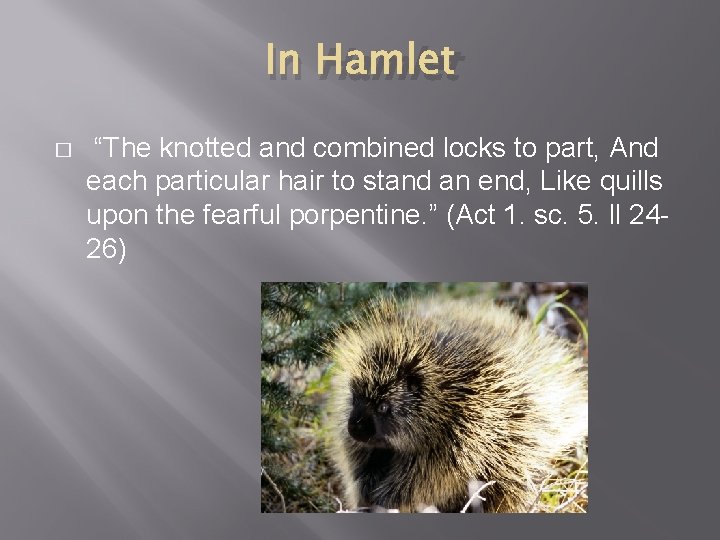
In Hamlet � “The knotted and combined locks to part, And each particular hair to stand an end, Like quills upon the fearful porpentine. ” (Act 1. sc. 5. ll 2426)
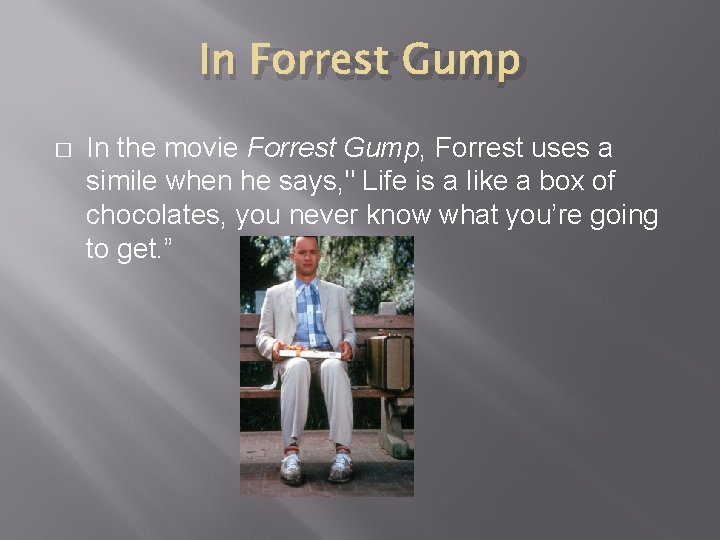
In Forrest Gump � In the movie Forrest Gump, Forrest uses a simile when he says, " Life is a like a box of chocolates, you never know what you’re going to get. ”
METAPHOR A figure of thought in which a word or phrase is applied to another object or action to which it is not literally applicable, without asserting an explicit comparison
In Hamlet � � In Act I, Scene 2, Line 146, Hamlet says, “Fie on't! ah fie! 'tis an unweeded garden, That grows to seed; things rank and gross in nature” Hamlet compares the world to an unweeded garden that produces things "rank and gross in nature. ”
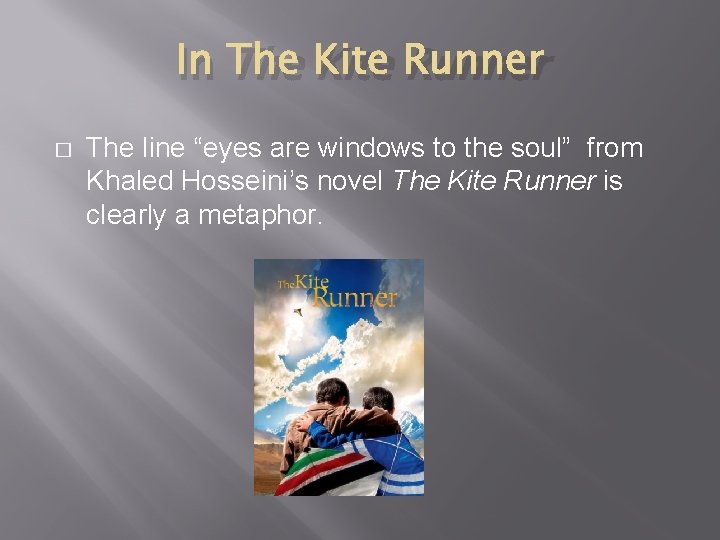
In The Kite Runner � The line “eyes are windows to the soul” from Khaled Hosseini’s novel The Kite Runner is clearly a metaphor.
PERSONIFICATION A figure of thought in which a personal nature or human characteristics are attributed to something nonhuman, or the representation of an abstract quality in human form
In Hamlet � In Act 1, Scene 1, Line 166, Horatio says, "But look the morn in russet mantle clad / Walks o'er the dew of yon high eastward hill. "
In Ender’s Game � "He imagined the ship dangling upside down on the undersurface of the Earth, the giant fingers of gravity holding them firmly in place. "
APOSTROPHE An address to a dead or absent person or to an inanimate object or abstract concept.
In Hamlet � � In Act 1, Scene 2, Lines 135 -136, Hamlet uses an apostrophe, speaking directly to "frailty. ” “ Let me not think on't—Frailty, thy name is woman!”
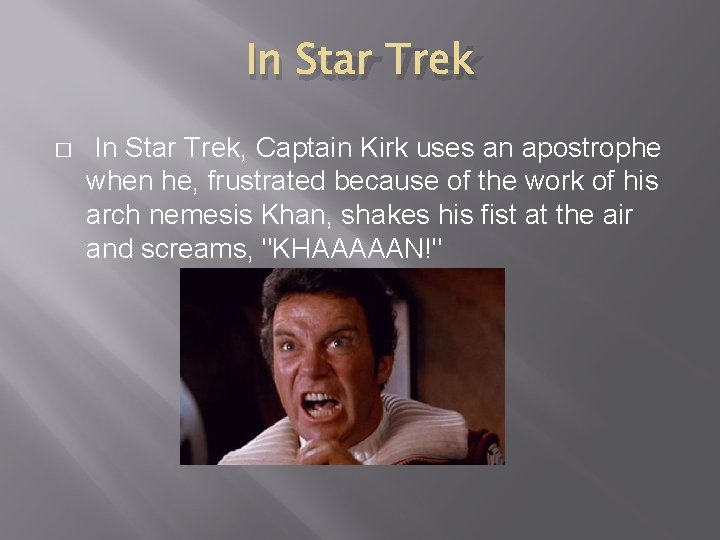
In Star Trek � In Star Trek, Captain Kirk uses an apostrophe when he, frustrated because of the work of his arch nemesis Khan, shakes his fist at the air and screams, "KHAAAAAN!"
SYMBOL An object, action, or event that represents something, or creates a range of associations beyond itself
In Hamlet � � When Ophelia loses her mind in Act IV, Scene V , she directly discusses the symbolic meaning of many of the flowers she hands out “There's rosemary, that's for remembrance; pray, love, remember, and there is pansies. That's for thoughts […]. There's fennel for you, and columbines: there's rue for you; and here's some for me: we may call it herb-grace o' Sundays: O you must wear your rue with a difference. There's a daisy: I would give you some violets, but they withered all when my father died. ”
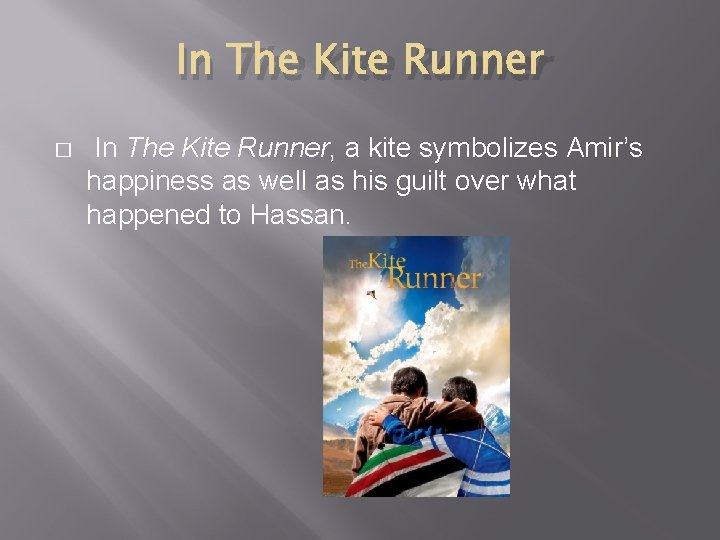
In The Kite Runner � In The Kite Runner, a kite symbolizes Amir’s happiness as well as his guilt over what happened to Hassan.
ALLEGORY A symbolic narrative in which the surface details imply a secondary meaning
In Hamlet � � � A cosmic allegory? Some scholars speculate that Hamlet can be viewed as cosmic allegory with different characters representing different views of the solar system with Copernicus’ Heliocentric theory eventually triumphing over the competing geocentric models This allegory is reinforced by theme of the way things seem versus the way they really are
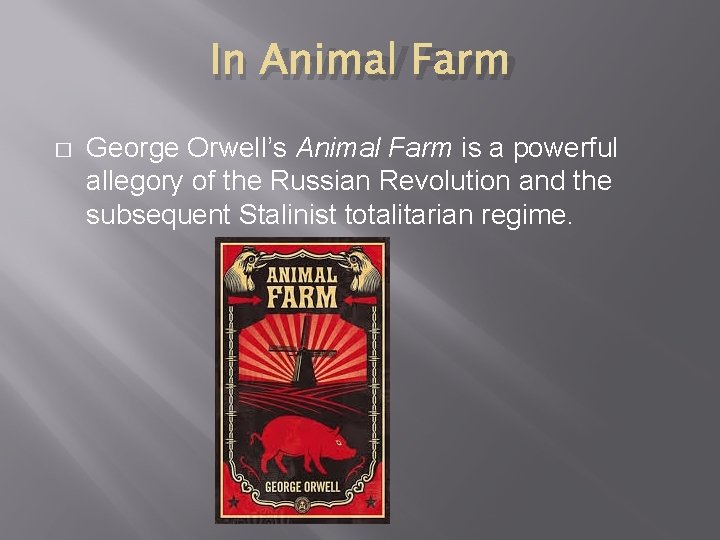
In Animal Farm � George Orwell’s Animal Farm is a powerful allegory of the Russian Revolution and the subsequent Stalinist totalitarian regime.
PARADOX A trope in which a statement that appears on the surface to be contradictory or impossible turns out to express an often striking truth
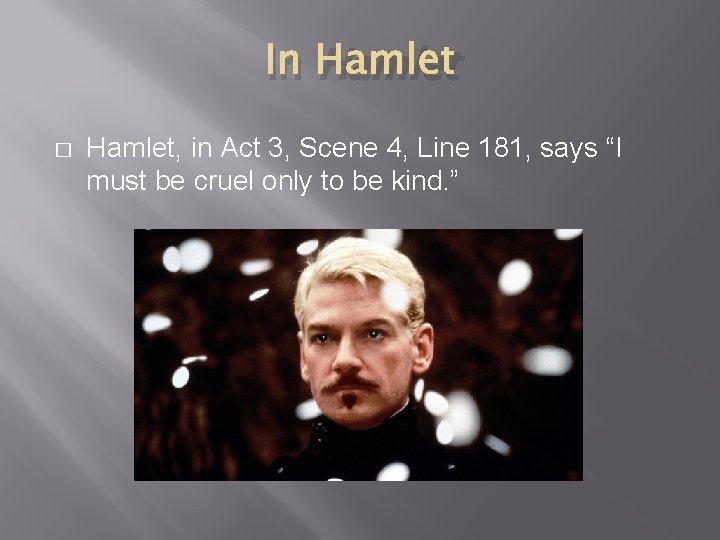
In Hamlet � Hamlet, in Act 3, Scene 4, Line 181, says “I must be cruel only to be kind. ”
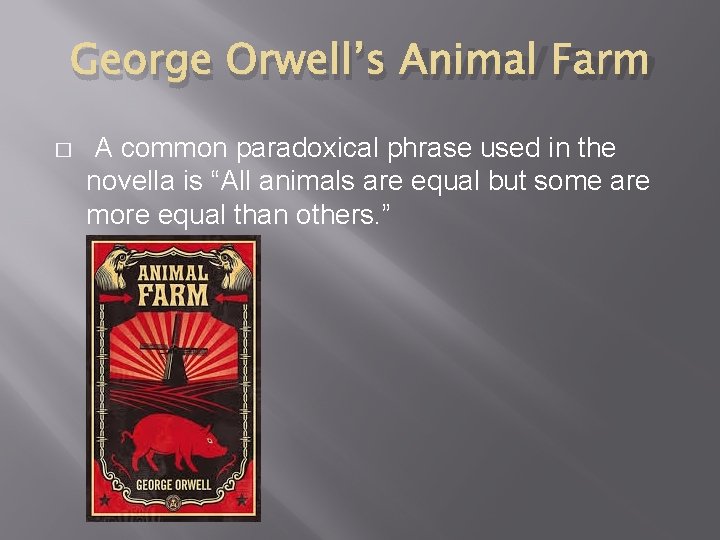
George Orwell’s Animal Farm � A common paradoxical phrase used in the novella is “All animals are equal but some are more equal than others. ”
HYPERBOLE A trope in which a point is stated in a way that is greatly exaggerated
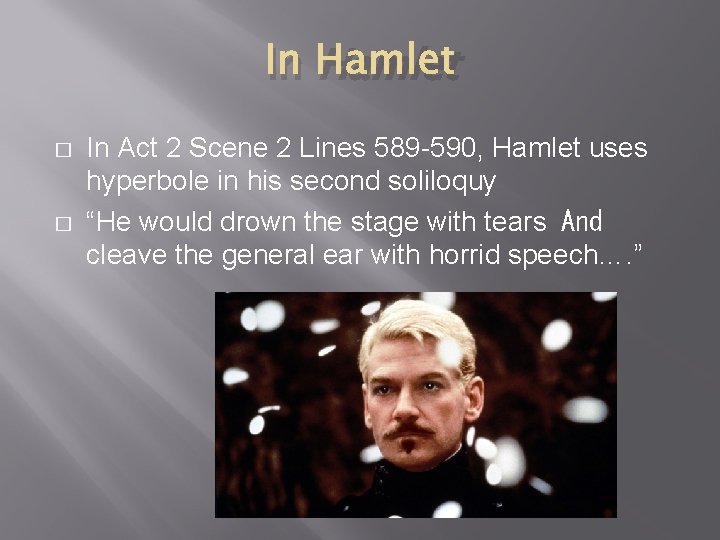
In Hamlet � � In Act 2 Scene 2 Lines 589 -590, Hamlet uses hyperbole in his second soliloquy “He would drown the stage with tears And cleave the general ear with horrid speech…. ”
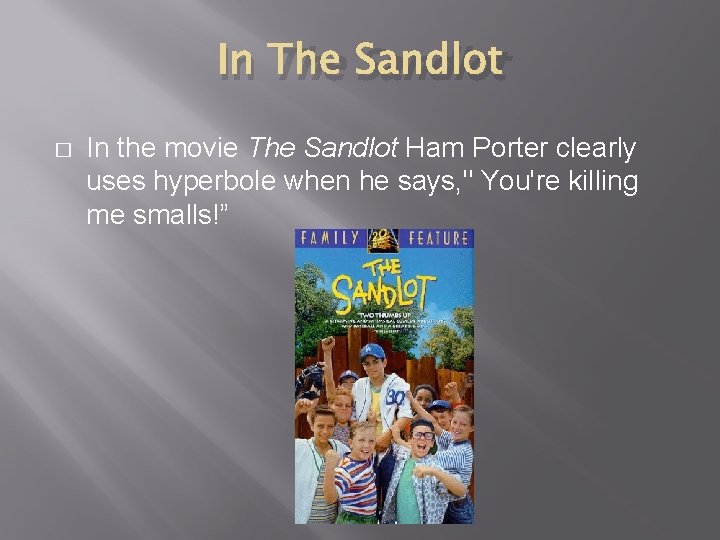
In The Sandlot � In the movie The Sandlot Ham Porter clearly uses hyperbole when he says, " You're killing me smalls!”
UNDERSTATEMENT A form of irony in which a point is deliberately expressed as less, in magnitude value or importance, than it actually is.
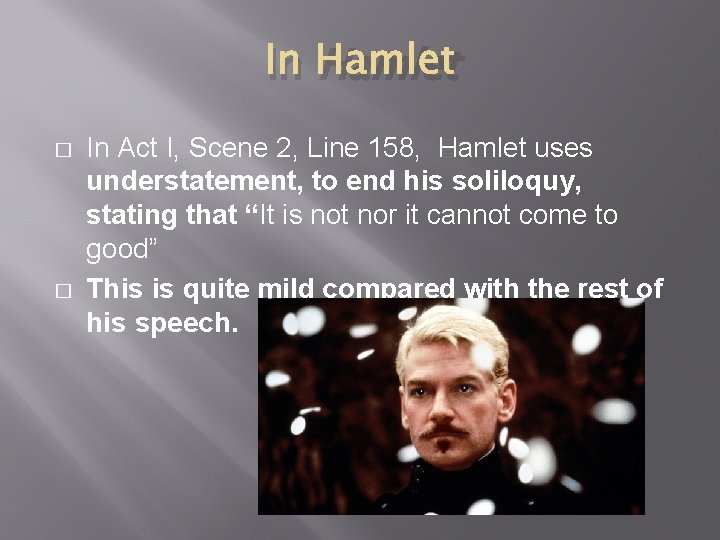
In Hamlet � � In Act I, Scene 2, Line 158, Hamlet uses understatement, to end his soliloquy, stating that “It is not nor it cannot come to good” This is quite mild compared with the rest of his speech.
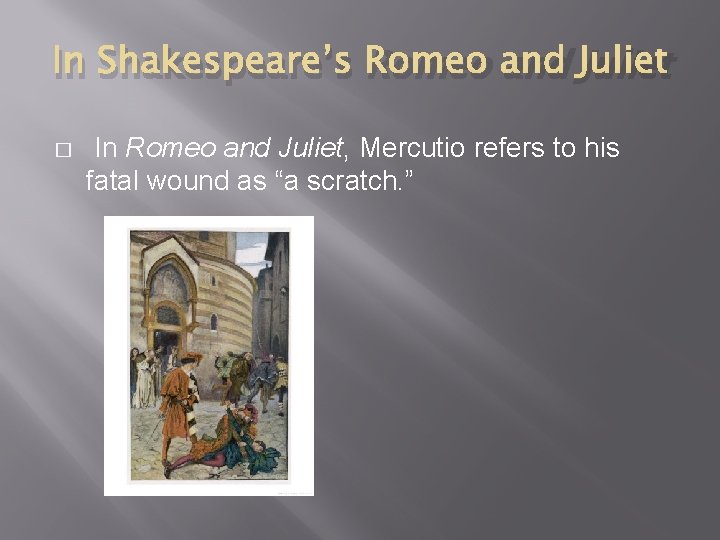
In Shakespeare’s Romeo and Juliet � In Romeo and Juliet, Mercutio refers to his fatal wound as “a scratch. ”
IRONY A contrast or discrepancy between what is said and what is meant or between what happens and what is expected to happen in life and in literature. In verbal irony, characters say the opposite of what they mean. In irony of circumstance or situation, the opposite of what is expected occurs. In dramatic irony, a character speaks in ignorance of a situation or event known to the audience or to the other characters.
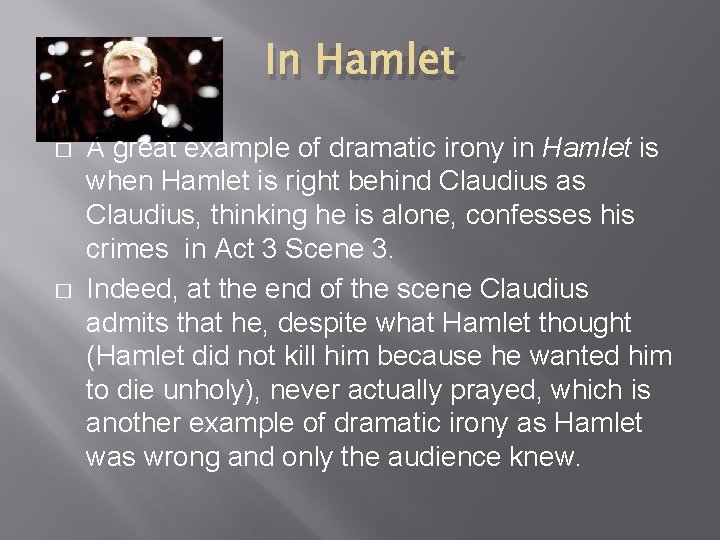
In Hamlet � � A great example of dramatic irony in Hamlet is when Hamlet is right behind Claudius as Claudius, thinking he is alone, confesses his crimes in Act 3 Scene 3. Indeed, at the end of the scene Claudius admits that he, despite what Hamlet thought (Hamlet did not kill him because he wanted him to die unholy), never actually prayed, which is another example of dramatic irony as Hamlet was wrong and only the audience knew.
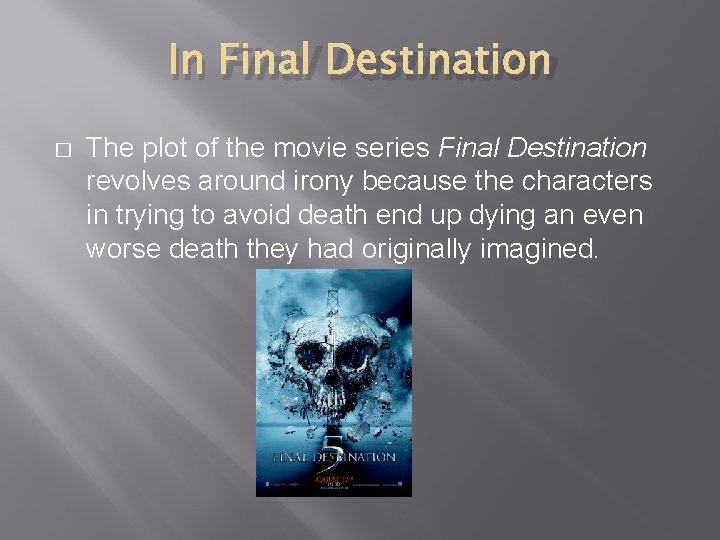
In Final Destination � The plot of the movie series Final Destination revolves around irony because the characters in trying to avoid death end up dying an even worse death they had originally imagined.
CHIASMUS A rhetorical device in which two or more clauses are balanced against each other by the reversal of their structures in order to produce an artistic effect
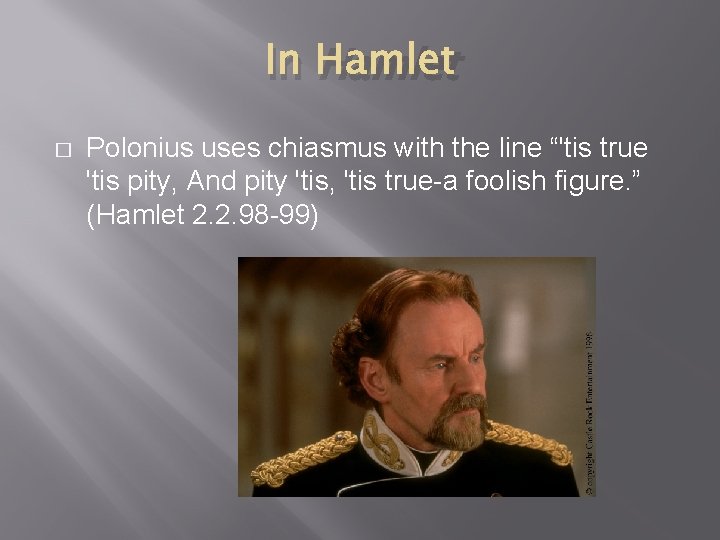
In Hamlet � Polonius uses chiasmus with the line “'tis true 'tis pity, And pity 'tis, 'tis true-a foolish figure. ” (Hamlet 2. 2. 98 -99)
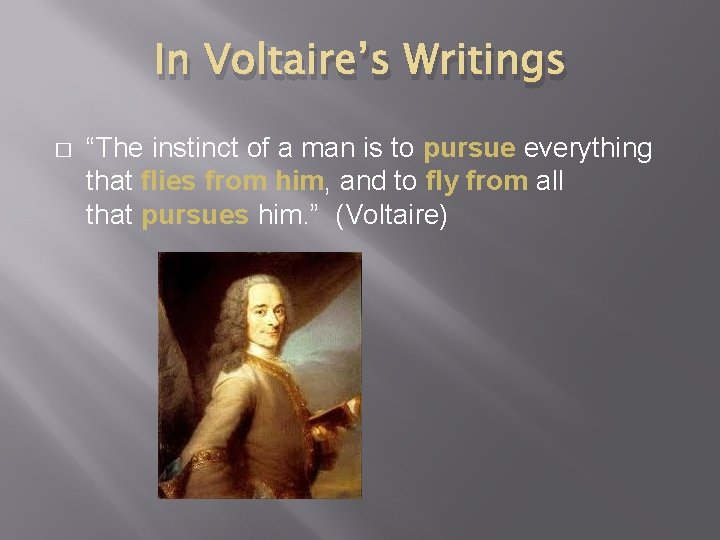
In Voltaire’s Writings � “The instinct of a man is to pursue everything that flies from him, and to fly from all that pursues him. ” (Voltaire)
METONYMY A trope which substitutes the name of an entity with something else closely associated with it.
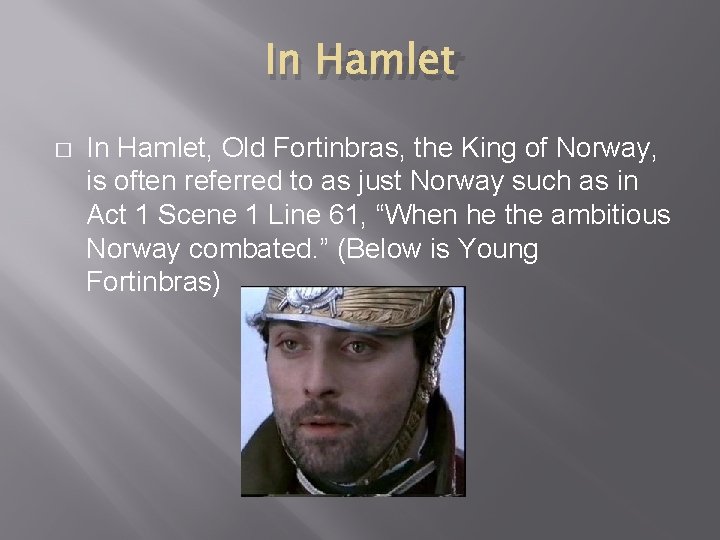
In Hamlet � In Hamlet, Old Fortinbras, the King of Norway, is often referred to as just Norway such as in Act 1 Scene 1 Line 61, “When he the ambitious Norway combated. ” (Below is Young Fortinbras)
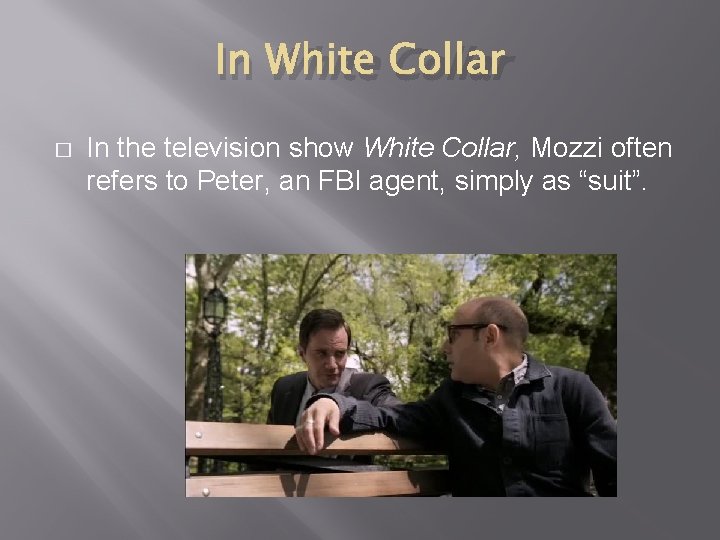
In White Collar � In the television show White Collar, Mozzi often refers to Peter, an FBI agent, simply as “suit”.
SYNECDOCHE A figure of speech in which the term for part of something is used to represent the whole, or vice versa
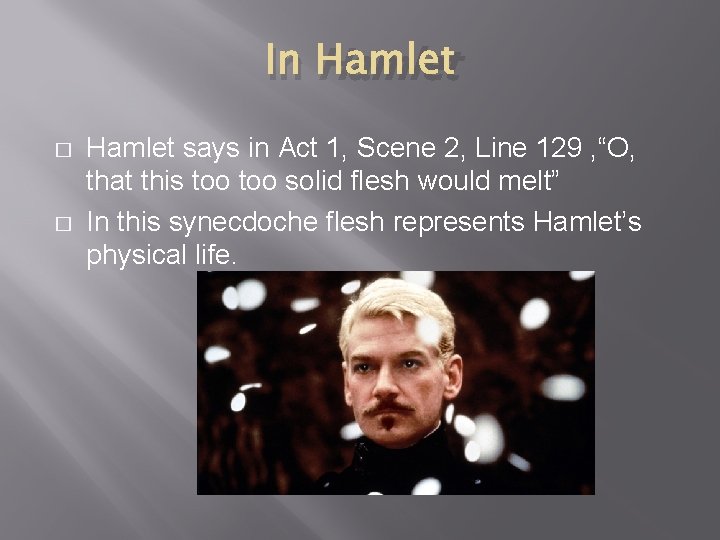
In Hamlet � � Hamlet says in Act 1, Scene 2, Line 129 , “O, that this too solid flesh would melt” In this synecdoche flesh represents Hamlet’s physical life.
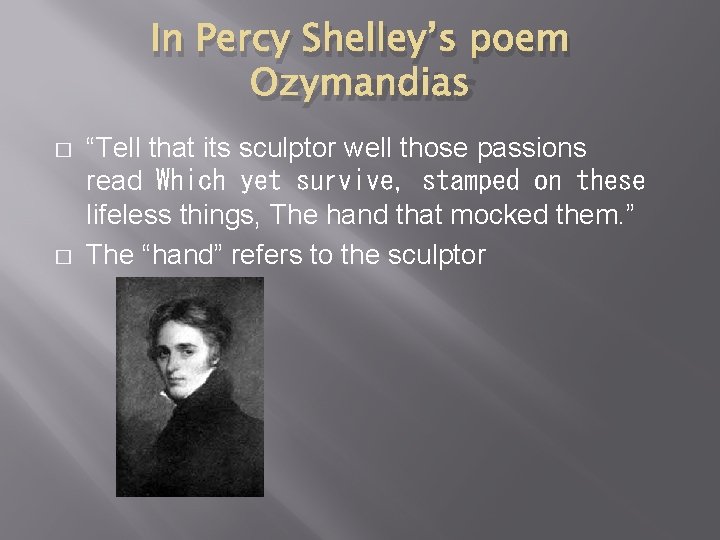
In Percy Shelley’s poem Ozymandias � � “Tell that its sculptor well those passions read Which yet survive, stamped on these lifeless things, The hand that mocked them. ” The “hand” refers to the sculptor
REPARTEE A conversation or speech characterized by quick, witty comments or replies. A repartee is like a verbal fencing match.
In Hamlet In Act 5, Scene 1, Hamlet engages in repartee with the grave digger HAMLET I think it be thine, indeed, for thou liest in ’t. GRAVEDIGGER You lie out on ’t, sir, and therefore it is not yours. For my part, I do not lie in ’t, and yet it is min HAMLET Thou dost lie in ’t, to be in ’t and say it is thine. 'Tis for the dead, not for the quick. Therefore thou liest. GRAVEDIGGER ’Tis a quick lie, sir. 'Twill away gain from me to you. HAMLET What man dost thou dig it for? GRAVEDIGGER For no man, sir. HAMLET What woman, then? GRAVEDIGGER For none, neither. HAMLET Who is to be buried in ’t? GRAVEDIGGER One that was a woman, sir, but, rest her soul, she is dead. �
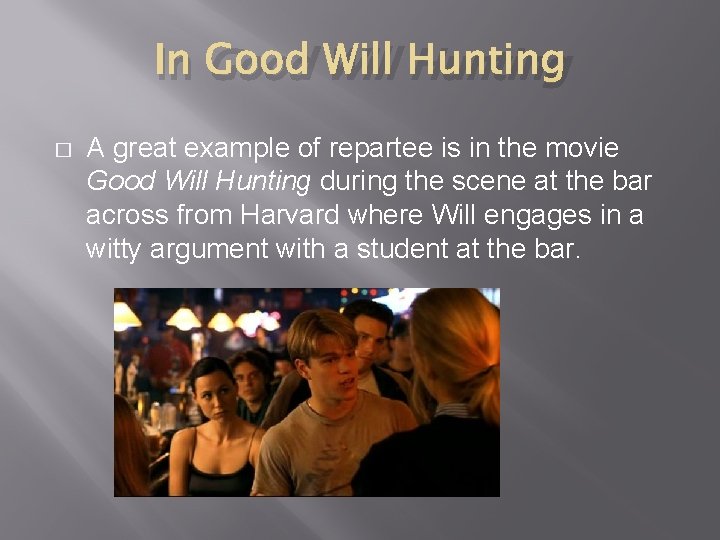
In Good Will Hunting � A great example of repartee is in the movie Good Will Hunting during the scene at the bar across from Harvard where Will engages in a witty argument with a student at the bar.
STICHOMYTHIA A technique in drama or poetry, in which alternating lines, or half-lines, are given to alternating characters, voices, or entities
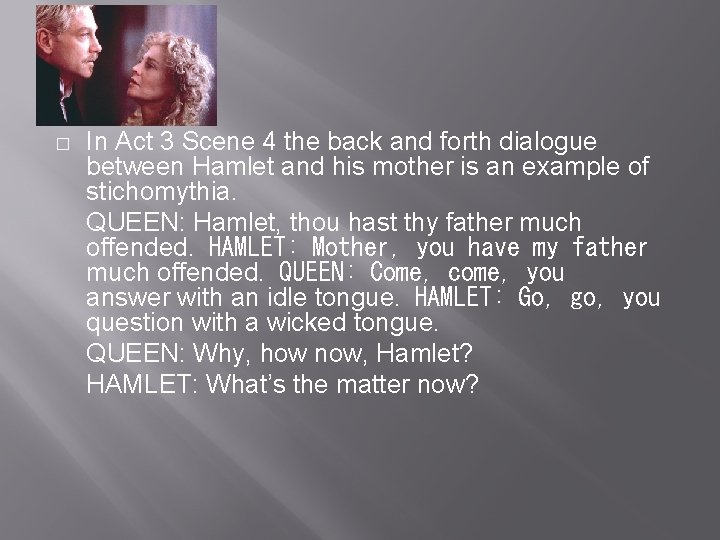
� In Act 3 Scene 4 the back and forth dialogue between Hamlet and his mother is an example of stichomythia. QUEEN: Hamlet, thou hast thy father much offended. HAMLET: Mother, you have my father much offended. QUEEN: Come, come, you answer with an idle tongue. HAMLET: Go, go, you question with a wicked tongue. QUEEN: Why, how now, Hamlet? HAMLET: What’s the matter now?
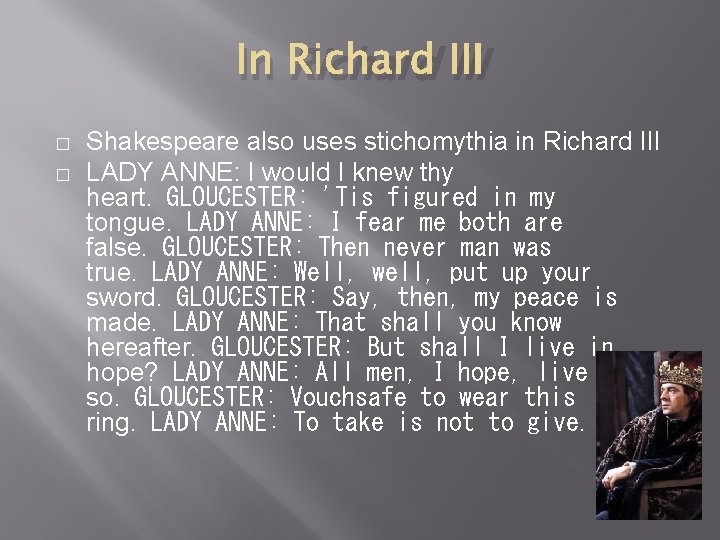
In Richard III � � Shakespeare also uses stichomythia in Richard III LADY ANNE: I would I knew thy heart. GLOUCESTER: 'Tis figured in my tongue. LADY ANNE: I fear me both are false. GLOUCESTER: Then never man was true. LADY ANNE: Well, well, put up your sword. GLOUCESTER: Say, then, my peace is made. LADY ANNE: That shall you know hereafter. GLOUCESTER: But shall I live in hope? LADY ANNE: All men, I hope, live so. GLOUCESTER: Vouchsafe to wear this ring. LADY ANNE: To take is not to give.
STOCK CHARACTERS Someone based on a common literary or social stereotype. Stock characters rely heavily on cultural types or names for their personality, manner of speech, and other characteristics
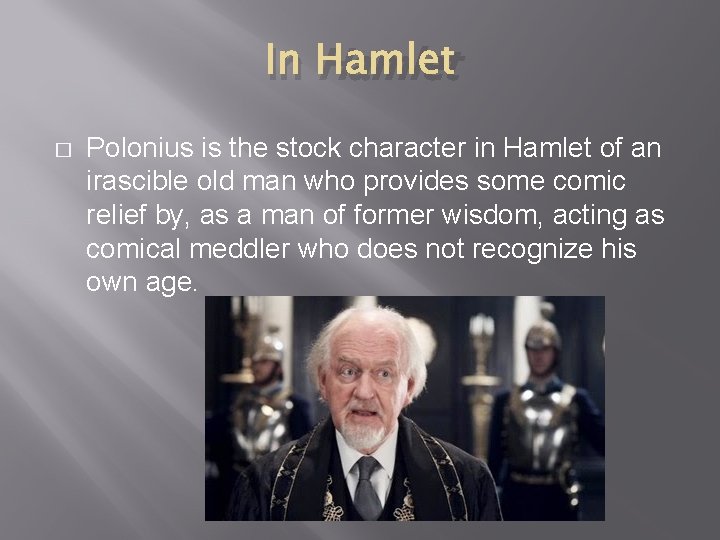
In Hamlet � Polonius is the stock character in Hamlet of an irascible old man who provides some comic relief by, as a man of former wisdom, acting as comical meddler who does not recognize his own age.
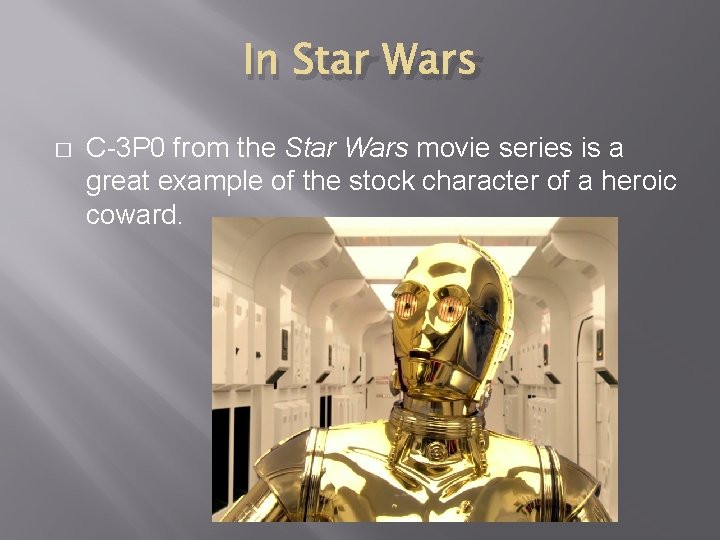
In Star Wars � C-3 P 0 from the Star Wars movie series is a great example of the stock character of a heroic coward.
MUSICAL DEVICES
ALLITERATION The occurrence of the same letter or sound at the beginning of adjacent or closely connected words.
In Hamlet � In Act I, Scene 5, Line 43 the ghost uses alliteration with the phrase, ” With witchcraft of his wit”
In V for Vendetta � The movie V for Vendetta contains a great example of alliteration when V says, ’’ Voilà! In view, a humble vaudevillian veteran, cast vicariously as both victim and villain by the vicissitudes of Fate…. ”
ASSONANCE The repetition of vowel sounds often to set the mood or add to the meaning of the word
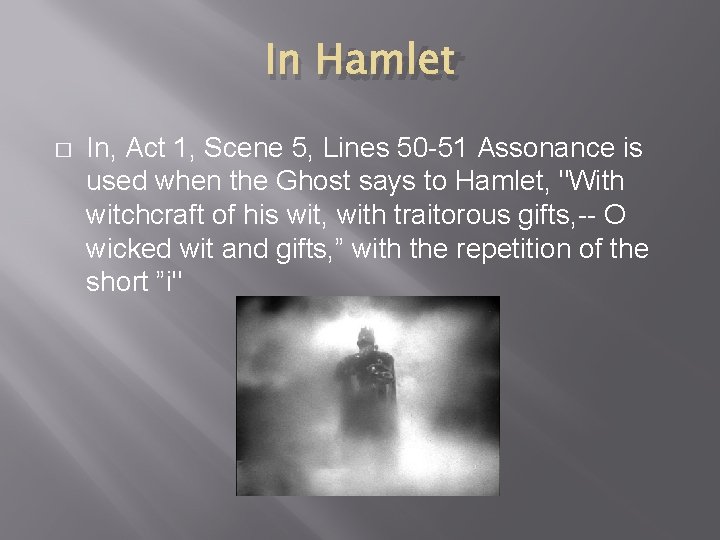
In Hamlet � In, Act 1, Scene 5, Lines 50 -51 Assonance is used when the Ghost says to Hamlet, "With witchcraft of his wit, with traitorous gifts, -- O wicked wit and gifts, ” with the repetition of the short ”i"
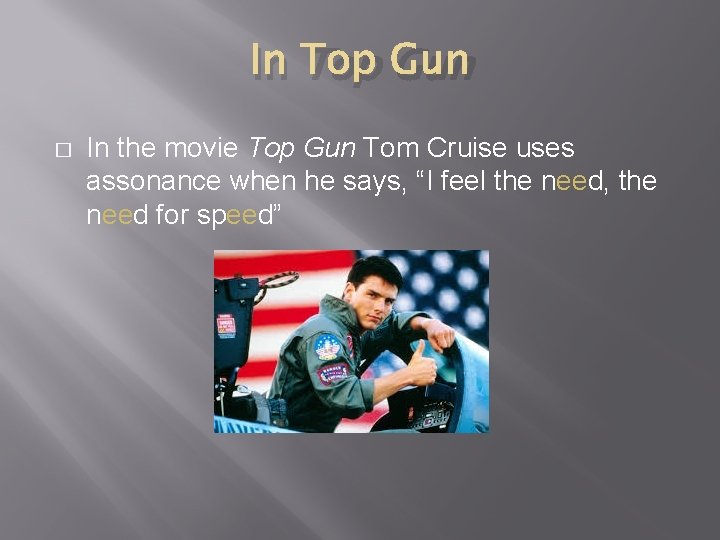
In Top Gun � In the movie Top Gun Tom Cruise uses assonance when he says, “I feel the need, the need for speed”
CONSONANCE The repetition of the final consonant sounds of words
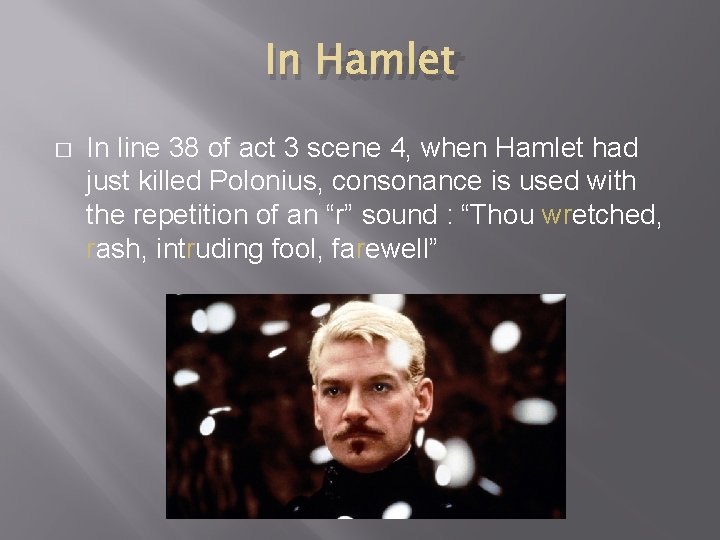
In Hamlet � In line 38 of act 3 scene 4, when Hamlet had just killed Polonius, consonance is used with the repetition of an “r” sound : “Thou wretched, rash, intruding fool, farewell”
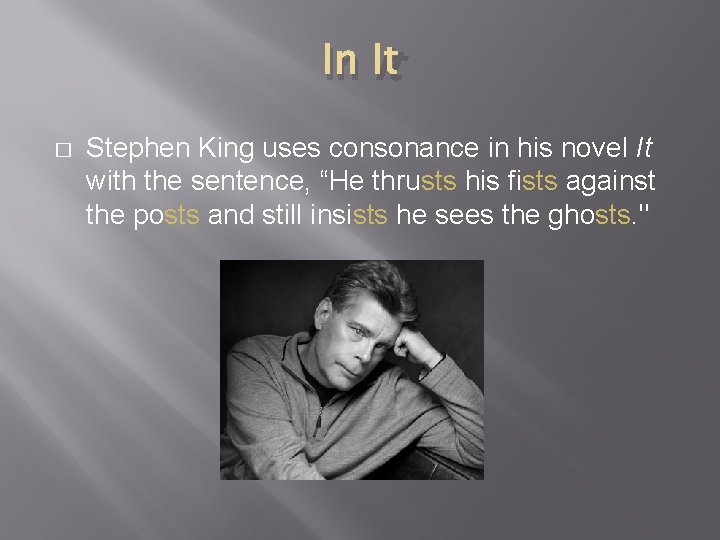
In It � Stephen King uses consonance in his novel It with the sentence, “He thrusts his fists against the posts and still insists he sees the ghosts. "
RHYME The matching of final vowel or consonant sounds in two or more words
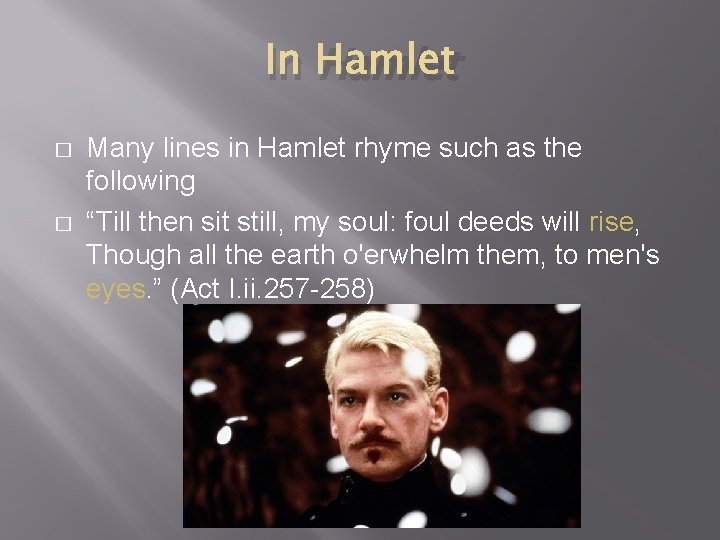
In Hamlet � � Many lines in Hamlet rhyme such as the following “Till then sit still, my soul: foul deeds will rise, Though all the earth o'erwhelm them, to men's eyes. ” (Act I. ii. 257 -258)
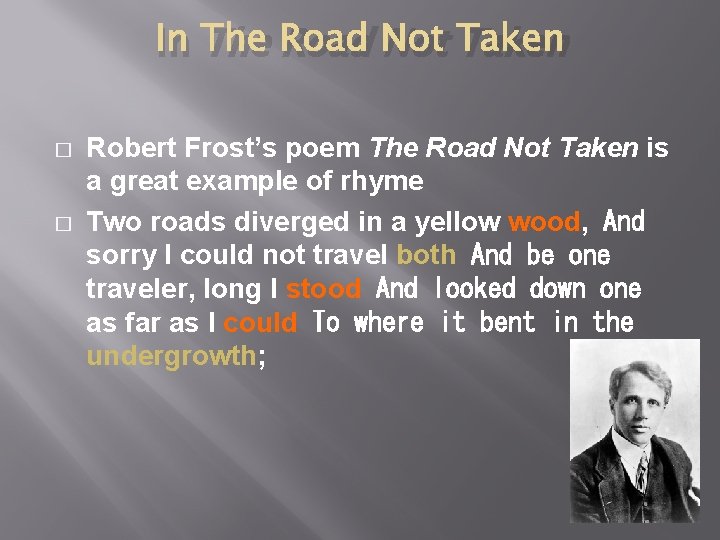
In The Road Not Taken � � Robert Frost’s poem The Road Not Taken is a great example of rhyme Two roads diverged in a yellow wood, And sorry I could not travel both And be one traveler, long I stood And looked down one as far as I could To where it bent in the undergrowth;
RHYTHM The recurrence of accent or stress in lines of verse
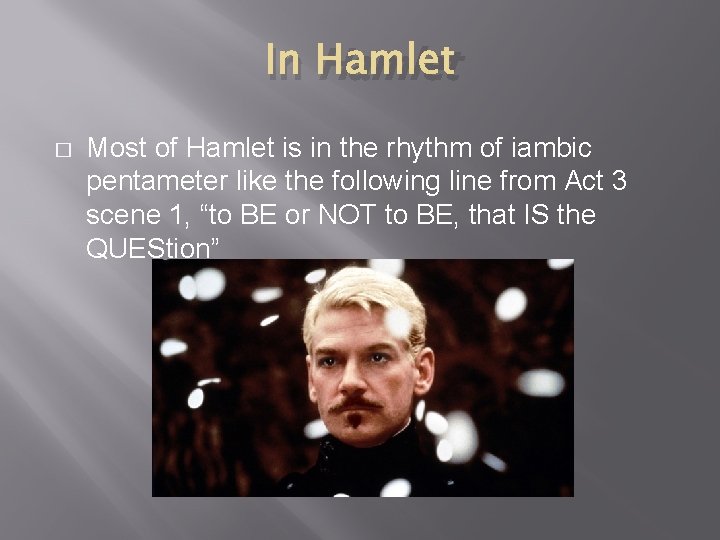
In Hamlet � Most of Hamlet is in the rhythm of iambic pentameter like the following line from Act 3 scene 1, “to BE or NOT to BE, that IS the QUEStion”
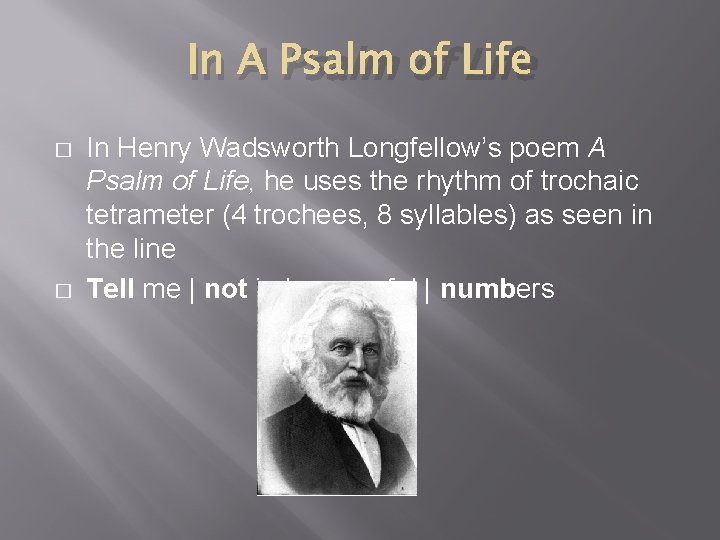
In A Psalm of Life � � In Henry Wadsworth Longfellow’s poem A Psalm of Life, he uses the rhythm of trochaic tetrameter (4 trochees, 8 syllables) as seen in the line Tell me | not in | mournful | numbers
METER The measured pattern of rhythmic accents in poems
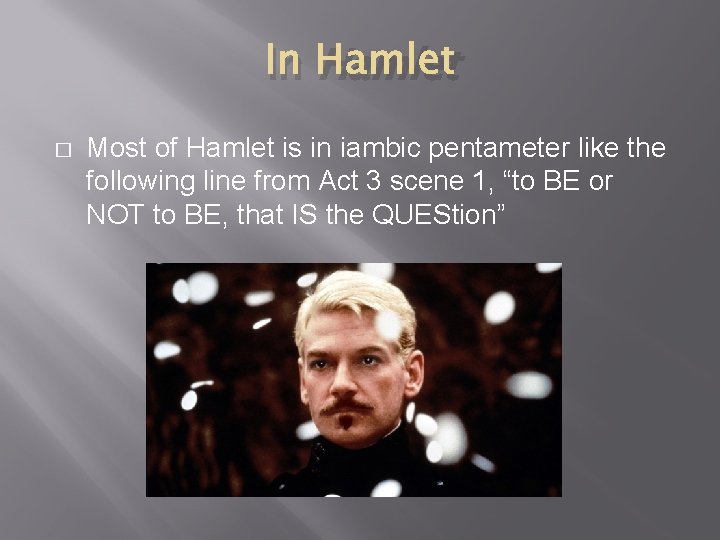
In Hamlet � Most of Hamlet is in iambic pentameter like the following line from Act 3 scene 1, “to BE or NOT to BE, that IS the QUEStion”
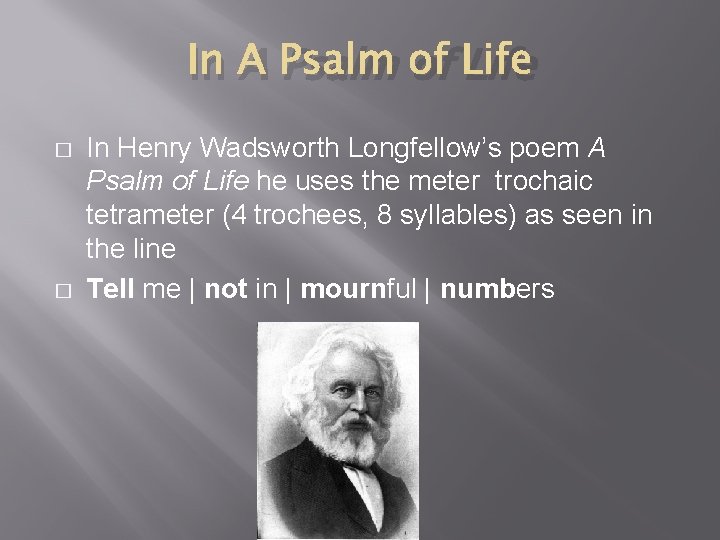
In A Psalm of Life � � In Henry Wadsworth Longfellow’s poem A Psalm of Life he uses the meter trochaic tetrameter (4 trochees, 8 syllables) as seen in the line Tell me | not in | mournful | numbers
END-STOPPED LINE An end-stop occurs when a line of poetry ends with a period or definite punctuation mark, such as a colon. When lines are end -stopped, each line is its own phrase or unit of syntax.
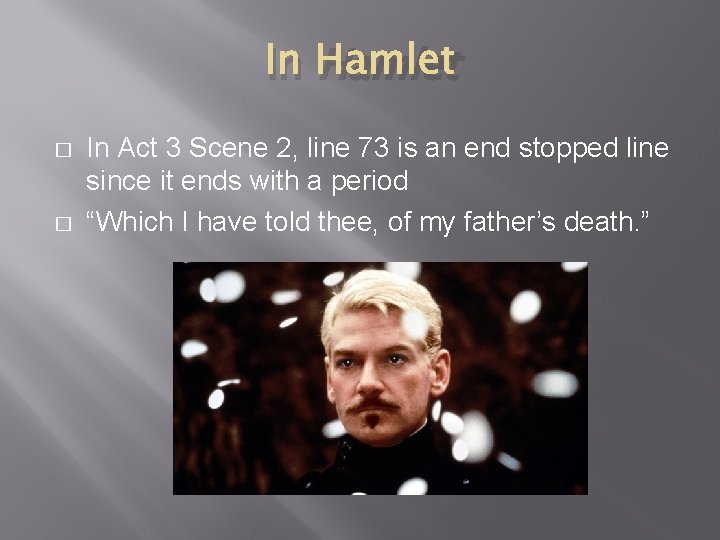
In Hamlet � � In Act 3 Scene 2, line 73 is an end stopped line since it ends with a period “Which I have told thee, of my father’s death. ”
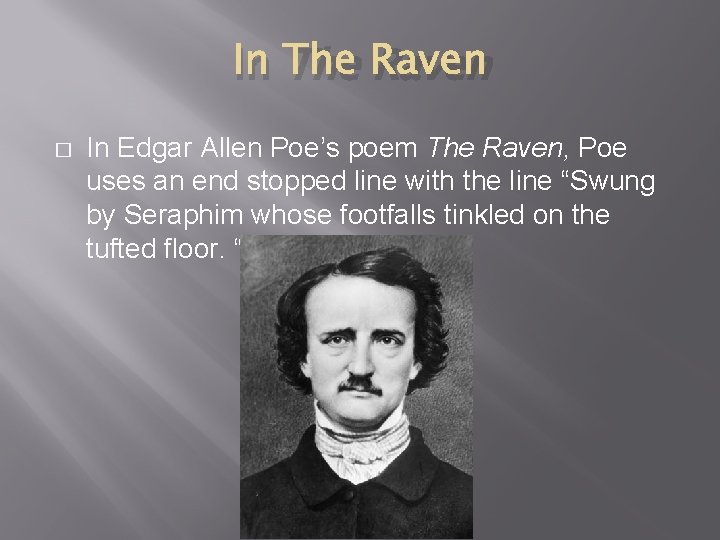
In The Raven � In Edgar Allen Poe’s poem The Raven, Poe uses an end stopped line with the line “Swung by Seraphim whose footfalls tinkled on the tufted floor. “
RUN-ON LINE Also known as enjambment, which is a run-on line of poetry in which logical and grammatical sense carries over from one line into the next
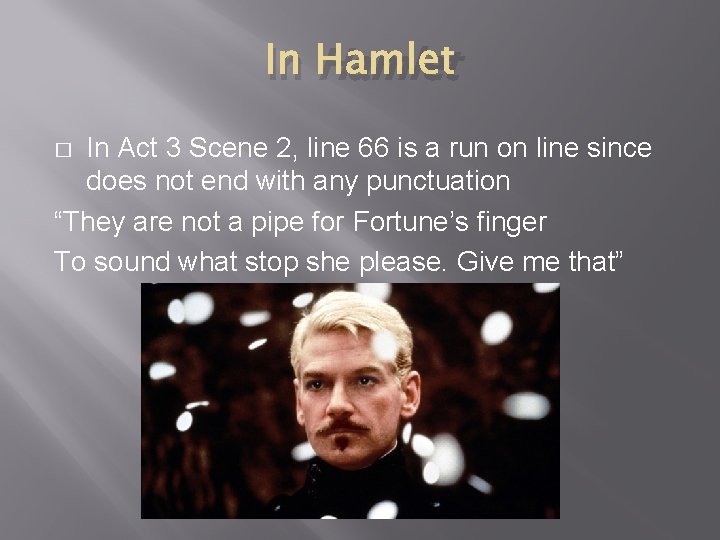
In Hamlet In Act 3 Scene 2, line 66 is a run on line since does not end with any punctuation “They are not a pipe for Fortune’s finger To sound what stop she please. Give me that” �
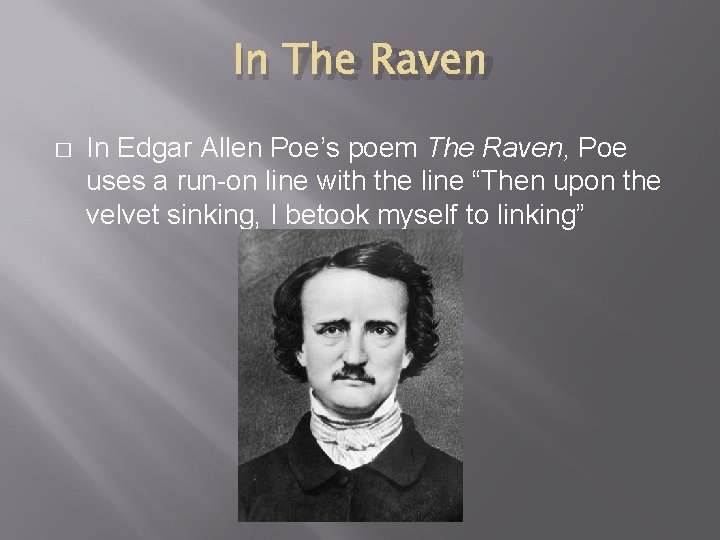
In The Raven � In Edgar Allen Poe’s poem The Raven, Poe uses a run-on line with the line “Then upon the velvet sinking, I betook myself to linking”
CAESURA (Latin “cutting off”) is a pause in the midst of a verse line, indicated by a mark of punctuation, such as a comma, a question mark, a period, or a dash.
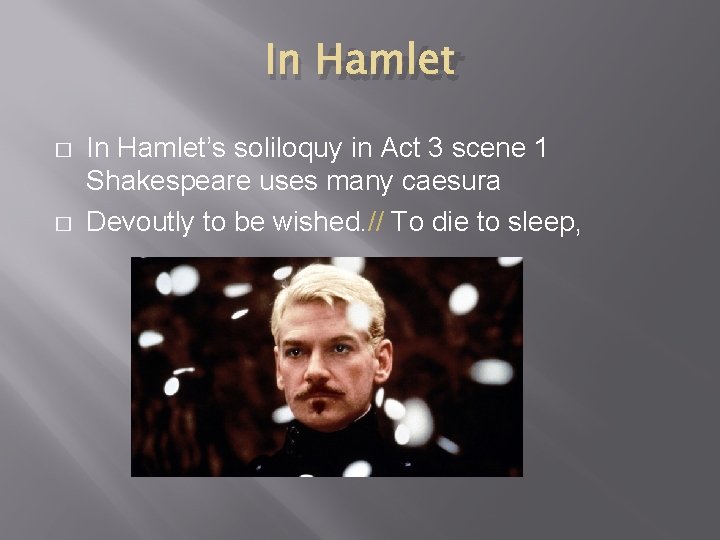
In Hamlet � � In Hamlet’s soliloquy in Act 3 scene 1 Shakespeare uses many caesura Devoutly to be wished. // To die to sleep,
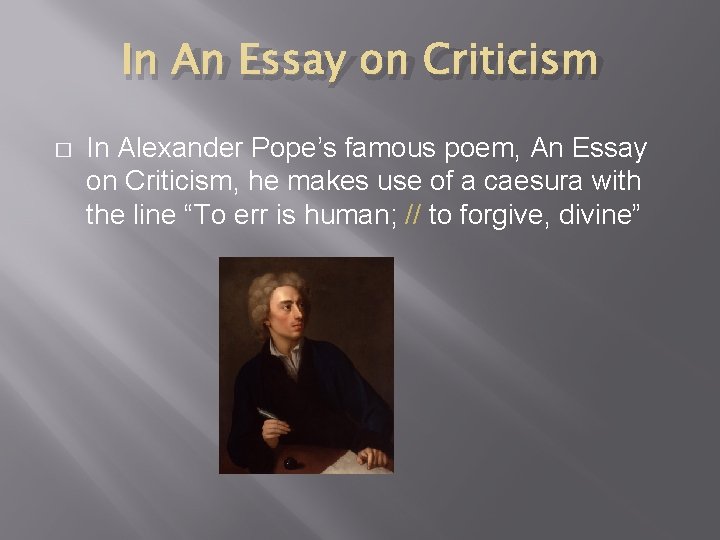
In An Essay on Criticism � In Alexander Pope’s famous poem, An Essay on Criticism, he makes use of a caesura with the line “To err is human; // to forgive, divine”
FREE VERSE Also called open form verse, unlike traditional verses its rhythms are not organized into the regularity of meter; most free verse lacks rhyme
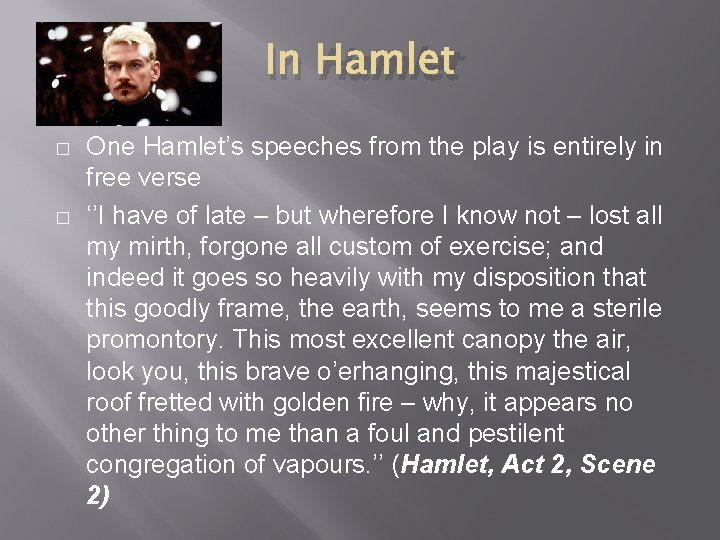
In Hamlet � � One Hamlet’s speeches from the play is entirely in free verse ‘’I have of late – but wherefore I know not – lost all my mirth, forgone all custom of exercise; and indeed it goes so heavily with my disposition that this goodly frame, the earth, seems to me a sterile promontory. This most excellent canopy the air, look you, this brave o’erhanging, this majestical roof fretted with golden fire – why, it appears no other thing to me than a foul and pestilent congregation of vapours. ’’ (Hamlet, Act 2, Scene 2)
IN THE PSALMS Psalm 23 (KJV) The Lord is my shepherd; I shall not want. 2 He maketh me to lie down in green pastures: he leadeth me beside the still waters. 3 He restoreth my soul: he leadeth me in the paths of righteousness for his name's sake. 4 Yea, though I walk through the valley of the shadow of death, I will fear no evil: for thou art with me; thy rod and thy staff they comfort me. 5 Thou preparest a table before me in the presence of mine enemies: thou anointest my head with oil; my cup runneth over. 6 Surely goodness and mercy shall follow me all the days of my life: and I will dwell in the house of the Lord for ever. �
IAMBIC PENTAMETER The name given to a line of verse that consists of five iambs (an iamb being one unstressed syllable followed by one stressed)
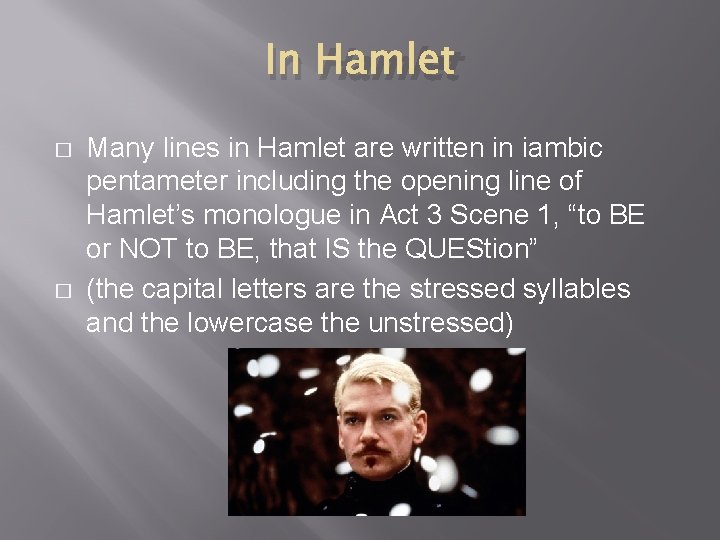
In Hamlet � � Many lines in Hamlet are written in iambic pentameter including the opening line of Hamlet’s monologue in Act 3 Scene 1, “to BE or NOT to BE, that IS the QUEStion” (the capital letters are the stressed syllables and the lowercase the unstressed)
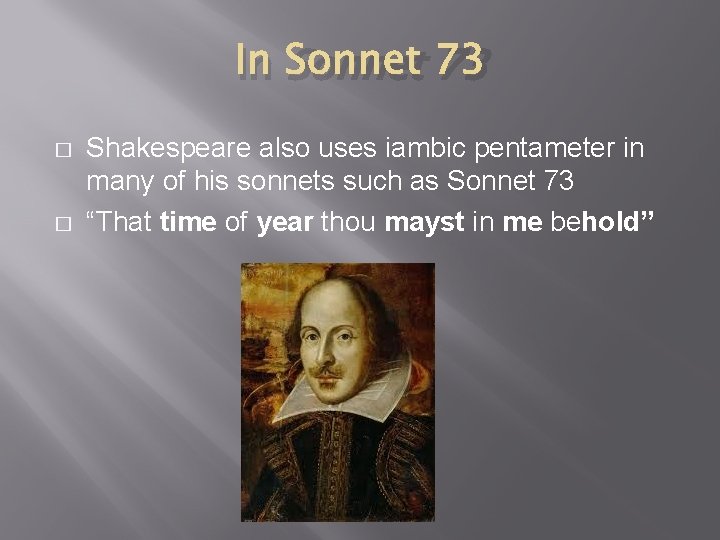
In Sonnet 73 � � Shakespeare also uses iambic pentameter in many of his sonnets such as Sonnet 73 “That time of year thou mayst in me behold”
GRAMMATICAL PAUSE A pause introduced into the reading of a line by a mark of punctuation
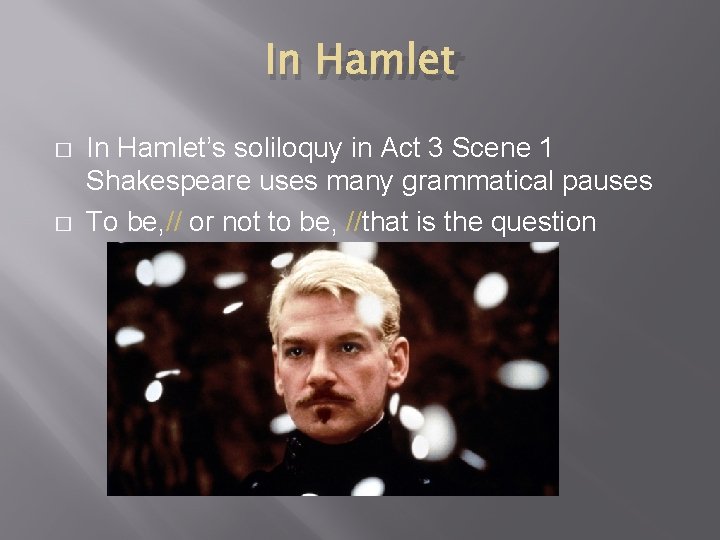
In Hamlet � � In Hamlet’s soliloquy in Act 3 Scene 1 Shakespeare uses many grammatical pauses To be, // or not to be, //that is the question
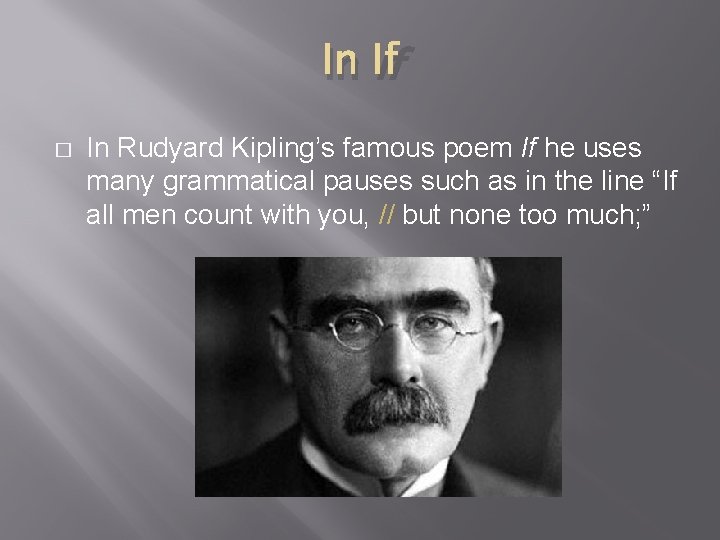
In If � In Rudyard Kipling’s famous poem If he uses many grammatical pauses such as in the line “If all men count with you, // but none too much; ”
RHETORICAL PAUSE A natural pause, unmarked by punctuation, introduced into the reading of a line by its phrasing or syntax
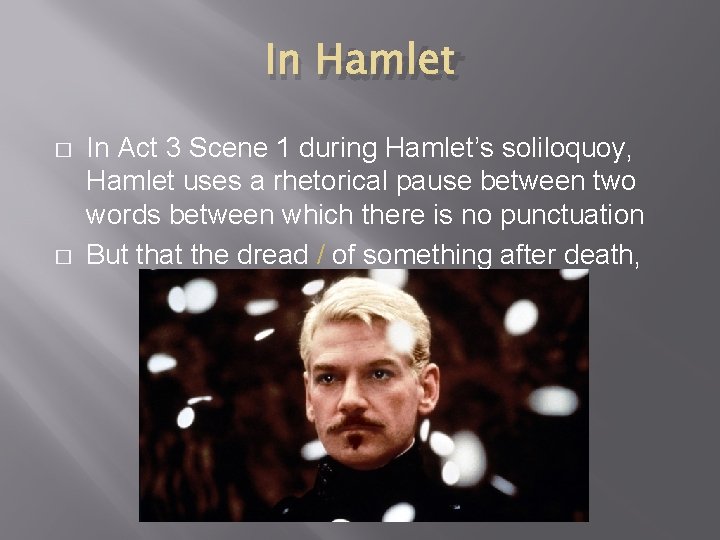
In Hamlet � � In Act 3 Scene 1 during Hamlet’s soliloquoy, Hamlet uses a rhetorical pause between two words between which there is no punctuation But that the dread / of something after death,
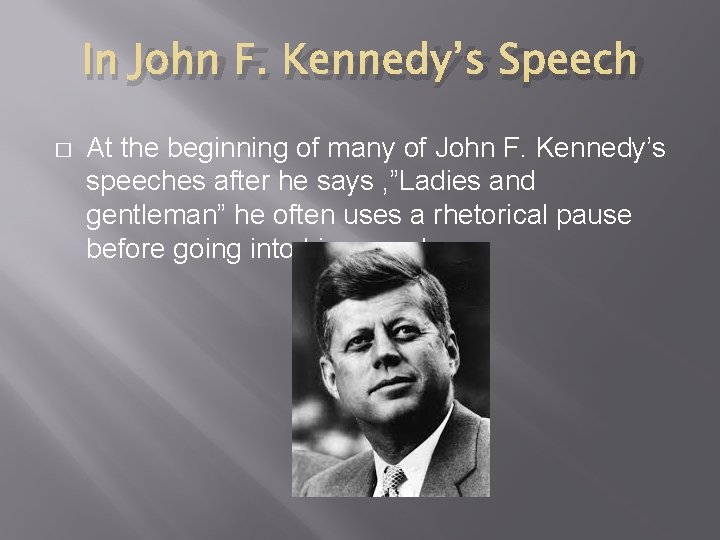
In John F. Kennedy’s Speech � At the beginning of many of John F. Kennedy’s speeches after he says , ”Ladies and gentleman” he often uses a rhetorical pause before going into his speech.
CONCLUDING COUPLET Two successive lines, usually in a verse of a poem or a song, that are rhymed and have the same meter
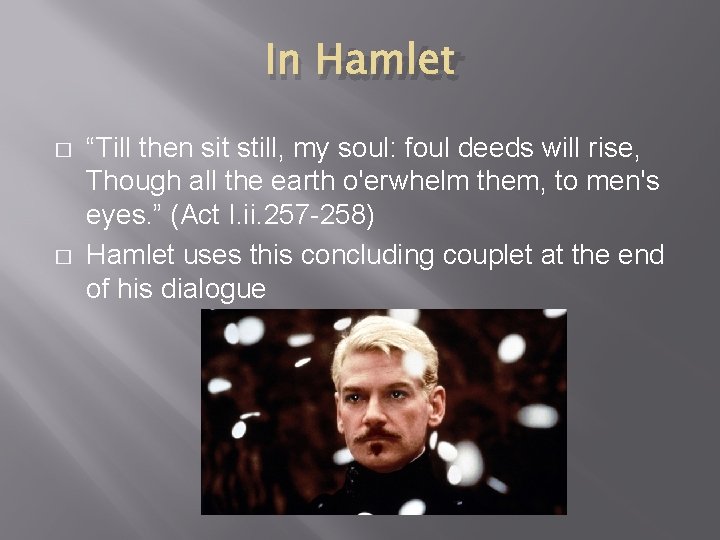
In Hamlet � � “Till then sit still, my soul: foul deeds will rise, Though all the earth o'erwhelm them, to men's eyes. ” (Act I. ii. 257 -258) Hamlet uses this concluding couplet at the end of his dialogue
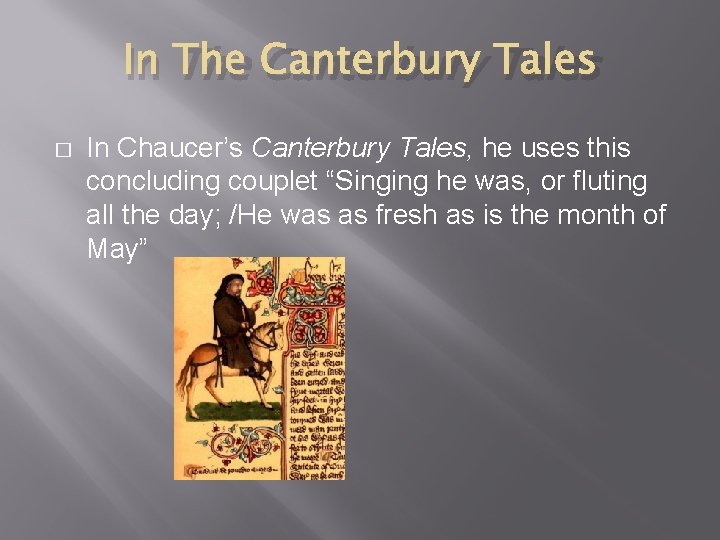
In The Canterbury Tales � In Chaucer’s Canterbury Tales, he uses this concluding couplet “Singing he was, or fluting all the day; /He was as fresh as is the month of May”
The End!
- Slides: 97