
Literary Terms Basic Plot Structure Falling Action Rising
Literary Terms
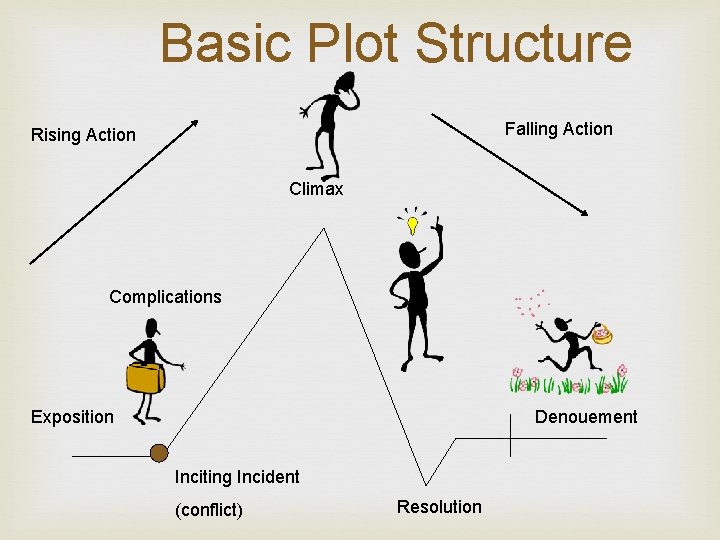
Basic Plot Structure Falling Action Rising Action Climax Complications Exposition Denouement Inciting Incident (conflict) Resolution
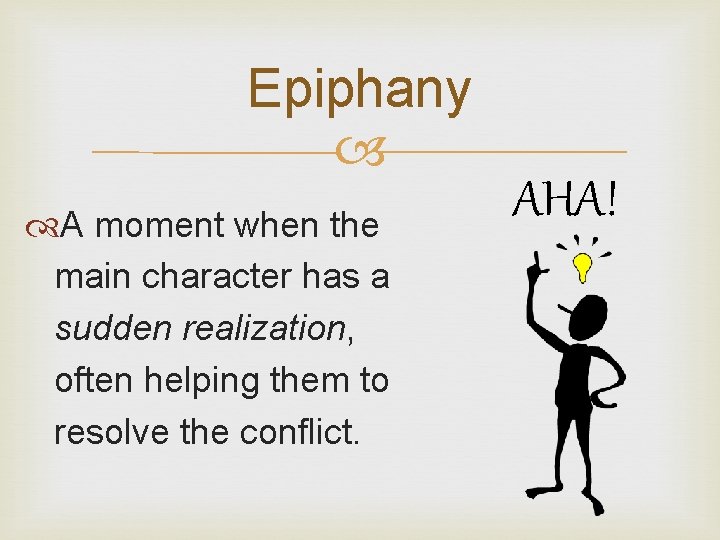
Epiphany A moment when the main character has a sudden realization, often helping them to resolve the conflict. AHA!
Theme The central idea or message of a story. The MAIN POINT!
Theme Statements You should express theme in a statement. (It is not just the topic!) Example: “Your view of hunting could change if you knew what it was like to be hunted. ” --Most Dangerous Game
Setting The time and place of the story. Setting can include: § § Time of day, week, year, or era A building, city, region or country The weather or psychological feeling Historical or social context
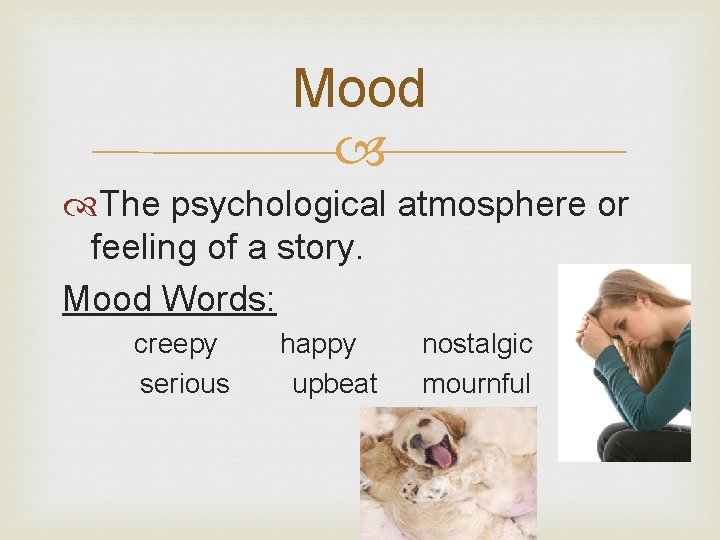
Mood The psychological atmosphere or feeling of a story. Mood Words: creepy serious happy upbeat nostalgic mournful
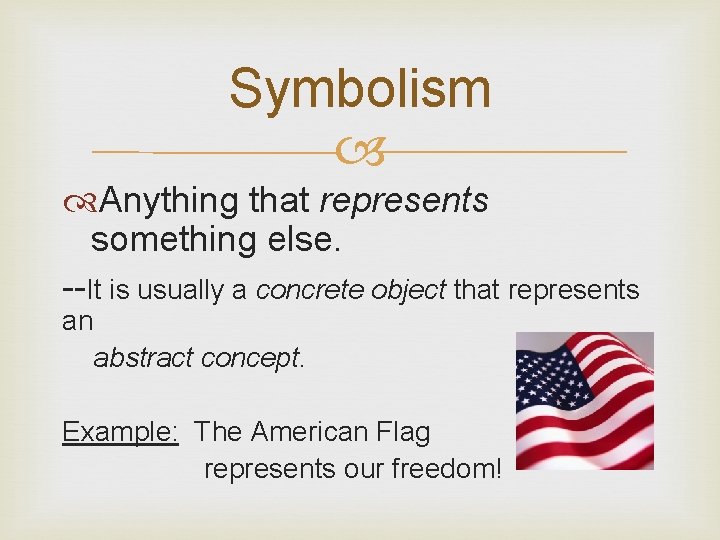
Symbolism Anything that represents something else. --It is usually a concrete object that represents an abstract concept. Example: The American Flag represents our freedom!
Types of Symbolism Names Numbers Objects Colors Example: GREEN could represent jealousy (aka “the green-eyed monster. ”)
Protagonist The Main Character in a story. May be a hero or heroine, or just a character who develops and grows.
Antagonist A character working against the main character. Sometimes the “bad guy” or the foil.
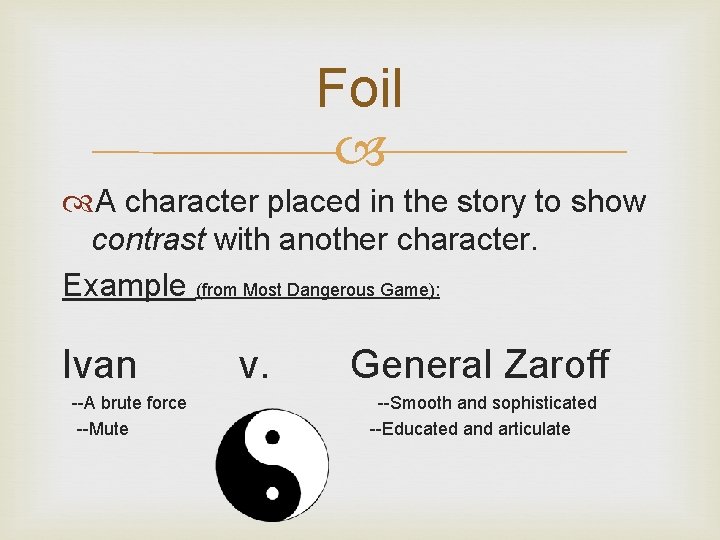
Foil A character placed in the story to show contrast with another character. Example (from Most Dangerous Game): Ivan --A brute force --Mute v. General Zaroff --Smooth and sophisticated --Educated and articulate
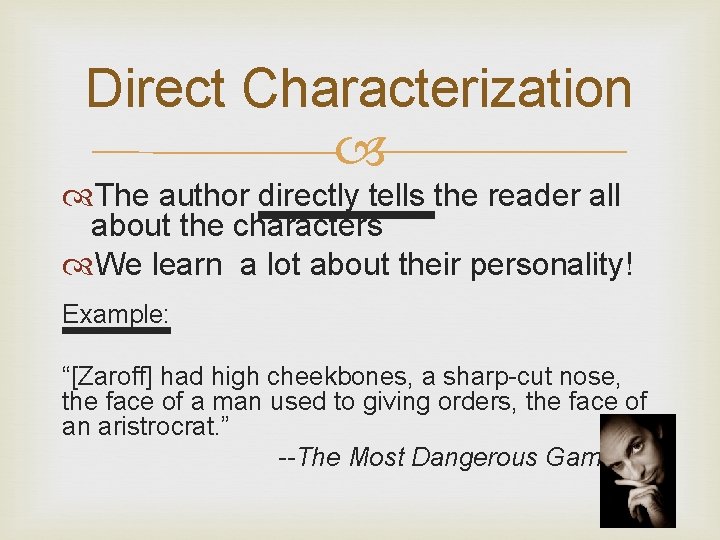
Direct Characterization The author directly tells the reader all about the characters We learn a lot about their personality! Example: “[Zaroff] had high cheekbones, a sharp-cut nose, the face of a man used to giving orders, the face of an aristrocrat. ” --The Most Dangerous Game
Indirect Characterization The author only gives CLUES to a character’s personality We only see the character’s actions or comments… You must “read between the lines. ”
Example Of Indirect Characterization: Even though the author tells us General Zaroff is smart and rich, we see his horrible actions: § § He plays mental games He has Ivan to train and hurt people He has mean dogs He hunts PEOPLE So, we draw the conclusion that he is BAD!
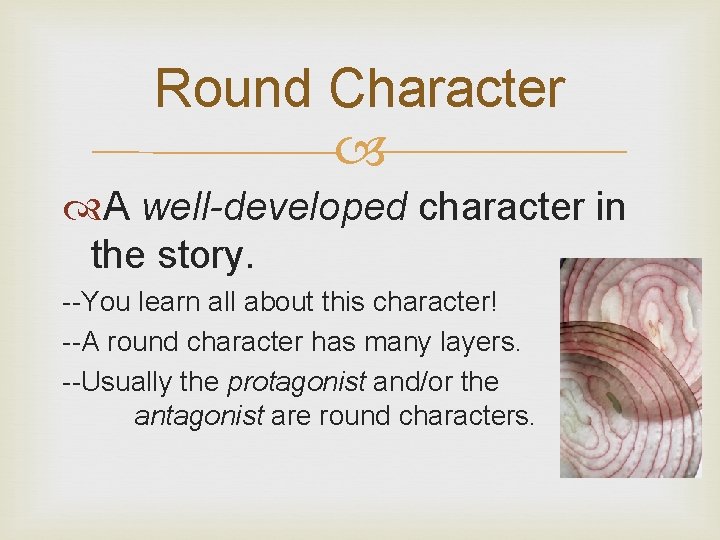
Round Character A well-developed character in the story. --You learn all about this character! --A round character has many layers. --Usually the protagonist and/or the antagonist are round characters.
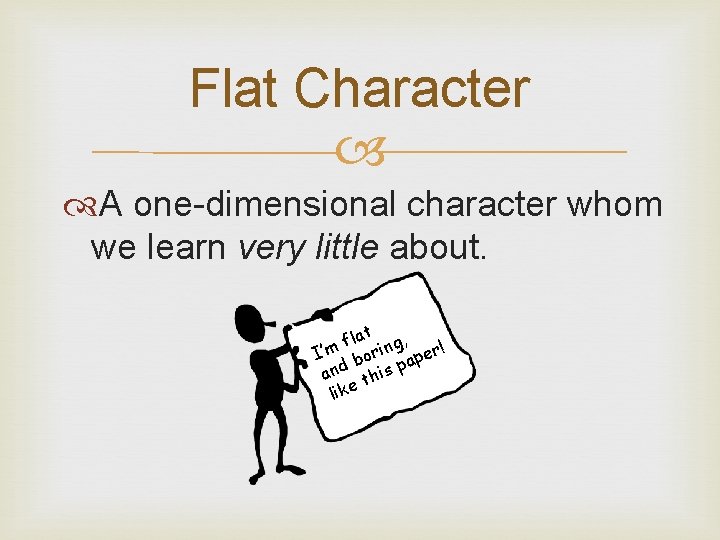
Flat Character A one-dimensional character whom we learn very little about. lat g, f I’m borin aper! p and this like
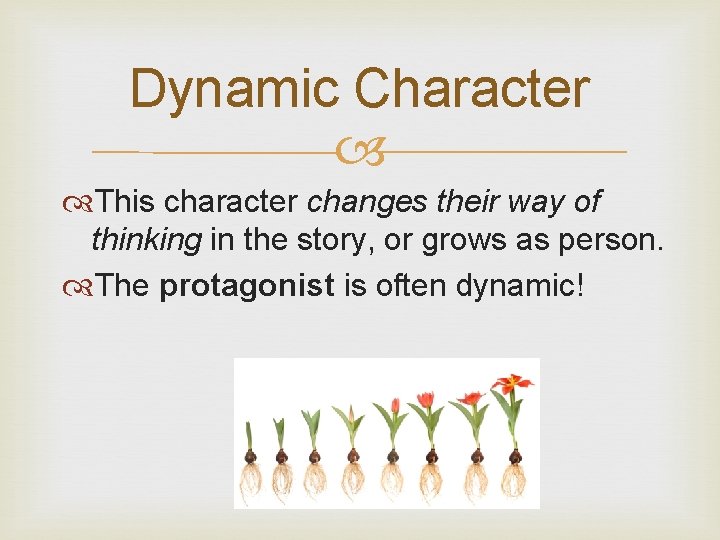
Dynamic Character This character changes their way of thinking in the story, or grows as person. The protagonist is often dynamic!
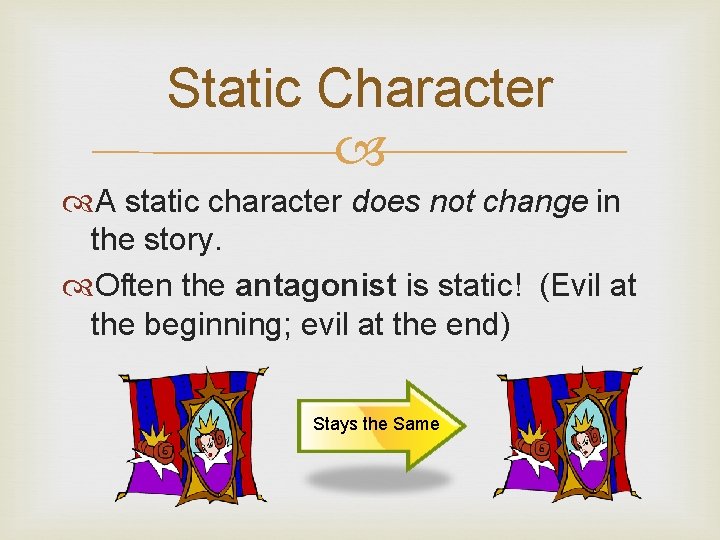
Static Character A static character does not change in the story. Often the antagonist is static! (Evil at the beginning; evil at the end) Stays the Same
Combinations? YES! A character may be more than one type. --Protagonists are often round and dynamic --Antagonists are often round and static --Flat characters are mainly static
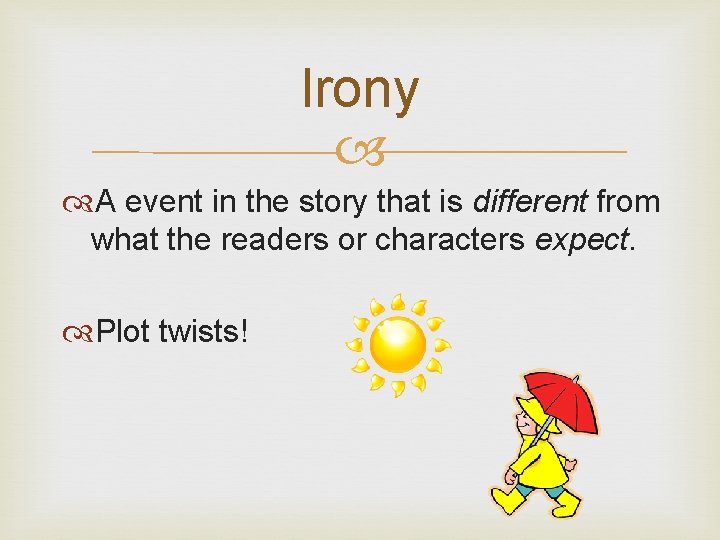
Irony A event in the story that is different from what the readers or characters expect. Plot twists!
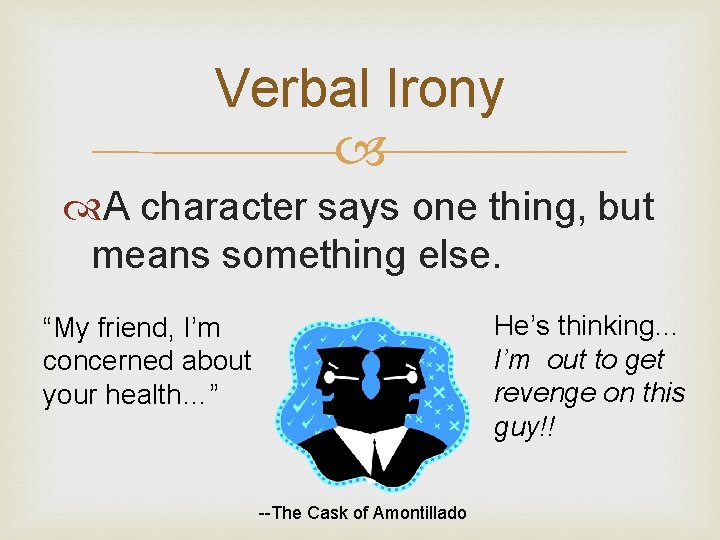
Verbal Irony A character says one thing, but means something else. He’s thinking… I’m out to get revenge on this guy!! “My friend, I’m concerned about your health…” --The Cask of Amontillado
Situational Irony Both the reader and the characters are surprised by the outcome of the story.
Dramatic Irony The reader knows what will happen at the end. Only the characters in the story are surprised! ! e S ar ES y L e Th LUE C
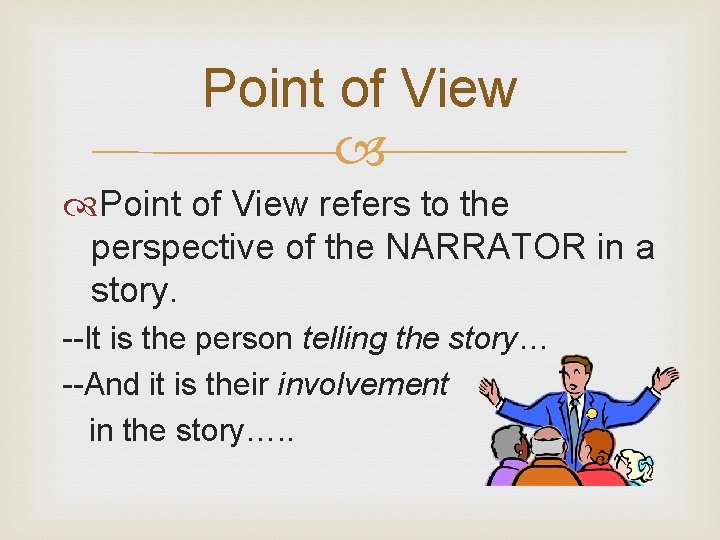
Point of View refers to the perspective of the NARRATOR in a story. --It is the person telling the story… --And it is their involvement in the story…. .
3 Types of Narrator st 1 Person rd 3 Person Limited rd 3 Person Omniscient
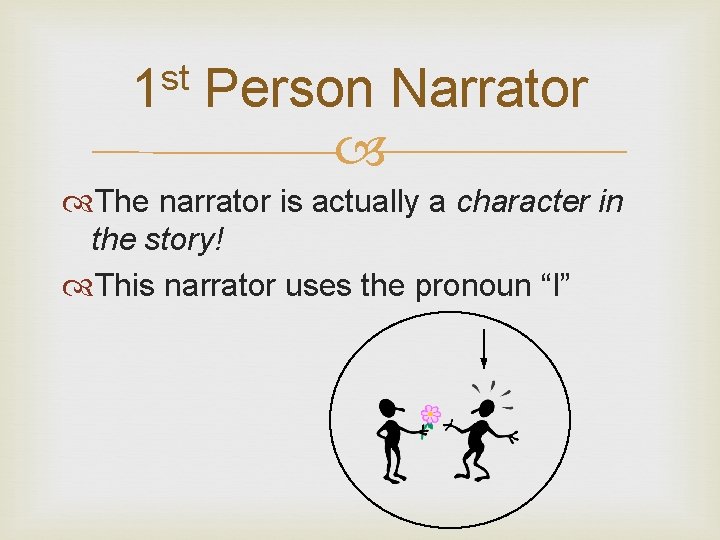
st 1 Person Narrator The narrator is actually a character in the story! This narrator uses the pronoun “I”
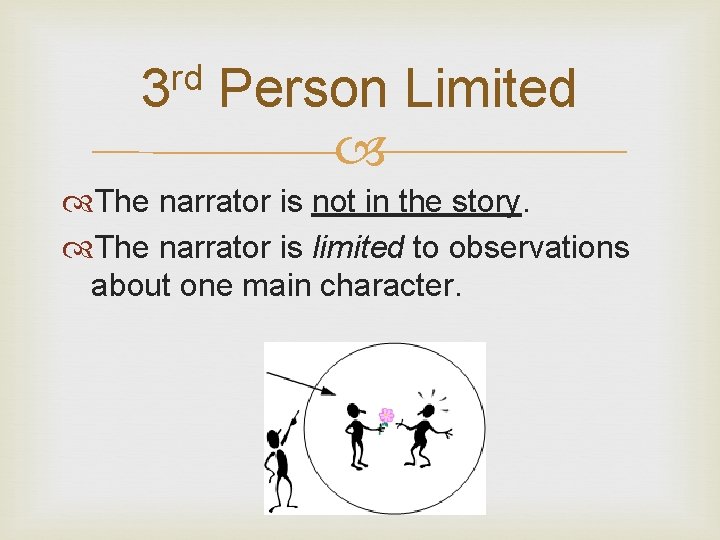
rd 3 Person Limited The narrator is not in the story. The narrator is limited to observations about one main character.
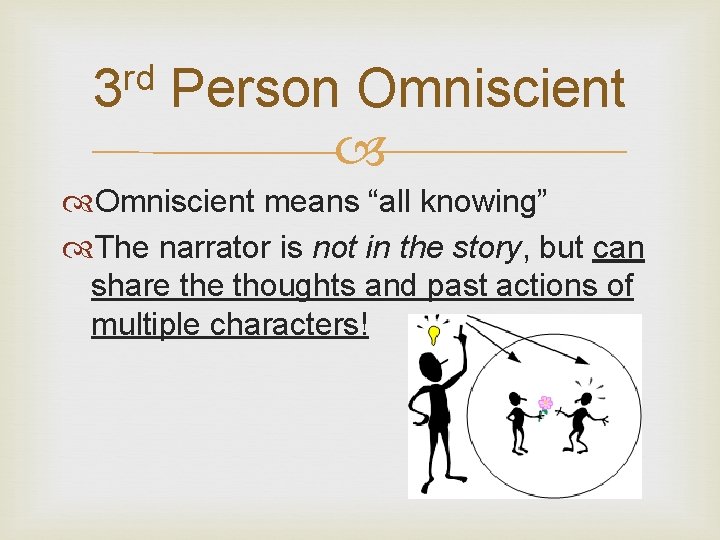
rd 3 Person Omniscient means “all knowing” The narrator is not in the story, but can share thoughts and past actions of multiple characters!
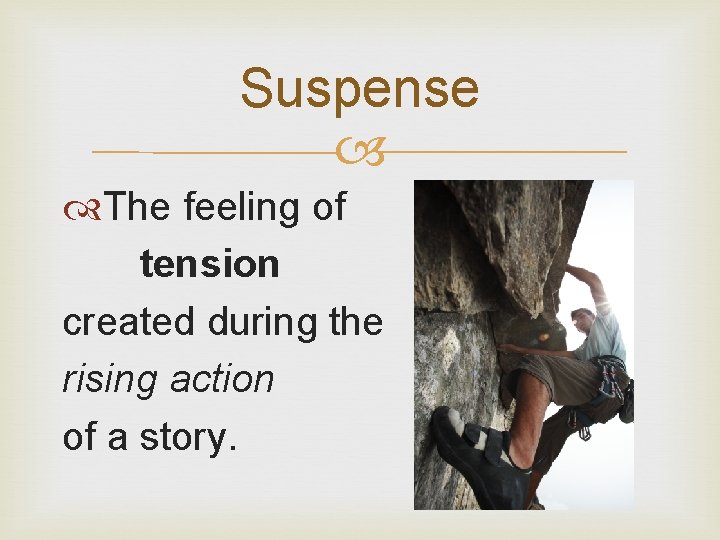
Suspense The feeling of tension created during the rising action of a story.
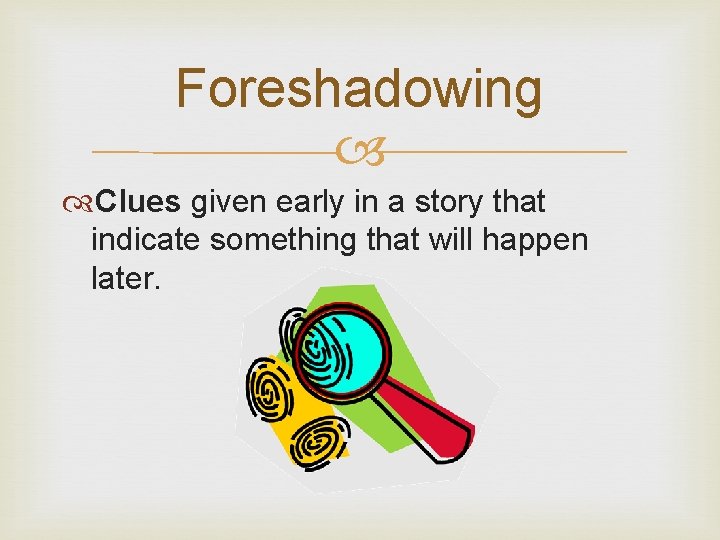
Foreshadowing Clues given early in a story that indicate something that will happen later.
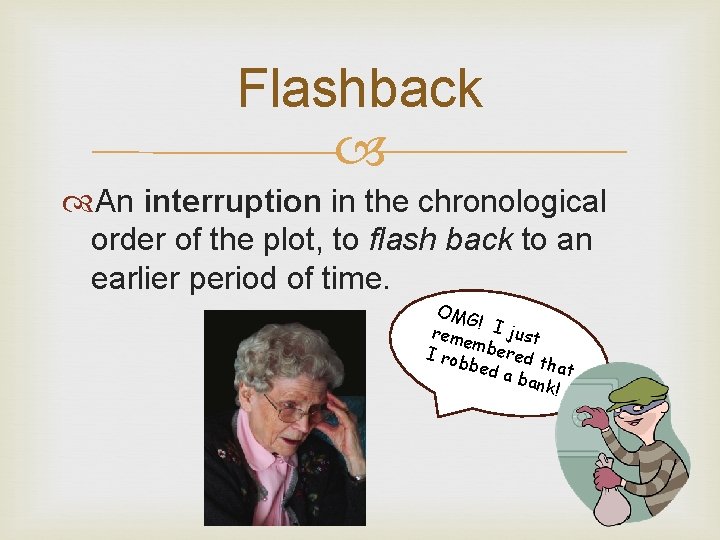
Flashback An interruption in the chronological order of the plot, to flash back to an earlier period of time. OMG ! reme I just m I rob bered that bed a ba nk!
- Slides: 32