
Literary Terms BASIC PLOT STRUCTURE 3 CLIMAX 2
Literary Terms
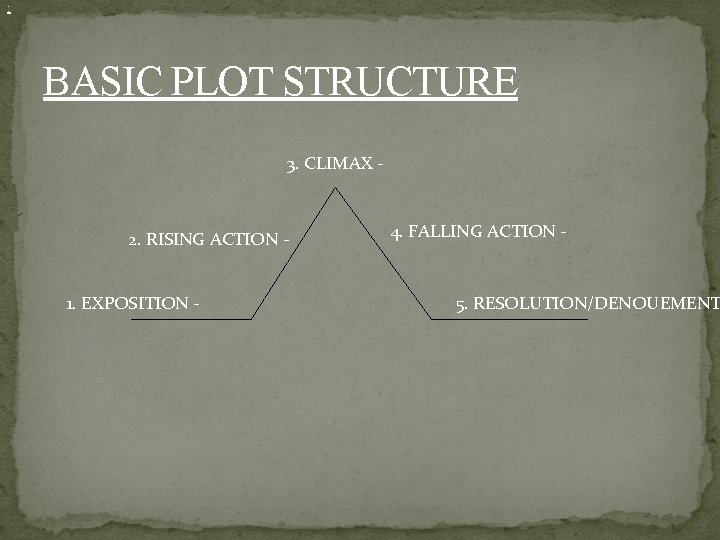
: BASIC PLOT STRUCTURE 3. CLIMAX - 2. RISING ACTION 1. EXPOSITION - 4. FALLING ACTION - 5. RESOLUTION/DENOUEMENT
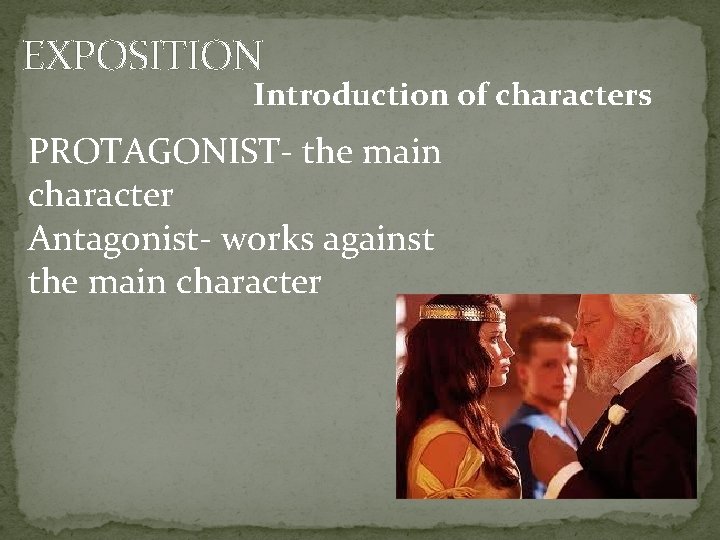
EXPOSITION Introduction of characters PROTAGONIST- the main character Antagonist- works against the main character
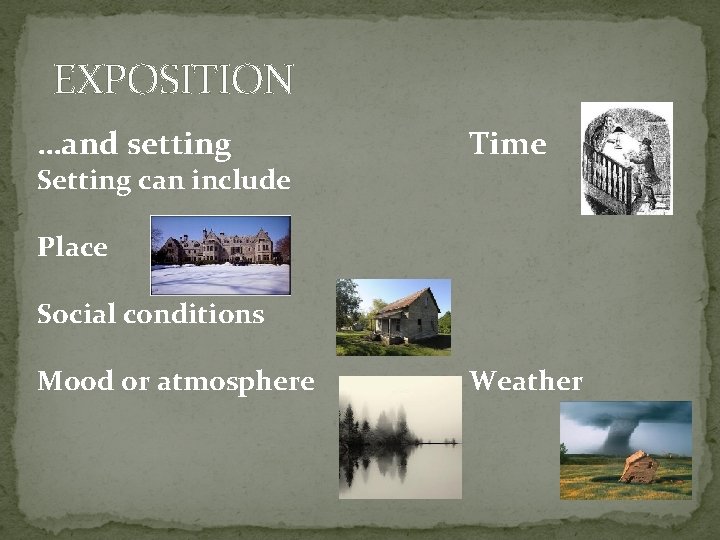
EXPOSITION …and setting Setting can include Time Place Social conditions Mood or atmosphere Weather
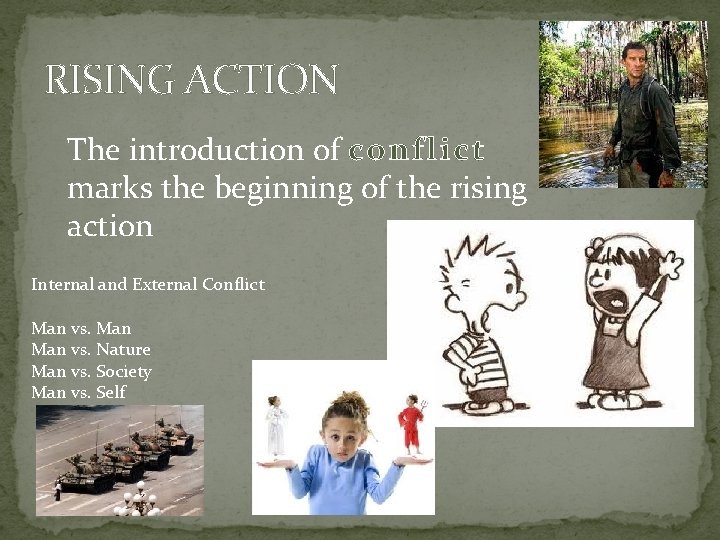
RISING ACTION The introduction of conflict marks the beginning of the rising action Internal and External Conflict Man vs. Nature Man vs. Society Man vs. Self
CLIMAX Highest point of dramatic intensity- it’s considered the most exciting or suspenseful part of the story.
FALLING ACTION conflict is being resolved
RESOLUTION/DENOUEMENT conflict is completely over (may not always be good)
DICTION Word choice (diction can have different levels of sophistication to reveal something about the narrator) My grandmother had a vinegar tongue.
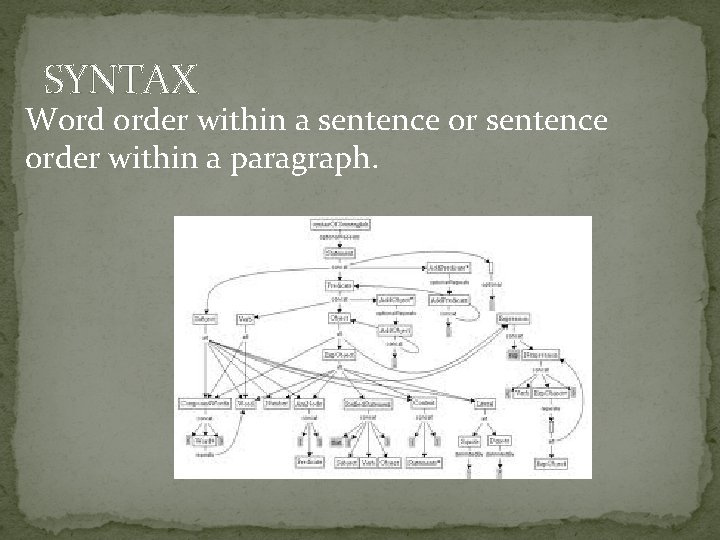
SYNTAX Word order within a sentence order within a paragraph.
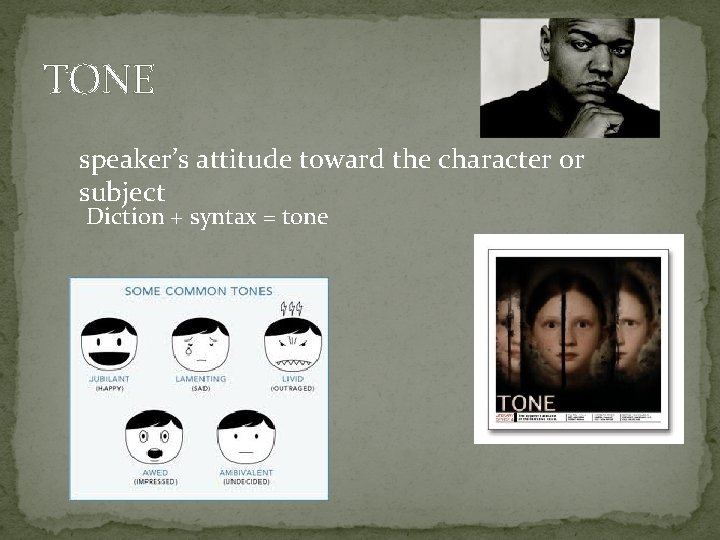
TONE speaker’s attitude toward the character or subject Diction + syntax = tone
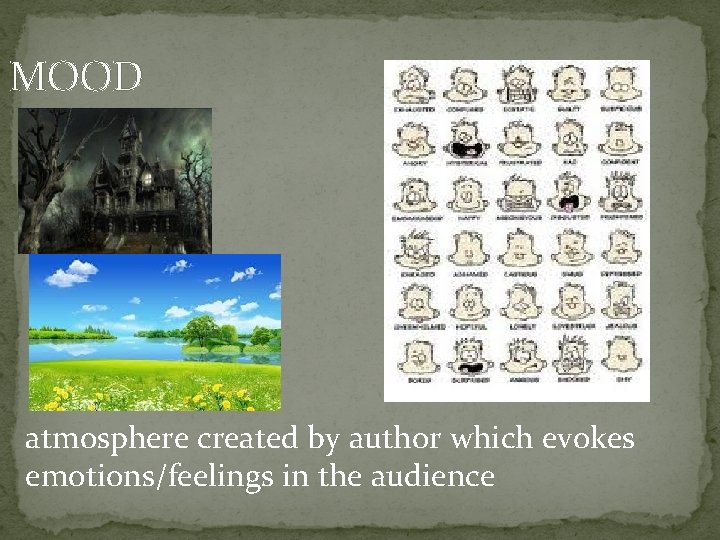
MOOD atmosphere created by author which evokes emotions/feelings in the audience
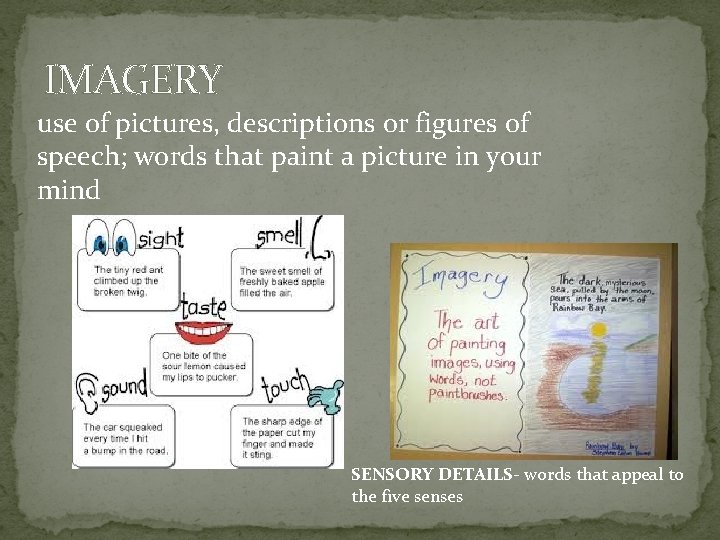
IMAGERY use of pictures, descriptions or figures of speech; words that paint a picture in your mind SENSORY DETAILS- words that appeal to the five senses
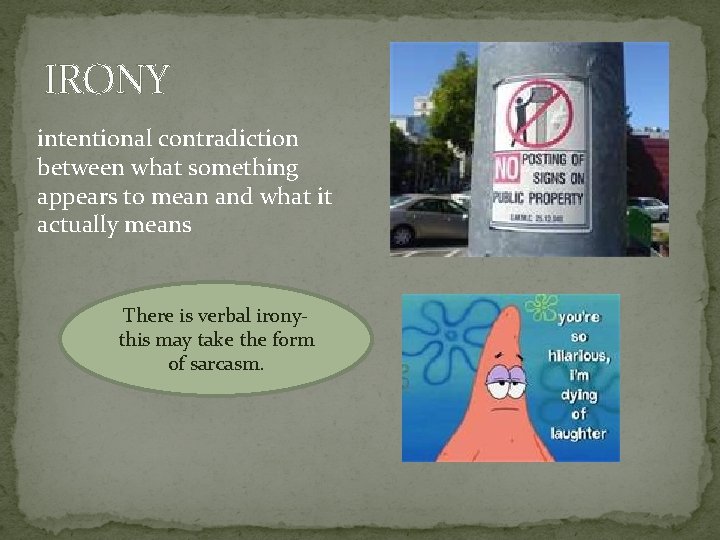
IRONY intentional contradiction between what something appears to mean and what it actually means There is verbal ironythis may take the form of sarcasm.
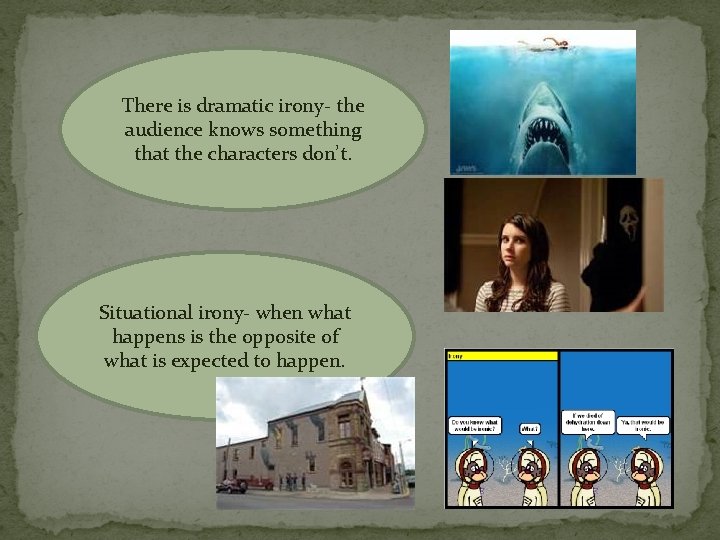
There is dramatic irony- the audience knows something that the characters don’t. Situational irony- when what happens is the opposite of what is expected to happen.
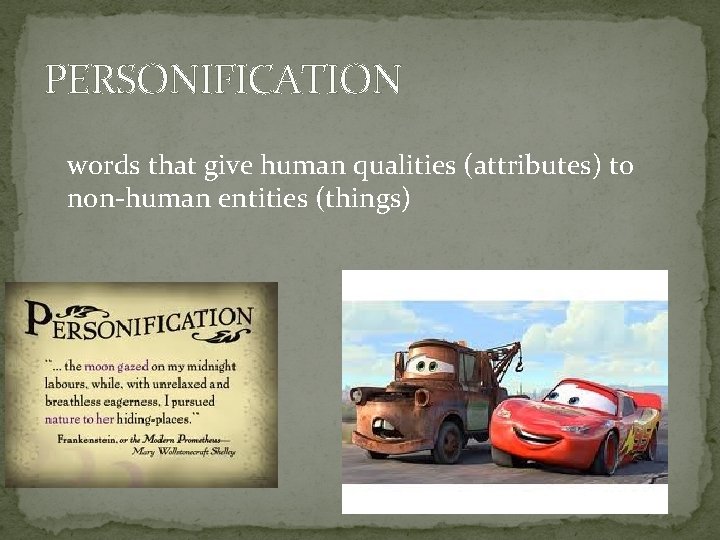
PERSONIFICATION words that give human qualities (attributes) to non-human entities (things)
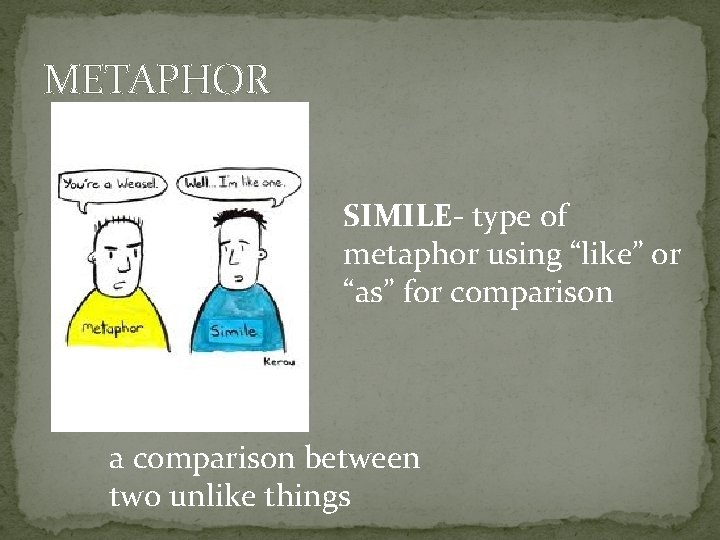
METAPHOR SIMILE- type of metaphor using “like” or “as” for comparison a comparison between two unlike things
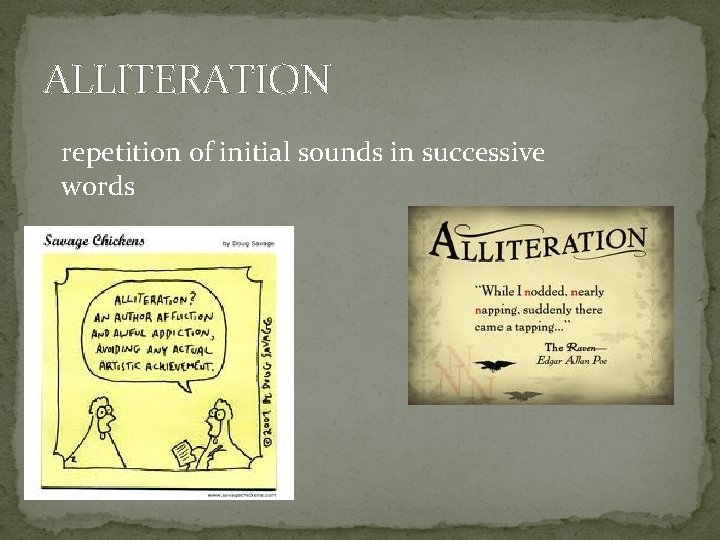
ALLITERATION repetition of initial sounds in successive words
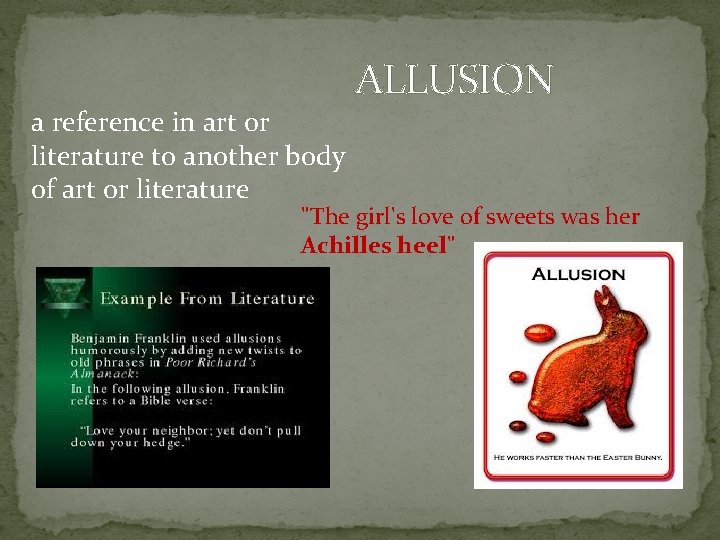
ALLUSION a reference in art or literature to another body of art or literature "The girl's love of sweets was her Achilles heel"
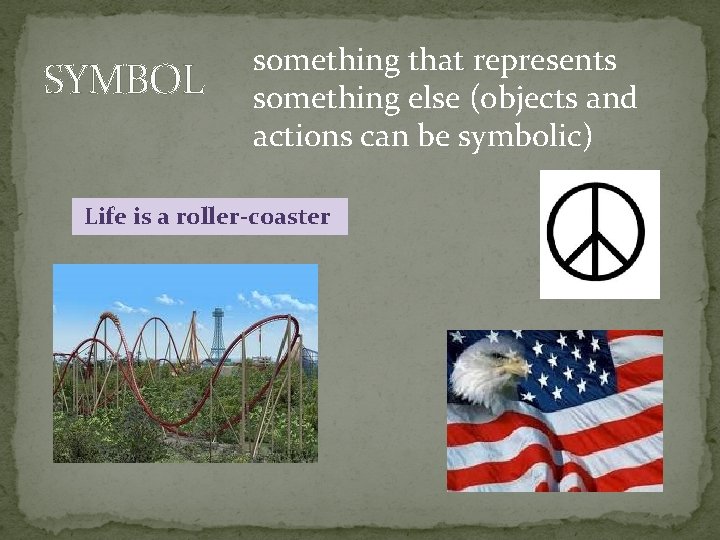
SYMBOL something that represents something else (objects and actions can be symbolic) Life is a roller-coaster
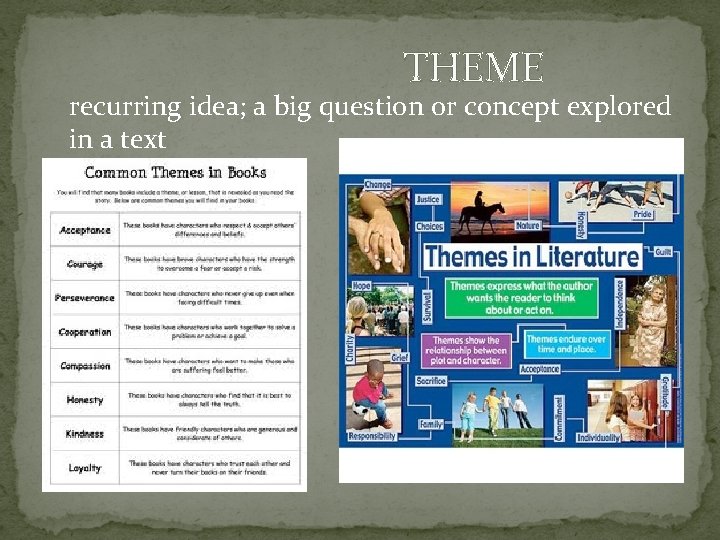
THEME recurring idea; a big question or concept explored in a text
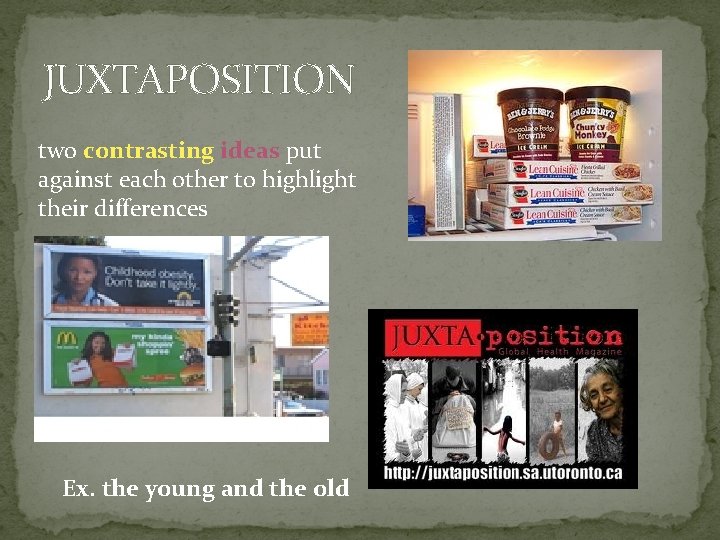
JUXTAPOSITION two contrasting ideas put against each other to highlight their differences Ex. the young and the old
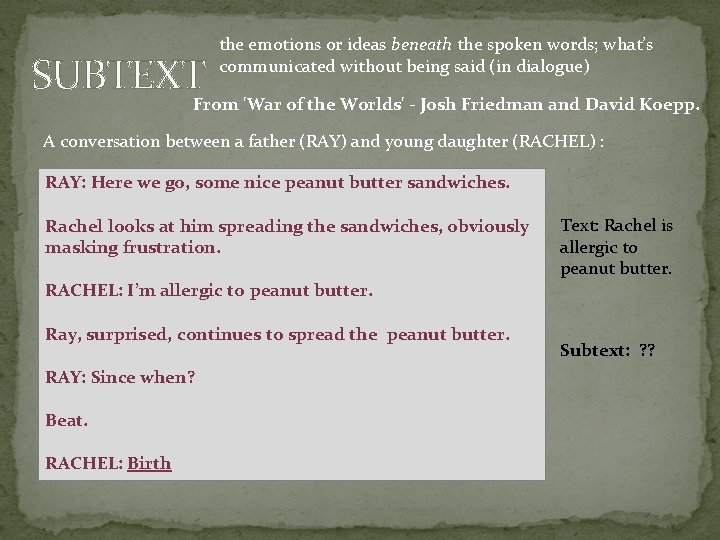
SUBTEXT the emotions or ideas beneath the spoken words; what’s communicated without being said (in dialogue) From 'War of the Worlds' - Josh Friedman and David Koepp. A conversation between a father (RAY) and young daughter (RACHEL) : RAY: Here we go, some nice peanut butter sandwiches. Rachel looks at him spreading the sandwiches, obviously masking frustration. Text: Rachel is allergic to peanut butter. RACHEL: I’m allergic to peanut butter. Ray, surprised, continues to spread the peanut butter. RAY: Since when? Beat. RACHEL: Birth Subtext: ? ?
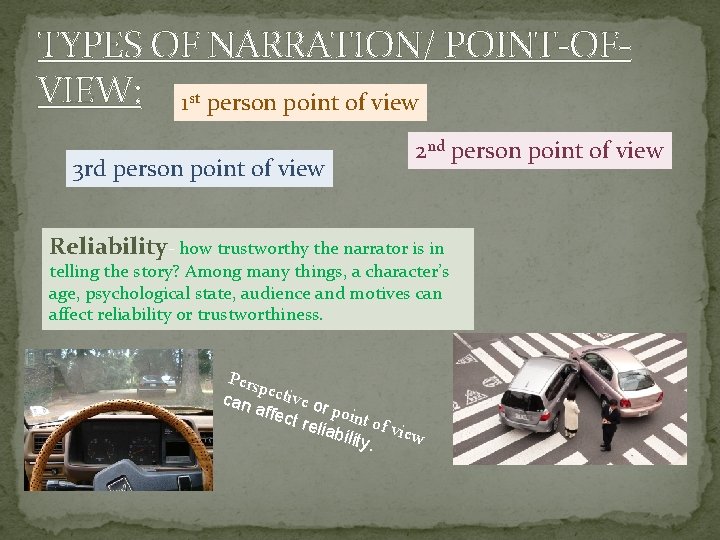
TYPES OF NARRATION/ POINT-OFVIEW: 1 st person point of view 3 rd person point of view 2 nd person point of view Reliability- how trustworthy the narrator is in telling the story? Among many things, a character’s age, psychological state, audience and motives can affect reliability or trustworthiness. Pers p can ective or affe ct re point of liabi v lity. iew
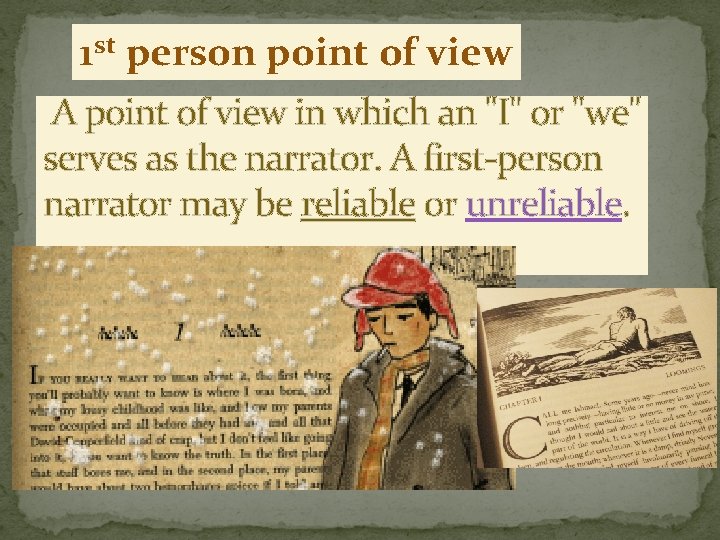
1 st person point of view A point of view in which an "I" or "we" serves as the narrator. A first-person narrator may be reliable or unreliable.
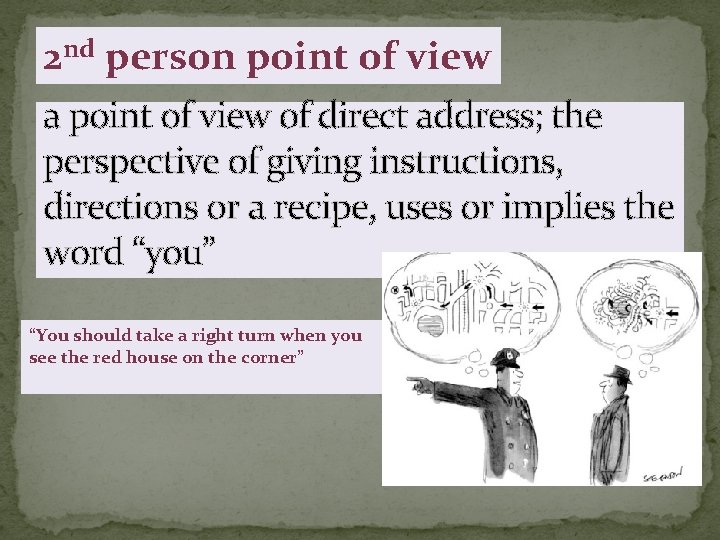
2 nd person point of view a point of view of direct address; the perspective of giving instructions, directions or a recipe, uses or implies the word “you” “You should take a right turn when you see the red house on the corner”
3 rd person point of view a form of storytelling in which a narrator relates all action in third person, using third person pronouns such as "he" or "she. " Third person point of view may be limited or omniscient.
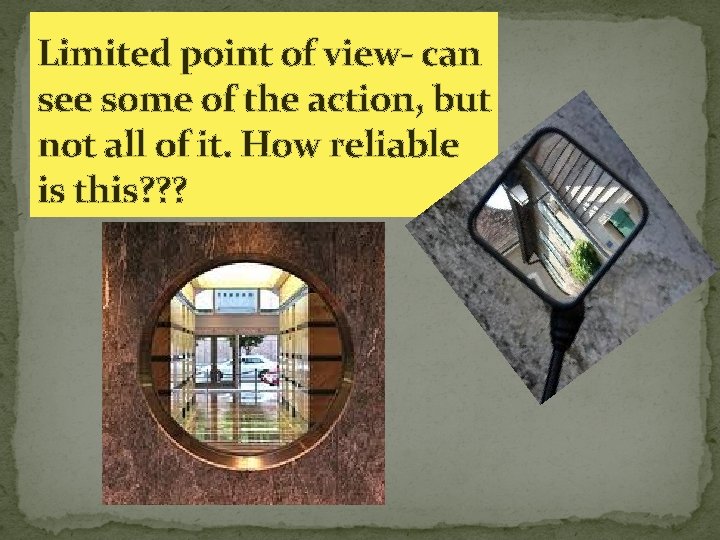
Limited point of view- can see some of the action, but not all of it. How reliable is this? ? ?
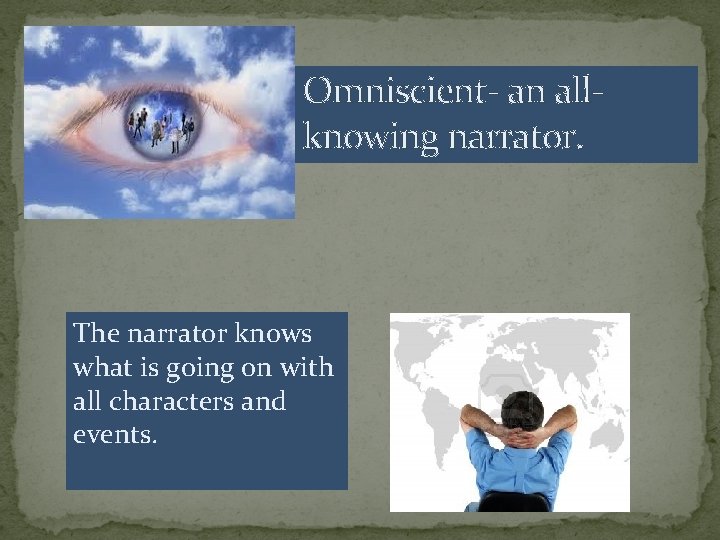
Omniscient- an allknowing narrator. The narrator knows what is going on with all characters and events.
- Slides: 29