
Literary Terms AP LITERATURE AND COMPOSITION Sentence Structure
![metonymy The pen [the written word] is mightier than the sword [military strength].](https://slidetodoc.com/presentation_image_h/7ff371f5cde8176a7c00b636c7907797/image-34.jpg "metonymy The pen [the written word] is mightier than the sword [military strength].")
![synechdoche “The western wave [sea] was all aflame. . ” --Samuel Taylor Coleridge, “The](https://slidetodoc.com/presentation_image_h/7ff371f5cde8176a7c00b636c7907797/image-40.jpg "synechdoche “The western wave [sea] was all aflame. . ” --Samuel Taylor Coleridge, “The")
- Slides: 54
Literary Terms AP LITERATURE AND COMPOSITION
Sentence Structure
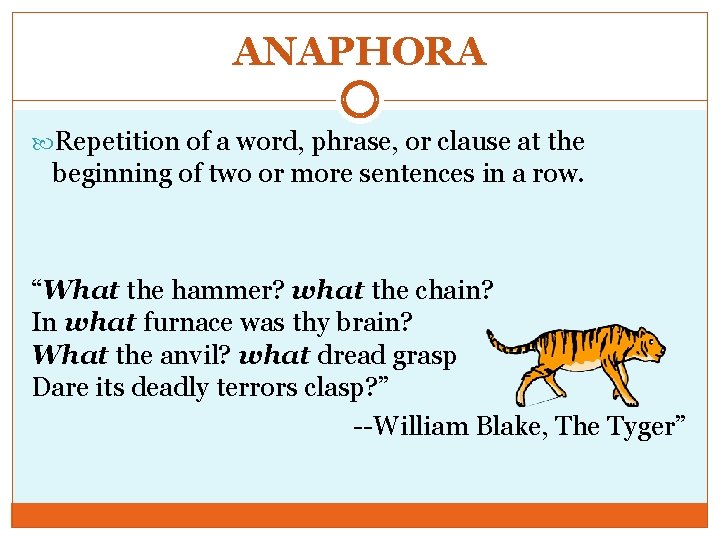
ANAPHORA Repetition of a word, phrase, or clause at the beginning of two or more sentences in a row. “What the hammer? what the chain? In what furnace was thy brain? What the anvil? what dread grasp Dare its deadly terrors clasp? ” --William Blake, The Tyger”
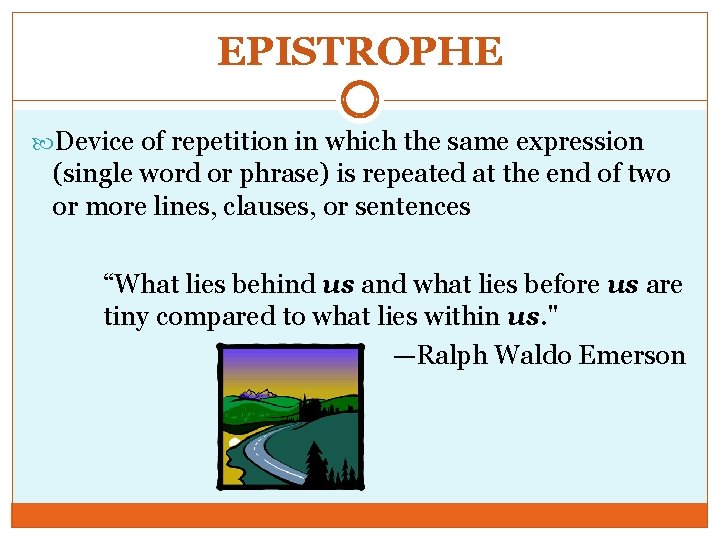
EPISTROPHE Device of repetition in which the same expression (single word or phrase) is repeated at the end of two or more lines, clauses, or sentences “What lies behind us and what lies before us are tiny compared to what lies within us. " —Ralph Waldo Emerson
EPANALEPSIS Repetition of a word or phrase at the beginning and end of a line, clause, or sentence “To each the boulders that have fallen to each. ” --Robert Frost, “Mending Wall”
ANTITHESIS Balancing words, phrases, or ideas that are strongly contrasted, often by means of grammatical structure “Not that I loved Caesar less, but that I loved Rome more. ” --William Shakespeare, Julius Caesar
CHIASMUS In poetry, a type of rhetorical balance in which the second part is syntactically balanced against the first, but with the parts reversed. (ABBA) "You forget what you want to remember, and you remember what you want to forget. “ --Cormac Mc. Carthy, The Road
ASYNDETON Commas used without conjunction to separate a series of words, thus emphasizing the parts equally “But, in a larger sense, we cannot dedicate, we cannot consecrate, we cannot hallow this ground. ” --Abraham Lincoln, Gettysburg Address
POLYSYNDETON sentence which uses a conjunction between each word, phrase, or clause in a list “Nor sun, nor moon, nor wind, nor rain, Can pierce its interwoven bowers. . . ” --Percy Bysshe Shelley, Prometheus Unbound
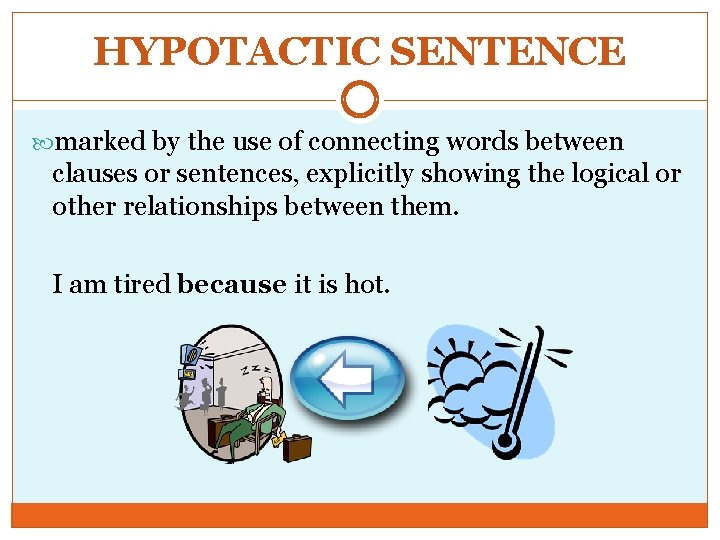
HYPOTACTIC SENTENCE marked by the use of connecting words between clauses or sentences, explicitly showing the logical or other relationships between them. I am tired because it is hot.
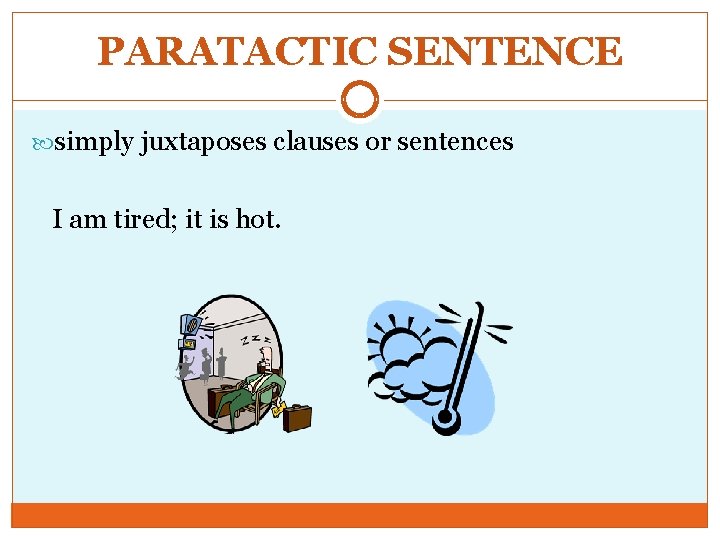
PARATACTIC SENTENCE simply juxtaposes clauses or sentences I am tired; it is hot.
ANASTROPHE Inversion of usual word order “This is the forest primeval. ” (noun adjective) --Henry Longfellow, “Evangeline”
LOOSE SENTENCE one in which the main clause comes first, followed by further dependent grammatical units I like living in Lawrenceville because of its fine restaurants, friendly people, and exciting nightlife.
PERIODIC SENTENCE places the main idea or central complete thought at the end of the sentence, after all introductory elements Because of its fine restaurants, friendly people, and exciting nightlife, I like living in Lawrenceville.
TELEGRAPHIC SENTENCE A sentence shorter than five words in length Lawrenceville is amazing.
YOUR TURN I have found the warm caves in the woods, filled them with skillets, carvings, shelves, closets, silks, innumerable goods --Anne Sexton, “Her Kind”
asyndeton I have found the warm caves in the woods, filled them with skillets, carvings, shelves, closets, silks, innumerable goods --Anne Sexton, “Her Kind”
“My only love sprung from my only hate. ” --William Shakespeare, Romeo and Juliet
antithesis “My only love sprung from my only hate. ” --William Shakespeare, Romeo and Juliet
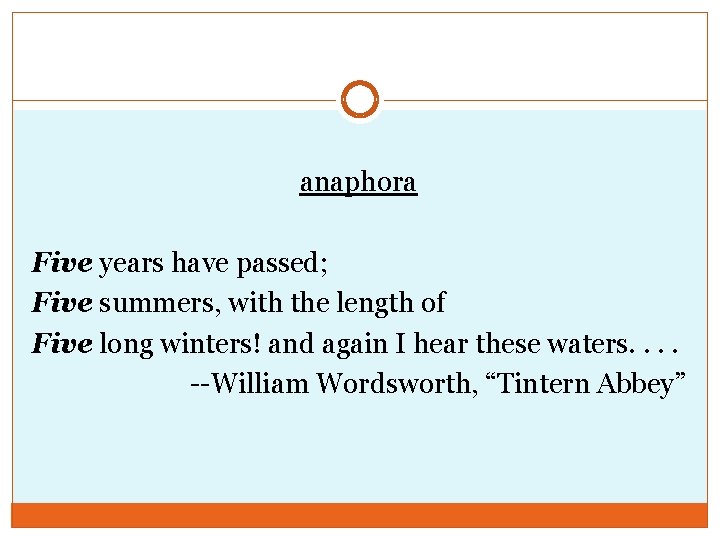
Five years have passed; Five summers, with the length of Five long winters! and again I hear these waters. . --William Wordsworth, “Tintern Abbey”
anaphora Five years have passed; Five summers, with the length of Five long winters! and again I hear these waters. . --William Wordsworth, “Tintern Abbey”
“Oh you haven’t, haven’t you? ” --Charles Dickens, Oliver Twist
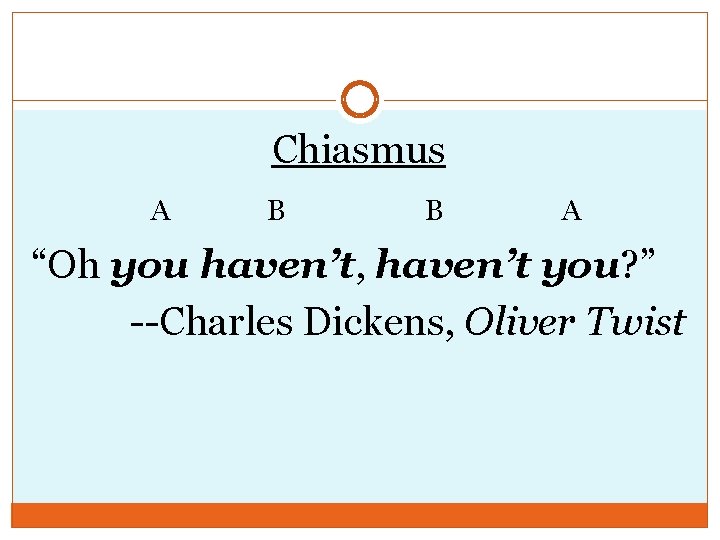
Chiasmus A B B A “Oh you haven’t, haven’t you? ” --Charles Dickens, Oliver Twist
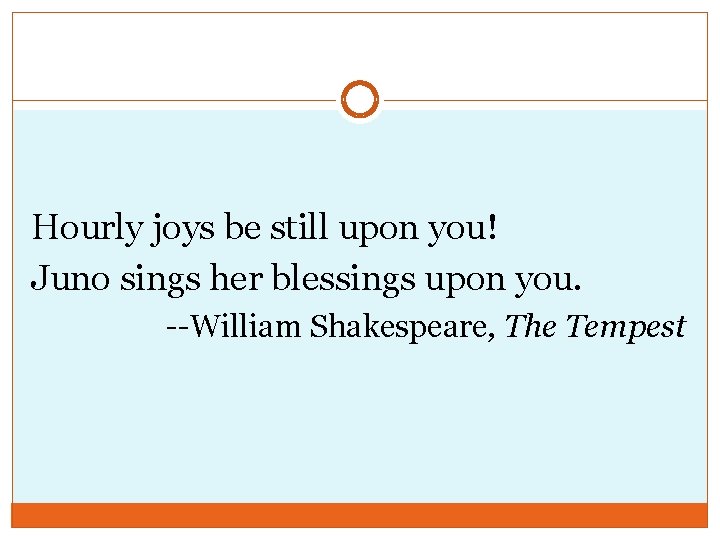
Hourly joys be still upon you! Juno sings her blessings upon you. --William Shakespeare, The Tempest
epistrophe Hourly joys be still upon you! Juno sings her blessings upon you. --William Shakespeare, The Tempest
Figurative Language
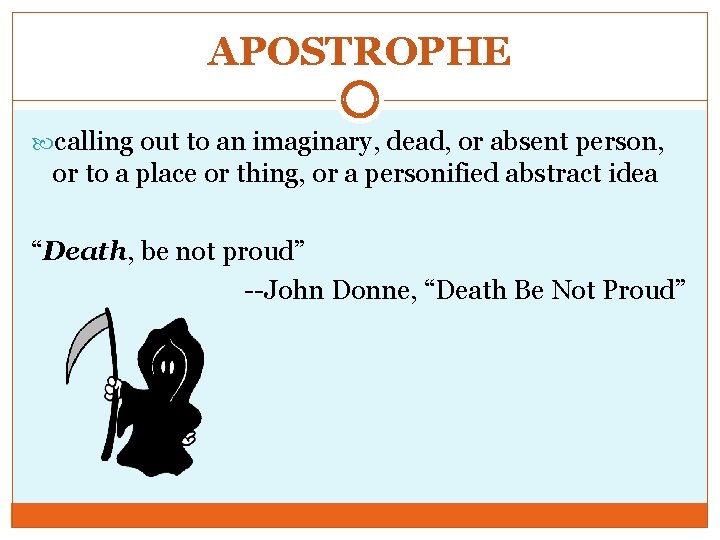
APOSTROPHE calling out to an imaginary, dead, or absent person, or to a place or thing, or a personified abstract idea “Death, be not proud” --John Donne, “Death Be Not Proud”
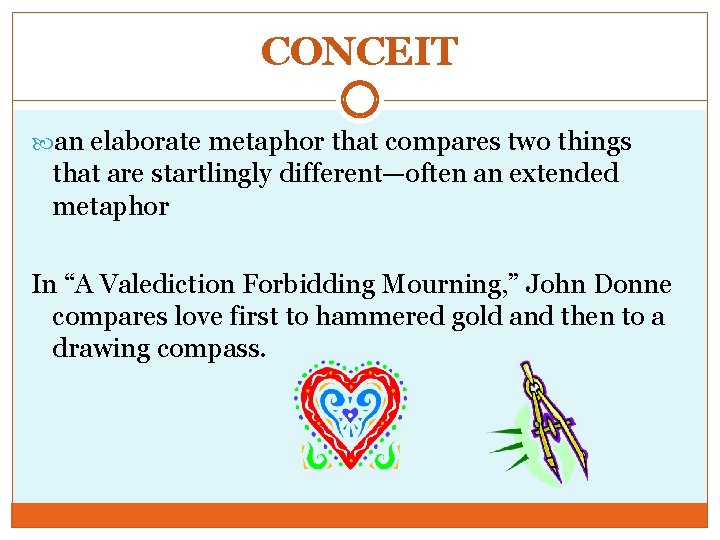
CONCEIT an elaborate metaphor that compares two things that are startlingly different—often an extended metaphor In “A Valediction Forbidding Mourning, ” John Donne compares love first to hammered gold and then to a drawing compass.
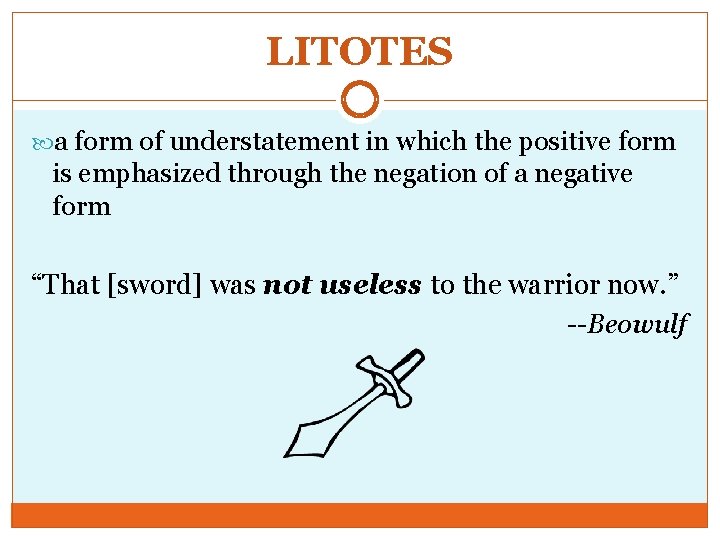
LITOTES a form of understatement in which the positive form is emphasized through the negation of a negative form “That [sword] was not useless to the warrior now. ” --Beowulf
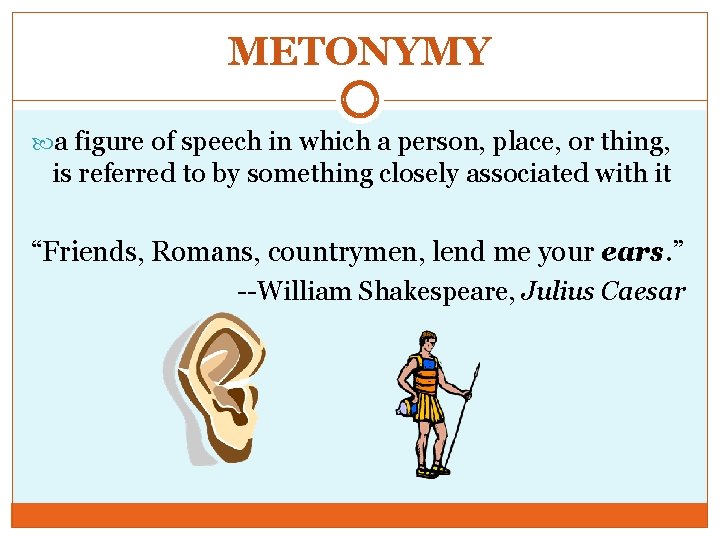
METONYMY a figure of speech in which a person, place, or thing, is referred to by something closely associated with it “Friends, Romans, countrymen, lend me your ears. ” --William Shakespeare, Julius Caesar
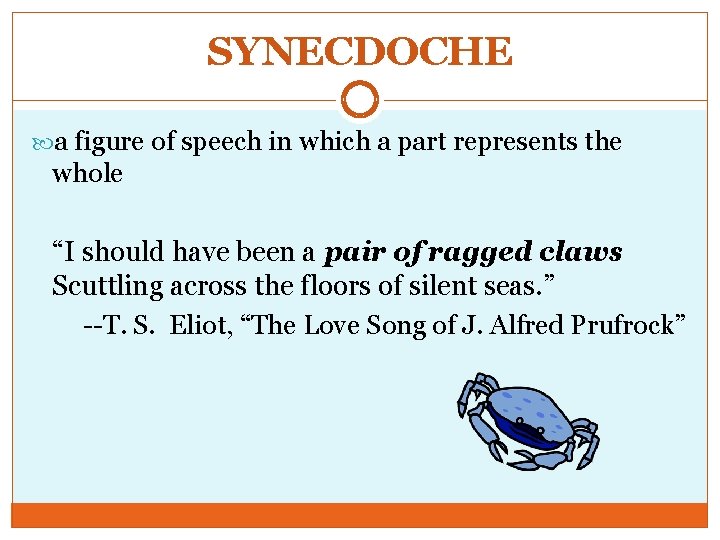
SYNECDOCHE a figure of speech in which a part represents the whole “I should have been a pair of ragged claws Scuttling across the floors of silent seas. ” --T. S. Eliot, “The Love Song of J. Alfred Prufrock”
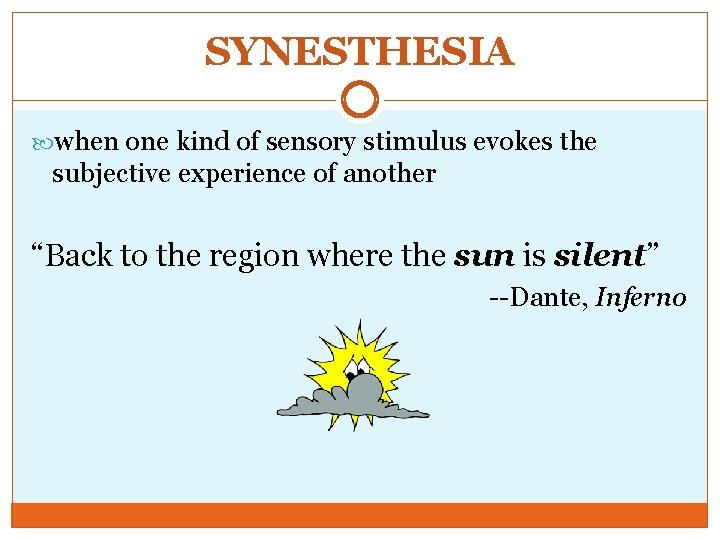
SYNESTHESIA when one kind of sensory stimulus evokes the subjective experience of another “Back to the region where the sun is silent” --Dante, Inferno
YOUR TURN The pen is mightier than the sword.
metonymy The pen [the written word] is mightier than the sword [military strength].
O western wind, when wilt thou blow That the small rain down can rain? --John Keats, “Ode to the West Wind”
apostrophe O western wind, when wilt thou blow That the small rain down can rain? --John Keats, “Ode to the West Wind”
In some melodious plot Of beechen green John Keats, “Ode to a Nightingale”
synesthesia In some melodious plot Of beechen green --John Keats
“The western wave was all aflame. . ” --Samuel Taylor Coleridge, “The Rime of the Ancient Mariner”
synechdoche “The western wave [sea] was all aflame. . ” --Samuel Taylor Coleridge, “The Rime of the Ancient Mariner”
Meter
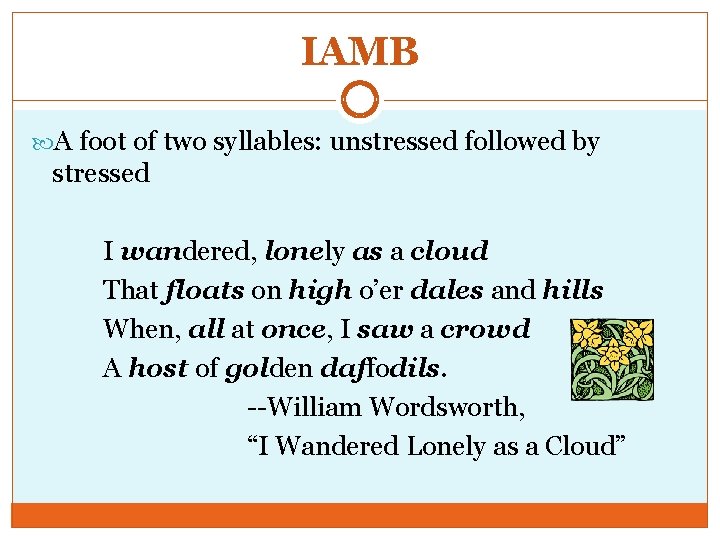
IAMB A foot of two syllables: unstressed followed by stressed I wandered, lonely as a cloud That floats on high o’er dales and hills When, all at once, I saw a crowd A host of golden daffodils. --William Wordsworth, “I Wandered Lonely as a Cloud”
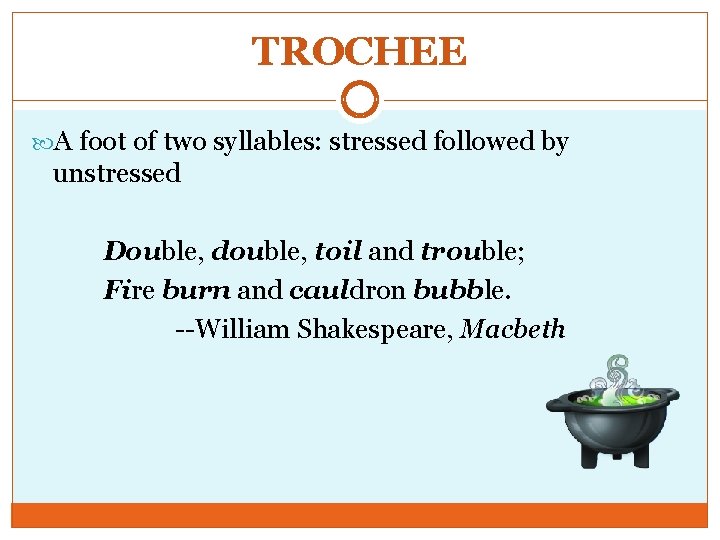
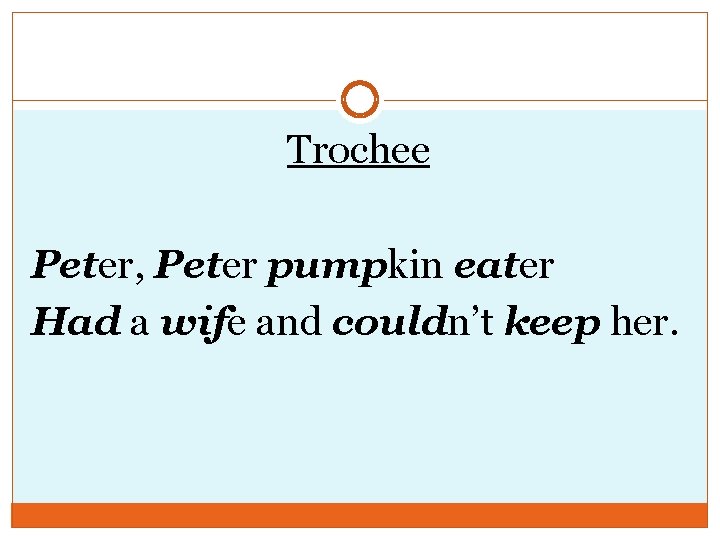
TROCHEE A foot of two syllables: stressed followed by unstressed Double, double, toil and trouble; Fire burn and cauldron bubble. --William Shakespeare, Macbeth
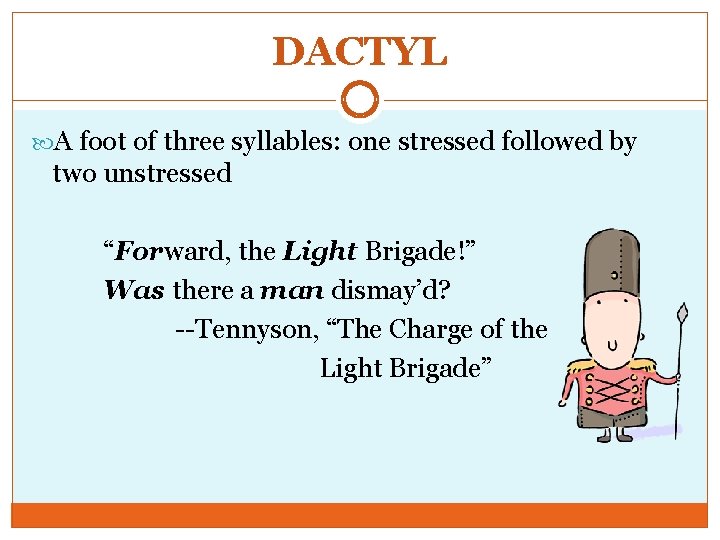
DACTYL A foot of three syllables: one stressed followed by two unstressed “Forward, the Light Brigade!” Was there a man dismay’d? --Tennyson, “The Charge of the Light Brigade”
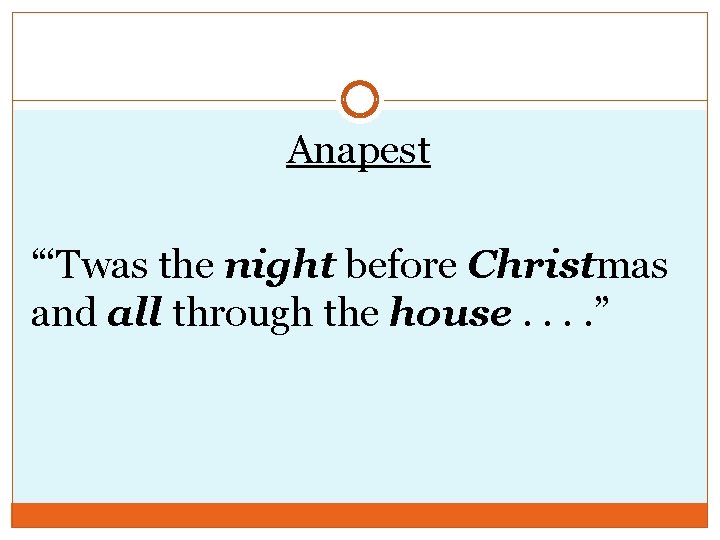
ANAPEST A foot of three syllables: two unstressed followed by one stressed And the sheen of their spears was like stars on the sea, When the blue wave rolls nightly on deep Galilee. --George Gordon, Lord Byron “The Destruction of Sennacherib”
YOUR TURN Peter, Peter pumpkin eater Had a wife and couldn’t keep her.
Trochee Peter, Peter pumpkin eater Had a wife and couldn’t keep her.
“‘Twas the night before Christmas and all through the house. . ”
Anapest “‘Twas the night before Christmas and all through the house. . ”
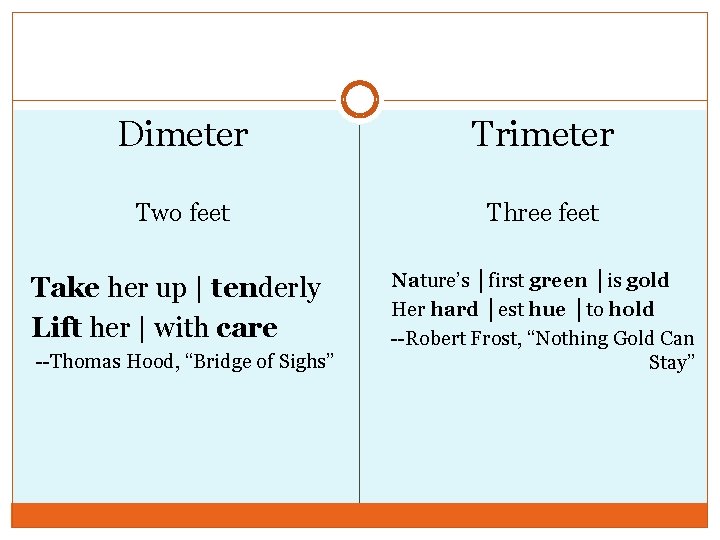
Dimeter Trimeter Two feet Three feet Take her up | tenderly Lift her | with care --Thomas Hood, “Bridge of Sighs” Nature’s │first green │is gold Her hard │est hue │to hold --Robert Frost, “Nothing Gold Can Stay”
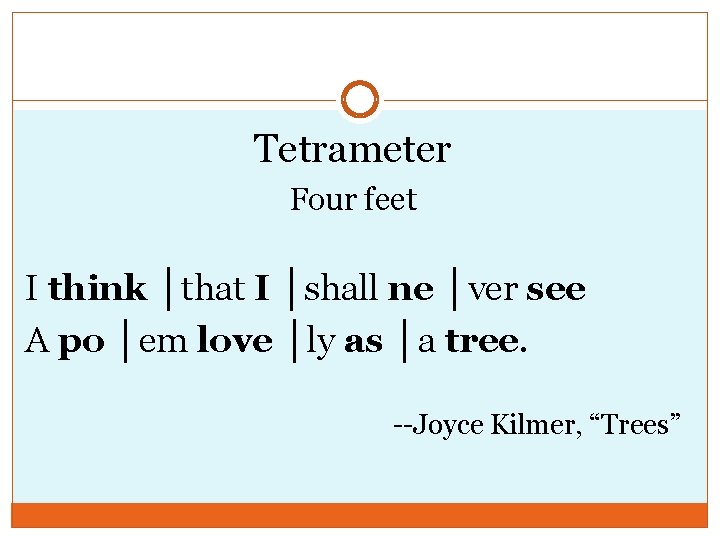
Tetrameter Four feet I think │that I │shall ne │ver see A po │em love │ly as │a tree. --Joyce Kilmer, “Trees”
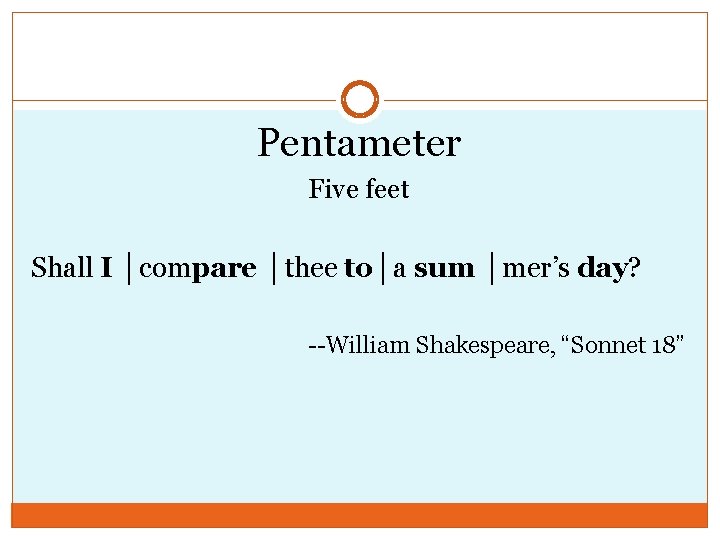
Pentameter Five feet Shall I │compare │thee to│a sum │mer’s day? --William Shakespeare, “Sonnet 18”
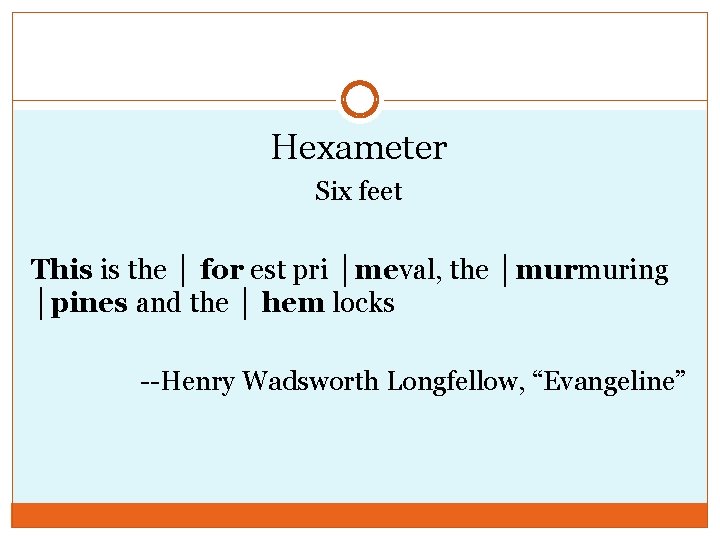
Hexameter Six feet This is the │ for est pri │meval, the │murmuring │pines and the │ hem locks --Henry Wadsworth Longfellow, “Evangeline”
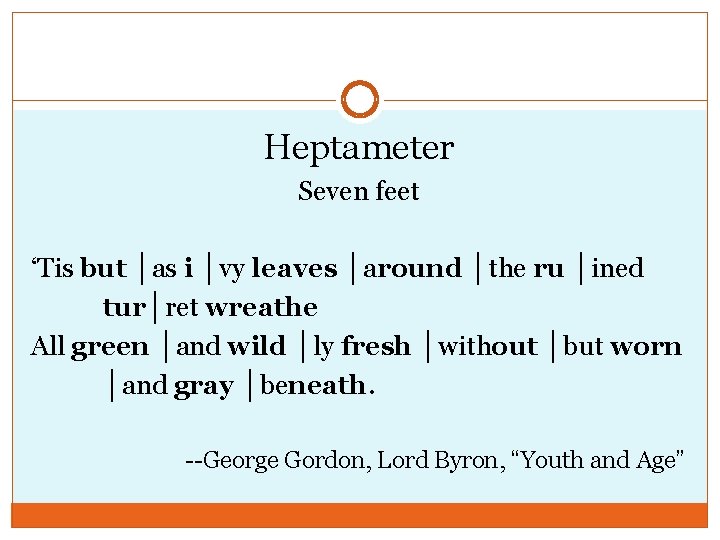
Heptameter Seven feet ‘Tis but │as i │vy leaves │around │the ru │ined tur│ret wreathe All green │and wild │ly fresh │without │but worn │and gray │beneath. --George Gordon, Lord Byron, “Youth and Age”