
Literary Elements You will need to keep these
- Slides: 31
Literary Elements You will need to keep these in your binder ALL YEAR!!! We will be adding to and referring back to this list often.
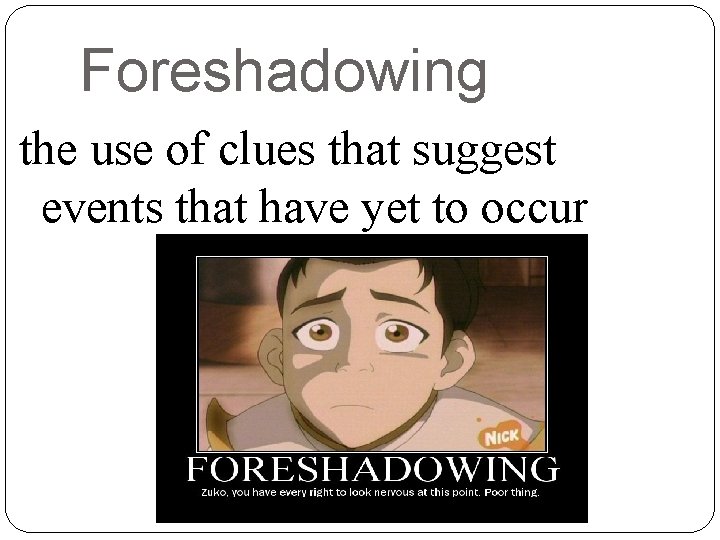
Foreshadowing the use of clues that suggest events that have yet to occur
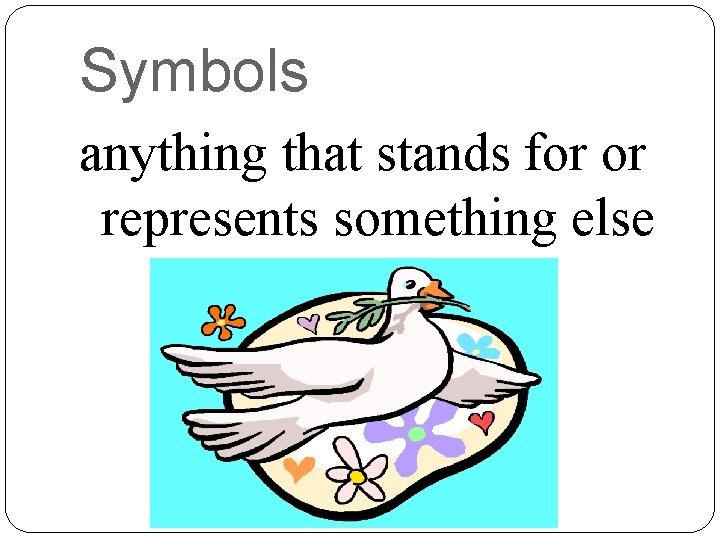
Symbols anything that stands for or represents something else
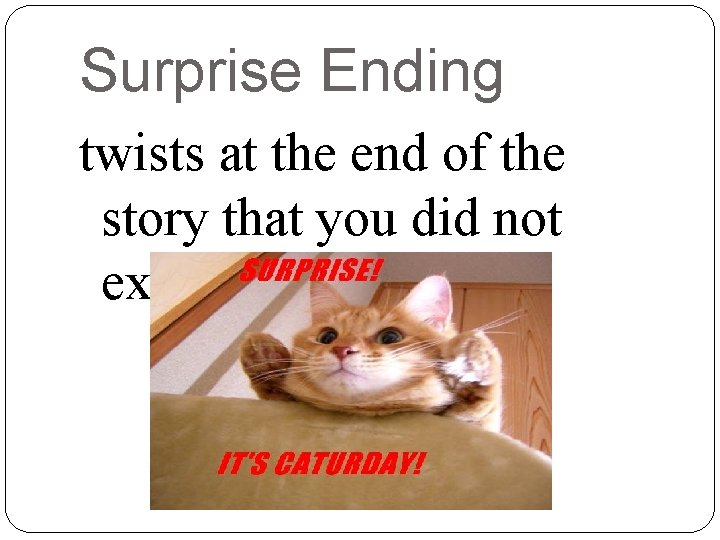
Surprise Ending twists at the end of the story that you did not expect
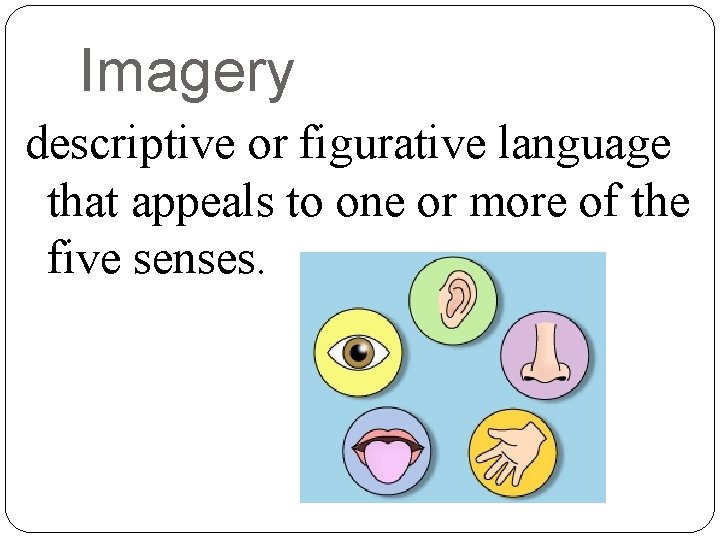
Imagery descriptive or figurative language that appeals to one or more of the five senses.
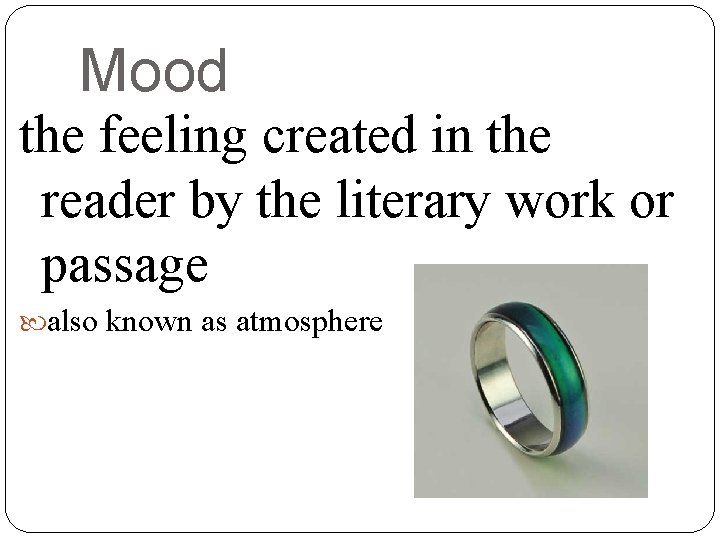
Mood the feeling created in the reader by the literary work or passage also known as atmosphere
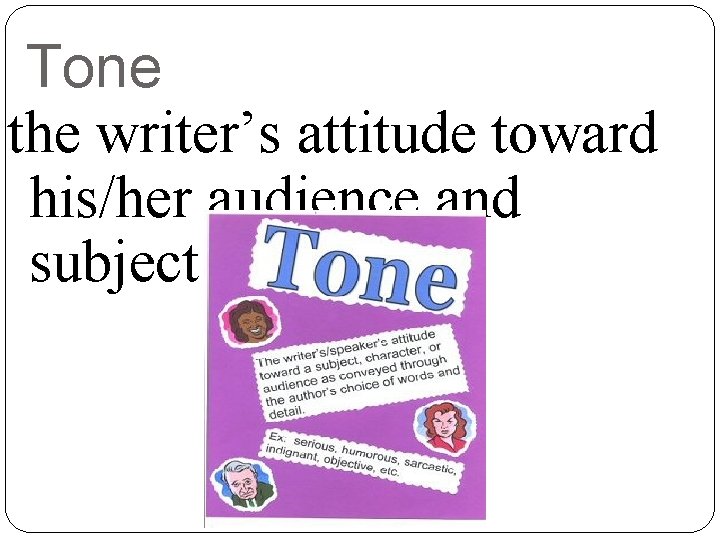
Tone the writer’s attitude toward his/her audience and subject
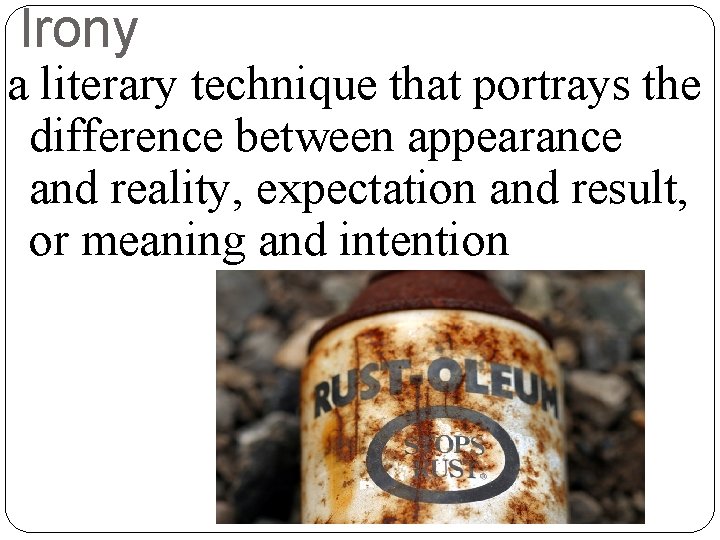
Irony a literary technique that portrays the difference between appearance and reality, expectation and result, or meaning and intention
Irony is an implied discrepancy between what is said and what is meant. Three kinds of irony: 1. verbal irony is when an author says one thing and means something else. 2. dramatic irony is when an audience perceives something that a character in the literature does not know. 3. irony of situation is a discrepancy between the expected result and actual results.
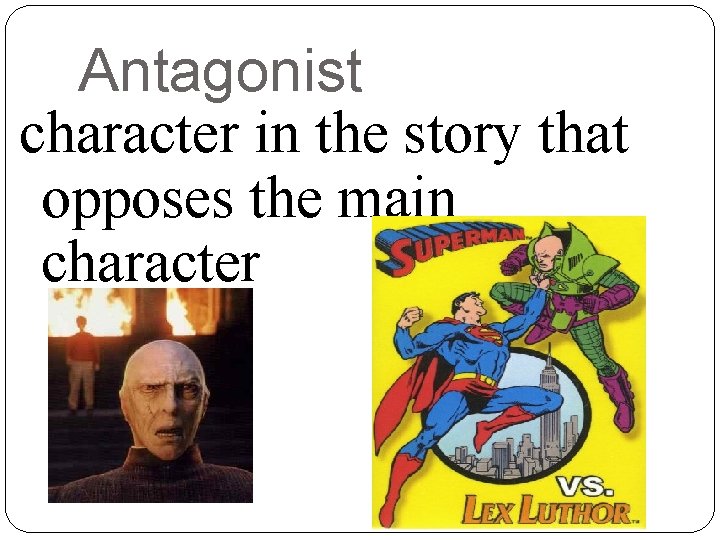
Antagonist character in the story that opposes the main character
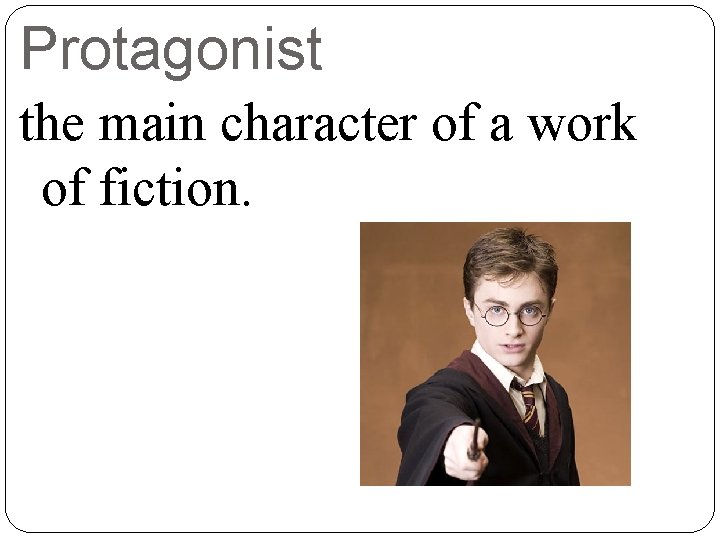
Protagonist the main character of a work of fiction.
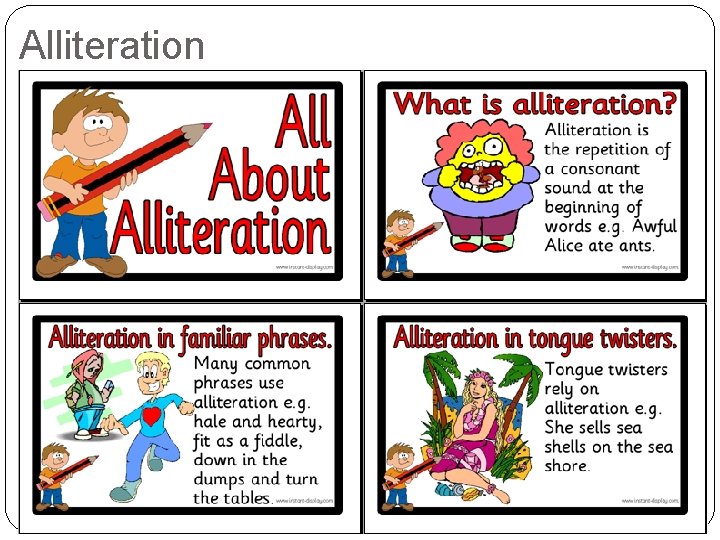
Alliteration repetition of initial consonant sounds Ex. Brilliant, beautiful, and bold, the blinding light beamed.
Alliteration
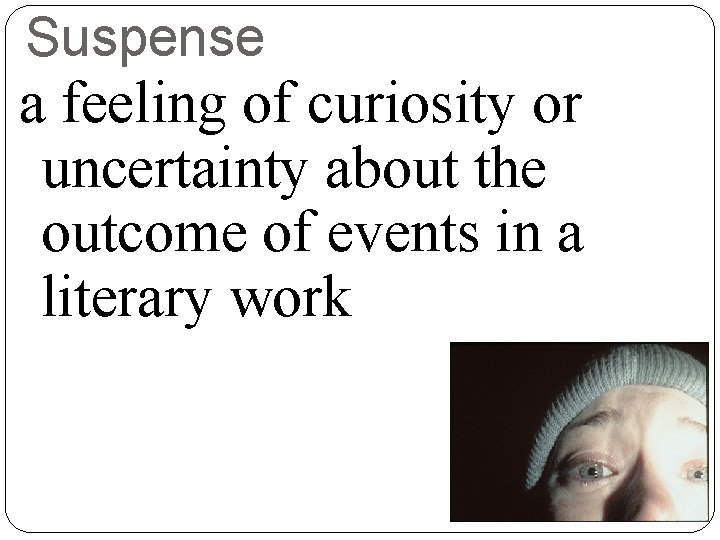
Suspense a feeling of curiosity or uncertainty about the outcome of events in a literary work
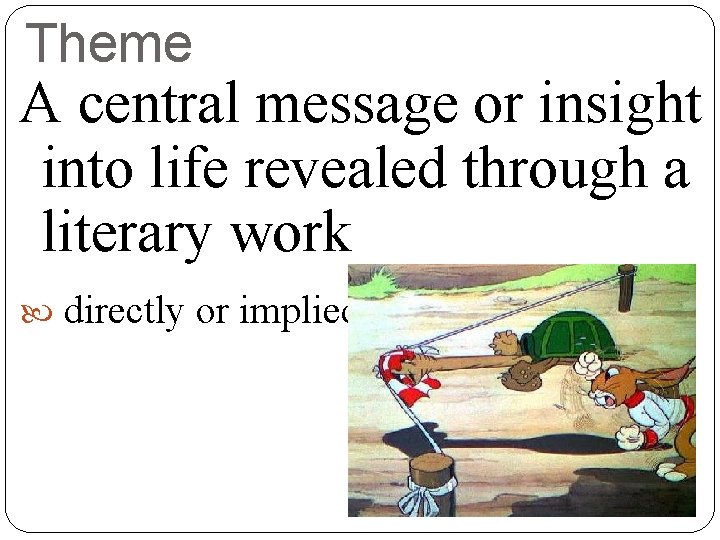
Theme A central message or insight into life revealed through a literary work directly or implied
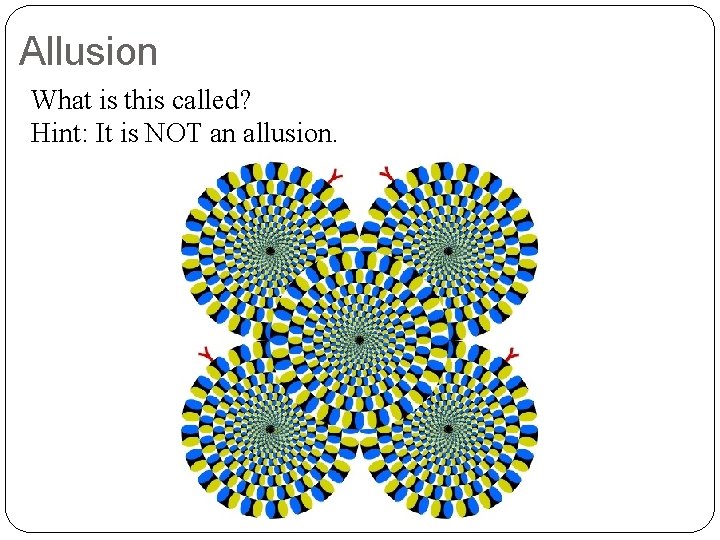
Allusion What is this called? Hint: It is NOT an allusion.
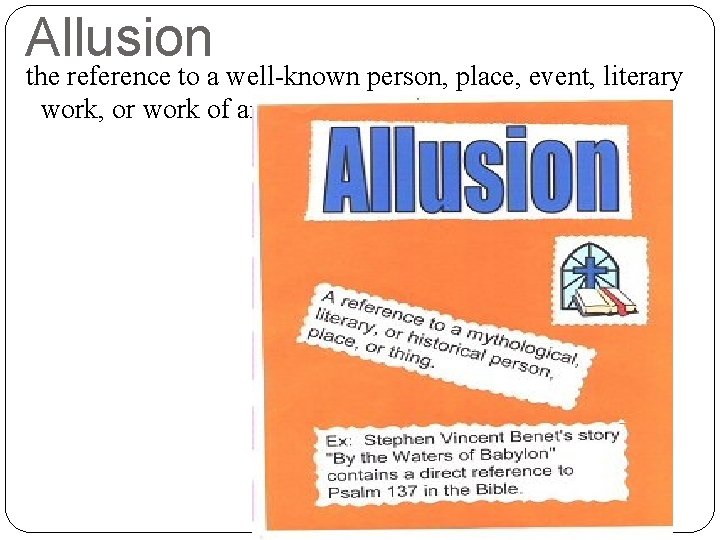
Allusion the reference to a well-known person, place, event, literary work, or work of art
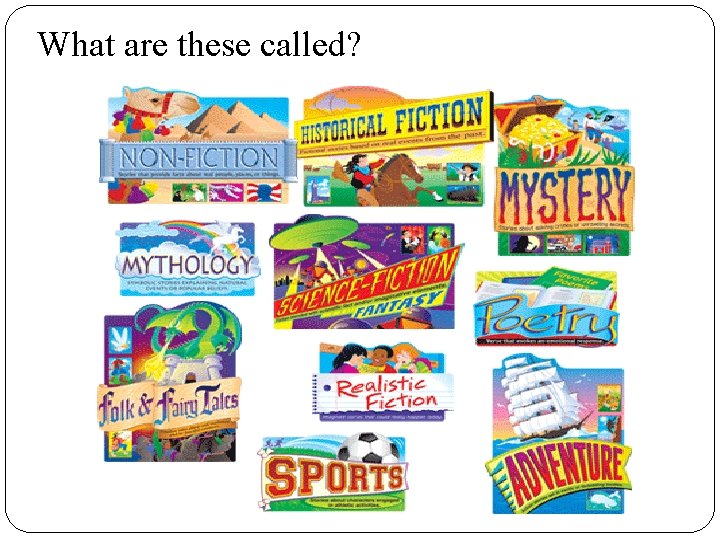
What are these called?
Genre category or type of literature Poetry Prose – Fiction(novels & short stories) and Nonfiction (bio’s, autobio’s, letters, essays and reports. Drama
Short Story a brief work of fiction -simpler plot and setting than novel -tends to reveal character at crucial moment rather than develop it
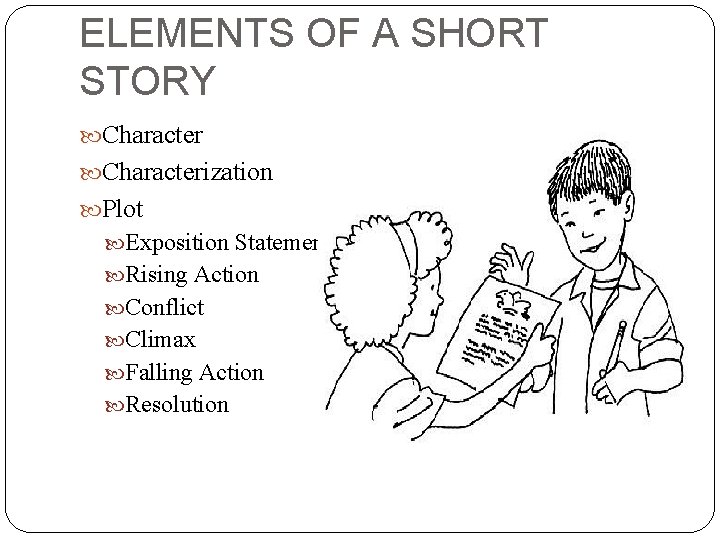
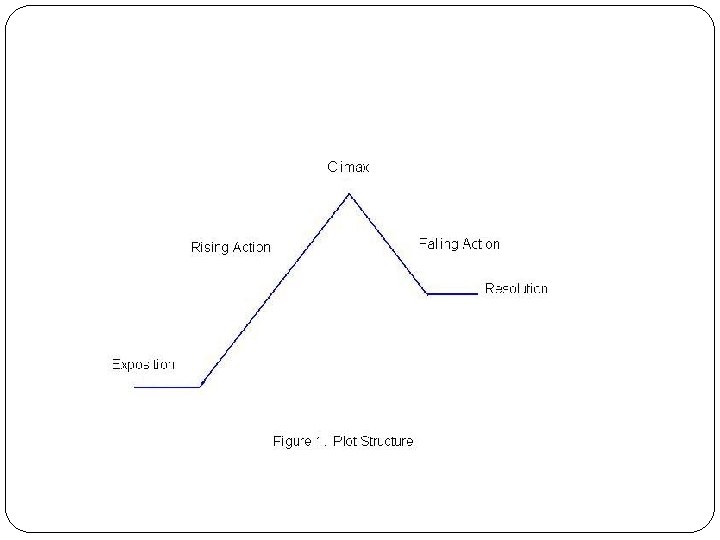
ELEMENTS OF A SHORT STORY Characterization Plot Exposition Statement Rising Action Conflict Climax Falling Action Resolution
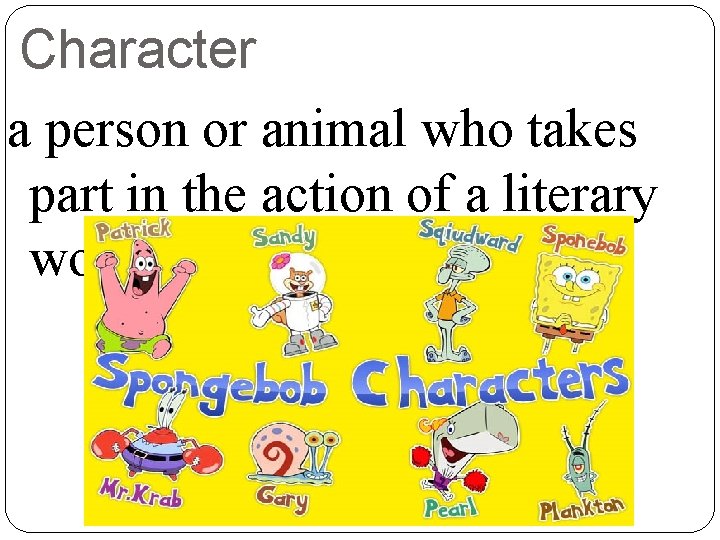
Character a person or animal who takes part in the action of a literary work
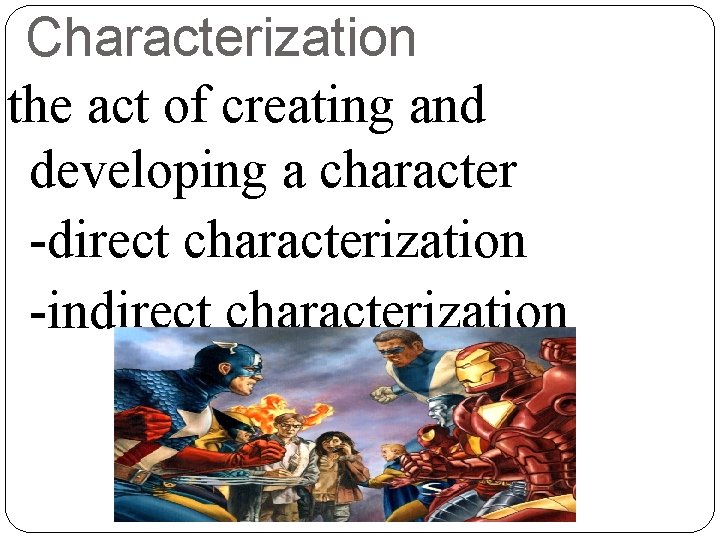
Characterization the act of creating and developing a character -direct characterization -indirect characterization
Exposition Statement introduces the characters, the setting, the basic situation
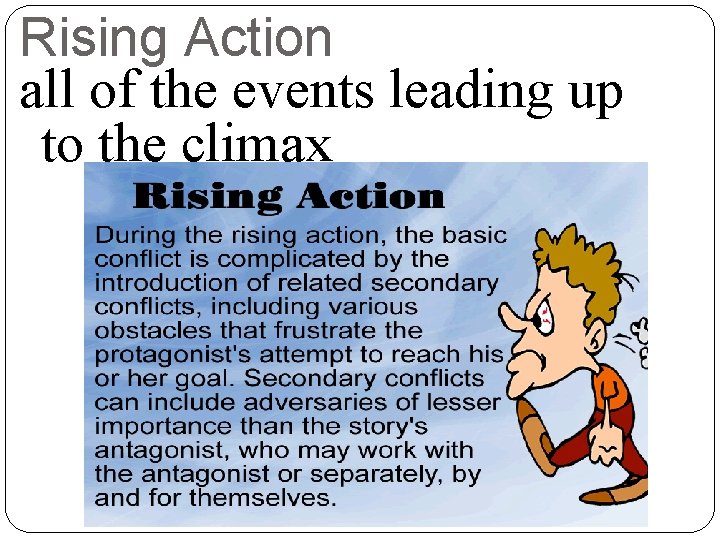
Rising Action all of the events leading up to the climax
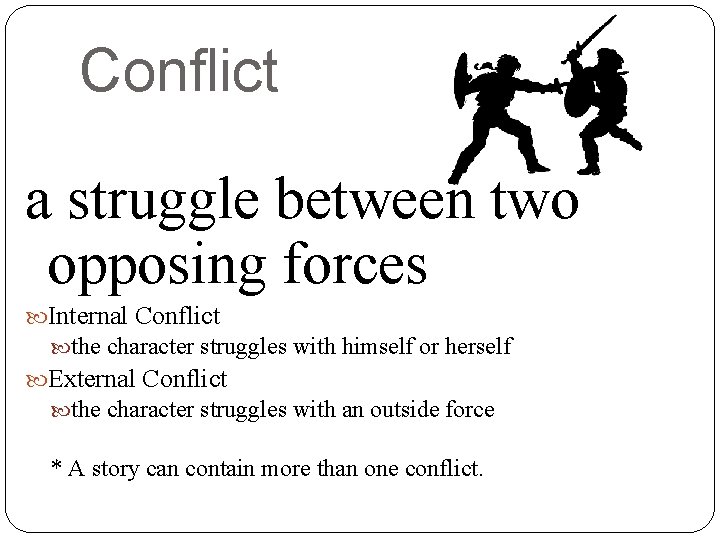
Conflict a struggle between two opposing forces Internal Conflict the character struggles with himself or herself External Conflict the character struggles with an outside force * A story can contain more than one conflict.
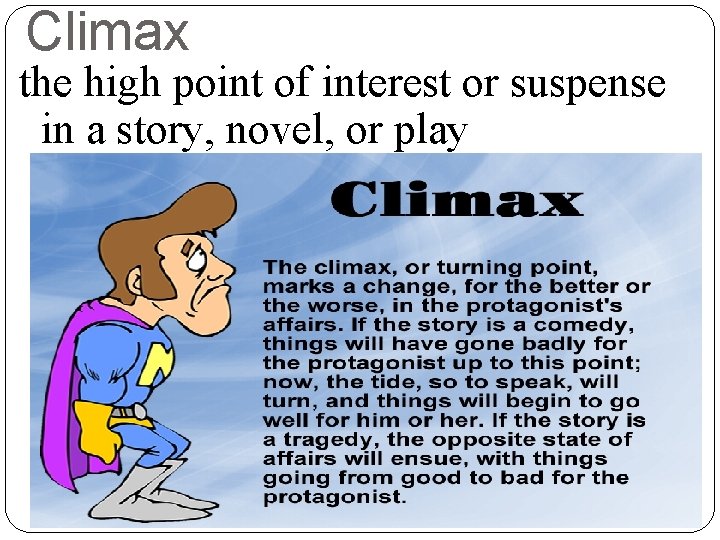
Climax the high point of interest or suspense in a story, novel, or play
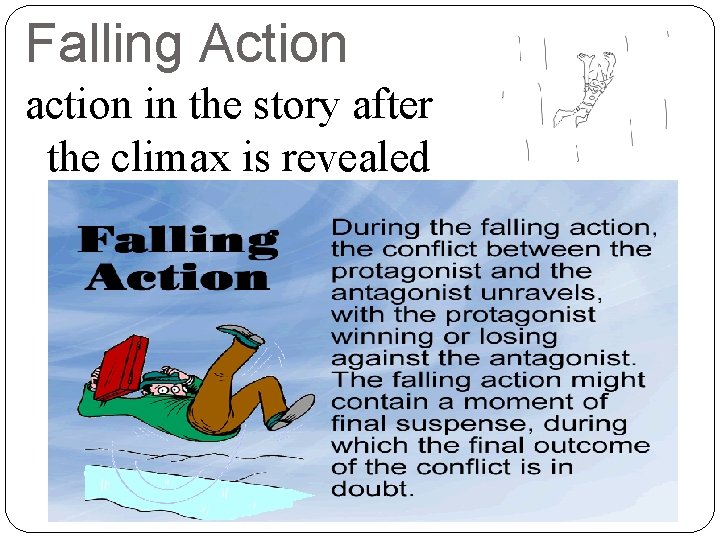
Falling Action action in the story after the climax is revealed
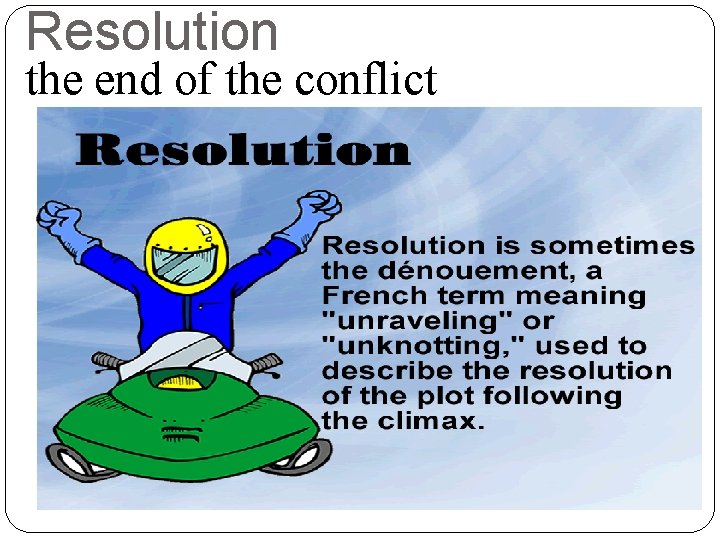
Resolution the end of the conflict
Keep these in your binder. We will be adding to them and referring back to them all year.