
Literary Elements setting Where and when a story
- Slides: 22
Literary Elements
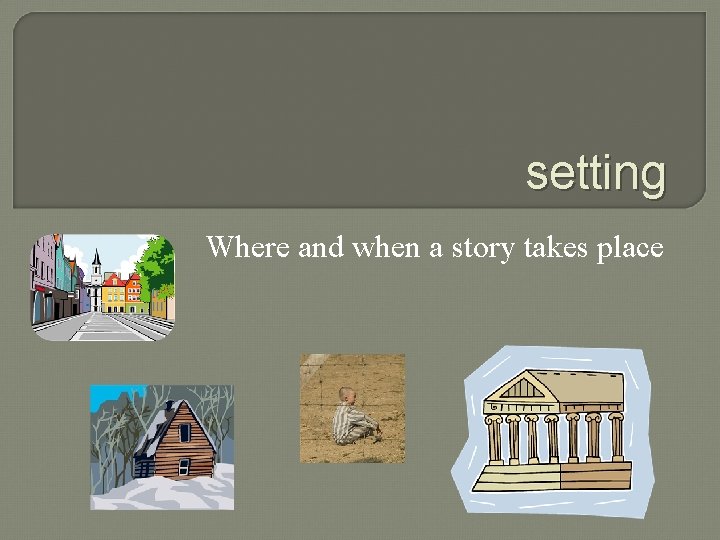
setting Where and when a story takes place
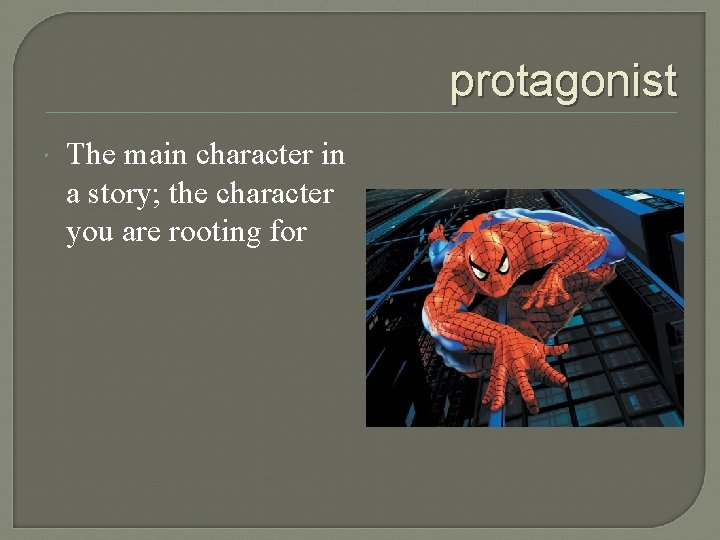
protagonist The main character in a story; the character you are rooting for
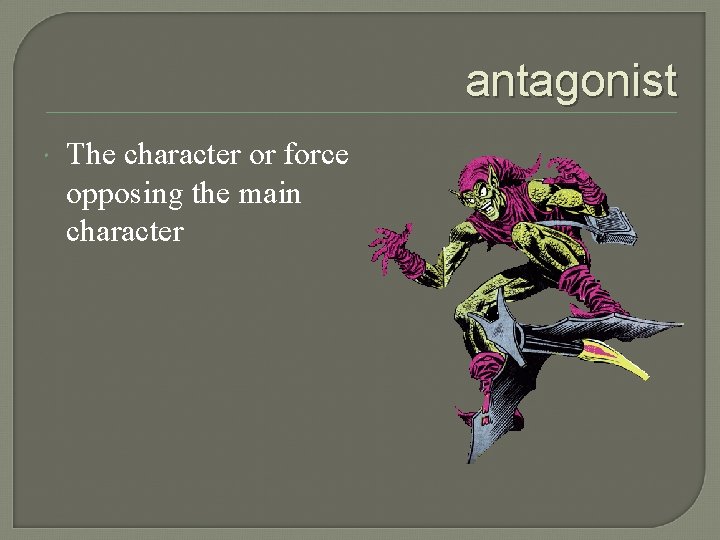
antagonist The character or force opposing the main character
plot The events that happen in a story
exposition At the beginning of the story; provides background information about characters and setting Who, what, where, and when
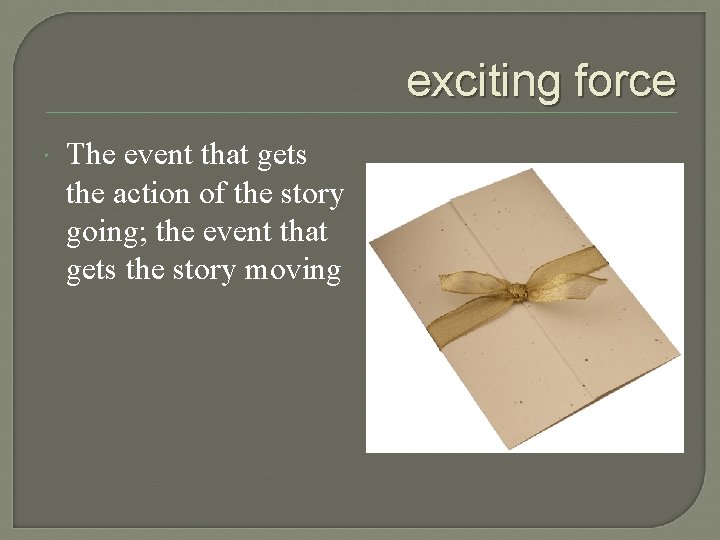
exciting force The event that gets the action of the story going; the event that gets the story moving
Rising action The series of conflicts (struggles) that build the story to its climax
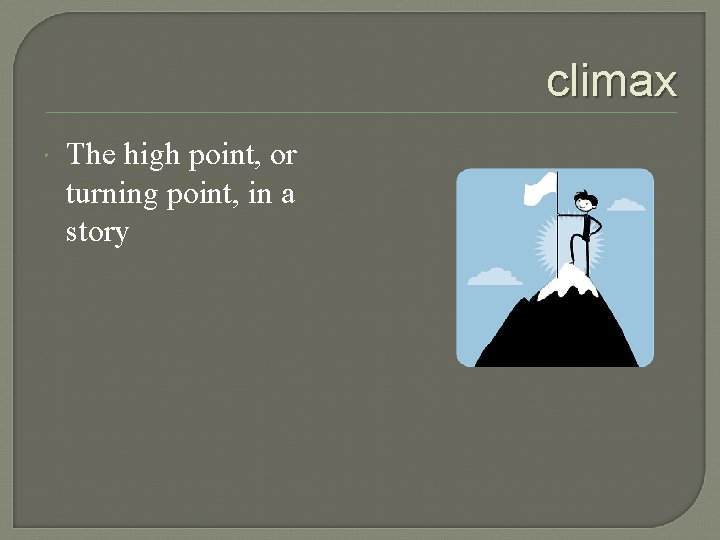
climax The high point, or turning point, in a story
falling action Occurs after the climax; minor conflicts are solved.
resolution The final outcome in a story; the end result AR oy al
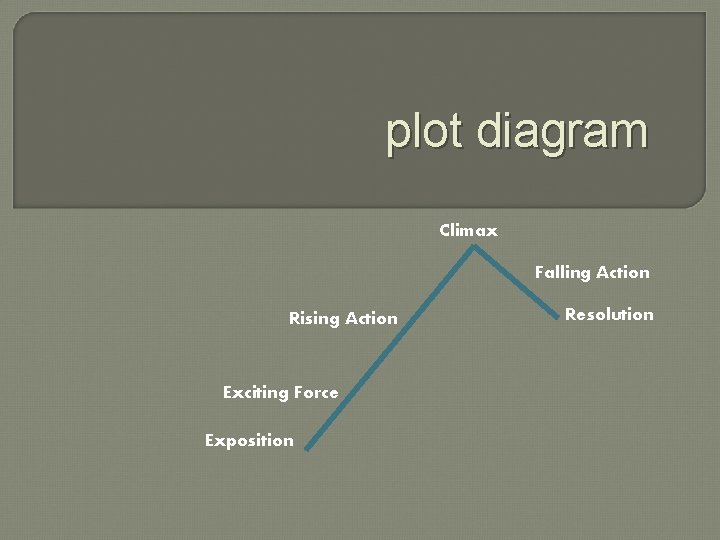
plot diagram Climax Falling Action Rising Action Exciting Force Exposition Resolution
conflict A struggle (problem) between two forces
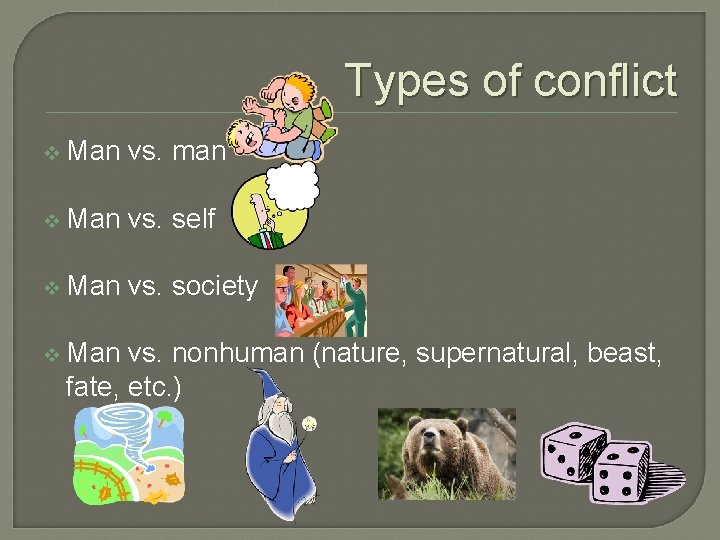
Types of conflict v Man vs. man v Man vs. self v Man vs. society v Man vs. nonhuman (nature, supernatural, beast, fate, etc. )
point of view Perspective from which a writer tells the story
first person P. O. V. ü One of the characters is telling the story, using the pronoun “I” The “I” narrator
omniscient P. O. V. ü The person telling the story knows everything there is to know about the characters: their thoughts, actions, problems, etc. The “all-knowing” point of view
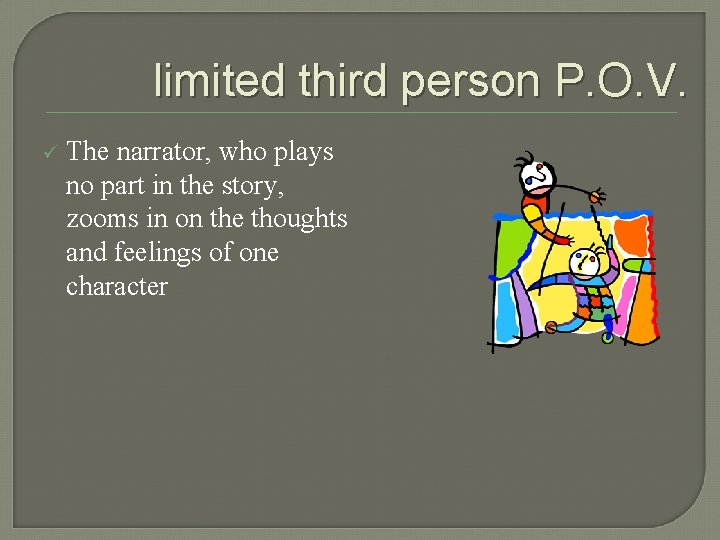
limited third person P. O. V. ü The narrator, who plays no part in the story, zooms in on the thoughts and feelings of one character
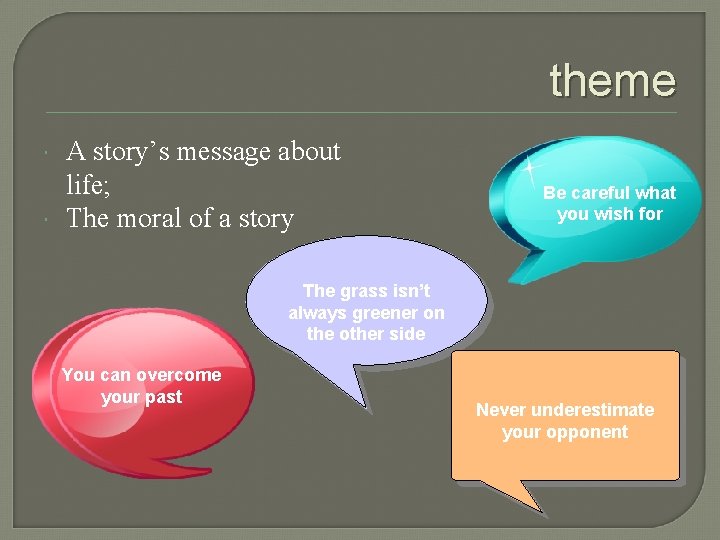
theme A story’s message about life; The moral of a story Be careful what you wish for The grass isn’t always greener on the other side You can overcome your past Never underestimate your opponent
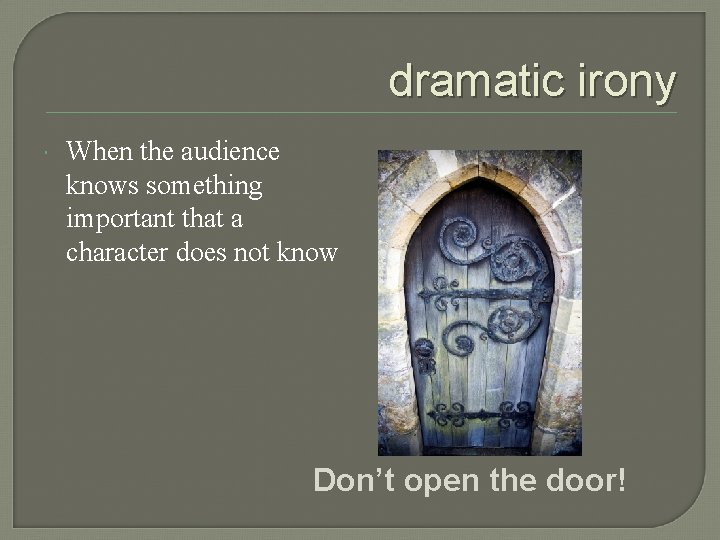
dramatic irony When the audience knows something important that a character does not know Don’t open the door!
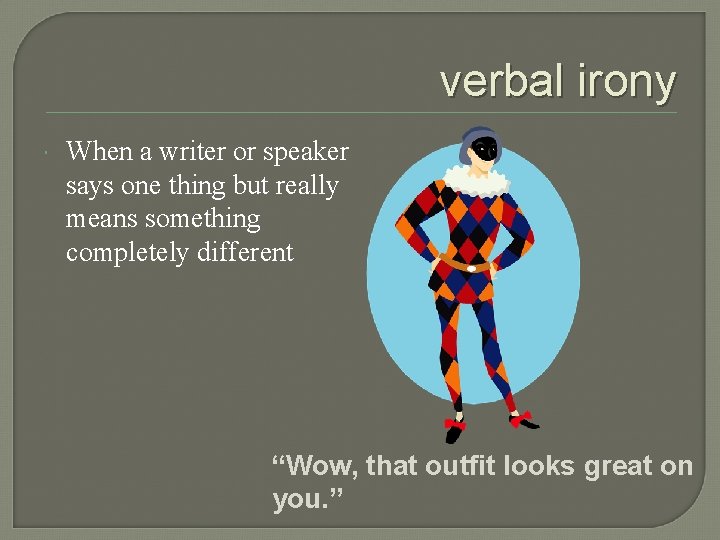
verbal irony When a writer or speaker says one thing but really means something completely different “Wow, that outfit looks great on you. ”
situational irony When there is a contradiction between what we expect to happen and what really does take place