
Literary elements Setting The time and place a

- Slides: 24
Literary elements
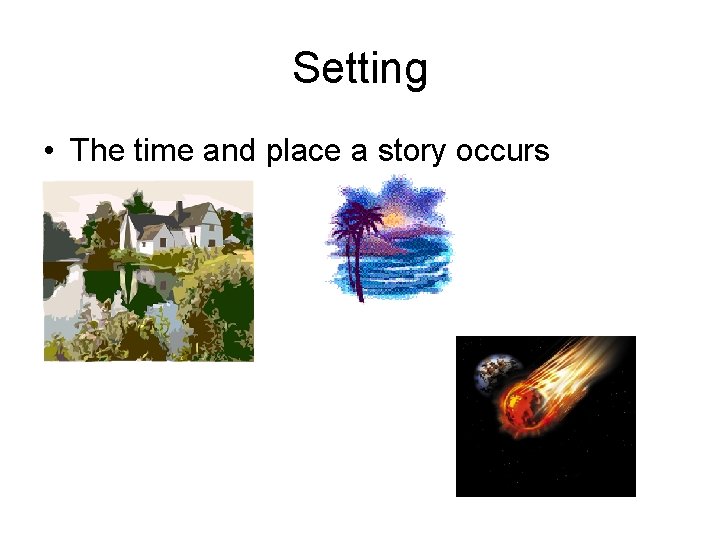
Setting • The time and place a story occurs
Point of View The way a story gets told • First Person — character in story tells story • Third Person Limited — person outside of story tells story but focuses on thoughts and feelings of one character • Third person omniscient — person outside of the story knows thoughts and feeling of all characters
Character • Person or animal in the story • Protagonist — Character faced with the conflict • Antagonist — Character who creates the problem • Static character — the character does not change from the beginning of the story to the end of the story • Dynamic character — the character has some kind of internal change or insight by the end of the story
Plot • The events in the story
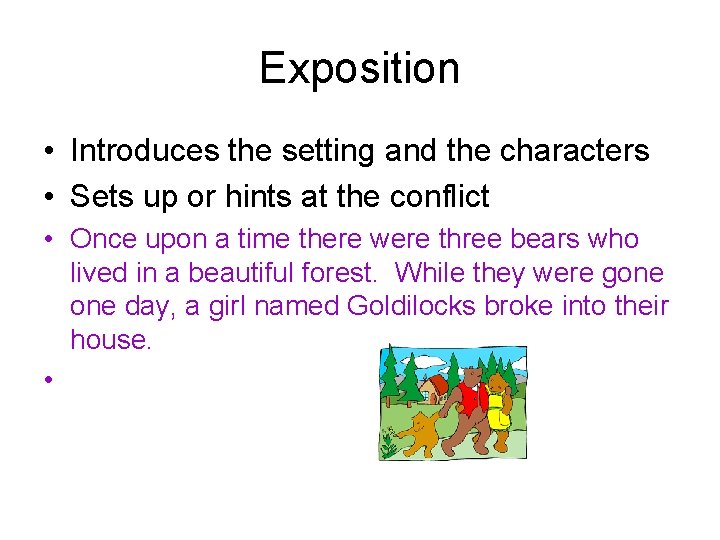
Exposition • Introduces the setting and the characters • Sets up or hints at the conflict • Once upon a time there were three bears who lived in a beautiful forest. While they were gone day, a girl named Goldilocks broke into their house. •
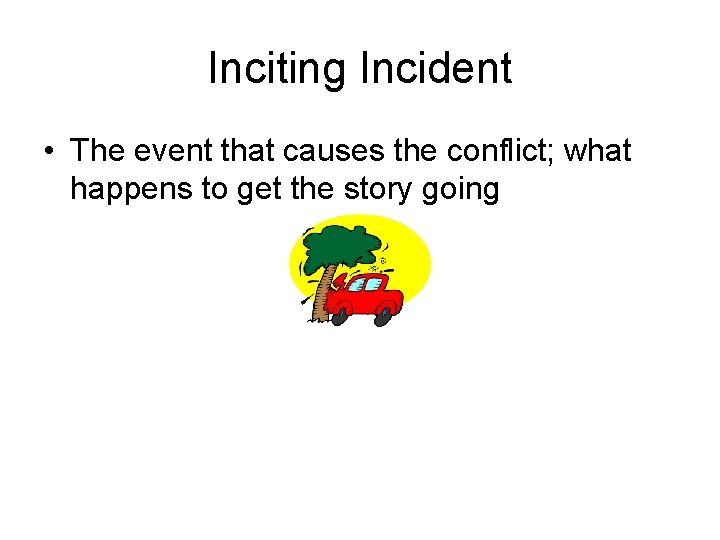
Inciting Incident • The event that causes the conflict; what happens to get the story going
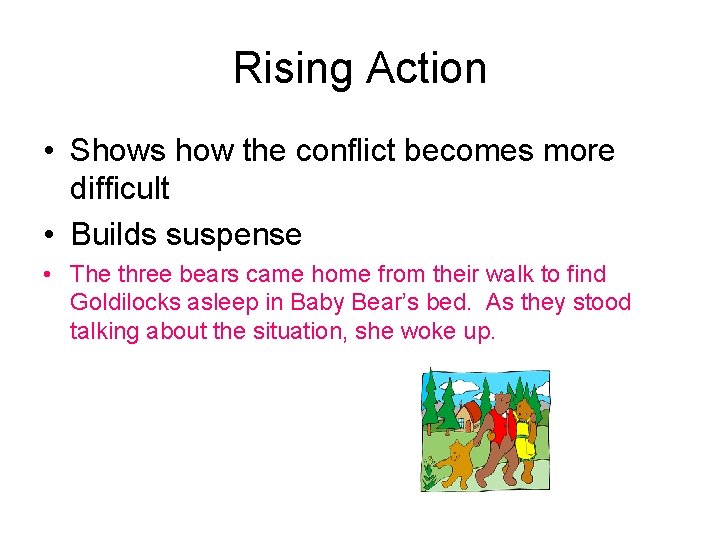
Rising Action • Shows how the conflict becomes more difficult • Builds suspense • The three bears came home from their walk to find Goldilocks asleep in Baby Bear’s bed. As they stood talking about the situation, she woke up.
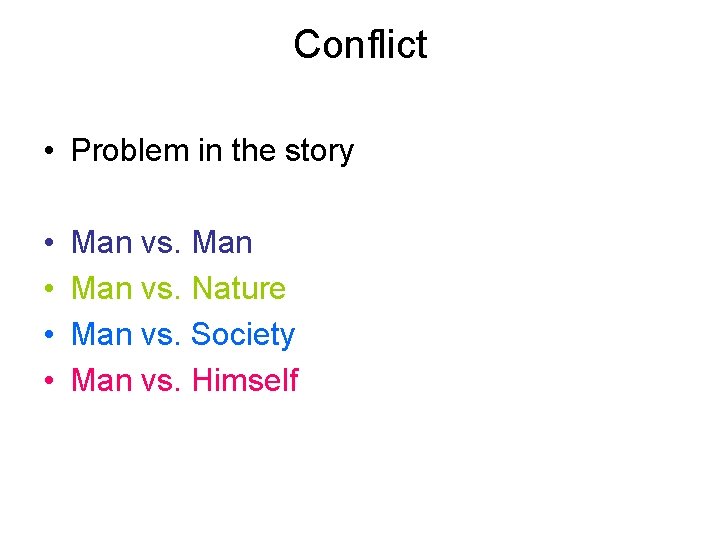
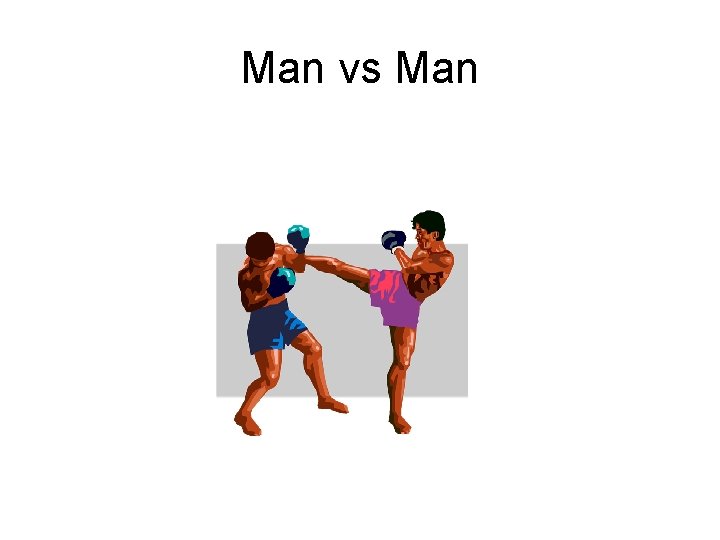
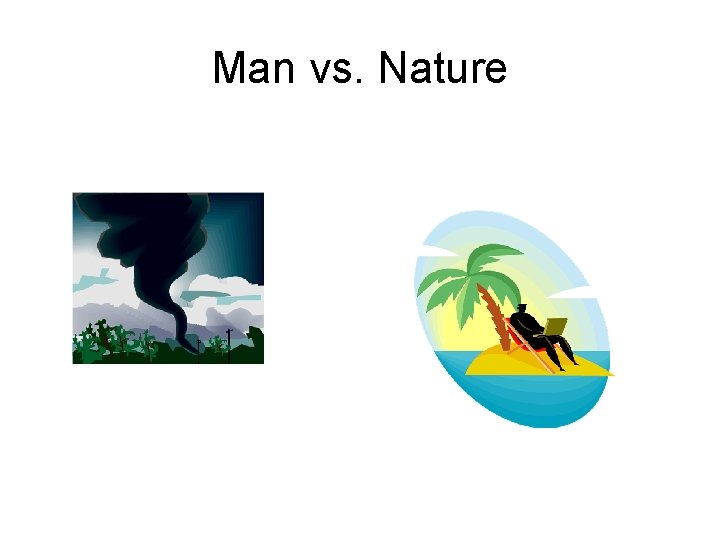
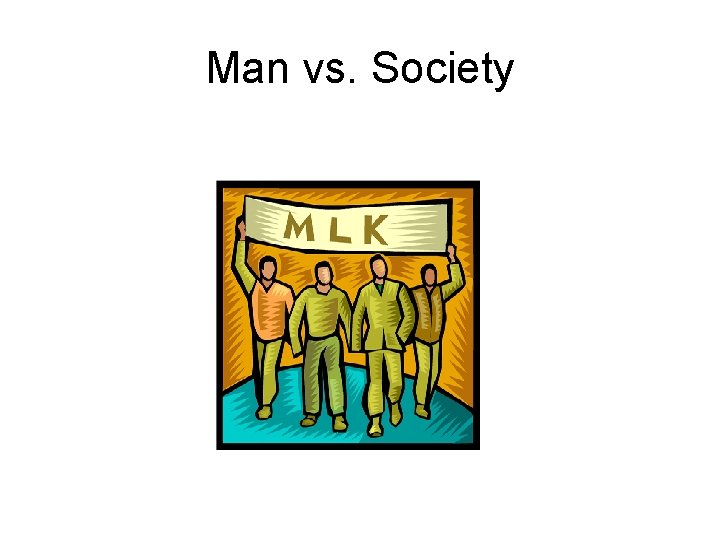
Conflict • Problem in the story • • Man vs. Nature Man vs. Society Man vs. Himself
Man vs Man
Man vs. Nature
Man vs. Society
Man vs. Himself • Jealousy, envy, self-hatred, depression
Climax • The most exciting part of the story (turning point) I wonder what’s going to happen?
Falling Action • How the story wraps itself up • The three bears came home from their walk and discovered that someone had eaten their food and sat in their chairs.
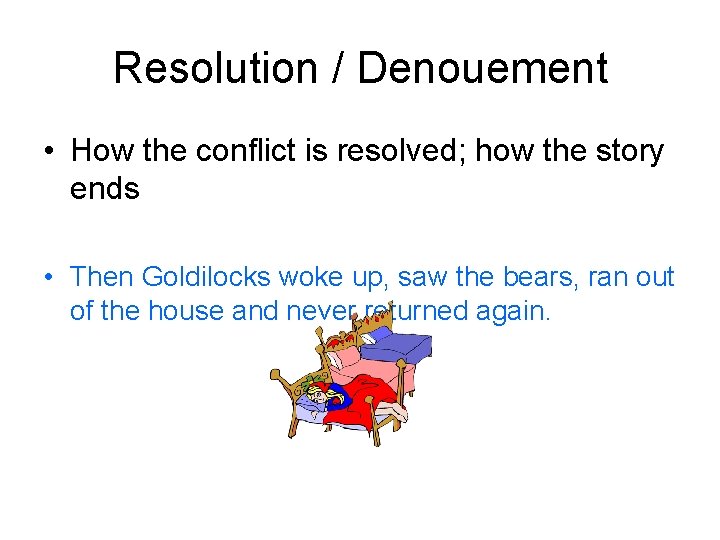
Resolution / Denouement • How the conflict is resolved; how the story ends • Then Goldilocks woke up, saw the bears, ran out of the house and never returned again.
Theme • A central message or insight into life; a lesson about life or people that the literary work communicates. • Love conquers all • Money can’t buy happiness • Don’t judge a man until you’ve walked in his shoes
Purpose • The reason why the author wrote the book or article – Entertain – Inform --Persuade
Allusion • Reference to famous historical, biblical, or literary people or events – Donald Trump is such a King Midas.
Flashback • Interruption in story to show scene which occurred earlier. Gives background information about character and plot. Going back in time to fill in details
Foreshadowing • Clues from the author that tell the reader what is going to happen before the characters know
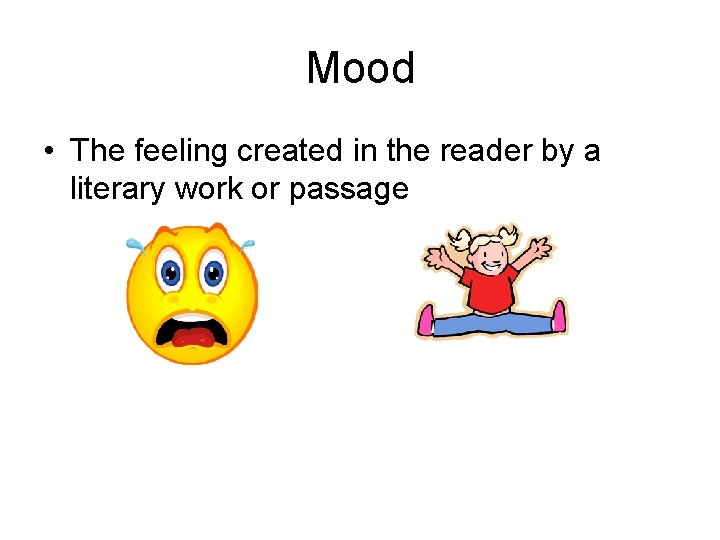
Mood • The feeling created in the reader by a literary work or passage
Tone • The writer’s attitude toward the audience or subject; can usually be described by a single adjective; often referred to as author’s attitude. • Sad, excited, thrilled, apprehensive, anxious, shocked
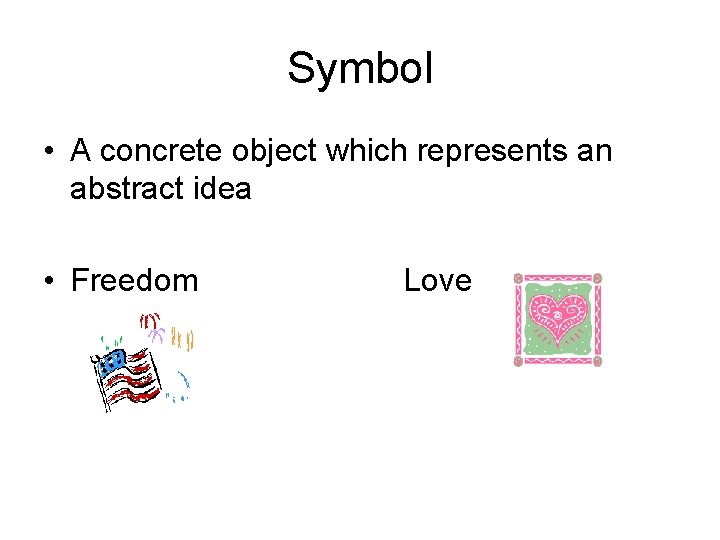
Symbol • A concrete object which represents an abstract idea • Freedom Love