
Literary Elements Part One Conflict Plot Progression What
- Slides: 25
+ Literary Elements Part One Conflict + Plot Progression
+ What is conflict? n. A conflict is a struggle between opposing forces. n Conflict n There = struggle are two types of conflict in literature: n Internal n External
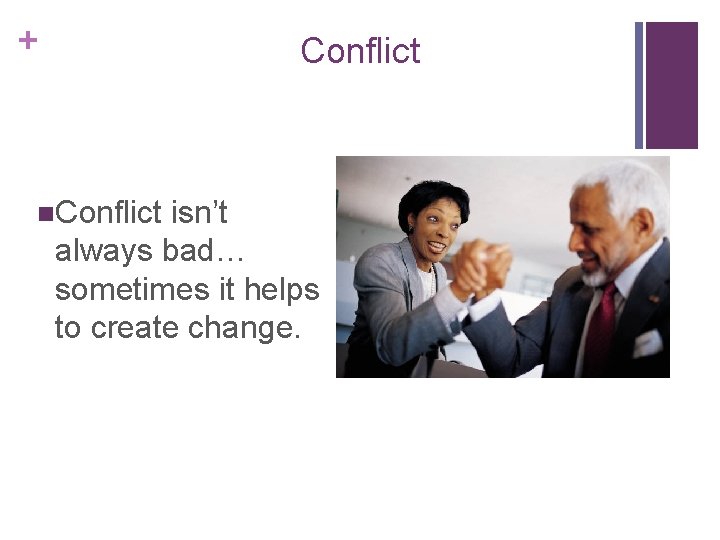
+ Conflict n. Conflict isn’t always bad… sometimes it helps to create change.
+ Why is conflict part of a story? My brother and I went to the grocery store for my mom. When we got there, we picked up eggs, milk, and bread. We paid for the items at the register, drove the groceries home, and brought them into the house. My mom was so proud of us. Is this a good story? Is it boring? Why?
+ Internal vs. External Conflict n Internal conflicts are struggles that happen within the characters’ minds. n External conflicts are struggles that happen between the character and something outside, in the world. n Internal = in n External = out
+ Internal vs. External Conflict n Internal conflicts are struggles that happen within the characters’ minds. n External conflicts are struggles that happen between the character and something outside, in the world. n Internal = in n External = out
+ Internal Conflict n Man vs. self n. A struggle that takes place in a character's mind is called internal conflict. A character may have to decide between right and wrong or between two solutions to a problem. Sometimes, a character must deal with his or her own mixed feelings or emotions. n Example: Jason promises Katie to keep her secret, but if he doesn’t tell the teacher, Kaatie might get hurt. He doesn’t know what the right thing to do is.
+ External Conflict n Man vs. man n Man vs. society n Man vs. nature
+ Man vs. Man n One character struggles/disagrees with another character(s). n Example: The Joker is kidnapping people from Gotham City, but Batman comes to the rescue and defeats The Joker.
+ Man vs. Society n When a character struggles against the town, society, or world in which he/she lives. “Society” could mean a specific group of people (ex: government) or it could just mean the way the society runs (ex: culture, rules, laws). n Example: Ashley lives in a society where he assigned the job of math teacher, but she wants to be an airplane pilot.
+ Man vs. Nature n When a character struggles against anything that is not himself, another person, or society. Usually, these are forces that cannot be seen, such as nature (ex: storms), God or an almighty power, or Fate/Destiny. n Example: Marcus is alone in his fishing boat when it suddenly becomes a storm. He must fight back to shore to survive. n Example 2: A ladder falls on Maria, paralyzing her. She must learn to walk again.
+ What kind of conflict? n The Wizard of Oz n The Day After Tomorrow n Alice in Wonderland (1: 36) n A League of Their Own
+ Plot n Definition: Plot is the organized pattern or sequence of events that make up a story. Every plot is made up of a series of incidents that are related to one another. n Plot n. A = the actual story! good plot can be broken up into different parts.
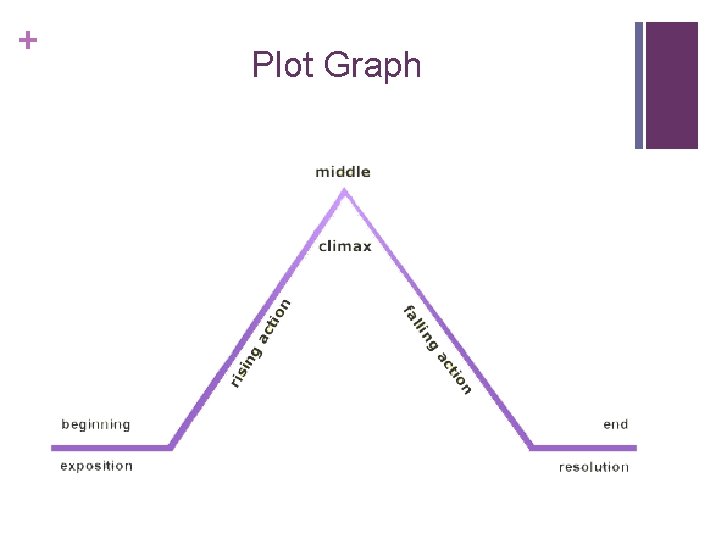
+ Plot Graph
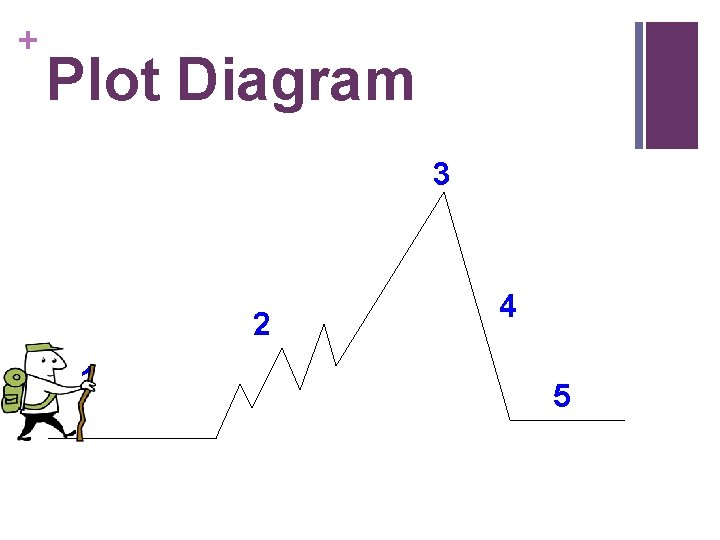
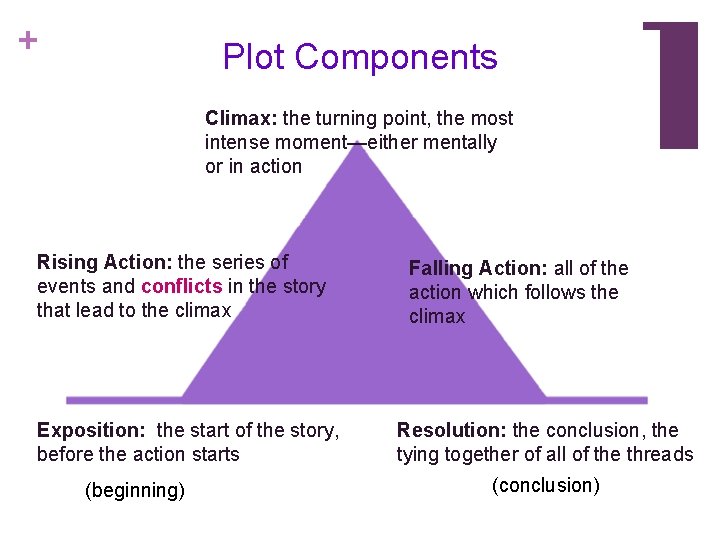
+ Plot Diagram 3 2 1 4 5
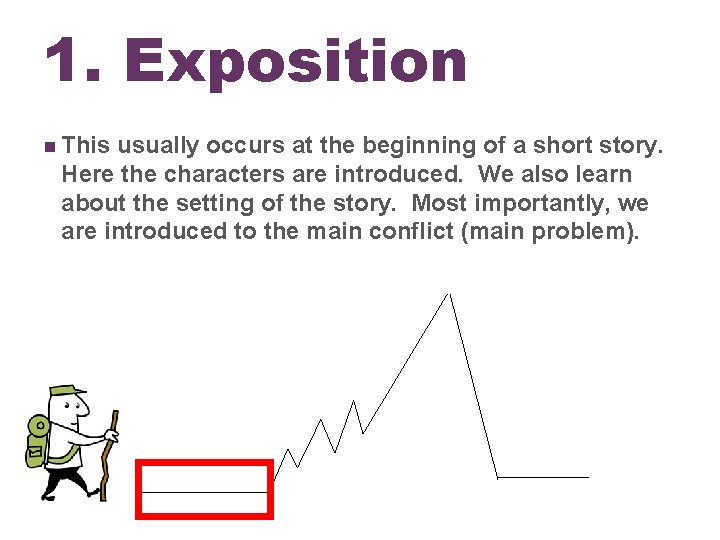
1. Exposition n This usually occurs at the beginning of a short story. Here the characters are introduced. We also learn about the setting of the story. Most importantly, we are introduced to the main conflict (main problem).
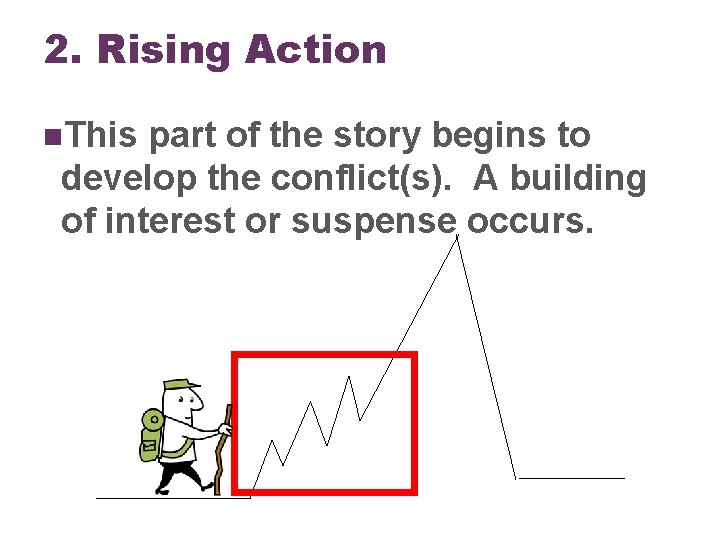
2. Rising Action n. This part of the story begins to develop the conflict(s). A building of interest or suspense occurs.
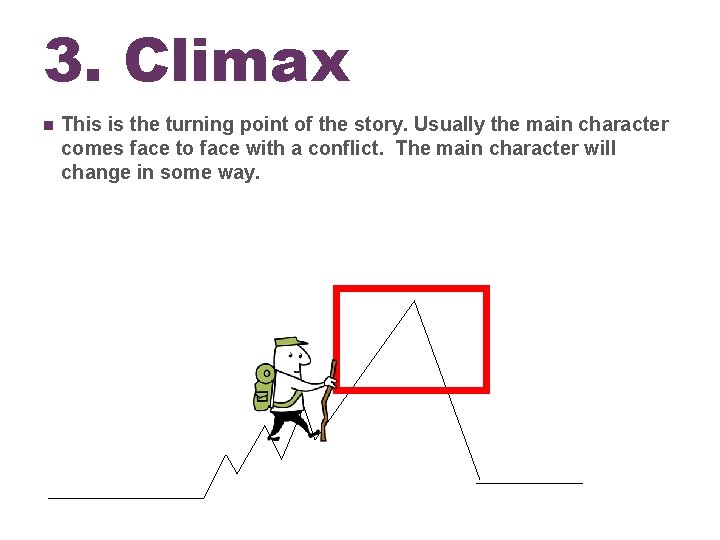
3. Climax n This is the turning point of the story. Usually the main character comes face to face with a conflict. The main character will change in some way.
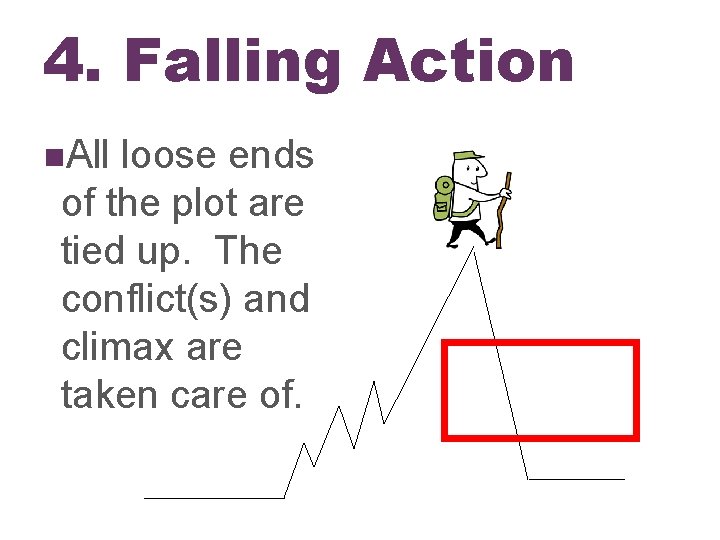
4. Falling Action n. All loose ends of the plot are tied up. The conflict(s) and climax are taken care of.
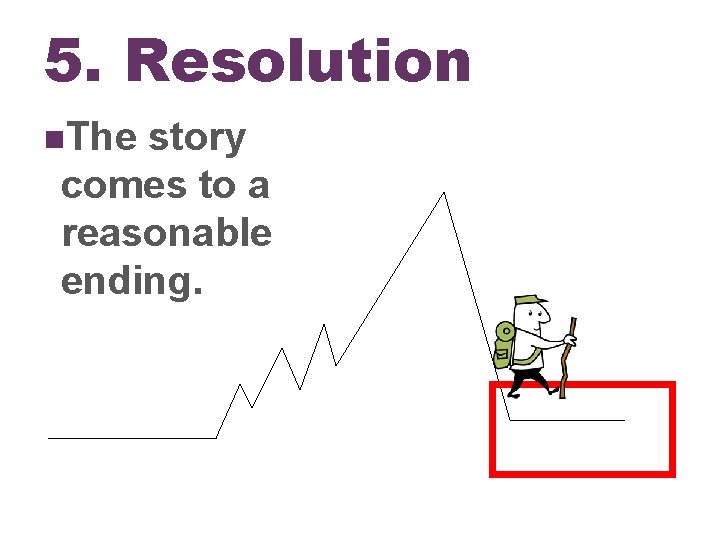
5. Resolution n. The story comes to a reasonable ending.
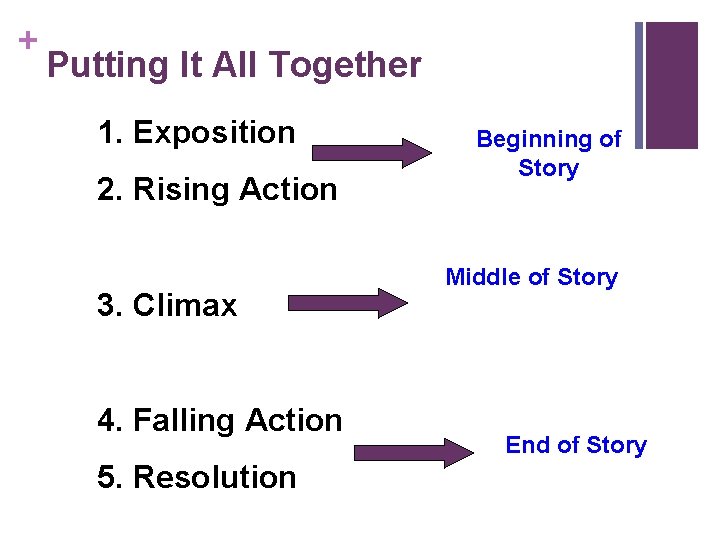
+ Putting It All Together 1. Exposition 2. Rising Action 3. Climax 4. Falling Action 5. Resolution Beginning of Story Middle of Story End of Story
+ Plot Components Climax: the turning point, the most intense moment—either mentally or in action Rising Action: the series of events and conflicts in the story that lead to the climax Exposition: the start of the story, before the action starts (beginning) Falling Action: all of the action which follows the climax Resolution: the conclusion, the tying together of all of the threads (conclusion)
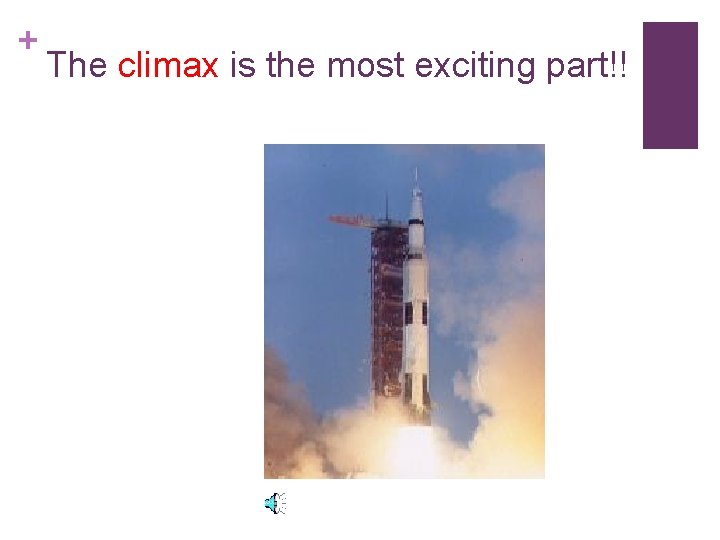
+ The climax is the most exciting part!!
+ Special Techniques of Plot… ØSuspense = excitement or tension ØFlashback = interrupts the normal sequence of events to tell about something that happened in the past ØSurprise Ending = conclusion that reader does not expect
+ Identifying Plot and Conflict n We are going to watch a video. Please pay attention to the video, but while you are watching also take notes on what is happening in the story. You don’t have to worry about small details (like what color shirt someone is wearing) but do note what is happening to the characters and between the characters during the story.