
Literary Elements Inferences Authors do not always tell
- Slides: 11
Literary Elements
Inferences • Authors do not always tell us everything, but you can find out more about the story by using what we already know. • An inference is a logical assumption about something that is not stated directly in the text. – We combine details the author provides AND our own knowledge to make these assumptions. – This is how we understand what the author does not state directly.
Open up your Literature Notebook to your Table of Contents Page Title 1 Genres of Fiction 2 Story Vocabulary 3 Plot Structure 4 Inferences 5 Characterization 6 Character Traits
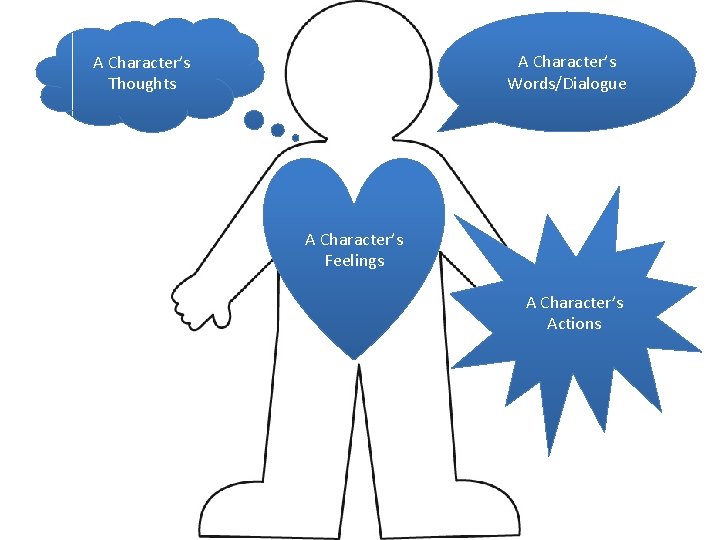
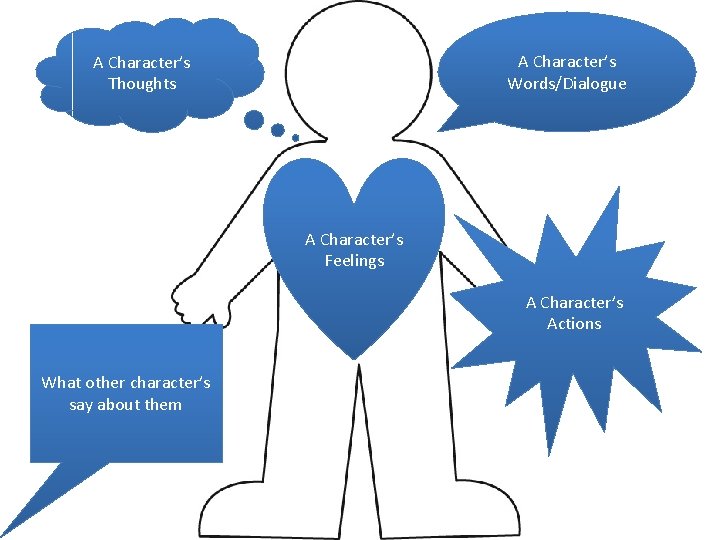
Characterization I. Characterization is the way authors develop a character to reveal their traits or qualities. A. An author can do this in two ways: 1. Direct characterization a. b. The author tells you straightforward statements about a character. Ex: “Ron is honest. ” 2. Indirect characterization a. b. The author uses the character’s thoughts, words, actions, and feelings and reveal what others say and think about that character. Ex: “Ron is honest, ” Julia told Sam.
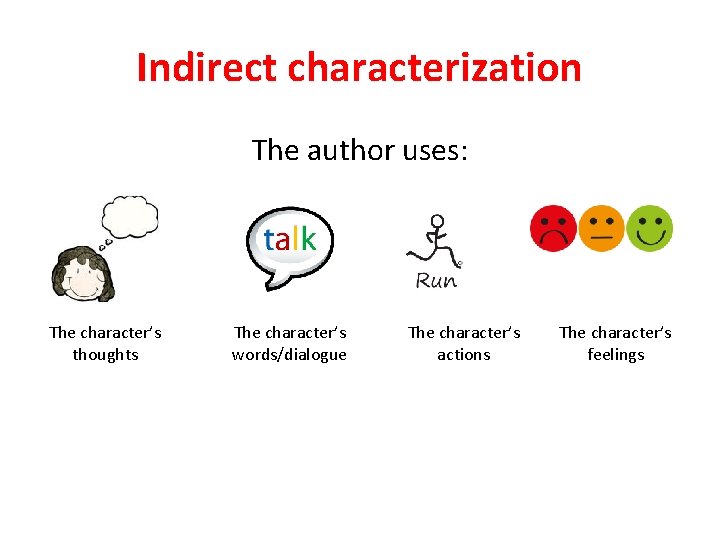
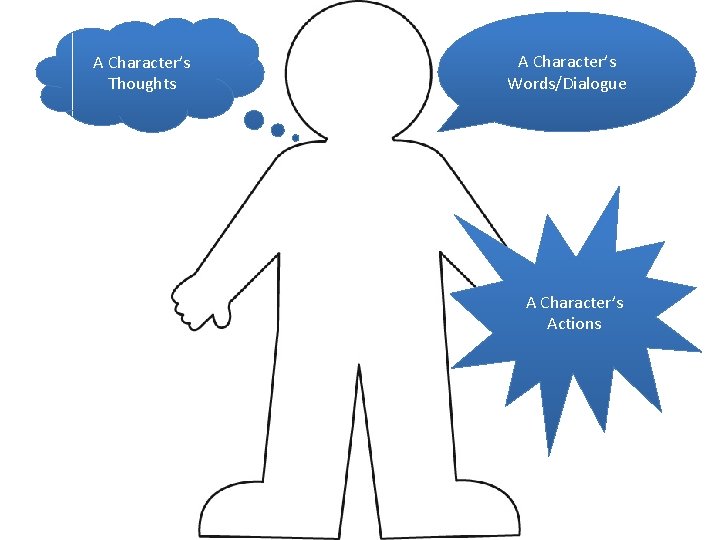
Indirect characterization The author uses: The character’s thoughts The character’s words/dialogue The character’s actions The character’s feelings
Paste the man into your notes. Draw and copy down the word bubbles into your notes.
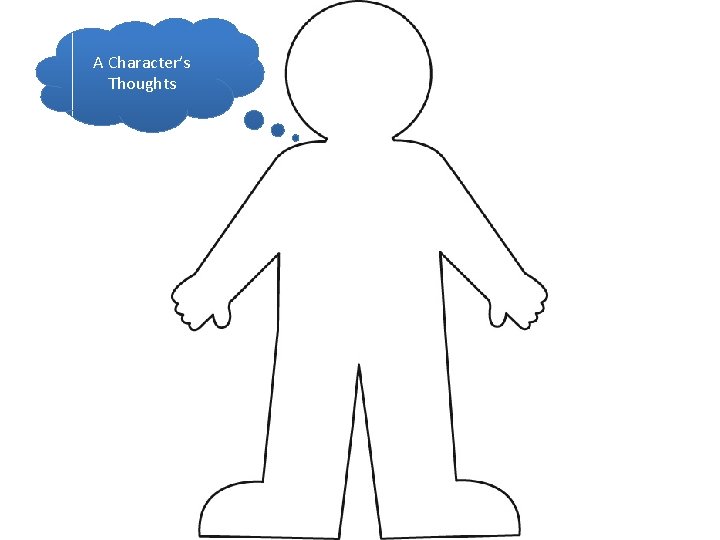
A Character’s Thoughts
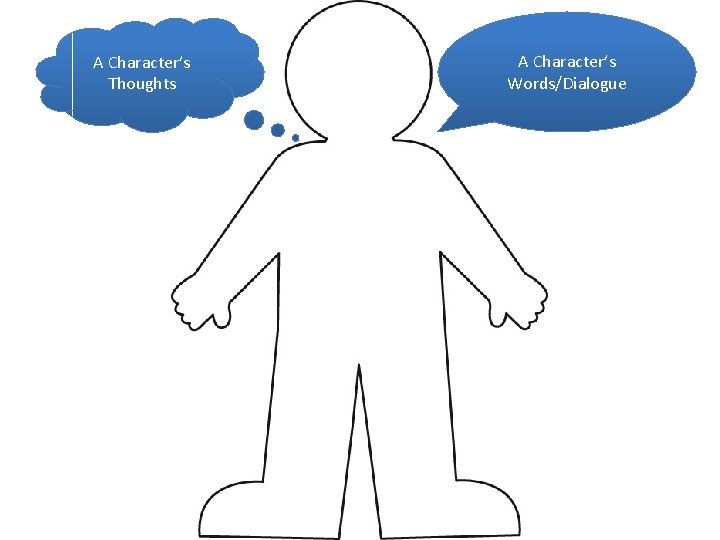
A Character’s Thoughts A Character’s Words/Dialogue
A Character’s Thoughts A Character’s Words/Dialogue A Character’s Actions
A Character’s Words/Dialogue A Character’s Thoughts A Character’s Feelings A Character’s Actions
A Character’s Words/Dialogue A Character’s Thoughts A Character’s Feelings A Character’s Actions What other character’s say about them