
Literary Element Characterization AP Literature and Composition Tuesday
- Slides: 6
Literary Element: Characterization AP Literature and Composition
Tuesday, September 25 Aim: What are the different types of characterization, and how are they all important in their own right? Objectives: To define the differences between static and dynamic characters. To relate the types of characters (static and dynamic) to John Updike’s short story “A&P” To list direct and indirect characterization techniques Do Now: Make a list of the various characters in John Updike’s “A&P” with a short description of each. Leave a line or two for each character to
Characterization Direct: The writer tells us directly what the character is like Indirect: The writer shows things that reveal the personality of a character (five different methods of doing this)
Speech: what does the character say, and how does the character speak? Thoughts: what is revealed through the character’s private thoughts and feelings? Effect: The effect of others toward the character? What is revealed through the character’s effect on other people? How do other characters feel or behave in reaction to the character? Actions: What does the character do? How does the character behave? Looks: What does the character look like? does the character dress? How
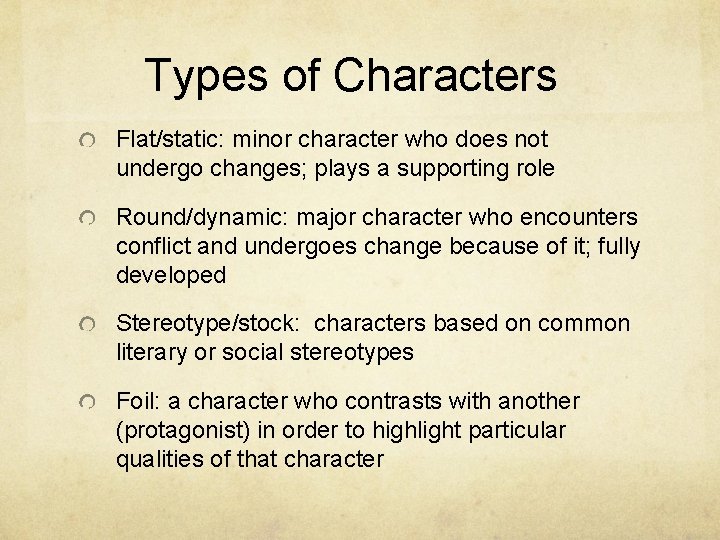
Types of Characters Flat/static: minor character who does not undergo changes; plays a supporting role Round/dynamic: major character who encounters conflict and undergoes change because of it; fully developed Stereotype/stock: characters based on common literary or social stereotypes Foil: a character who contrasts with another (protagonist) in order to highlight particular qualities of that character
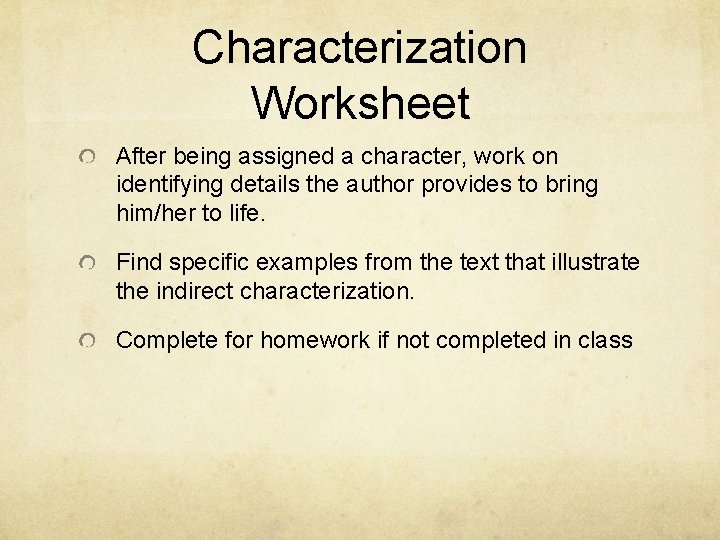
Characterization Worksheet After being assigned a character, work on identifying details the author provides to bring him/her to life. Find specific examples from the text that illustrate the indirect characterization. Complete for homework if not completed in class