
Literary Devices Types of Literary Devices These are
- Slides: 12
Literary Devices
Types of Literary Devices These are three types of literary devices that author’s use to help us understand their stories and poetry: l Sounds l Figurative l Graphics Language
Sounds l Authors use the sounds of their words to make them easier to remember and understand. Here are some of the ways they use sound: l Alliteration l Rhyme l Onomatopoeia
Alliteration l This is the repetition of the beginning sound of a series of words. Tongue twisters are famous for being alliterative (using alliteration). Ex. Peter Piper picked a peck of pickled peppers… The “P” sound is repeated making this alliteration.
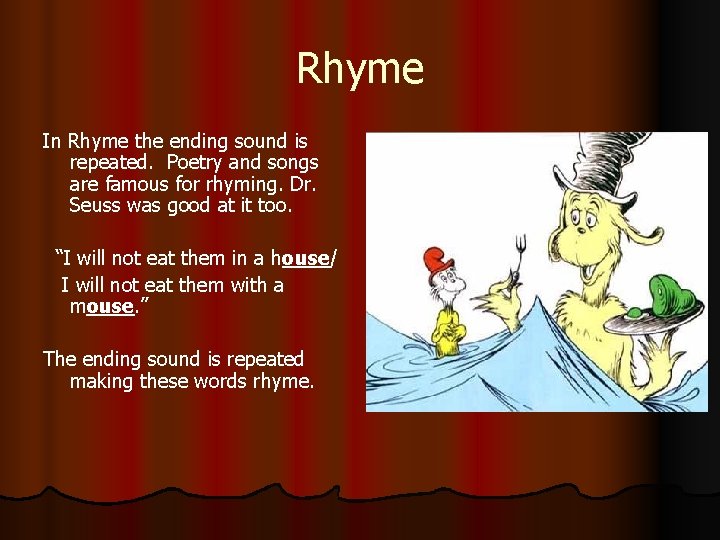
Rhyme In Rhyme the ending sound is repeated. Poetry and songs are famous for rhyming. Dr. Seuss was good at it too. “I will not eat them in a house/ I will not eat them with a mouse. ” The ending sound is repeated making these words rhyme.
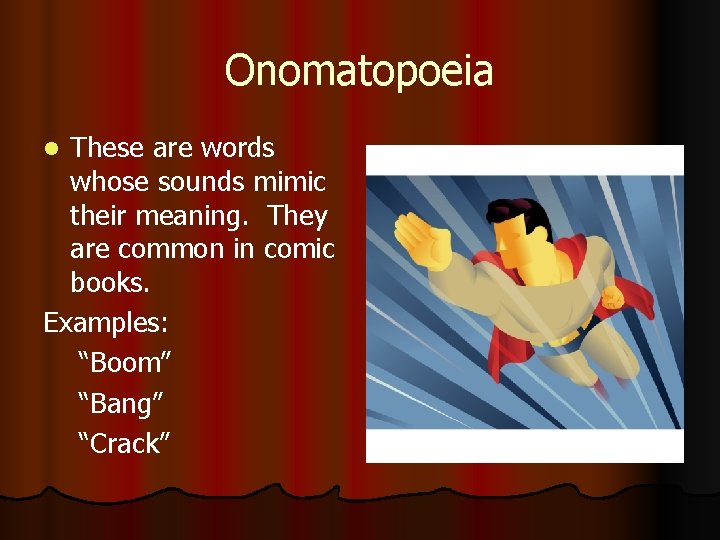
Onomatopoeia These are words whose sounds mimic their meaning. They are common in comic books. Examples: “Boom” “Bang” “Crack” l
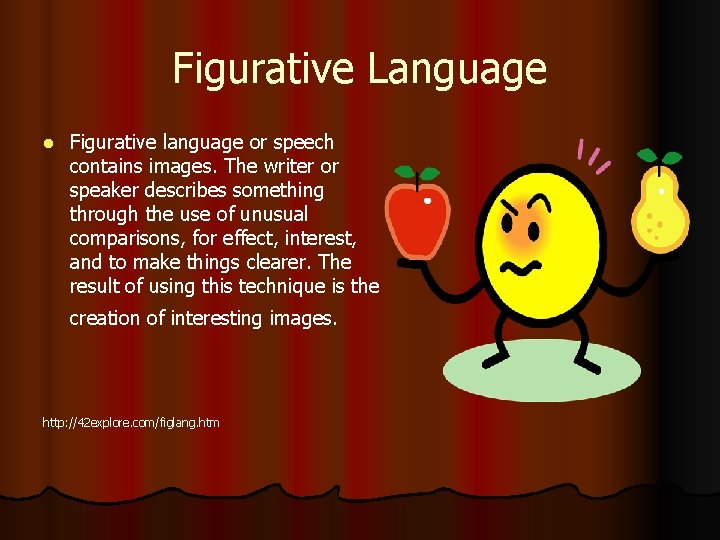
Figurative Language l Figurative language or speech contains images. The writer or speaker describes something through the use of unusual comparisons, for effect, interest, and to make things clearer. The result of using this technique is the creation of interesting images. http: //42 explore. com/figlang. htm
Idioms Sometimes called “figures of speech” these are phrases or sayings that are not meant to be taken literally. Example: when we say “that hit the spot” we usually mean that it satisfied us.
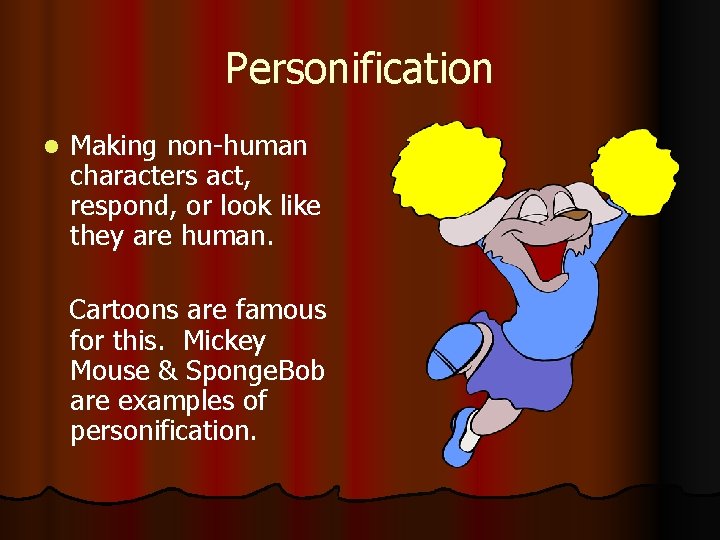
Personification l Making non-human characters act, respond, or look like they are human. Cartoons are famous for this. Mickey Mouse & Sponge. Bob are examples of personification.
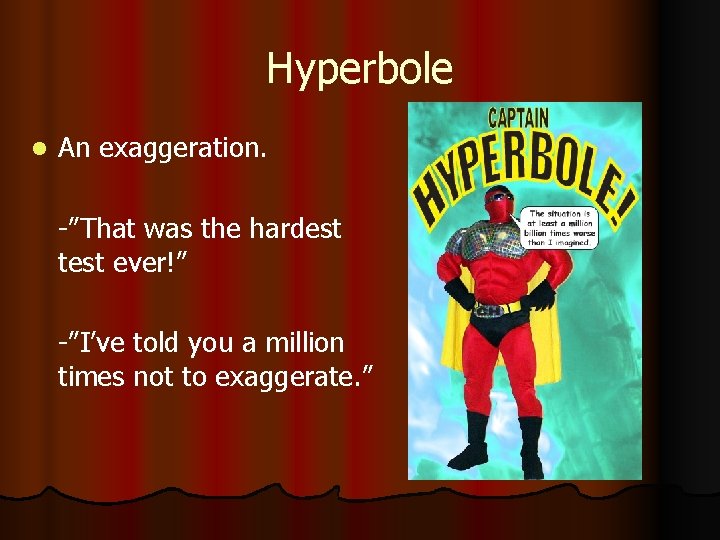
Hyperbole l An exaggeration. -”That was the hardest test ever!” -”I’ve told you a million times not to exaggerate. ”
Comparisons l There are two types of comparisons that authors use: -Simile: A comparison using the words “like” or “as”. -Metaphor: A comparison that doesn’t use “like” or “as”.
Graphics l Author’s can also use graphics to draw attention to their meaning. - Bold type can let you know a word is important. - WRITING IN ALL CAPS CAN ALSO DRAW YOUR READER’S ATTENTION. - Italics can elegantly set a word apart.