
LITERARY DEVICES POETIC TERMS Diction A writers choice


- Slides: 48
LITERARY DEVICES & POETIC TERMS
Diction • A writer’s choice of words, the type of words used (simple, formal, slang, flowery) • Connotation (emotion of words) important
Style • The way a writer uses language through diction, figurative language and sentence patterns
Form • The physical structure of the poem (number and length of lines, stanzas, rhyme scheme)
Line • A single line of words in a poem (like a sentence)
Stanza • A lines of poetry grouped together to form a single unit (like a paragraph)
Rhyme scheme • The pattern of end rhymes in a poem – Bid me to weep, and I will weep (A) – While I have eyes to see; (B) – And having none, and yet I will keep (A) – A heart to weep for thee. (B)
Rhythm • The musical quality in a poem produced by repetition of stressed and unstressed syllables
Couplet • Two lines of poetry grouped together
Found Poetry • A collage of poetry. A poem created by taking pieces of existing texts (stories, novels etc) and piecing them together in a poetic way
Free verse • A verse without a fixed metrical pattern, usually having unrhymed lines of varying length
Lyrical poetry • A short poem of songlike quality. Typically express personal/emotional feelings
Narrative Poetry • A poem that tells a story
Dramatic poetry • Like a narrative poem, it tells a story, but this involves more than one character acting out the story
Sonnet • 14 line lyric poem that is written in iambic pentameter and has a specific rhyme scheme
A reference to a historical figure, place, or event
A direct comparison between two basically different things. A simile is introduced by the words “like” or “as”.
An implied comparison between two basically different things. Is not introduced with the words “like” or “as”.
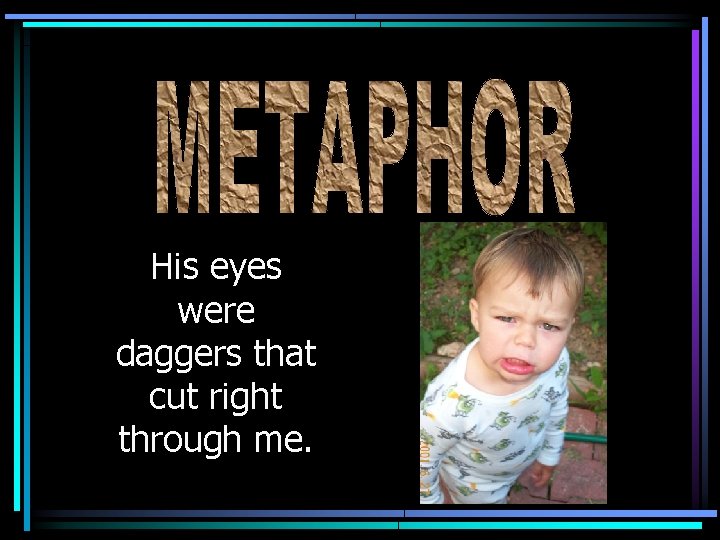
His eyes were daggers that cut right through me.
A great exaggeration to emphasize strong feeling.
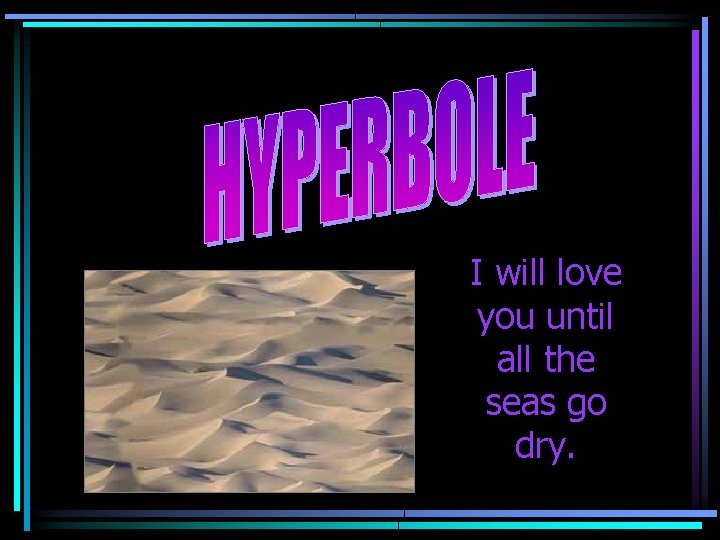
I will love you until all the seas go dry.
Human characteristics are given to non-human animals, objects, or ideas.
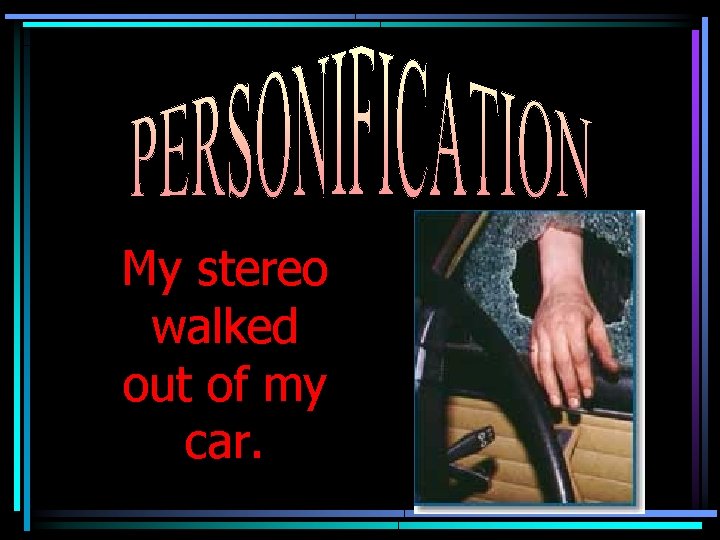
My stereo walked out of my car.
An absent person or inanimate object is directly spoken to as though they were present.
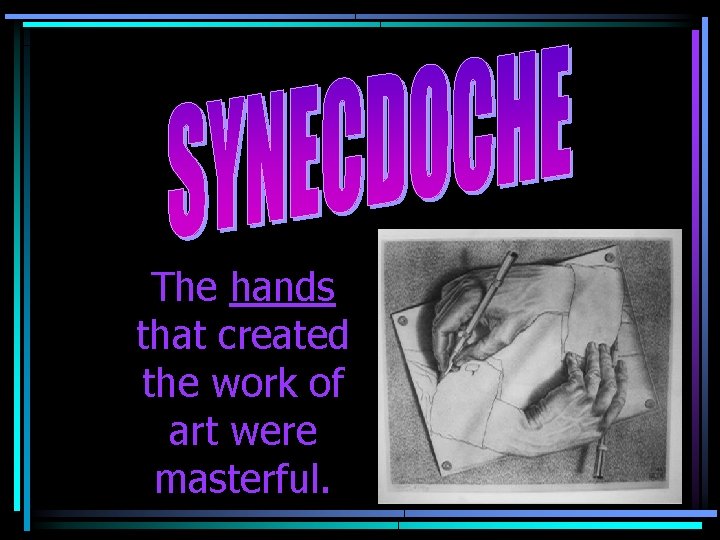
A part stands for the whole or vice versa.
The hands that created the work of art were masterful.
Hints given to the reader of what is to come.
The use of concrete details that appeal to the five senses.
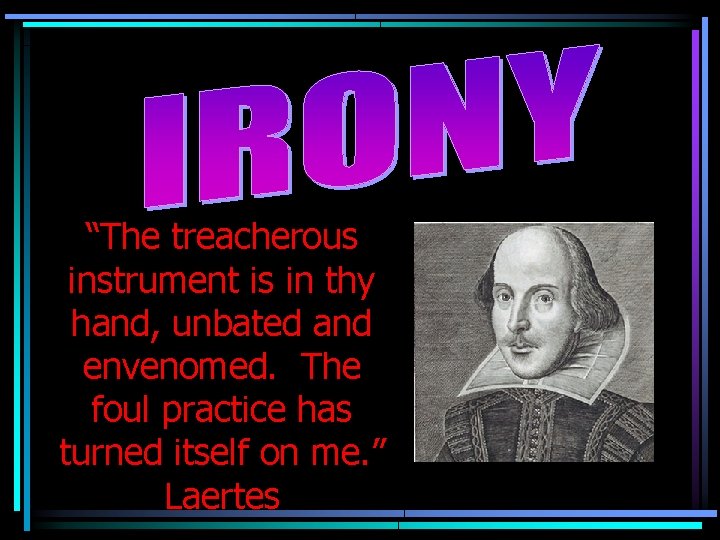
A contrast between what is said and what is meant. Also, when things turn out different than what is expected.
“The treacherous instrument is in thy hand, unbated and envenomed. The foul practice has turned itself on me. ” Laertes
The overall atmosphere or prevailing emotional feeling of a work.
A seemingly selfcontradictory statement that still is true.
The more we learn, the less we know.
The vantage point from which an author presents the action in a work.
The repetition of identical sounds at the ends of lines of poetry.
The repetition of identical sounds within a line of poetry.
“We three shall flee across the sea to Italy. ” Or “Hold infinity in the palm of your hand And eternity in an hour. ”
A slant rhyme or half rhyme occurs when the vowel sounds are not quite identical.
“And on that cheek and o’er that brow” A mind at peace with all below”
The repetition of consonant sounds at the beginnings of words.
The repetition of similar vowel sounds followed by different consonant.
The repetition of consonant sounds that are preceded by different vowel sounds.
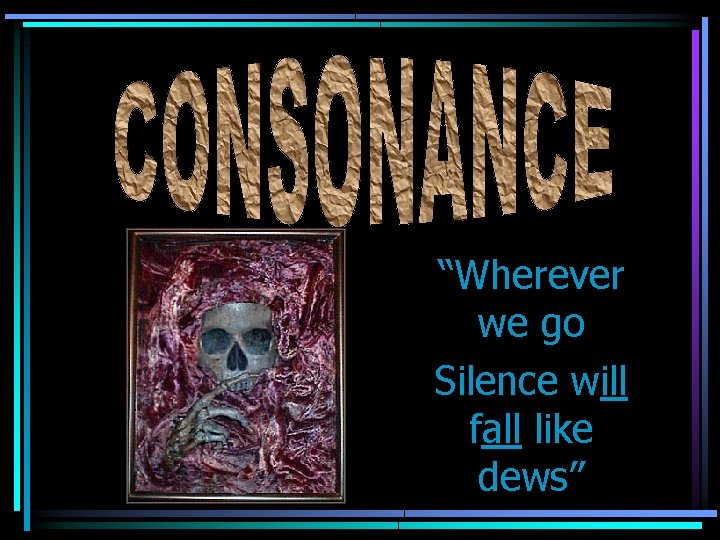
“Wherever we go Silence will fall like dews”
The use of words whose sounds suggest the sounds made by objects or activities.
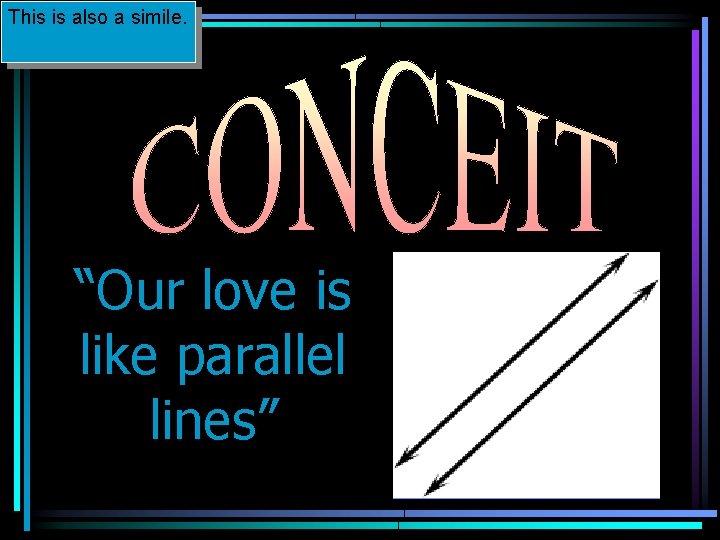
Comparing two very dissimilar things. Usually involves cleverness and ingenuity.
This is also a simile. “Our love is like parallel lines”
A term naming an object is substituted for another word with which it is closely associated with.
“Sweat” stands for hard work. “Only through the sweat of your brow can you achieve success”