
Literary Devices Abnormal Word Order gives variety and
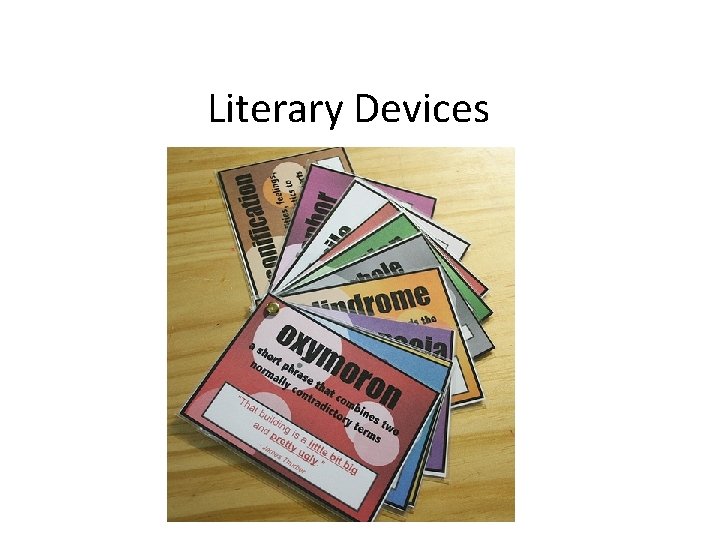
Literary Devices

Abnormal Word Order • gives variety and emphasis to your writing by changing the usual subject-verb sentence pattern. • i. e. normal word order: The boy's worst nightmare hid amongst the shadows. • abnormal word order: Hiding amongst the shadows stood the boy’s worst nightmare.

Allegory • A story told on two levels, one literal and one metaphorical or symbolic • i. e. Sacha Baron Cohen’s film Borat, literally, is about a seemingly ignorant and silly foreigner; but some critics realized that it was more a metaphor for Americans’ cultural ignorance of, arrogance toward, and condescension to foreigners
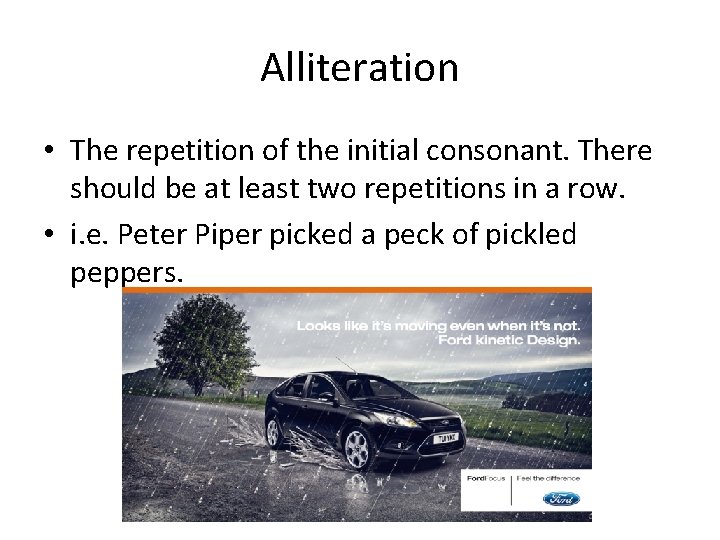
Alliteration • The repetition of the initial consonant. There should be at least two repetitions in a row. • i. e. Peter Piper picked a peck of pickled peppers.
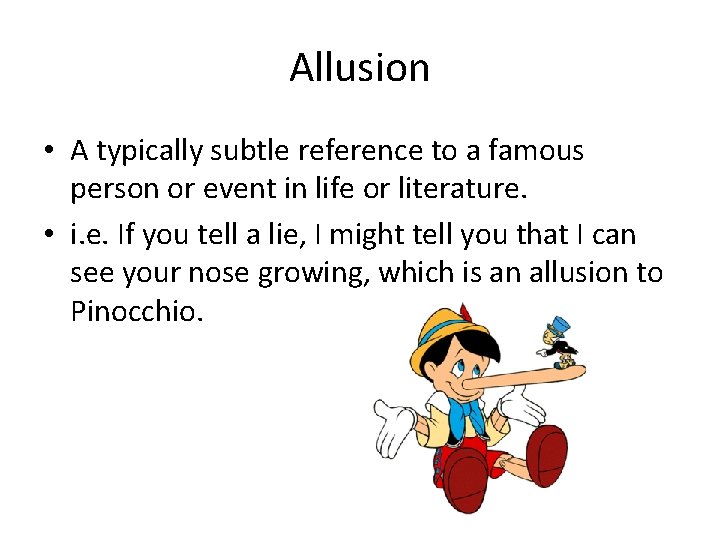
Allusion • A typically subtle reference to a famous person or event in life or literature. • i. e. If you tell a lie, I might tell you that I can see your nose growing, which is an allusion to Pinocchio.
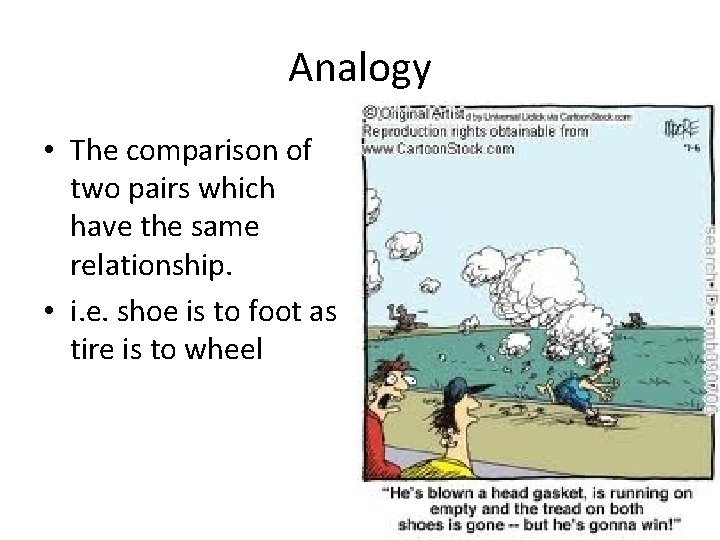
Analogy • The comparison of two pairs which have the same relationship. • i. e. shoe is to foot as tire is to wheel

Apostrophe • direct address to an person, the audience, or a personified object or quality • i. e. “Twinkle, twinkle, little star, How I wonder what you are. Up above the world so high, Like a diamond in the sky. ”
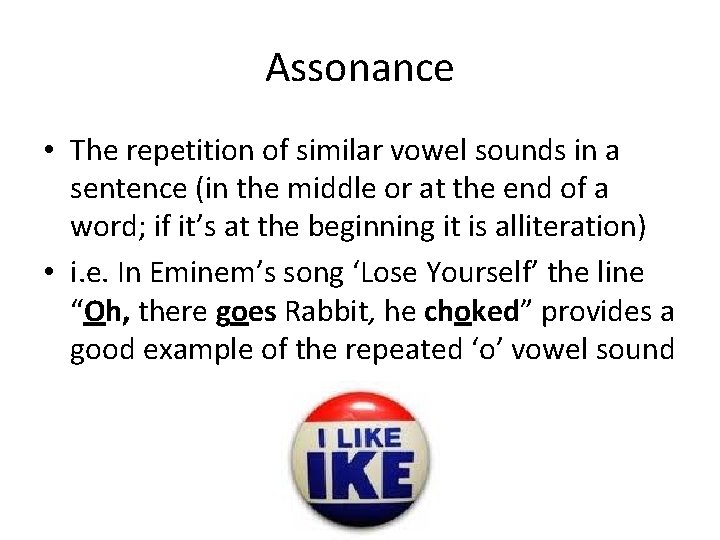
Assonance • The repetition of similar vowel sounds in a sentence (in the middle or at the end of a word; if it’s at the beginning it is alliteration) • i. e. In Eminem’s song ‘Lose Yourself’ the line “Oh, there goes Rabbit, he choked” provides a good example of the repeated ‘o’ vowel sound

Balanced Sentence • expresses two or more equal and/or parallel ideas • i. e. “Life is a comedy to those who think, a tragedy to those who feel. ”Horace Walpole, British writer and politician
Climactic Word Order • presents several facts in order from least to most important • i. e. Jennifer's decision to quit annoyed her secretary, angered her colleagues, and enraged her boss.

Consonance • The repetition of similar consonant sounds in a sentence (in the middle or at the end of a word; if it’s at the beginning it is alliteration) • i. e. In Jay-Z’s song “D’Evils” he says “I’m trying to live it to the limit and love it a lot, ” which highlights the ‘v’ and final ‘t’ sounds
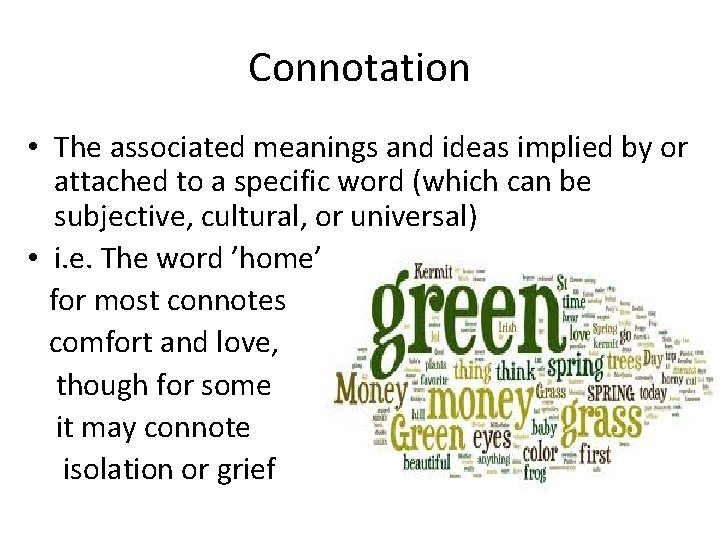
Connotation • The associated meanings and ideas implied by or attached to a specific word (which can be subjective, cultural, or universal) • i. e. The word ’home’ for most connotes comfort and love, though for some it may connote isolation or grief
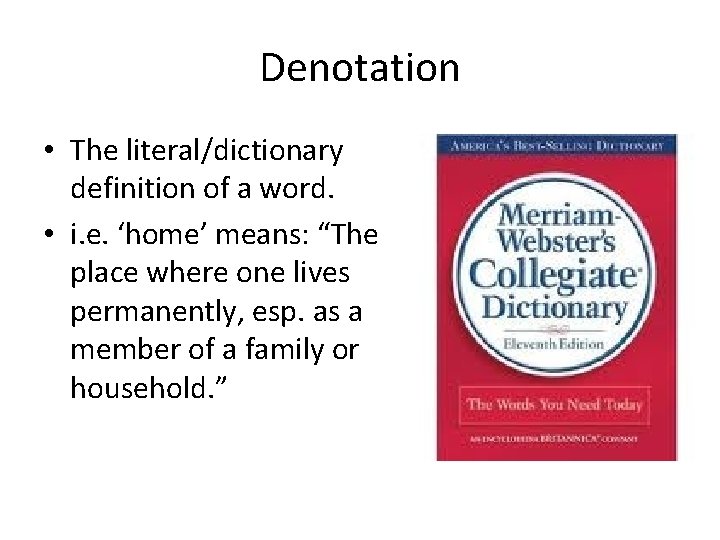
Denotation • The literal/dictionary definition of a word. • i. e. ‘home’ means: “The place where one lives permanently, esp. as a member of a family or household. ”
Diction • The specific word choice of the author; diction can be formal or informal, positive or negative, modern or traditional. • i. e. A teenager’s diction will likely be different in a formal English essay than how they speak to their friends
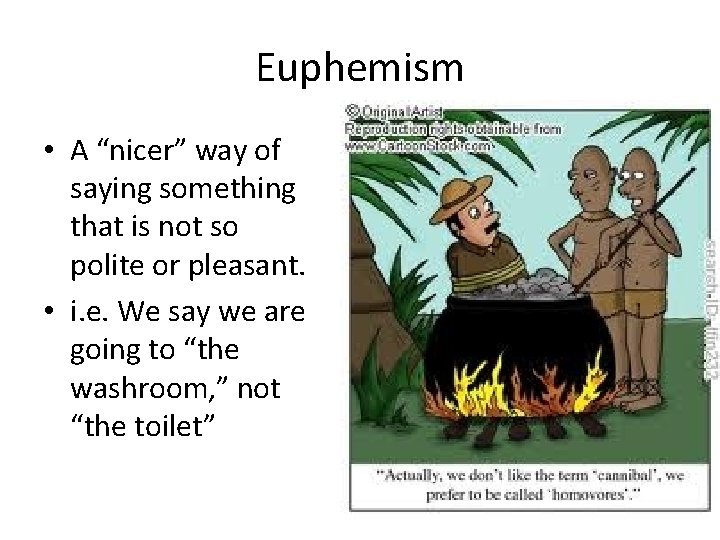
Euphemism • A “nicer” way of saying something that is not so polite or pleasant. • i. e. We say we are going to “the washroom, ” not “the toilet”
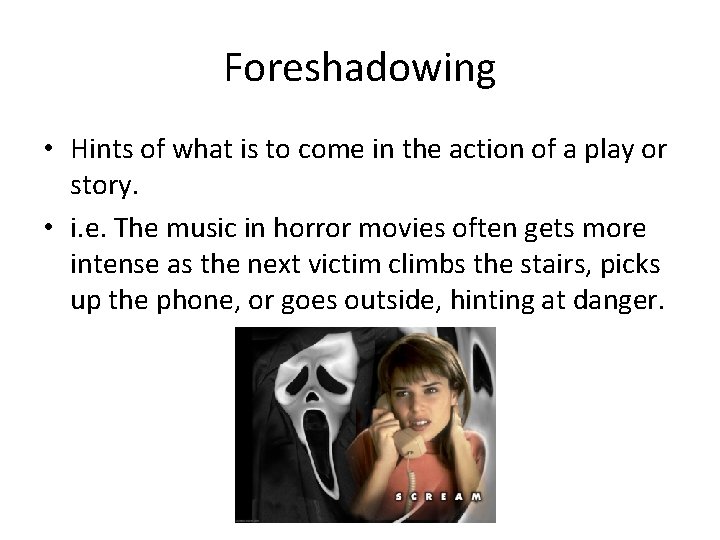
Foreshadowing • Hints of what is to come in the action of a play or story. • i. e. The music in horror movies often gets more intense as the next victim climbs the stairs, picks up the phone, or goes outside, hinting at danger.
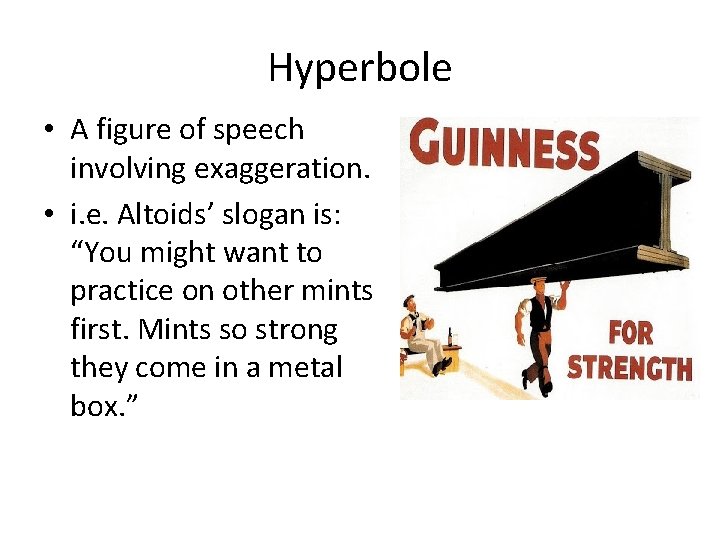
Hyperbole • A figure of speech involving exaggeration. • i. e. Altoids’ slogan is: “You might want to practice on other mints first. Mints so strong they come in a metal box. ”

Idiom • A popular saying or expression whose literal meaning has no association with the intended meaning. • i. e. He kicked the bucket.
Imagery • Visual images that describe something that triggers our other five senses. • i. e. Led Zeppelin’s “Ramble On” is full of imagery: “Leaves are falling all around, It's time I was on my way. / Thanks to you, I'm much obliged for such a pleasant stay. / But now it's time for me to go. The autumn moon lights my way. / For now I smell the rain, and with it pain, and it's headed my way. / Sometimes I grow so tired, but I know I've got one thing I got to do. . . ”
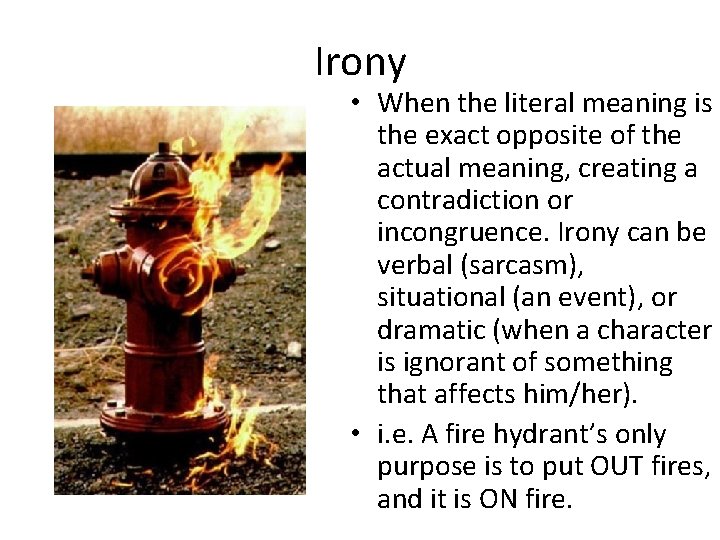
Irony • When the literal meaning is the exact opposite of the actual meaning, creating a contradiction or incongruence. Irony can be verbal (sarcasm), situational (an event), or dramatic (when a character is ignorant of something that affects him/her). • i. e. A fire hydrant’s only purpose is to put OUT fires, and it is ON fire.
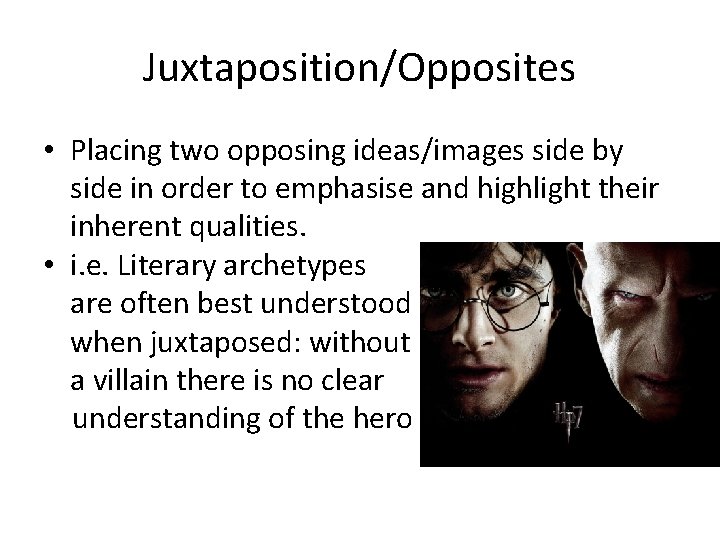
Juxtaposition/Opposites • Placing two opposing ideas/images side by side in order to emphasise and highlight their inherent qualities. • i. e. Literary archetypes are often best understood when juxtaposed: without a villain there is no clear understanding of the hero
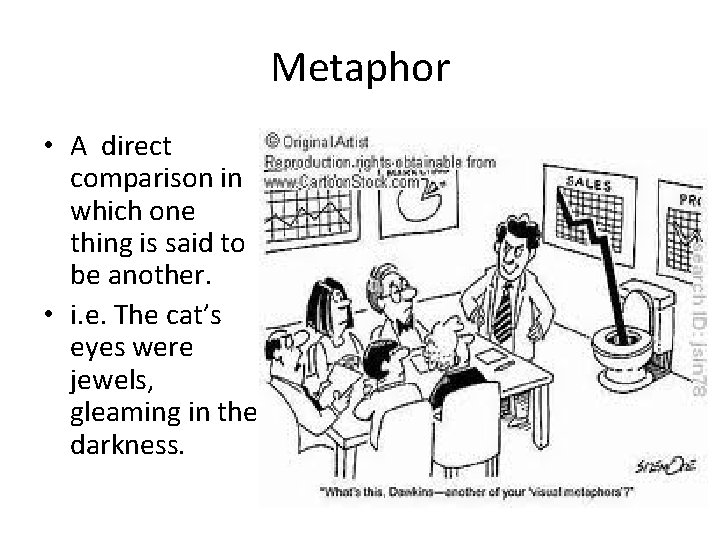
Metaphor • A direct comparison in which one thing is said to be another. • i. e. The cat’s eyes were jewels, gleaming in the darkness.
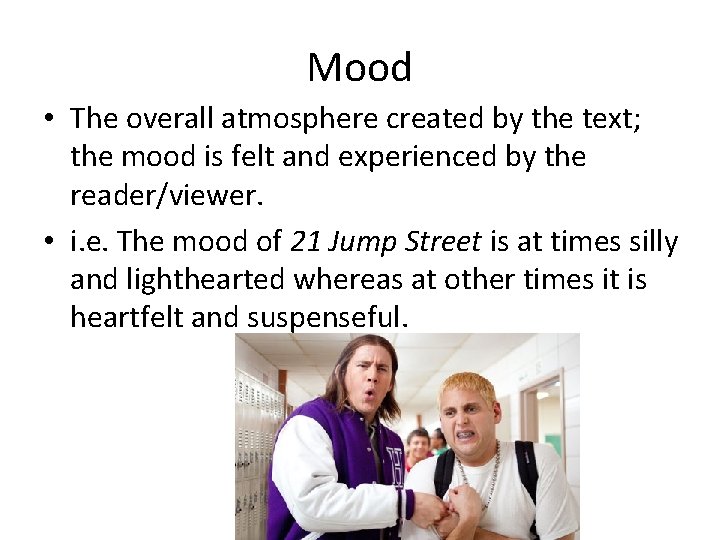
Mood • The overall atmosphere created by the text; the mood is felt and experienced by the reader/viewer. • i. e. The mood of 21 Jump Street is at times silly and lighthearted whereas at other times it is heartfelt and suspenseful.
Motif • A recurrent structure, contrast, or literary device (including images, words, characters or situations) that can help to develop and inform the text’s major themes. • i. e. In The Kite Runner rape is a motif: there are several instances of it throughout the novel and each time it is meant to reinforce the physical and emotional domination of those who don’t have power by those who do
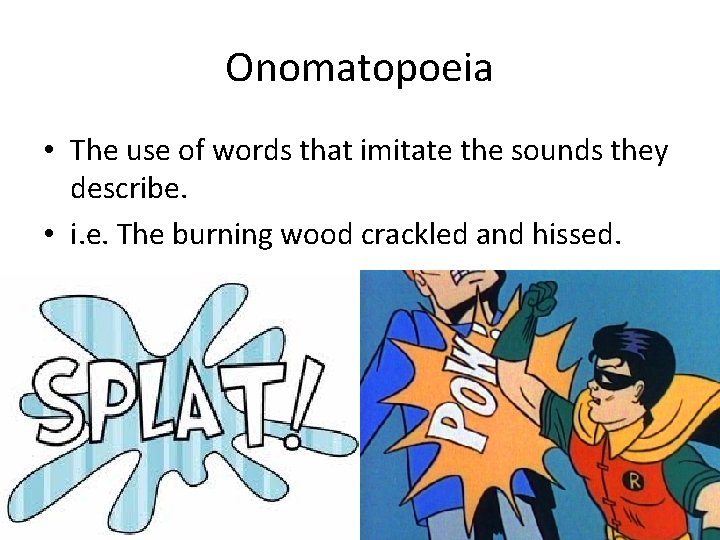
Onomatopoeia • The use of words that imitate the sounds they describe. • i. e. The burning wood crackled and hissed.
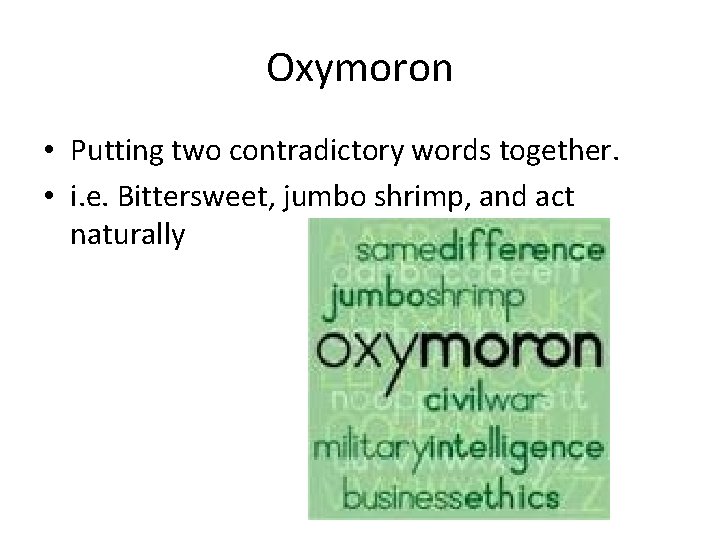
Oxymoron • Putting two contradictory words together. • i. e. Bittersweet, jumbo shrimp, and act naturally
Parallel Structure • repeats specific words, phrases, or clauses in a series, giving emphasis to key words and making them memorable • i. e. The salesman expected that he would present his product at the meeting, that he would be given time to show his slide presentation, and that he would answer prospective buyers’ questions.

Periodic Sentence • withholds an important part of the sentence until the end so that it doesn't make complete sense until the last word is read. • i. e. Considering the free health care, the cheap tuition fees, the low crime rate, the comprehensive social programs, and the wonderful winters, I am willing to pay slightly higher taxes for the privilege of living in Canada.
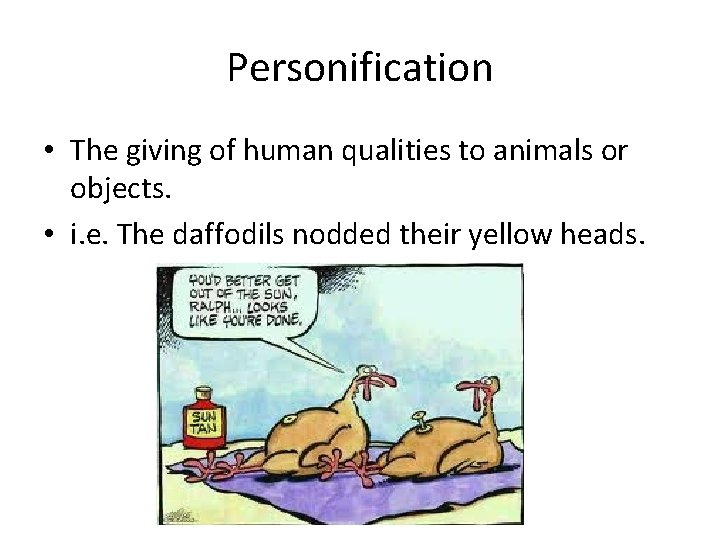
Personification • The giving of human qualities to animals or objects. • i. e. The daffodils nodded their yellow heads.

Pun • A word is used which has two meanings at the same time, which results in humour. • i. e.
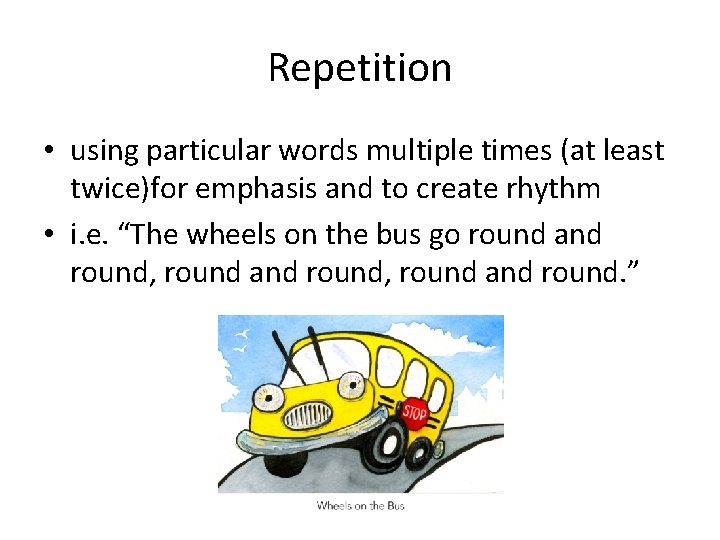
Repetition • using particular words multiple times (at least twice)for emphasis and to create rhythm • i. e. “The wheels on the bus go round and round, round and round. ”

Reversals • make a balanced sentence even more memorable by repeating the words in reverse order • i. e. “When the going gets tough, the tough get going. ”
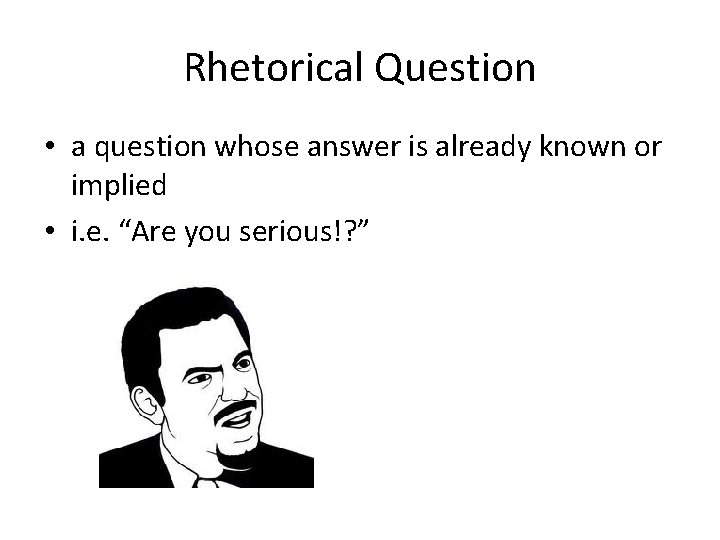
Rhetorical Question • a question whose answer is already known or implied • i. e. “Are you serious!? ”
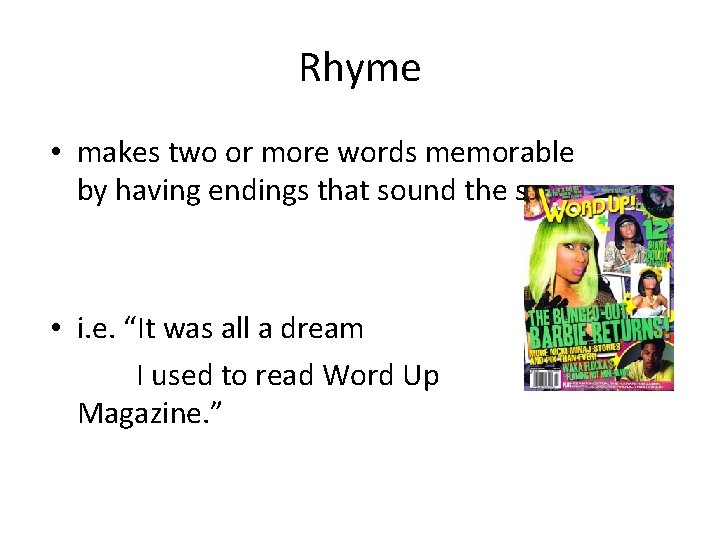
Rhyme • makes two or more words memorable by having endings that sound the same. • i. e. “It was all a dream I used to read Word Up Magazine. ”
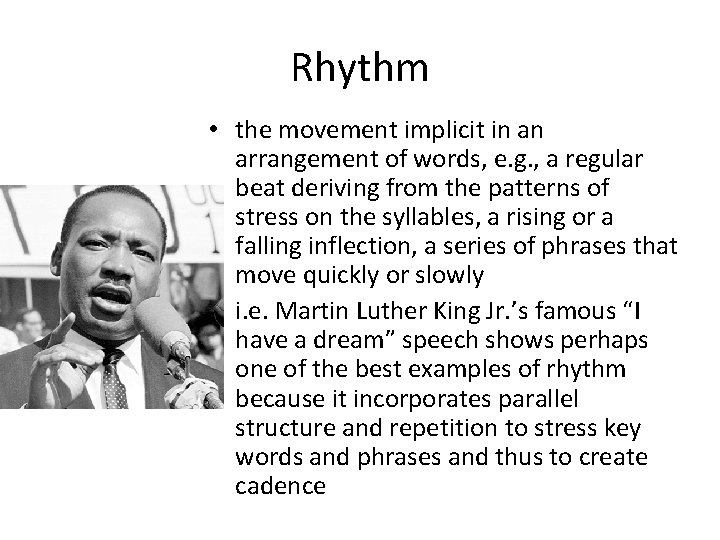
Rhythm • the movement implicit in an arrangement of words, e. g. , a regular beat deriving from the patterns of stress on the syllables, a rising or a falling inflection, a series of phrases that move quickly or slowly • i. e. Martin Luther King Jr. ’s famous “I have a dream” speech shows perhaps one of the best examples of rhythm because it incorporates parallel structure and repetition to stress key words and phrases and thus to create cadence
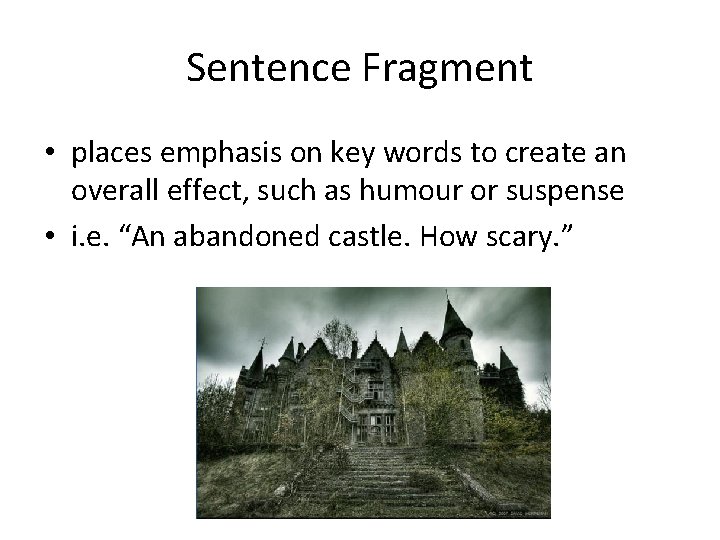
Sentence Fragment • places emphasis on key words to create an overall effect, such as humour or suspense • i. e. “An abandoned castle. How scary. ”
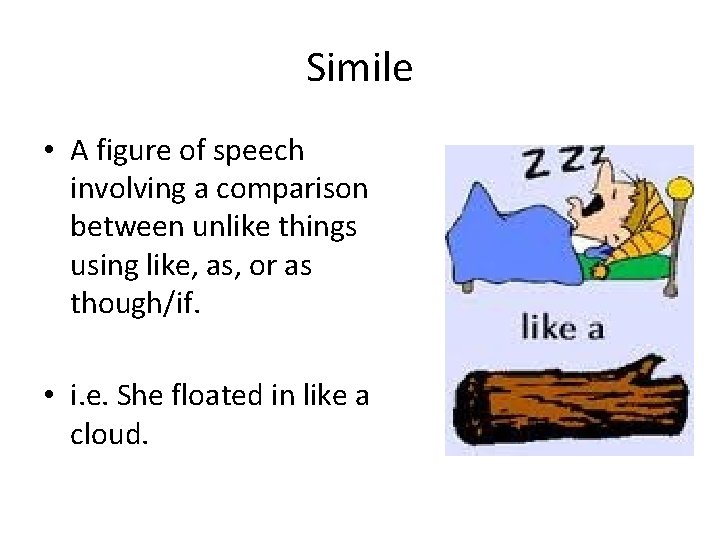
Simile • A figure of speech involving a comparison between unlike things using like, as, or as though/if. • i. e. She floated in like a cloud.
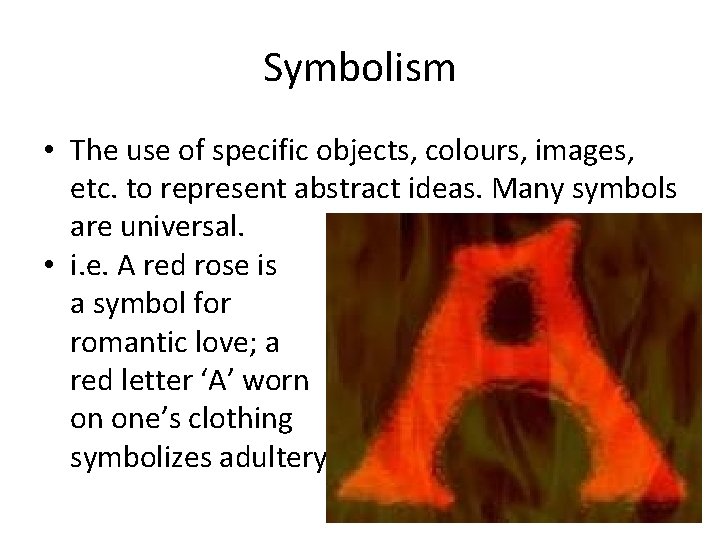
Symbolism • The use of specific objects, colours, images, etc. to represent abstract ideas. Many symbols are universal. • i. e. A red rose is a symbol for romantic love; a red letter ‘A’ worn on one’s clothing symbolizes adultery

Synecdoche • figure of speech in which a part of something is used to stand for the whole • i. e. “I got new wheels” refers to a car (even though wheels are just a PART of a car)
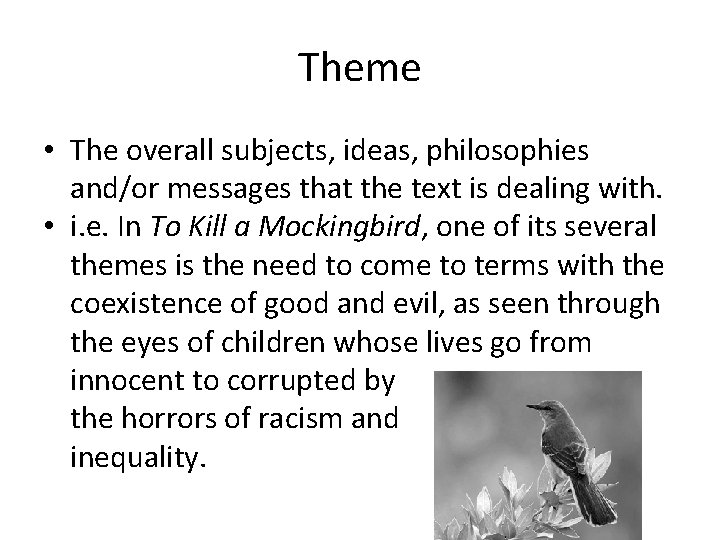
Theme • The overall subjects, ideas, philosophies and/or messages that the text is dealing with. • i. e. In To Kill a Mockingbird, one of its several themes is the need to come to terms with the coexistence of good and evil, as seen through the eyes of children whose lives go from innocent to corrupted by the horrors of racism and inequality.
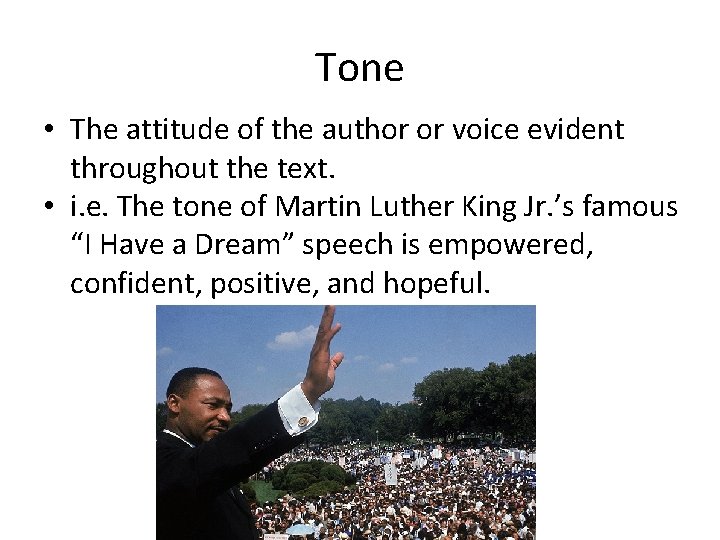
Tone • The attitude of the author or voice evident throughout the text. • i. e. The tone of Martin Luther King Jr. ’s famous “I Have a Dream” speech is empowered, confident, positive, and hopeful.
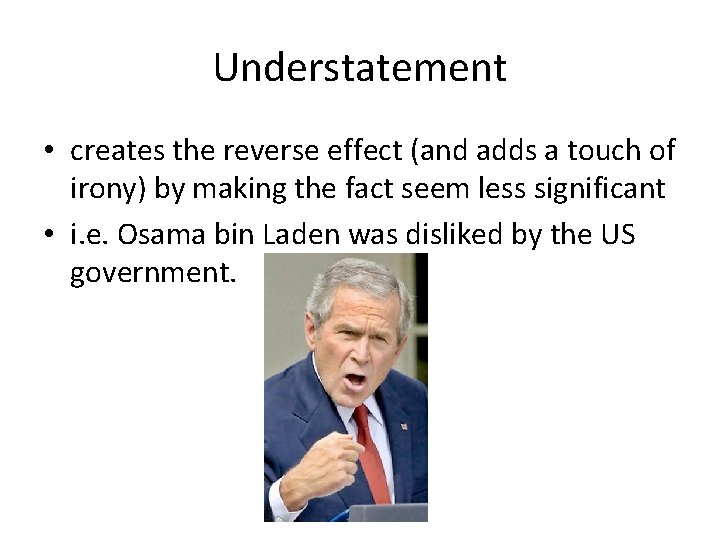
Understatement • creates the reverse effect (and adds a touch of irony) by making the fact seem less significant • i. e. Osama bin Laden was disliked by the US government.
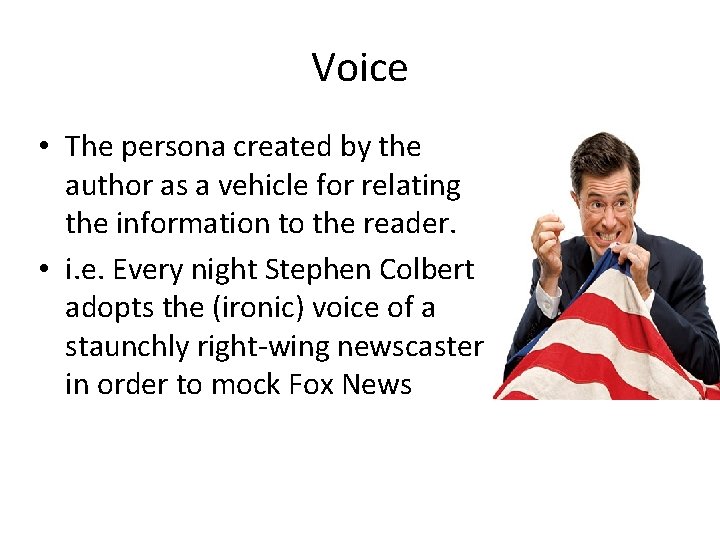
Voice • The persona created by the author as a vehicle for relating the information to the reader. • i. e. Every night Stephen Colbert adopts the (ironic) voice of a staunchly right-wing newscaster in order to mock Fox News
- Slides: 43