
LITERARY DEVICES 9 TH GRADE ENGLISH IMAGERY Descriptive

- Slides: 7
LITERARY DEVICES 9 TH GRADE ENGLISH
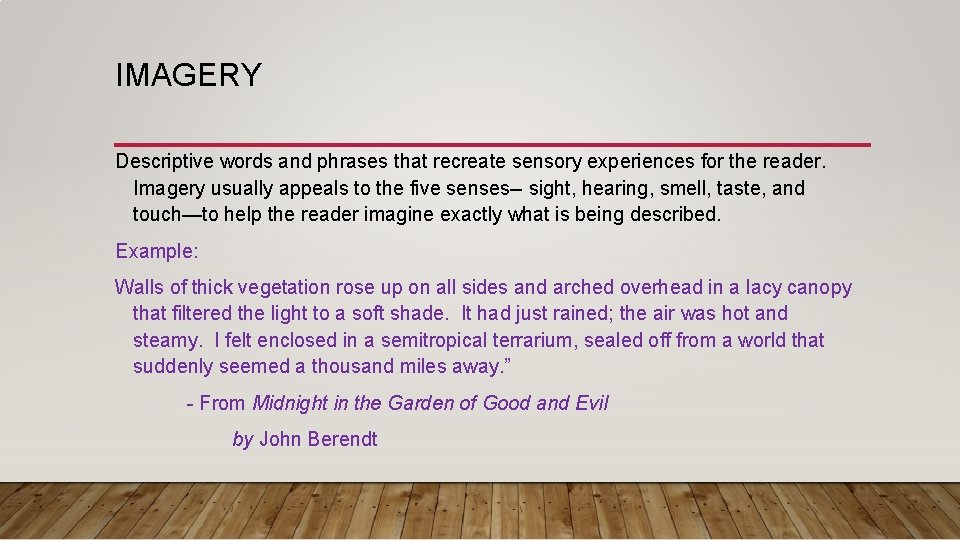
IMAGERY Descriptive words and phrases that recreate sensory experiences for the reader. Imagery usually appeals to the five senses-- sight, hearing, smell, taste, and touch—to help the reader imagine exactly what is being described. Example: Walls of thick vegetation rose up on all sides and arched overhead in a lacy canopy that filtered the light to a soft shade. It had just rained; the air was hot and steamy. I felt enclosed in a semitropical terrarium, sealed off from a world that suddenly seemed a thousand miles away. ” - From Midnight in the Garden of Good and Evil by John Berendt
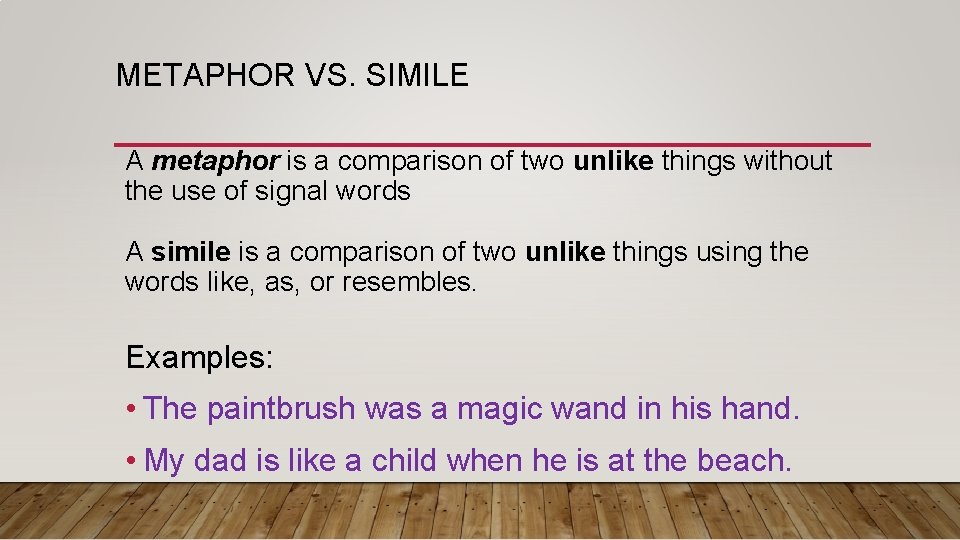
METAPHOR VS. SIMILE A metaphor is a comparison of two unlike things without the use of signal words A simile is a comparison of two unlike things using the words like, as, or resembles. Examples: • The paintbrush was a magic wand in his hand. • My dad is like a child when he is at the beach.
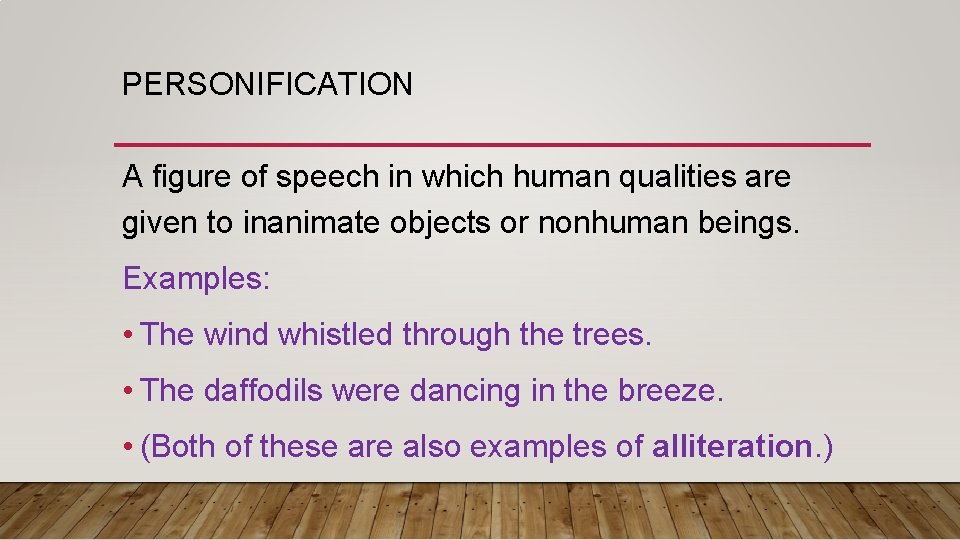
PERSONIFICATION A figure of speech in which human qualities are given to inanimate objects or nonhuman beings. Examples: • The wind whistled through the trees. • The daffodils were dancing in the breeze. • (Both of these are also examples of alliteration. )
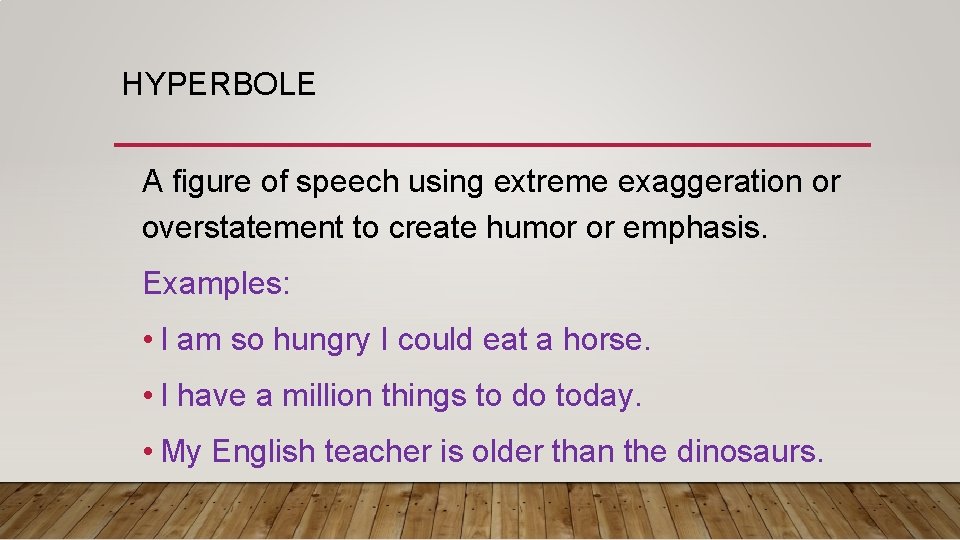
HYPERBOLE A figure of speech using extreme exaggeration or overstatement to create humor or emphasis. Examples: • I am so hungry I could eat a horse. • I have a million things to do today. • My English teacher is older than the dinosaurs.
SITUATIONAL IRONY • An outcome that turns out to be very different from what was expected, the difference between what is expected to happened and what actually does. • Example: • The fire station burns down • A pilot that has a fear of flying • A police station gets robbed
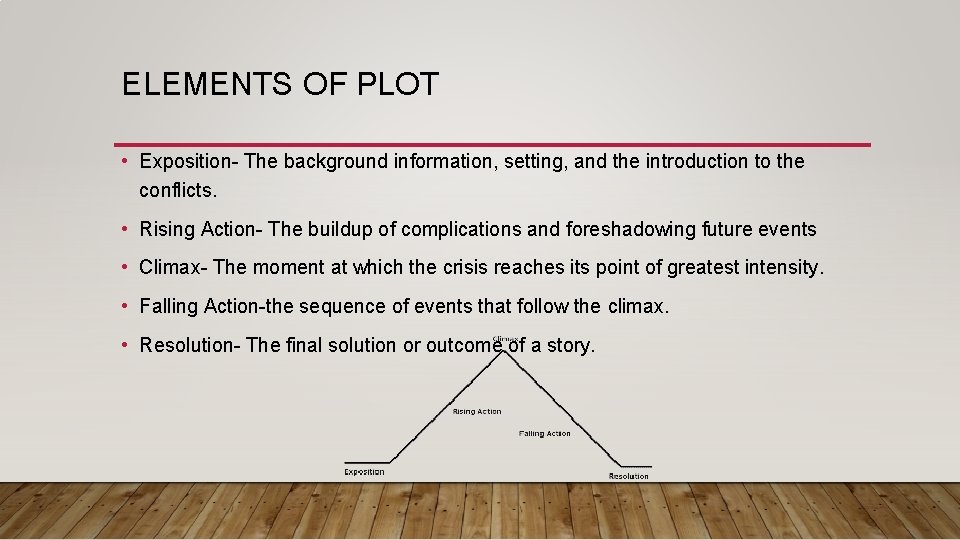
ELEMENTS OF PLOT • Exposition- The background information, setting, and the introduction to the conflicts. • Rising Action- The buildup of complications and foreshadowing future events • Climax- The moment at which the crisis reaches its point of greatest intensity. • Falling Action-the sequence of events that follow the climax. • Resolution- The final solution or outcome of a story.