
Literary Analysis Why Do We Analyze Literature The

- Slides: 15
Literary Analysis
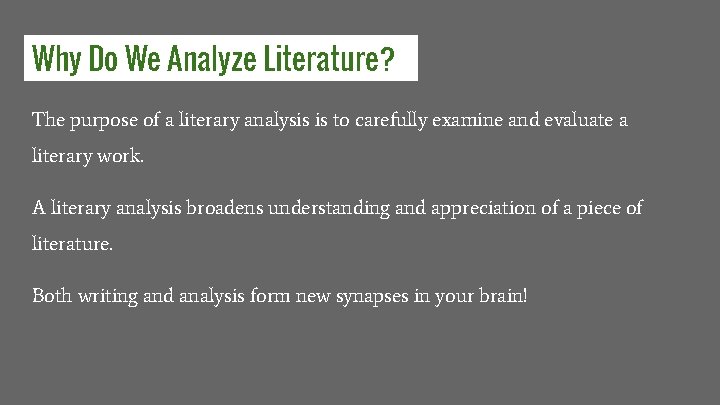
Why Do We Analyze Literature? The purpose of a literary analysis is to carefully examine and evaluate a literary work. A literary analysis broadens understanding and appreciation of a piece of literature. Both writing and analysis form new synapses in your brain!
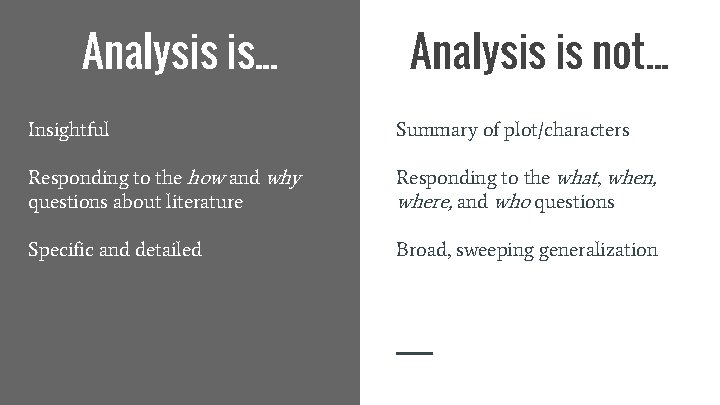
Analysis is. . . Analysis is not. . . Insightful Summary of plot/characters Responding to the how and why questions about literature Responding to the what, when, where, and who questions Specific and detailed Broad, sweeping generalization
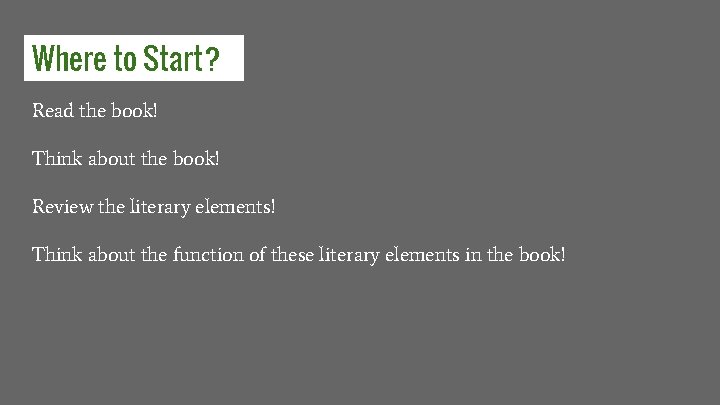
Where to Start? Read the book! Think about the book! Review the literary elements! Think about the function of these literary elements in the book!
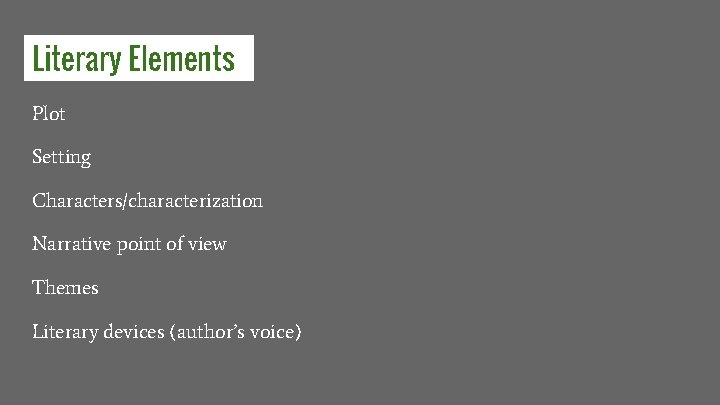
Literary Elements Plot Setting Characters/characterization Narrative point of view Themes Literary devices (author’s voice)
Questions to Ponder What themes are the author trying to convey? Which techniques does the author employ to convey theme, mood, characterization, etc. ? What ideas lie beneath the text? What significance/importance does the reader find in the work?
Theme vs. Thesis Theme = topic + insight (+ extension) What claim is the author making through the text? Thesis = topic + insight (+ extension) Claim YOU are making about the text
How to Write a Thesis Statement Your thesis must be: short and simple (1 sentence) limited to ONE main idea (topic) debatable declarative (NOT qualified)
How to Write a BETTER Thesis Statement Your thesis should be: specific and focused evaluative directive purposeful to your audience
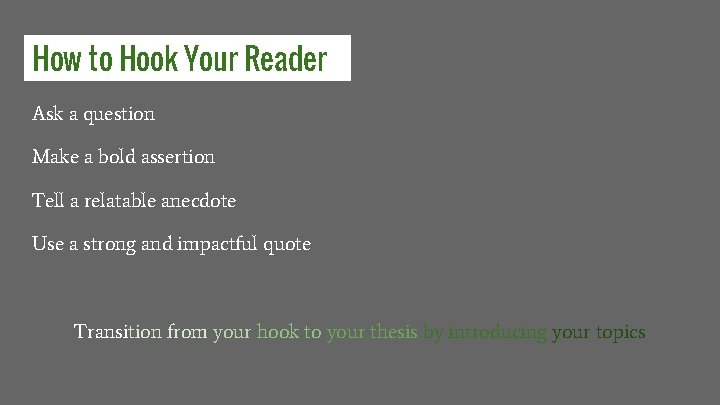
How to Hook Your Reader Ask a question Make a bold assertion Tell a relatable anecdote Use a strong and impactful quote Transition from your hook to your thesis by introducing your topics
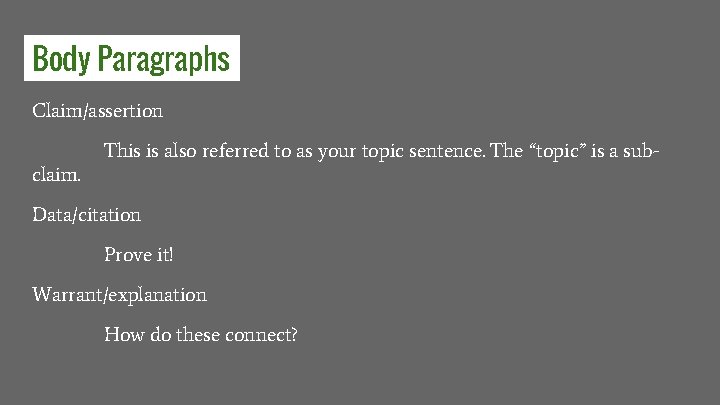
Body Paragraphs Claim/assertion claim. This is also referred to as your topic sentence. The “topic” is a sub- Data/citation Prove it! Warrant/explanation How do these connect?
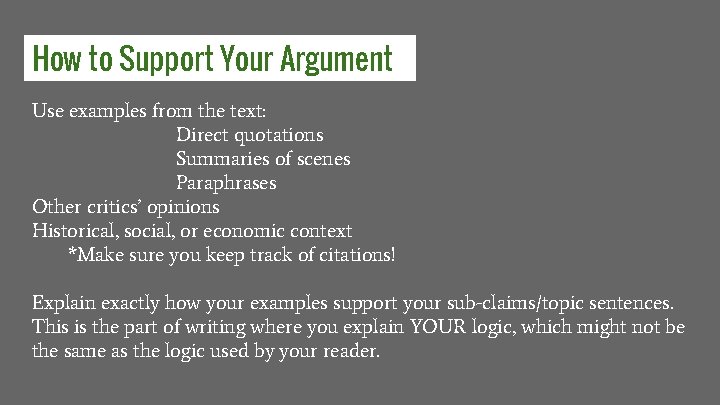
How to Support Your Argument Use examples from the text: Direct quotations Summaries of scenes Paraphrases Other critics’ opinions Historical, social, or economic context *Make sure you keep track of citations! Explain exactly how your examples support your sub-claims/topic sentences. This is the part of writing where you explain YOUR logic, which might not be the same as the logic used by your reader.
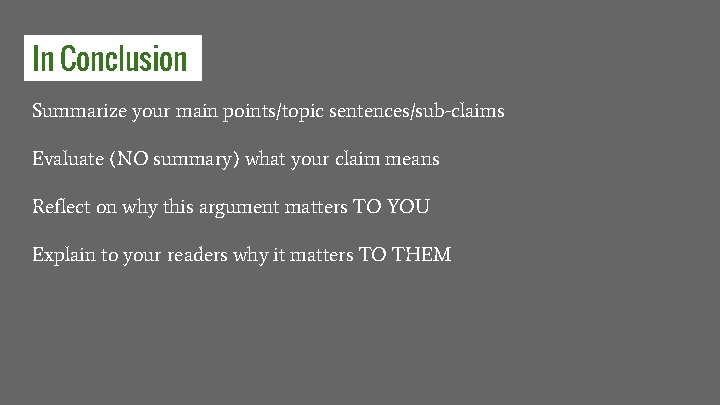
In Conclusion Summarize your main points/topic sentences/sub-claims Evaluate (NO summary) what your claim means Reflect on why this argument matters TO YOU Explain to your readers why it matters TO THEM
Finally. . . Think about readers who you might not know. Then, answer the questions of: why should people outside of this class/school should care about this analysis? what truths about literacy/human nature are you thinking about in relation to this analysis? and what questions do you have for your author/audience related to these truths/analyses? THIS PART IS WHERE YOU DEFINE YOUR PURPOSE. WITHOUT THIS EXIGENCE, YOUR WORK IS MEANINGLESS.
Additional Tips for Writing an Effective Analysis Avoid summarizing the work analyzed. Narrow the scope of your response. Pre-write to explore the topic and develop a thesis. Avoid extensive direct quotations. Write in the present tense and third person (except for hook/conclusion) After writing the first draft, review the work, and examine your thesis and supporting evidence. Proofread and re-write – Do NOT rely on spellcheck!