
Literacy is for All Presented by Based on
Literacy is for All Presented by: Based on a Presentation By: Exceptional Children’s Assistance Center, North Carolina
What is Literacy?

Literacy is. . . 3
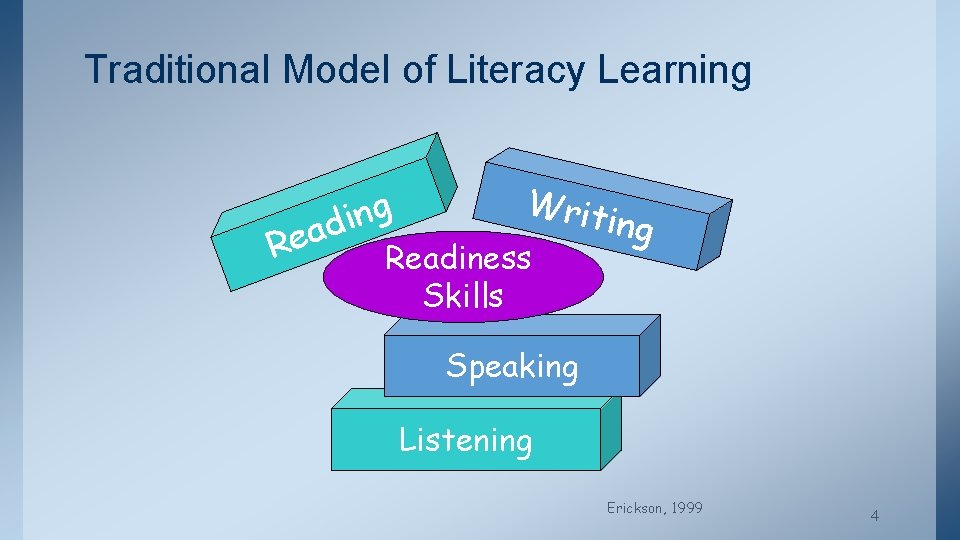
Traditional Model of Literacy Learning Re g n i ad Writ Readiness Skills ing Speaking Listening Erickson, 1999 4
“Literacy” for some Students with Disabilities can mean… �Recognizing pictures or common words �Choosing books to be read �Showing awareness of being read to �Paying attention to the reader �Tracking print 5
But for most students, Literacy is Reading ecac 2013 6
Reading is a Complex Process Not ALL students with disabilities will master ALL components of reading �A student with Central Auditory Processing Disorder or other communication disorder may have difficulty with phonics. �Students with a reading disability, such as dyslexia, will need “unique” instruction based on the effects of the disability. �A student with significant Cerebral Palsy might not be a fluent oral reader.
What helps struggling readers? • Current research shows that the majority of children who struggle in reading can learn to read IF: – We identify that the student has difficulty – The specific reading problem is correctly identified and – Effective reading methods are used over a long period of time. practice. . practice… practice!
ALL students have a right to… • Have access to the general curriculum – based on State Standards • Be educated using peer-reviewed research based practices “to the extent practicable” ecac 2013 9
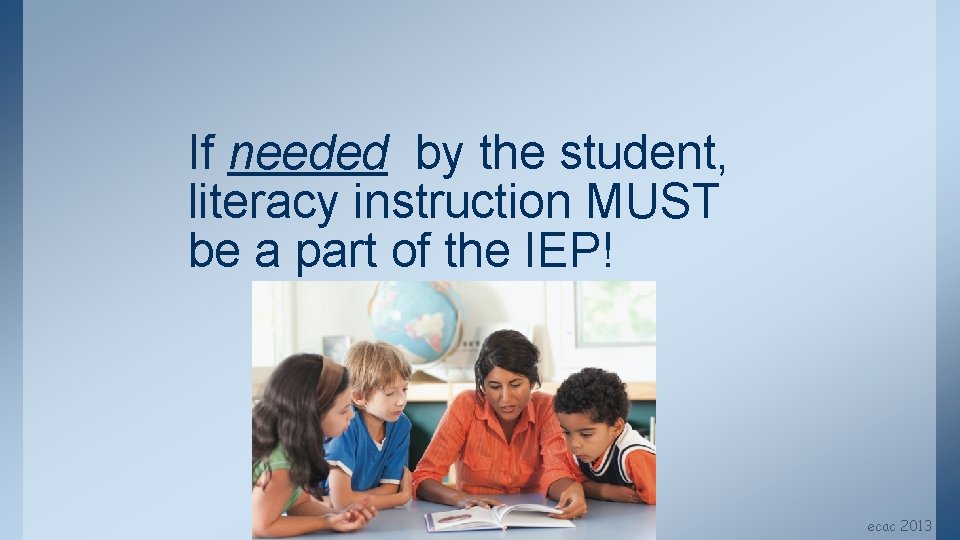
If needed by the student, literacy instruction MUST be a part of the IEP! ecac 2013
And YOU are YOUR Child’s Best Advocate! ecac 2013 11
Know the Language of Reading! ecac 2013 12
Components of Reading � Phonemic Awareness � Phonics � Fluency � Vocabulary Development � Text Comprehension What do these terms mean and what do these skills have to do with a child becoming a good reader? ecac 2013 13
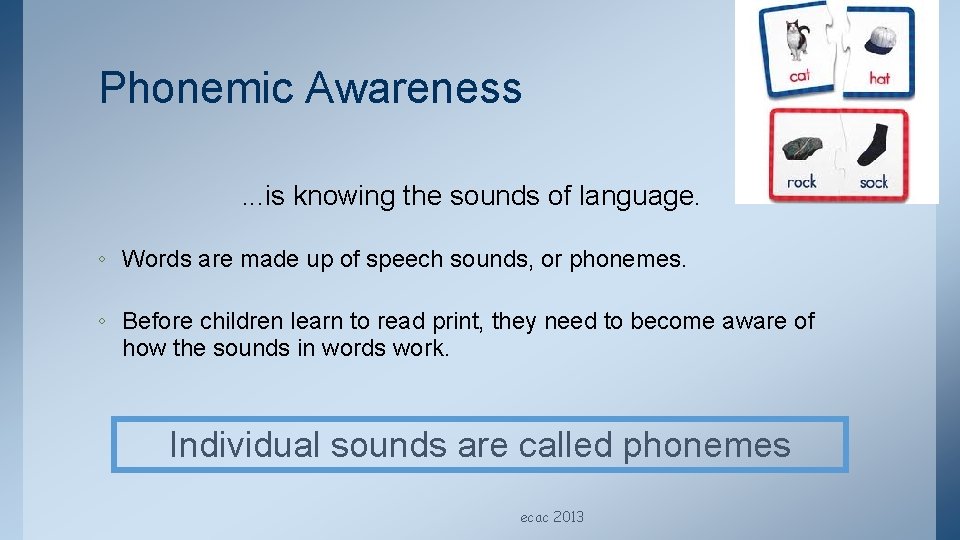
Phonemic Awareness. . . is knowing the sounds of language. ◦ Words are made up of speech sounds, or phonemes. ◦ Before children learn to read print, they need to become aware of how the sounds in words work. Individual sounds are called phonemes ecac 2013
Phonemes The smallest parts of sound in a spoken word that make a difference in the word’s meaning. “Hat” has three sounds or phonemes “h”, “a” & “t” § For example, changing the first phoneme in the word hat from /h/ to /b/ changes the word from hat to bat, and so changes the meaning of the word. ecac 2013
Phonemic Awareness Students need to learn: � The spoken word consists of sounds: phonemes � How words can be: 1. segmented (pulled apart) into sounds 2. blended (put back together) 3. manipulated (added, deleted & substituted) � How to use their phonemic awareness to blend sounds to read words and to segment sounds in words to spell them.
Phonemic Awareness What Parents Can Do � Play clapping, rhyming and “what do you hear? ” games with your child. � Ask your child to say words that start with a specific sound, such as the “sss” sound. � Play with sounds in all parts of words (beginning, middle, and end): like "job, " "joy, " and "jog, " where the difference is at the end of the words. � Listen for rhyming words in songs, rap, and poems. Play a game: who can come up with three words that rhyme with "cool" the fastest? � Read and recite nursery rhymes together � Practice writing often ecac 2013
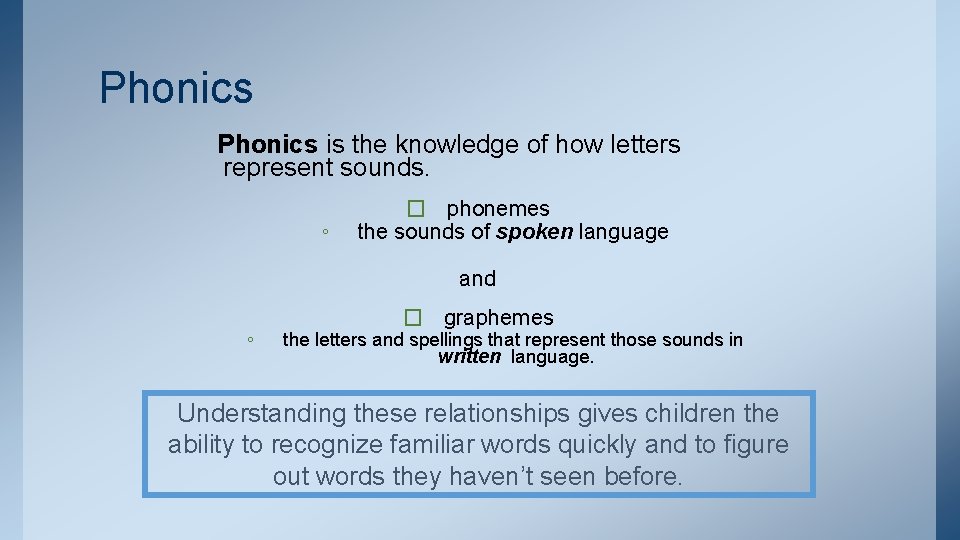
Phonics is the knowledge of how letters represent sounds. ◦ � phonemes the sounds of spoken language and ◦ � graphemes the letters and spellings that represent those sounds in written language. Understanding these relationships gives children the ability to recognize familiar words quickly and to figure out words they haven’t seen before.
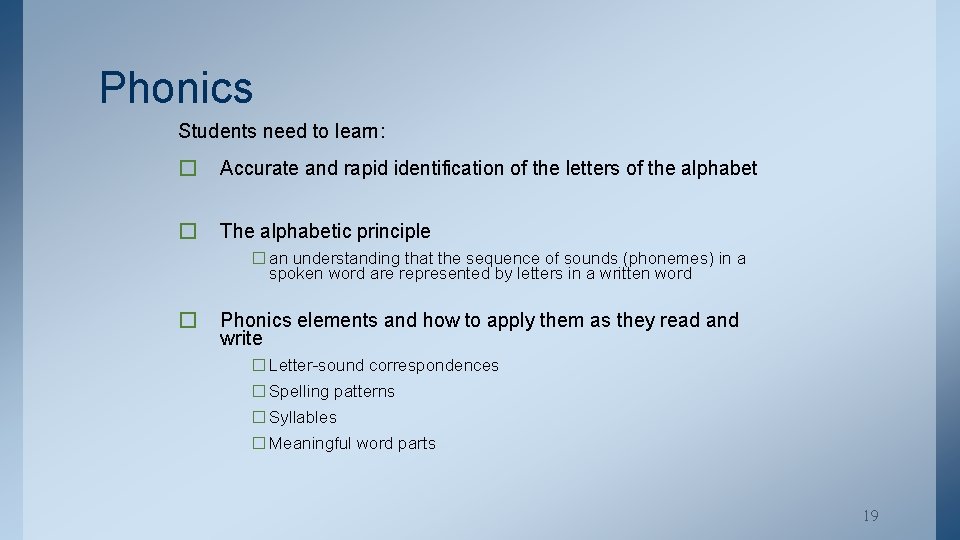
Phonics Students need to learn: � Accurate and rapid identification of the letters of the alphabet � The alphabetic principle � an understanding that the sequence of sounds (phonemes) in a spoken word are represented by letters in a written word � Phonics elements and how to apply them as they read and write � Letter-sound correspondences � Spelling patterns � Syllables � Meaningful word parts 19
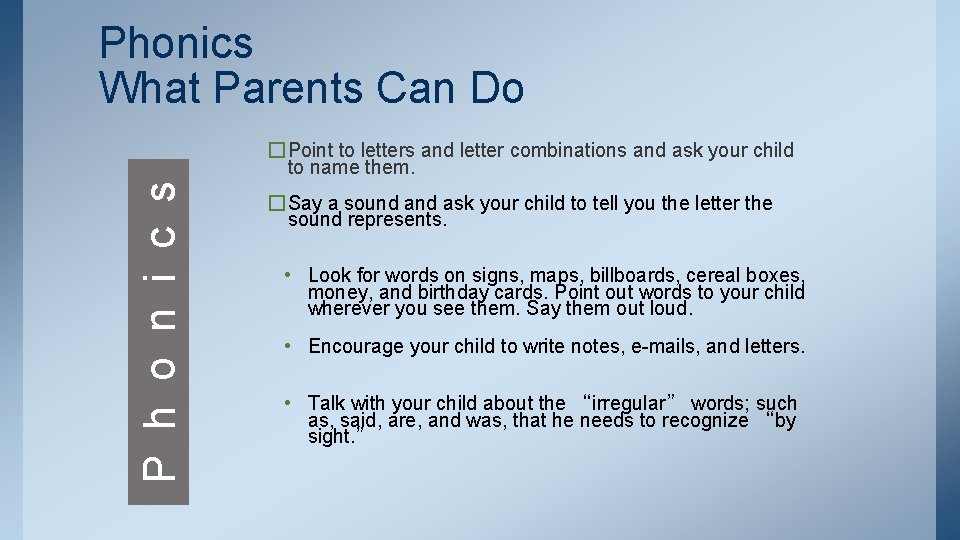
Phonics What Parents Can Do P h o n i c s �Point to letters and letter combinations and ask your child to name them. �Say a sound ask your child to tell you the letter the sound represents. • Look for words on signs, maps, billboards, cereal boxes, money, and birthday cards. Point out words to your child wherever you see them. Say them out loud. • Encourage your child to write notes, e-mails, and letters. • Talk with your child about the “irregular” words; such as, said, are, and was, that he needs to recognize “by sight. ”
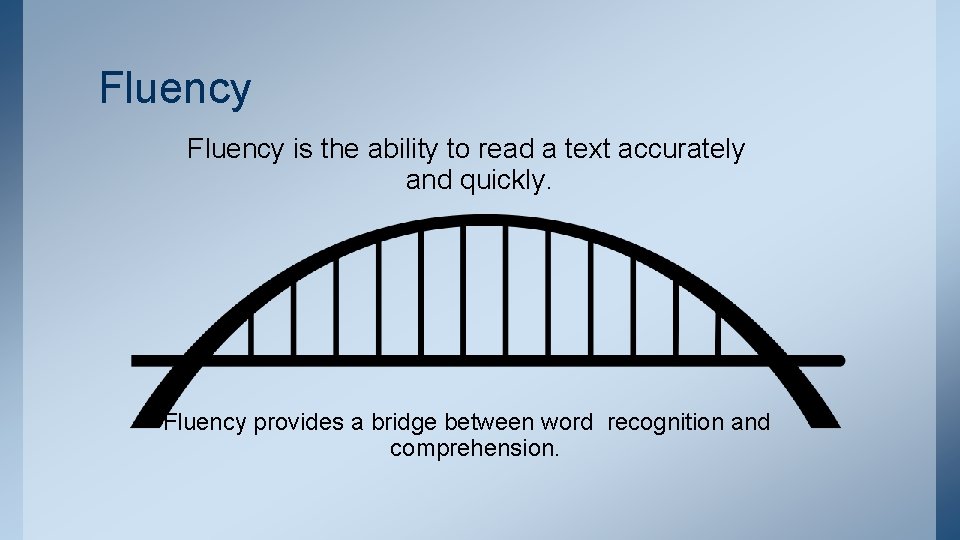
Fluency is the ability to read a text accurately and quickly. Fluency provides a bridge between word recognition and comprehension.
Fluency Students need to learn: � How to decode isolated words accurately � How to read connected text automatically with appropriate: ◦ Speed ◦ Accuracy and ◦ Expression! ecac 2013
Fluency What Parents Can Do �Help your child sound out words they don’t know. �You read the page first and have your child follow along. �Listen to your child read the same pages repeatedly until your child smooths out all the "bumps in the road. " Reading those favorite books over and over again �Have your child read into a tape recorders a number of times. �Practice, Practice! ecac 2013
Vocabulary Development Vocabulary means the words we must know to be able to communicate well ◦ Oral vocabulary refers to words that we use in speaking or recognize in listening. ◦ Reading vocabulary refers to words we recognize or use in print. ecac 2013
Vocabulary development Students need to learn: � The meanings for most of the words in a text � How to apply a variety of strategies to learn word meanings � How to make connections between words and concepts � How to accurately use words in oral and written language ecac 2013
Vocabulary Development What Parents Can Do • Lots of conversation. • Lots of shared reading and conversation about specific words. • Use magnets on the refrigerator. • Study word parts. If your child knows the meaning of a root word (“kind”), then he’ll know what the new word means when the prefix (“un”/not) or suffix (“ness”/state of being) is added. (unkind, kindness). • Talk about the relationships between words. Words with the same or similar meanings (“bucket/pail”), and opposites (“good/bad”).
Text comprehension Comprehension is the understanding of what is read Comprehension is the reason for reading. If readers can read the words, but do not understand what they are reading, they are not really reading.
Text Comprehension Students need to learn how to: � Read both narrative (stories) and expository (factual) texts � Understand remember what they read � Relate their own knowledge or experiences to text � Use comprehension strategies � Communicate with others about what they read
Text Comprehension What Parents Can Do � Have your child use words in sentences to tell you something or to describe an object. � Use “retelling”: Have your child read a page or story to you and retell everything they can remember. � Discuss what your child has read. Ask your child probing questions about the book and connect the events to his or her own life. � Give your child many background experiences. The more experiences a child has had, the more he can connect what he is reading to what he knows.
Literacy really IS for ALL!
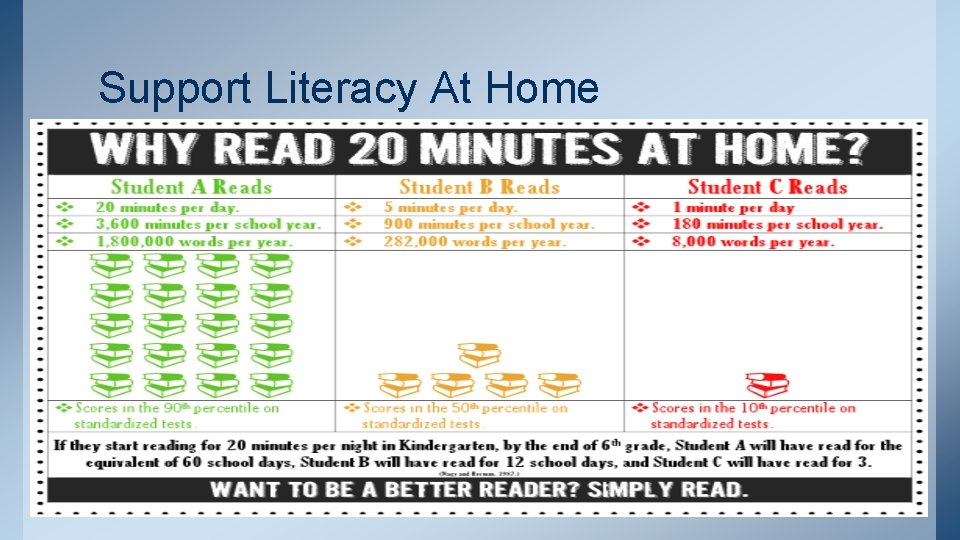
Support Literacy At Home
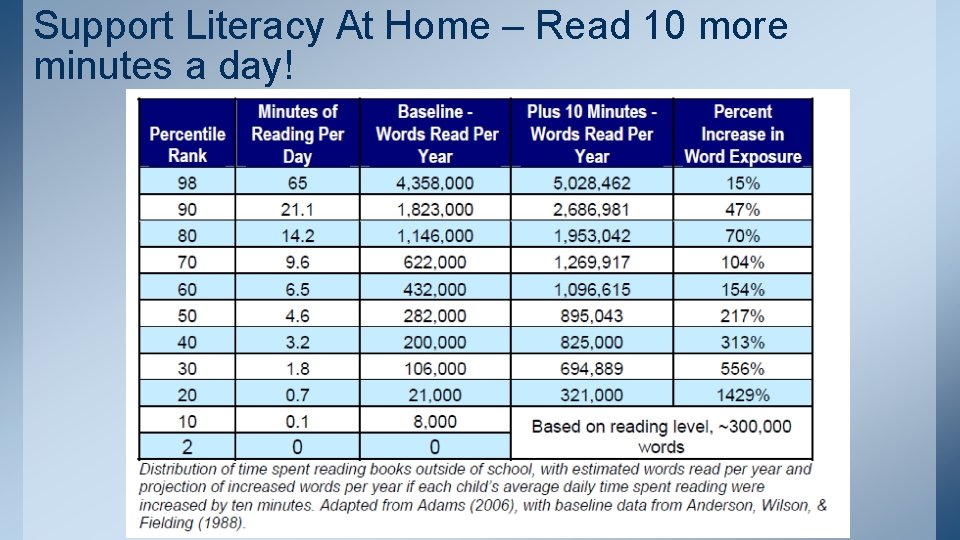
Support Literacy At Home – Read 10 more minutes a day!
Support Literacy At Home �CHALLENGE: �Read 10 more minutes per day; 5 days per week �Print out a calendar and record the # of minutes you read each day �Try at least one activity from “Building Literacy with Everyday Activities”

CONTACT US www. wifacets. org Main Office: 600 W. Virginia Street, Suite 501 Milwaukee, WI 53204 Phone: (414) 374 -4645
- Slides: 34