
LITERACY A bit of a refresh Every teacher
LITERACY A bit of a refresh
Every teacher is a teacher of literacy Every discipline has its own literacy, a language and vocabulary that is special to that discipline. It defines the way each discipline communicates and expresses itself. Students learn to be literate by explicit and supported teaching – scaffolding. Literacy has a set of identifiable skills and strategies that can be used to help students make meaning and become competent text users. Learners never stop needing literacy scaffolding; it is not something we grow out of.
Hattie’s collation of extensive research says… • 50 meta-analyses on reading research based on over 2000 studies and about 5 million students, with an average effect size of d = 0. 51, and demonstrates the importance of gaining a set of learning strategies to construct meaning from text.
Research tells us what works… • A mean effect size of 0. 67 indicated that students who experienced vocabulary instruction had major improvements in reading comprehension of passages containing taught words. • The most effective vocabulary teaching methods included providing both definitional and contextual information, involved students in deeper processing, and gave students more than one or two exposures of the words they were to learn.
Effect sizes for various strategies were… • Summarizing reading material (d = 0. 82) • Working together to plan, draft, revise and edit (d = 0. 75) • Setting clear and specific goals for what students are to accomplish with their writing product (d = 0. 70) • Using word-processing (d = 0. 55), • Teaching strategies to write increasingly complex sentences (d = 0. 50).
John Munro • Developed the High Reliability Literacy Teaching Procedures (HRLTPs) • Visited CSC in 2011 • His work informed much of the reading focus of the Literacy PLTs over the years
Getting knowledge ready – visualise at topic level • • • Ask what the topic is Ask what is already known about it Ask what mind-pictures the topic suggests Put imagery knowledge into sentences Imagine the images changing over time Talk about what the visualizations show as they change over time
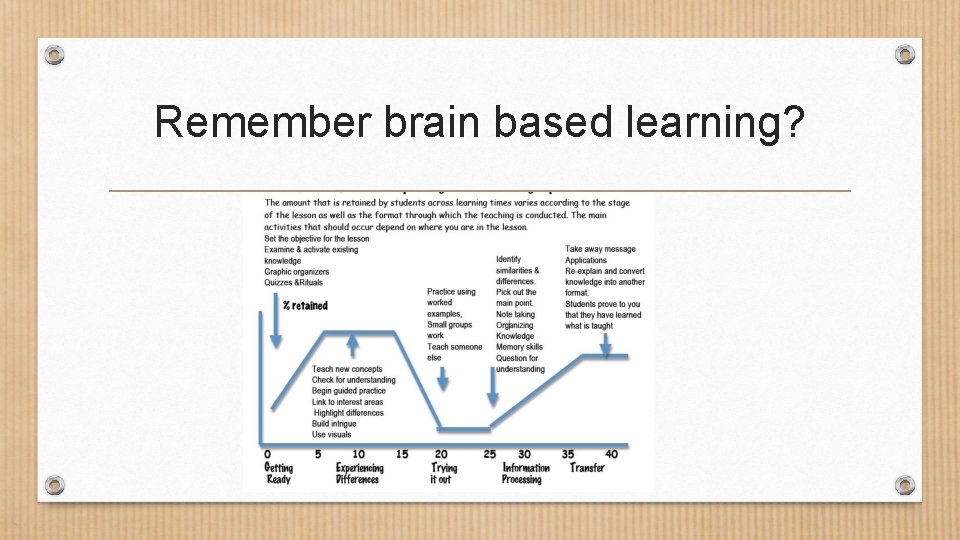
Remember brain based learning?
Getting knowledge ready - recall verbal knowledge • • Suggest key words that might arise in the text Suggest synonyms for these Say the questions the text might answer and suggest answers for them Read some key words taken from the text, suggest synonyms for them & use them in sentences
Getting knowledge ready - bridge to the text • • Paraphrase the title Read the topic sentence and suggest what the paragraph might be about Discuss diagrams that accompany the text Ask what is the writer’s likely purpose
Teaching vocabulary • Identify new words by scanning the text and underlining –sensitize students to quickly identify new words • Guide the reader to work out how to say new words by using analogy, segmenting and de-stressing • Teach the meaning of new words by helping students link them with known words • Guide students to use the context to work out /speculate about meaning of new words • Link the new word with words already known (through synonyms, etc).
Reading aloud • Students read an extract aloud, taking turns • Read, note and repeat any difficult words
Paraphrase and visualise sentences • Say each sentence of the text in another way, segmenting or focusing on the verbs where necessary to make sense of it • • For complex or difficult sentences, paraphrase by phrase Check that the paraphrase means the same as the original text Visualise the paraphrased sentence Check that the paraphrase links with earlier sentences read and with the topic
Questioning • Before reading - say what questions the text might answer • While reading – identify questions the text answers at a sentence and paragraph level • After reading – say what questions can be answered now that couldn’t be answered earlier
Summarize the text • For each paragraph write down the main idea • In this way, build a summary of the text
Review & consolidate • Ask what students know that they didn’t know before reading this text • Ask students what should be remembered about today’s lesson? • Ask students how the important points will be remembered – visually &/or verbally
Writing • Teaching strategies to write increasingly complex sentences (d = 0. 50).
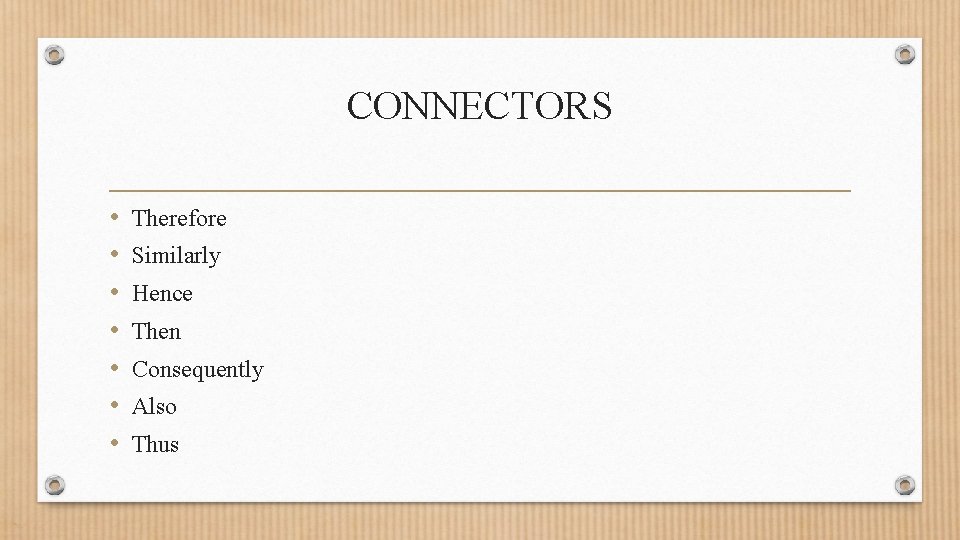
CONNECTORS • • Therefore Similarly Hence Then Consequently Also Thus
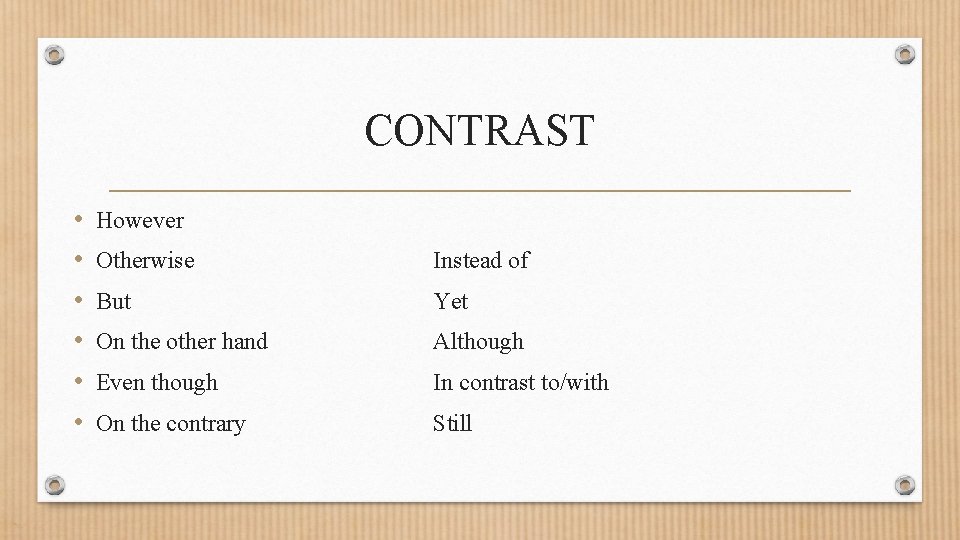
CONTRAST • • • However Otherwise Instead of But Yet On the other hand Although Even though In contrast to/with On the contrary Still
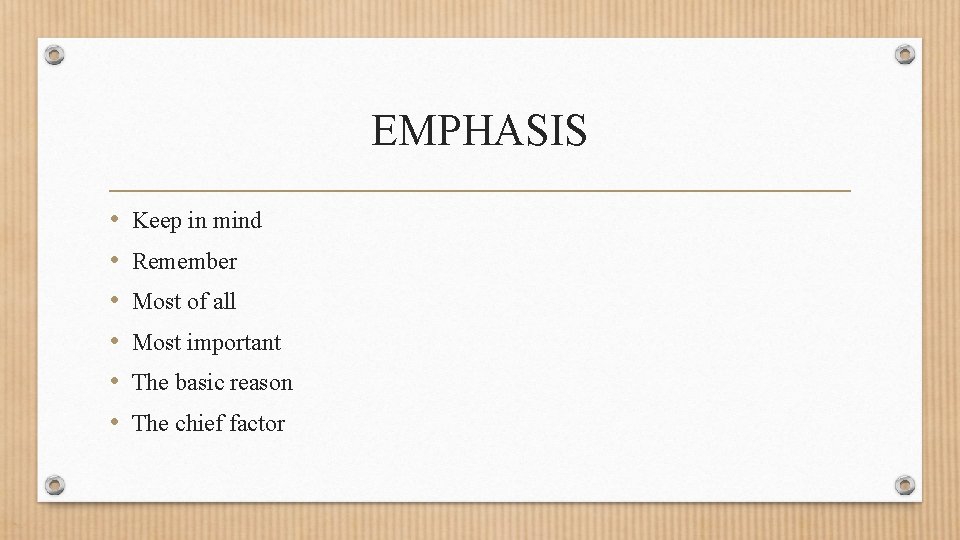
EMPHASIS • • • Keep in mind Remember Most of all Most important The basic reason The chief factor
ADDITION • • • First of all Another reason is In addition Also Moreover The most important reason is Finally For example This means that Equally important
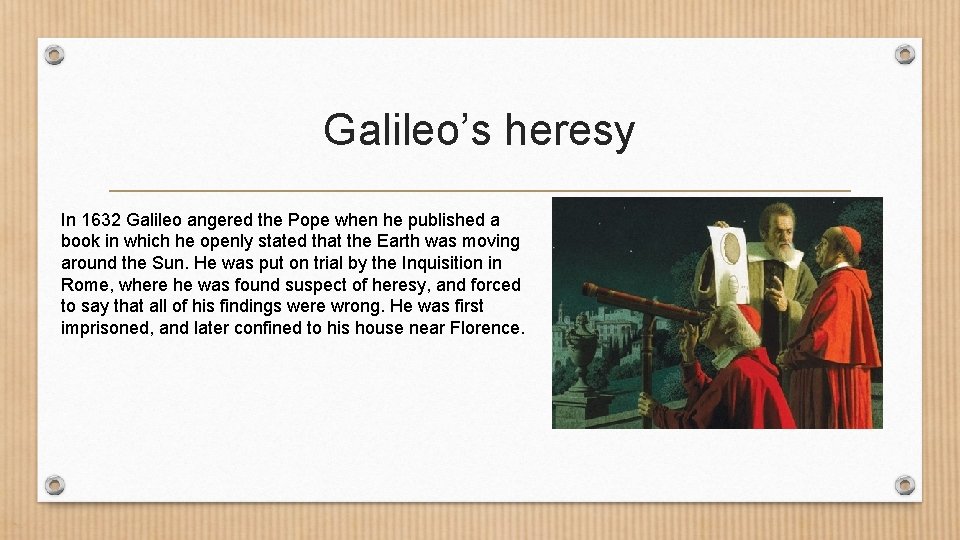
Galileo’s heresy In 1632 Galileo angered the Pope when he published a book in which he openly stated that the Earth was moving around the Sun. He was put on trial by the Inquisition in Rome, where he was found suspect of heresy, and forced to say that all of his findings were wrong. He was first imprisoned, and later confined to his house near Florence.
- Slides: 22