
List the different types of waves present in
- Slides: 22
List the different types of waves present in the events described below: Imagine that your family has just returned from a day at the beach. You had fun playing in the ocean in the hot sun. You put some cold pizza in the microwave for dinner and turn on the radio. Just then the phone rings. It is your friend calling about homework. • •
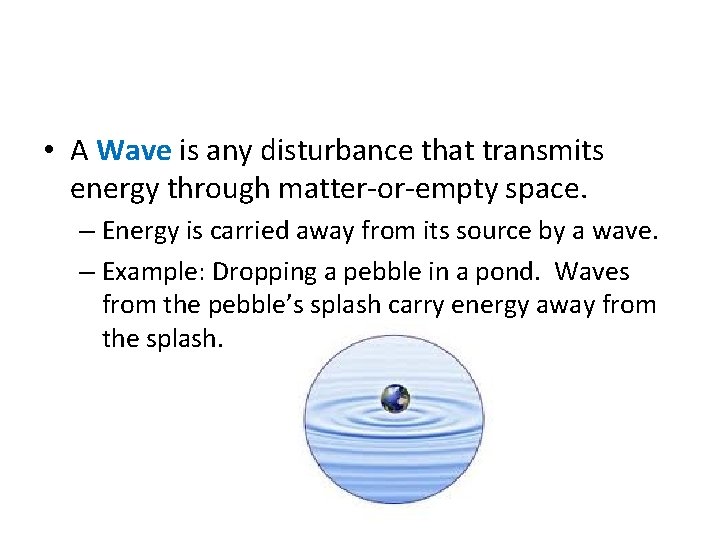
• A Wave is any disturbance that transmits energy through matter-or-empty space. – Energy is carried away from its source by a wave. – Example: Dropping a pebble in a pond. Waves from the pebble’s splash carry energy away from the splash.
Waves are everywhere in nature – – – sound waves visible light waves radio waves microwaves water waves sine waves – telephone cord waves – stadium waves – earthquake waves – waves on a string – slinky waves
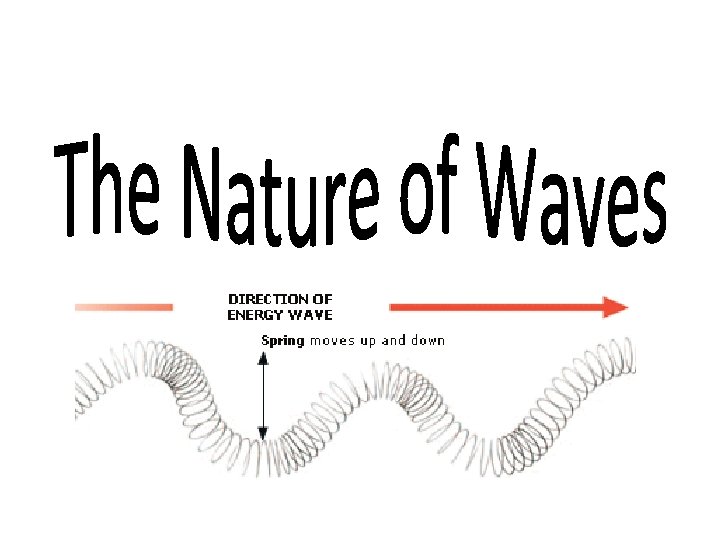
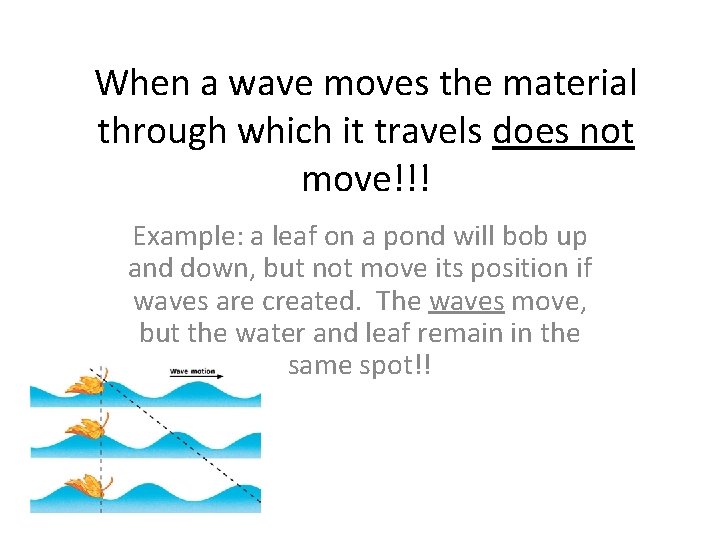
When a wave moves the material through which it travels does not move!!! Example: a leaf on a pond will bob up and down, but not move its position if waves are created. The waves move, but the water and leaf remain in the same spot!!
How Waves Travel • Some waves need a substance to travel through. • The substance through which a wave can travel through is called a medium. This can be a solid, liquid, or gas. • These waves are called mechanical waves.
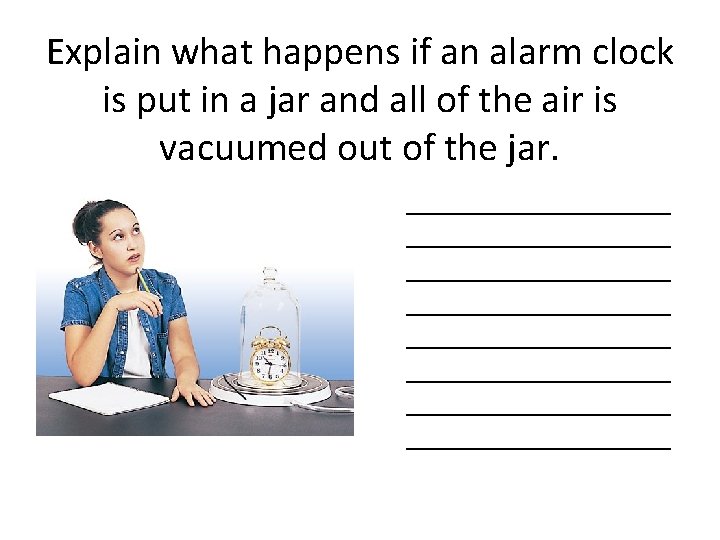
Explain what happens if an alarm clock is put in a jar and all of the air is vacuumed out of the jar. ___________________ ___________________
• Some waves do not need a medium to travel through. These waves are called electromagnetic waves. • Examples: Light, microwaves, x-rays
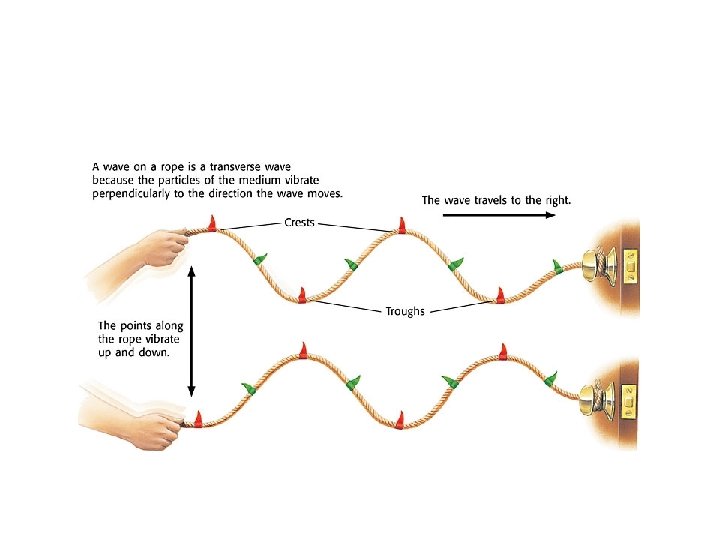
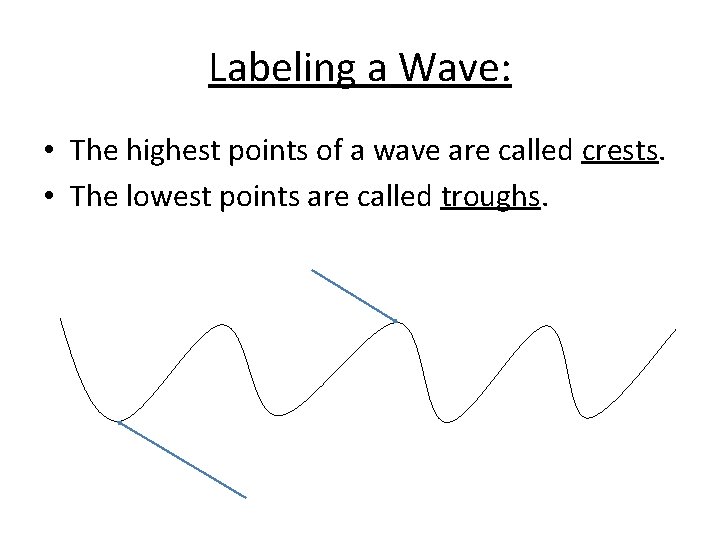
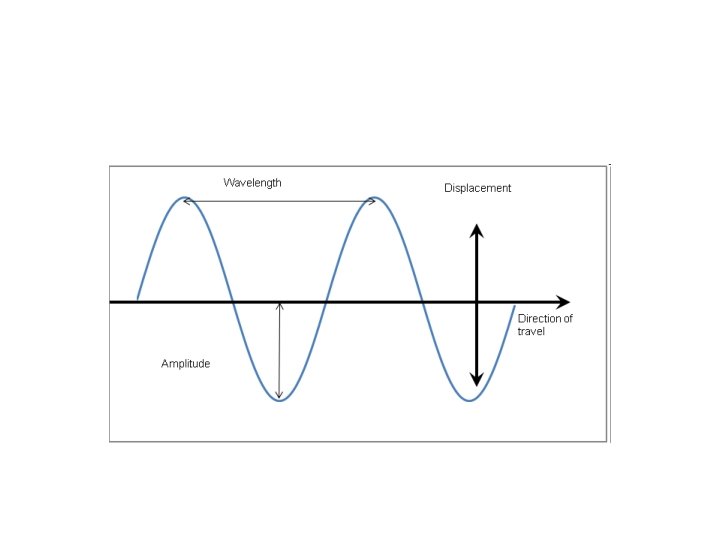
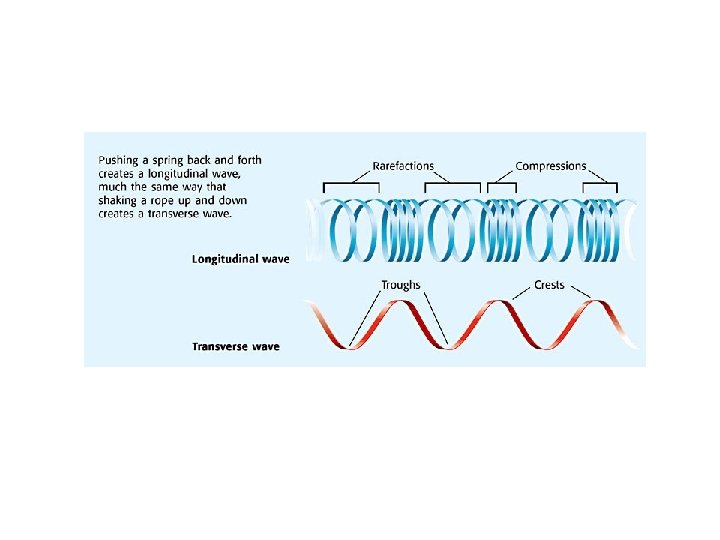
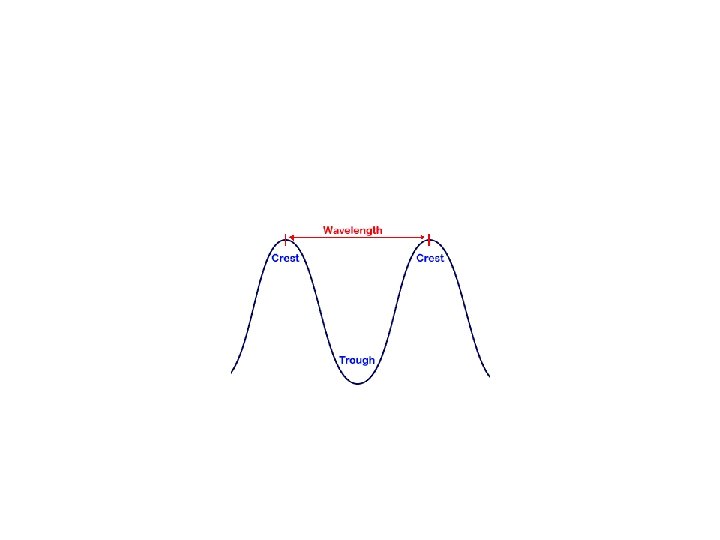
Labeling a Wave: • The highest points of a wave are called crests. • The lowest points are called troughs.
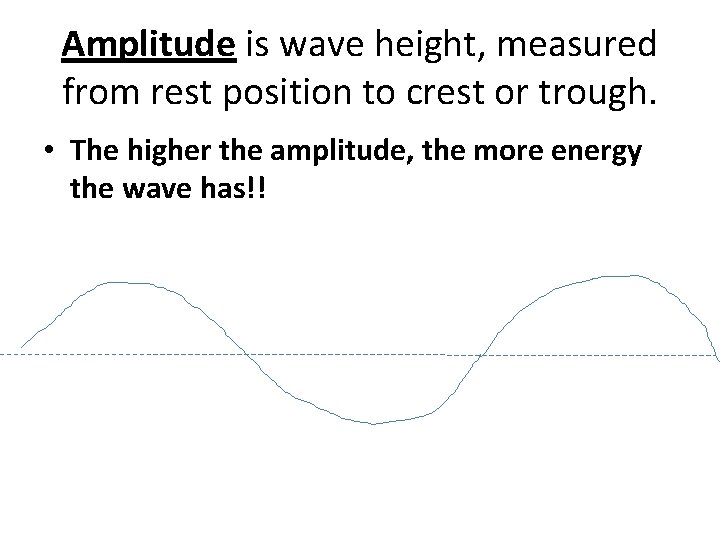
Amplitude is wave height, measured from rest position to crest or trough. • The higher the amplitude, the more energy the wave has!!
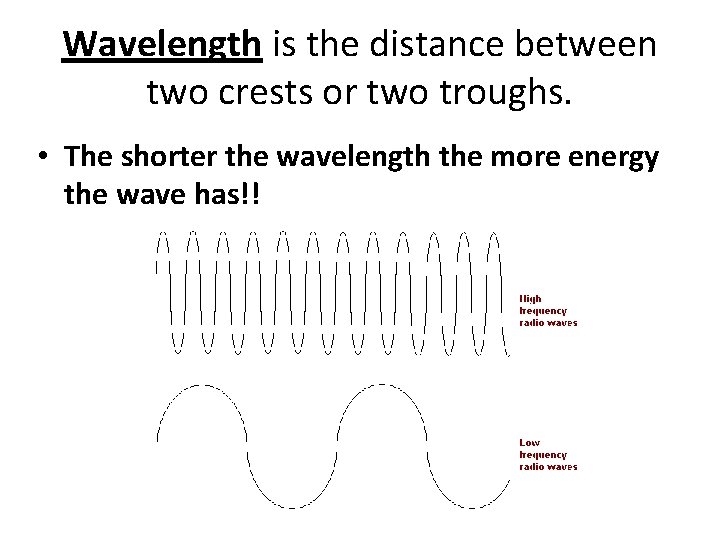
Wavelength is the distance between two crests or two troughs. • The shorter the wavelength the more energy the wave has!!
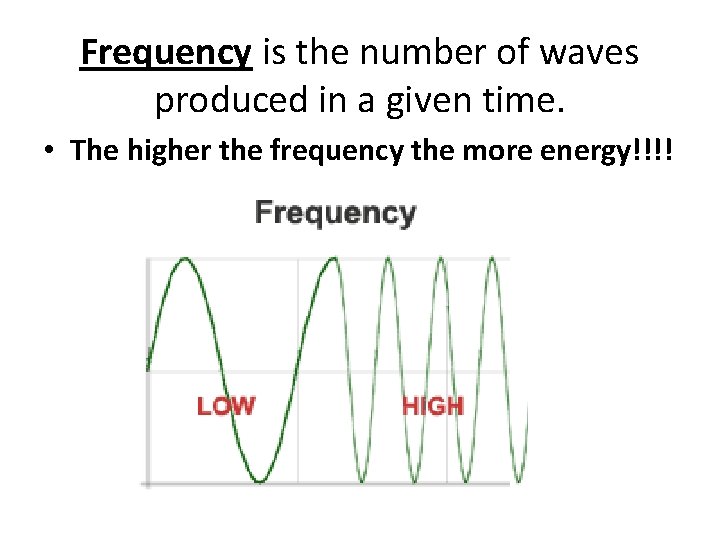
Frequency is the number of waves produced in a given time. • The higher the frequency the more energy!!!!
• http: //www. classzone. com/books/ml_science _share/vis_sim/wslm 05_pg 18_graph/wslm 05 _pg 18_graph. html • http: //www. solpass. org/5 s/AP/wavelength. sw f
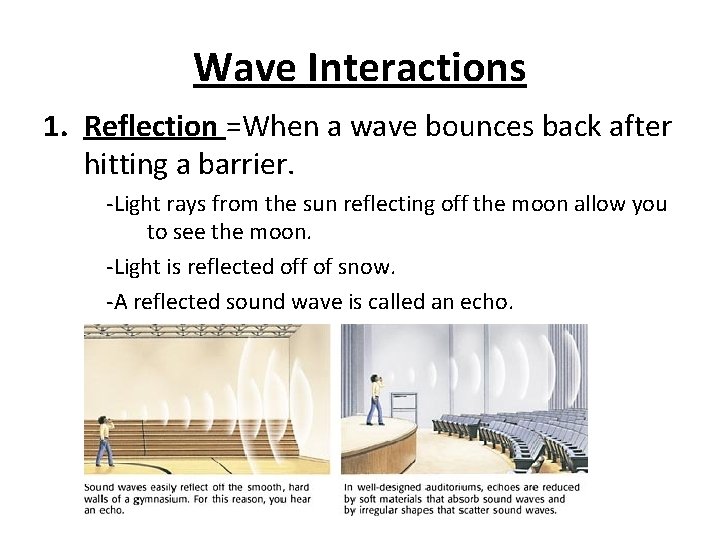
Wave Interactions 1. Reflection =When a wave bounces back after hitting a barrier. -Light rays from the sun reflecting off the moon allow you to see the moon. -Light is reflected off of snow. -A reflected sound wave is called an echo.
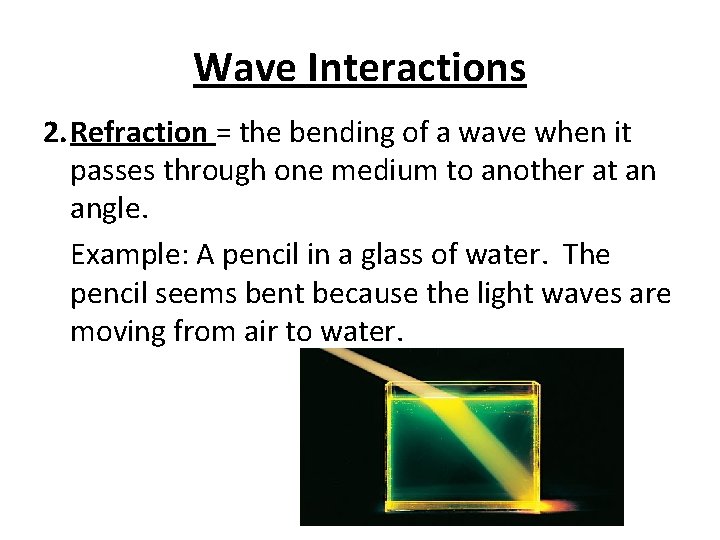
Wave Interactions 2. Refraction = the bending of a wave when it passes through one medium to another at an angle. Example: A pencil in a glass of water. The pencil seems bent because the light waves are moving from air to water.
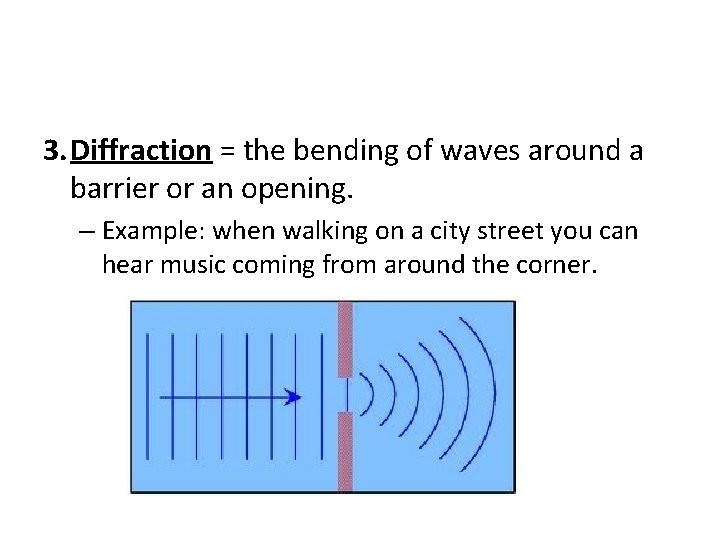
3. Diffraction = the bending of waves around a barrier or an opening. – Example: when walking on a city street you can hear music coming from around the corner.
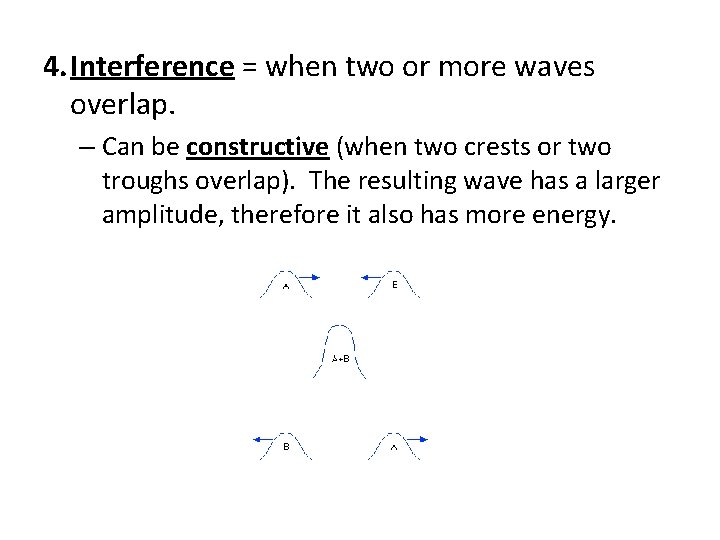
4. Interference = when two or more waves overlap. – Can be constructive (when two crests or two troughs overlap). The resulting wave has a larger amplitude, therefore it also has more energy.
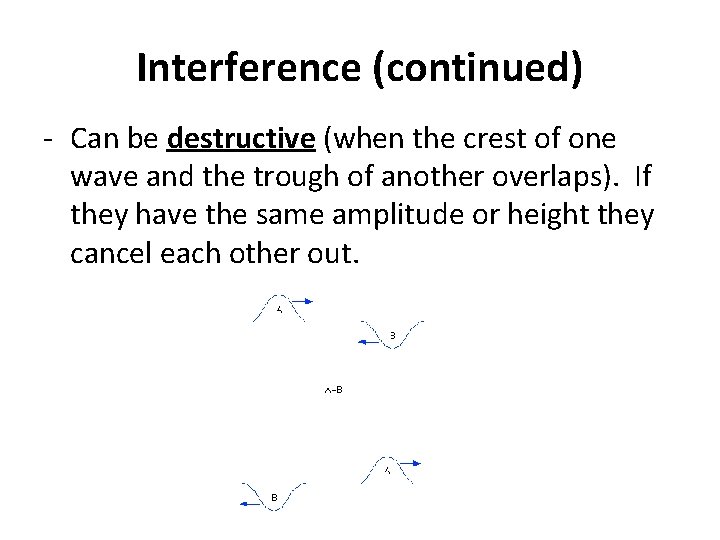
Interference (continued) - Can be destructive (when the crest of one wave and the trough of another overlaps). If they have the same amplitude or height they cancel each other out.