
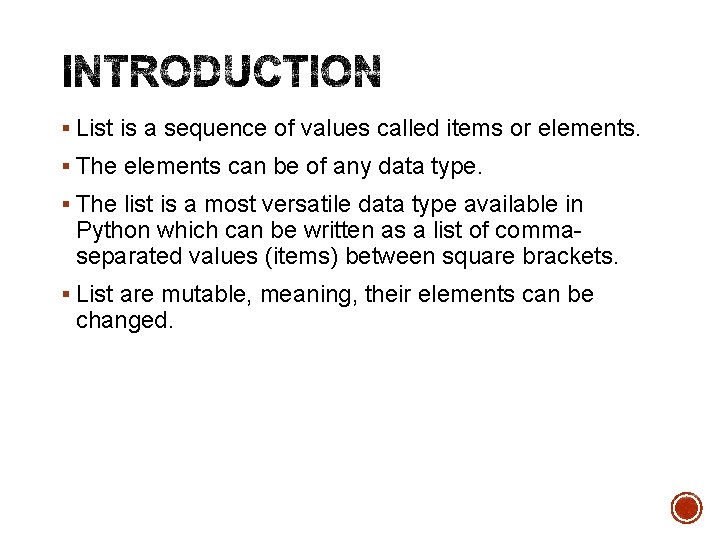
List is a sequence of values called items
![§ Index operator [] is used to access an item in a list. Index](https://slidetodoc.com/presentation_image_h2/324410eaf162dc332a6ec93696d9c1e6/image-5.jpg "§ Index operator [] is used to access an item in a list. Index")
![#Add Elements #Change Elements = operator with index >>> marks=[90, 60, 80] >>> print(marks)](https://slidetodoc.com/presentation_image_h2/324410eaf162dc332a6ec93696d9c1e6/image-7.jpg "#Add Elements #Change Elements = operator with index >>> marks=[90, 60, 80] >>> print(marks)")
![§ >>> marks. extend([40, 50, 60, 70]) § >>> marks § [90, 40, 50,](https://slidetodoc.com/presentation_image_h2/324410eaf162dc332a6ec93696d9c1e6/image-9.jpg "§ >>> marks. extend([40, 50, 60, 70]) § >>> marks § [90, 40, 50,")
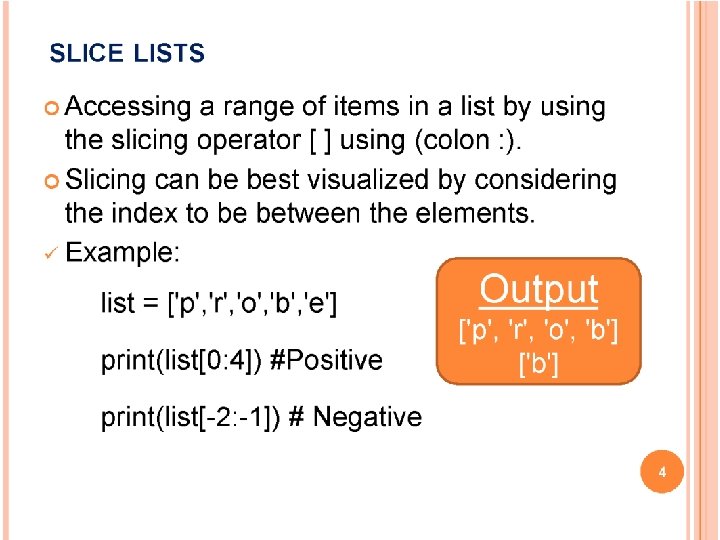
![§ Slicing [: : ] (i. e) list[start: stop: step] § Concatenation = +](https://slidetodoc.com/presentation_image_h2/324410eaf162dc332a6ec93696d9c1e6/image-10.jpg "§ Slicing [: : ] (i. e) list[start: stop: step] § Concatenation = +")
- Slides: 39
§ List is a sequence of values called items or elements. § The elements can be of any data type. § The list is a most versatile data type available in Python which can be written as a list of commaseparated values (items) between square brackets. § List are mutable, meaning, their elements can be changed.
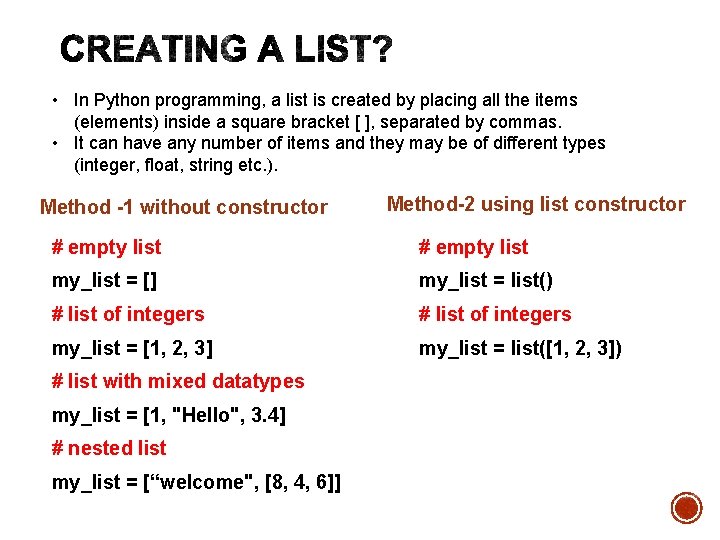
• In Python programming, a list is created by placing all the items (elements) inside a square bracket [ ], separated by commas. • It can have any number of items and they may be of different types (integer, float, string etc. ). Method -1 without constructor Method-2 using list constructor # empty list my_list = [] my_list = list() # list of integers my_list = [1, 2, 3] my_list = list([1, 2, 3]) # list with mixed datatypes my_list = [1, "Hello", 3. 4] # nested list my_list = [“welcome", [8, 4, 6]]
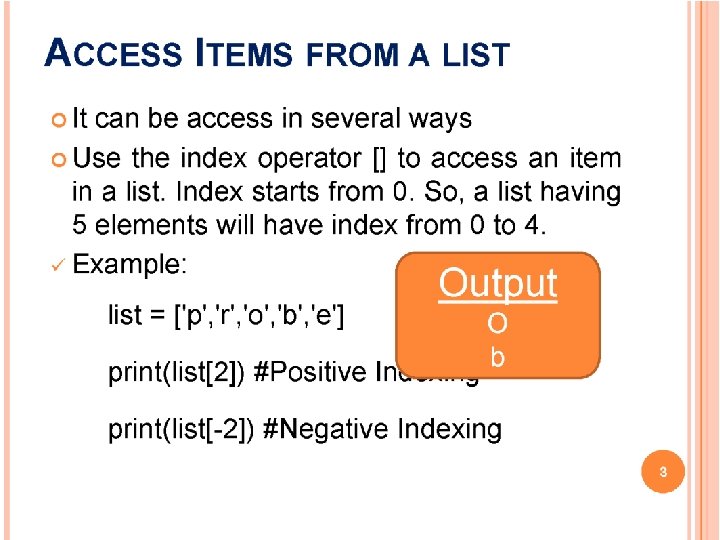
§ Index operator [] is used to access an item in a list. Index starts from 0 § marks=[90, 80, 50, 70, 60] § print(marks[0]) Output: 90 § Nested list: § my_list = [“welcome", [8, 4, 6]] § Print(marks[1][0]) Output: 8
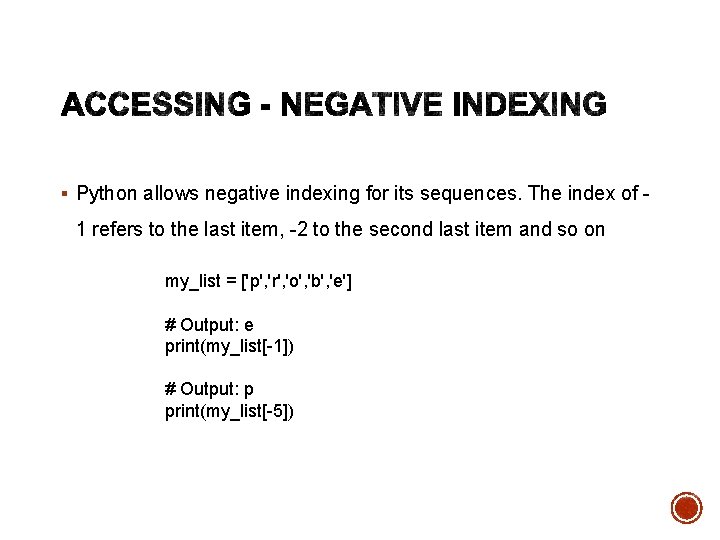
§ Python allows negative indexing for its sequences. The index of - 1 refers to the last item, -2 to the second last item and so on my_list = ['p', 'r', 'o', 'b', 'e'] # Output: e print(my_list[-1]) # Output: p print(my_list[-5])
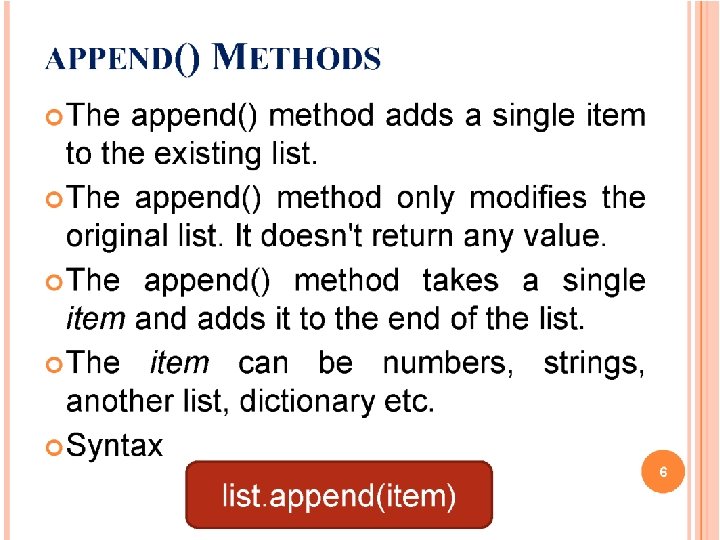
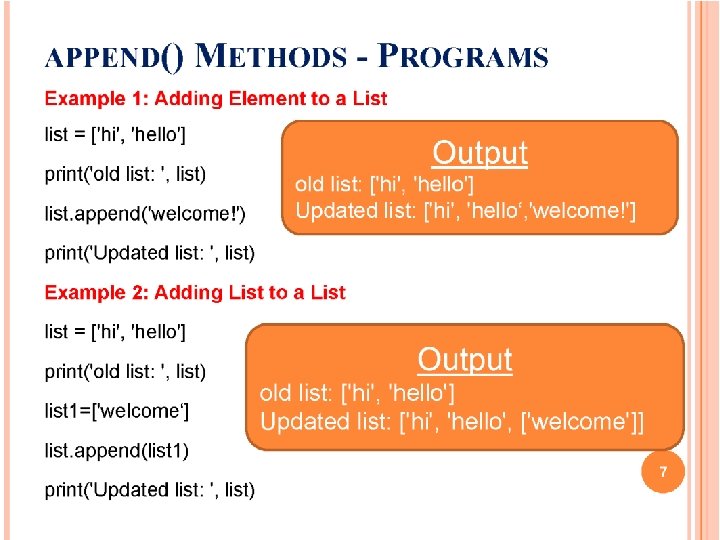
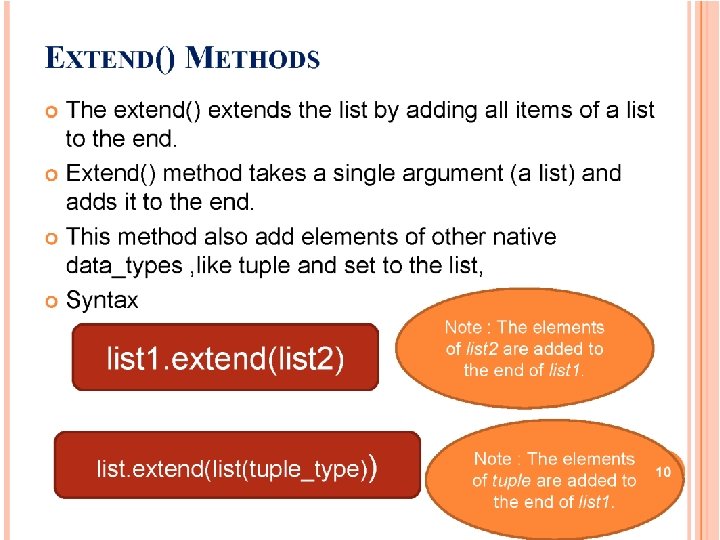
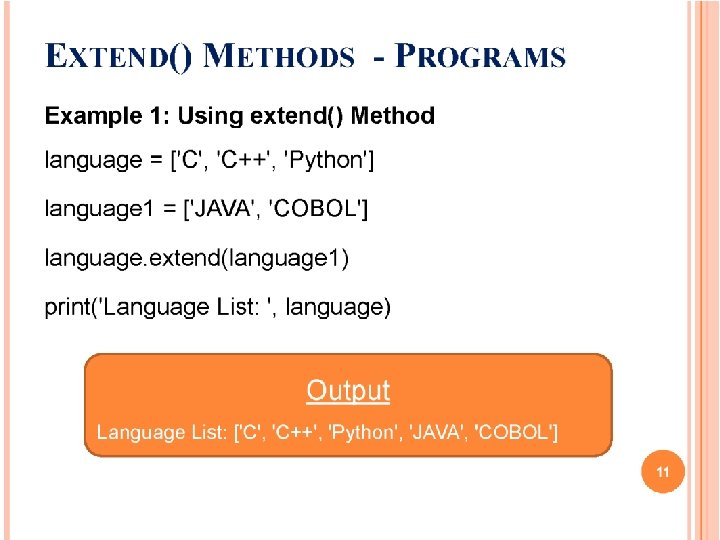
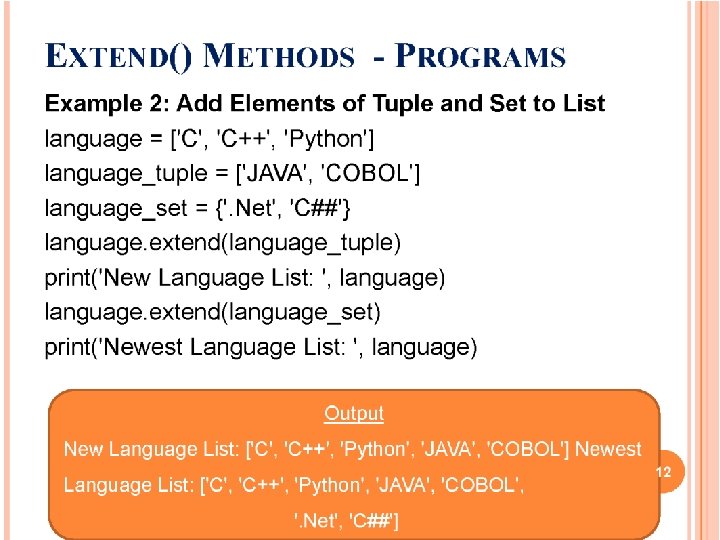
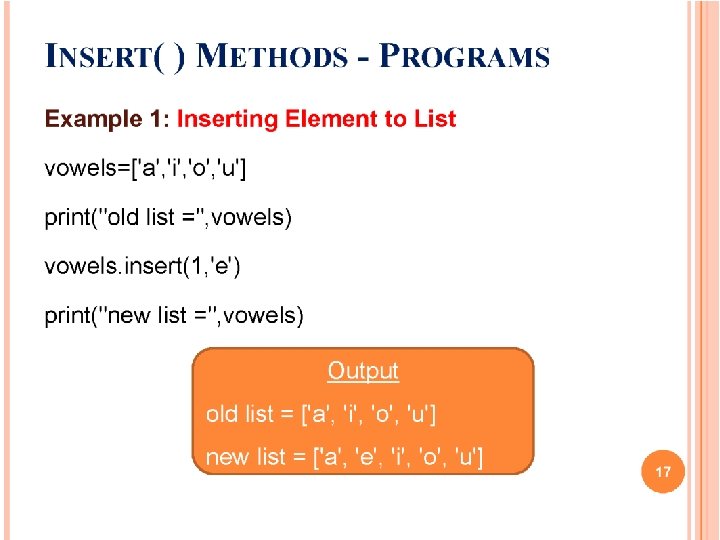
#Add Elements #Change Elements = operator with index >>> marks=[90, 60, 80] >>> print(marks) [90, 60, 80] § add one item to a list using append() method § add several items using extend() § insert one item at a desired location by using the method insert() >>> marks. append(50) >>> print(marks) [90, 100, 80, 50] >>> marks[1]=100 >>> print(marks) [90, 100, 80] >>> marks. extend([60, 80, 70]) >>> print(marks) [90, 100, 80, 50, 60, 80, 70] >>> marks. insert(3, 40) >>> print(marks) [90, 100, 80, 40, 50, 60, 80, 70]
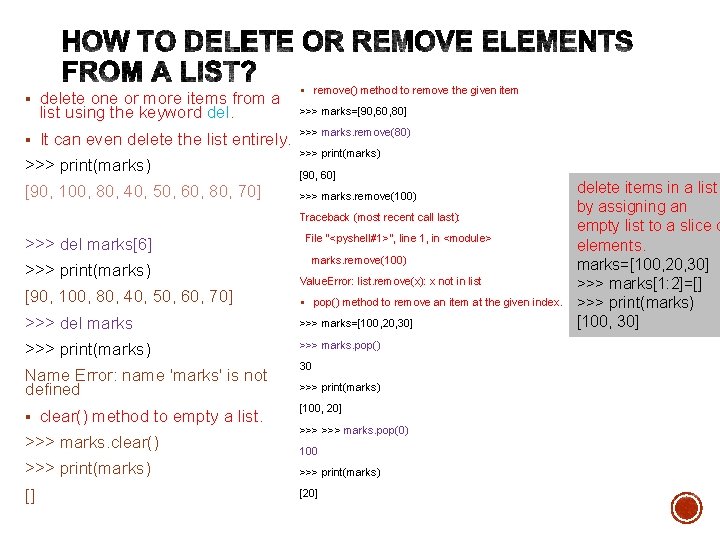
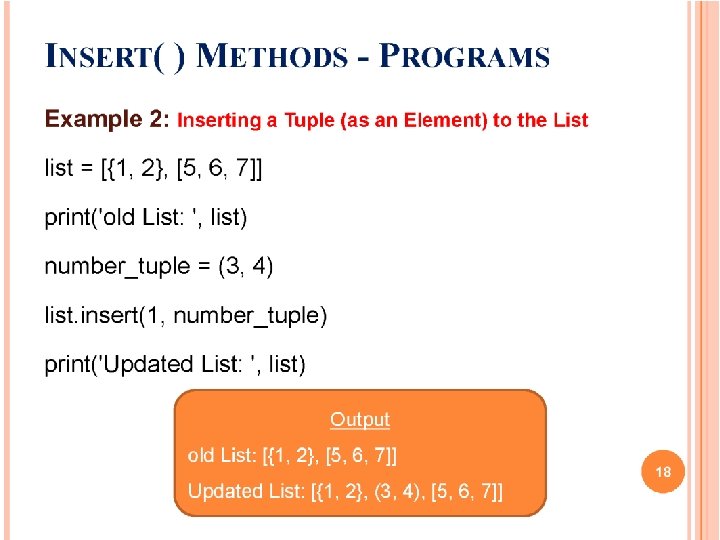
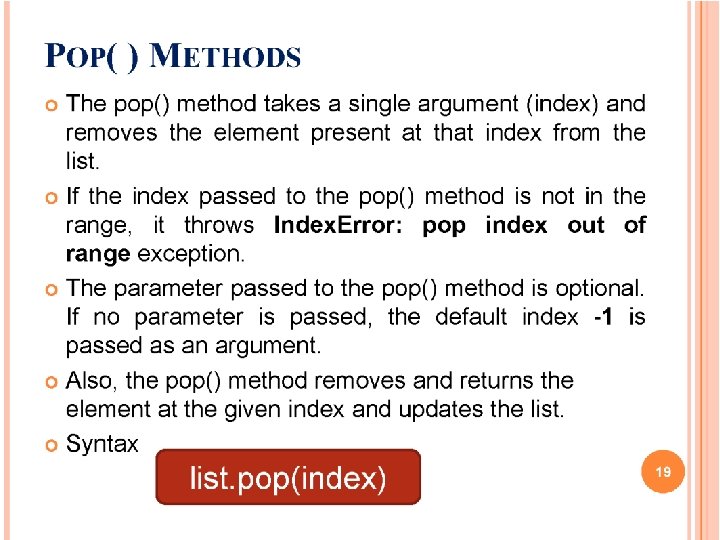
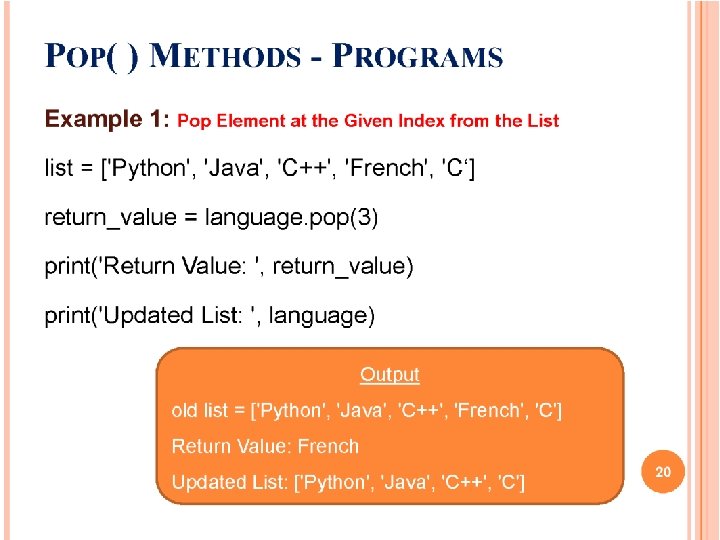
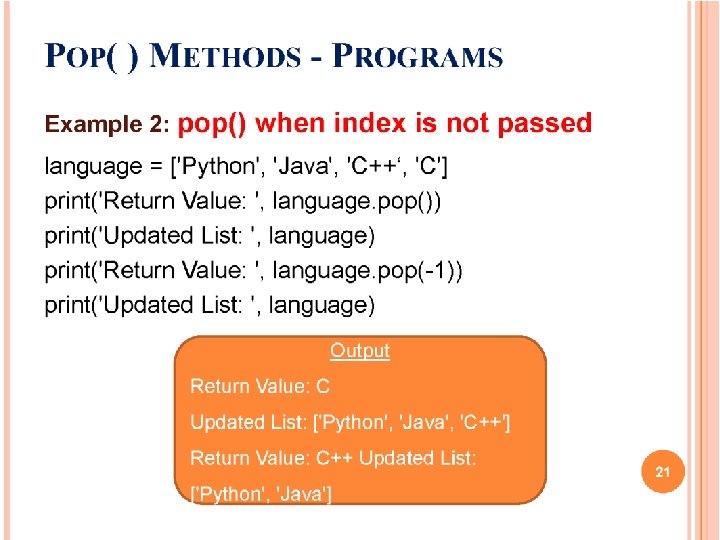
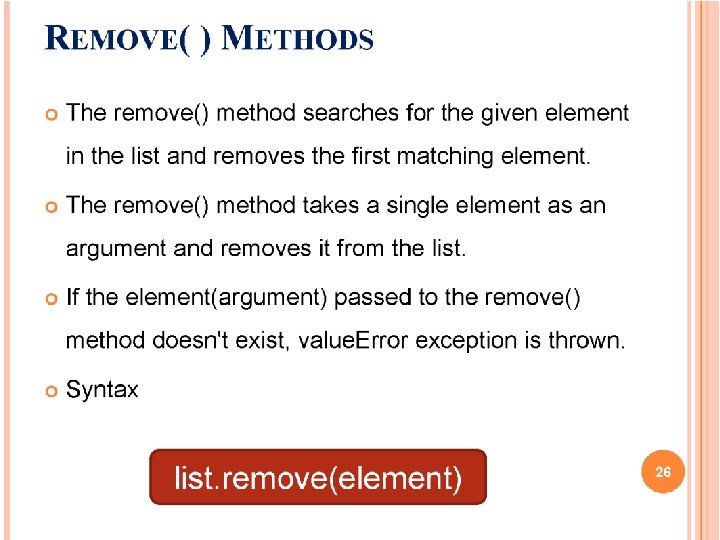
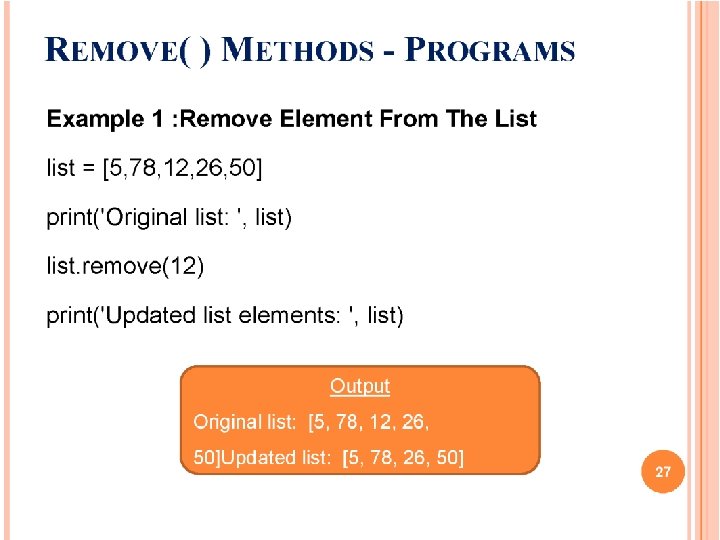
remove() method to remove the given item § delete one or more items from a § § It can even delete the list entirely. >>> marks. remove(80) list using the keyword del. >>> print(marks) [90, 100, 80, 40, 50, 60, 80, 70] >>> marks=[90, 60, 80] >>> print(marks) [90, 60] >>> marks. remove(100) Traceback (most recent call last): File "<pyshell#1>", line 1, in <module> >>> del marks[6] >>> print(marks) [90, 100, 80, 40, 50, 60, 70] marks. remove(100) Value. Error: list. remove(x): x not in list § pop() method to remove an item at the given index. >>> del marks >>> marks=[100, 20, 30] >>> print(marks) >>> marks. pop() Name Error: name 'marks' is not defined § clear() method to empty a list. >>> marks. clear() 30 >>> print(marks) [100, 20] >>> marks. pop(0) 100 >>> print(marks) [] [20] delete items in a list by assigning an empty list to a slice o elements. marks=[100, 20, 30] >>> marks[1: 2]=[] >>> print(marks) [100, 30]
§ >>> marks. extend([40, 50, 60, 70]) § >>> marks § [90, 40, 50, 60, 70] § >>> marks. pop() § 70 § >>> marks. pop() § 60
§ Slicing [: : ] (i. e) list[start: stop: step] § Concatenation = + § Repetition= * § Membership = in § Identity = is
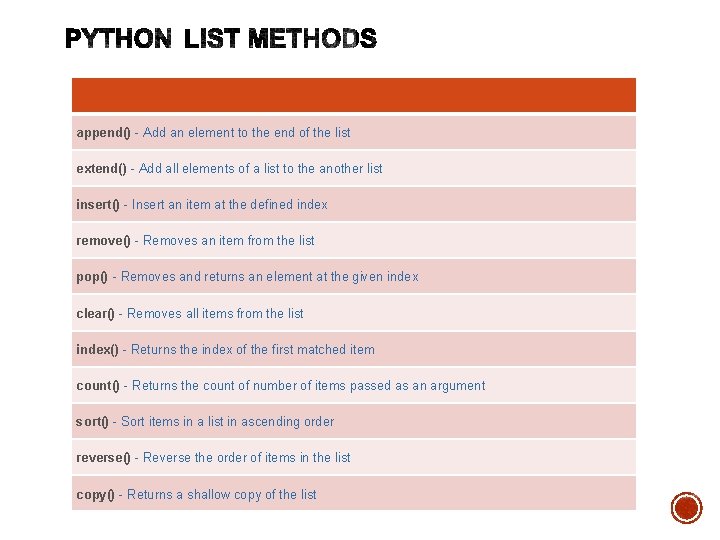
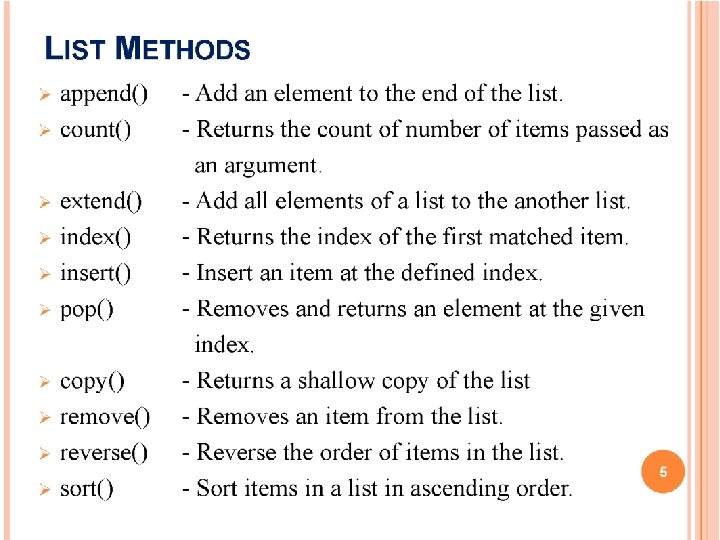
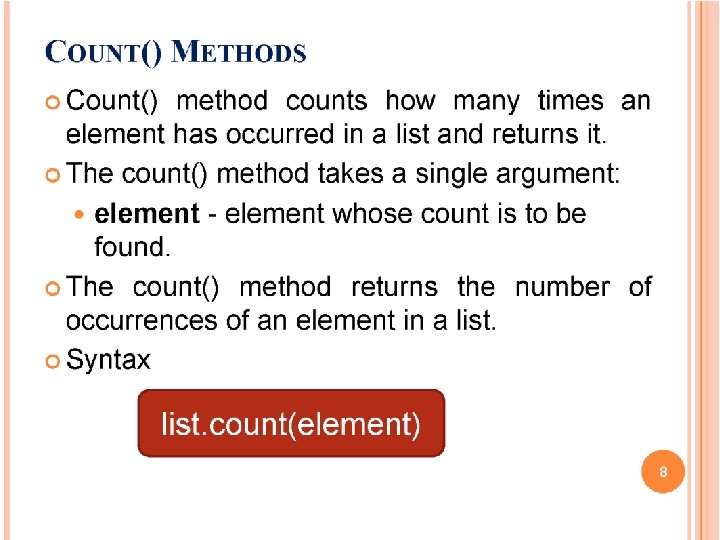
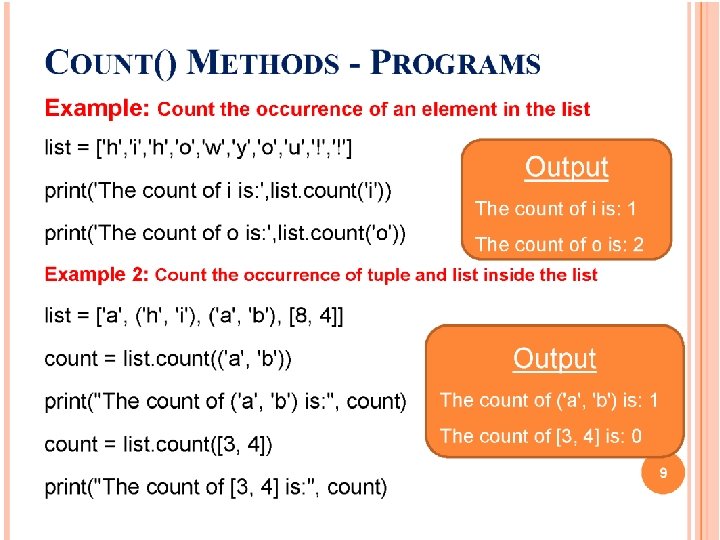
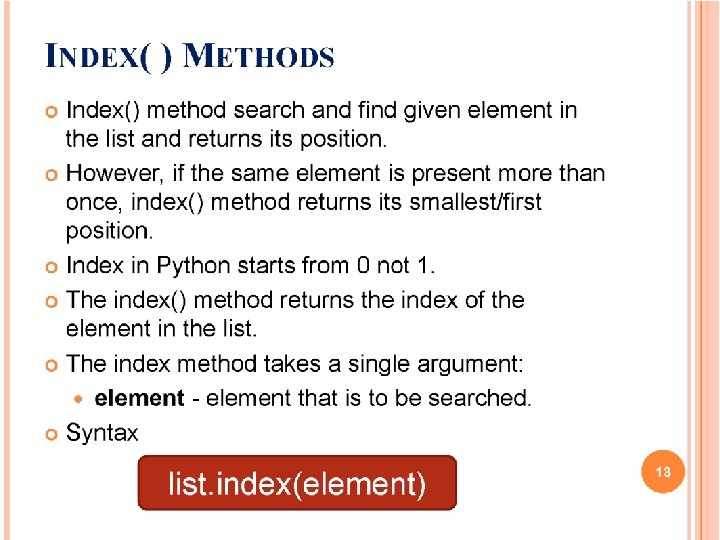
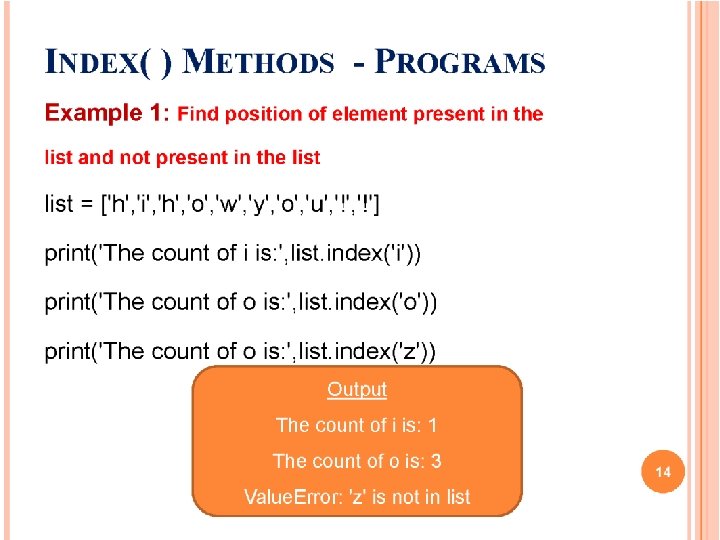
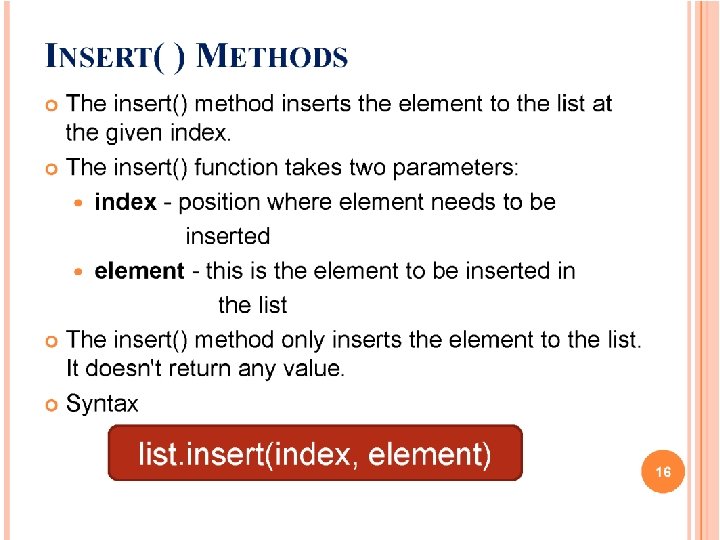
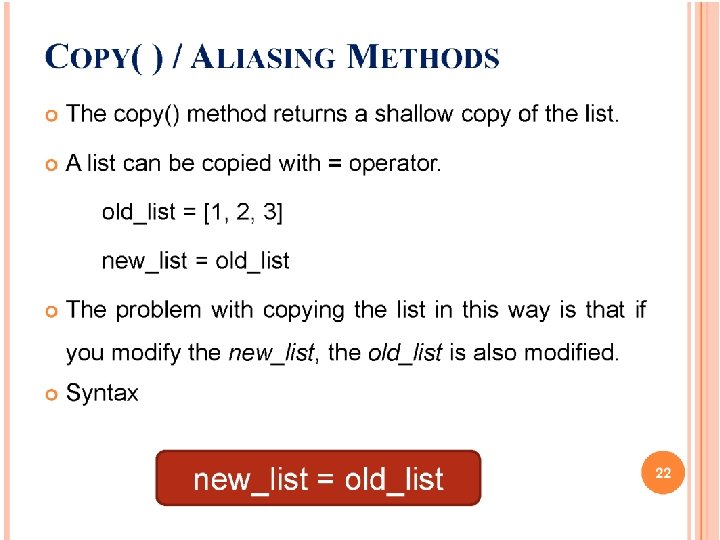
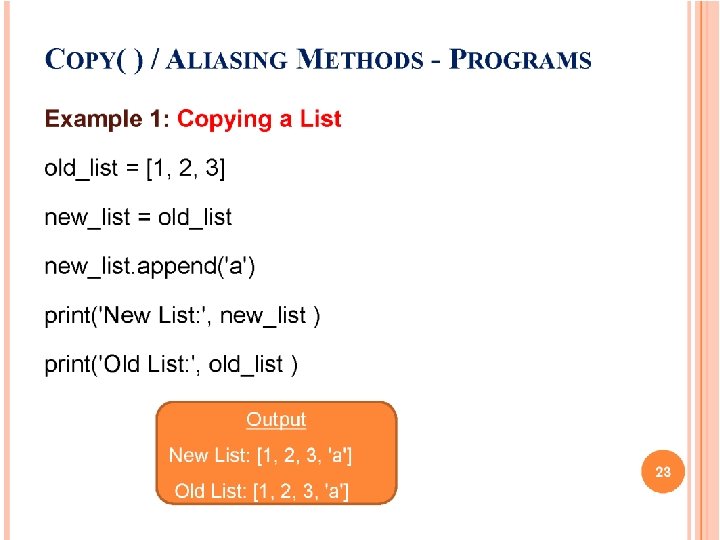
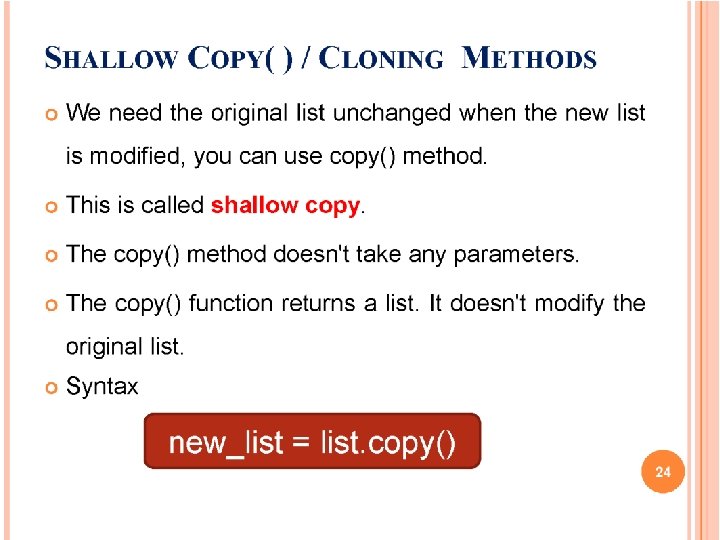
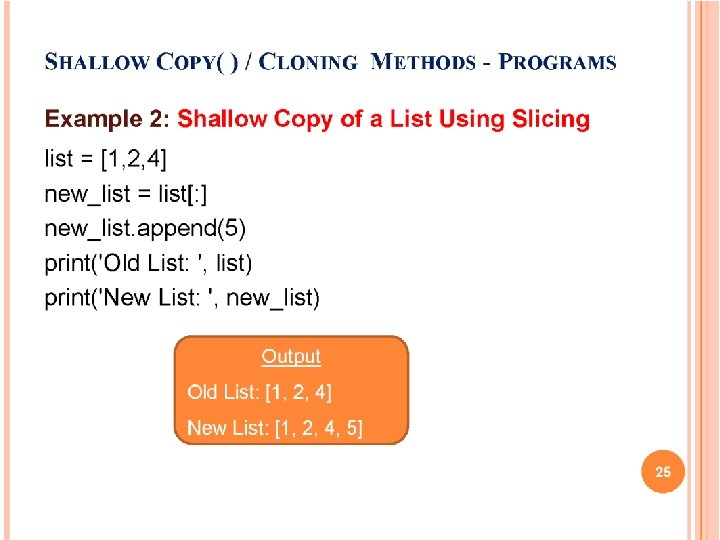
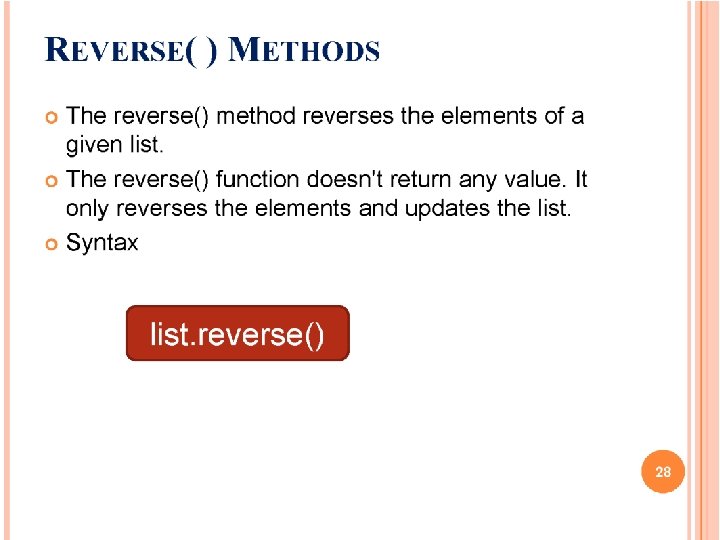
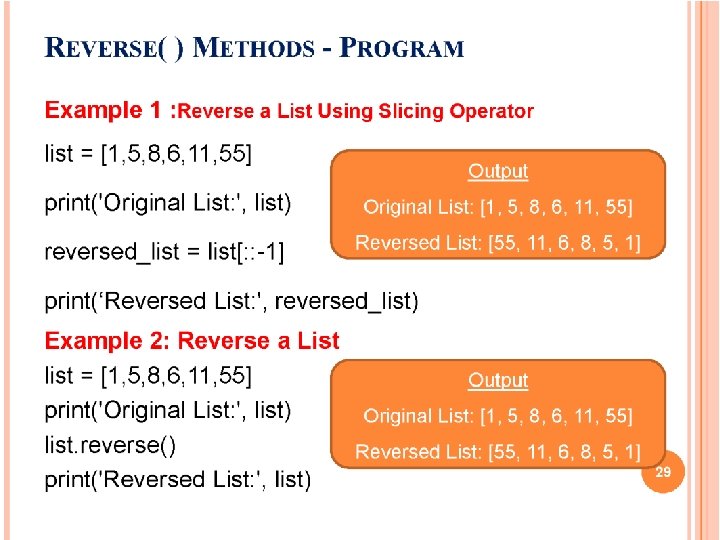
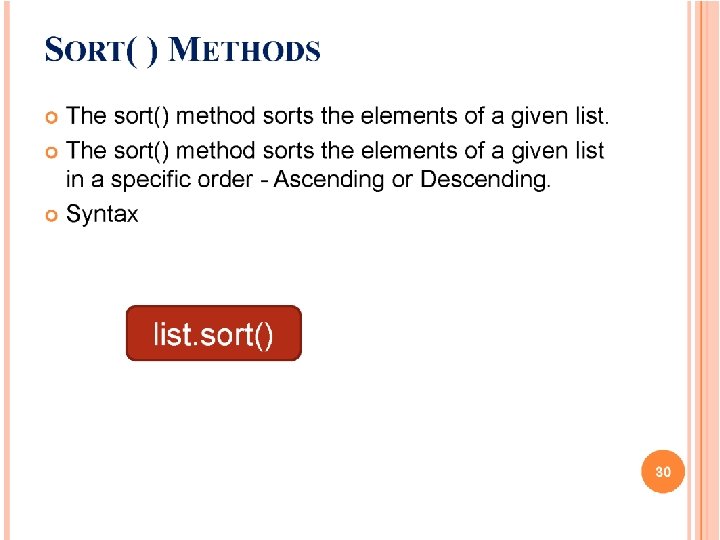
append() - Add an element to the end of the list extend() - Add all elements of a list to the another list insert() - Insert an item at the defined index remove() - Removes an item from the list pop() - Removes and returns an element at the given index clear() - Removes all items from the list index() - Returns the index of the first matched item count() - Returns the count of number of items passed as an argument sort() - Sort items in a list in ascending order reverse() - Reverse the order of items in the list copy() - Returns a shallow copy of the list
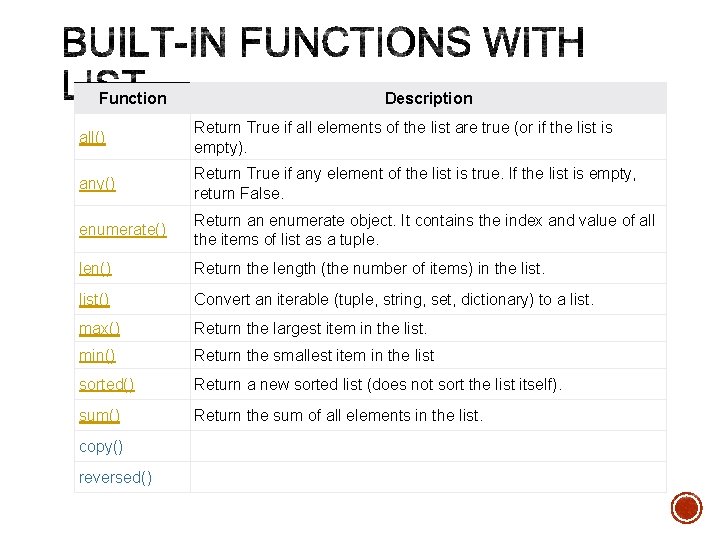
Function Description all() Return True if all elements of the list are true (or if the list is empty). any() Return True if any element of the list is true. If the list is empty, return False. enumerate() Return an enumerate object. It contains the index and value of all the items of list as a tuple. len() Return the length (the number of items) in the list() Convert an iterable (tuple, string, set, dictionary) to a list. max() Return the largest item in the list. min() Return the smallest item in the list sorted() Return a new sorted list (does not sort the list itself). sum() Return the sum of all elements in the list. copy() reversed()