
Liquids Vapor Pressure Vapor Pressure VP Pressure exerted
- Slides: 14
Liquids & Vapor Pressure
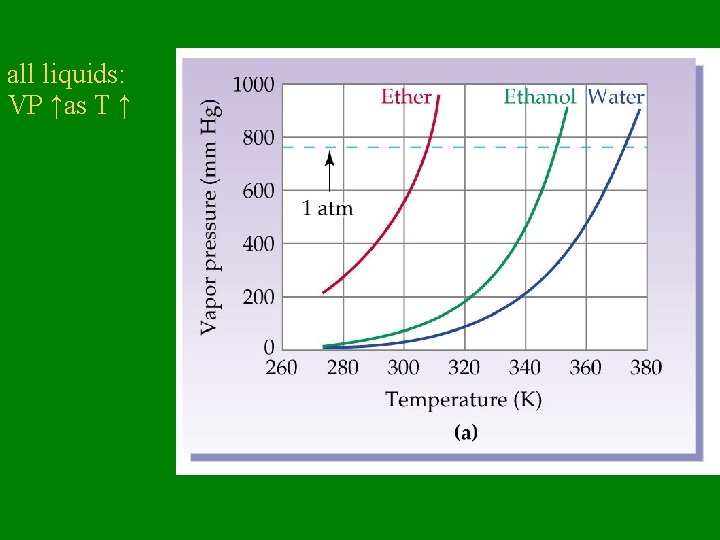
Vapor Pressure (VP) = Pressure exerted by vapor over its liquid How is vapor pressure affected by temperature? • higher the temperature, the higher the VP
Vapor • Gas phase of substance that is normally liquid at room temperature Evaporation occurs at all temperatures • the easier a substance evaporates, the weaker the attractive forces between liquid molecules
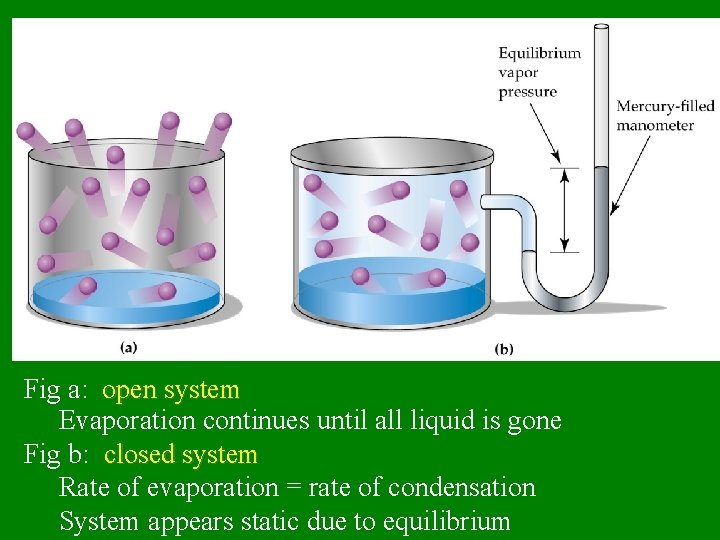
Fig a: open system Evaporation continues until all liquid is gone Fig b: closed system Rate of evaporation = rate of condensation System appears static due to equilibrium
all liquids: VP ↑as T ↑
Vapor Pressure • VP does NOT depend on how much liquid is present • VP depends ONLY on temperature
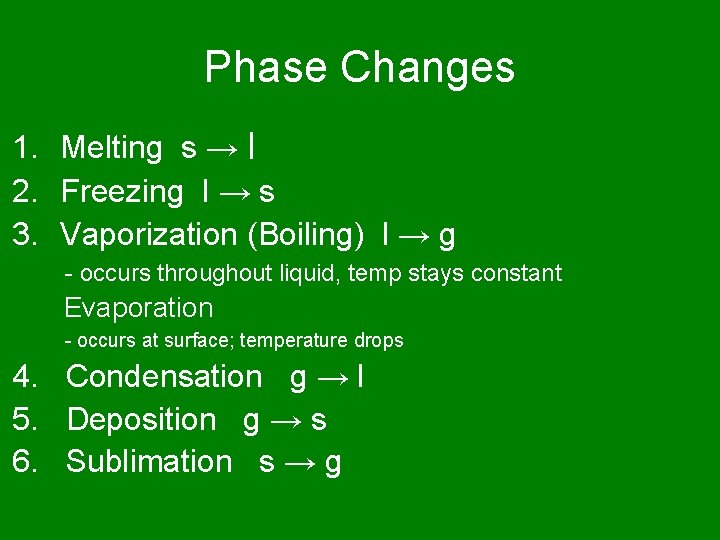
Phase Changes 1. Melting s → l 2. Freezing l → s 3. Vaporization (Boiling) l → g - occurs throughout liquid, temp stays constant Evaporation - occurs at surface; temperature drops 4. Condensation g → l 5. Deposition g → s 6. Sublimation s → g
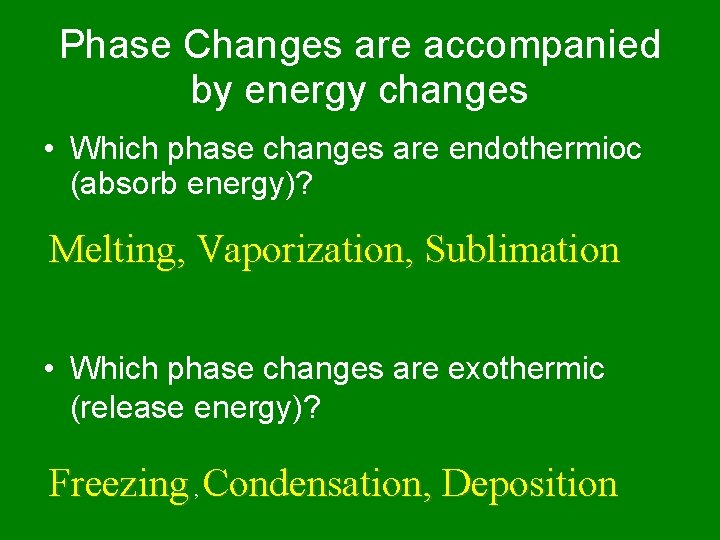
Phase Changes are accompanied by energy changes • Which phase changes are endothermioc (absorb energy)? Melting, Vaporization, Sublimation • Which phase changes are exothermic (release energy)? Freezing , Condensation, Deposition
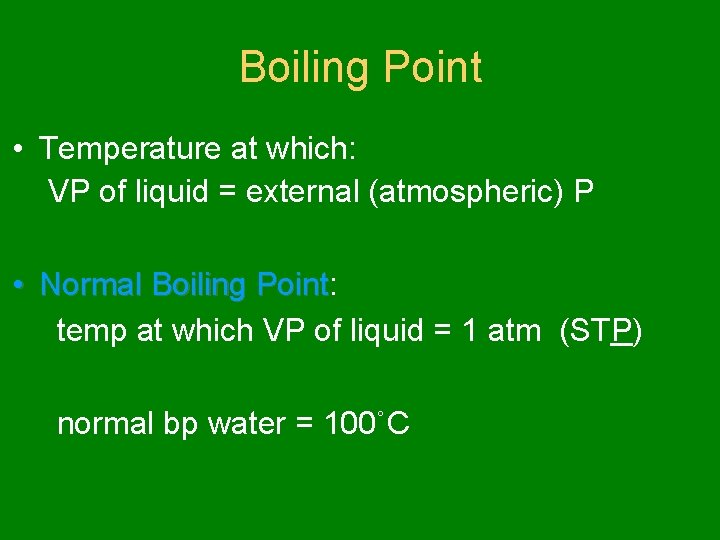
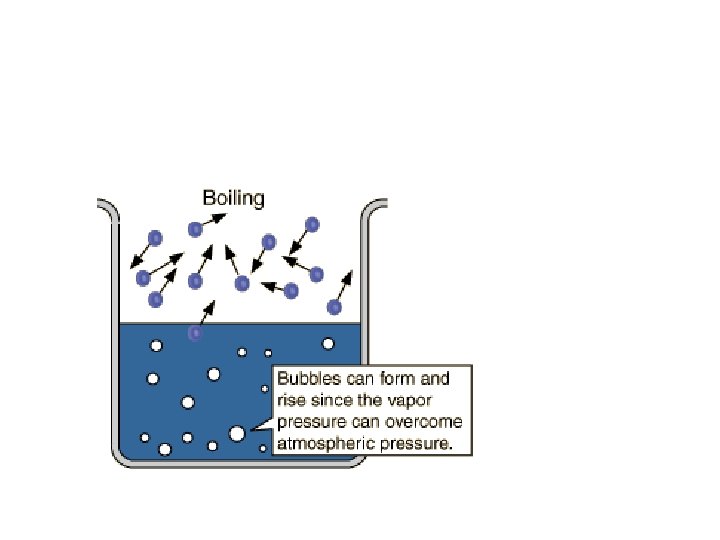
Boiling Point • Temperature at which: VP of liquid = external (atmospheric) P • Normal Boiling Point: Point temp at which VP of liquid = 1 atm (STP) normal bp water = 100˚C
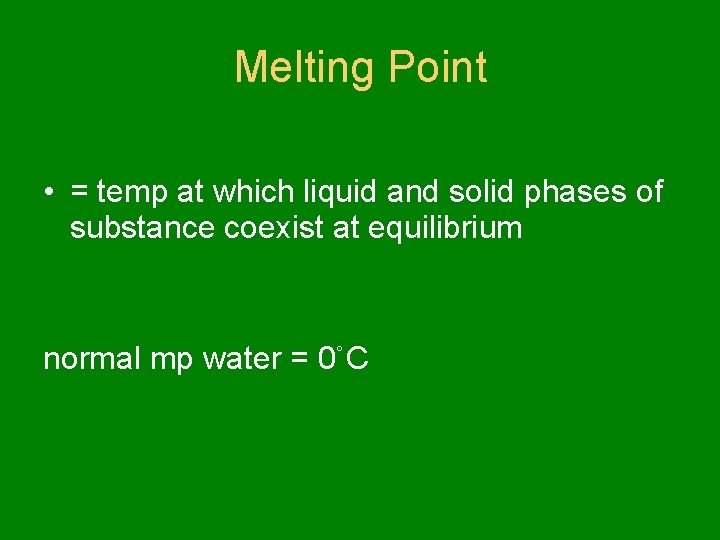
Melting Point • = temp at which liquid and solid phases of substance coexist at equilibrium normal mp water = 0˚C
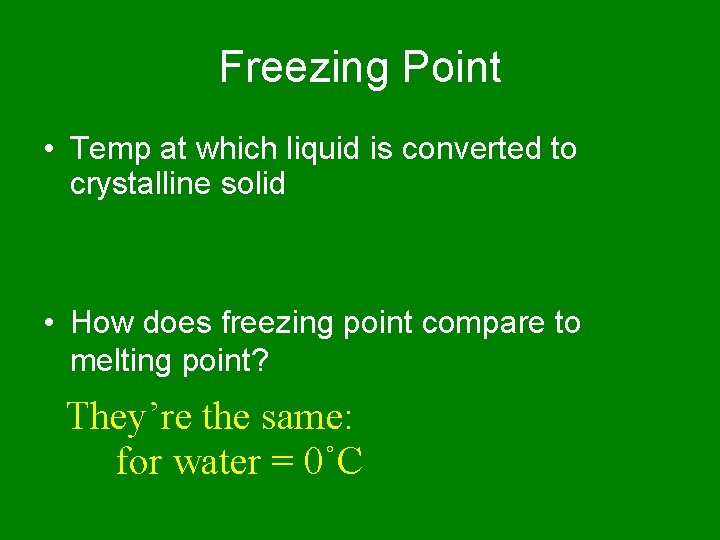
Freezing Point • Temp at which liquid is converted to crystalline solid • How does freezing point compare to melting point? They’re the same: for water = 0˚C
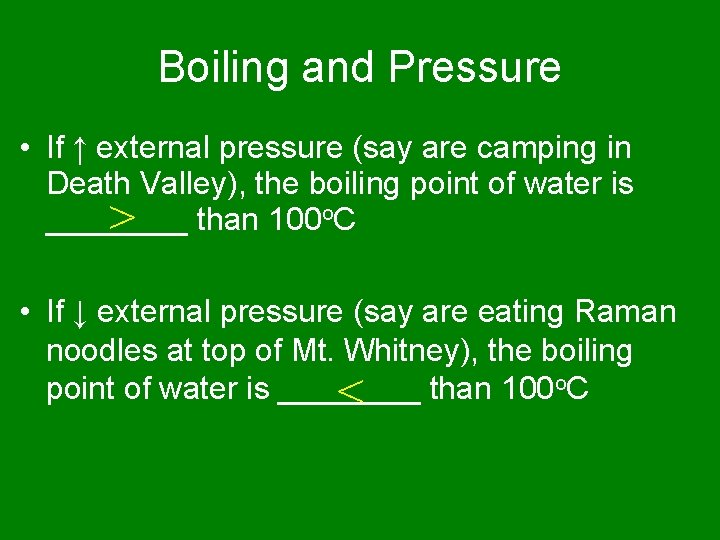
Boiling and Pressure • If ↑ external pressure (say are camping in Death Valley), the boiling point of water is ____ > than 100 o. C • If ↓ external pressure (say are eating Raman noodles at top of Mt. Whitney), the boiling o. C point of water is ____ than 100 <
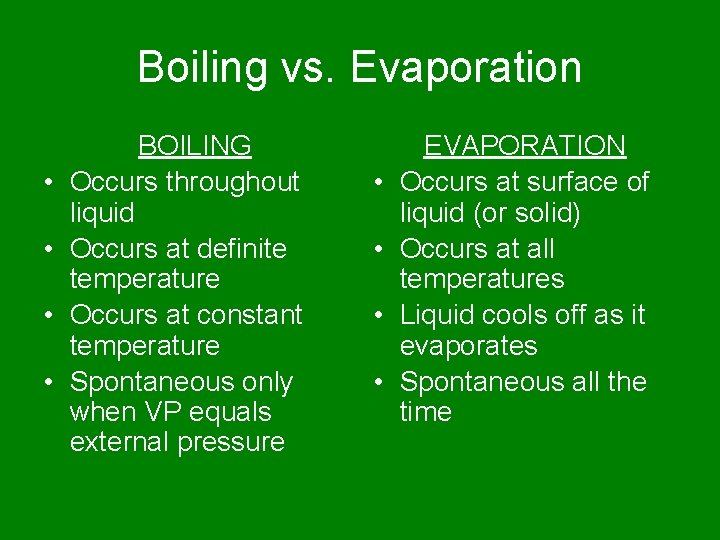
Boiling vs. Evaporation • • BOILING Occurs throughout liquid Occurs at definite temperature Occurs at constant temperature Spontaneous only when VP equals external pressure • • EVAPORATION Occurs at surface of liquid (or solid) Occurs at all temperatures Liquid cools off as it evaporates Spontaneous all the time