
Liquids Solids and Intermolecular Forces Why are molecules
- Slides: 23
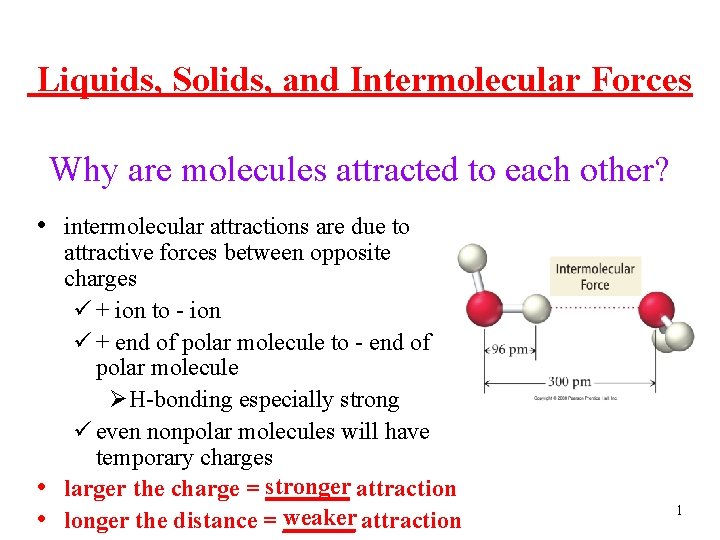
Liquids, Solids, and Intermolecular Forces Why are molecules attracted to each other? • intermolecular attractions are due to • • attractive forces between opposite charges ü + ion to - ion ü + end of polar molecule to - end of polar molecule ØH-bonding especially strong ü even nonpolar molecules will have temporary charges larger the charge = stronger _______ attraction weaker attraction longer the distance = ______ 1
Trends in the Strength of Intermolecular Attraction? • the stronger the attractions between the atoms or • • molecules, the more ____ energy it will take to separate them boiling a liquid requires we add enough energy to overcome the attractions between the molecules or atoms the higher the normal boiling point of the liquid, the stronger the intermolecular attractive forces 2
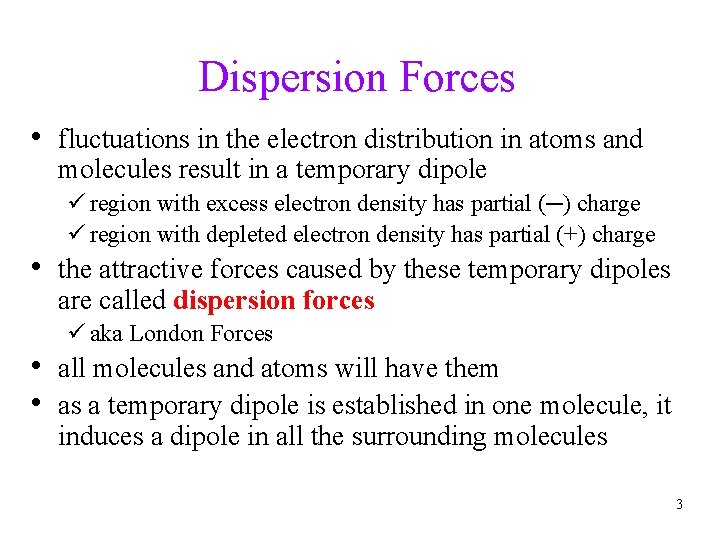
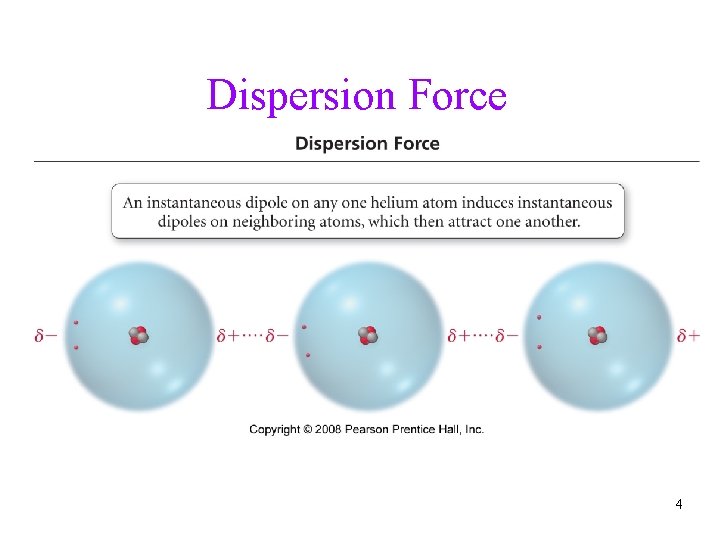
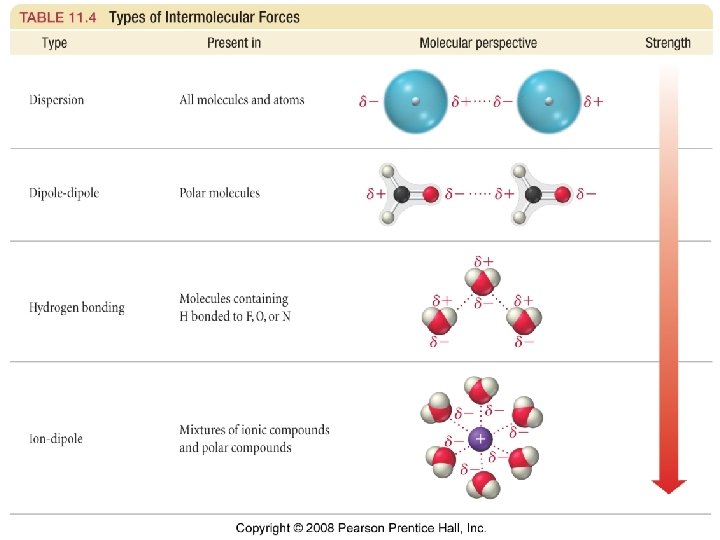
Dispersion Forces • fluctuations in the electron distribution in atoms and molecules result in a temporary dipole ü region with excess electron density has partial (─) charge ü region with depleted electron density has partial (+) charge • the attractive forces caused by these temporary dipoles are called dispersion forces ü aka London Forces • all molecules and atoms will have them • as a temporary dipole is established in one molecule, it induces a dipole in all the surrounding molecules 3
Dispersion Force 4
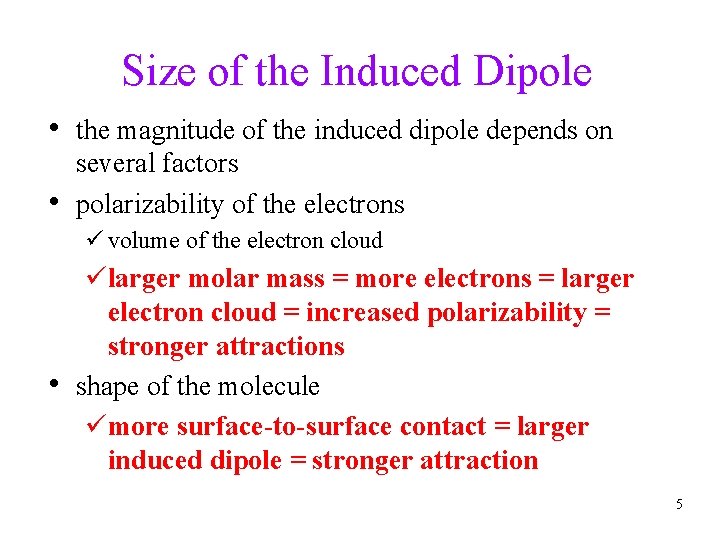
Size of the Induced Dipole • the magnitude of the induced dipole depends on • several factors polarizability of the electrons ü volume of the electron cloud ülarger molar mass = more electrons = larger electron cloud = increased polarizability = stronger attractions • shape of the molecule ümore surface-to-surface contact = larger induced dipole = stronger attraction 5
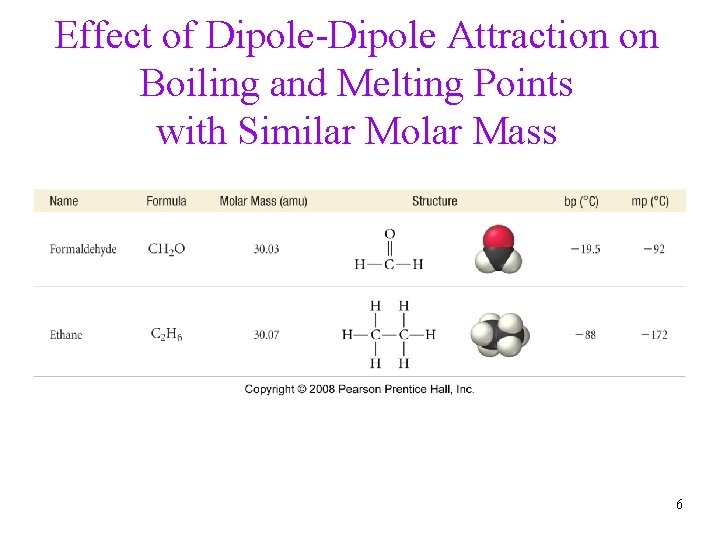
Effect of Dipole-Dipole Attraction on Boiling and Melting Points with Similar Molar Mass 6
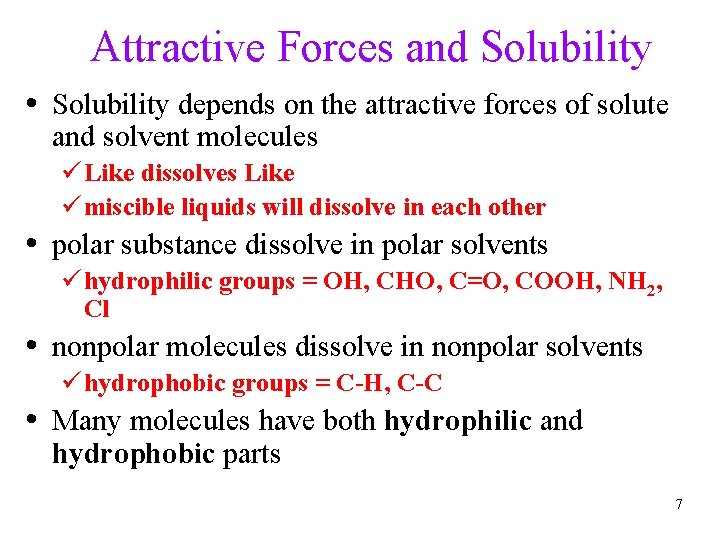
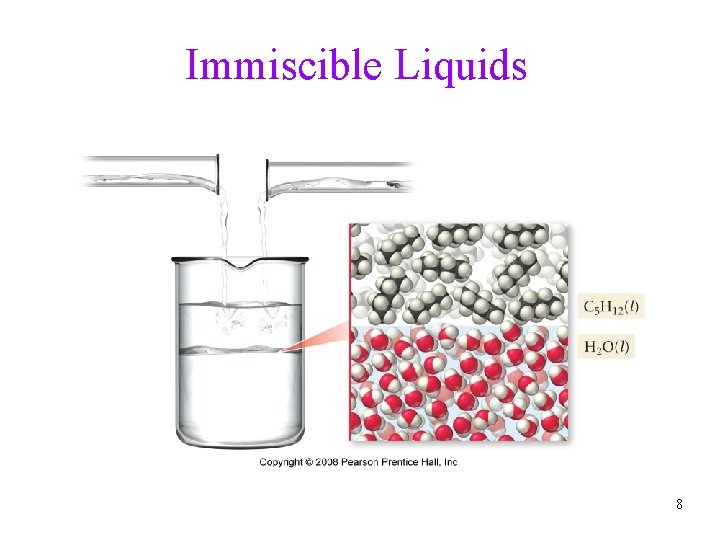
Attractive Forces and Solubility • Solubility depends on the attractive forces of solute and solvent molecules ü Like dissolves Like ü miscible liquids will dissolve in each other • polar substance dissolve in polar solvents ü hydrophilic groups = OH, CHO, C=O, COOH, NH 2, Cl • nonpolar molecules dissolve in nonpolar solvents ü hydrophobic groups = C-H, C-C • Many molecules have both hydrophilic and hydrophobic parts 7
Immiscible Liquids 8
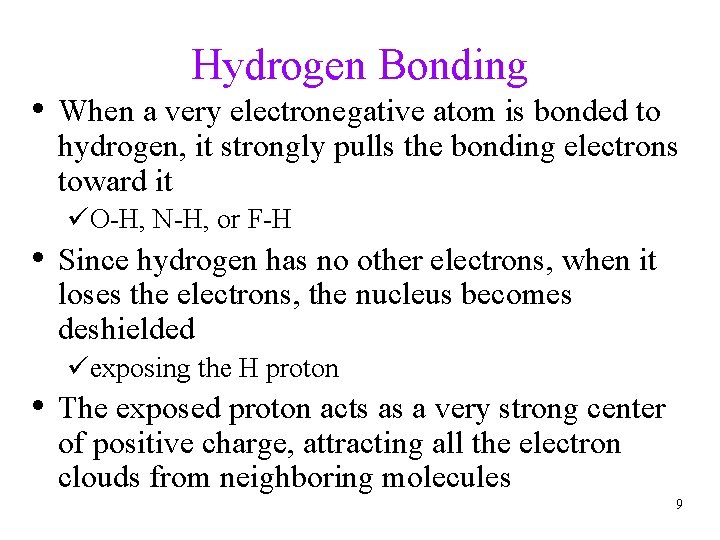
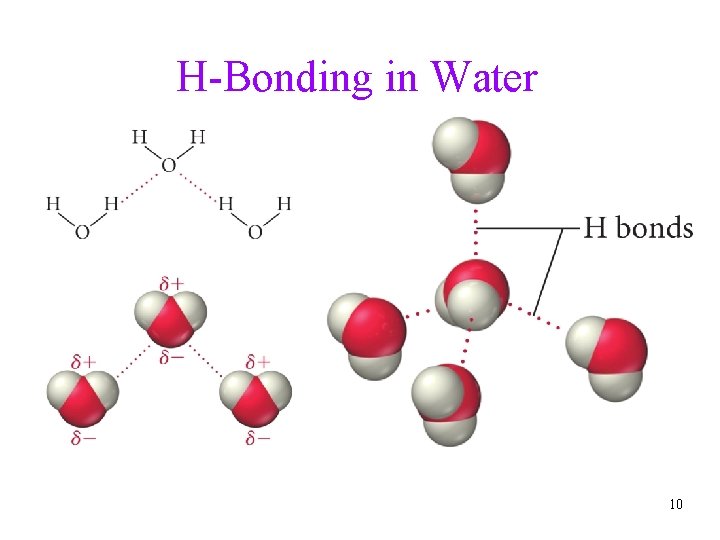
Hydrogen Bonding • When a very electronegative atom is bonded to hydrogen, it strongly pulls the bonding electrons toward it üO-H, N-H, or F-H • Since hydrogen has no other electrons, when it loses the electrons, the nucleus becomes deshielded üexposing the H proton • The exposed proton acts as a very strong center of positive charge, attracting all the electron clouds from neighboring molecules 9
H-Bonding in Water 10
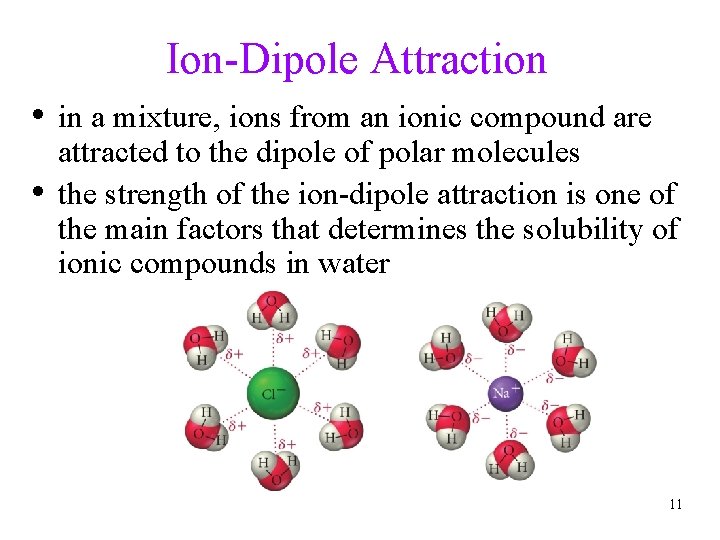
Ion-Dipole Attraction • in a mixture, ions from an ionic compound are • attracted to the dipole of polar molecules the strength of the ion-dipole attraction is one of the main factors that determines the solubility of ionic compounds in water 11
12
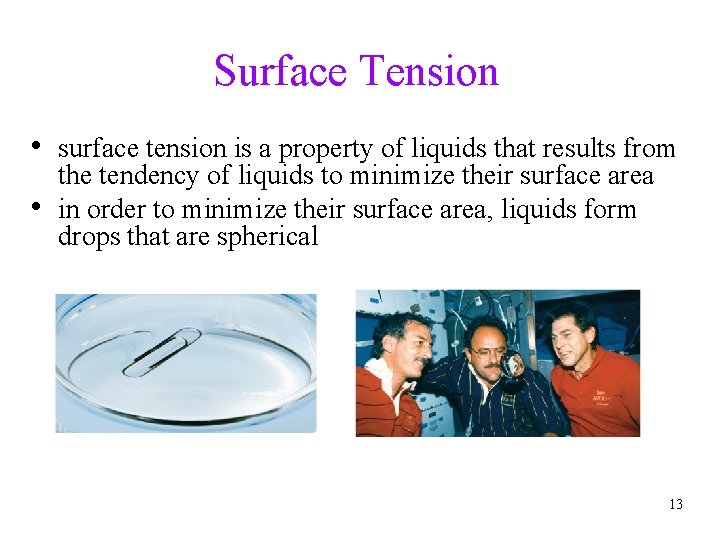
Surface Tension • surface tension is a property of liquids that results from • the tendency of liquids to minimize their surface area in order to minimize their surface area, liquids form drops that are spherical 13
Factors Affecting Surface Tension • the stronger the intermolecular attractive forces, • the higher the surface tension will be raising the temperature of a liquid reduces its surface tension üraising the temperature of the liquid increases the average kinetic energy of the molecules 14
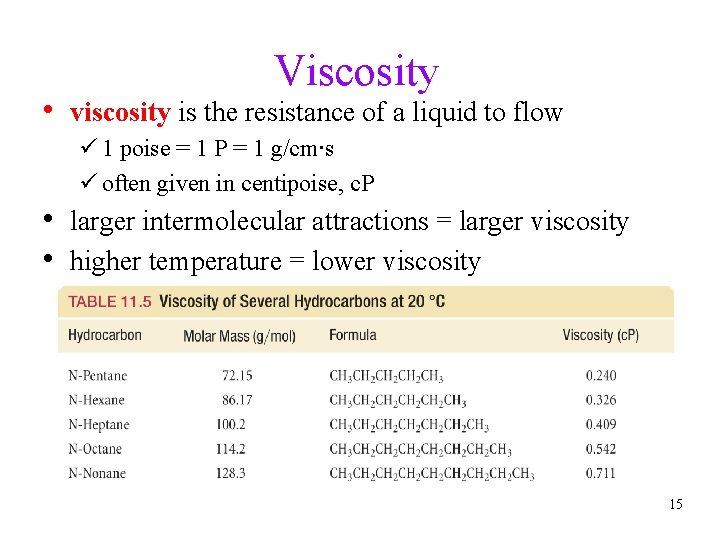
Viscosity • viscosity is the resistance of a liquid to flow ü 1 poise = 1 P = 1 g/cm∙s ü often given in centipoise, c. P • larger intermolecular attractions = larger viscosity • higher temperature = lower viscosity 15
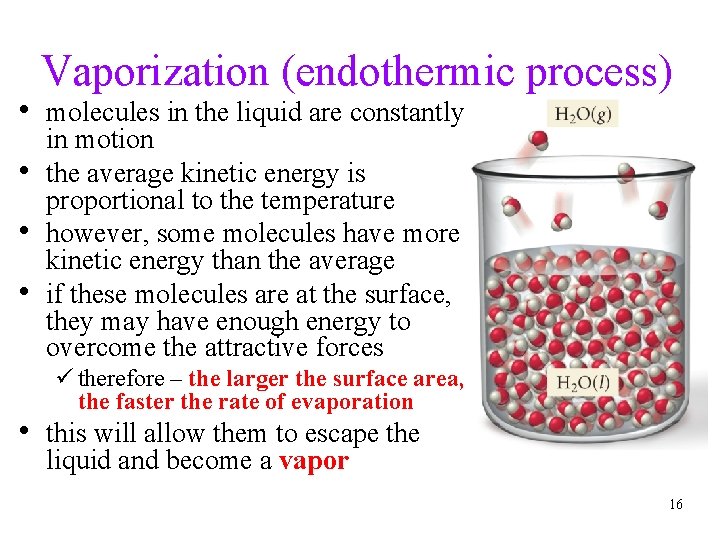
Vaporization (endothermic process) • molecules in the liquid are constantly • • • in motion the average kinetic energy is proportional to the temperature however, some molecules have more kinetic energy than the average if these molecules are at the surface, they may have enough energy to overcome the attractive forces ü therefore – the larger the surface area, the faster the rate of evaporation • this will allow them to escape the liquid and become a vapor 16
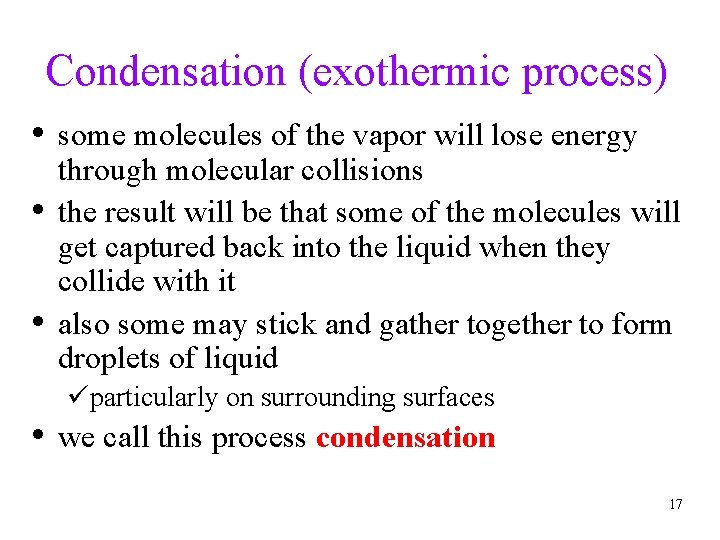
Condensation (exothermic process) • some molecules of the vapor will lose energy • • through molecular collisions the result will be that some of the molecules will get captured back into the liquid when they collide with it also some may stick and gather together to form droplets of liquid üparticularly on surrounding surfaces • we call this process condensation 17
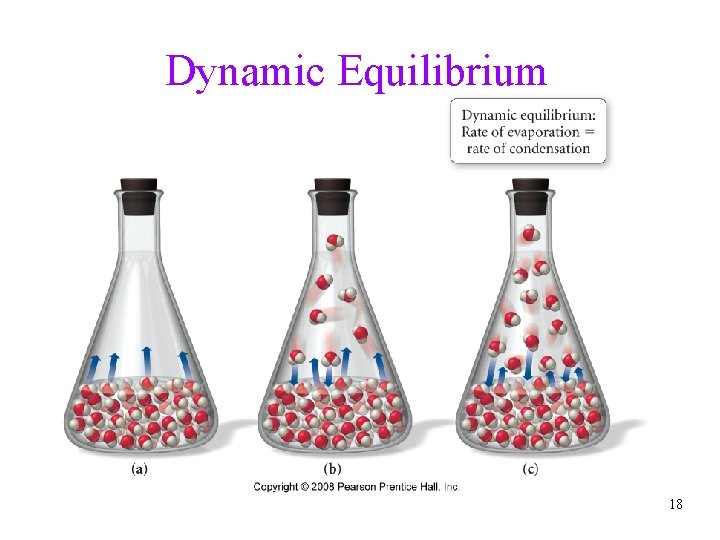
Dynamic Equilibrium 18
Vapor Pressure • the pressure exerted by the vapor when it is in dynamic • • equilibrium with its liquid is called the vapor pressure the weaker the attractive forces between the molecules, the more molecules will be in the vapor therefore, the weaker the attractive forces, the higher the vapor pressure ü the higher the vapor pressure, the more volatile the liquid 19
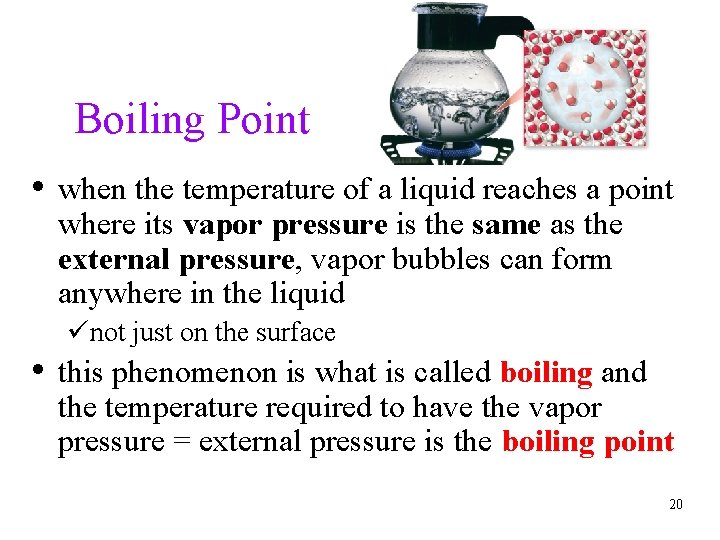
Boiling Point • when the temperature of a liquid reaches a point where its vapor pressure is the same as the external pressure, vapor bubbles can form anywhere in the liquid ünot just on the surface • this phenomenon is what is called boiling and the temperature required to have the vapor pressure = external pressure is the boiling point 20
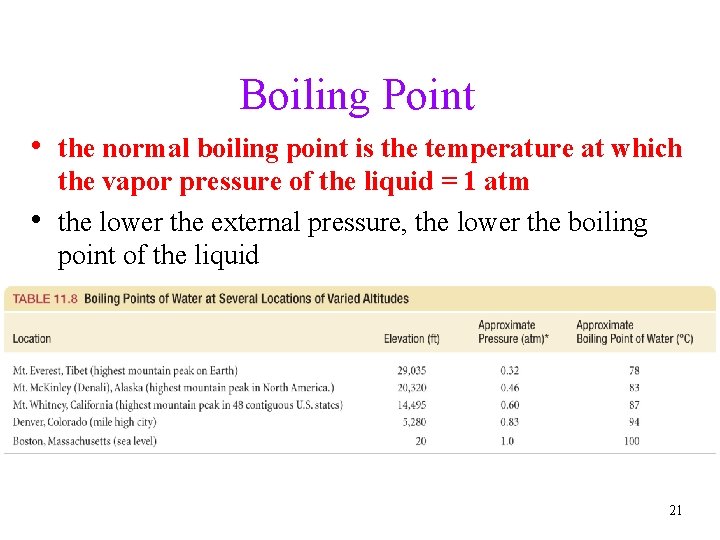
Boiling Point • the normal boiling point is the temperature at which • the vapor pressure of the liquid = 1 atm the lower the external pressure, the lower the boiling point of the liquid 21
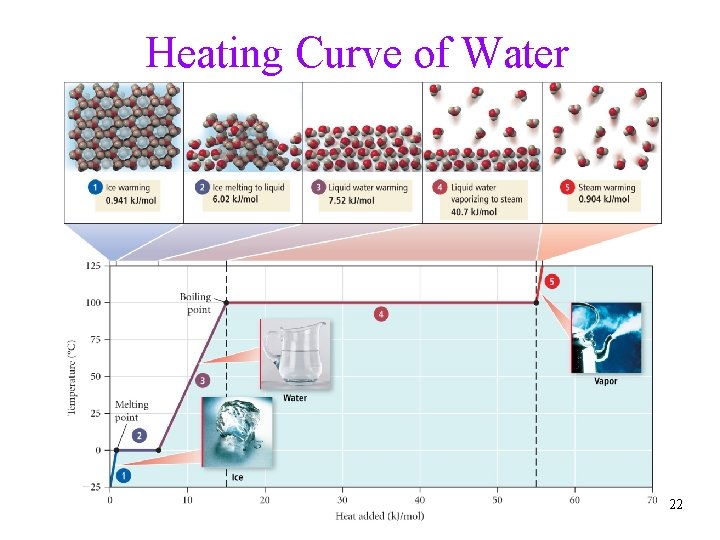
Heating Curve of Water 22
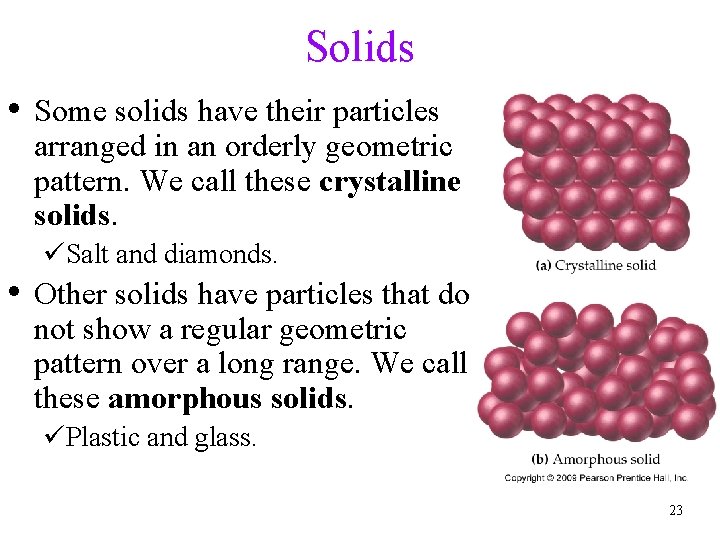
Solids • Some solids have their particles arranged in an orderly geometric pattern. We call these crystalline solids. üSalt and diamonds. • Other solids have particles that do not show a regular geometric pattern over a long range. We call these amorphous solids. üPlastic and glass. 23