
LIQUID PRV INSTABILITY TEAM RECOMMENDATIONS API520 Subcommittee November
LIQUID PRV INSTABILITY TEAM RECOMMENDATIONS API-520 Subcommittee November 14, 2011 Brad Otis Principal HSE Consultant Shell Global Solutions (US) Inc. © 2011 Shell Global Solutions (US) Inc. All rights reserved. 10/25/2011 1
The companies in which Royal Dutch Shell plc directly or indirectly owns investments are separate entities. In this presentation the expressions "Shell", "Group" and "Shell Group" are sometimes used for convenience where references are made to Group companies in general. Likewise the words "we", "us" and "our" are also used to refer to Group companies in general or those who work for them. The expressions are also used where there is no purpose in identifying specific companies. Shell Global Solutions is a network of independent technology companies in the Shell Group. In this presentation the expression ‘Shell Global Solutions’ is sometimes used for convenience where reference is made to these companies in general, or where no useful purpose is served by identifying a particular company. The information contained in this presentation contains forward-looking statements, that are subject to risk factors which may affect the outcome of the matters covered. None of Shell International B. V. , any other Shell company and their respective officers, employees and agents represents the accuracy or completeness of the information set forth in this presentation and none of the foregoing shall be liable for any loss, cost, expense or damage (whether arising from negligence or otherwise) relating to the use of such information. The information contained in this presentation is intended to be general in nature and must not be relied on as specific advice in connection with any decisions you may make. Shell Global Solutions is not liable for any action you may take as a result of you relying on such material or for any loss or damage suffered by you as a result of you taking this action. Furthermore, these materials do not in any way constitute an offer to provide specific services. Some services may not be available in certain countries or political subdivisions thereof. Copyright © 2011 Shell Global Solutions (US) Inc. All copyright and other (intellectual property) rights in all text, images and other information contained in this presentation are the property of Shell International B. V. or other Shell companies. Permission should be sought from Shell International B. V. before any part of this presentation is reproduced, stored or transmitted by any means, electronic or mechanical including by photocopy, recording or information storage and retrieval system. 1/4/2022 2

Objective 1. Share team’s recommendations for API-520 Parts I & II 2. Explain technical basis and potential issues 3. Layout a plan that provides effective and practical guidance to avoid liquid PRV chatter 1/4/2022 3
Agenda • Liquid PRV Instability Team • Findings 1 -4 • Acoustics • The Acoustic Effect • Proposed Acoustic Criteria o PRV Inlet Line Length o Maximum Acoustic Length o Speed of Sound o PRV Opening Time • Proposed Design Criteria • Significance • Homework 1/4/2022 4
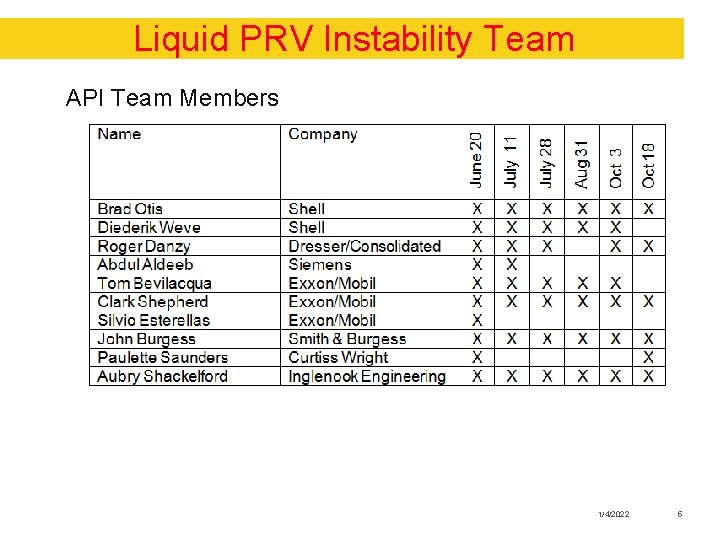
Liquid PRV Instability Team API Team Members 1/4/2022 5

Liquid PRV Instability Team Mission o Get clarity on the relative susceptibility of PRV instability with liquid reliefs o Give user, as a minimum, qualitative guidance for designing/installing PRVs intended for liquid relief service. o Give user guidance to avoid liquid relief related PRV stability issues The team recommendations need to be vetted with the API-520 Subcommittee 1/4/2022 6

Finding #1: Vapor certified PRVs relieving liquid are significantly more susceptible to PRV chatter than liquid certified PRVs relieving liquid o See “PRV Chatter Incidents” presentation by Brad Otis Spring 2011 API-520 meeting o This has been observed on PRV test stands § Valves of up to 2” size have chattered on the test stand (larger valves are more difficult to test). o Liquid chatter damaged PRVs have been received from the field 1/4/2022 7

Finding #1 o Vapor certified PRVs are not very modulating when relieving liquid PRV performance when relieving vapor Modulating PRV performance when relieving liquid Modulating? 1/4/2022 8
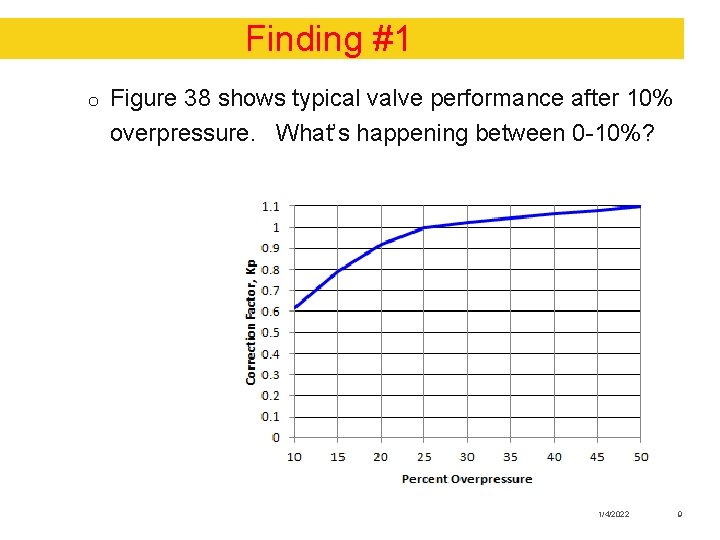
Finding #1 o Figure 38 shows typical valve performance after 10% overpressure. What’s happening between 0 -10%? 1/4/2022 9

Finding #1 o Figure 38 shows typical valve performance after 10% overpressure. What’s happening between 0 -10%? ? 1/4/2022 10
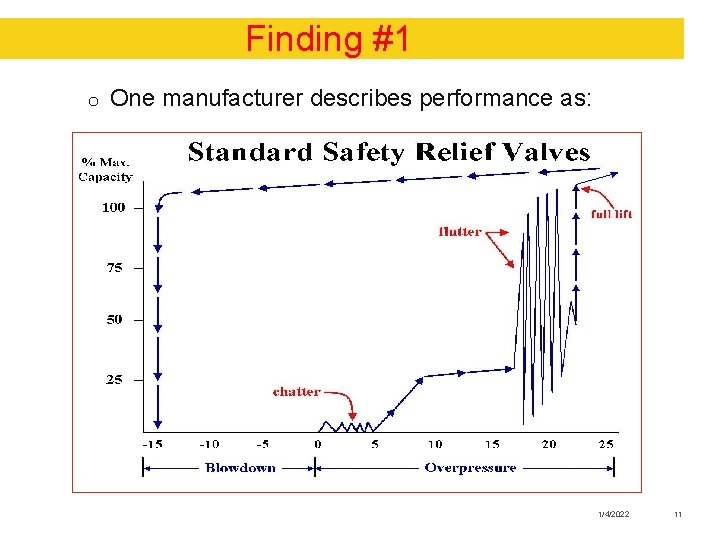
Finding #1 o One manufacturer describes performance as: 1/4/2022 11
Finding #1 o With liquid, these valves can momentarily pop wide open o o Recommend NOT using required relief for inlet pressure drop calculations when relieving liquid Consider using maximum liquid flow for inlet pressure drop calculation (P=1. 1*set and Kp =1. 0 instead of 0. 6) o Valves are very sensitive to oversizing o o Higher instability if relief load is well below PRV capacity Can be stable with restricted lift o Modern vapor certified valves relieving liquid do not need 25% overpressure to achieve full lift. o Use of Figure 38 with modern valves will increase valve over-sizing and their propensity to chatter 1/4/2022 12

Finding #2: There may be opportunities with API 520 Parts 1 and 2 to clearly describe this issue and provide clearer guidance o Neither have a section on PRV selection considerations o Liquid relief chatter is described in API-520 Part I* but this comes across as a description of history, not valve selection guidance. “Where liquid PRVs were required to operate within the accumulation limit of 10% a conservative factor was applied to the valve capacity when sizing the valves. Consequently, many installations were oversized and instability often resulted. ” 1/4/2022 13

Finding #2 o Liquid relief chatter is described in API-520 Part I in Figure 38, but only in a note: 1/4/2022 14

Finding #3: Adjustments and add-ons not likely to improve PRV stability o Blowdown adjustments may not reduce liquid PRV chatter o o Conflicting guidance from different manufacturers on raising or lowering blowdown rings Some operating companies have not observed any positive effect o Dampeners not likely to help with most PRVs o o o One PRV mfg offers these for smaller valves Unclear if this would be effective for larger valves Dampeners currently are not permitted by ASME Section VIII Code 1/4/2022 15
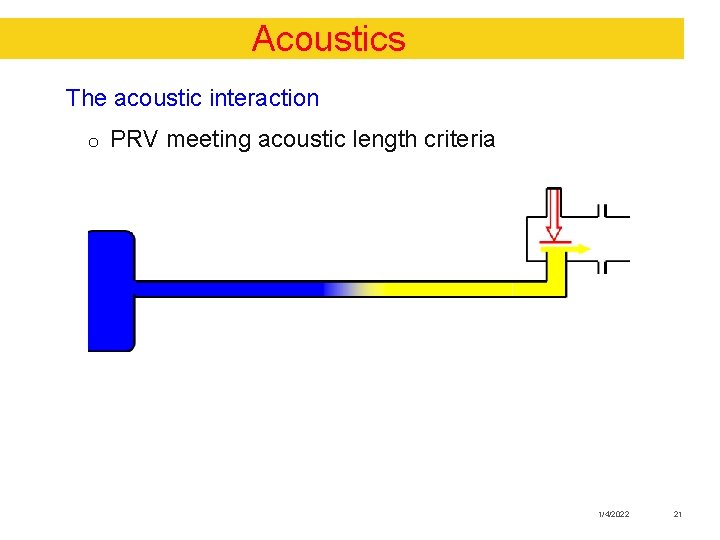
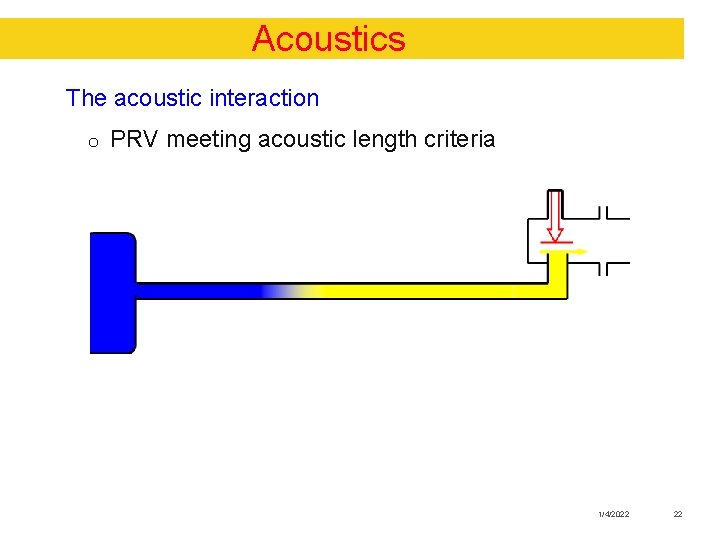
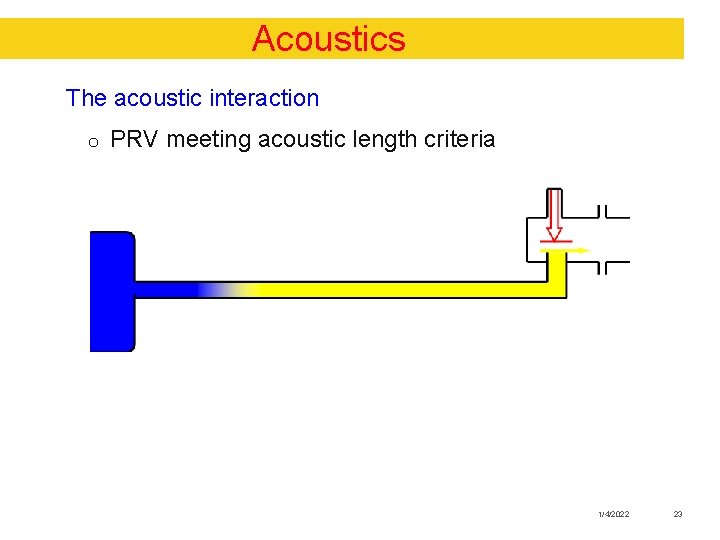
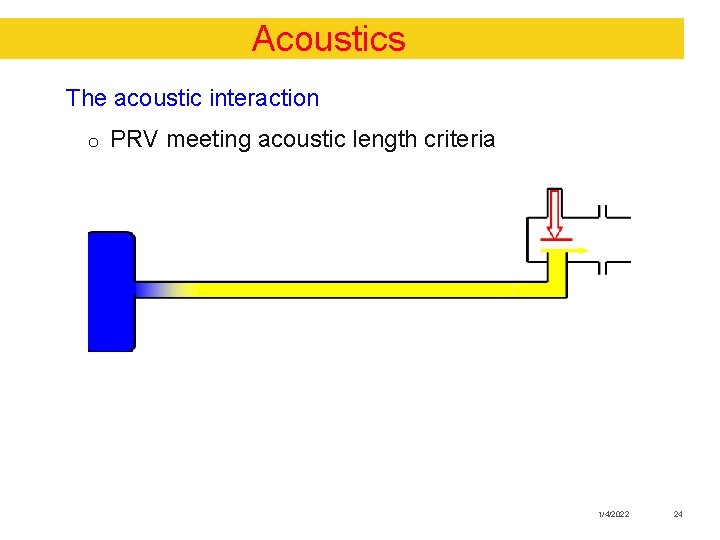
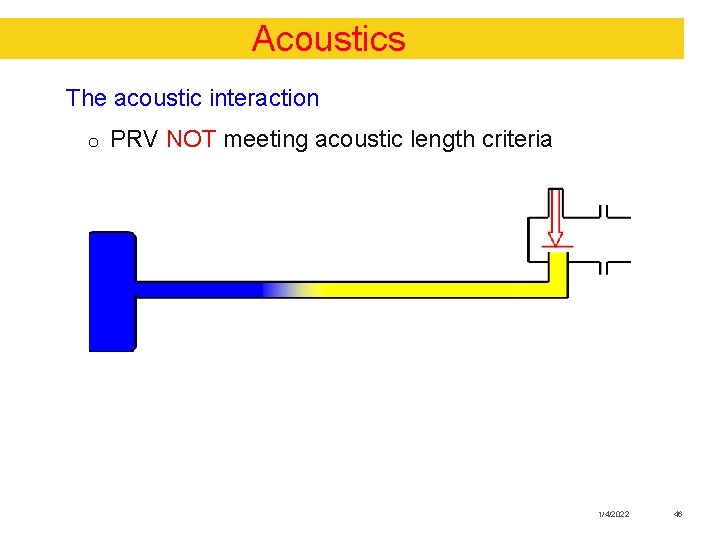
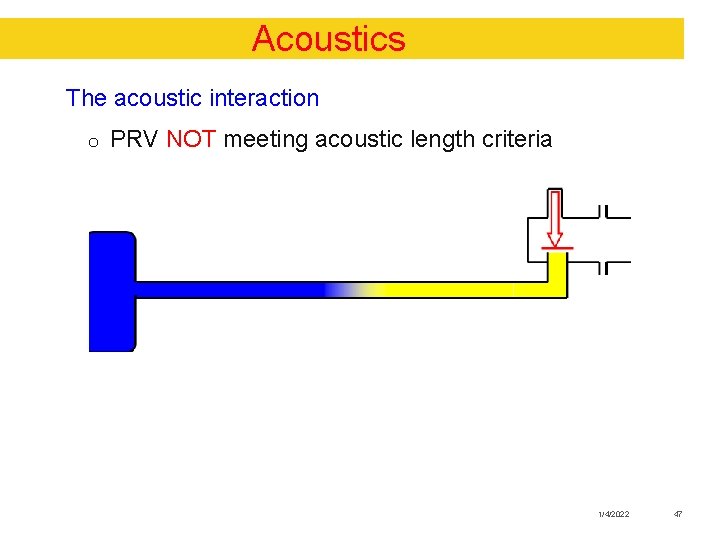
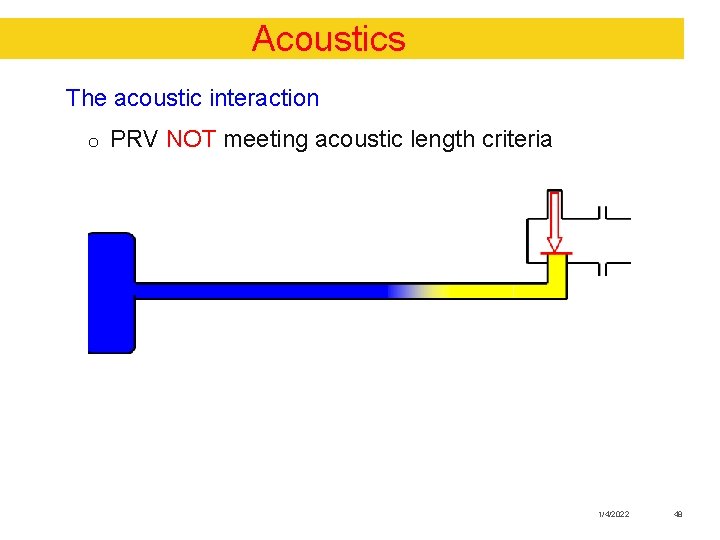
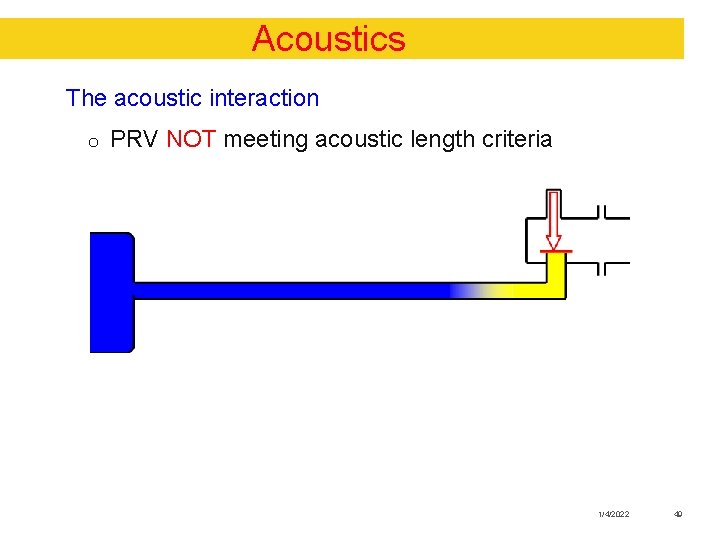
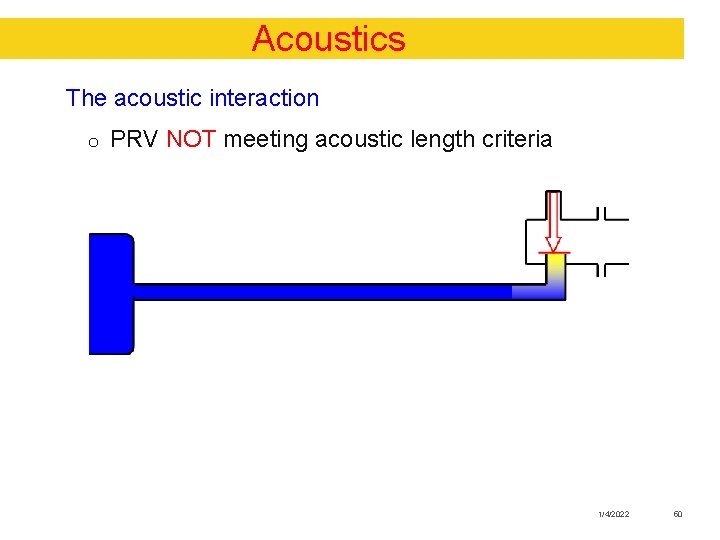
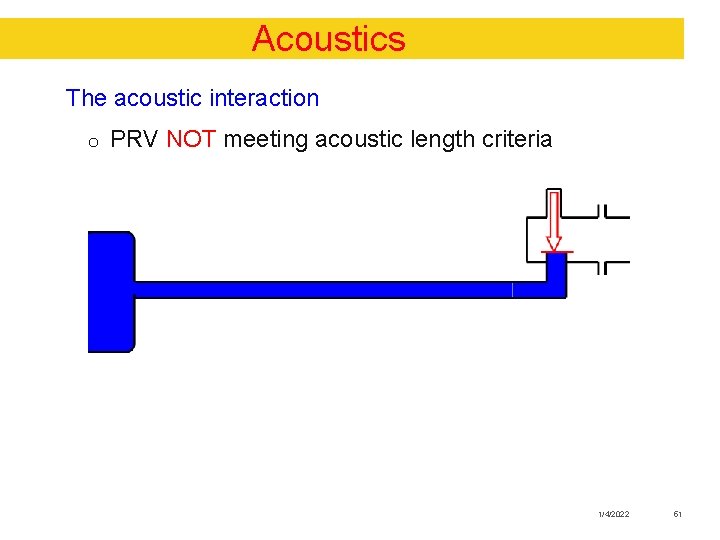
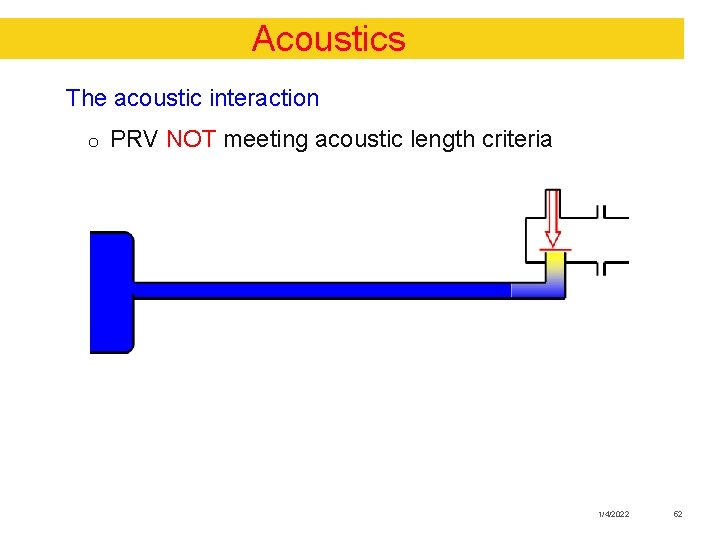
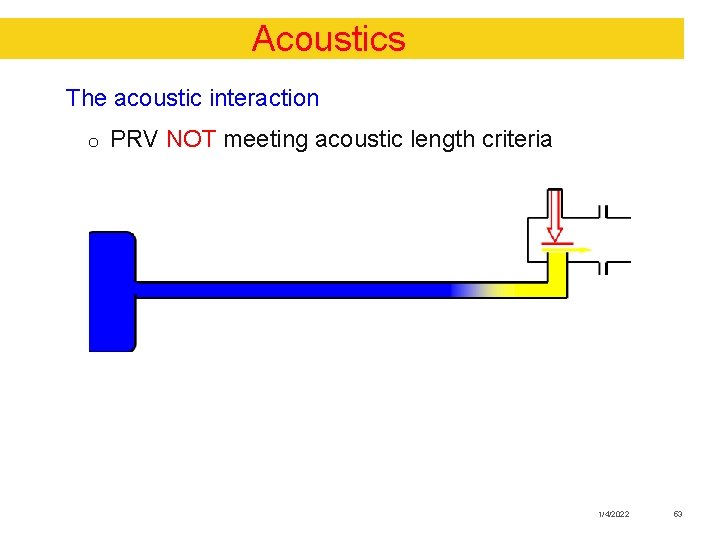
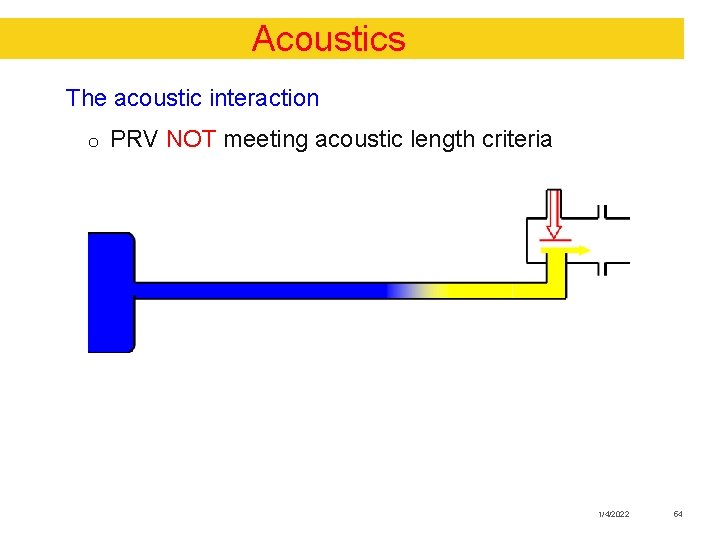
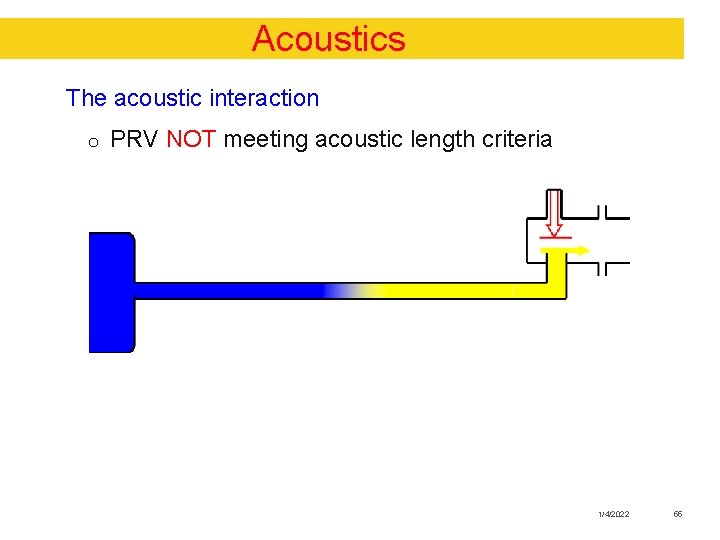
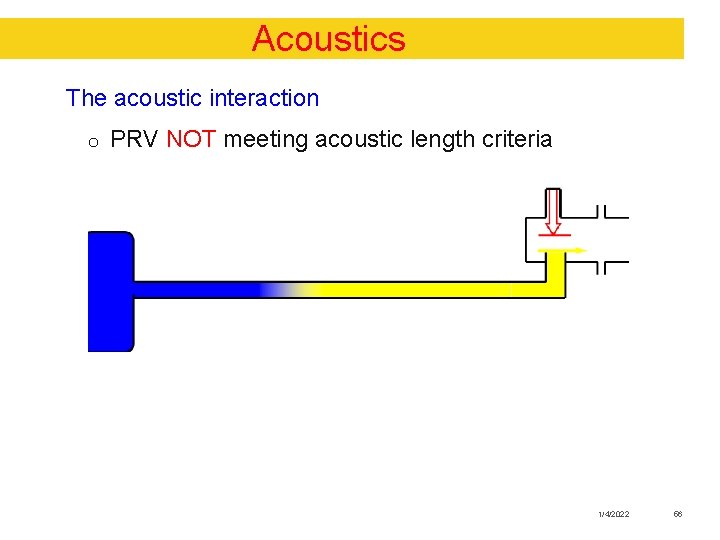
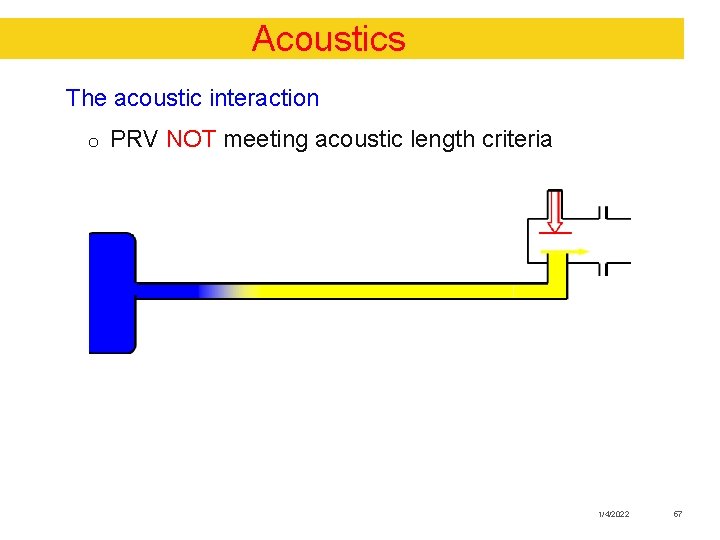
Finding #4 PRVs have an acoustic interaction with their inlet line o PRVs are dynamic devices • Mass and spring rates • Response time (time to open) • Sensitive to inlet pressure o PRV inlet pressure is dynamic • Pressure at the PRV depends how quickly the PRV opens • How quickly the pressure signal can be transmitted down the PRV inlet line 1/4/2022 16
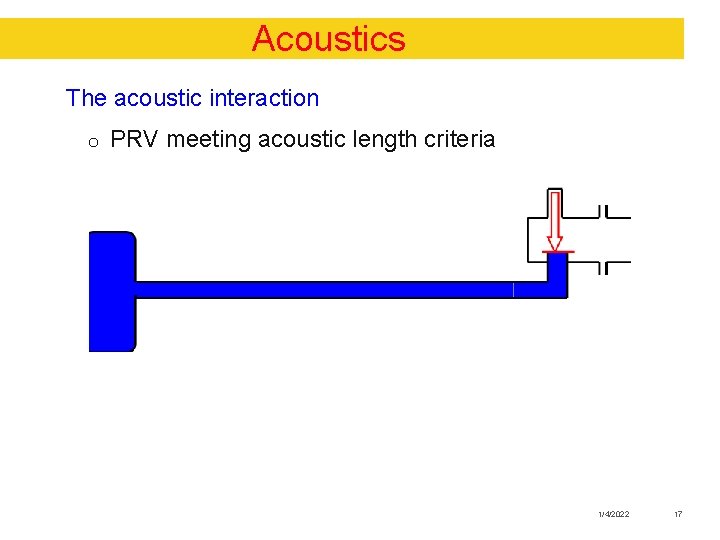
Acoustics The acoustic interaction o PRV meeting acoustic length criteria 1/4/2022 17
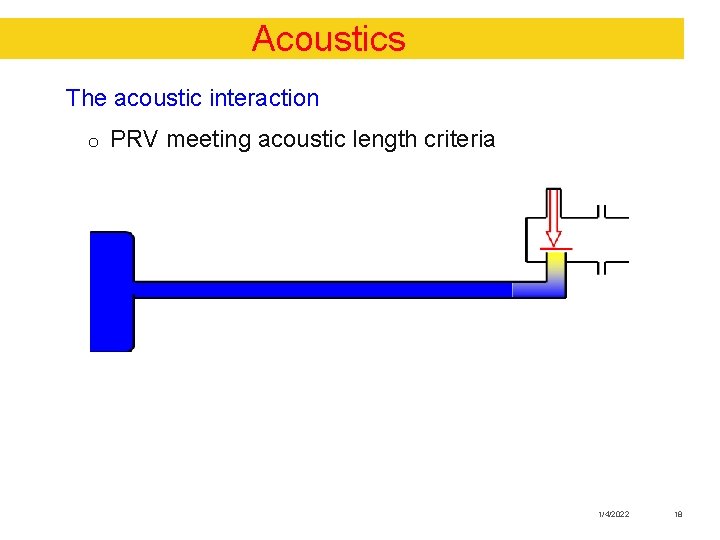
Acoustics The acoustic interaction o PRV meeting acoustic length criteria 1/4/2022 18
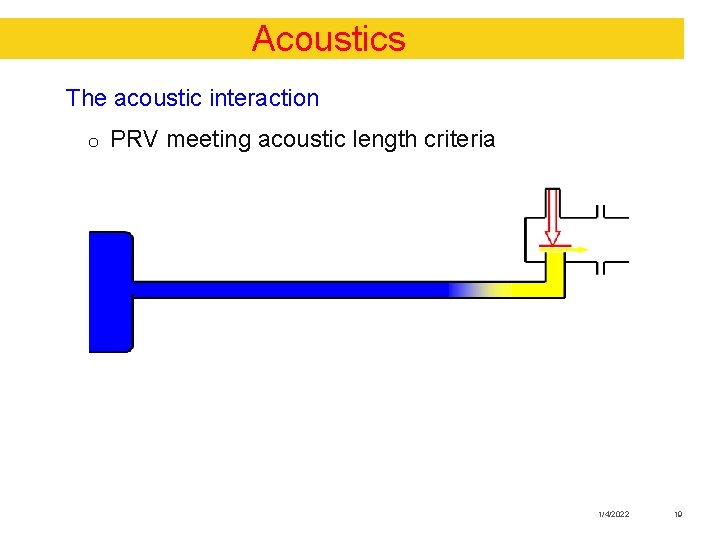
Acoustics The acoustic interaction o PRV meeting acoustic length criteria 1/4/2022 19
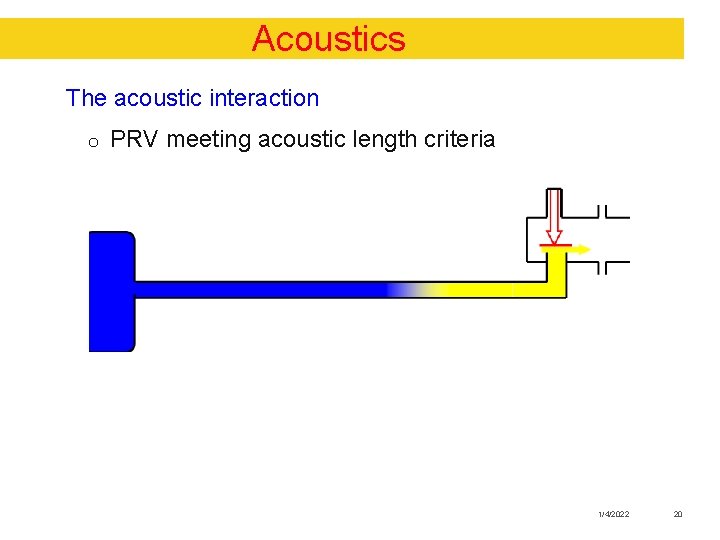
Acoustics The acoustic interaction o PRV meeting acoustic length criteria 1/4/2022 20
Acoustics The acoustic interaction o PRV meeting acoustic length criteria 1/4/2022 21
Acoustics The acoustic interaction o PRV meeting acoustic length criteria 1/4/2022 22
Acoustics The acoustic interaction o PRV meeting acoustic length criteria 1/4/2022 23
Acoustics The acoustic interaction o PRV meeting acoustic length criteria 1/4/2022 24
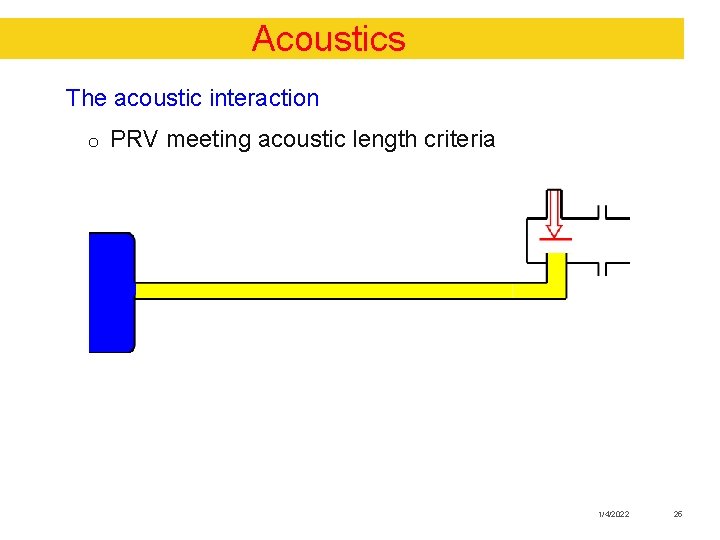
Acoustics The acoustic interaction o PRV meeting acoustic length criteria 1/4/2022 25
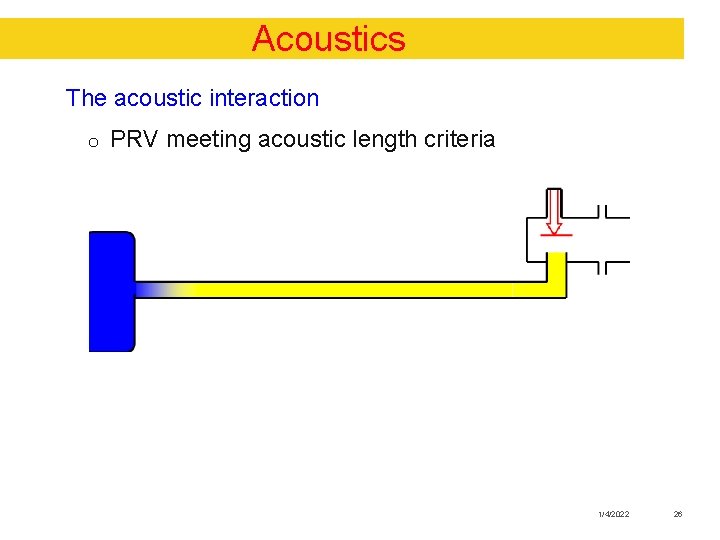
Acoustics The acoustic interaction o PRV meeting acoustic length criteria 1/4/2022 26
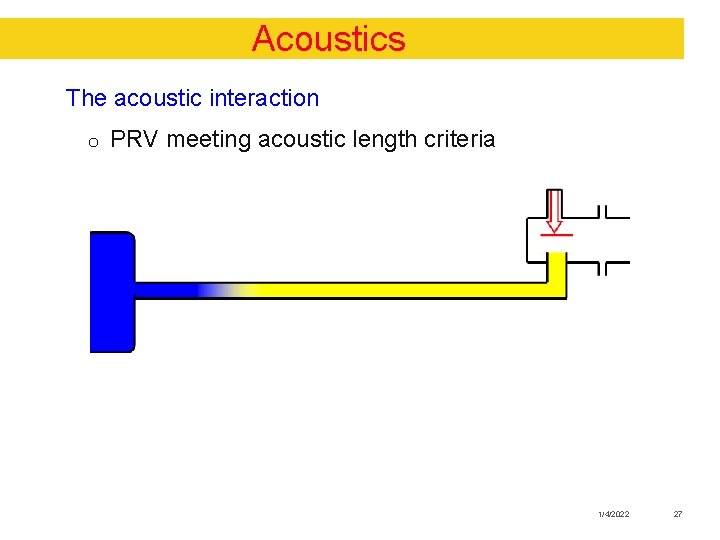
Acoustics The acoustic interaction o PRV meeting acoustic length criteria 1/4/2022 27
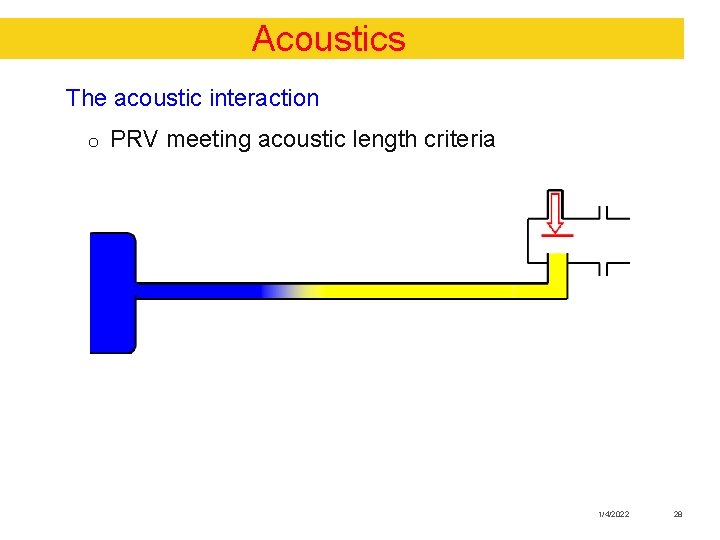
Acoustics The acoustic interaction o PRV meeting acoustic length criteria 1/4/2022 28
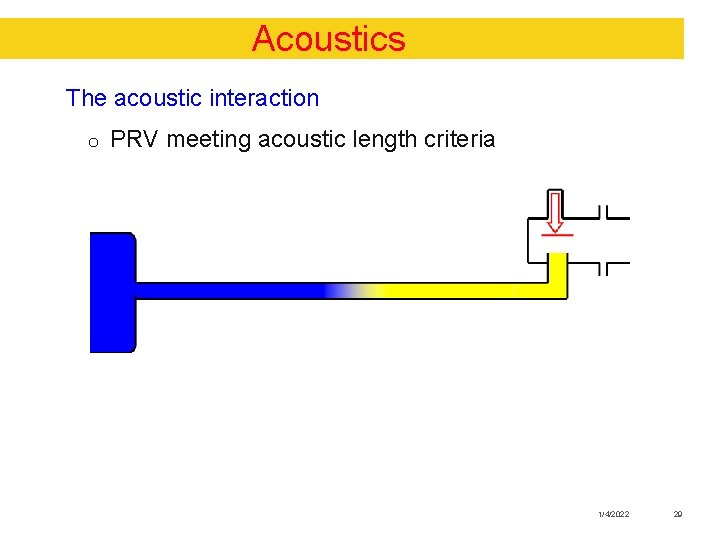
Acoustics The acoustic interaction o PRV meeting acoustic length criteria 1/4/2022 29
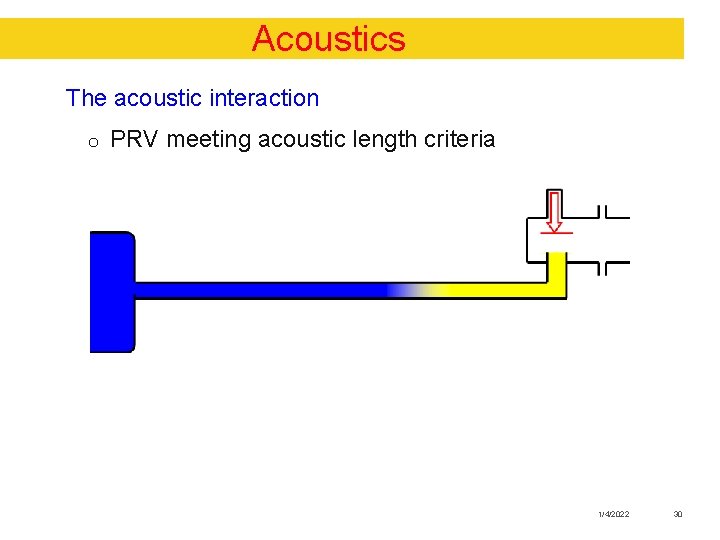
Acoustics The acoustic interaction o PRV meeting acoustic length criteria 1/4/2022 30
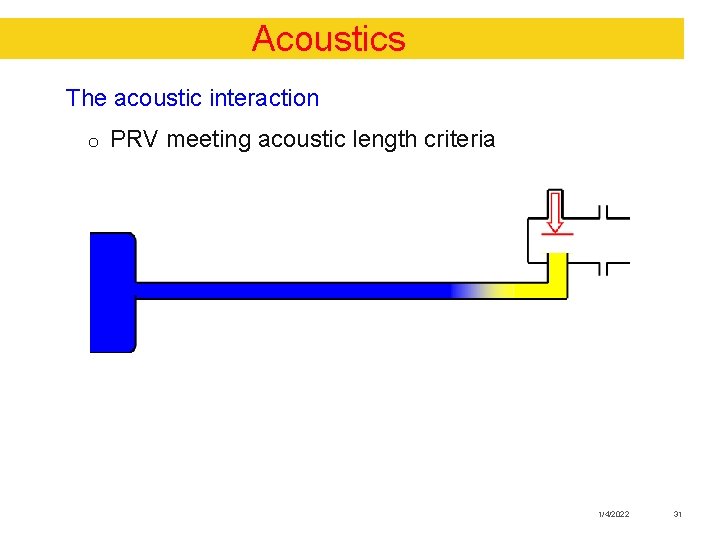
Acoustics The acoustic interaction o PRV meeting acoustic length criteria 1/4/2022 31
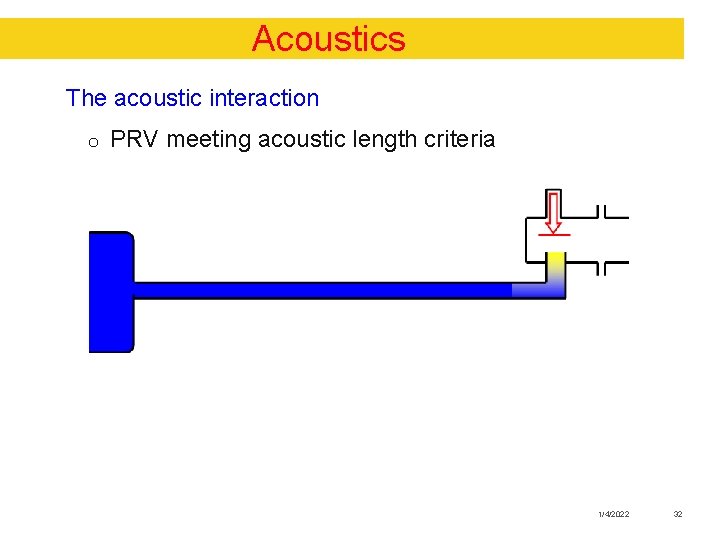
Acoustics The acoustic interaction o PRV meeting acoustic length criteria 1/4/2022 32
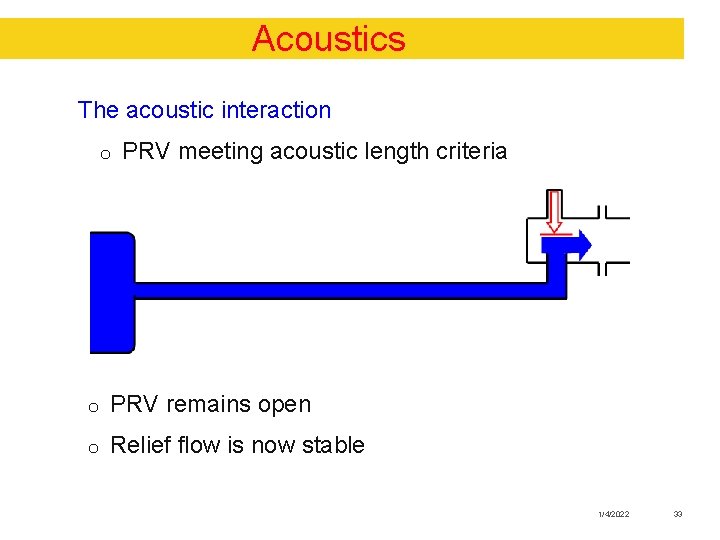
Acoustics The acoustic interaction o PRV meeting acoustic length criteria o PRV remains open o Relief flow is now stable 1/4/2022 33

1/4/2022 34
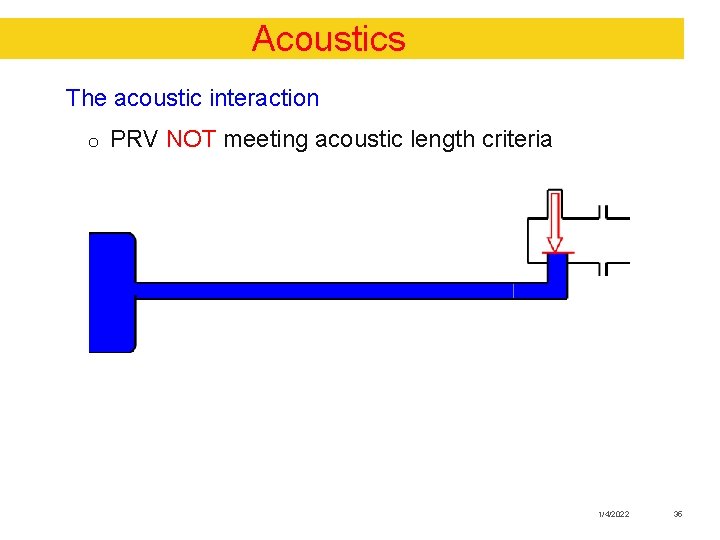
Acoustics The acoustic interaction o PRV NOT meeting acoustic length criteria 1/4/2022 35
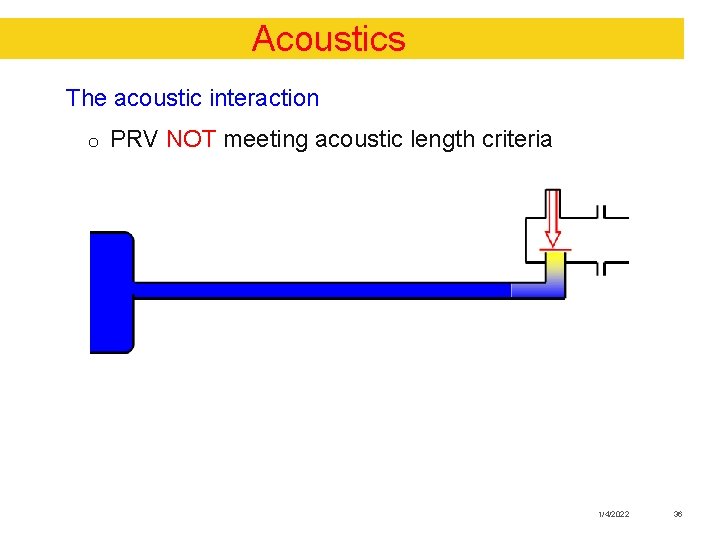
Acoustics The acoustic interaction o PRV NOT meeting acoustic length criteria 1/4/2022 36
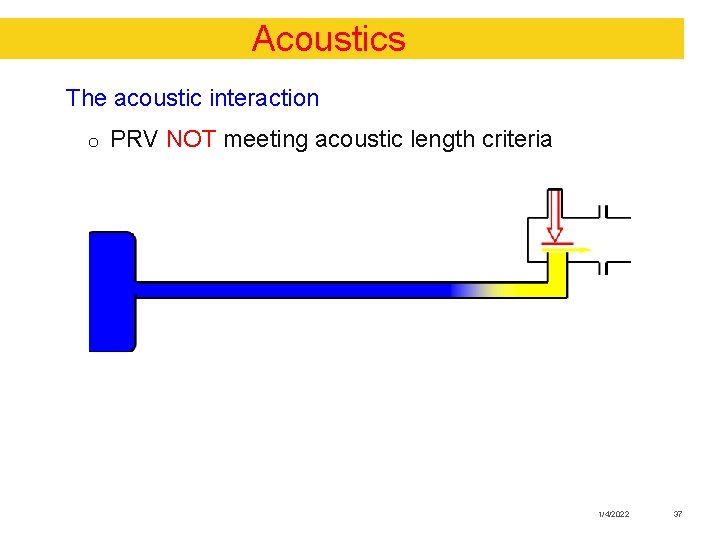
Acoustics The acoustic interaction o PRV NOT meeting acoustic length criteria 1/4/2022 37
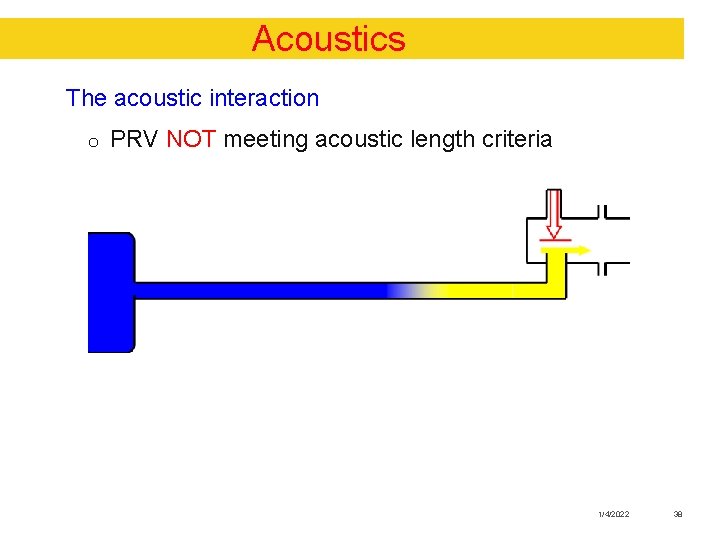
Acoustics The acoustic interaction o PRV NOT meeting acoustic length criteria 1/4/2022 38
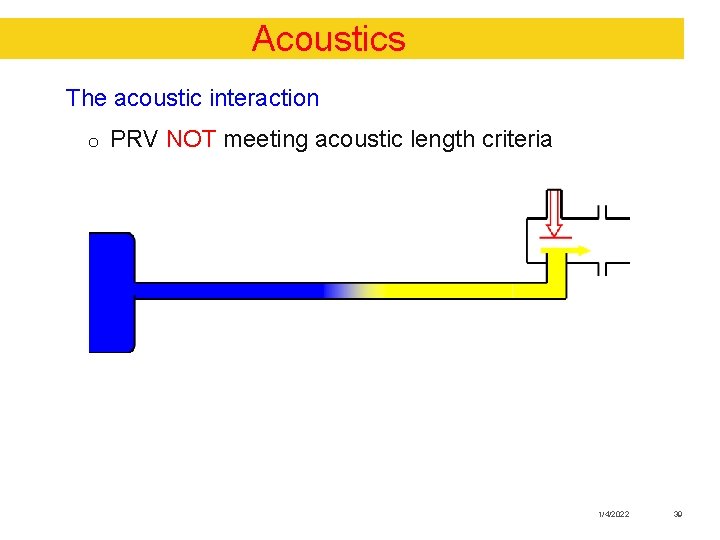
Acoustics The acoustic interaction o PRV NOT meeting acoustic length criteria 1/4/2022 39
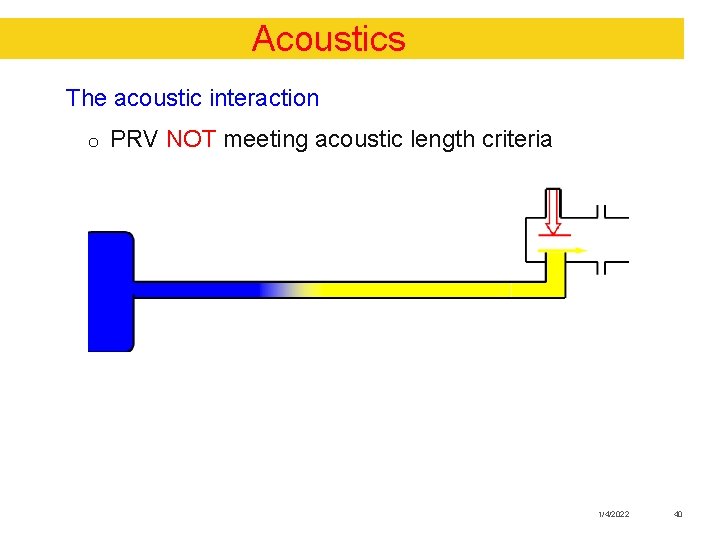
Acoustics The acoustic interaction o PRV NOT meeting acoustic length criteria 1/4/2022 40
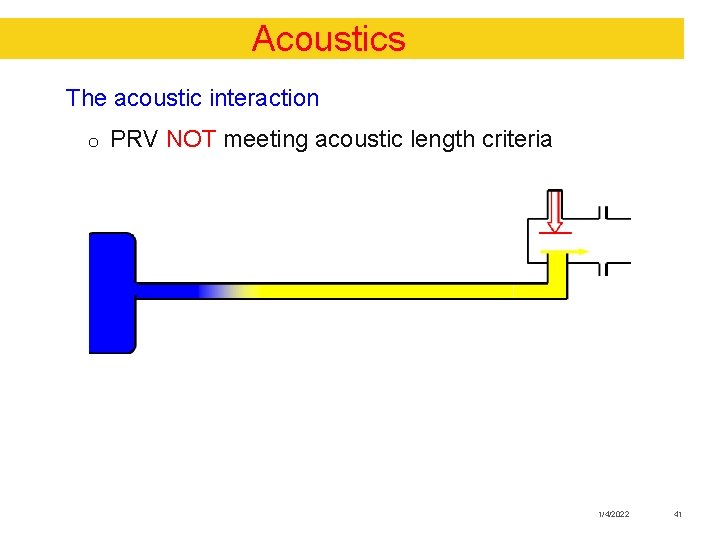
Acoustics The acoustic interaction o PRV NOT meeting acoustic length criteria 1/4/2022 41
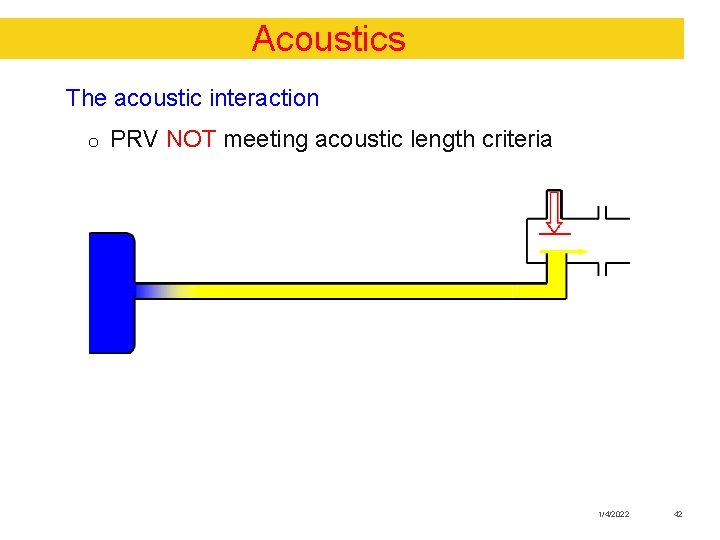
Acoustics The acoustic interaction o PRV NOT meeting acoustic length criteria 1/4/2022 42
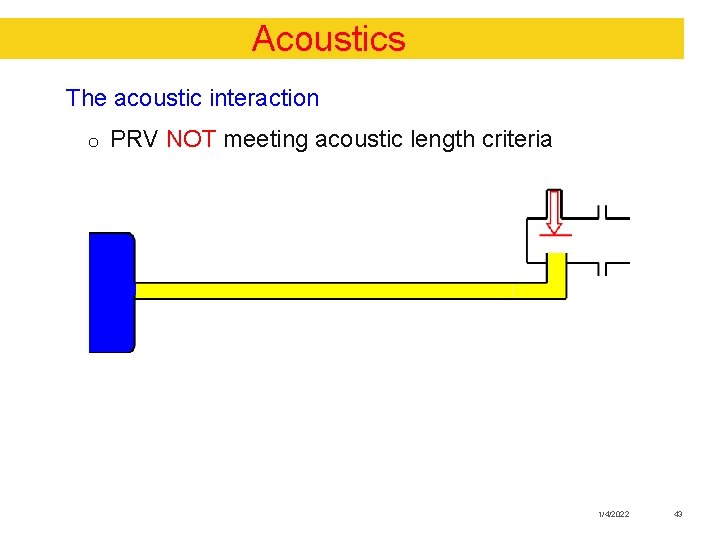
Acoustics The acoustic interaction o PRV NOT meeting acoustic length criteria 1/4/2022 43
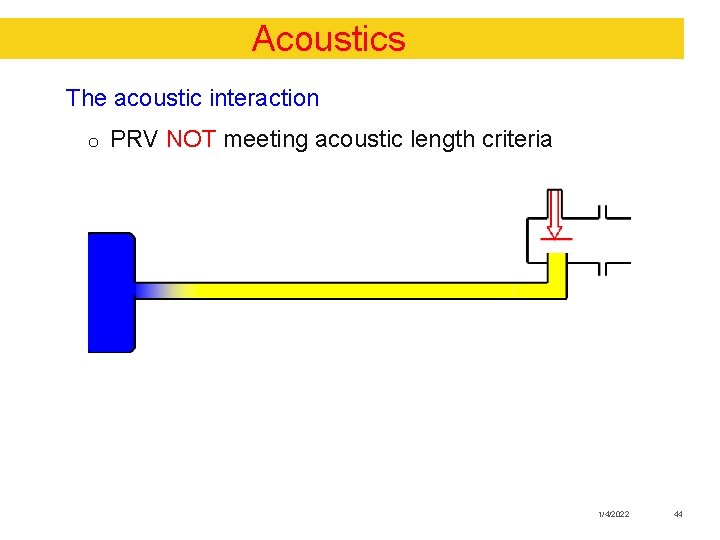
Acoustics The acoustic interaction o PRV NOT meeting acoustic length criteria 1/4/2022 44
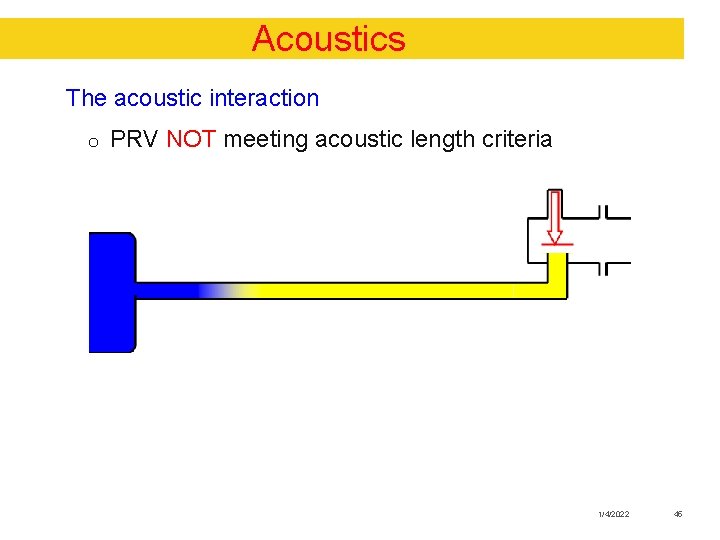
Acoustics The acoustic interaction o PRV NOT meeting acoustic length criteria 1/4/2022 45
Acoustics The acoustic interaction o PRV NOT meeting acoustic length criteria 1/4/2022 46
Acoustics The acoustic interaction o PRV NOT meeting acoustic length criteria 1/4/2022 47
Acoustics The acoustic interaction o PRV NOT meeting acoustic length criteria 1/4/2022 48
Acoustics The acoustic interaction o PRV NOT meeting acoustic length criteria 1/4/2022 49
Acoustics The acoustic interaction o PRV NOT meeting acoustic length criteria 1/4/2022 50
Acoustics The acoustic interaction o PRV NOT meeting acoustic length criteria 1/4/2022 51
Acoustics The acoustic interaction o PRV NOT meeting acoustic length criteria 1/4/2022 52
Acoustics The acoustic interaction o PRV NOT meeting acoustic length criteria 1/4/2022 53
Acoustics The acoustic interaction o PRV NOT meeting acoustic length criteria 1/4/2022 54
Acoustics The acoustic interaction o PRV NOT meeting acoustic length criteria 1/4/2022 55
Acoustics The acoustic interaction o PRV NOT meeting acoustic length criteria 1/4/2022 56
Acoustics The acoustic interaction o PRV NOT meeting acoustic length criteria 1/4/2022 57
Acoustics The acoustic interaction o PRV NOT meeting acoustic length criteria 1/4/2022 58
Acoustics The acoustic interaction o PRV NOT meeting acoustic length criteria 1/4/2022 59
Acoustics The acoustic interaction o PRV NOT meeting acoustic length criteria 1/4/2022 60
Acoustics The acoustic interaction o PRV NOT meeting acoustic length criteria 1/4/2022 61
Acoustics The acoustic interaction o PRV NOT meeting acoustic length criteria 1/4/2022 62
Acoustics The acoustic interaction o PRV NOT meeting acoustic length criteria 1/4/2022 63
Acoustics The acoustic interaction o PRV NOT meeting acoustic length criteria 1/4/2022 64
Acoustics The acoustic interaction o PRV NOT meeting acoustic length criteria 1/4/2022 65
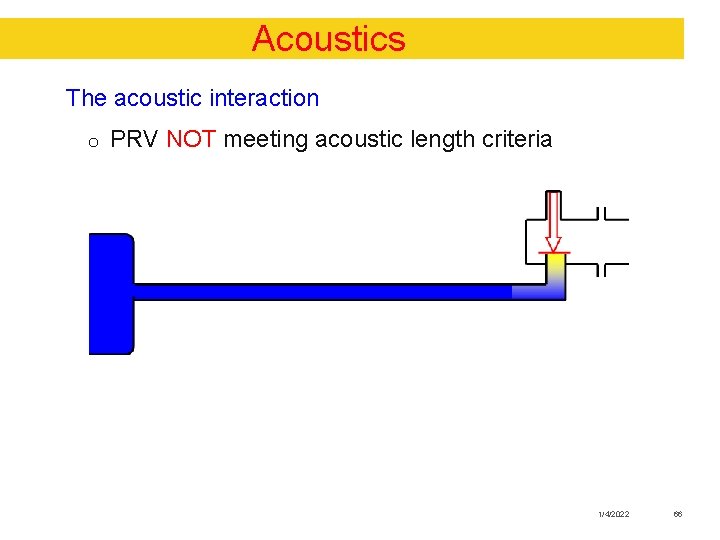
Acoustics The acoustic interaction o PRV NOT meeting acoustic length criteria 1/4/2022 66
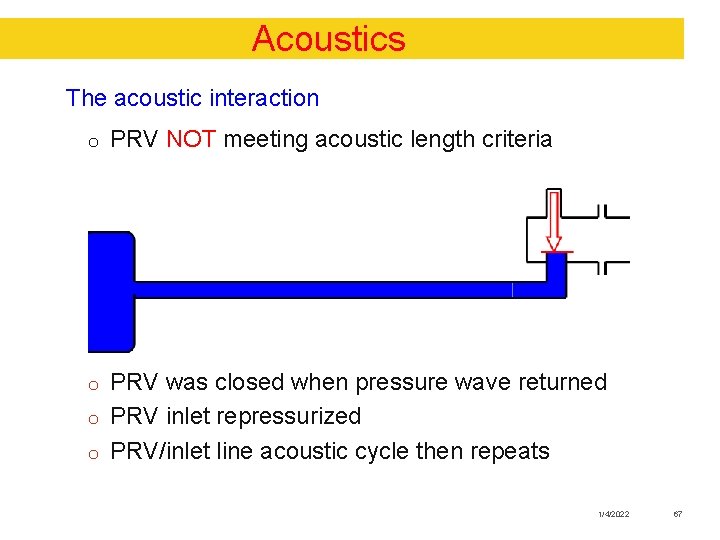
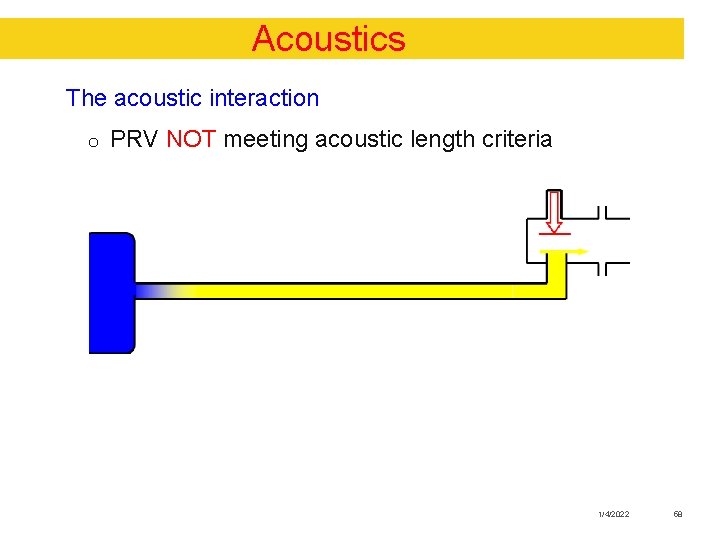
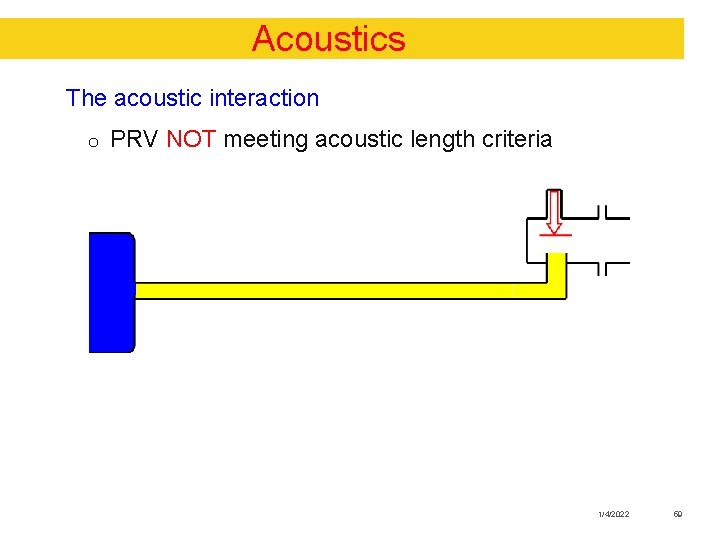
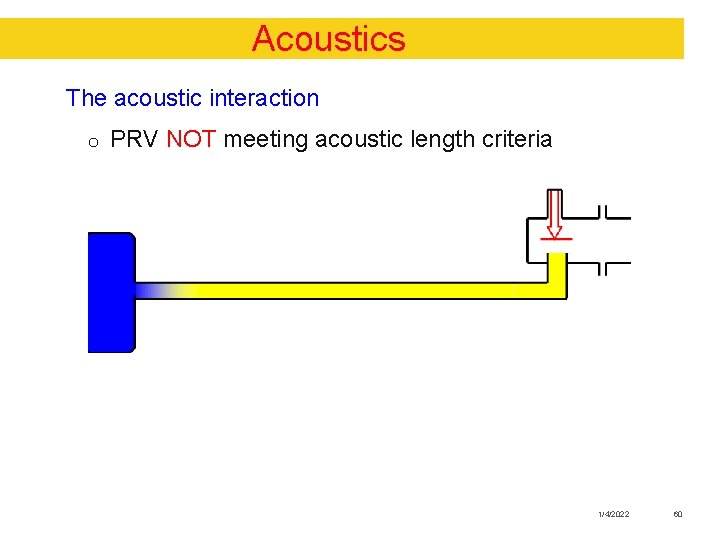
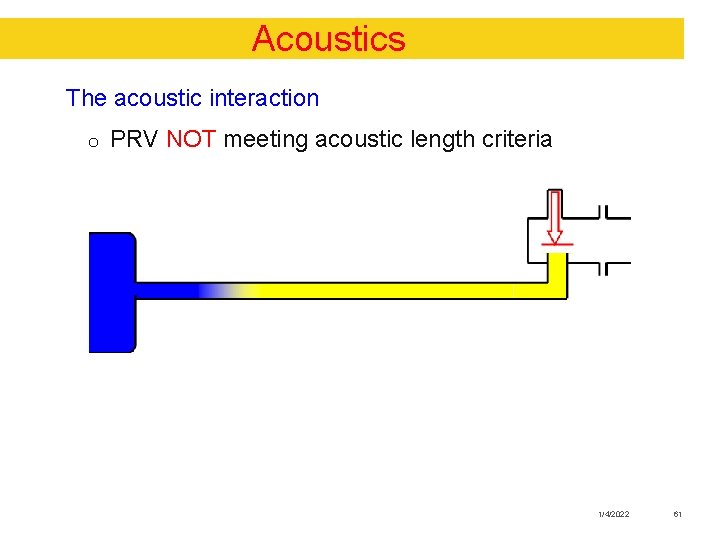
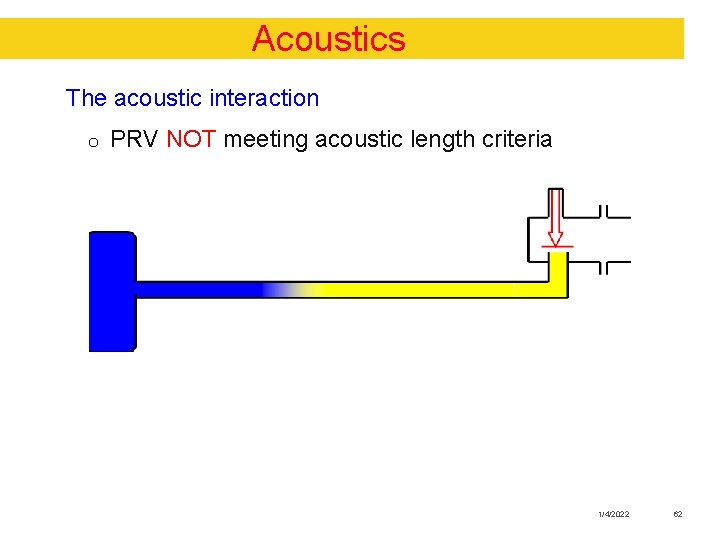
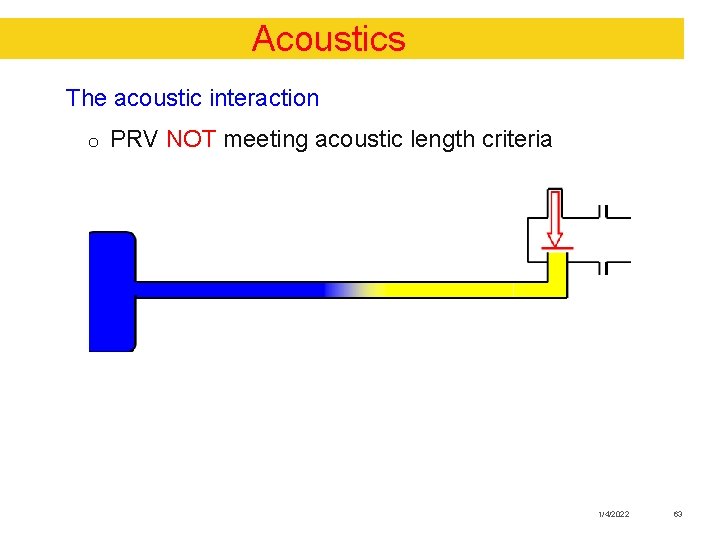
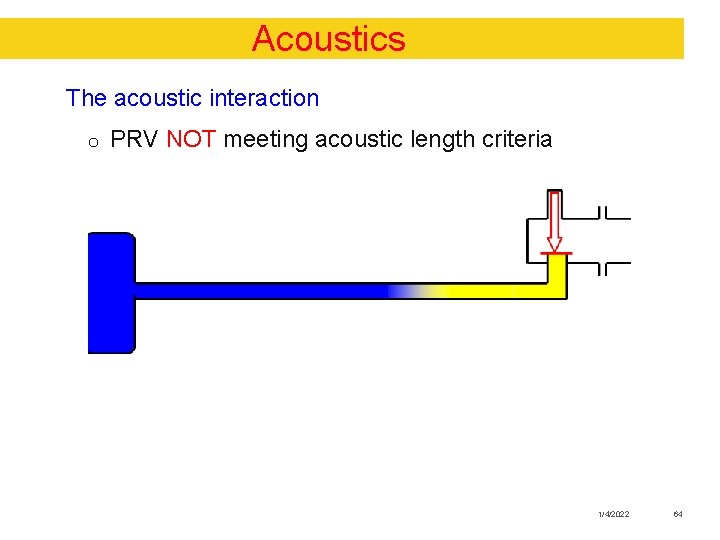
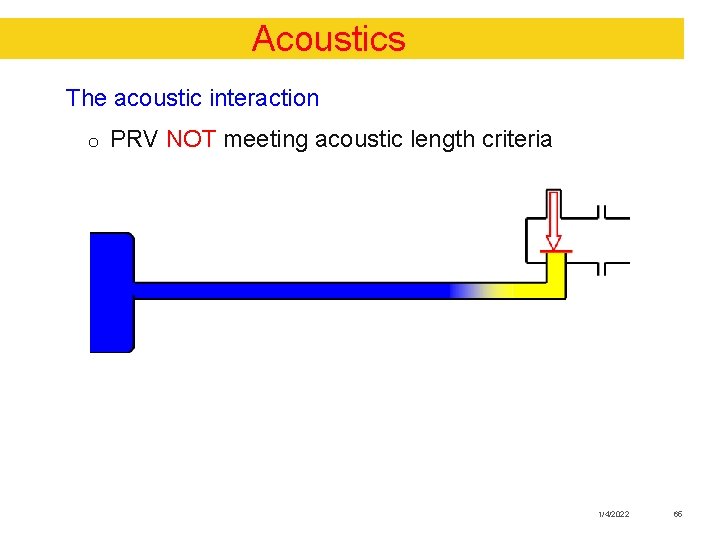
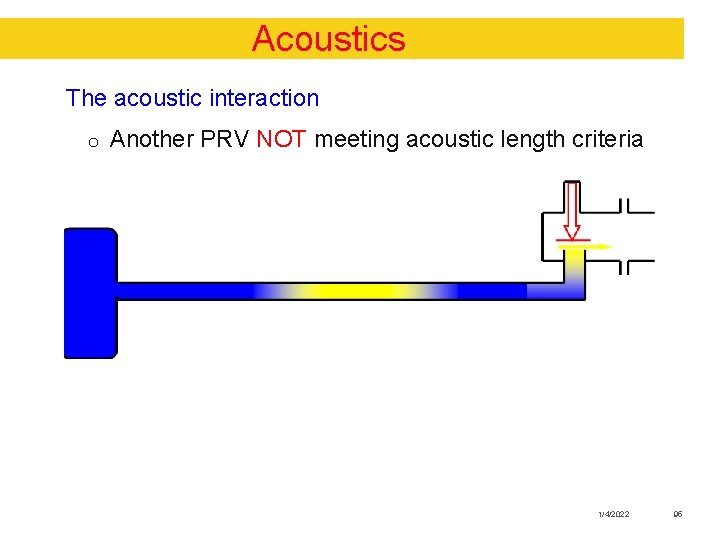
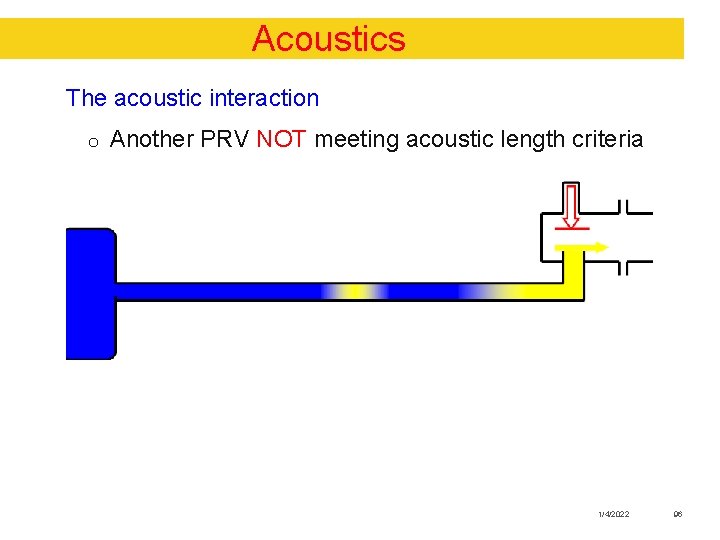
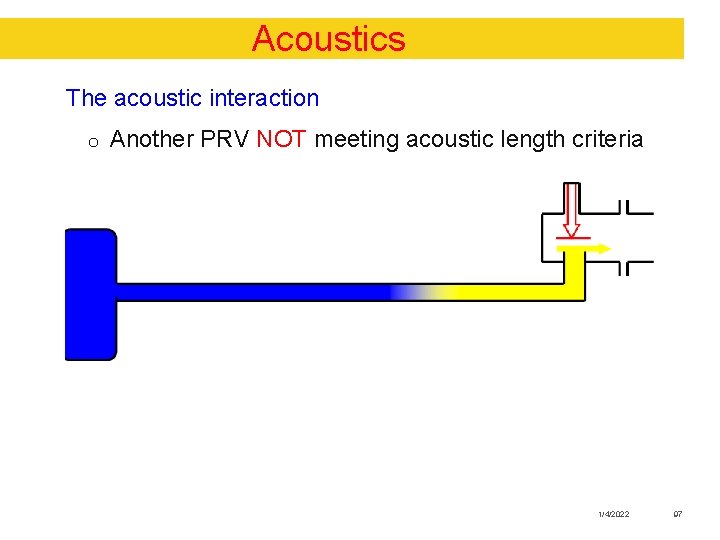
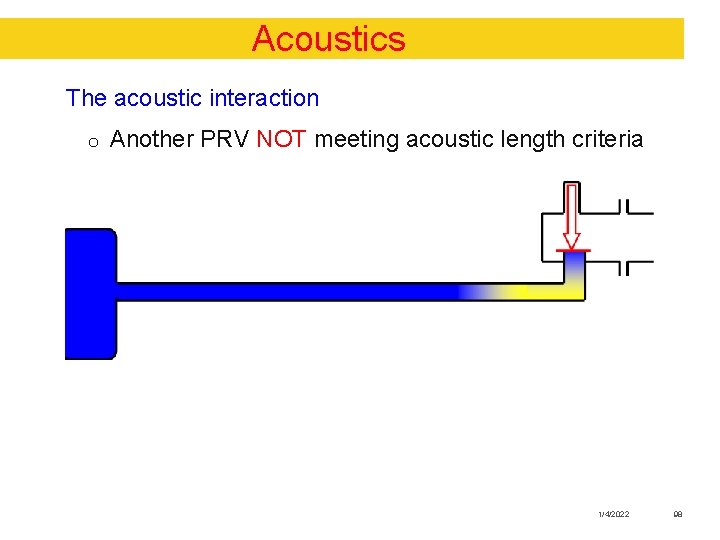
Acoustics The acoustic interaction o PRV NOT meeting acoustic length criteria o PRV was closed when pressure wave returned o PRV inlet repressurized o PRV/inlet line acoustic cycle then repeats 1/4/2022 67

1/4/2022 68
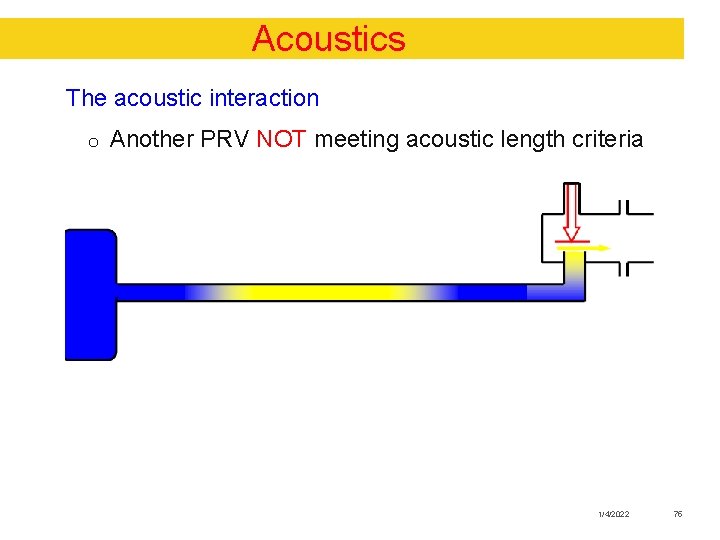
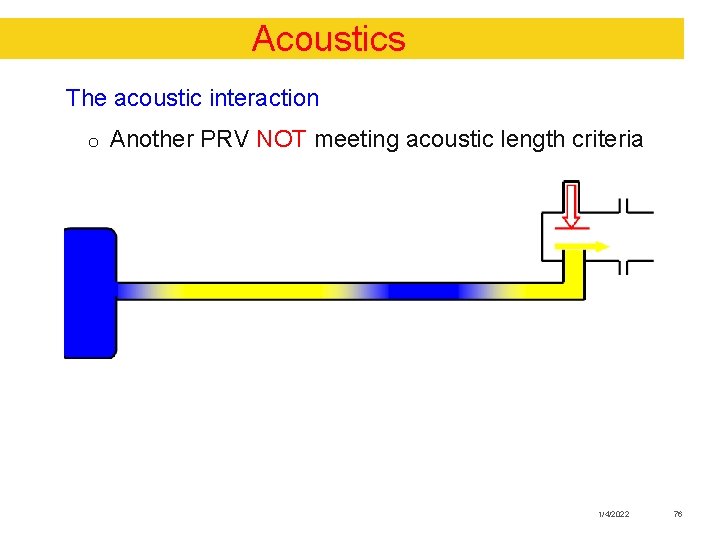
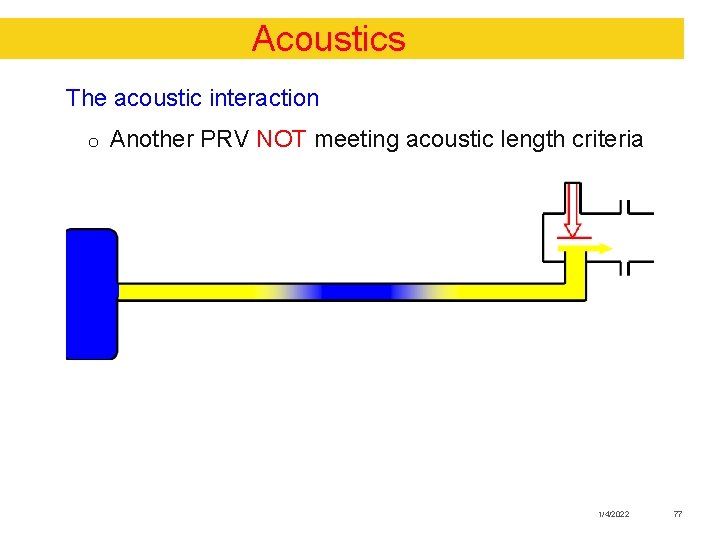
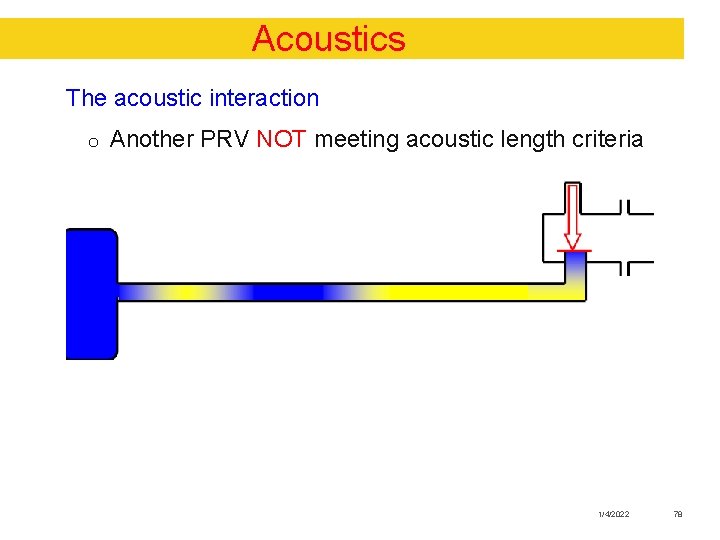
Acoustics The acoustic interaction o Another PRV NOT meeting acoustic length criteria 1/4/2022 69
Acoustics The acoustic interaction o Another PRV NOT meeting acoustic length criteria 1/4/2022 70
Acoustics The acoustic interaction o Another PRV NOT meeting acoustic length criteria 1/4/2022 71
Acoustics The acoustic interaction o Another PRV NOT meeting acoustic length criteria 1/4/2022 72
Acoustics The acoustic interaction o Another PRV NOT meeting acoustic length criteria 1/4/2022 73
Acoustics The acoustic interaction o Another PRV NOT meeting acoustic length criteria 1/4/2022 74
Acoustics The acoustic interaction o Another PRV NOT meeting acoustic length criteria 1/4/2022 75
Acoustics The acoustic interaction o Another PRV NOT meeting acoustic length criteria 1/4/2022 76
Acoustics The acoustic interaction o Another PRV NOT meeting acoustic length criteria 1/4/2022 77
Acoustics The acoustic interaction o Another PRV NOT meeting acoustic length criteria 1/4/2022 78
Acoustics The acoustic interaction o Another PRV NOT meeting acoustic length criteria 1/4/2022 79
Acoustics The acoustic interaction o Another PRV NOT meeting acoustic length criteria 1/4/2022 80
Acoustics The acoustic interaction o Another PRV NOT meeting acoustic length criteria 1/4/2022 81
Acoustics The acoustic interaction o Another PRV NOT meeting acoustic length criteria 1/4/2022 82
Acoustics The acoustic interaction o Another PRV NOT meeting acoustic length criteria 1/4/2022 83
Acoustics The acoustic interaction o Another PRV NOT meeting acoustic length criteria 1/4/2022 84
Acoustics The acoustic interaction o Another PRV NOT meeting acoustic length criteria 1/4/2022 85
Acoustics The acoustic interaction o Another PRV NOT meeting acoustic length criteria 1/4/2022 86
Acoustics The acoustic interaction o Another PRV NOT meeting acoustic length criteria 1/4/2022 87
Acoustics The acoustic interaction o Another PRV NOT meeting acoustic length criteria 1/4/2022 88
Acoustics The acoustic interaction o Another PRV NOT meeting acoustic length criteria 1/4/2022 89
Acoustics The acoustic interaction o Another PRV NOT meeting acoustic length criteria 1/4/2022 90
Acoustics The acoustic interaction o Another PRV NOT meeting acoustic length criteria 1/4/2022 91
Acoustics The acoustic interaction o Another PRV NOT meeting acoustic length criteria 1/4/2022 92
Acoustics The acoustic interaction o Another PRV NOT meeting acoustic length criteria 1/4/2022 93
Acoustics The acoustic interaction o Another PRV NOT meeting acoustic length criteria 1/4/2022 94
Acoustics The acoustic interaction o Another PRV NOT meeting acoustic length criteria 1/4/2022 95
Acoustics The acoustic interaction o Another PRV NOT meeting acoustic length criteria 1/4/2022 96
Acoustics The acoustic interaction o Another PRV NOT meeting acoustic length criteria 1/4/2022 97
Acoustics The acoustic interaction o Another PRV NOT meeting acoustic length criteria 1/4/2022 98
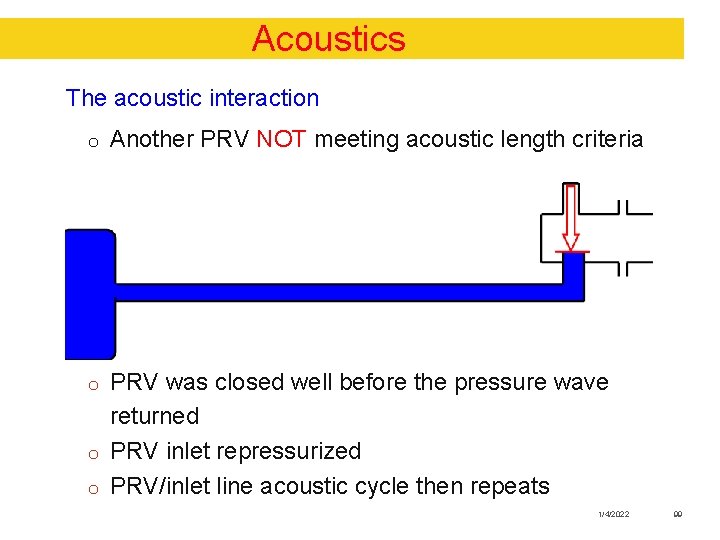
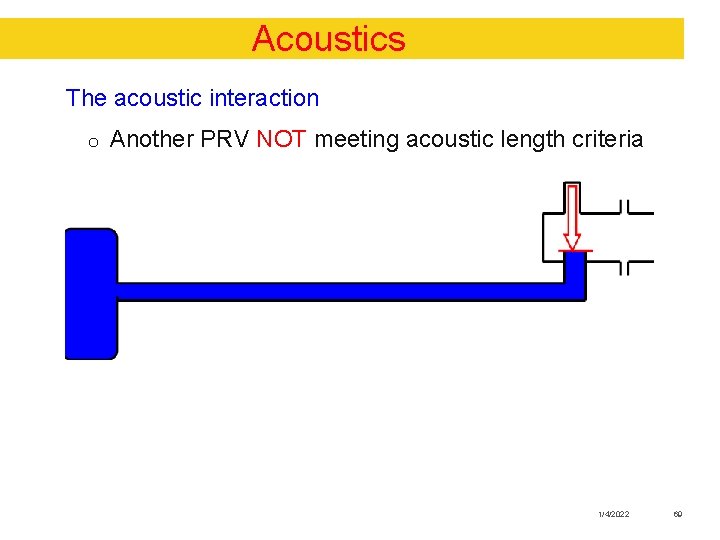
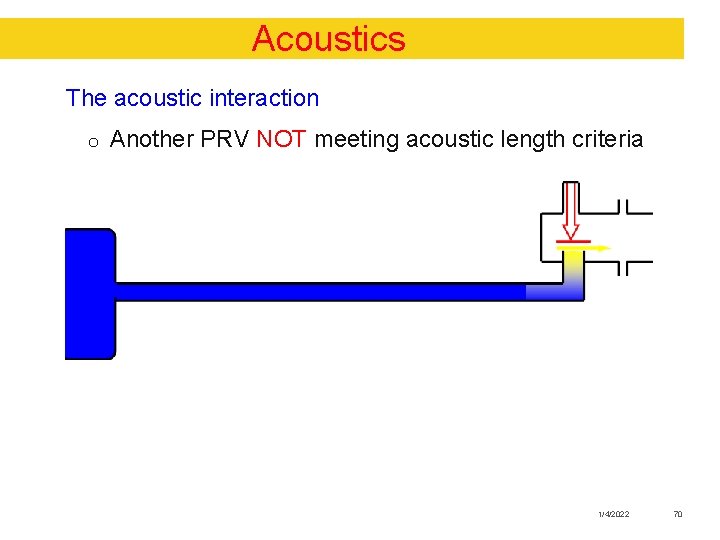
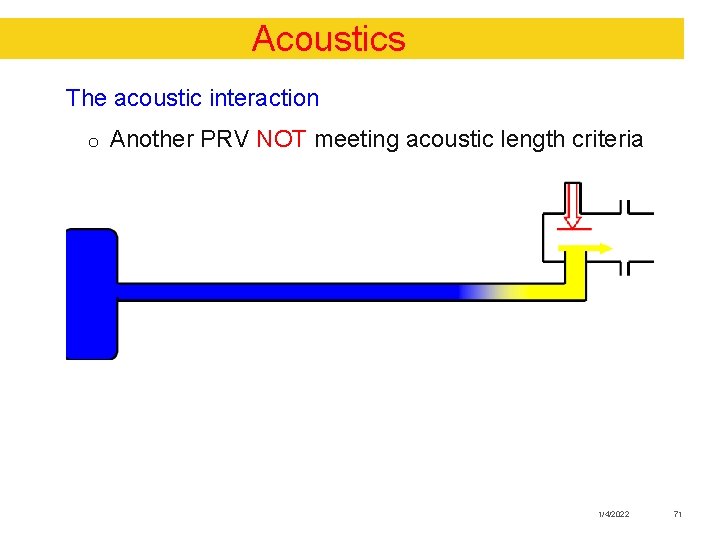
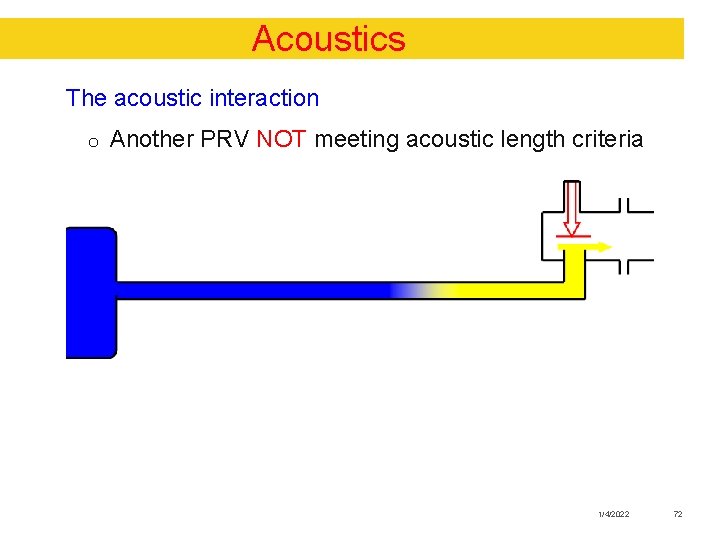
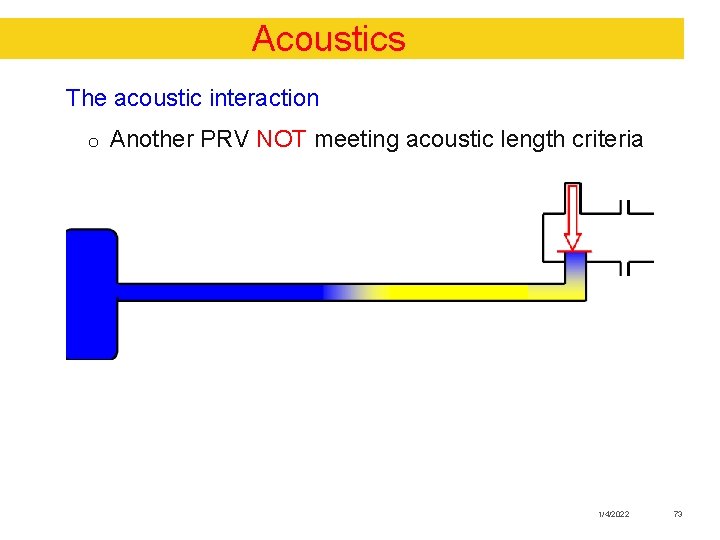
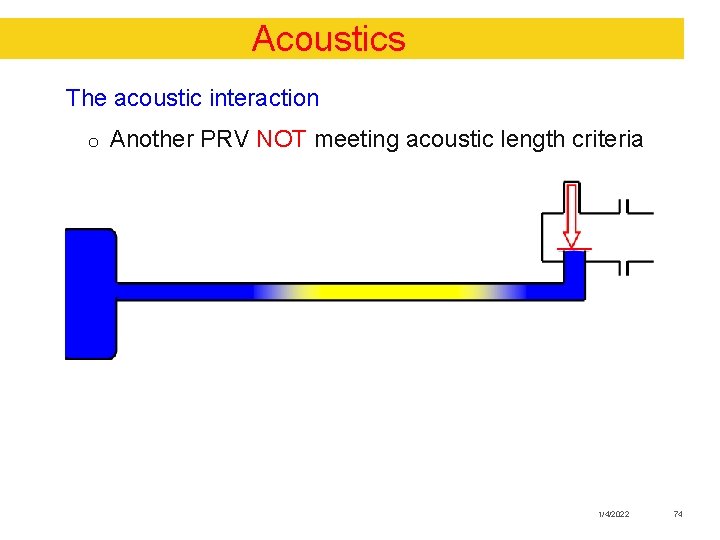
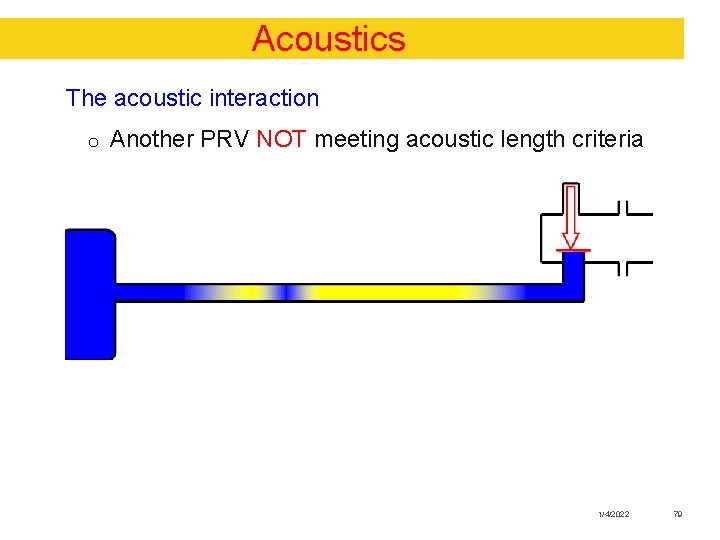
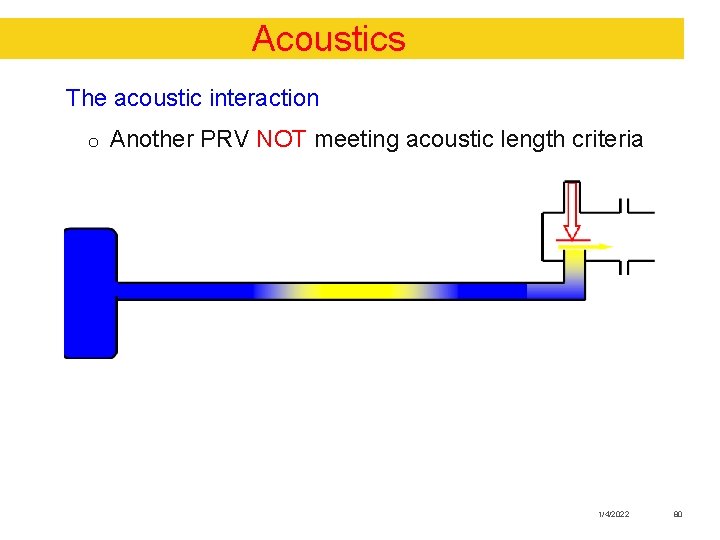
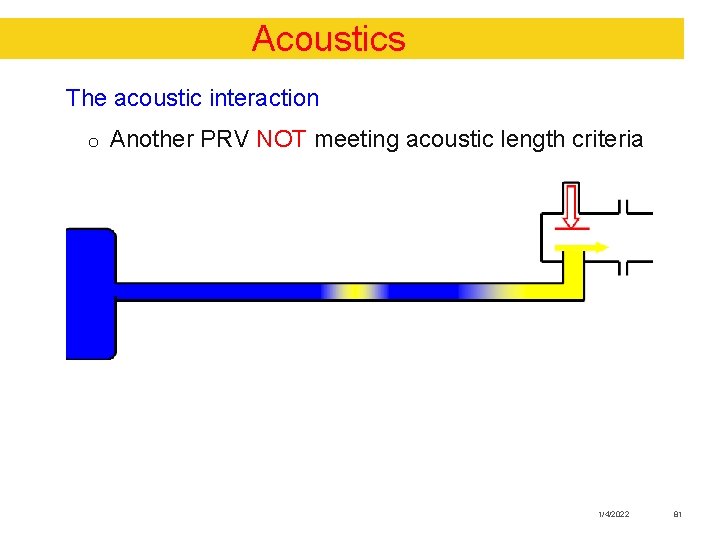
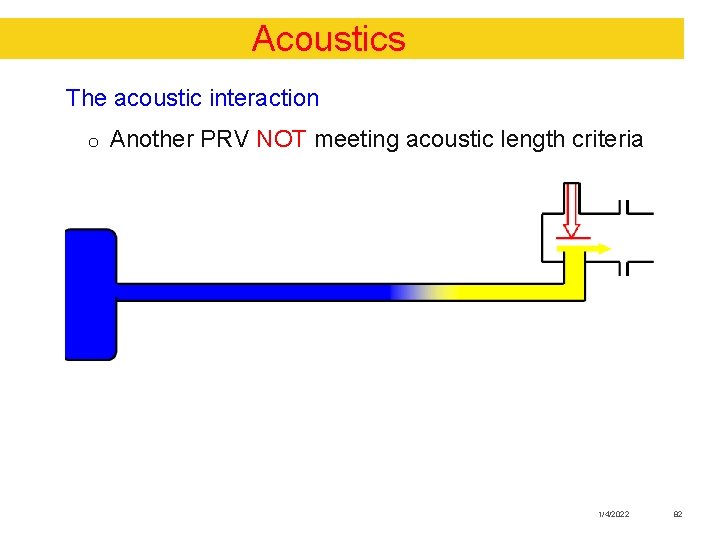
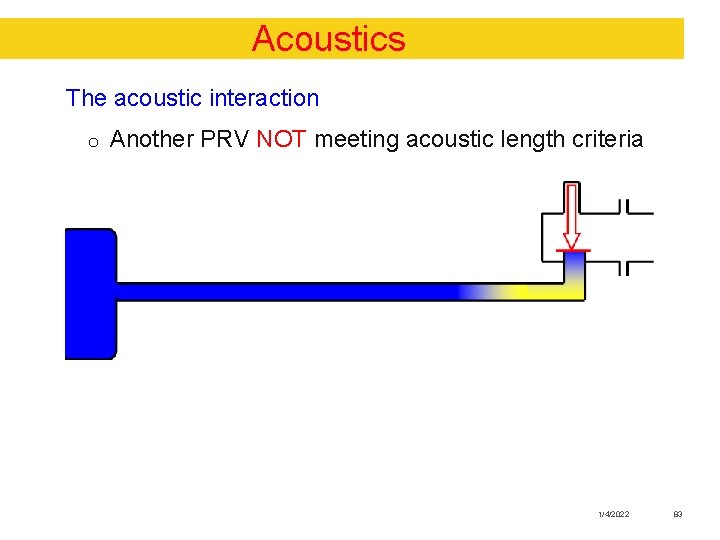
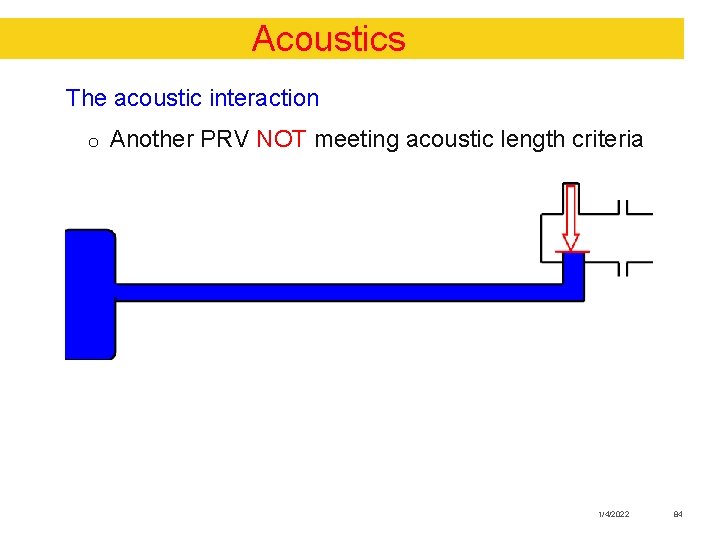
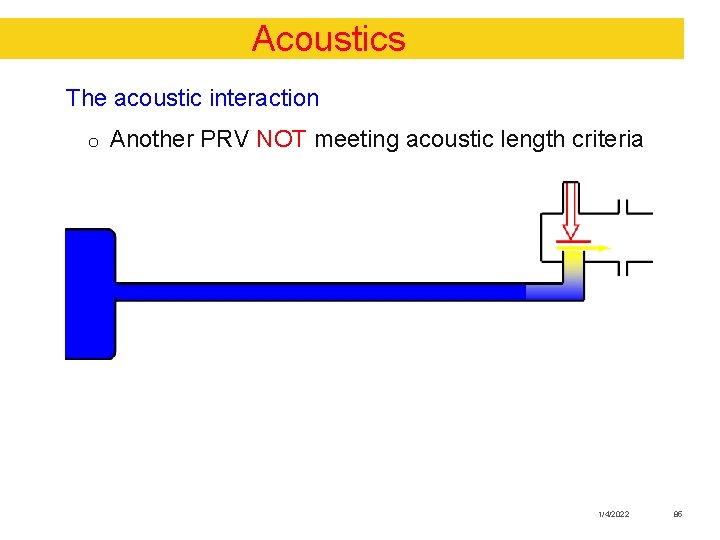
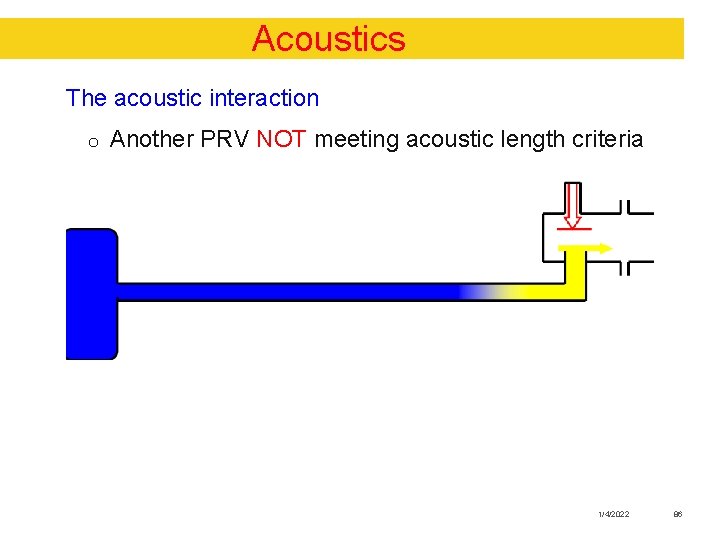
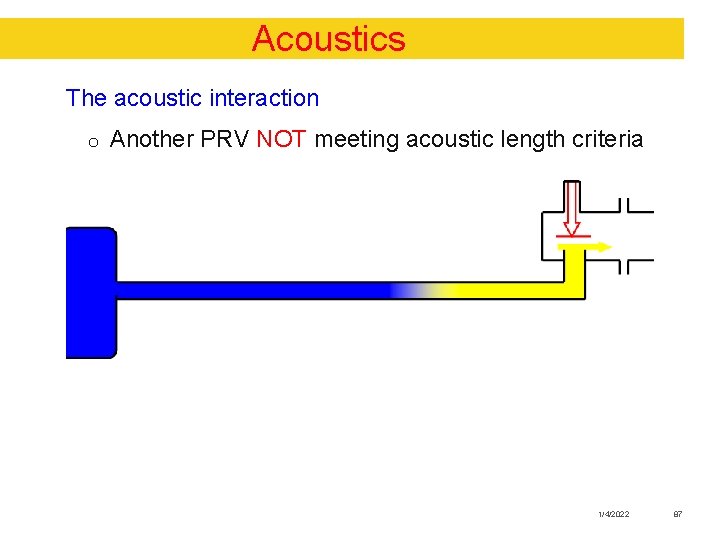
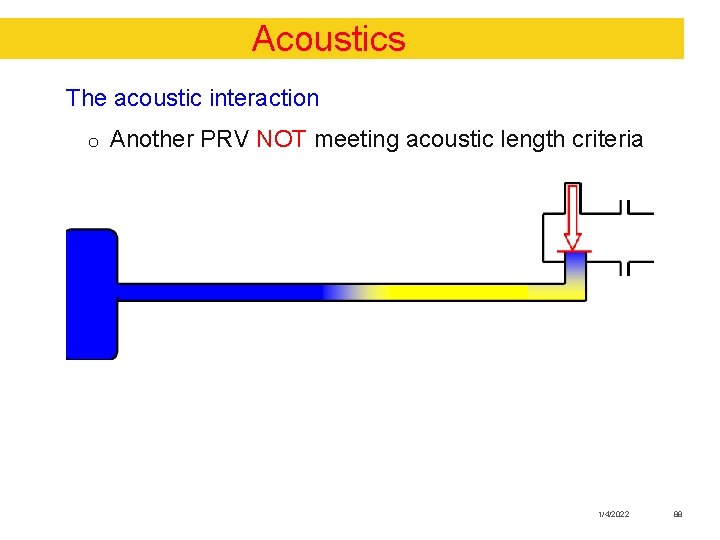
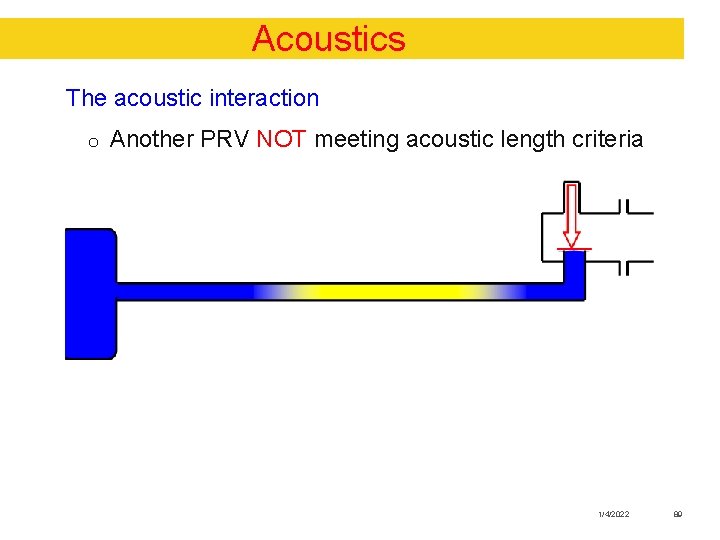
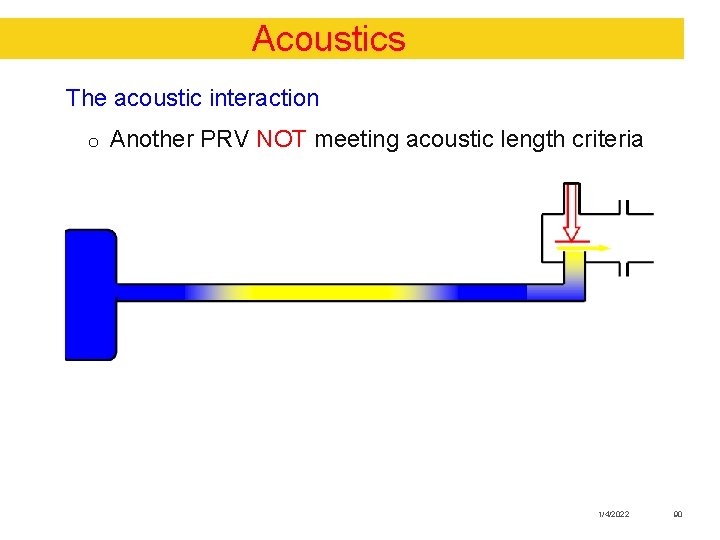
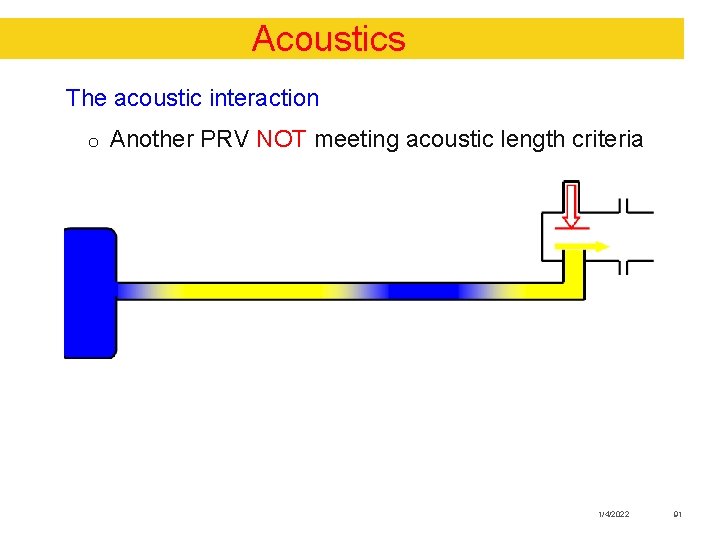
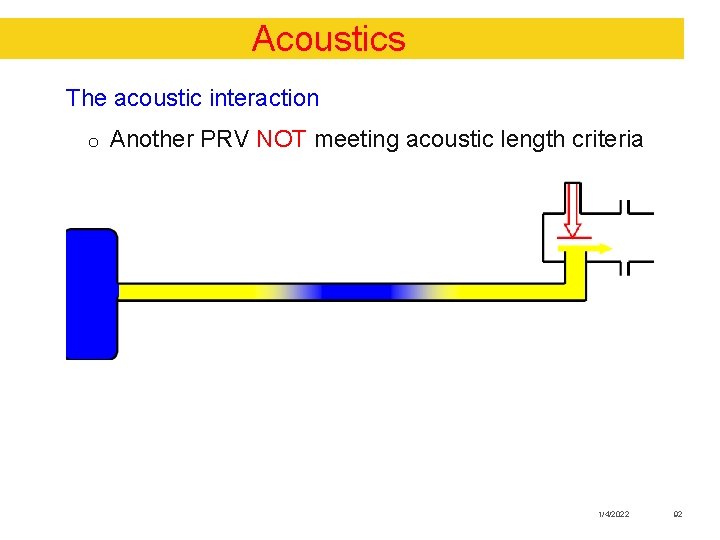
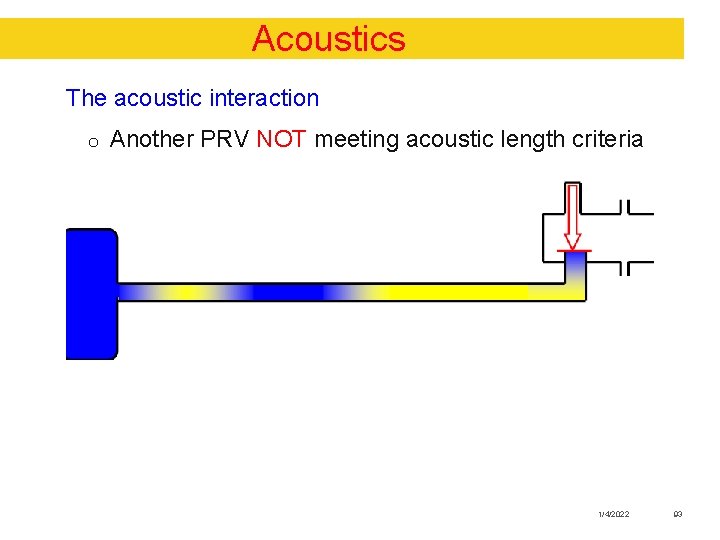
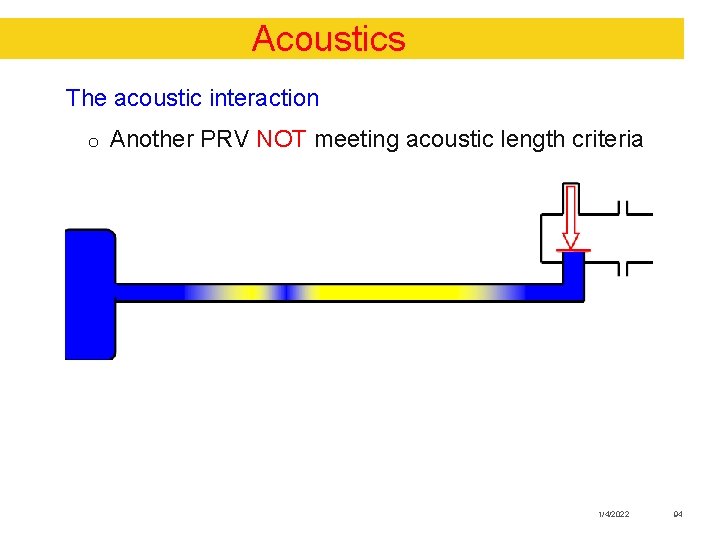
Acoustics The acoustic interaction o Another PRV NOT meeting acoustic length criteria o PRV was closed well before the pressure wave returned o PRV inlet repressurized o PRV/inlet line acoustic cycle then repeats 1/4/2022 99

1/4/2022 100
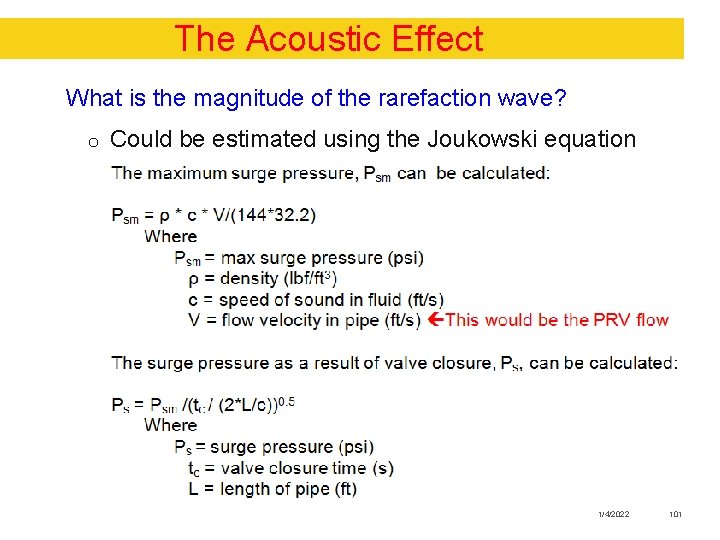
The Acoustic Effect What is the magnitude of the rarefaction wave? o Could be estimated using the Joukowski equation 1/4/2022 101
The Acoustic Effect o Joukowski equation is used for assessing water hammer and pressure surge o Premise that sudden surge pressure reduction with initial PRV lift is equal but opposite to pressure surge when valve closes o This surge pressure reduction is a “recoverable” loss o Surge pressure reduction can be well below the PRV reseat pressure for liquids o This is OK provided that the pressure wave comes back in time! o See worksheet for magnitude of pressure surge 1/4/2022 102
The Acoustic Effect The surge pressure with valve closure assumes an initial velocity. Can the inlet pipe actually achieve relief flow velocity during the PRV lift? o Yes, but it depends on PRV orifice size, PRV opening time, and line volume o Can be calculated using basic principles o Team did not explore what it would mean if premised relief velocities cannot be achieved during valve lift. o See worksheet for examples 1/4/2022 103
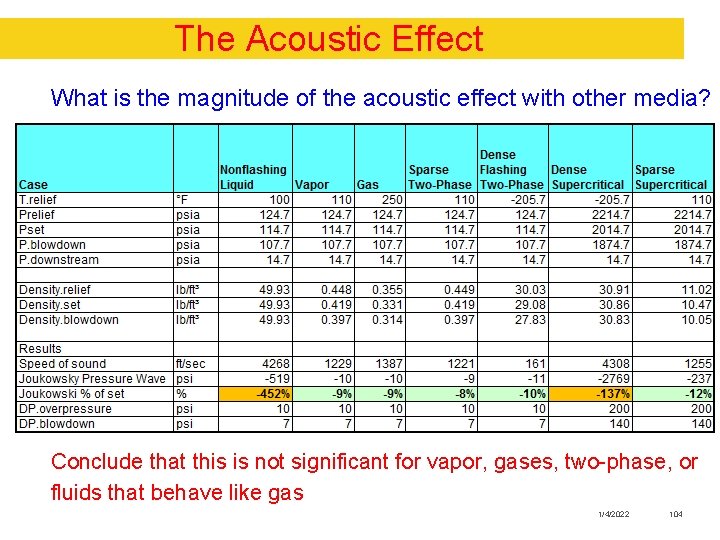
The Acoustic Effect What is the magnitude of the acoustic effect with other media? Conclude that this is not significant for vapor, gases, two-phase, or fluids that behave like gas 1/4/2022 104

Proposed Acoustic Criteria The applicable physical length of the PRV inlet should not exceed the maximum acoustic length This criteria would be applicable to: o Spring loaded vapor certified valves and pop-action pilot operated PRVs (with local sensing) relieving liquid or a super-critical fluids that behave similar to liquid (the change in density as a function of pressure is low). Note, two-phase relief shall be considered liquid in this application if the fluid in the PRV inlet line remains liquid (any flashing only occurs downstream of PRV inlet) 1/4/2022 105
Proposed Acoustic Criteria This criteria would NOT be applicable to: o Any pilot operated PRV with a remote sense located on the protected equipment o Any modulating pilot operated relief valve o Vapor certified, liquid certified, or dual certified spring loaded PRVs flowing two-phase, vapor, or supercritical fluids that behave similar to vapor o Although installations could exceed the calculated acoustic line lengths limit, the effect on the PRV will be low. The acoustic pressure wave magnitude is relatively small and the presence of a highly compressible fluid in the PRV’s huddling chamber will tend to keep the PRV open. 1/4/2022 106
Proposed Acoustic Criteria This criteria would NOT be applicable to: o Liquid certified (or dual certified) PRVs relieving liquid o These have longer opening times and exhibit very good modulating behavior during initial valve lift o Thermal relief valves o Since the relief load is very small and transient 1/4/2022 107
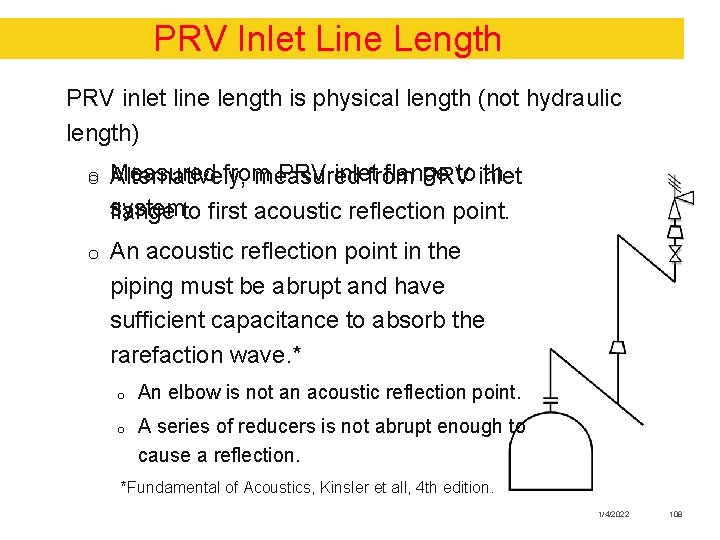
PRV Inlet Line Length PRV inlet line length is physical length (not hydraulic length) o Alternatively, Measured from PRV inletfrom flange to inlet the protected measured PRV systemto first acoustic reflection point. flange o An acoustic reflection point in the piping must be abrupt and have sufficient capacitance to absorb the rarefaction wave. * o An elbow is not an acoustic reflection point. o A series of reducers is not abrupt enough to cause a reflection. *Fundamental of Acoustics, Kinsler et all, 4 th edition. 1/4/2022 108
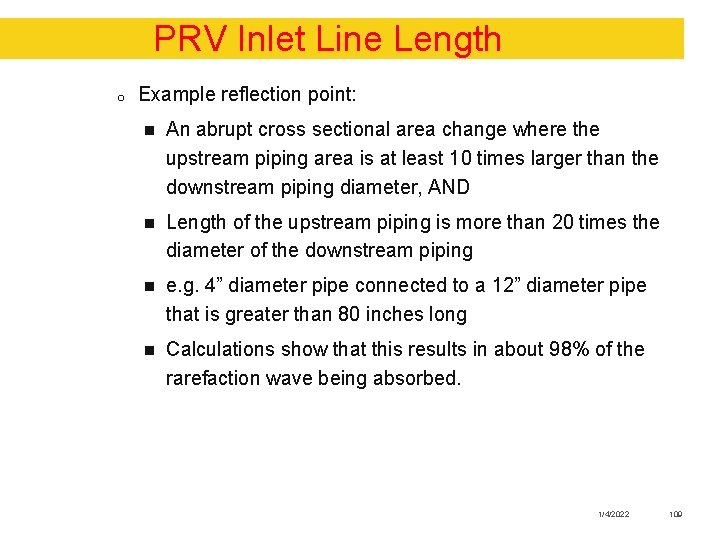
PRV Inlet Line Length o Example reflection point: An abrupt cross sectional area change where the upstream piping area is at least 10 times larger than the downstream piping diameter, AND Length of the upstream piping is more than 20 times the diameter of the downstream piping e. g. 4” diameter pipe connected to a 12” diameter pipe that is greater than 80 inches long Calculations show that this results in about 98% of the rarefaction wave being absorbed. 1/4/2022 109
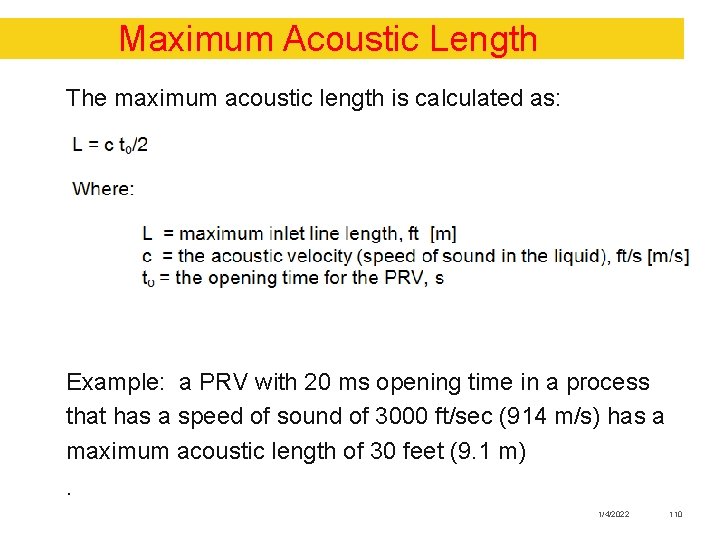
Maximum Acoustic Length The maximum acoustic length is calculated as: Example: a PRV with 20 ms opening time in a process that has a speed of sound of 3000 ft/sec (914 m/s) has a maximum acoustic length of 30 feet (9. 1 m). 1/4/2022 110
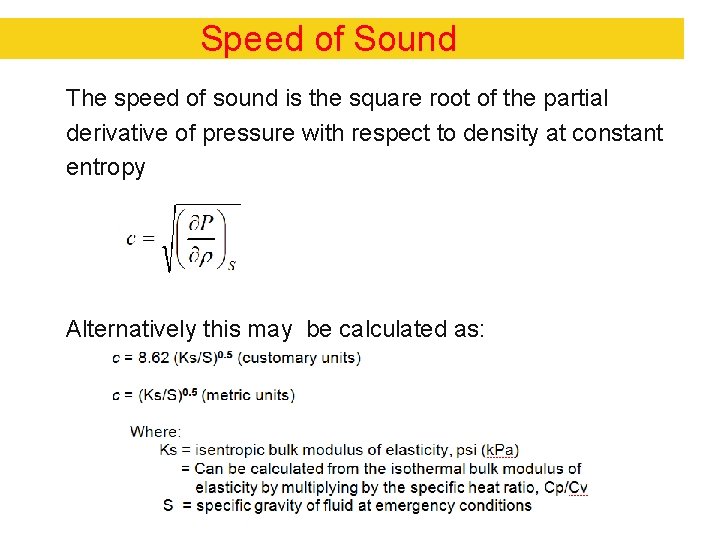
Speed of Sound The speed of sound is the square root of the partial derivative of pressure with respect to density at constant entropy Alternatively this may be calculated as: 1/4/2022 111
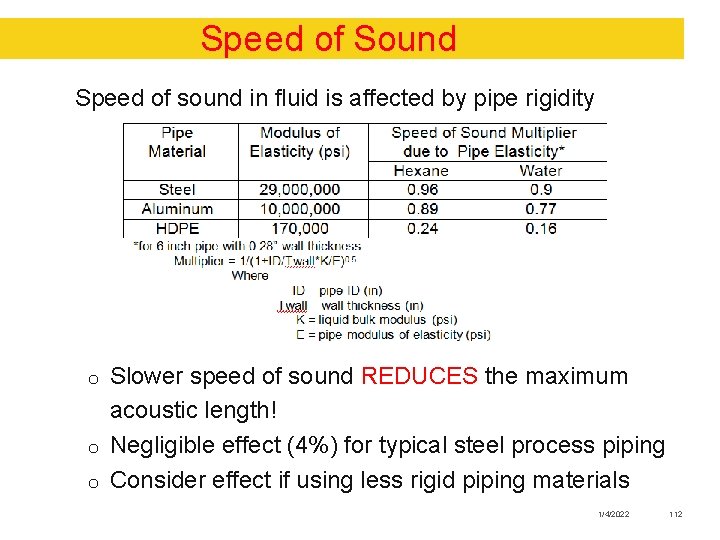
Speed of Sound Speed of sound in fluid is affected by pipe rigidity o Slower speed of sound REDUCES the maximum acoustic length! o Negligible effect (4%) for typical steel process piping o Consider effect if using less rigid piping materials 1/4/2022 112
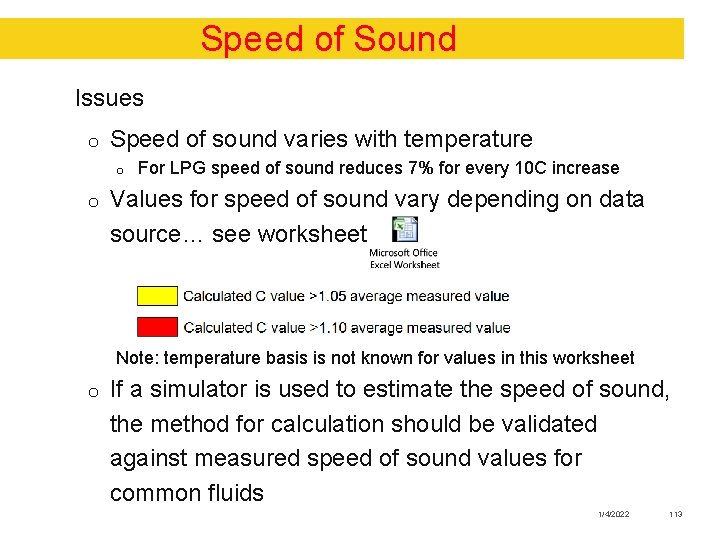
Speed of Sound Issues o Speed of sound varies with temperature o For LPG speed of sound reduces 7% for every 10 C increase o Values for speed of sound vary depending on data source… see worksheet Note: temperature basis is not known for values in this worksheet o If a simulator is used to estimate the speed of sound, the method for calculation should be validated against measured speed of sound values for common fluids 1/4/2022 113
PRV Opening Time Acoustic length is based on PRV opening time, not full PRV open/close cycle o Consistent with other approaches o EPRI research o Exxon/Mobil research o Consolidated Dresser’s PI-10 work process o No credit for valve closing time o Concern that the incoming pressure wave might not have enough force to counteract the valve closure momentum o Detailed analysis might prove otherwise on specific cases 1/4/2022 114
PRV Opening Time Issues o Wide variability in published PRV opening times o Function of o Valve type o Valve size o Set pressure o Overpressure speed o Fluid o Users could consult with PRV manufacturer’s to get representative values 1/4/2022 115
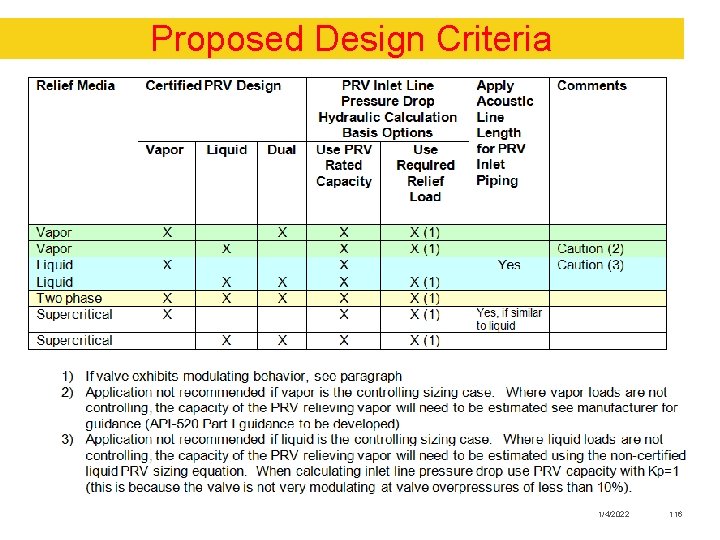
Proposed Design Criteria 1/4/2022 116
Significance Potential Impact? o See Worksheet for acoustic length calculations 1/4/2022 117
Summary 1. Vapor certified valves relieving liquid should meet acoustic line length criteria and inlet loss should be based on PRV capacity at full lift 2. To apply acoustic line length user needs: o Physical length of the PRV inlet line o Speed of sound for the liquid at relieving temperature o Expected PRV opening time 1/4/2022 118
Homework Recommend subcommittee evaluate the proposal in detail before Spring 2012 API meeting 1. Any liquid PRV relief experience that suggests acoustic line length model/criteria is too conservative or too liberal? 2. Any PRV incident data that suggests that the acoustic line length criteria should include liquid certified PRVs? 3. Any PRV incident data that suggests that the criteria should include vapor relief? 4. Is application of the proposed criteria practical? 5. Other related issues? 1/4/2022 119

- Slides: 120