
Liquid Nitrogen and Cryogenics Training Potential Hazards Health
- Slides: 16
Liquid Nitrogen and Cryogenics Training
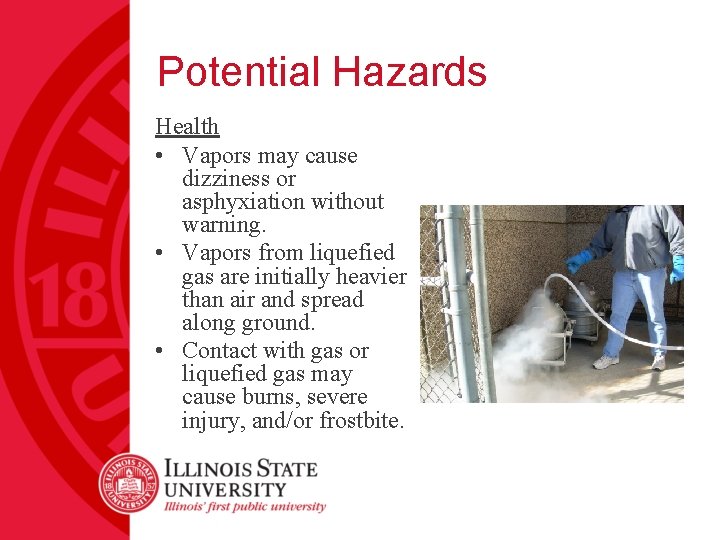
Potential Hazards Health • Vapors may cause dizziness or asphyxiation without warning. • Vapors from liquefied gas are initially heavier than air and spread along ground. • Contact with gas or liquefied gas may cause burns, severe injury, and/or frostbite.
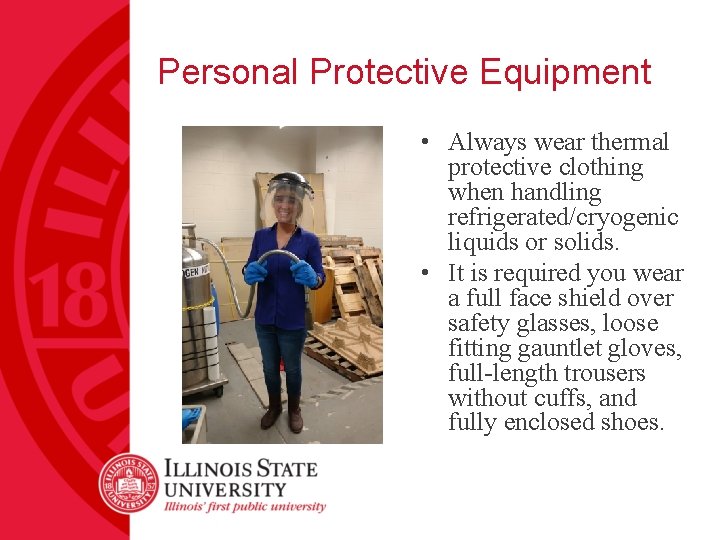
Personal Protective Equipment • Always wear thermal protective clothing when handling refrigerated/cryogenic liquids or solids. • It is required you wear a full face shield over safety glasses, loose fitting gauntlet gloves, full-length trousers without cuffs, and fully enclosed shoes.
Pubic Safety • Immediately call emergency personnel in the event of a large spill or leak. – 9 -1 -1 from any phone or (309)438 -8631 for ISUPD dispatcher • Isolate large spills or leaks for at least 100 meters in all directions. • Keep unauthorized personnel away. • Stay upwind. • Keep out of low areas. • Ventilate closed spaces before entering.
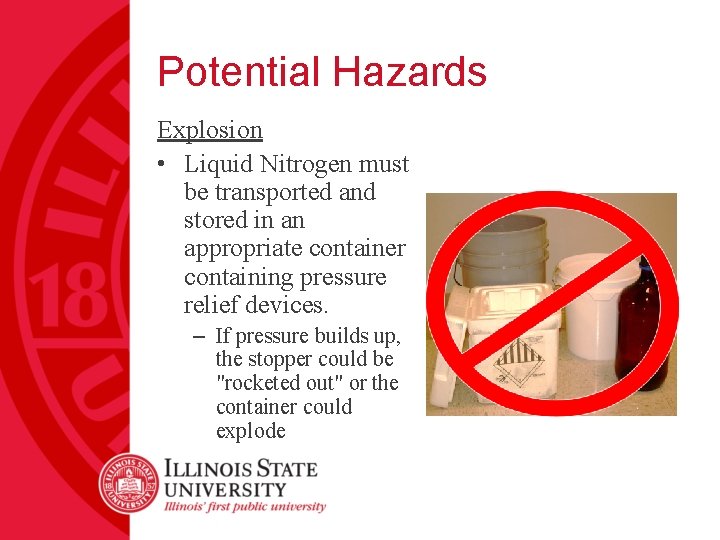
Potential Hazards Explosion • Liquid Nitrogen must be transported and stored in an appropriate container containing pressure relief devices. – If pressure builds up, the stopper could be "rocketed out" or the container could explode
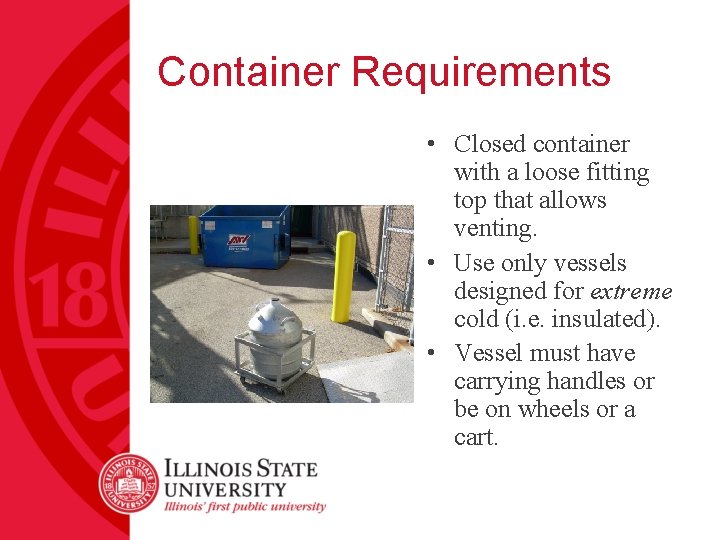
Container Requirements • Closed container with a loose fitting top that allows venting. • Use only vessels designed for extreme cold (i. e. insulated). • Vessel must have carrying handles or be on wheels or a cart.
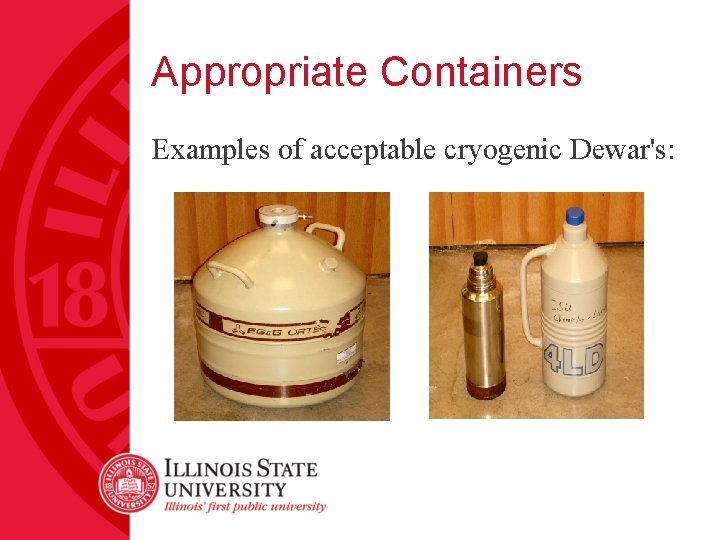
Appropriate Containers Examples of acceptable cryogenic Dewar's:
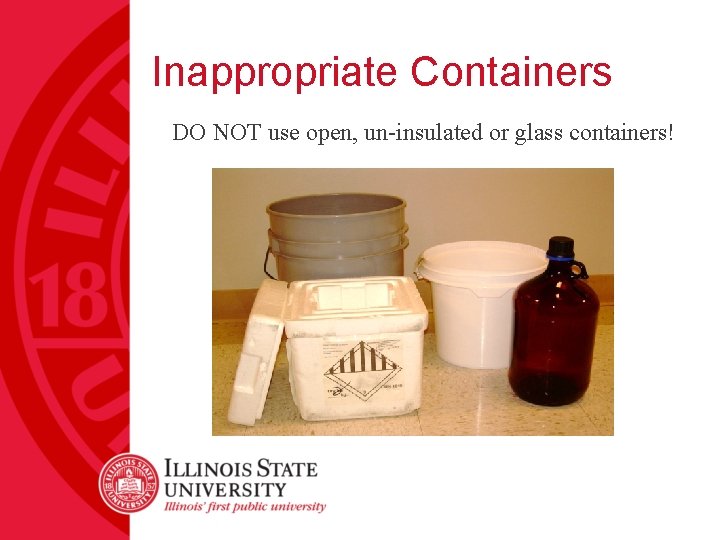
Inappropriate Containers DO NOT use open, un-insulated or glass containers!
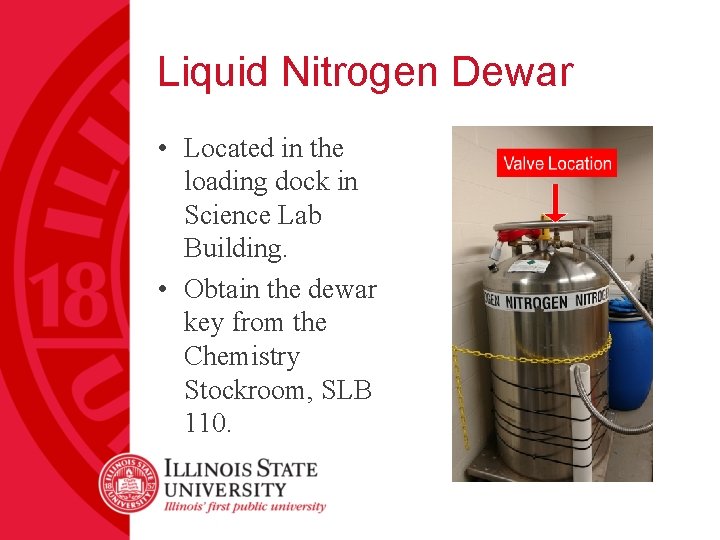
Liquid Nitrogen Dewar • Located in the loading dock in Science Lab Building. • Obtain the dewar key from the Chemistry Stockroom, SLB 110.
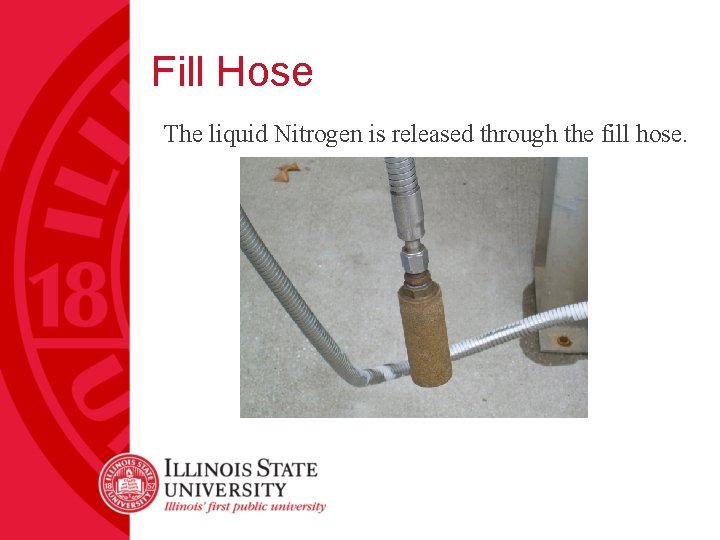
Fill Hose The liquid Nitrogen is released through the fill hose.
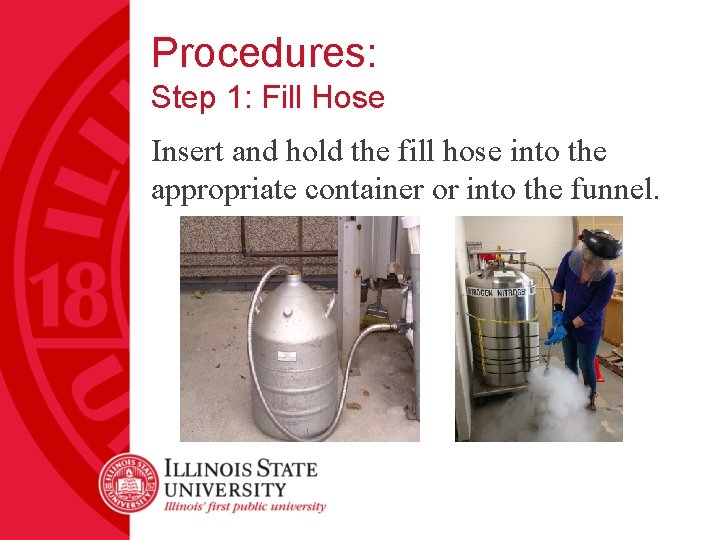
Procedures: Step 1: Fill Hose Insert and hold the fill hose into the appropriate container or into the funnel.
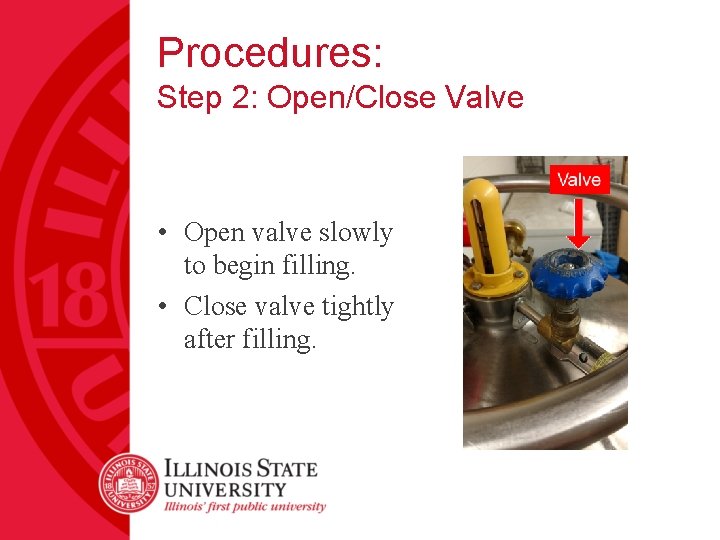
Procedures: Step 2: Open/Close Valve • Open valve slowly to begin filling. • Close valve tightly after filling.
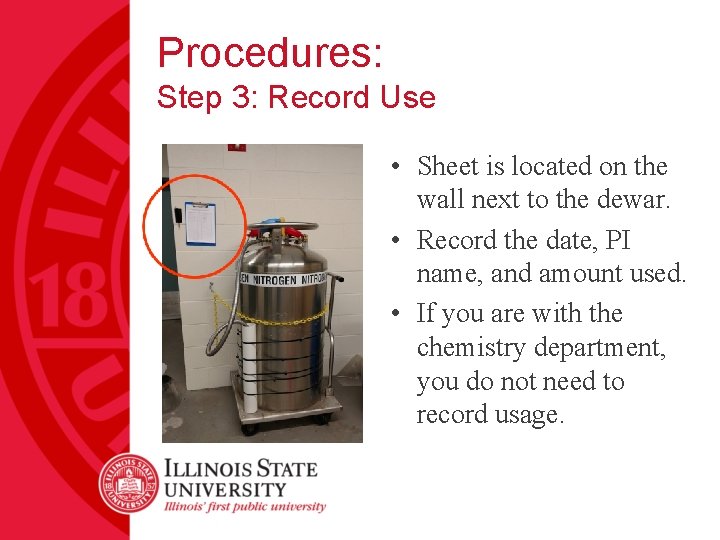
Procedures: Step 3: Record Use • Sheet is located on the wall next to the dewar. • Record the date, PI name, and amount used. • If you are with the chemistry department, you do not need to record usage.
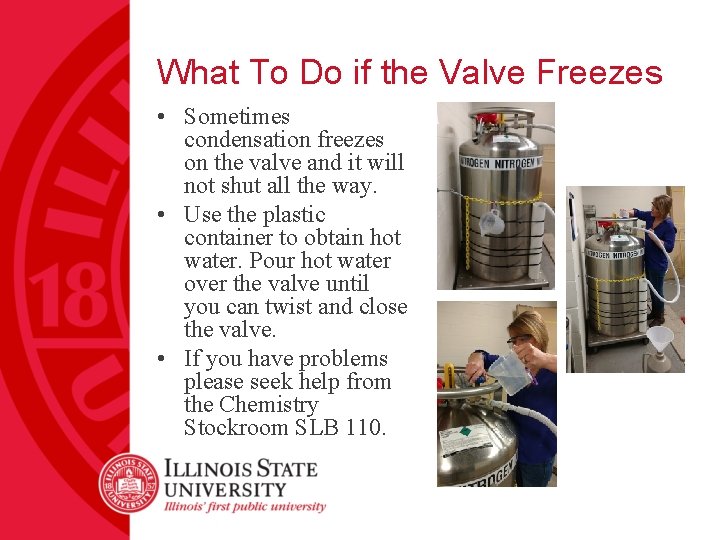
What To Do if the Valve Freezes • Sometimes condensation freezes on the valve and it will not shut all the way. • Use the plastic container to obtain hot water. Pour hot water over the valve until you can twist and close the valve. • If you have problems please seek help from the Chemistry Stockroom SLB 110.
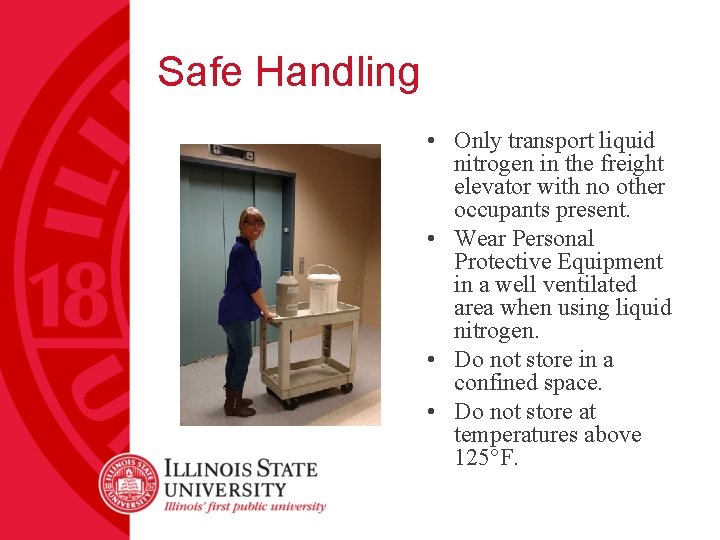
Safe Handling • Only transport liquid nitrogen in the freight elevator with no other occupants present. • Wear Personal Protective Equipment in a well ventilated area when using liquid nitrogen. • Do not store in a confined space. • Do not store at temperatures above 125°F.
Contact • Chemistry Stockroom: – 309 -438 -3766 • Environmental Health & Safety: – 309 -438 -8325