
Liquid Biopsy for Cancer Screening Eric A Klein
Liquid Biopsy for Cancer Screening Eric A. Klein, MD Professor and Chair Glickman Urological and Kidney Institute Cleveland Clinic Lerner College of Medicine
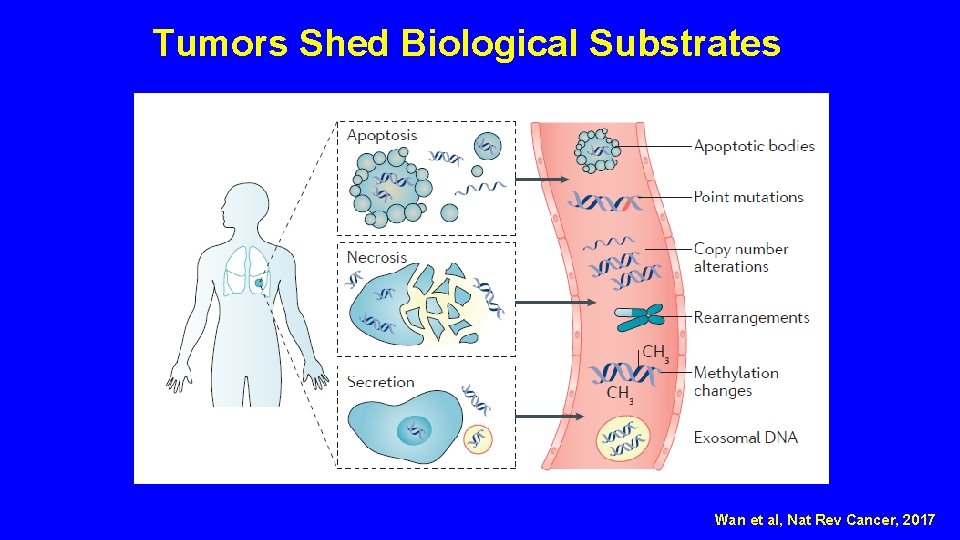
Tumors Shed Biological Substrates Wan et al, Nat Rev Cancer, 2017
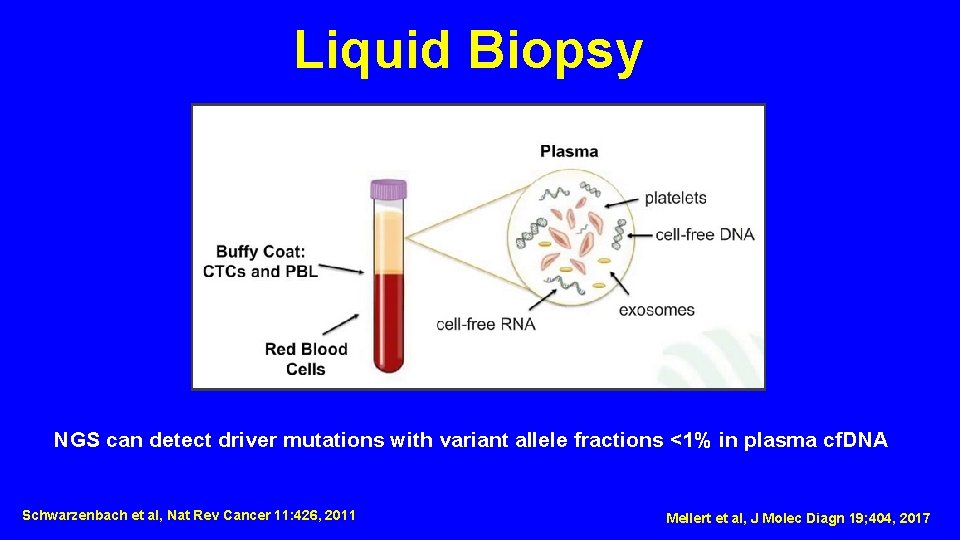
Liquid Biopsy NGS can detect driver mutations with variant allele fractions <1% in plasma cf. DNA Schwarzenbach et al, Nat Rev Cancer 11: 426, 2011 Mellert et al, J Molec Diagn 19; 404, 2017
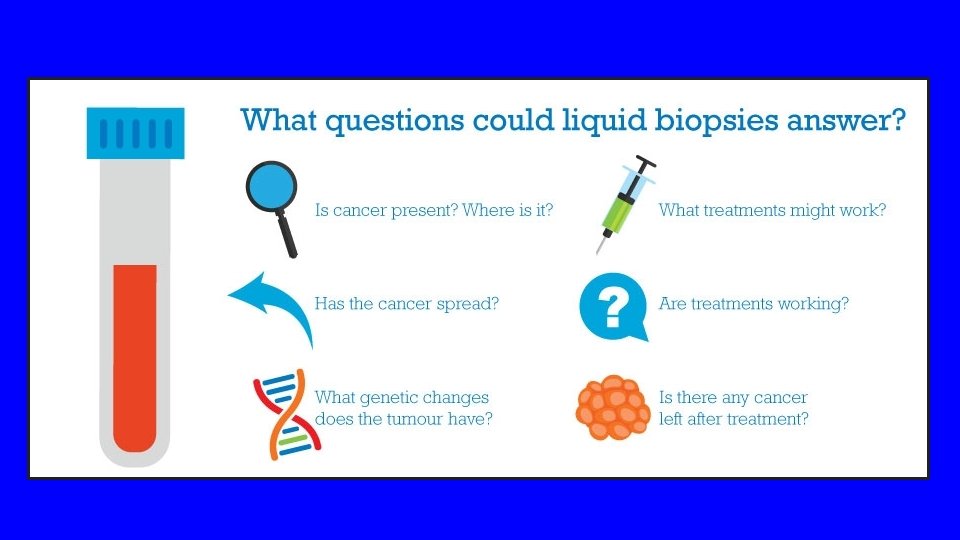
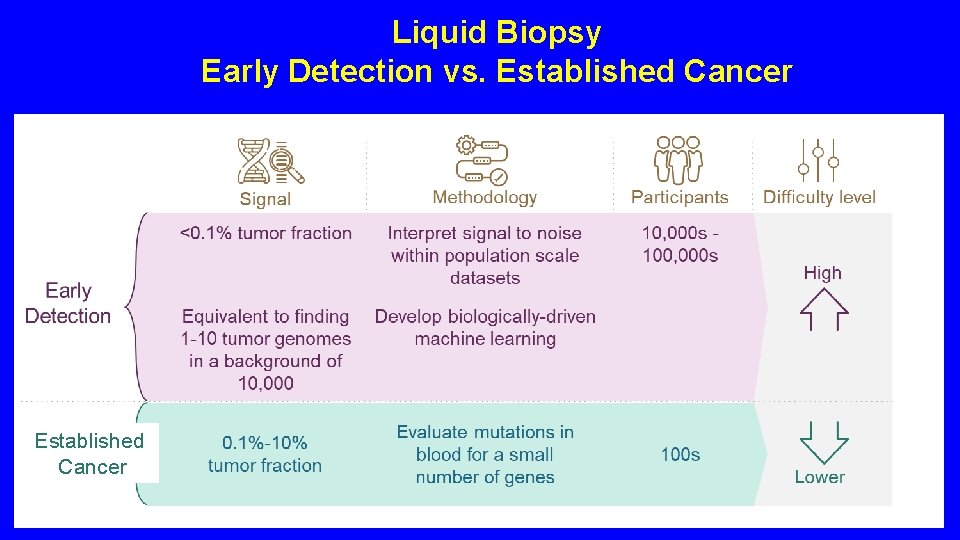
Liquid Biopsy Early Detection vs. Established Cancer

Liquid Biopsy Enabling Technologies • Microfluidics • Droplet-based digital PCR • Next Generation Sequencing
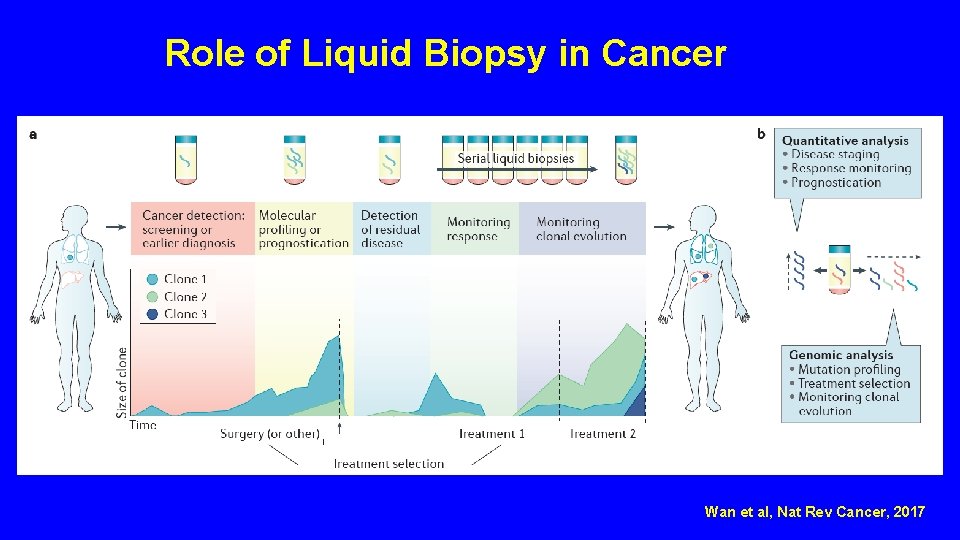
Role of Liquid Biopsy in Cancer Wan et al, Nat Rev Cancer, 2017
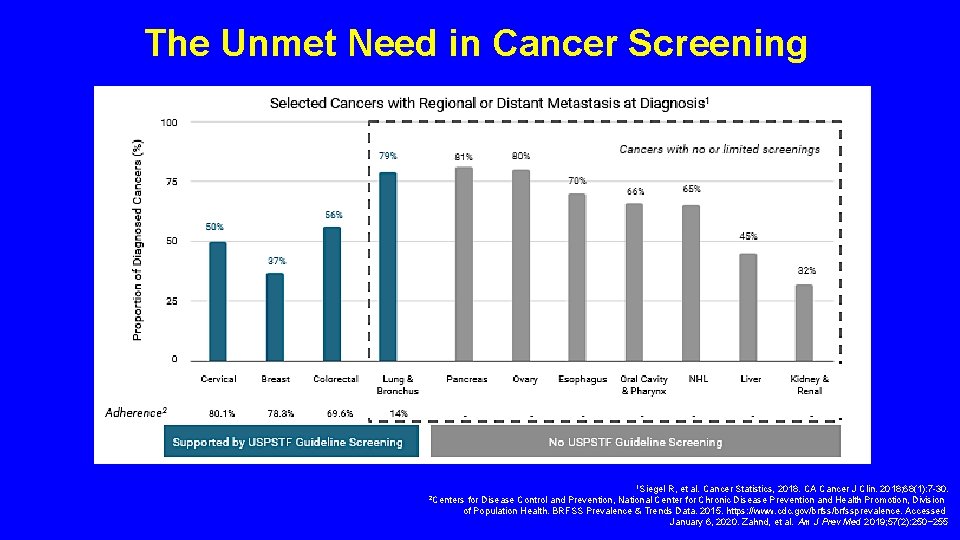
The Unmet Need in Cancer Screening 1 Siegel R, et al. Cancer Statistics, 2018. CA Cancer J Clin. 2018; 68(1): 7 -30. for Disease Control and Prevention, National Center for Chronic Disease Prevention and Health Promotion, Division of Population Health. BRFSS Prevalence & Trends Data. 2015. https: //www. cdc. gov/brfssprevalence. Accessed January 6, 2020. Zahnd, et al. Am J Prev Med 2019; 57(2): 250− 255 2 Centers
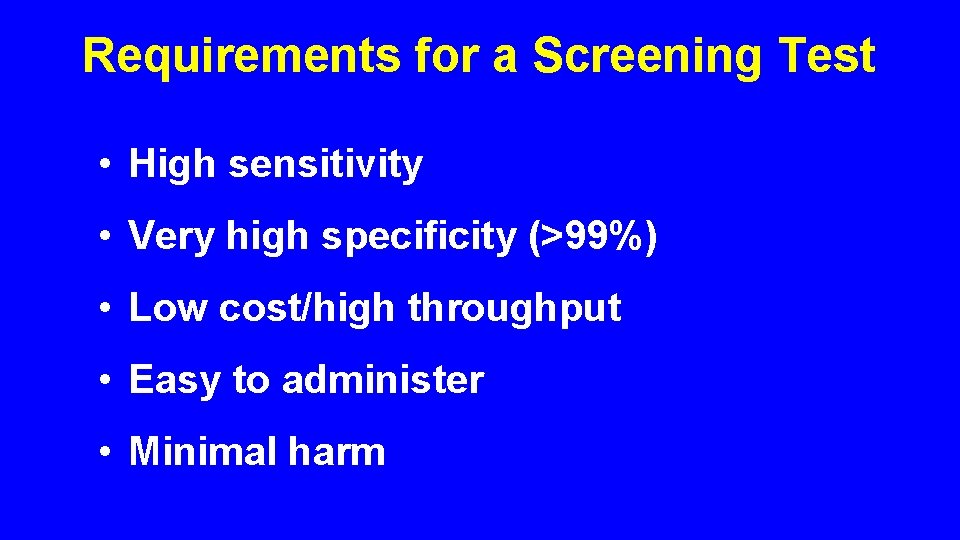
Requirements for a Screening Test • High sensitivity • Very high specificity (>99%) • Low cost/high throughput • Easy to administer • Minimal harm
Published Studies • Cancer. Seek • Pan. SEER • Circulating Cancer Genome Atlas (CCGA)
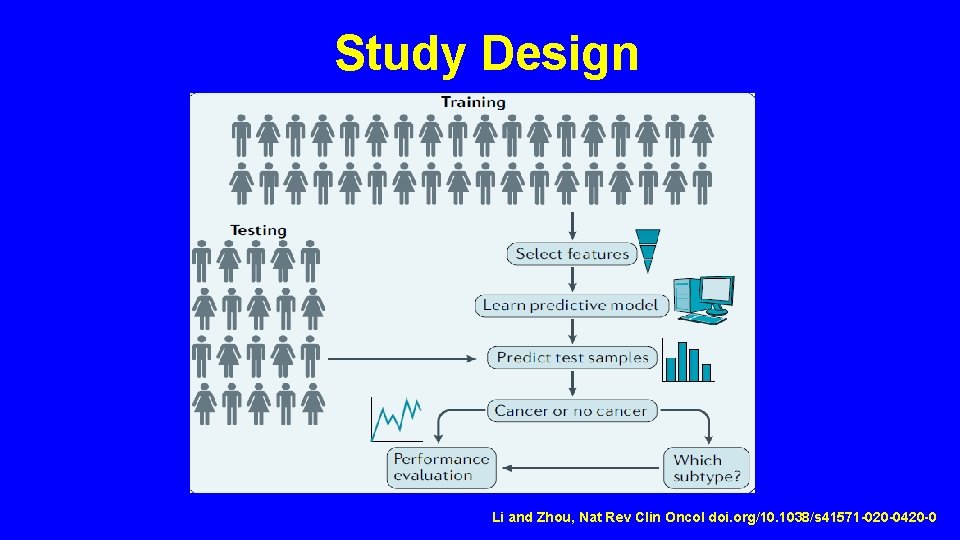
Study Design Li and Zhou, Nat Rev Clin Oncol doi. org/10. 1038/s 41571 -020 -0420 -0
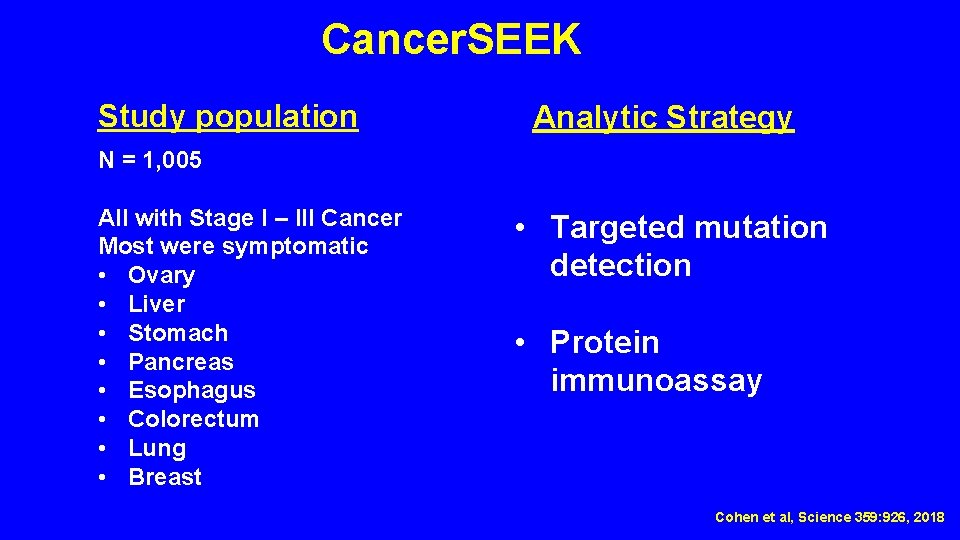
Cancer. SEEK Study population Analytic Strategy N = 1, 005 All with Stage I – III Cancer Most were symptomatic • Ovary • Liver • Stomach • Pancreas • Esophagus • Colorectum • Lung • Breast • Targeted mutation detection • Protein immunoassay Cohen et al, Science 359: 926, 2018
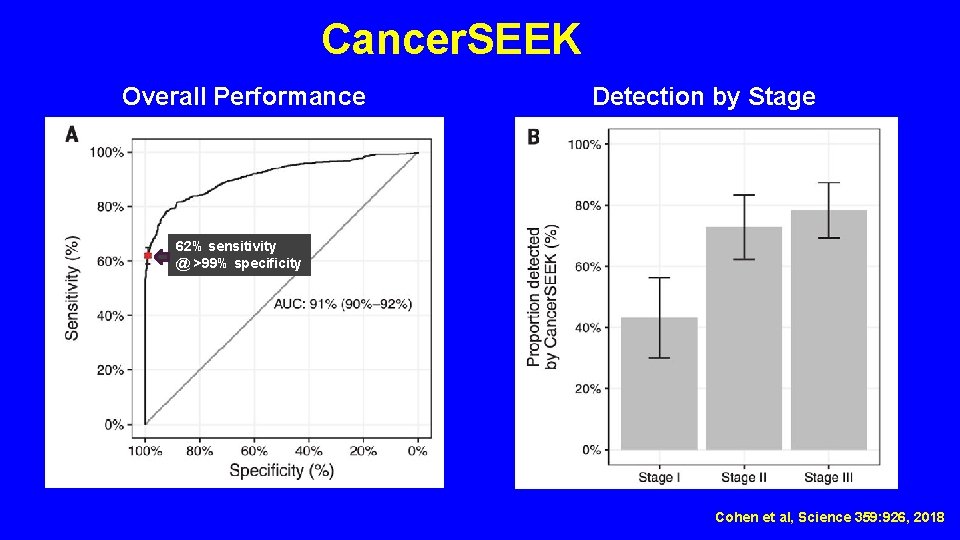
Cancer. SEEK Overall Performance Detection by Stage 62% sensitivity @ >99% specificity Cohen et al, Science 359: 926, 2018
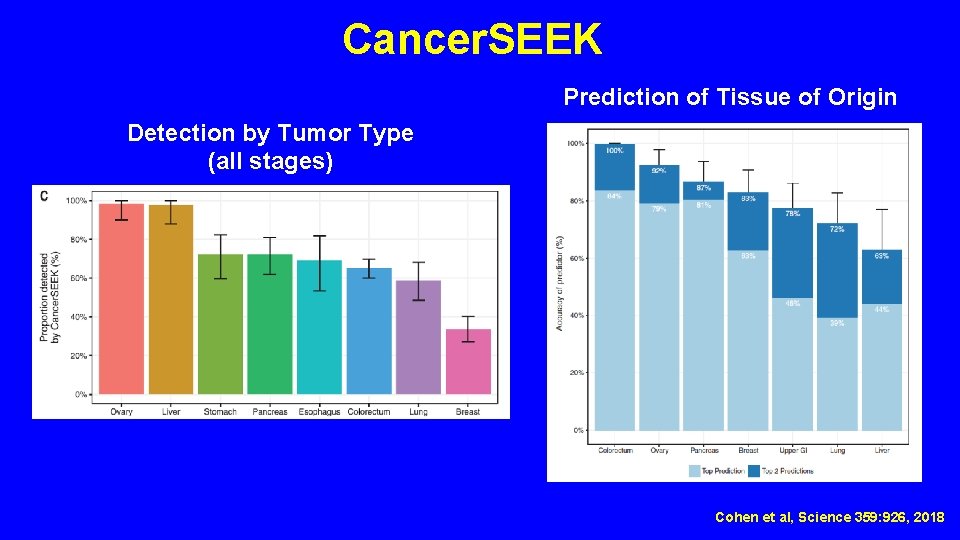
Cancer. SEEK Prediction of Tissue of Origin Detection by Tumor Type (all stages) Cohen et al, Science 359: 926, 2018
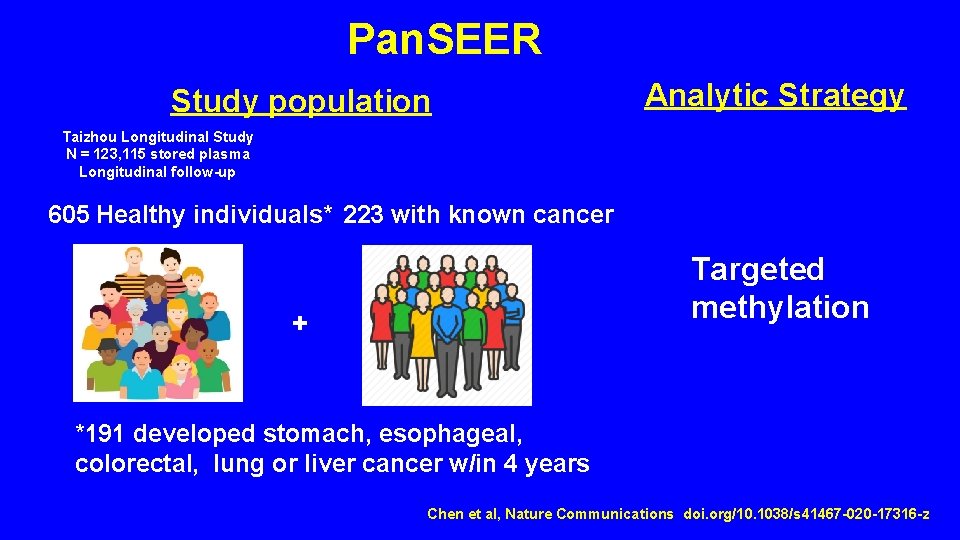
Pan. SEER Study population Analytic Strategy Taizhou Longitudinal Study N = 123, 115 stored plasma Longitudinal follow-up 605 Healthy individuals* 223 with known cancer Targeted methylation + *191 developed stomach, esophageal, colorectal, lung or liver cancer w/in 4 years Chen et al, Nature Communications doi. org/10. 1038/s 41467 -020 -17316 -z
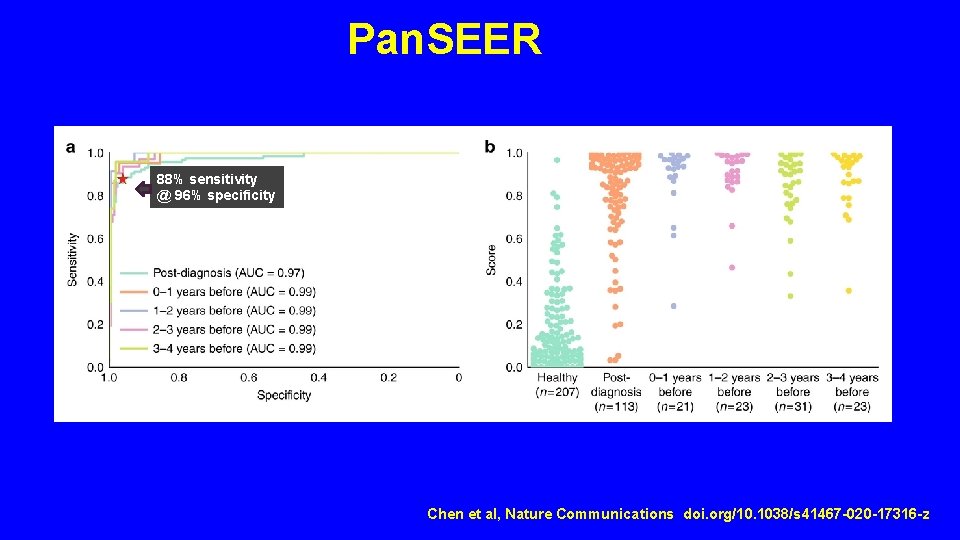
Pan. SEER 88% sensitivity @ 96% specificity Chen et al, Nature Communications doi. org/10. 1038/s 41467 -020 -17316 -z
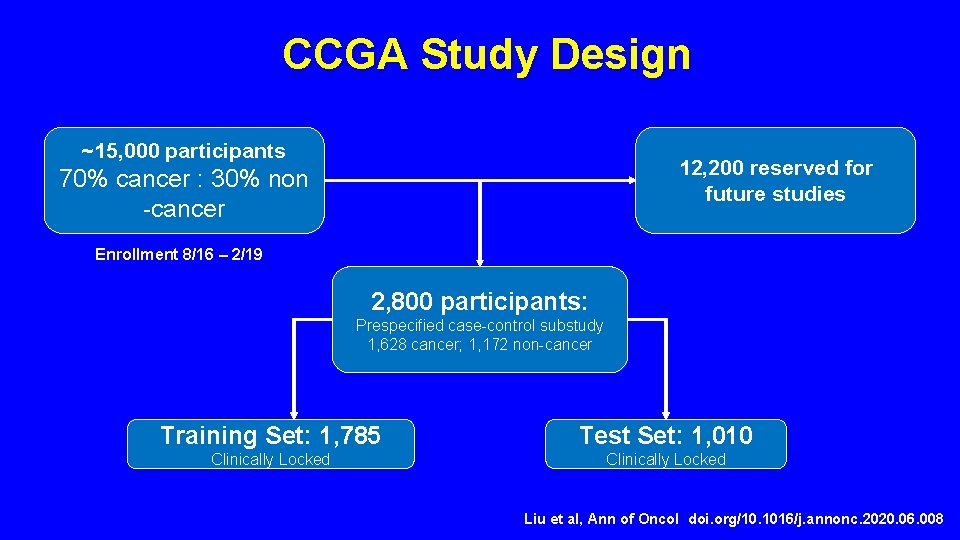
CCGA Study Design ~15, 000 participants 12, 200 reserved for future studies 70% cancer : 30% non -cancer Enrollment 8/16 – 2/19 2, 800 participants: Prespecified case-control substudy 1, 628 cancer; 1, 172 non-cancer Training Set: 1, 785 Test Set: 1, 010 Clinically Locked Liu et al, Ann of Oncol doi. org/10. 1016/j. annonc. 2020. 06. 008
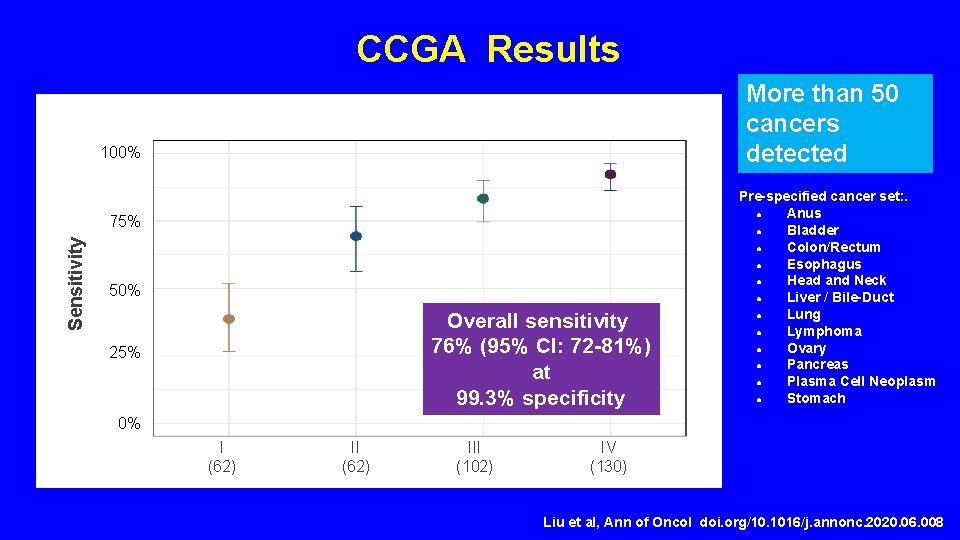
CCGA Results More than 50 cancers detected 100% Sensitivity 75% 50% Overall sensitivity 76% (95% CI: 72 -81%) at 99. 3% specificity 25% Pre-specified cancer set: . ● Anus ● Bladder ● Colon/Rectum ● Esophagus ● Head and Neck ● Liver / Bile-Duct ● Lung ● Lymphoma ● Ovary ● Pancreas ● Plasma Cell Neoplasm ● Stomach 0% I (62) II Cancer Stage (n) III (62) (102) IV (130) Liu et al, Ann of Oncol doi. org/10. 1016/j. annonc. 2020. 06. 008
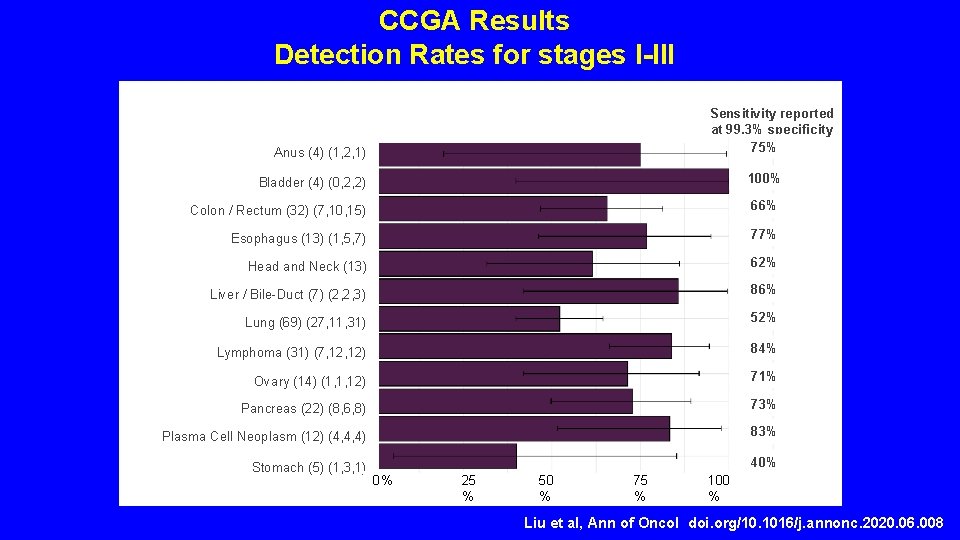
CCGA Results Detection Rates for stages I-III Sensitivity reported at 99. 3% specificity 75% Anus (4) (1, 2, 1) Bladder (4) (0, 2, 2) 100% Colon / Rectum (32) (7, 10, 15) 66% Esophagus (13) (1, 5, 7) 77% Head and Neck (13) (3, 4, 6) Liver / Bile-Duct (7) (2, 2, 3) 62% Lung (69) (27, 11, 31) 52% Lymphoma (31) (7, 12) 84% Ovary (14) (1, 1, 12) 71% Pancreas (22) (8, 6, 8) 73% Plasma Cell Neoplasm (12) (4, 4, 4) 83% Stomach (5) (1, 3, 1) 40% 86% 0% 25 % 50 % 75 % 100 % Liu et al, Ann of Oncol doi. org/10. 1016/j. annonc. 2020. 06. 008
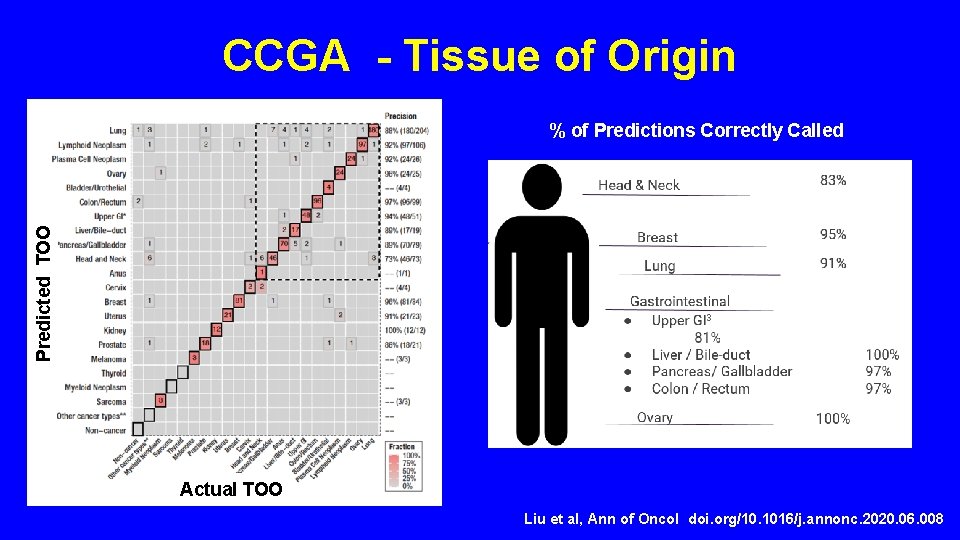
CCGA - Tissue of Origin Predicted TOO % of Predictions Correctly Called Actual TOO Liu et al, Ann of Oncol doi. org/10. 1016/j. annonc. 2020. 06. 008
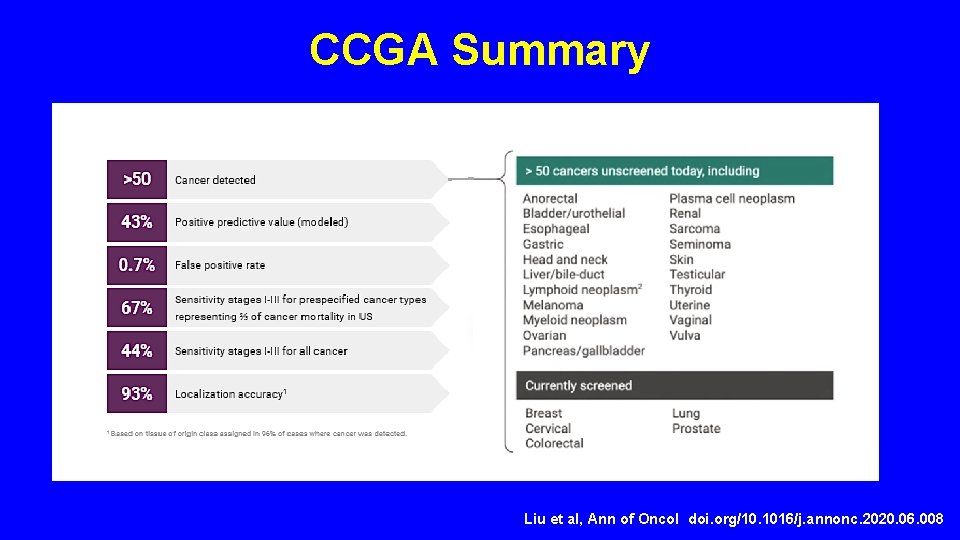
CCGA Summary Liu et al, Ann of Oncol doi. org/10. 1016/j. annonc. 2020. 06. 008
CCGA - High Specificity is Feasible 8/948 (0. 8%) non-cancer controls had a positive signal 3 subsequently diagnosed w/in a few months with: Endometrial cancer, stage II Ovarian cancer, stage III Lung cancer, stage IV 5 -year follow-up will enable identification of participants who are subsequently diagnosed
Conclusions • Advances in genomic technology allow detection of biologic substrates in body fluids at clinically meaningful levels • Liquid biopsy has potential to impact cancer management • • Screening/Early Detection • Molecular profiling/prognosis/targeted therapy • Detection of Residual Disease • Real time monitoring of treatment response • Monitoring of treatment-emergent resistance 3 studies have laid the foundation for large scale screening of healthy populations for common cancers that have no established screening paradigms
- Slides: 23