
Lipoprotein electrophoresis Mr Ali Hana Mr Mohamed Hsen
- Slides: 11
Lipoprotein electrophoresis Mr. Ali Hana Mr. Mohamed Hsen
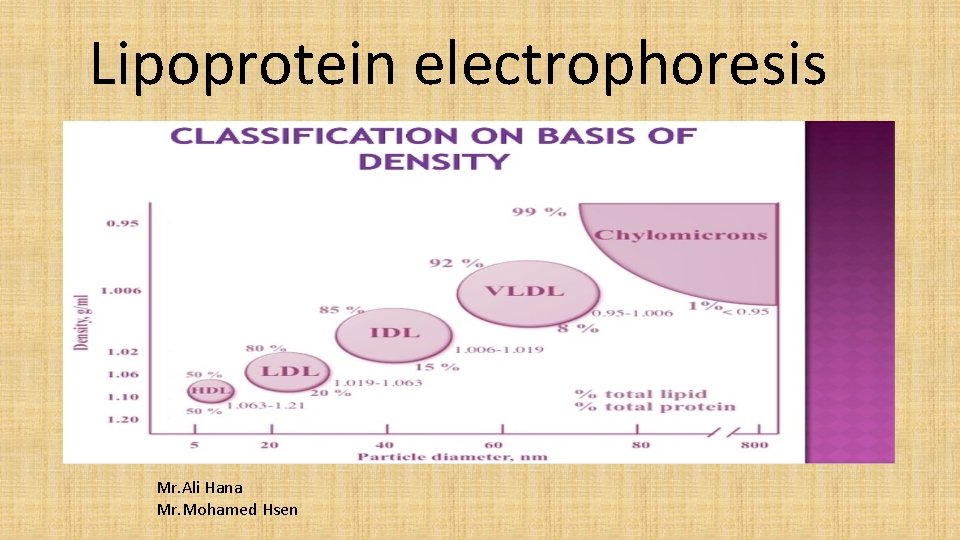
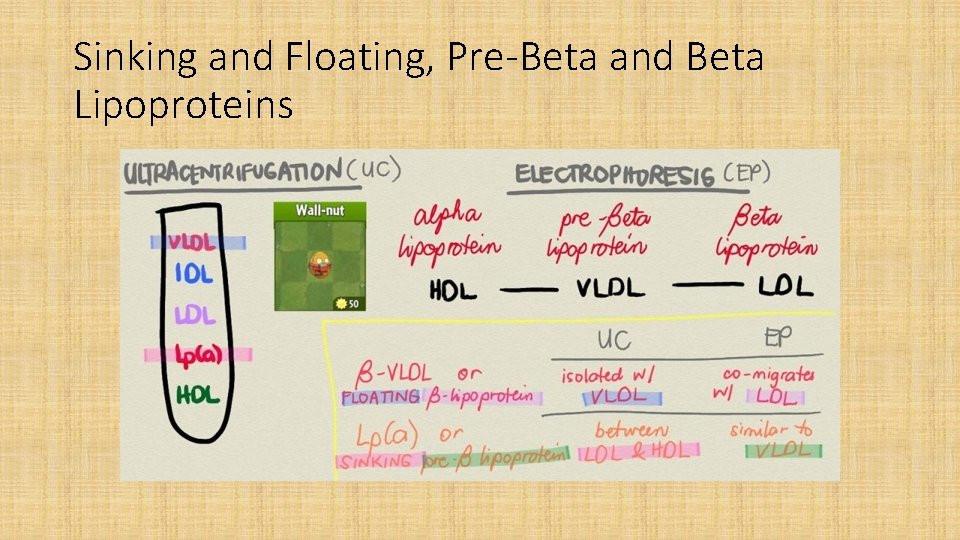
Sinking and Floating, Pre-Beta and Beta Lipoproteins The different properties of lipoproteins form the basis for electrophoretic and ultracentrifuges separation, and analogous fractions separated by the two techniques may not be identical. In this very much effort(-ed) illustration of mine, you can see the results with ULTRACENTRIFUGATION (UC) and
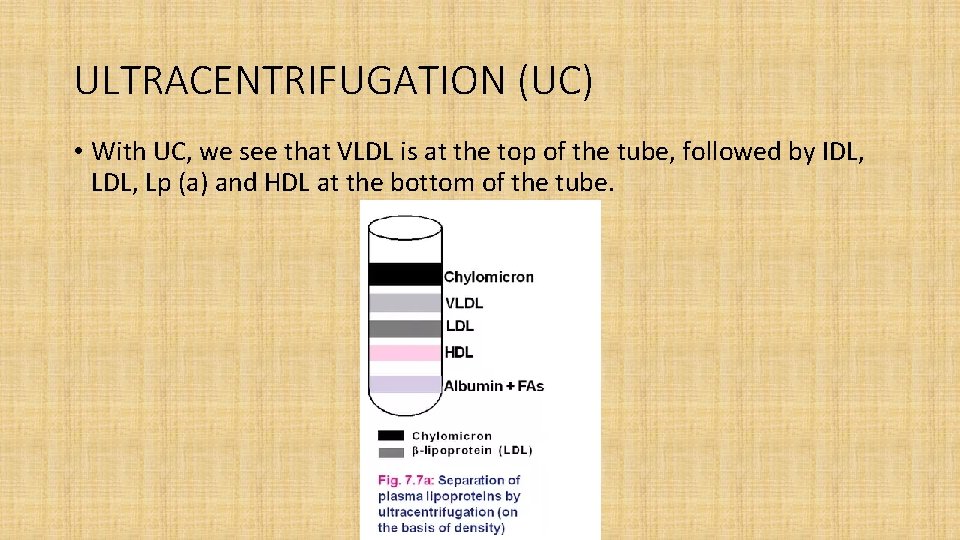
ULTRACENTRIFUGATION (UC) • With UC, we see that VLDL is at the top of the tube, followed by IDL, LDL, Lp (a) and HDL at the bottom of the tube.
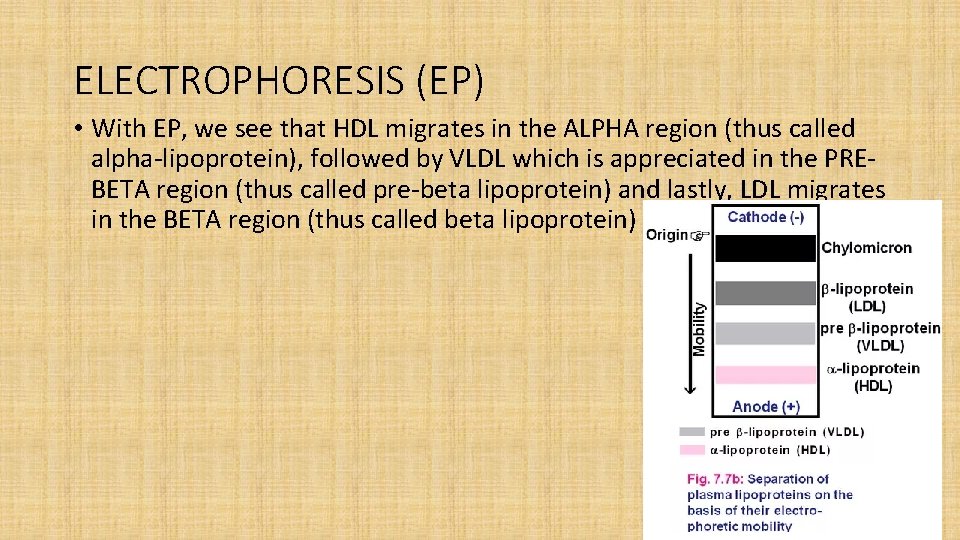
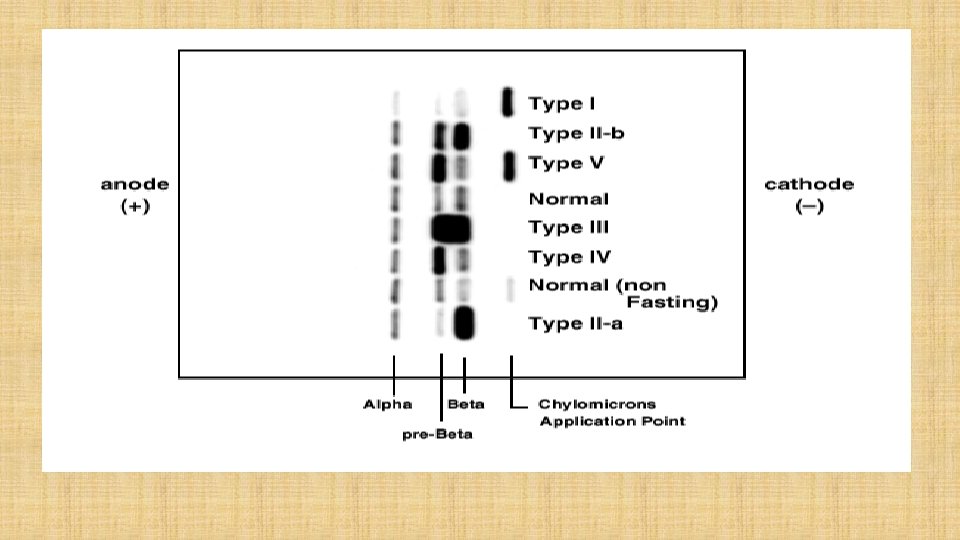
ELECTROPHORESIS (EP) • With EP, we see that HDL migrates in the ALPHA region (thus called alpha-lipoprotein), followed by VLDL which is appreciated in the PREBETA region (thus called pre-beta lipoprotein) and lastly, LDL migrates in the BETA region (thus called beta lipoprotein)
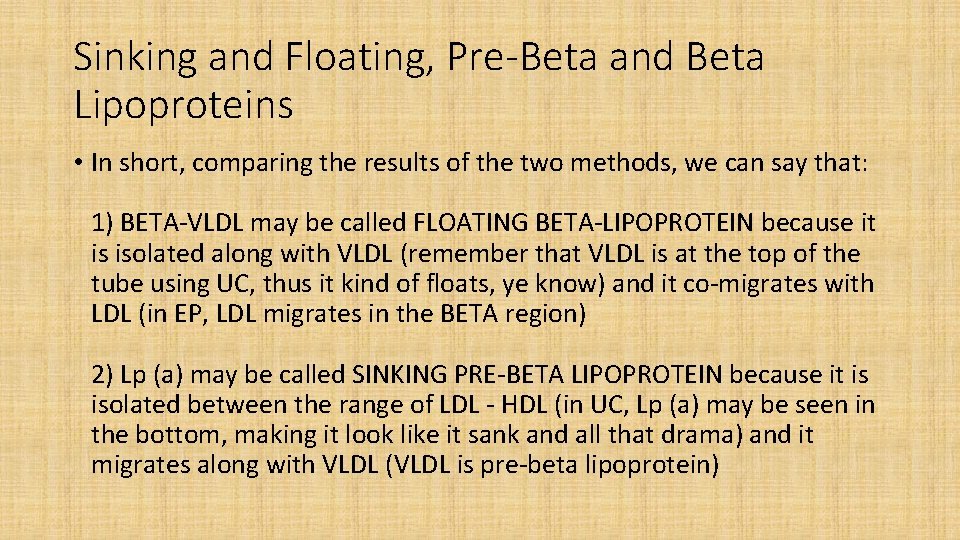
Sinking and Floating, Pre-Beta and Beta Lipoproteins • In short, comparing the results of the two methods, we can say that: 1) BETA-VLDL may be called FLOATING BETA-LIPOPROTEIN because it is isolated along with VLDL (remember that VLDL is at the top of the tube using UC, thus it kind of floats, ye know) and it co-migrates with LDL (in EP, LDL migrates in the BETA region) 2) Lp (a) may be called SINKING PRE-BETA LIPOPROTEIN because it is isolated between the range of LDL - HDL (in UC, Lp (a) may be seen in the bottom, making it look like it sank and all that drama) and it migrates along with VLDL (VLDL is pre-beta lipoprotein)
Sinking and Floating, Pre-Beta and Beta Lipoproteins
Hyperlipoproteinemia type I Type I hyperlipoproteinemia exists in several forms: • Lipoprotein lipase deficiency • Lack of lipoprotein lipase activator • Due to circulating inhibitor of lipoprotein lipase The Result • Increase Chylomicrons
Hyperlipoproteinemia type II • depending mainly on whether elevation in the triglyceride level occurs in addition to LDL cholesterol. • Type IIa • increased levels of LDL cholesterol in the blood due to the lack of uptake of LDL particles • Type IIb • The high VLDL levels are due to overproduction of substrates, including triglycerides. They may also be caused by the decreased clearance of LDL
Hyperlipoproteinemia type III • Also known as broad beta disease The receptor defect causes levels of chylomicron remnants and IDL to be higher than normal in the blood stream
Hyperlipoproteinemia type IV • This form is due to high triglyceride level. Other lipoprotein levels are normal or increased a little. • Hyperlipoproteinemia type V, also known as mixed hyperlipoproteinemia familial or mixed hyperlipidemia, is very similar to type I, but with high VLDL in addition to chylomicrons.