
Lipids Objective B 2 Compare the structures functions
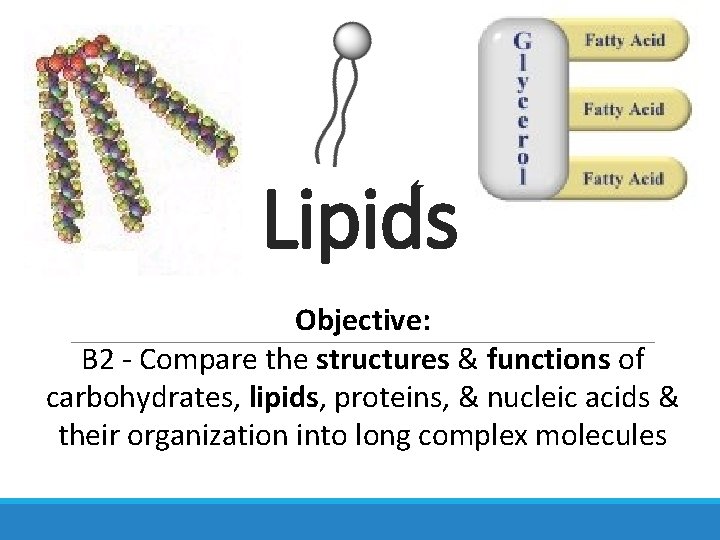
Lipids Objective: B 2 - Compare the structures & functions of carbohydrates, lipids, proteins, & nucleic acids & their organization into long complex molecules
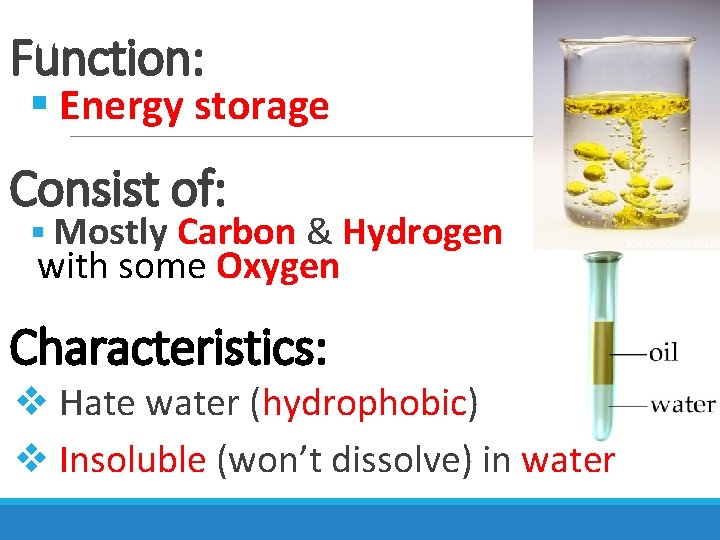
Function: § Energy storage Consist of: § Mostly Carbon & Hydrogen with some Oxygen Characteristics: v Hate water (hydrophobic) v Insoluble (won’t dissolve) in water
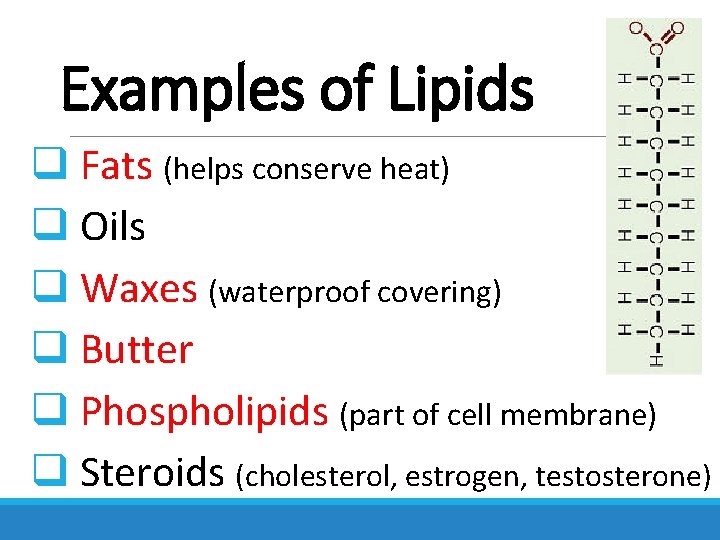
Examples of Lipids q Fats (helps conserve heat) q Oils q Waxes (waterproof covering) q Butter q Phospholipids (part of cell membrane) q Steroids (cholesterol, estrogen, testosterone)
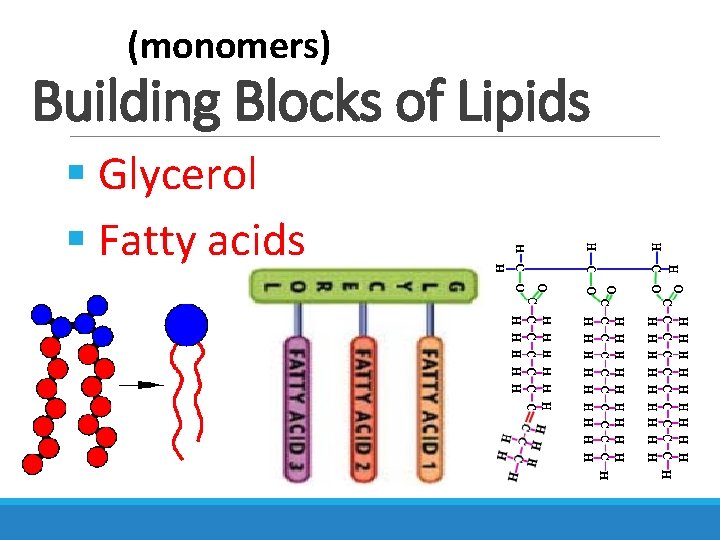
(monomers) Building Blocks of Lipids § Glycerol § Fatty acids
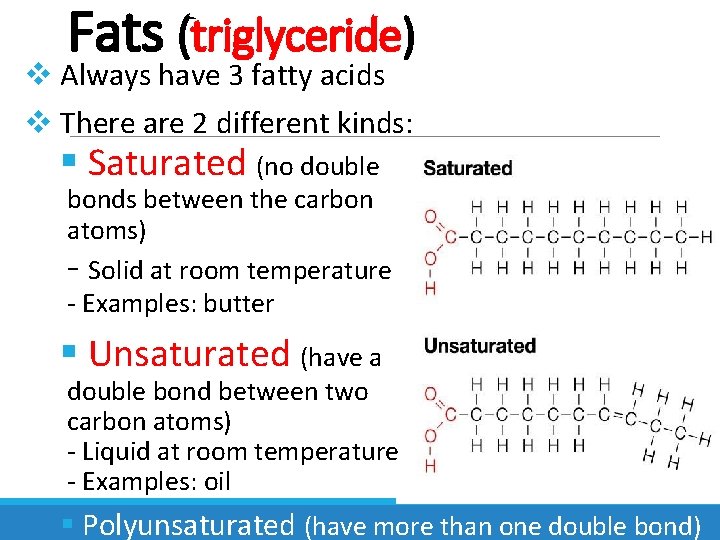
Fats (triglyceride) v Always have 3 fatty acids v There are 2 different kinds: § Saturated (no double bonds between the carbon atoms) - Solid at room temperature - Examples: butter § Unsaturated (have a double bond between two carbon atoms) - Liquid at room temperature - Examples: oil § Polyunsaturated (have more than one double bond)
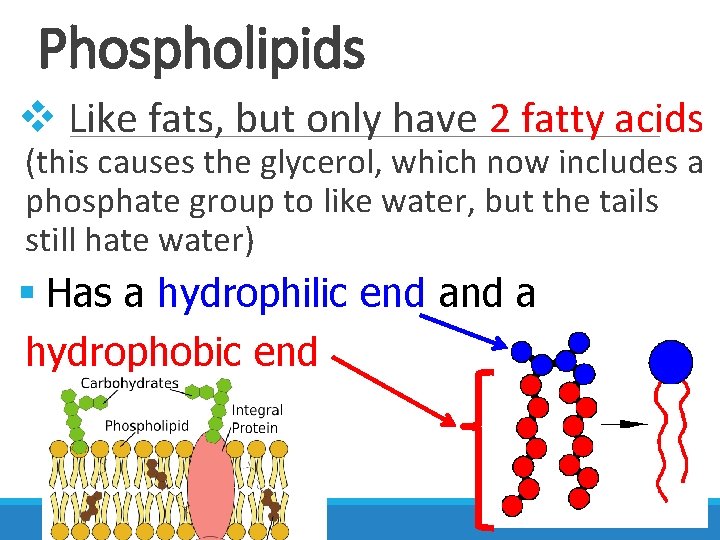
Phospholipids v Like fats, but only have 2 fatty acids (this causes the glycerol, which now includes a phosphate group to like water, but the tails still hate water) § Has a hydrophilic end a hydrophobic end
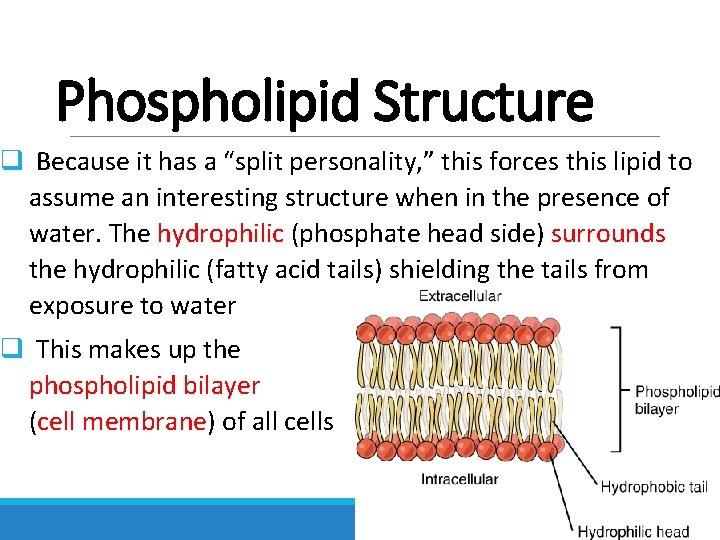
Phospholipid Structure q Because it has a “split personality, ” this forces this lipid to assume an interesting structure when in the presence of water. The hydrophilic (phosphate head side) surrounds the hydrophilic (fatty acid tails) shielding the tails from exposure to water q This makes up the phospholipid bilayer (cell membrane) of all cells
Etymology Lipids: (Gk. LIPOS, fat) Hydrophilic: hydro- (water) + -philic or -phile (Gk. PHILOS, loving) Hydrophobic: hydro- (water) + -phobic (Gk. PHOBOS, fear)
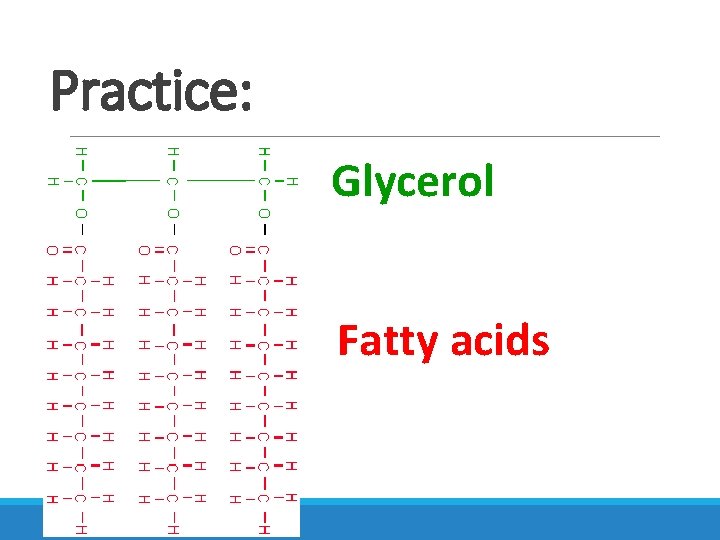
Practice: Glycerol Fatty acids
What is the function of lipids? Energy storage
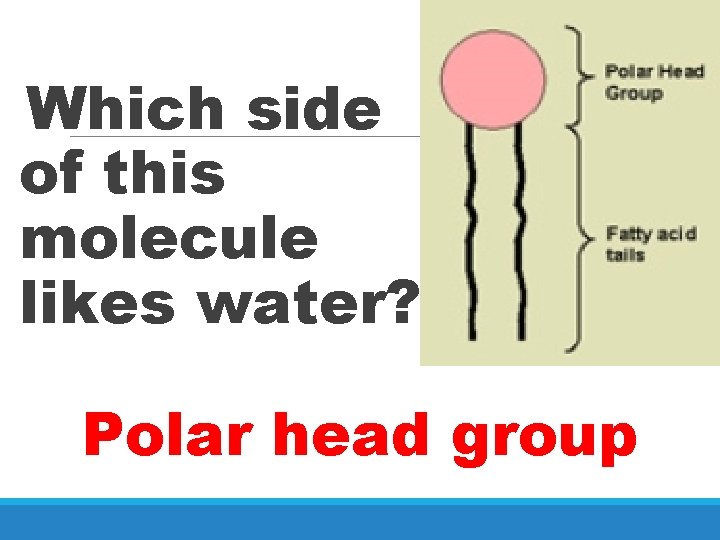
Which side of this molecule likes water? Polar head group
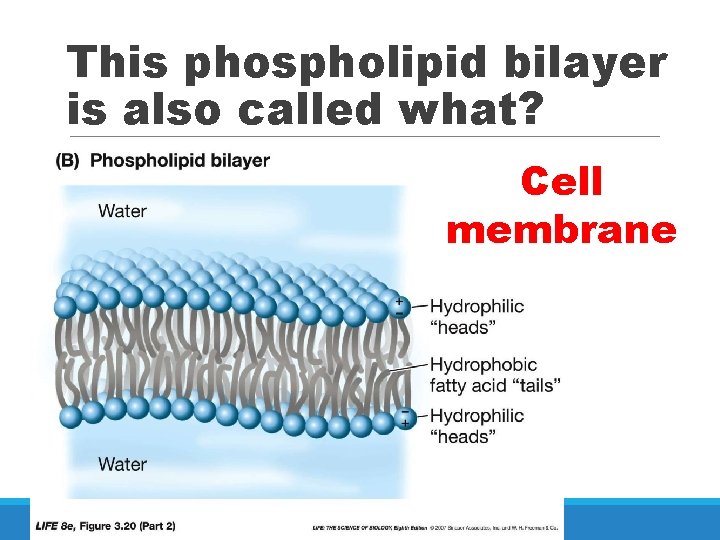
This phospholipid bilayer is also called what? Cell membrane
- Slides: 12