
Lipids Module 1 4 Lipid Functions Contribute texture
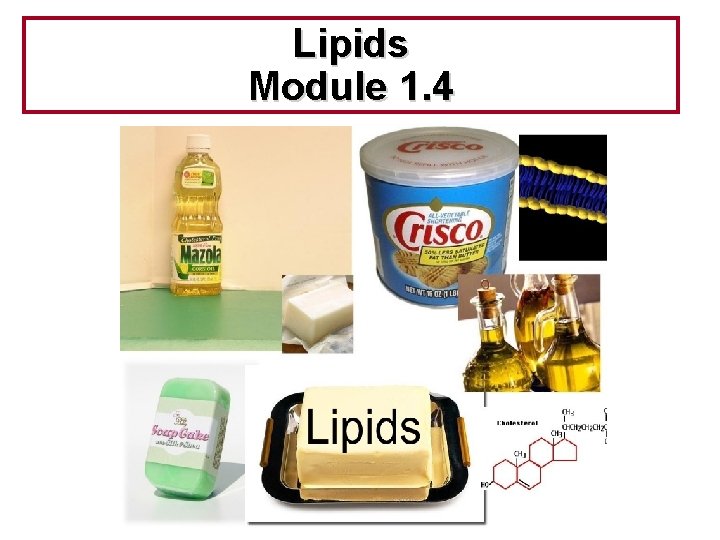
Lipids Module 1. 4
Lipid Functions § Contribute texture, taste, flavor, aroma to foods and a sense of fullness attributed to delayed stomach emptying § Necessary for absorption of fat-soluble vitamins § Major components of cell membranes § Nourish the skin and hair § Insulates the body from extremes of temperature § Cushion the vital organs to protect them from shock (especially kidneys and brain) § Lipids in the body are important for lubricated body surfaces, such as the mucous membranes of the eyes § Component of several hormones, including estrogen and testosterone § Helps to regulate BP and blood clotting (eicosanoids) § Must have fat in foods to absorb fat-soluble vitamins
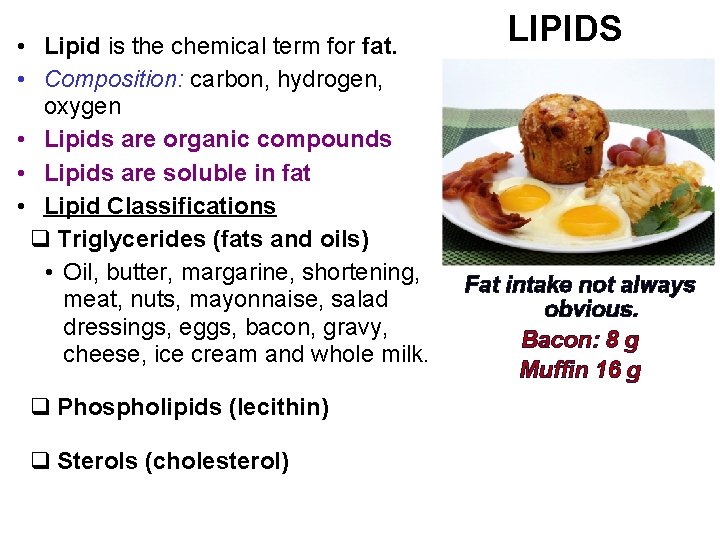
• Lipid is the chemical term for fat. • Composition: carbon, hydrogen, oxygen • Lipids are organic compounds • Lipids are soluble in fat • Lipid Classifications q Triglycerides (fats and oils) • Oil, butter, margarine, shortening, meat, nuts, mayonnaise, salad dressings, eggs, bacon, gravy, cheese, ice cream and whole milk. q Phospholipids (lecithin) q Sterols (cholesterol) LIPIDS Fat intake not always obvious. Bacon: 8 g Muffin 16 g
Triglycerides • Triglycerides account for 95% of lipids – only type of lipid that the body can convert to ATP or produce energy from. – most calorically dense (calories yielded per weight of the substance) energy producing nutrient. Triglyceride categories – Fats: lipids that are solid at room temperature – Oils: lipids that are liquid at normal room temperature. • Fats and oils contain 9 calories per gram. – Contains 2 x as many calories as CHO and Proteins • 20 -35% of total dietary calories should come from fat. – Less than 7% should come from SFA. Limit trans fatty acids. • Typical American diet gets about 33% of its energy from fat.

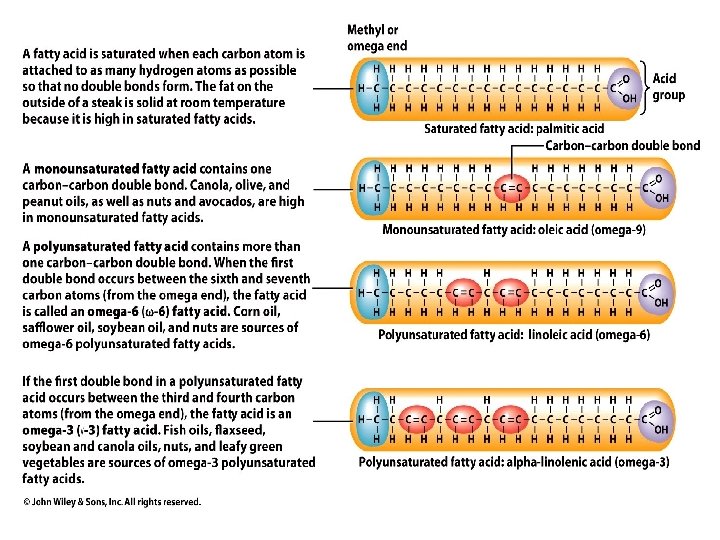
Triglyceride Structure – 3 Fatty acids: basic units of fat made of carbon atoms chains with acid group at one end and hydrogen atoms attached along the length. – 1 Glycerol - an organic compound that serves as the backbone for triglycerides. • 1 fatty acid attached to glycerol backbone -monoglyceride. • 2 fatty acid is diglyceride • 3 fatty acids triglyceride • Fatty acid not joined to glycerol backbone is termed “free fatty acid” Dietary fats are defined by the composition of the fatty acids in the triglyceride. Saturation refers to the chemical structure—specifically to the number of hydrogens the fatty acid chain holds. • Determines whether a fat is solid or liquid at room temperature • Classified as either Saturated or Unsaturated fatty acids
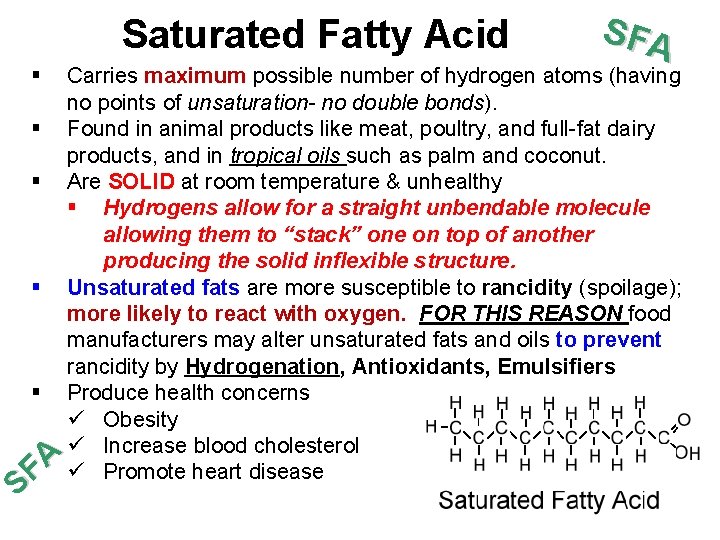
Saturated Fatty Acid § SFA Carries maximum possible number of hydrogen atoms (having no points of unsaturation- no double bonds). § Found in animal products like meat, poultry, and full-fat dairy products, and in tropical oils such as palm and coconut. § Are SOLID at room temperature & unhealthy § Hydrogens allow for a straight unbendable molecule allowing them to “stack” one on top of another producing the solid inflexible structure. § Unsaturated fats are more susceptible to rancidity (spoilage); more likely to react with oxygen. FOR THIS REASON food manufacturers may alter unsaturated fats and oils to prevent rancidity by Hydrogenation, Antioxidants, Emulsifiers § Produce health concerns ü Obesity ü Increase blood cholesterol A F ü Promote heart disease S
Benefits to Saturated Fatty Acids • Brain Health – The majority of the brain is saturated fat and cholesterol. • Cardiovascular Health –SFAs can provide benefits for the heart and circulatory system. Lauric acid (found in coconut and breastmilk) increases total serum cholesterol more than many other fatty acid but most of the increase is an increase in high-density lipoprotein (HDL). • Bone Health – Saturated fat facilitates calcium incorporation into bone. • Immune Health –white blood cells, their ability to recognize and destroy foreign invaders like viruses, bacteria, and fungi is impaired. • Nervous System Health –saturated fat provides the “insulation” coating for the neurons in the nervous system enabling rapid neural stimulation.
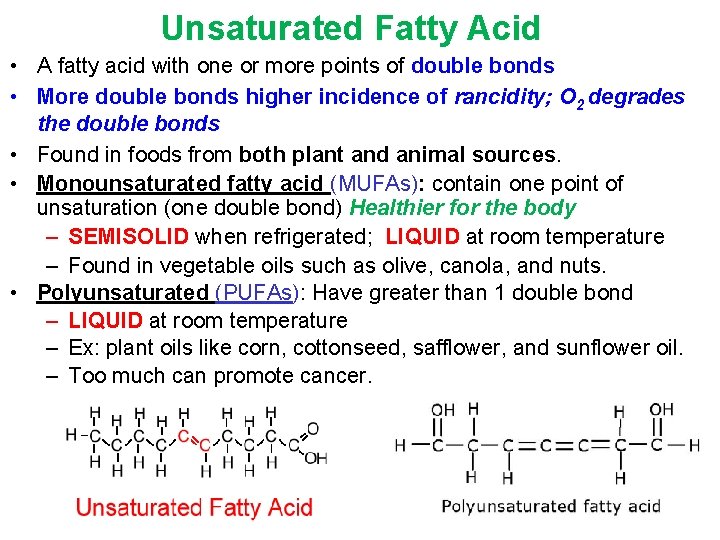
Unsaturated Fatty Acid • A fatty acid with one or more points of double bonds • More double bonds higher incidence of rancidity; O 2 degrades the double bonds • Found in foods from both plant and animal sources. • Monounsaturated fatty acid (MUFAs): contain one point of unsaturation (one double bond) Healthier for the body – SEMISOLID when refrigerated; LIQUID at room temperature – Found in vegetable oils such as olive, canola, and nuts. • Polyunsaturated (PUFAs): Have greater than 1 double bond – LIQUID at room temperature – Ex: plant oils like corn, cottonseed, safflower, and sunflower oil. – Too much can promote cancer.
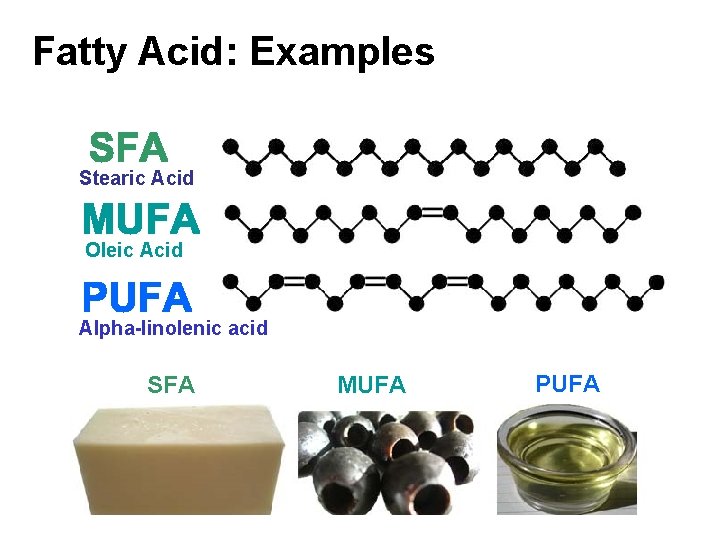
Fatty Acid: Examples Stearic Acid Oleic Acid Alpha-linolenic acid SFA MUFA PUFA
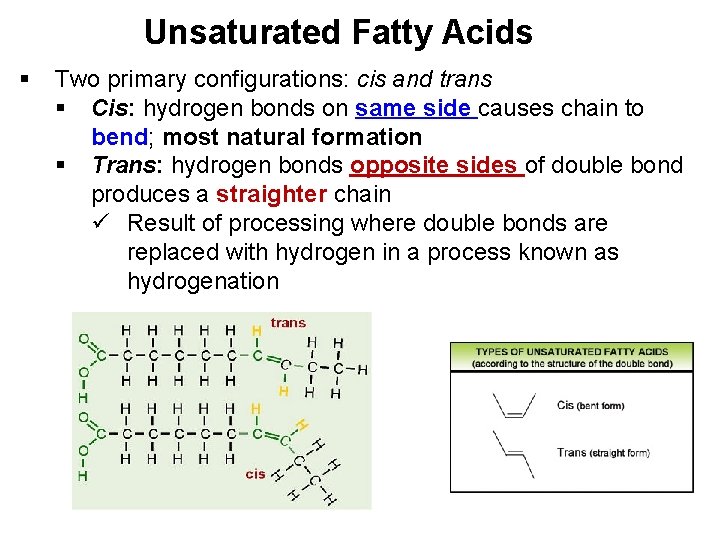
Unsaturated Fatty Acids § Two primary configurations: cis and trans § Cis: hydrogen bonds on same side causes chain to bend; most natural formation § Trans: hydrogen bonds opposite sides of double bond produces a straighter chain ü Result of processing where double bonds are replaced with hydrogen in a process known as hydrogenation
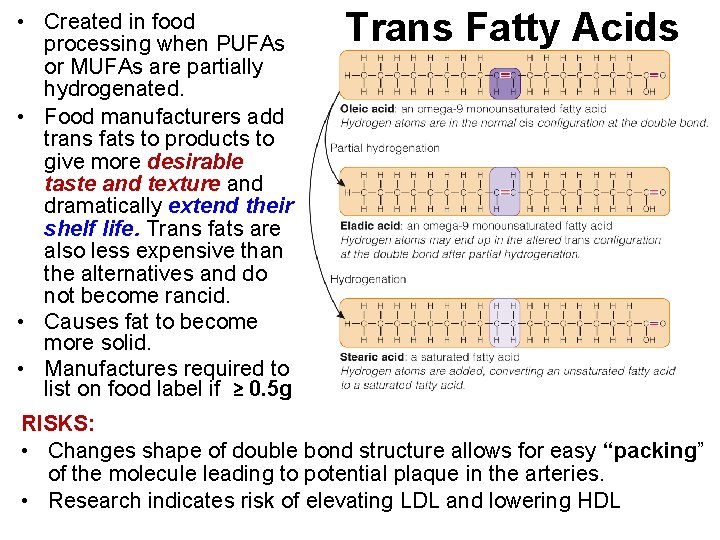
• Created in food processing when PUFAs or MUFAs are partially hydrogenated. • Food manufacturers add trans fats to products to give more desirable taste and texture and dramatically extend their shelf life. Trans fats are also less expensive than the alternatives and do not become rancid. • Causes fat to become more solid. • Manufactures required to list on food label if ≥ 0. 5 g Trans Fatty Acids RISKS: • Changes shape of double bond structure allows for easy “packing” of the molecule leading to potential plaque in the arteries. • Research indicates risk of elevating LDL and lowering HDL
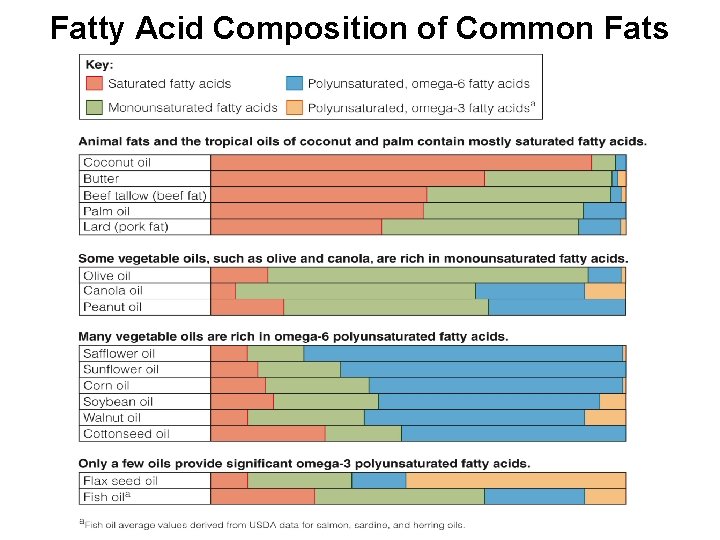
Fatty Acid Composition of Common Fats
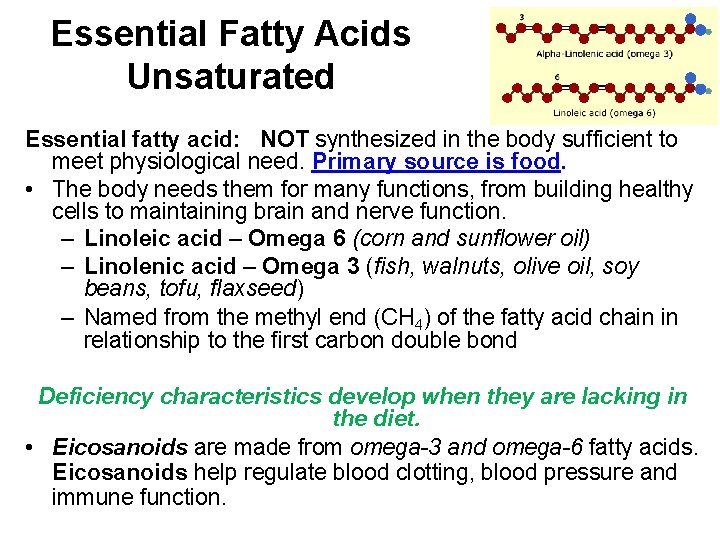
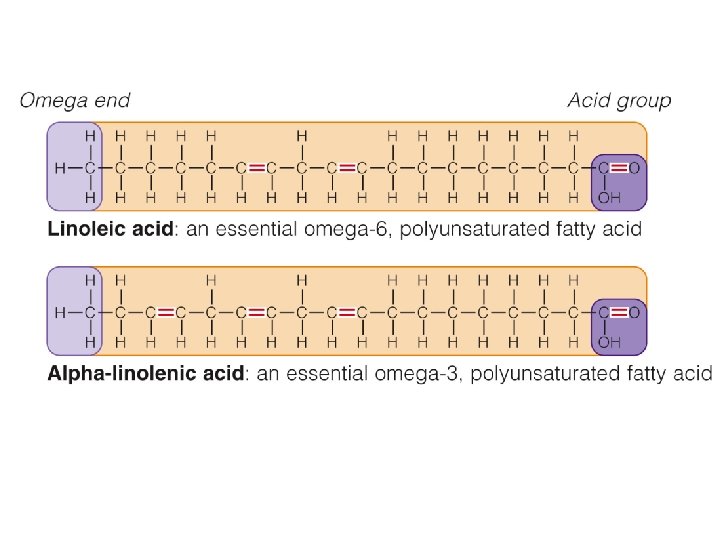
Essential Fatty Acids Unsaturated Essential fatty acid: NOT synthesized in the body sufficient to meet physiological need. Primary source is food. • The body needs them for many functions, from building healthy cells to maintaining brain and nerve function. – Linoleic acid – Omega 6 (corn and sunflower oil) – Linolenic acid – Omega 3 (fish, walnuts, olive oil, soy beans, tofu, flaxseed) – Named from the methyl end (CH 4) of the fatty acid chain in relationship to the first carbon double bond Deficiency characteristics develop when they are lacking in the diet. • Eicosanoids are made from omega-3 and omega-6 fatty acids. Eicosanoids help regulate blood clotting, blood pressure and immune function.
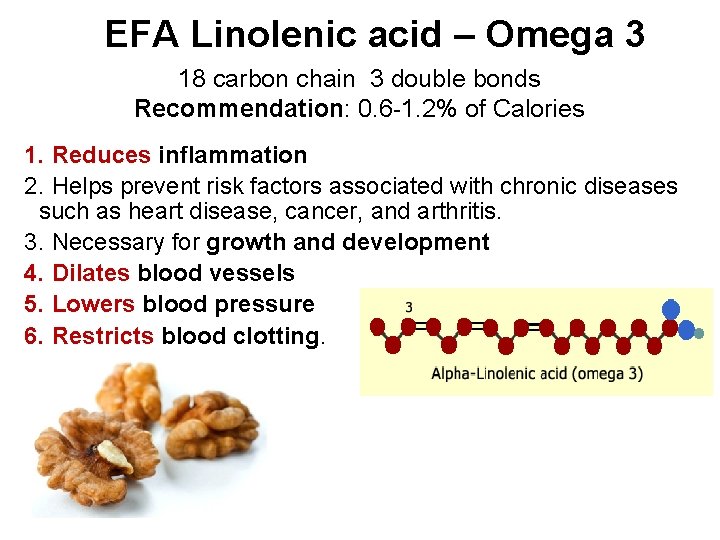
EFA Linolenic acid – Omega 3 18 carbon chain 3 double bonds Recommendation: 0. 6 -1. 2% of Calories 1. Reduces inflammation 2. Helps prevent risk factors associated with chronic diseases such as heart disease, cancer, and arthritis. 3. Necessary for growth and development 4. Dilates blood vessels 5. Lowers blood pressure 6. Restricts blood clotting.
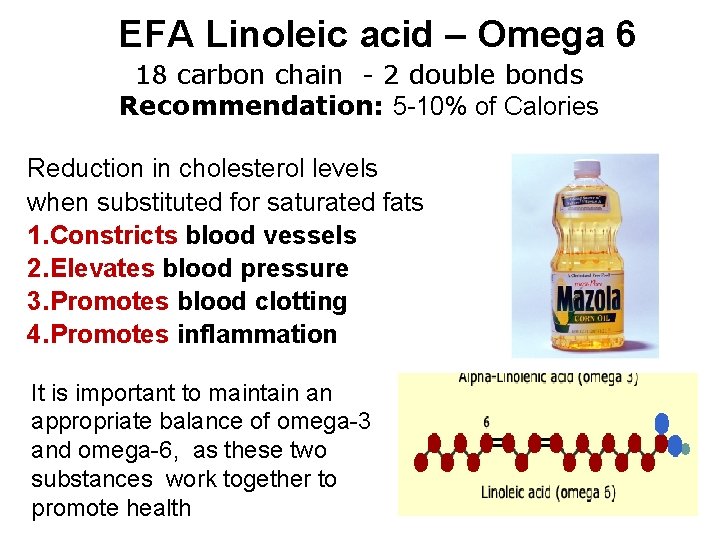
EFA Linoleic acid – Omega 6 18 carbon chain - 2 double bonds Recommendation: 5 -10% of Calories Reduction in cholesterol levels when substituted for saturated fats 1. Constricts blood vessels 2. Elevates blood pressure 3. Promotes blood clotting 4. Promotes inflammation It is important to maintain an appropriate balance of omega-3 and omega-6, as these two substances work together to promote health
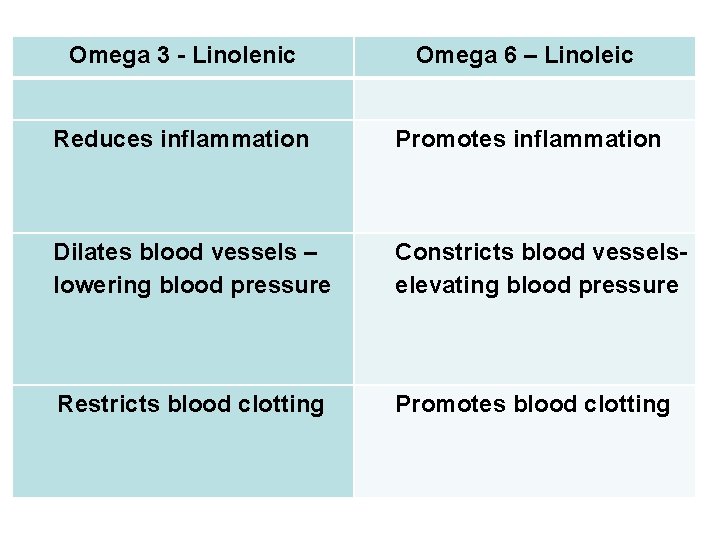
Omega 3 - Linolenic Omega 6 – Linoleic Reduces inflammation Promotes inflammation Dilates blood vessels – lowering blood pressure Constricts blood vesselselevating blood pressure Restricts blood clotting Promotes blood clotting
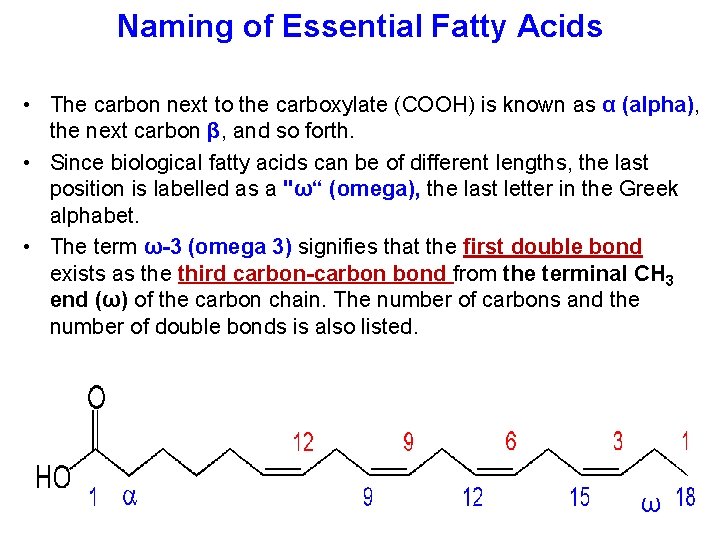
Naming of Essential Fatty Acids • The carbon next to the carboxylate (COOH) is known as α (alpha), the next carbon β, and so forth. • Since biological fatty acids can be of different lengths, the last position is labelled as a "ω“ (omega), the last letter in the Greek alphabet. • The term ω-3 (omega 3) signifies that the first double bond exists as the third carbon-carbon bond from the terminal CH 3 end (ω) of the carbon chain. The number of carbons and the number of double bonds is also listed. ω
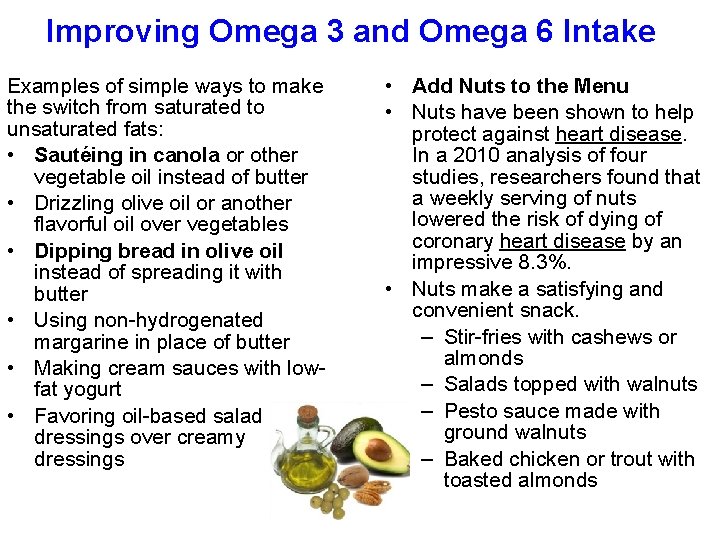
Improving Omega 3 and Omega 6 Intake Examples of simple ways to make the switch from saturated to unsaturated fats: • Sautéing in canola or other vegetable oil instead of butter • Drizzling olive oil or another flavorful oil over vegetables • Dipping bread in olive oil instead of spreading it with butter • Using non-hydrogenated margarine in place of butter • Making cream sauces with lowfat yogurt • Favoring oil-based salad dressings over creamy dressings • Add Nuts to the Menu • Nuts have been shown to help protect against heart disease. In a 2010 analysis of four studies, researchers found that a weekly serving of nuts lowered the risk of dying of coronary heart disease by an impressive 8. 3%. • Nuts make a satisfying and convenient snack. – Stir-fries with cashews or almonds – Salads topped with walnuts – Pesto sauce made with ground walnuts – Baked chicken or trout with toasted almonds

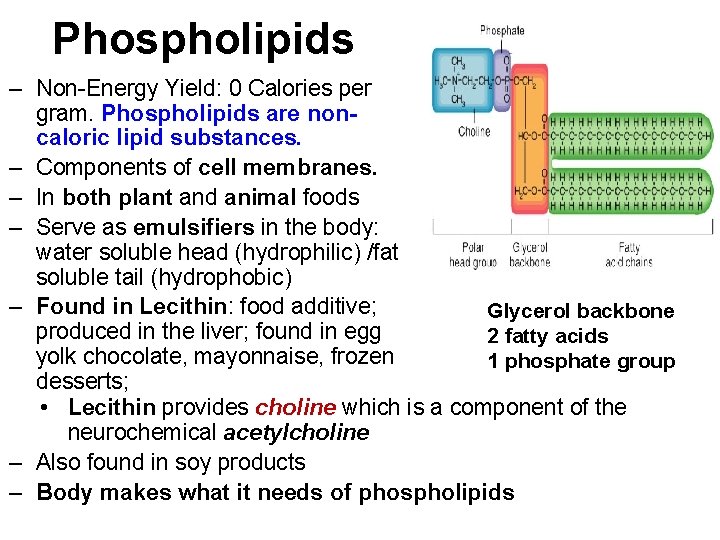
Phospholipids – Non-Energy Yield: 0 Calories per gram. Phospholipids are noncaloric lipid substances. – Components of cell membranes. – In both plant and animal foods – Serve as emulsifiers in the body: water soluble head (hydrophilic) /fat soluble tail (hydrophobic) – Found in Lecithin: food additive; Glycerol backbone produced in the liver; found in egg 2 fatty acids yolk chocolate, mayonnaise, frozen 1 phosphate group desserts; • Lecithin provides choline which is a component of the neurochemical acetylcholine – Also found in soy products – Body makes what it needs of phospholipids
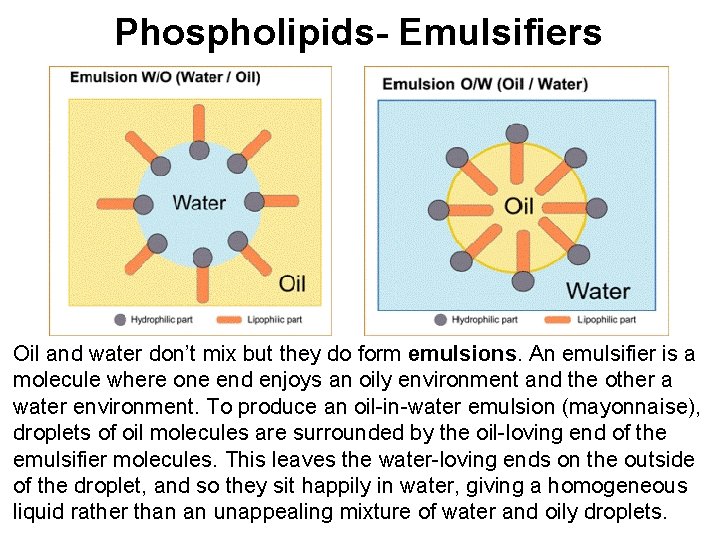
Phospholipids- Emulsifiers Oil and water don’t mix but they do form emulsions. An emulsifier is a molecule where one end enjoys an oily environment and the other a water environment. To produce an oil-in-water emulsion (mayonnaise), droplets of oil molecules are surrounded by the oil-loving end of the emulsifier molecules. This leaves the water-loving ends on the outside of the droplet, and so they sit happily in water, giving a homogeneous liquid rather than an unappealing mixture of water and oily droplets.
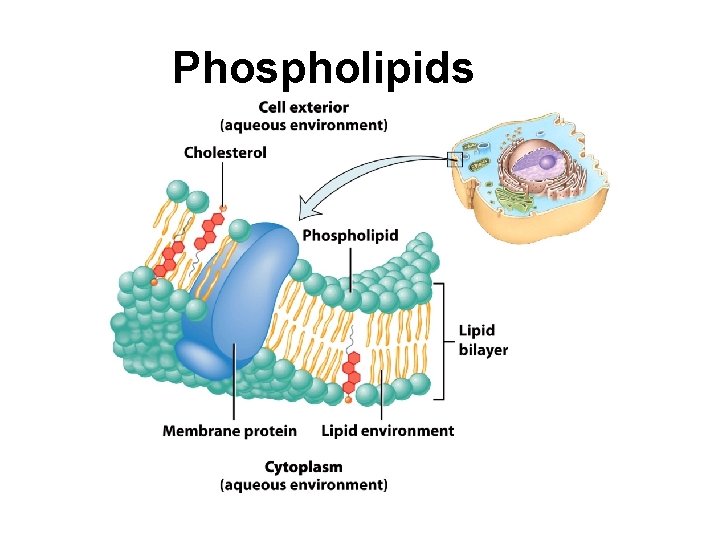
Phospholipids
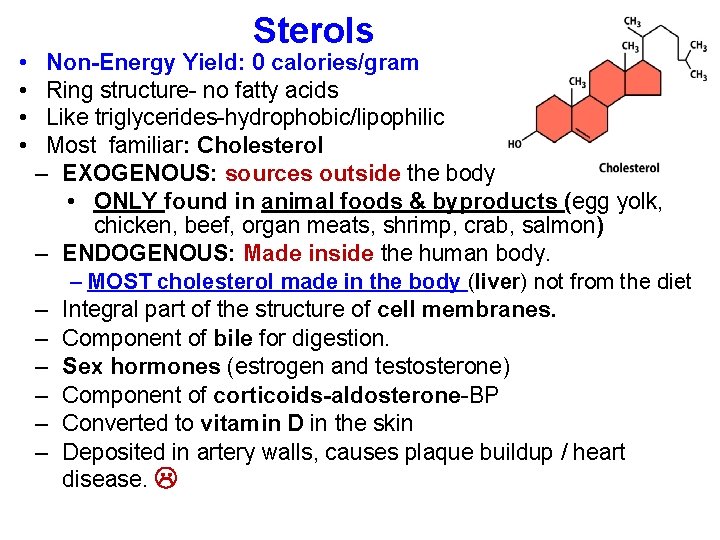
• • Sterols Non-Energy Yield: 0 calories/gram Ring structure- no fatty acids Like triglycerides-hydrophobic/lipophilic Most familiar: Cholesterol – EXOGENOUS: sources outside the body • ONLY found in animal foods & byproducts (egg yolk, chicken, beef, organ meats, shrimp, crab, salmon) – ENDOGENOUS: Made inside the human body. – MOST cholesterol made in the body (liver) not from the diet – Integral part of the structure of cell membranes. – Component of bile for digestion. – Sex hormones (estrogen and testosterone) – Component of corticoids-aldosterone-BP – Converted to vitamin D in the skin – Deposited in artery walls, causes plaque buildup / heart disease.
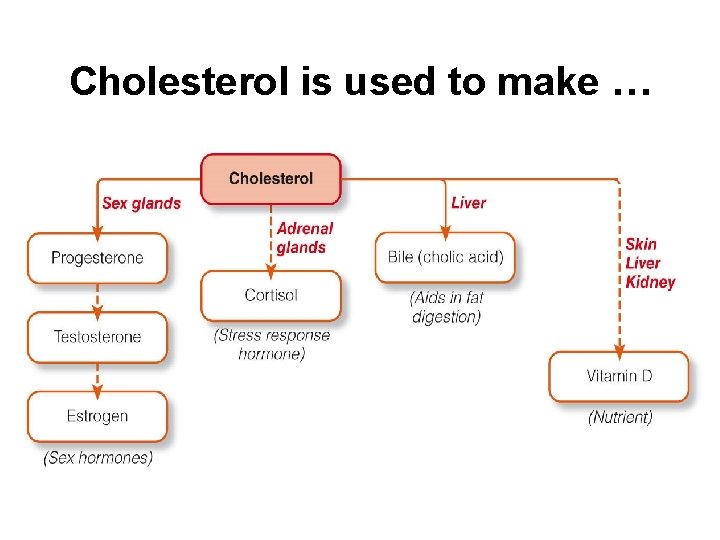
Cholesterol is used to make …
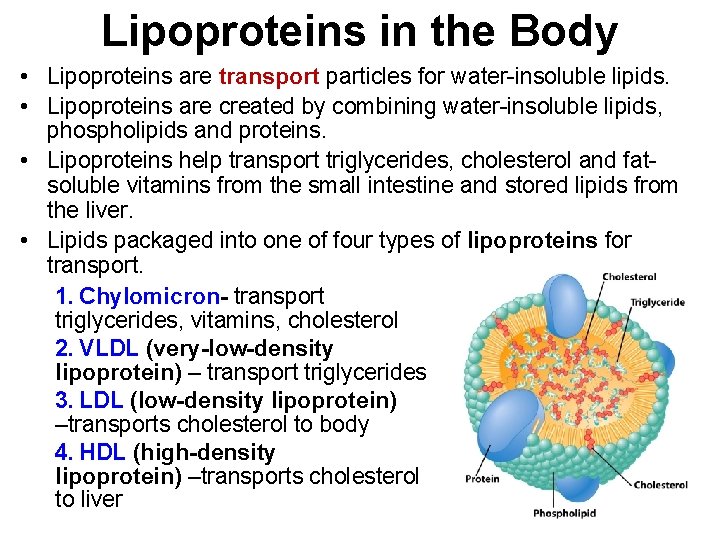
Lipoproteins in the Body • Lipoproteins are transport particles for water-insoluble lipids. • Lipoproteins are created by combining water-insoluble lipids, phospholipids and proteins. • Lipoproteins help transport triglycerides, cholesterol and fatsoluble vitamins from the small intestine and stored lipids from the liver. • Lipids packaged into one of four types of lipoproteins for transport. 1. Chylomicron- transport triglycerides, vitamins, cholesterol 2. VLDL (very-low-density lipoprotein) – transport triglycerides 3. LDL (low-density lipoprotein) –transports cholesterol to body 4. HDL (high-density lipoprotein) –transports cholesterol to liver
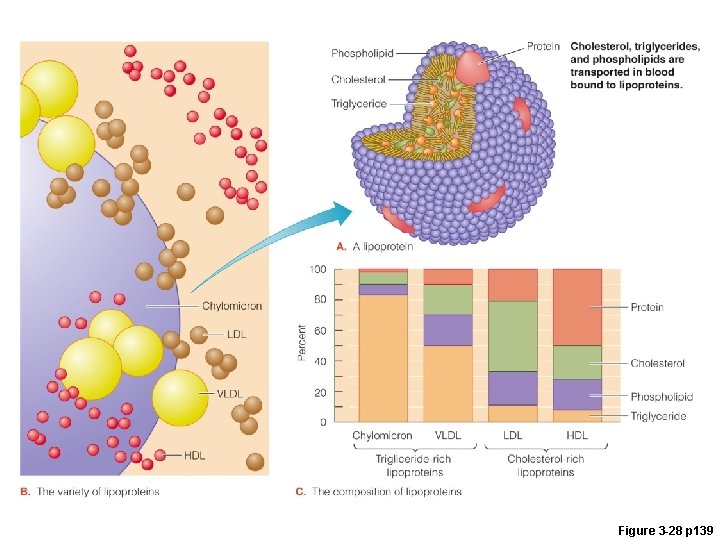
Figure 3 -28 p 139
Cholesterol Level To maintain heart health, the dietary recommendation is to limit intake to < 300 mg/day. – To improve heart health, limit intake to < 200 mg/day. Total cholesterol = Triglycerides + LDL + HDL 1. Total cholesterol < 200 2. HDL >60 mg/d. L- optimal • HDL < 40 mg/dl for men < 50 mg/dl for women is a major risk factor for heart disease. 3. LDL < than 100 is optimal <130 acceptable 4. Triglyceride levels < 150 Example: Male: Total cholesterol 300; LDL 150; HDL 45; --What is his triglycerides level? – Add LDL and HDL subtract from total to determine triglyceride total. (105) – Is LDL high or low; is total cholesterol high or low? Is HDL optimal?
- Slides: 29