
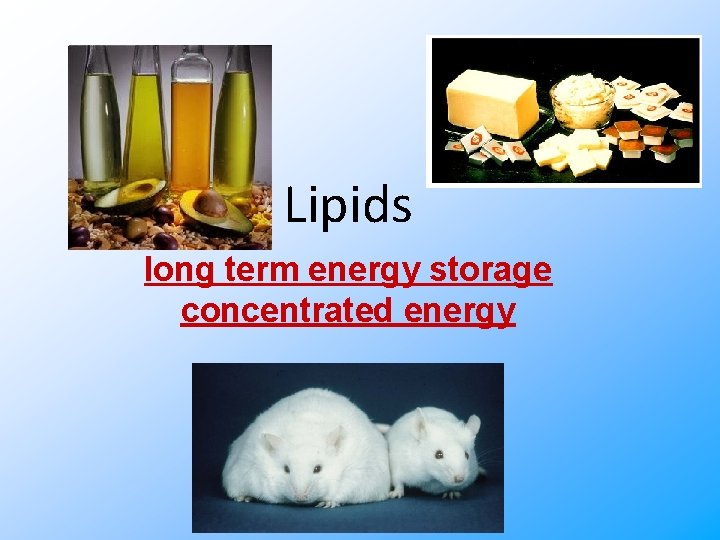
Lipids long term energy storage concentrated energy Lipids

- Slides: 14
Lipids long term energy storage concentrated energy
Lipids • Lipids are composed of C, H, – long hydrocarbon chains (H-C) • “Family groups” – fats – phospholipids – steroids • Do not form polymers – big molecules made of smaller subunits – not a continuing chain
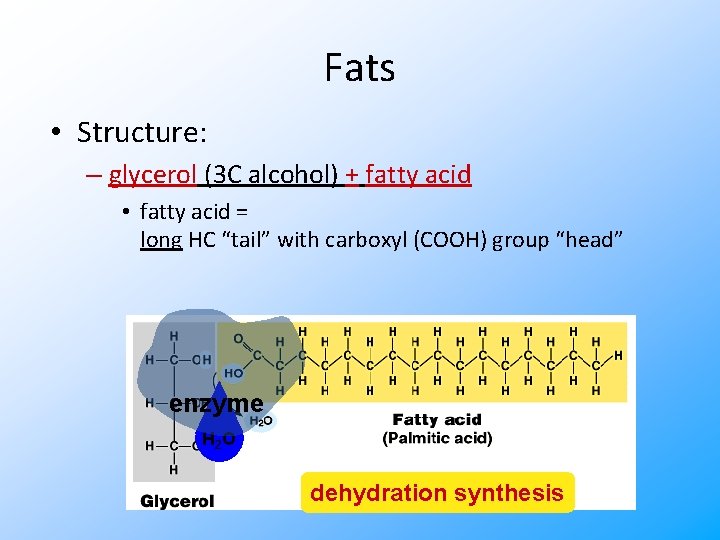
Fats • Structure: – glycerol (3 C alcohol) + fatty acid • fatty acid = long HC “tail” with carboxyl (COOH) group “head” enzyme H 2 O dehydration synthesis
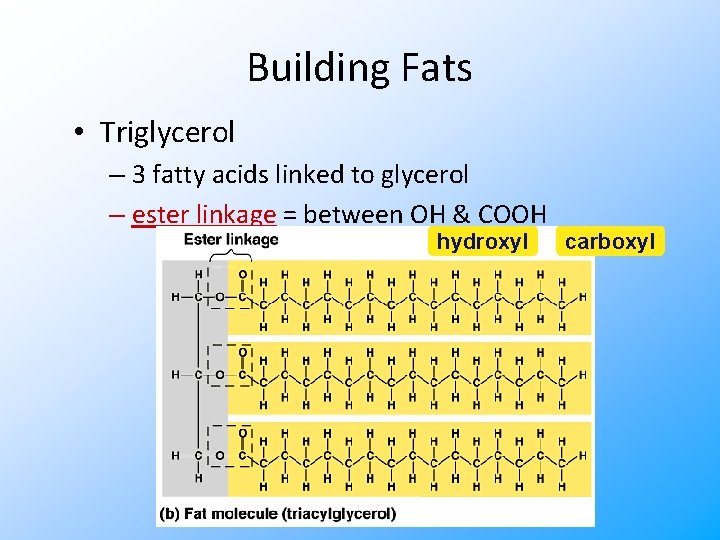
Building Fats • Triglycerol – 3 fatty acids linked to glycerol – ester linkage = between OH & COOH hydroxyl carboxyl
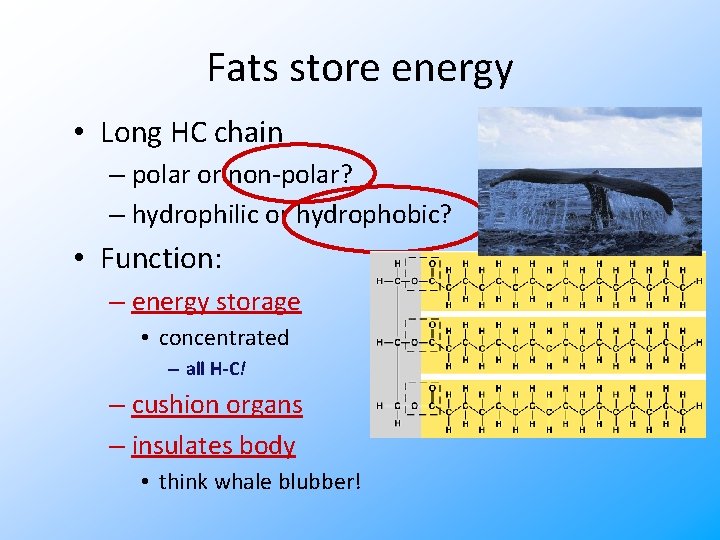
Fats store energy • Long HC chain – polar or non-polar? – hydrophilic or hydrophobic? • Function: – energy storage • concentrated – all H-C! – cushion organs – insulates body • think whale blubber!
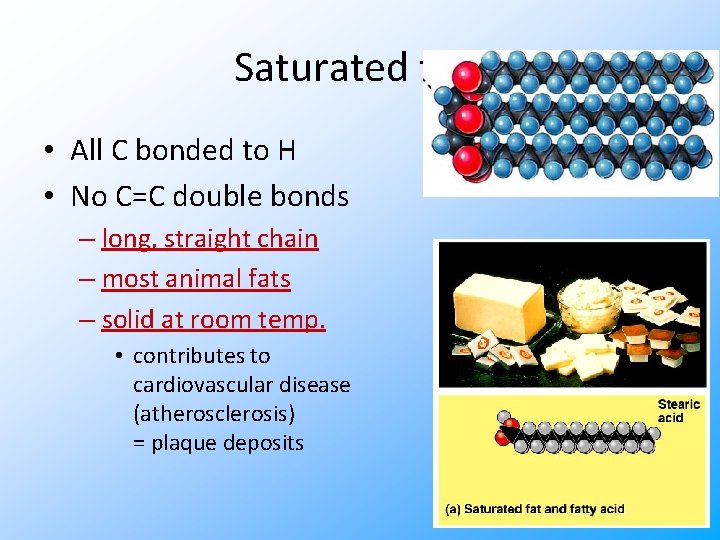
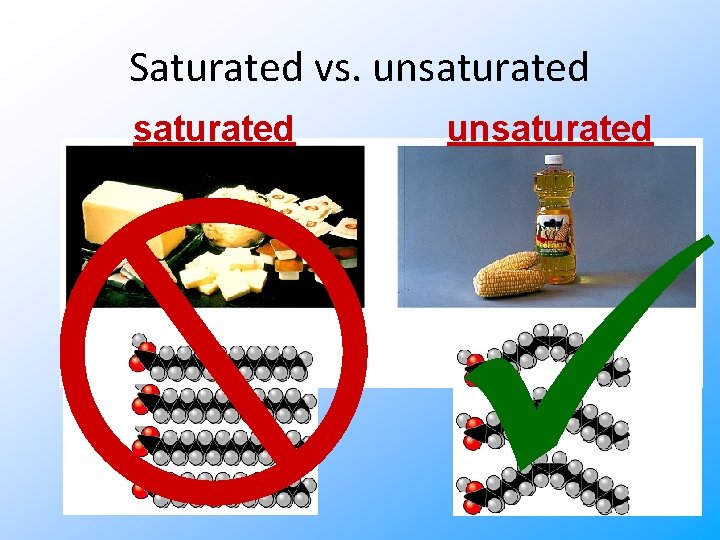
Saturated fats • All C bonded to H • No C=C double bonds – long, straight chain – most animal fats – solid at room temp. • contributes to cardiovascular disease (atherosclerosis) = plaque deposits
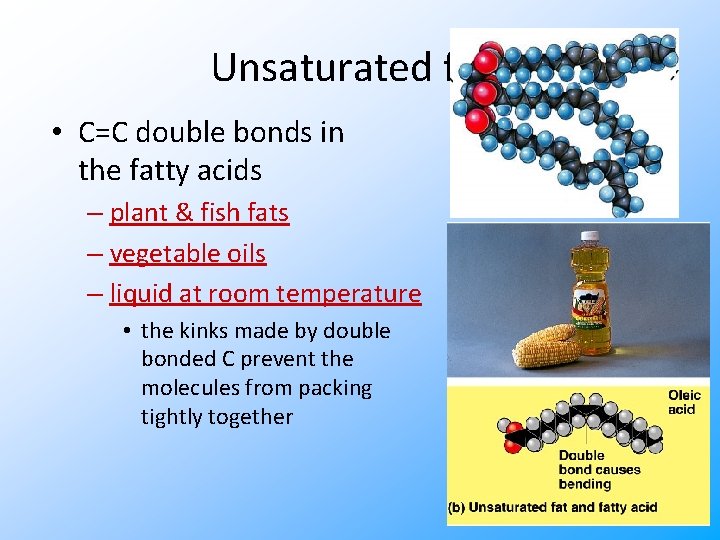
Unsaturated fats • C=C double bonds in the fatty acids – plant & fish fats – vegetable oils – liquid at room temperature • the kinks made by double bonded C prevent the molecules from packing tightly together
Saturated vs. unsaturated
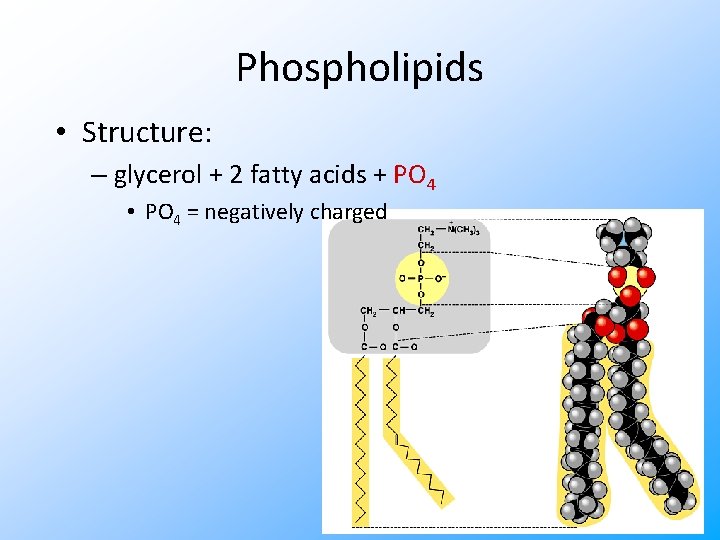
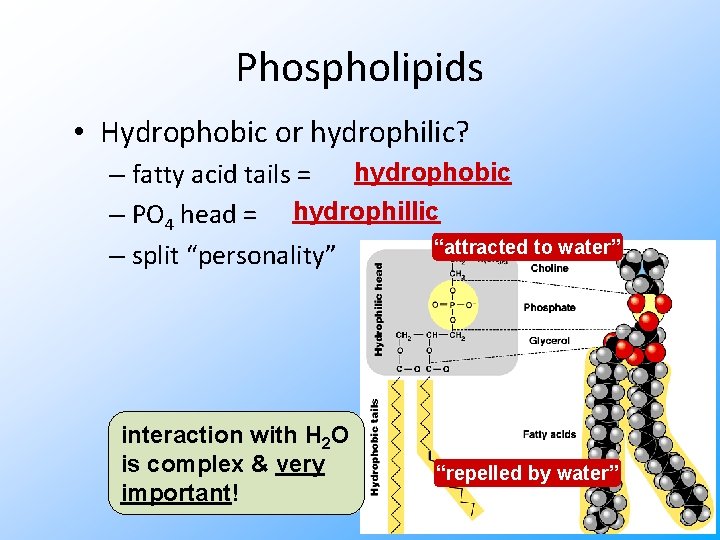
Phospholipids • Structure: – glycerol + 2 fatty acids + PO 4 • PO 4 = negatively charged
Phospholipids • Hydrophobic or hydrophilic? hydrophobic – fatty acid tails = – PO 4 head = hydrophillic “attracted to water” – split “personality” interaction with H 2 O is complex & very important! “repelled by water”
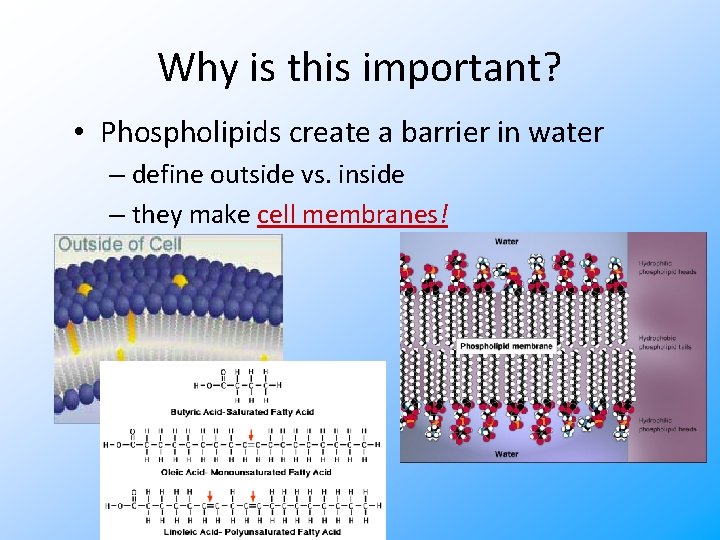
Why is this important? • Phospholipids create a barrier in water – define outside vs. inside – they make cell membranes!
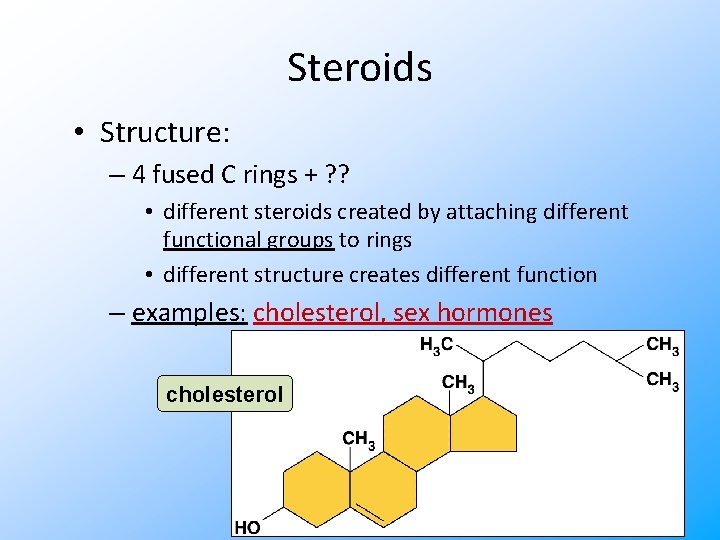
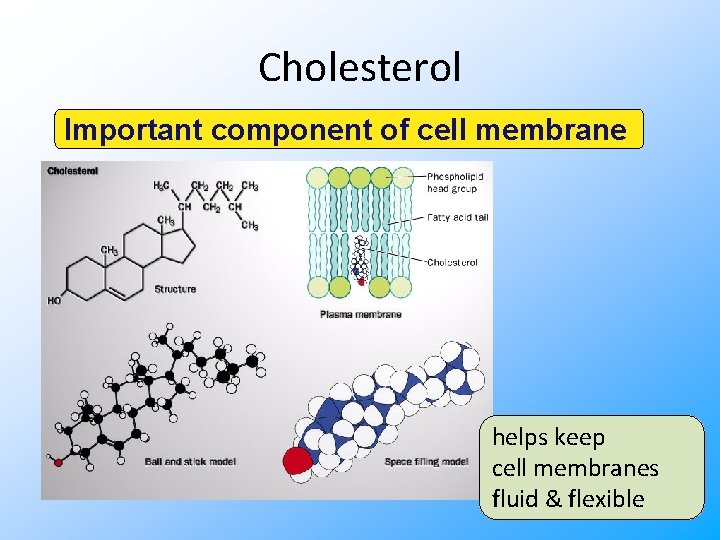
Steroids • Structure: – 4 fused C rings + ? ? • different steroids created by attaching different functional groups to rings • different structure creates different function – examples: cholesterol, sex hormones cholesterol
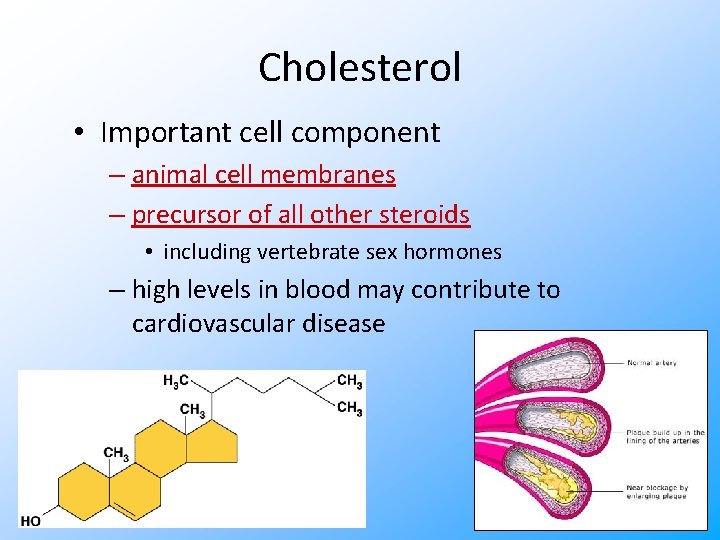
Cholesterol • Important cell component – animal cell membranes – precursor of all other steroids • including vertebrate sex hormones – high levels in blood may contribute to cardiovascular disease
Cholesterol Important component of cell membrane helps keep cell membranes fluid & flexible